
1. Introduction
In recent years, due to the complexity of the business environment, more and more organizations have started to integrate environmental, social and governance (ESG) aspects in their strategic decision-making in addition to financial performance. Frequent disasters caused by extreme weather conditions are affecting not only the quality of life but also the global economy, so governments, enterprises, and organizations around the world are starting to pay important attention to the health, economic, safety, and security crises caused by climate change (Chen et al., 2022). Within each organization, investments play a major role, having a significant influence on the economic growth of every country (Minciu et al., 2021). At the same time, considering ESG criteria is no longer an option, but a necessity for organizations that want to maintain or increase their competitive advantage, given the increasing pressure from customers, suppliers, and other stakeholders. Also, with the deterioration of the ecological environment, the depletion of natural resources, the intensification of conflicts in the workplace, the rise of corporate bankruptcies, all sectors of society are increasingly paying more and more attention to sustainable development, so that ESG issues are becoming a topical subject in both the academic and the pragmatic world (Zhang et al., 2024).
ESG criteria refers to a system used by organizations to evaluate environmental, social (Wong et al., 2024), and governance competencies. ESG considerations are basically aspects of sustainability based on certain measurable data that demonstrate an organization’s ESG performance (Senadheera et al., 2022). Concerns for the integration of ESG aspects into the activities of organizations are being exercised from several fronts: policy-makers, financial institutions, regulators, stakeholders, and business encouraging organizations to transparently present their corporate practices by disclosing both financial and non-financial aspects (Eliwa et al., 2021; Lavin & Montecinos-Pearce, 2022; Manes-Rossi et al., 2021; Vitolla et al., 2021). In this context, ESG behavior is becoming increasingly important because institutions and organizations in general are being held accountable for the environmental and societal impacts that they produce (De Giuli et al., 2024). Companies have mainstreamed ESG practices in their organizational work due to the rapid changes demanded by economic development, including in the elaboration of investment strategies and decision-making processes (Cai, et al., 2024). ESG aspects also provide valuable information for investors, in terms of both potential benefits and risks, which is why ESG features have been integrated into equity portfolios for active indexing and management (Bender et al., 2018).
The adoption of ESG criteria can significantly contribute to the management of risks and opportunities that can be transformed into benefits for the organization’s management, customers, employees, and supply chain participants (Park & Jang, 2021). With the growing interest in ESG issues, more and more organizations are reviewing their investment strategies, both to respond to stakeholder demands and to successfully manage the risks that are often associated with climate change, social inequalities and poor governance practices. From a broad perspective, urban development, policy decisions, company activities, and consumer choices in terms of products and services purchased can contribute to sustainable development (Anelli & Tajani, 2023; De Giuli et al., 2024; Jackson, 2005; Morano et al., 2020). ESG’s origins are rooted primarily in shareholder value (Hilson, 2024).
Although the link between ESG and the financial performance of companies is not very well defined in the literature, as there are many studies with contradictory results, most organizations incorporate ESG criteria in their activities in order to comply with existing market standards, but also to achieve higher financial returns (Khan, 2022). Egorova’s study (2022) demonstrates that organizations with high ESG scores have high financial performance. It should also be noted that numerous studies have shown that investments in ESG activities help to promote social investment (Zhang & Zi, 2021), to maximize profits (Naseer et al., 2023), to mitigate environmental risks and pollution (Liang & Renneboog, 2017), as well as to improve the reputation (Kim et al., 2018). Research conducted by Clark et al. (2015) indicated that 88% of organizations in over 200 academic studies improved their financial performance as a result of implementing ESG criteria and presenting their results and strategies for sustainable development (ESG aspects positively influenced the share price and decreased the companies’ operating costs) (Chen et al., 2022). In terms of risk management, recent studies in the literature have highlighted that in the face of crisis situations (such as the coronavirus pandemic in 2020), organizations that have taken ESG principles into account have shown a lower risk of withdrawal from the market (Narula et al., 2024).
Thus, with the growing interest in researching and analyzing how ESG aspects are integrated in organizations, it proves necessary and useful to conduct a bibliometric analysis in order to gain an understanding of ESG studies conducted in recent years. This study proposes, through a bibliometric and systematic analysis, to explore how ESG considerations can influence the future activity of organizations in terms of the opportunities generated as well as the way to manage risks. The contribution made by this study to the literature is represented by the scientific analysis of the most significant studies in the field regarding the risks and opportunities associated with ESG approaches in organizations, highlighting the main authors, countries, journals, and keywords.
Therefore, the article is organized as follows: the first part includes the literature review being analyzed the most important studies and research in the ESG field related to the risks and opportunities identified, the next part presents the methodology used to achieve the aim of the article, in part three the results obtained are highlighted, and in the last part the conclusions are presented as well as future research directions. The novelty of this study is directly related to the focus on the relationship between ESG risks and opportunities following the analysis of the results obtained from the bibliometric and systematic reviews conducted, which provide researchers a better understanding of the current state of the art of studies in the field as well as future research directions. Compared to existing studies that specifically address the application of ESG principles from a financial performance perspective, this article stands out by highlighting the ambivalence of ESG as a source of both competitive advantages and challenges. Therefore, the article offers a dual contribution, both at a theoretical level by highlighting ESG approaches in terms of opportunities and risks, and at a practical level by providing relevant and useful information for managers and investors seeking to understand the concrete effects resulting from the implementation of ESG principles at the organizational level. The originality of the study is also supported by the methodological approach. The identification of thematic clusters through bibliometric analysis and the review of publications allows, in addition to mapping the field and pointing out emerging trends, the identification of gaps, with a focus on opportunities and risks.
2. Literature review
In today’s environment, where consumers are increasingly focusing on ethical and sustainable practices and turning their attention to responsible organizations, companies are almost forced to report on their ESG performance in order to stay competitive and attract capital. In addition to consumer pressures, investors have also started to make decisions based on ESG performance, so non-compliance by organizations can lead to reputational loss and significant financial penalties in addition to loss of reputation. In accordance with the Principles for Responsible Investment, 5,372 investors holding more than 121.3 trillion in Assets Under Management use ESG criteria information in the analysis and evaluation of investment decisions, supporting the ethical behavior of organizations (Cesarone et al., 2024).
Currently, companies receive mixed signals from rating agencies regarding the actions that will be appreciated by the market, leading to underinvestment in ESG improvement activities (Berg et al., 2022). In selecting a sustainable portfolio, investors have a two-fold objective: on the one hand, they want to achieve the best balance between risk and return, and on the other hand, they want to consider the sustainability of the investment in terms of ESG criteria (Cesarone et al., 2024). Thus, with the joint efforts of several companies, the concept of ESG, as well as the philosophy of sustainable development, has gradually become known to the public, rapidly spreading to several areas of research and application (Zhang et al., 2024).
The widespread integration of ESG principles and initiatives marks a fundamental shift in how corporations respond to global challenges such as social inequality, climate change, and ethical governance (dos Reis Cardillo & Basso, 2025). The recent evolution of the ESG landscape has largely been driven by situations depicting corporate cases of greed, concerns about climate change, environmental catastrophes, and social injustices (Nicolas et al., 2024). The concept of ESG was introduced many years ago, in 2004, by the International Finance Corporation in a study entitled “Who Cares Wins: Connecting Financial Markets to a Changing World” which aimed to analyze the influence of ESG factors in financial research and asset management (Compact UN Global, 2004).
ESG considerations emphasize the three pillars of sustainability that align with the 2030 Global Agenda, signaling a clear link between sustainable investment practices and ESG practices that include a broad spectrum of factors (an organization’s environmental impact, social responsibility, governance systems) (Khaw et al., 2024). ESG is a comprehensive framework for sustainable and coordinated development involving organizations and investors that address ESG issues in their operations and demonstrate their performance in the marketplace (Bin-Feng et al., 2024). So, today’s challenging environments are pressuring companies to improve their overall ESG performance (Lavin & Montecinos-Pearce, 2022).
The first, environmental pillar includes all measures taken to reduce greenhouse gases, dispose of wastewater, combat pollution, and use renewable energy sources (De Giuli et al., 2024). In other words, the environmental pillar covers the main environmental issues such as carbon footprint, resource use, waste management, and toxic emissions (Jasch, 2006; Senadheera et al., 2022). Moreover, ESG-based portfolios include companies that pay attention to the environment, but are also profitable for investors (Fereydooni et al., 2024). Human actions, often irresponsible, are the main causes of the consumption of the planet’s resources, and also the pollution caused by human activities through the release of greenhouse gases into the atmosphere contributes to global warming (the main cause of climate change).
The main actions that cause climate change and contribute to increased toxic emissions include (IPCC, 2007; Yébenes, 2024) deforestation (trees act as climate regulators by absorbing CO2 and returning it in the form of oxygen, so uncontrolled deforestation jeopardizes these very important positive effects), burning fossil fuels and producing carbon dioxide and nitrous oxide, the use of nitrogen fertilizers in agriculture which contribute to increased nitrous oxide, the destruction of marine ecosystems (when oceans reach their limits they acidify, destroying flora and fauna). Climate change in the context of ESG can generate both risks and opportunities (Figure 1).
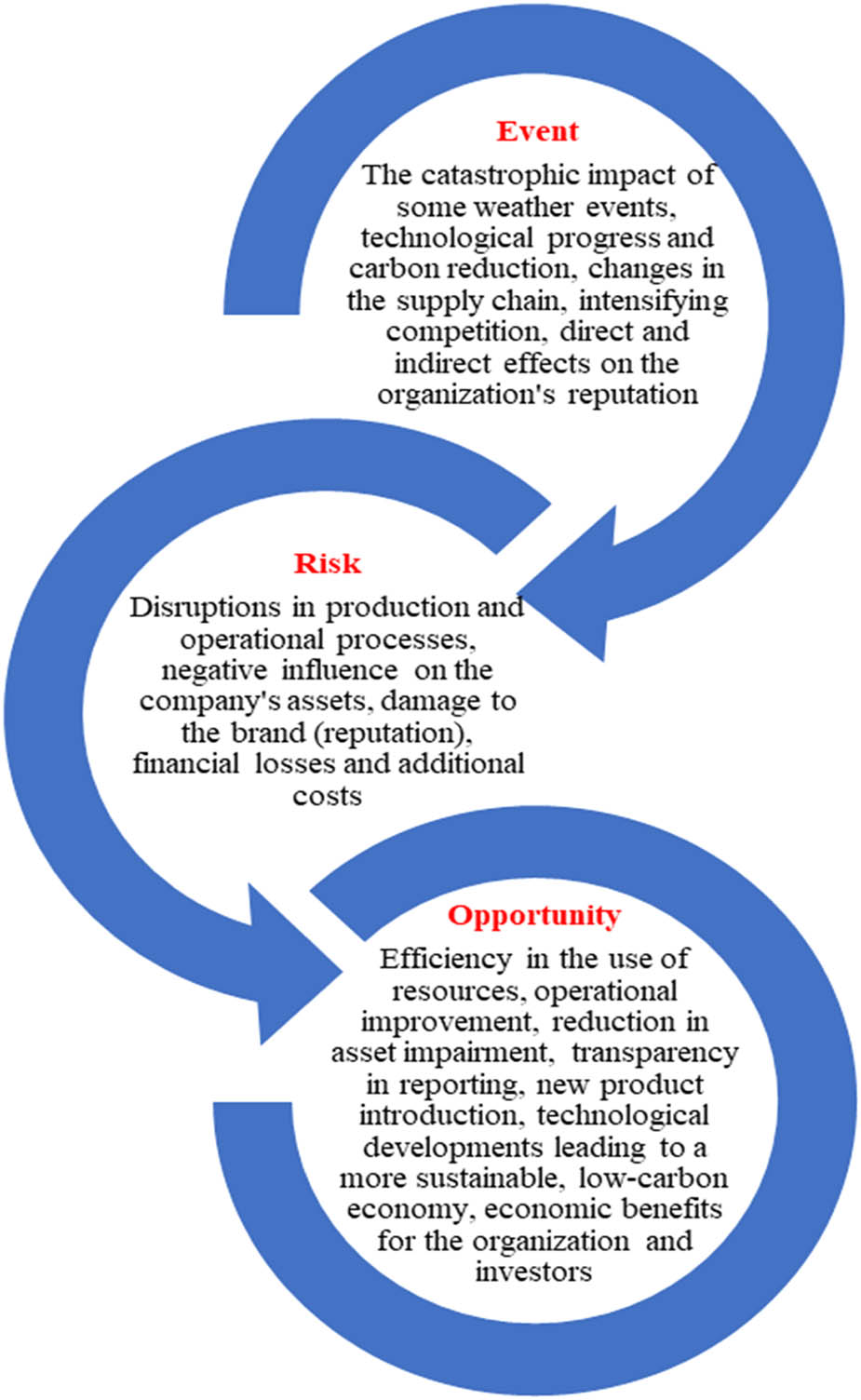
Figure 1
Risk and opportunities in the context of the ESG.
Source: adapted from Yébenes (2024).
The environmental pillar can affect ESG performance in two ways. On the one hand, as the level of environmental uncertainty increases, the operating conditions of organizations change as they operate in complex contexts due to the high risks generated by uncertain investment returns (Bin-Feng et al., 2024). On the other hand, the results achieved under the first pillar contribute to the increase in ESG performance which is an important measure for maintaining reputation (Hatem et al., 2020), a significant direction that can act as a shield for organizations against operational risks arising from operating in an ambiguous and uncertain business environment (Muhammad et al., 2022), as well as an important means to attract stakeholder attention and engagement (Çigdem, 2021).
The second pillar, the social pillar, covers societal issues such as community issues, human rights, workforce management, product responsibility (Senadheera et al., 2022), employee practices, and equal opportunities for the workforce (De Giuli et al., 2024). The social criteria concern the relationship of organizations with the stakeholders with whom they have a direct relationship (employees, customers, suppliers, shareholders, and local communities) referring to: the impact of the companies’ activities on members of the community or society, health and safety in the production processes, respect for the relationship with consumers, social responsibility of the products provided (Yébenes, 2024). Regarding the third pillar, governance, it concerns board diversity and structure, political lobbying and donations, tax strategy, bribery and corruption, executive pay (Bender et al., 2018), financial system instability, business ethics, anti-competitive practices (Nitescu & Cristea, 2020), clear criteria on remuneration and career plans, maintenance of reliable audits (de Hoyos Guevara & Dib, 2022). Governance also refers to the practices, policies, and systems that guide the totality of responsible activities and decisions taken within an organization, involving the totality of corporate governance structures, transparency, board diversity, and ethical business practices (Khaw et al., 2024; Kouaib et al., 2020; Manita et al., 2018).
The importance of reporting on environmental, social, and governance (ESG) issues has become a global standard in financial markets, suggesting a paradigm change toward corporate sustainability (Chopra et al., 2024). ESG factors are closely linked to economic performance, as events caused by climate change can affect profitability, even leading to losses in some situations. This means companies are driven by certain factors to act in the most sustainable way possible (Agosto & Tanda, 2025). ESG data can be used both for analyzing the risks faced by organizations and for a better understanding of the opportunities for growth that are represented in particular by innovative products created that respond to social needs without negatively affecting the environment, the way in which organizations are governed, or ethical standards (Stewart, 2015). ESG criteria focus mainly on quantitative results that help investors to implement decisions relating to risks and ethical practices associated with particular companies, while ESG reports provide the information necessary for clients to decide who to support if the practices promoted in their production and organizational processes are consistent with their values (de Hoyos Guevara & Dib, 2022). Research in the field has also shown that organizations that meet the ESG dimensions with high levels of ESG compliance reduce their risk of litigation with stakeholders (Becchetti et al., 2018), mitigate their exposure to the risk of collapse (Kim et al., 2014), and reduce their chances of default considerably (Boubaker et al., 2020). Thus, ESG-compliant investments are seen as a way to improve the performance of managed portfolios, as well as a means to increase returns and reduce portfolio risk (Broadstock, et al., 2021; Park & Jang, 2021). In fact, seeing ESG as a means of protection against threats that can produce negative risks, there have been a lot of inflows into sustainable funds in recent times (Demers et al., 2021; Narula et al., 2024).
Addressing ESG features can create a number of opportunities for businesses. Public discussions about the ESG aspects of an organization can lead to building a considerable ESG reputation, which over time can create important financial returns (Nicolas et al., 2024). Also, studies conducted by Aureli et al. (2020), Brogi and Lagasio (2018), Chen and Xie (2022), Kim and Li (2021) demonstrate a positive relationship between ESG and financial performance. The inclusion of ESG aspects, in addition to potentially creating access to new investors and thus new markets, can also lead to lower production costs by adopting more energy-efficient, sustainable practices. ESG indicators are generally calculated using a mix of qualitative and quantitative data, based on the financial and non-financial results provided by companies in their annual report, balance sheet, and with the occurrence of certain events/conflict situations (De Giuli et al., 2024). The integration of ESG considerations at the level of organizations has moved beyond the early stages, and today, ESG criteria are real tools for measuring organizational performance in the context of sustainability and ethical and responsible elements (Yébenes, 2024).
In addition to the fact that organizations that pay attention to ESG principles mitigate the risks associated with their business, they are much better able to manage times of crisis – even during the most recent crisis (the COVID-19 pandemic), investments that met ESG criteria outperformed conventional, traditional ones (Cerqueti et al., 2022; Omura et al., 2021). Also, the study by Ferriani and Natoli (2020) reveals that firms with high ESG scores are less risky and more resilient in times of crisis and turbulence. Addressing ESG elements in the decision-making processes of organizations is of paramount importance, as failure to comply with the three pillars (environmental, social, and governance) can lead to financial penalties, reputational damage, and loss of customers. At the same time, investors have become increasingly cautious in directing capital, so organizations need to take measures to remain competitive in the marketplace.
3. Methodology
In order to conduct the bibliometric analysis and systematic review, the Scopus database was used to identify the most representative articles dealing with ESG considerations and their associated risks and opportunities. In order to perform the two analyses, a series of steps were carried out as shown in Figure 2.
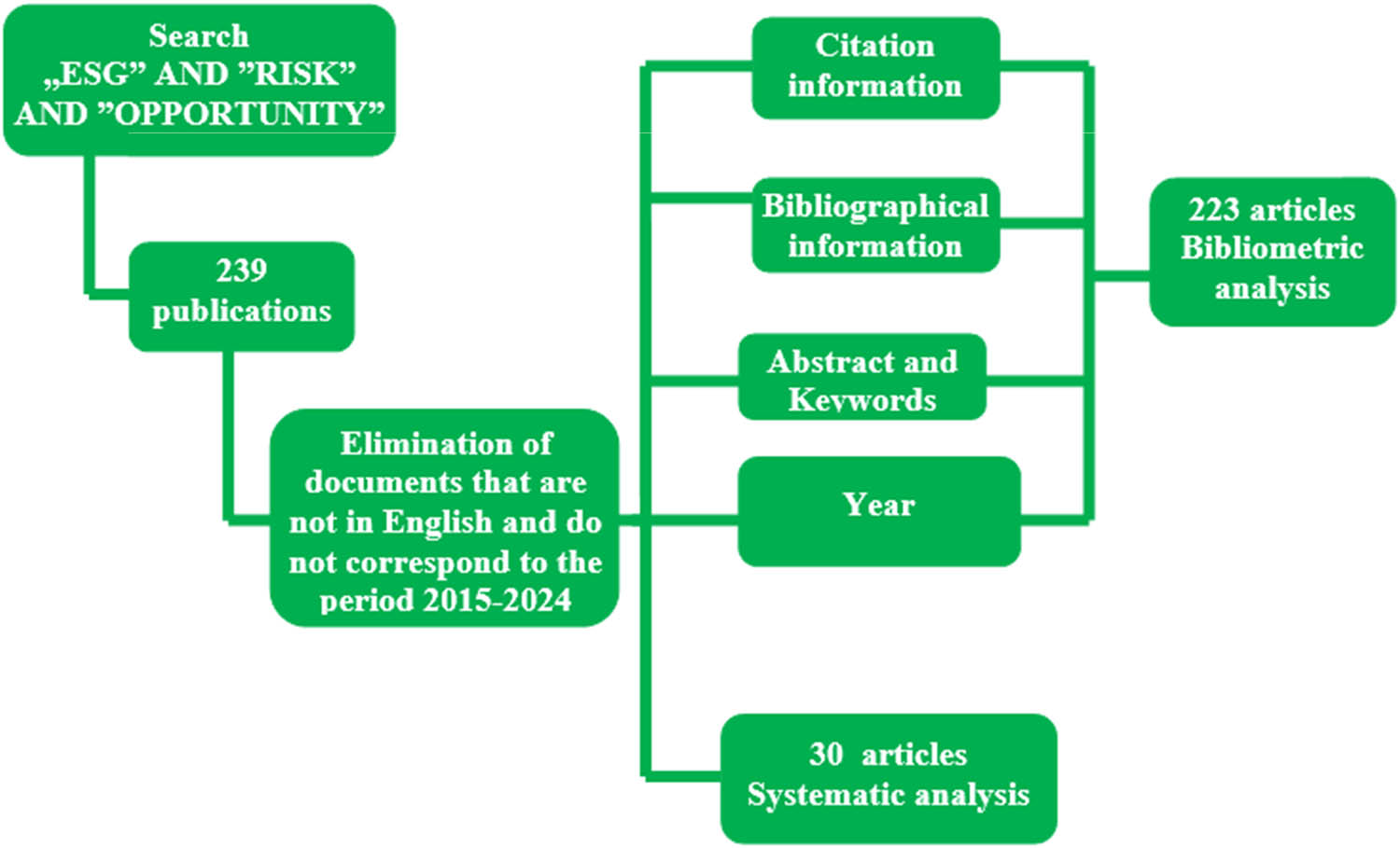
Figure 2
The framework of the study.
Source: authors’ own contribution.
The first step consisted of selecting the most representative articles in the field, extracting all papers that contained in their title, abstract, or keywords the combination “ESG” AND “RISK” AND “OPPORTUNITY.” The Scopus database was chosen because it covers a wider range of interdisciplinary and international sources than the others, and different filters can be applied to search for information (De Giuli et al., 2024). Also, a very important aspect is that the articles and publications in this database are verified in advance, which increases the reliability and credibility of the content. A particularly important aspect that should be emphasized is that results can vary significantly depending on the database used, the criteria applied, and the coverage of the journals. The exclusive use of the Scopus database is also a limitation of the article, as described in the other sections, since the use of the Web of Science database or other databases may generate different results in terms of geographical distribution and total number of articles.
This resulted in 239 articles, including all existing articles and publications in the Scopus database that met the above criteria. Thus, after the preliminary analysis of the articles and the exclusion of those that were not in English or did not fall within the 2015–2024 period, 223 articles were retained for which all the necessary information to run the bibliometric analysis was exported (citation information, year, bibliographical information, abstract, and keywords). Bibliometric analysis is a widely used method to map the impact of existing publications on the concept under investigation (Kar et al., 2022; Kumar Kar & Harichandan, 2022). This method is extremely effective for visualizing the state of play of a given topic by identifying the themes addressed, as well as for summarizing the countries, journals, and authors that have the most significant impact (Linnenluecke et al., 2019). The aim of bibliometric analysis, from a theoretical point of view, is to highlight the areas in which researchers have concentrated their efforts so far and to illustrate the dynamic development of the field.
In this sense, this article aims to answer the following questions:
Q1. What is the current state of research that examines the risks and opportunities associated with the implementation of ESG criteria in organizations?
Q2. What are the most common keywords used in the ESG field in relation to risks and opportunities ?
Q3. What is the distribution of descriptive and evaluative information (authors, years, countries, journals) concerning risks and opportunities created by ESG approaches?
In order to identify the answers to the above questions, we conducted a bibliometric analysis using the VosViewer software developed by van Eck and Waltm (2010). This is a free software commonly used in bibliometric research to make different maps and charts regarding authors, journals, citations, and keywords (Senadheera et al., 2022).
The time period was limited to the interval 2015–2024, because between these years the field of ESG approaches experienced the greatest expansion 2015 registering less than 20 articles, in which the ESG concept was characterized in a general way or was linked and analyzed together with other terms such as responsible investment or sustainability. Therefore, we conducted the bibliometric analysis on the 223 exported articles, and for the systematic analysis, we selected the most relevant 30 articles in which the ESG criteria as well as the risks and opportunities associated with them were described in detail.
4. Results and discussion
The adoption of ESG criteria within organizations is an important means of differentiation, as companies can use their ESG performance to attract new investors, customers, and business partners and become prepared to successfully manage external environmental challenges. The growing interest of companies to implement ESG practices in their organizational processes is also reflected in the existing research in the field.
As can be seen from Figure 3, referring to the 223 articles (described earlier) in recent years, respectively in the period 2021–2024, 183 studies on the topic of ESG have been conducted, which denotes an increase in the effects produced (risks and opportunities) as a result of the integration of ESG criteria, considering that in the period 2015–2020 only 40 articles were published.
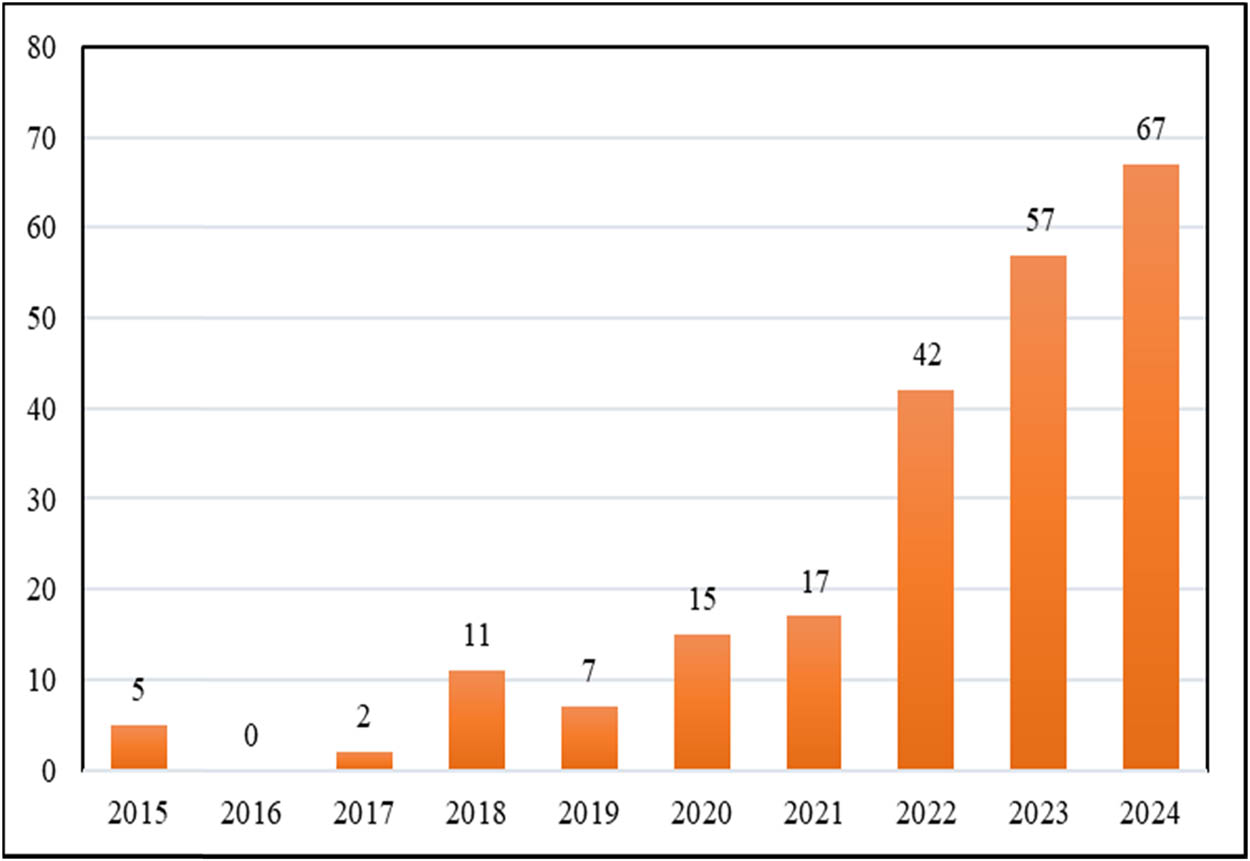
Figure 3
Number of articles distributed by year.
Source: authors’ own contribution after Scopus.
In addition to the increasingly stringent international regulations, this can also be explained by the 2020 coronavirus pandemic, which has stimulated organizations to undertake a business priority analysis to become more resilient. The coronavirus pandemic has created unprecedented volatility in all sectors, leading to frequent fluctuations in the activity of organizations and a heightened state of ambiguity (Minciu et al., 2025). The COVID-19 pandemic highlighted the fragility of the economic system, with many organizations having to reorganize their production processes or, at worst, temporarily stop their activities during that period. To better understand how the COVID-19 crisis has influenced financial performance and ESG investment decisions, we must also consider investor and client preferences (Albuquerque et al., 2020). In such a context where challenges were omnipresent and situations were completely new, academic research intensified as the pandemic emphasized the need to address ESG considerations to make business models more sustainable and able to adapt quickly to crisis situations.
The results obtained confirm the findings in the specialist literature. The study by Wan et al. (2023) reveals that, since 2020, ESG issues have become increasingly prominent in emerging markets. Regarding the topics analyzed, according to the Scopus database for the 223 articles for which we conducted the bibliometric analysis, in the first 9 positions are publications dealing with topics falling into the following categories (in one or more categories): Business, Management and Accounting (100 publications, a percentage of 44.84), Economics, Econometrics and Finance (98 publications, a percentage of 43.95), Social Sciences (70 publications, a percentage of 31.39), Environmental Science (65 publications, a percentage of 29.15), Energy (29 publications, a percentage of 13), Engineering (26 publications, a percentage of 11.66), Computer Science (20 publications, a percentage of 8.97), Earth and Planetary Sciences (20 publications, a percentage of 8.97), Decision Sciences (19 publications, a percentage of 8.52) (Figure 4). The following categories gather fewer than 10 articles; thus, they are excluded from the analysis.
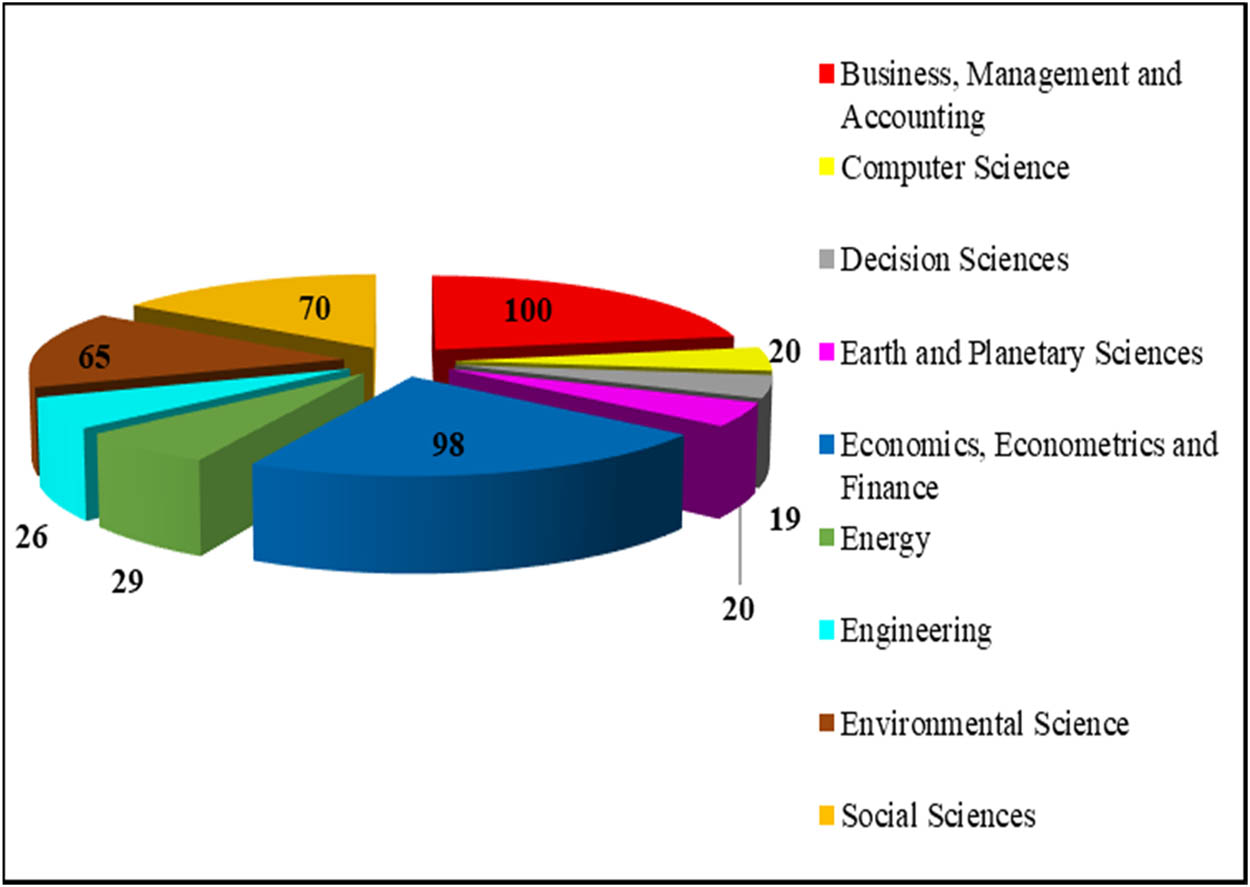
Figure 4
Classification of articles by subject area.
Source: authors’ own contribution after Scopus.
The high percentage held by Business, Management and Accounting and Economics, Econometrics and Finance emphasizes the importance of ESG in business, as organizations need to address ESG principles in their business strategies, not only to protect the environment but also to perform globally. The second place occupied by the Social Sciences area underlines the interest in social issues (components of the ESG criteria) debated throughout the research in the field, such as social inclusion, the impact of organizations’ activities on communities, social equity, changes in customer opinions, and corporate social responsibility.
It is also worth noting that the next top domains are Environmental Science and Energy, which reveal researchers’ concerns towards facilitating the shift towards a green, sustainable economy focusing on carbon reduction, use of renewable energy sources, and protection of biodiversity. The green economy has positive effects on improving people’s well-being and helps promote social equity.
In terms of the contribution of the journals to the development of themes that address the opportunities and risks of integrating ESG considerations at the level of organizations, the top 5 places are Sustainability Switzerland (a total of 8 articles distributed as follows: 1 article in 2019, 2 articles in 2020, 3 articles in 2022, 1 article in 2023, and 1 article in 2024), Csr Sustainability Ethics and Governance (a total of 6 articles distributed as follows: 2 articles in year 2015, 1 article in year 2019, 1 article in year 2021 and 2 articles in year 2024), Corporate Social Responsibility and Environmental Management (in total 5 articles distributed as follows: 1 article in year 2021 and 4 articles in year 2024), E3s Web of Conferences (in total 4 articles of which 1 article in year 2021, 2 articles in year 2022 and 1 article in year 2024), Journal of Portfolio Management (4 articles, one in each year, period 2019–2022) (Figure 5).
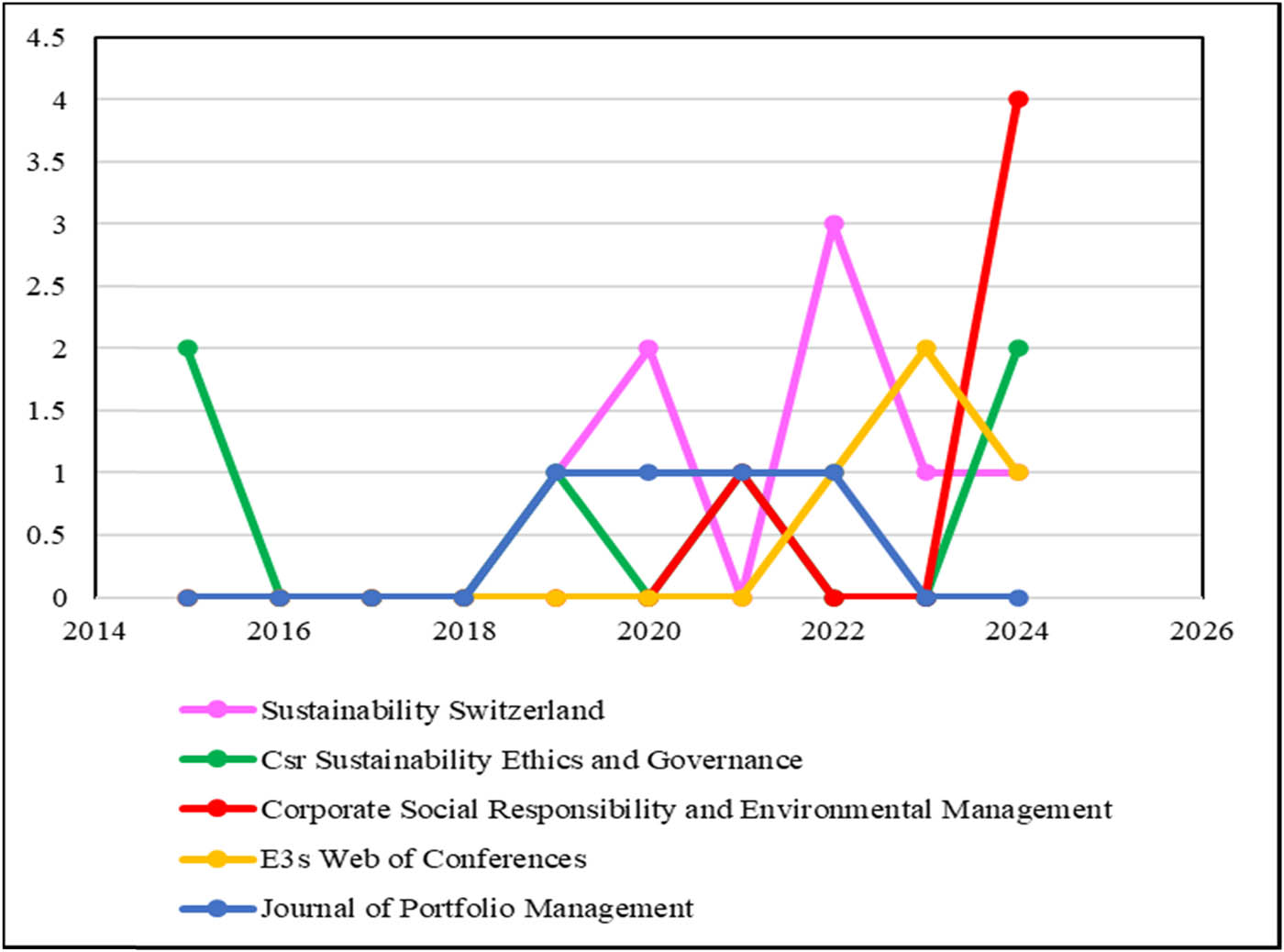
Figure 5
Classification of articles by journals.
Source: authors’ own contribution after Scopus.
As can be seen from Figure 5, the number of articles began to increase significantly after 2020, which reveals a major concern of organizations to integrate ESG criteria in their activities and investment decisions, especially after the period marked by the coronavirus epidemic. In addition, the almost continuous appearance of articles indicates a permanent concern for research on these issues, as well as the dissemination of the results obtained with a view to the integration of ESG criteria by companies to improve their governance.
If we examine the distribution of articles by country, the first place is occupied by the United Kingdom, where 32 publications were published (about 14.35% of the total number of 223 articles) (Figure 6). The United States (27 articles, 12.11%), India (18 articles, 8.07%), Australia (17 articles, 7.62%), and Italy (16 articles, 7.17%). They represent 49.32% of the total number of published articles, the rest of the countries included in the bibliometric analysis having 15 or fewer published articles. The country-level geographical analysis is consistent with the findings of other studies, which highlight the USA, UK, China, and India as key actors (Rani et al., 2025).
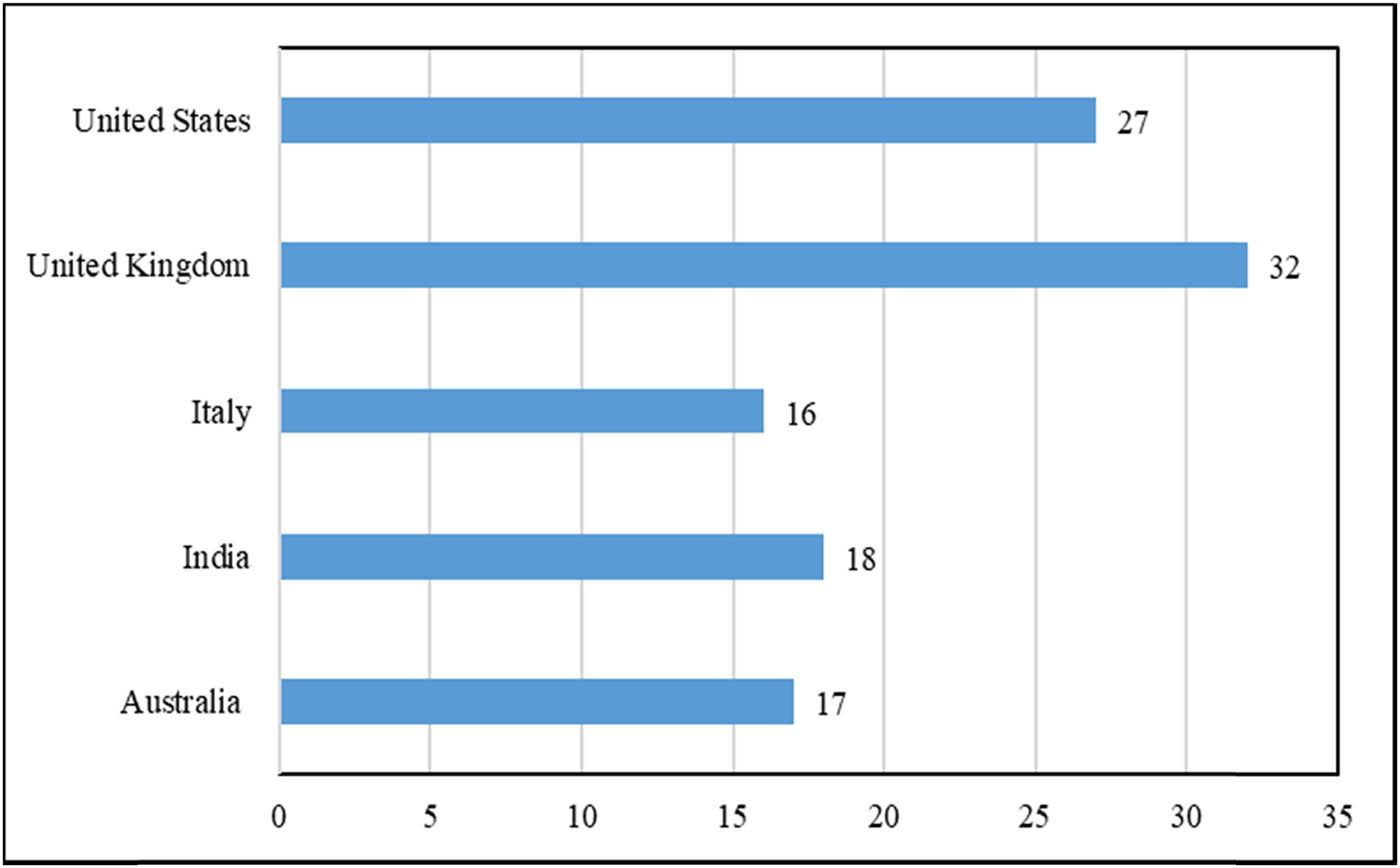
Figure 6
Distribution of articles per country.
Source: authors’ own contribution after Scopus.
The top five countries emphasize the importance of the development and integration of ESG principles both from a research point of view, at an academic level, and for ensuring a clear transition towards a sustainable economy. Furthermore, results reflecting increased interest in ESG investment approaches in countries from different geographical areas and at different levels of development suggest that ESG practices should be mainstreamed into corporate practices in order to benefit from opportunities and successfully manage the risks that may arise.
Regarding the co-occurrence of keywords analysis, out of 1,189 keywords, only 28 meet the threshold, and they are categorized into five groups: Cluster 1, consisting of eight items (decision making, economic and social effects, environmental, finance, investments, performance, risk and opportunity, and supply chains), Cluster 2, which covers seven items (corporate social responsibility, esg factors, governance approach, integrated reporting, investment, stakeholder, and sustainability), Cluster 3 consisting of five items (artificial intelligence, COVID-19, csr, esg and sustainable finance), Cluster 4 consisting of four items (circular economy, climate change, gas emissions, and sustainable development), Cluster 5 containing three items (esg investing, risk assessment, and risk management) (Figure 7). The distribution of the keywords across the five clusters thematically revealed a particular focus on the links between ESG approaches and economic performance, corporate governance, the coronavirus pandemic and technological developments, environmental sustainability, and risk management.
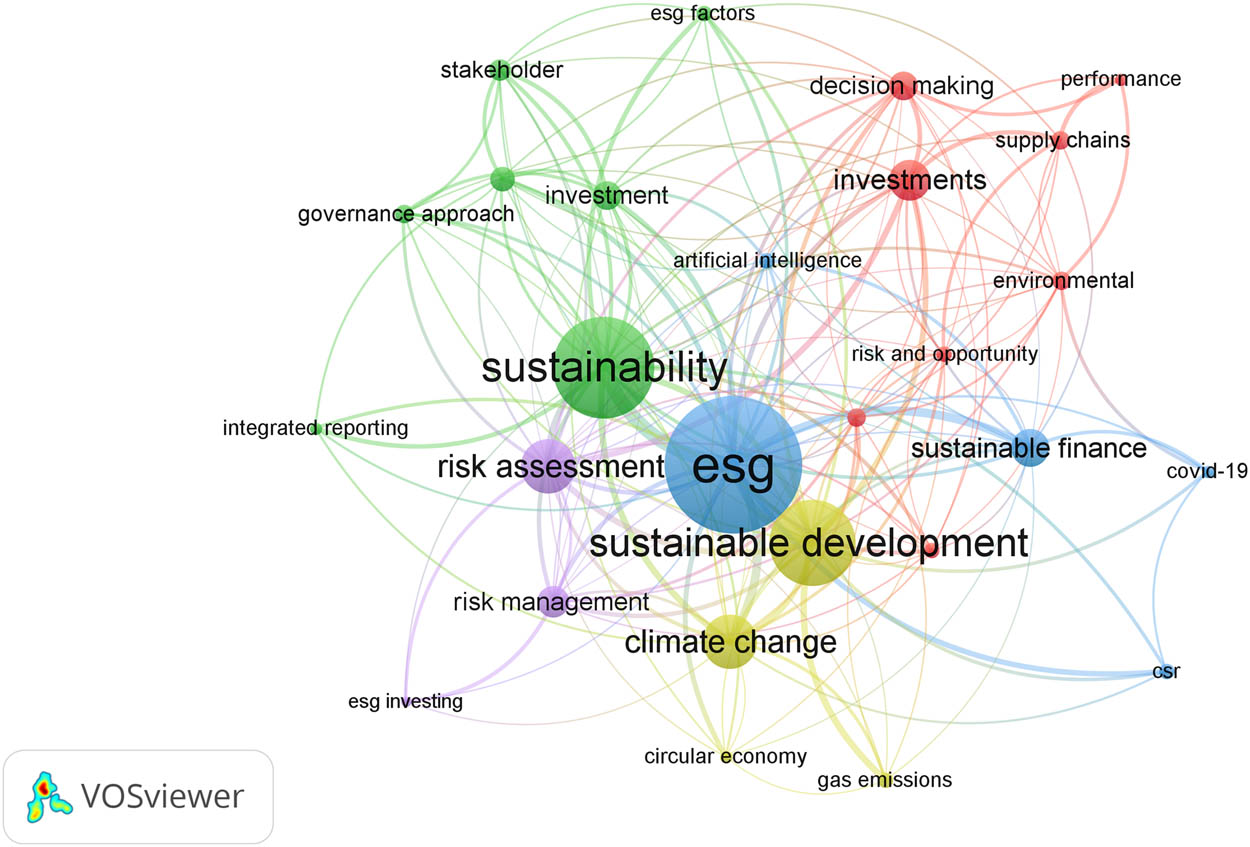
Figure 7
Co-occurrence of keywords.
Source: created by authors with VOSviewer.
The terms that compose the first cluster suggest that the research included in this group has sought to explore how ESG influences decision-making processes, financial performance, and the main risks that may arise, underlying the interdependence between the integration of ESG considerations in the investment activities carried out by organizations and the economic impact. ESG ratings and scores can substantially influence economic decisions (Jámbor & Zanócz, 2023).
The second cluster focuses more on the third pillar, governance, with research in this group analyzing how companies address ESG factors in terms of accountability and transparency towards all stakeholders (customers, investors, suppliers, etc.). The next cluster reflects a clear link between ESG and recent global events/evolutions such as COVID-19, artificial intelligence. The social implications of the coronavirus epidemic, in addition to driving the development of technological innovations, have drawn the attention of organizations to ESG principles, respectively, social responsibility and the need to create a system/plan for rapid adaptation to changes in the external environment. Cluster 4 focuses on the environmental pillar, which reveals the interest of researchers in identifying solutions to act on climate change, reducing greenhouse gas emissions and contributing to sustainable development. Activities related to the circular economy in the energy sector emphasize the need for clear regulations and policies to support and foster the transition towards more sustainable energy practices (Androniceanu et al., 2024). The last cluster is oriented towards risk assessment, indicating an interest in analyzing how investment activities based on ESG principles are assessed from a risk perspective. As regards the authors’ contribution to the development of the researched topics, there are no significant influences, except for Krosinsky, who has three articles; the other authors had two articles or one article indexed in the Scopus database. The presence, however, of so many authors (more than 200 authors) emphasizes both individual interest and academic collaborations that represent a significant potentiating factor for further research in this field. Also, the fact that over 200 authors have conducted research on the risks and opportunities associated with ESG considerations suggests the growing importance of integrating ESG criteria, given the totality of challenges to be managed by organizations: climate change, increasing transparency requirements in reporting from investors, and increasing stakeholder pressures to implement responsible, ethical practices. Compared to other studies in the literature, our research confirms the upward trend starting in 2020. At the same time, our study brings something new in terms of highlighting how opportunities and risks are treated separately or associated with ESG principles.
Looking globally at the obtained results, it can be concluded that ESG research reflects that ESG considerations are becoming more and more important as organizations need to turn their attention to them in order to successfully manage every unexpected event. In this context, the limitations of the article should also be emphasized, as the two analyses carried out (bibliometric and systematic) were based exclusively on articles extracted for this research for the period 2015–2024. In addition, the exclusive use of the Scopus database for the identification and collection of publications is another limitation of the research carried out because there were no other studies from other databases included (which could have influenced the results obtained).
5. Conclusions
The concept of ESG has undergone an extraordinary evolution in recent years, representing an essential tool that organizations need to take into account in their strategic decisions. The results of the two analyses carried out (bibliometric and systematic) revealed a significant increase in interest in the study of the integration of ESG criteria in organizations and especially on the effects caused (risks and opportunities), in the period 2021–2024 where the number of publications reached 183 articles, compared to the period 2015–2020, when the number of researches totaled 40 articles. The bibliometric analysis of the 223 articles revealed a number of risks and opportunities associated with organizations that integrate ESG principles in their activities, as also emerged from the systematic analysis conducted previously (at the level of the 30 most representative articles in the literature). Thus, organizations that have reorganized their activities by addressing ESG principles have been able to achieve a number of opportunities such as: increased stakeholder confidence (customers, investors, local community members, suppliers, etc.) as a result of transparency and full reporting of activities, improved operational efficiency and long-term financial performance by attracting new investors and customers, penetration of new markets and access to capital by aligning with national and international governance standards. Companies adopting ESG criteria also showed better management of risks related to the reputation of the organizations, streamlining production processes, and financial performance (access to new sustainable investments).
The co-occurrence keywords analysis within the bibliometric analysis revealed the creation of five clusters that further emphasized the interdependencies and complexity of the three pillars (environmental, social, and governance). The second cluster also highlighted the link between the ESG and the coronavirus pandemic from 2020 (as the systematic analysis revealed), concluding that the totality of crisis situations faced by organizations during that period was a stimulus for companies. They have become much more aware of the importance of addressing ESG principles in order to remain sustainable and able to successfully manage unexpected and constantly changing events. Also, climate change, sustainable development, risk management, corporate governance, economic and social decisions, and circular economy, highlighted by the five clusters, were other elements that signify priorities for organizations.
At the same time, the disciplinary diversity reflected in the multiplicity of fields in which the analyzed publications were classified (Business Management and Accounting, Economics, Econometrics and Finance, Social Sciences, Energy, Earth, and Planetary Science) also highlights the multidimensional nature of the topics researched, ESG principles no longer representing a subject of interest only for the business sector, but also a phenomenon that has a major influence on the environment and a major economic and social impact. At the same time, the thematic study regarding the risks and opportunities associated with ESG considerations in different countries (United States, India, Australia, etc.) underlines that the integration of ESG principles in organizations is a strategic requirement to successfully face the uncertainties and challenges in the internal and external environment.
5.1. Theoretical implications
This article makes a relevant and significant contribution to the existing literature by highlighting the way ESG is approached both as a source of risks and opportunities. This dual perspective, very rarely explored systematically in previous research, paves the way for a conceptual framework that goes beyond the traditional view of ESG as merely a reporting or compliance tool. The keyword cluster analysis further confirms the interdisciplinary nature of the field, positioning ESG at the intersection of economics, social sciences, and environmental sciences.
5.2. Managerial relevance
The findings have significant practical implications. Understanding how ESG approaches can generate both risks and opportunities provides organizations with a solid basis for formulating sustainability strategies, reducing vulnerabilities, and building competitive advantages. Managers can leverage this information to direct investments toward green technologies, strengthen governance mechanisms, and foster stronger relationships with stakeholders.
Although the literature indicates a clear progress in the field, there are still aspects that can be further researched and deepened in the future, such as: quantifying the impact of ESG approaches on costs and profits of organizations, the role of technologies in monitoring risks and improving ESG performance, the analysis of differences between geographical regions in terms of priorities and application of ESG criteria, the role of ESG in supporting organizations in certain crisis situations, and how stakeholders contribute to the success of ESG approaches in organizations. Another direction could focus on emerging areas, respectively, research into the use of artificial intelligence in ESG reporting, assessment of the effects of climate change, and integration of circular economy principles.
Funding information
Authors state no funding involved.
Author contributions
Conceptualization, methodology, writing – original draft preparation: Mihaela Minciu, Cristian Buşu, Luis Miguel Fonseca, Ilona Skačkauskienė; Software: Mihaela Minciu, Luis Miguel Fonseca, Ilona Skačkauskienė; Validation: Mihaela Minciu, Cristian Bușu, Ilona Skačkauskienė; Formal analysis, Investigation and Resources: Mihaela Minciu, Luis Miguel Fonseca; data curation, writing – review and editing, and supervision and project administration: Mihaela Minciu, Cristian Buşu; Visualization: Mihaela Minciu, Ilona Skačkauskienė. All authors have read and agreed to the published version of the manuscript.
Conflict of interest statement
Authors state no conflict of interest.