
Introduction
The term ‘digital detox’ is defined as a voluntary or enforced temporary limitation of the use of Information and Communication Technology (ICT). Furthermore, it is becoming an increasingly prevalent tourist motive. Indeed, as early as over a decade ago, digital detox was already being identified as a potential avenue for tourism development and one of the trends in global and European tourism demand (Euromonitor International 2012). Nevertheless, it has only been in more recent years, in the aftermath of the COVID-19 pandemic and the subsequent increase in remote working and learning, that this trend has gained significant traction (Ipsos 2023). For those who travel for leisure purposes, the value proposition lies in the opportunity to limit the use of ICT and to immerse oneself in ‘analogue experiences’. It is evident that experiences that lack technological involvement are progressively becoming the preferred means of leisure (OECD 2018). This study explores the relationship between the excessive use of ICT and its impact on human well-being in both professional and private contexts, with a particular focus on its implications for tourism in Poland.
Recent literature and reports on the tourism sector provide a range of terms for the discussion of this emerging phenomenon. Examples include ‘digital detox’, ‘digital detoxification’, ‘offline tourism’, ‘switch-off tourism’, ‘disconnected tourism’, ‘digital-free tourism’ and ‘off-the-grid vacations’ (Li et al. 2018; Pawłowska-Legwand & Matoga 2021; Cai & McKenna 2023). The salient feature of these terms is the reference to the limitation of the use of ICT during travel, both in the context of short-term trips and long-term stays. In the study conducted by Nassen et al. (2023), the heterogeneity and equivocality of the definitions and methodologies employed in the examination of digital detox are emphasised. Digital detox can thus be defined as the deliberate practice of abstaining from or limiting the use of electronic devices, platforms, tools, functions, interactions and messages. The frequency and duration of these actions may vary. However, a common theme that can be identified in these actions is the objective of suppressing the excessive use of ICT. Nevertheless, it is important to note that this objective may extend beyond merely modifying technology usage. The subject under discussion also encompasses interpersonal relationships, psychological well-being, productivity, privacy and perceived usefulness (Nassen et al. 2023).
To date, the concept of digital detox, or ‘digital detachment’, has been analysed from various perspectives. The state of knowledge includes definitions, measurements (extent of disuse, well-being, dependence), prevalence of the trend, motives, strategies, consequences, effectiveness, relapse (return to previous habits, or failure of self-control) and interventions (tools and services to support the limitation of the use of ICT). Voluntary limitation can be understood as a highly personal set of practices and experiences, which translate into subjective assessments of impact and consequences. These assessments include the effectiveness of conducting a digital detox (Nassen et al. 2023).
Contemporary tourism research analyses the phenomenon of digital detox in the context of both a type of tourism and a tourism product across a range of destinations. Examples of this include agritourism and rural tourism, spa and wellness tourism, adventure and cultural (museum) tourism, and slow tourism. Moreover, attitudes and behaviours consistent with the tenets of digital detox are concomitant with the sustainable development of tourism (Cai & McKenna 2023).
The increasing use of ICT in both private and professional spheres is a consequence of the digital transformation of the economy and the development of the information society. Conversely, the pursuit and practice of digital detox is emerging as a necessity within tourism and leisure. This creates a research gap with regard to both the attitudes of tourists and the actions of stakeholders in tourism markets. The aim of the paper is to discuss the attitudes of tourists towards the use of digital detox, including underlying motives, geographical locations and methods of digital detox practice in domestic tourism in Poland, as well as the experience outcomes achieved. In order to achieve the aim of the study, three research questions were formulated: (1) What are the motives for limiting the use of ICT during a trip? (2) Where and how can the use of ICT be limited during a trip? (3) What are the outcomes of limiting the use of ICT during a trip? This study makes a contribution to the existing literature on the tourist experience in the context of digital detox in domestic tourism in Central Europe.
Digital detox and the tourist experience
The initial studies examining the phenomenon of ‘disconnection from technology’ in the tourism sector focused on ‘technological dead zones’. These zones were defined as areas characterised by the absence or limitation of a mobile network and Internet access due to inadequate ICT infrastructure. In such circumstances, the act of ‘disconnecting from technology’ was, to a certain extent, involuntary (Pearce & Gretzel 2012; Paris et al. 2015). Contemporary research on the deliberate limitation of the use of ICT has witnessed a surge, largely driven by the advent of the COVID-19 pandemic and the associated rise in remote work and learning practices, accompanied by an increased reliance on digital tools (Cai & McKenna 2023; Nassen et al. 2023; Hassan & Saleh 2024). In this context, motivation encompasses a range of factors, including, but not limited to, escape, relaxation, personal growth, health and well-being, and relationships and social connections (Egger et al. 2020; Hassan & Saleh 2024; Stäheli & Stoltenberg 2024).
As posited by Stankov and Gretzel (2021), tourism can be defined as a highly technology-dependent industry, with ICT playing a pivotal role in the provision and delivery of information and services. Conversely, tourism can be utilised to address the need to minimise the use of ICT during periods of digital detox. The digital well-being continuum, as conceptualised by Stankov and Gretzel (2021), emphasises the tourism sector's consideration of contemporary societal changes, influenced by technological advancements, in the context of service and experience design. This novel philosophy of well-being encompasses shifts in needs, values, lifestyles, attitudes, and social roles and responsibilities (Stankov & Gretzel 2021). The limitation of the use of ICT has been demonstrated to foster digital well-being. However, since the inception of research in this field, a divergence of attitudes has emerged with regard to the impact of limited access to ICT whilst travelling, with findings demonstrating both positive and negative effects (e.g. Pearce & Gretzel 2012; Paris et al. 2015; Tanti & Buhalis 2017).
Research on digital detox in the context of tourism covers the rationale for its existence and practice, the demand for products that allow for the limitation of the use of ICT and the supply as a response to this demand (e.g. Paris et al. 2015; Dickinson et al. 2016; Tanti & Buhalis 2017; Ozdemir & Goktas 2021; Cai & McKenna 2023; Stäheli & Stoltenberg 2024). In terms of supply, there has been an emergence of digital-free tourism offers in regions where Internet and mobile network access is either impossible or difficult due to inadequate ICT infrastructure. In contradistinction to these so-called technological dead zones, the choice of destinations in which ICT infrastructure is not available necessitates a deliberate decision to impose limitations on its use (Li et al. 2018). The digital-free environments identified by Li et al. (2018) are either managed by hosts or selected by tour operators, and are used by tourists interested in digital detox. Examples of such areas include regions of natural attractiveness and value, peripheral and remote regions, rural areas, resorts and hotels, retreats, and restaurants designed as facilities and spaces with limited access to ICT.
As posited by Stäheli and Stoltenberg (2024), the phenomenon of digital detox has the potential to exert a favourable influence on the tourist experience and its perception as authentic. It is facilitated by a range of activities, media, and infrastructure that seek to transform the tourist experience. This process can be defined as ‘analogisation’, ‘digital detoxification’ or ‘unplugged travel’. The aim is to establish a symbolic boundary between the digital and analogue spheres, and to perform a ritual of transition between them during travel. Appropriate tourism development facilitates digital detox – for example, through the provision of accommodation devoid of mobile and Internet access, or through the organisation of trips specifically designed to limit the use of ICT. Furthermore, the so-called technological dead zones – namely destinations or regions where mobile phone reception is poor – can be deliberately chosen as destinations for digital detox.
Digital detox in tourism research and in tourism development plans in Poland
The deliberate limitation of the use of ICT in the context of domestic tourism and leisure time has already begun to be studied (Modrzejewska & Walaszek-Latacz 2015; Mazur & Dominik 2019; Jalinik 2021; Pawłowska-Legwand & Matoga 2021; Sawczuk 2022; Dziadkiewicz et al. 2024; Kopecka-Piech et al. 2024; Pawłowska-Legwand et al. 2024). Agritourism farms, spa hotels, monasteries and boutique travel agencies have pioneered a range of offers for trips and stays with the aim of limiting the use of ICT (Mazur & Dominik 2019; Pawłowska-Legwand & Matoga 2021).
The concept of digital detox has emerged as a theme in tourism promotion addressed to the domestic market, as well as in destination marketing (Pawłowska-Legwand & Matoga 2021; Sawczuk 2022; Buczak et al. 2023; Pawłowska et al. 2024). In these campaigns, conducted over the last few years, this change has introduced a novel dimension to the concept of escape motives in tourism, whereby the transition from the quotidian (daily life, study, work) to the extraordinary involves a deliberate choice to disengage from the digital realm (Buczak et al. 2023). It has been incorporated into the image campaigns, positioning certain regions as destinations for aesthetic and escapist tourist experiences with the limited use of ICT (Pawłowska et al. 2024). The restoration of psycho-physical equilibrium through interaction with nature, in addition to the cultivation of conscientious consumer attitudes and digital detox, also finds exemplification within the domain of destination marketing (Sawczuk 2022).
The phenomenon of digital detox is also included in the current regional tourism development strategies of the provinces of Lower Silesia (Nowicki et al. 2020; Feiga et al. 2022) and Subcarpathia (Gonera et al. 2020), and as an addition to trans-local and trans-regional strategies in the provinces of Kuyavian-Pomerania (Locativo 2022), Silesia (Locativo, Stowarzyszenie… 2020) and Holy Cross (Szpara et al. 2024). It is posited that the formulation of a tourism product that is commensurate with the principles of digital detox has the potential to fulfil a public health mission (Szpara et al. 2024). Furthermore, changes in tourism motives and behaviours, aimed at limiting the use of ICT, can contribute to the implementation of the UN's Sustainable Development Goals, including those related to health and well-being (Dziadkiewicz et al. 2024).
Material and methods
The aim of the paper is to present the attitudes of tourists towards the use of digital detox, including underlying motives, geographical locations and methods of digital detox practice in domestic tourism in Poland, as well as the experience outcomes achieved. In order to conduct the present study, three research questions were formulated: (1) What are the motives for limiting the use of ICT during a trip? (2) Where and how can the use of ICT be limited during a trip? (3) What are the outcomes of limiting the use of ICT during a trip?
The present study adopted an exploratory and qualitative approach. It was divided into two primary phases. The initial phase of the study comprised semi-structured interviews (n=30) between August and September of 2024. Interviewees were individuals who had, to varying extents, limited their use of ICT during a tourist trip.
Participants were intentionally and deliberately selected on the basis of their specific characteristics, knowledge, and experience, which was deemed relevant to the study's main aim and research questions. Purposive sampling was employed in the study. The research team utilised their personal networks (friends, relatives and colleagues) and online communities, such as Facebook groups for those seeking places and accommodation with limited Internet and mobile network access, to identify individuals who had limited their use of ICT and engaged in activities related to digital detox. In some instances, a snowball sampling was employed to identify suitable participants for interview. Prior to the interview, individuals were asked to consider their habits and patterns with regard to the use of ICT, as well as whether they had engaged in any digital detox practices. Following the provision of a comprehensive explanation of the study's aim and the specific theme of the interview, individuals were requested to participate in the interview process. This approach allowed us to identify and choose interviewees who were most likely to provide rich, in-depth information and unique insights directly related to the study's main aim and research questions.
The interviewees comprised individuals between 18 and 49 years of age who reported undertaking at least one tourist trip per year and limiting their use of ICT during these trips. In a detailed age breakdown, there were: 17 individuals up to the age of 30 and 13 individuals aged 30 to 49. The vast majority of participants indicated a large city as their place of residence (23 individuals lived in a city with over 500,000 inhabitants). In their daily lives, they used ICT extensively for work, study, and leisure purposes. This was addressed in detailed questions in the interview guide; these questions are not presented in the current article. All participants had undergone secondary or higher education. All individuals were professionally employed in a variety of fields.
Each interview was recorded during a face-to-face meeting lasting approximately 30 minutes. The analysis draws upon these interviews, which were conducted in Polish. The participants were informed of the subjects on which they would be interviewed in a timely manner, so that they had the opportunity to prepare their responses accordingly. A structured interview guide was formulated, passing a predetermined list of subjects to be addressed and an array of open-ended enquiries, meticulously categorised into two distinct sections.
The interview guide specifically investigated individuals' self-reported approaches to limiting the use of ICT while travelling. The study focused exclusively on the individuals' stated intentions and perceived behaviours regarding the limitation of the use of ICT during a trip. It is important to note that the study's aim and research questions did not pertain to the clinical diagnosis or treatment of ICT addiction. The study did not encompass direct enquiries concerning clinical diagnosis or therapeutic interventions; moreover, none of the interviewees made any reference to those subjects.
For interviewees, the limitation of the use of ICT was observed to range from a few hours to several days (typically 3–7 days), as illustrated in Figure 2. The collated data indicates that the majority of individuals travelled individually for the purpose of digital detox. A total of six individuals participated in organised trips, which included training trips focused on sports and arts (e.g. playing an instrument), as well as workshops on meditation, mindfulness, and yoga. The journeys under discussion were undertaken during the following periods: weekends, school holidays, winter breaks and summer holidays.
In the second phase of the study, thematic analysis was employed to code and analyse the data collected in the interviews (Creswell 2014). Thematic analysis is a systematic process for identifying, analysing, and reporting patterns (themes) within qualitative data. It involves thoroughly reading and re-reading the data to gain a deep understanding, followed by coding words or sentences, and then grouping these codes into broader themes. The aim was to describe the experiences, perspectives, and behaviours of participants as they relate to the the study's main aim and research questions.
Transcriptions of the interviews were made. The coding of textual data was conducted using MAXQDA 2024 software, and the methodical extraction of specific statements from sentences and paragraphs within the transcriptions was carried out. The collected material was then analysed and divided into key themes and sub-themes related to the main aim of the study and the research questions. Quotations from the interviews, coded IX (I – interviewee, X – numbering of interviewees) in the text and QX (Q – quotation, X – numbering of quotations from interviews) throughout this paper, were employed to provide more illustrative examples of the issues under discussion.
Results of the study
Underlying motives of digital detox whilst travelling
Following the establishment of the methodological framework, data acquisition and analysis were carried out, the results of which are presented in the ensuing sections of this study. Five primary motives for undertaking a digital travel detox were identified (Figure 1). However, these were not mutually exclusive and, thus, may have been complementary and reinforcing. The limitation of the use of ICT, whether intentionally or accidentally, encompassed a range of electronic devices (e.g. laptop, smartphone, TV and, less frequently, radio) and the Internet (e.g. social media, news portals, online gaming and shopping, instant messaging, and emails).
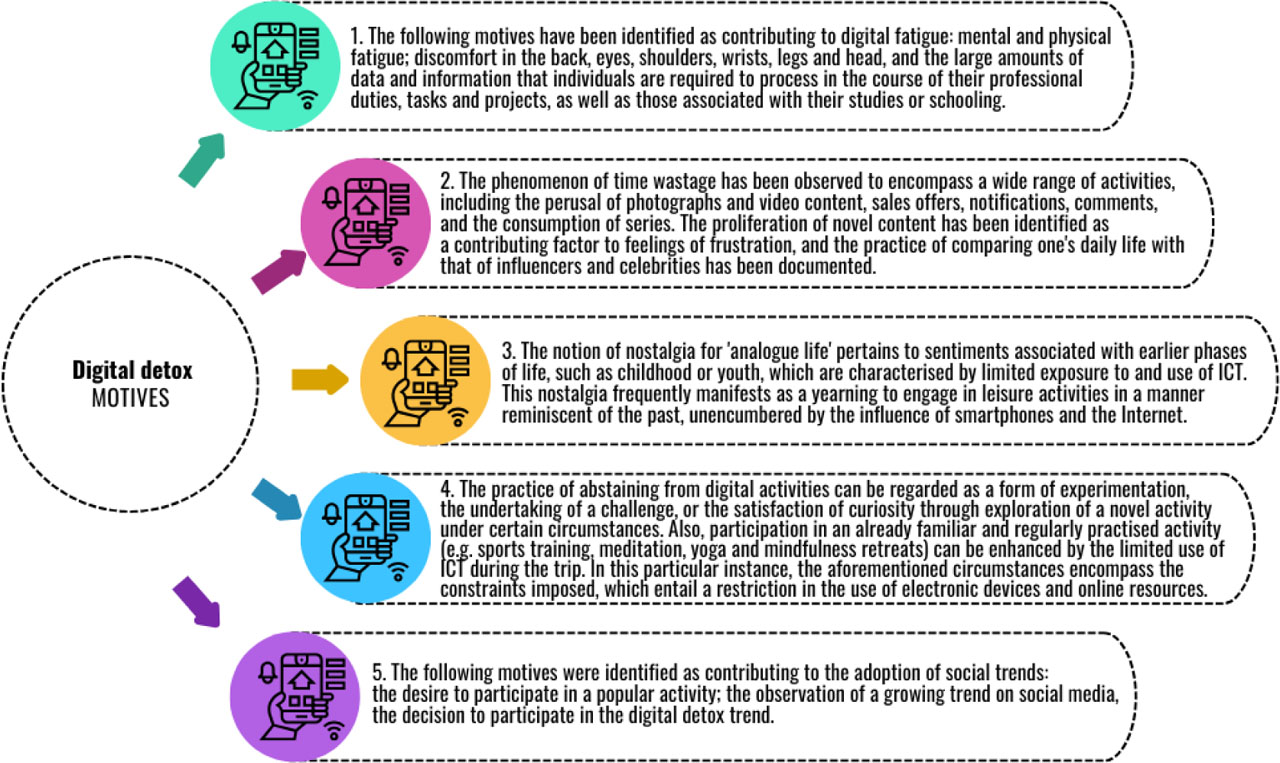
Figure 1.
Motives behind undertaking digital detox during a trip
Source: own elaboration
The predominant rationale for undertaking digital detox is the perception of mental and physical fatigue arising from excessive use of ICT. It was driven by concerns regarding the use of ICT for professional and academic pursuits and during leisure time. A salient feature of the two motives pertains to the expectation of a transformation in daily life after the trip. This change was expected to engender mental and physical well-being. It was also anticipated to facilitate the reorganisation of private and professional life through a change in time management in relation to the use of ICT. In these cases, the overarching aim of digital detox was to improve well-being. In the long term, enhanced overall health and health awareness was the goal. Examples of such motives were:
My eyes hurt a lot; I often have headaches and generally feel exhausted and tired
(Q1).
I am overstimulated and my eyes hurt after spending a long time on the phone. Also, when I was doing remote classes and sat at the computer for a long time, my back hurt
(Q2).
Short forms of content, such as those presented on TikTok or various other platforms, mean that I receive a lot of information quickly, which makes me feel overstimulated and I would like to reduce this a little
(Q3).
I feel overwhelmed by all the information. Also, I often compare my life with the lives of people on social media. This makes me feel overwhelmed and like I'm missing out on something. Then I don't appreciate what I have now
(Q4).
In addition to the aforementioned points, further motives for digital detox were identified (Figure 1). The third was characterised by a yearning for an ‘analogue life’ and nostalgia. The fourth motive alluded to the desire to experiment with novel approaches to leisure; participation in an already familiar and regularly practised activity (e.g. sports training, meditation, yoga, and mindfulness retreats and art workshops) can be enhanced by limiting the use of ICT during the trip. The final motive pertained to the necessity of adhering to emerging social and market trends. In these cases, digital detox was regarded rather as a means of leisure, an unconventional and new experience, and an adventure or a challenge. Some comments were as follows:
I just wanted it to be the same, as it used to be. To feel the same, to do the same
(Q5).
(…), if we didn't have mobile phone coverage, we couldn't call or use the phone. So, we spent that time in the yard, playing with friends. That's what I miss, that's what I long for. I've been missing that feeling. Going on a digital detox trip with friends is like a summer camp for adults. That's why I do it
(Q6).
No one was on their phone, so we could talk to each other more. It used to feel bad when we didn't have phones, but now it feels cool to be without them
(Q7).
It allows me to be more present in what I'm doing. Less technology, more in the moment
(Q8).
I need to unplug from technology so I can truly focus on other topics. It's to make sure I get the most out of the retreat I'm attending
(Q9).
I found out about it; I think I saw an ad on social media for these cabins you can go to for a digital detox. You can rent a cabin in the mountains and spend a few days there. I thought it was a cool idea and that I would try it. Kind of like an adventure
(Q10).
I love finding cool stuff on social media. This time, it was digital detox. I just wanted to do it because it seemed so fancy
(Q11).
Geographical locations and methods of digital detox practice
Following the establishment of the primary motives for digital detox engagement, the subsequent section addresses the spatial context and methods applied to digital detox practice. Within the realm of domestic tourism, the following destinations were identified: forest areas, mountain areas and lakesides, and the countryside. The specific regions listed by interviewees in the study encompassed Eastern Poland: Bieszczady Mountains, Warmia, Masuria, Podlasie, Roztocze, and the Łęczna-Włodawa Lake District, along with Lower Silesia in Western Poland, and Kuyavia and the Tuchola Forest in Central Poland. The direction of these trips was primarily towards lesser-known areas, situated outside the confines of well-known mass tourism destinations. These destinations were characterised by limited Internet coverage, often due to geographical constraints or inadequate ICT infrastructure, such as in forested or mountainous regions. Whilst motives pertaining to the enhancement of mental and physical well-being predominated, no specific reference was made to spas or spa destinations.
Furthermore, emphasis is also placed on the limited access to ICT during the journey to a destination. This phenomenon was not invariably a deliberate action. Instead, it was predominantly a circumstance arising from external factors, such as the absence of Internet access in the means of transportation. Conversely, the deliberate limitation of the use of ICT whilst hiking was indicated. Examples given included hiking along mountain trails and the St James Trail. In such cases, it was a conscious decision, aimed at enhancement of the tourist experience or the spiritual experience itself.
It was observed that the limitation of the use of ICT among the interviewees ranged from a few hours to several days (typically 3–7 days), as illustrated in Figure 2. The limited mobile network coverage was a factor in the decision-making process while choosing the destination and accommodation facility. During the trip, rental accommodation was utilised, as well as holiday homes, second homes or family homes in trips organised individually. As one interviewee (I21) stated, ‘the time that was regained after the limitation of the use of ICT was dedicated to various activities', as demonstrated in Figure 2. On the one hand, these could be seen as conventional leisure activities during a vacation or holiday. On the other, they were regarded as exceptional due to their occurrence during a period of ‘regained time’, namely a time when there was a decision to impose limitations on the use of ICT.
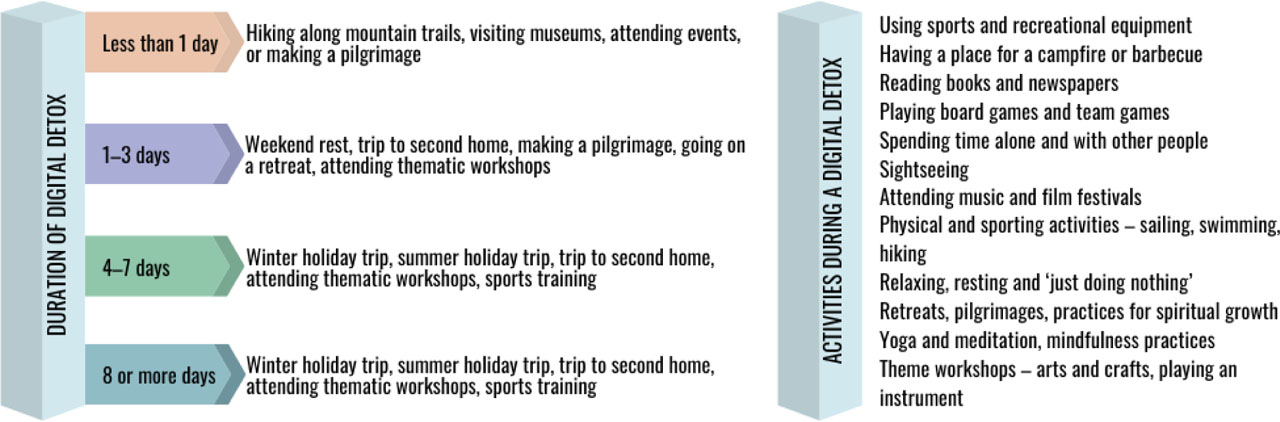
Figure 2.
Duration of the digital detox process, and the types of activities that are typically undertaken during this period
Source: own elaboration
The results obtained demonstrate that the aforementioned motives are applicable to both individual and group excursions. However, the study revealed two differences in the attitudes of interviewees travelling in groups compared to those travelling individually with regard to their engagement in digital detox practices. The initial discrepancy pertains to individuals who participated in organised retreats and trainings or workshops. These participants ascribed to the importance of the spiritual dimension of digital detox. This reflection was attributed to an involvement in meditation, yoga and mindfulness. The second discrepancy was as follows: individuals who participated in sports training or art workshops reported a heightened sense of immersion in these activities, attributable to the limited use of ICT during the trip.
This study revealed no substantial differences in responses based on trip duration. Both participants who underwent a digital detox on a weekend getaway and those who did so for a full week cited similar motives. These included, for example, physical and mental exhaustion, as well as the desire for an interesting adventure and a personal challenge in a new environment. However, the motive concerning following digital detox trends and fads was reported by participants of shorter, weekend trips, rather than by those engaged in longer excursions.
An analysis was also conducted to identify the factors that could be utilised to improve the tourist experience during the period of limited ICT use. The factors in question were divided into two categories: the role of the person and the role of the setting and environment (Figure 3). Furthermore, digital detox was incorporated into organised trips and stays, subsequently becoming a pivotal element of participation (Figure 2). During these retreats or workshops, the experience outcomes achieved as a result of digital detox was additionally enhanced by two primary mechanisms: personal control and the stipulated guidelines for participation.
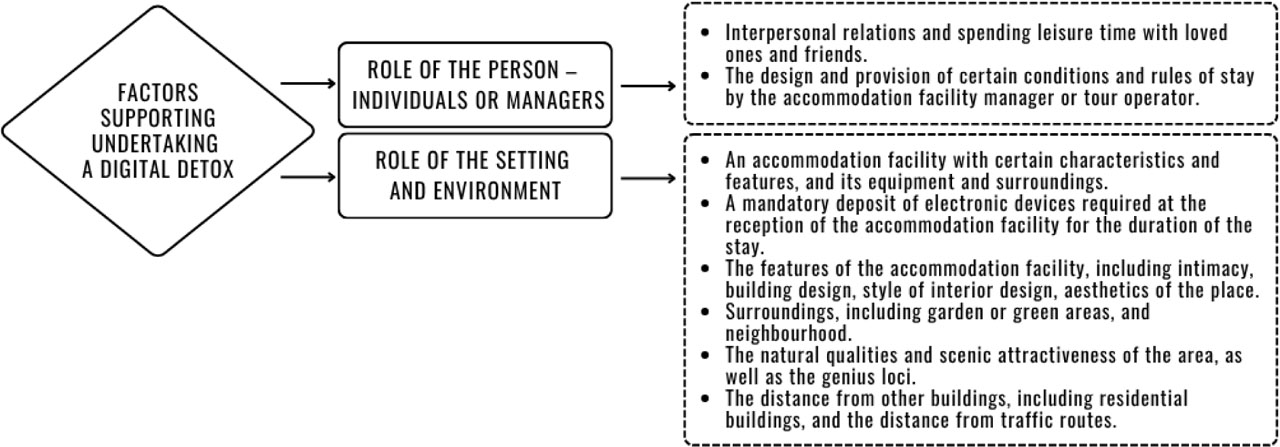
Figure 3.
Factors conducive to the limitation of the use of ICT during a trip
Source: own elaboration
Consequences of digital detox both during a trip and in the aftermath thereof
The impact of digital detox was analysed in two phases: during the trip itself and after participants returned. The majority of interviewees reported feelings of mental and physical relaxation (22 individuals) and indicated their intention to engage in a digital detox again (19 individuals). The limited use of ICT, whether intentional or accidental, was reported to have provided a sense of ‘taking a break from daily digital life’ (I17). It has been argued that such a trip can facilitate a shift in perspective, allowing individuals to consider their digital habits and behaviours in their professional and personal lives from a different vantage point. This, in turn, can lead to gaining self-insight and developing a deeper understanding of one's own thoughts, feelings, and behaviours. The consequence was a sense of ‘refreshment’, ‘renewal’, and ‘regeneration’ during the period in question. Some comments were as follows:
Physically, I felt no different than I did before, as I consider myself a pretty active person, so I don't notice a change, whether I'm using tech or not. Mentally, however, I definitely felt calmer and less anxious. I didn't feel that pressure, and I think not using technology is a great way to rest mentally
(Q12).
I felt so free! I didn't have to go anywhere, meet other people's expectations or reply to boring messages
(Q13).
It's been a significant learning experience. As I mentioned earlier, I've become more ‘intentional’. I've learned to appreciate what I have, and my relationships and mental health have greatly improved as a result
(Q14).
Yes. Since I started cutting back on tech, I've definitely become more aware of my screen time and I try to actively minimise it. So, I think it's made me more conscious of my ‘tech habits’ and how I spend my screen time
(Q15).
However, the limited access to ICT may have precipitated feelings of anxiety, nervousness, and stress; the reasons listed by interviewees were related to difficulties in contacting friends and relatives, coupled with impaired access to news outlets, social media platforms, or work emails. Such an outcome aligns with the phenomenon of FOMO (fear of missing out). The effect was further compounded by the perceived necessity to ‘limit the limitation’ of the use of ICT, as articulated by one interviewee (I1).
When I'm not using my phone or computer, I often feel worried. It also depends on why I don't have access – whether it's intentional or not. If I don't have access to the Internet, I often feel worried because I'm afraid that an emergency or sudden situation may arise and I won't be able to call my loved ones
(Q16).
Unfortunately, I also feel anxious and sometimes I think I experience FOMO
(Q17).
Although digital detox did not yield a permanent and substantial change in the daily use of ICT, it did foster a heightened awareness of interviewees' digital habits and behaviours. This was reflected in the adoption of various practices, including the uninstallation or deactivation of applications and the implementation of software designed to monitor the duration of computer or telephone use. Other notable examples included scheduling medical check-ups, such as eye exams, or starting physical therapy programmes.
I deleted unnecessary apps, so I cut back and kept only what I genuinely need for home or work
(Q18).
Well I usually go back… I mean, yeah, I go back to my old habits, but I'm always full of self-reflection, thinking I could definitely cut back on the time I spend
(Q19).
Unfortunately, I went back to my old habits because I think they're too deeply rooted, and a single trip for a few days can't fix that
(Q20).
I've learned to cut back on using my devices and I'm better at organising my free time. After a while, though, I did slip back into some of my old habits because using technology is just essential these days
(Q21).
Discussion and managerial implications
This study contributes to the growing body of research on the role of digital detox in shaping tourist experience and tourism development. By examining the interplay between technological advancements and the demands of contemporary tourists, this study also offers insights for managerial implications within domestic tourism. In relation to the motives of Polish tourists, the results obtained are consistent with those previously published, which pertain to issues such as escape, relaxation, personal development, health and well-being, relationships, and social ties (Egger et al. 2020; Hassan & Saleh 2024; Stäheli & Stoltenberg 2024). This also encompasses adverse reactions and the repercussions of constrained access to ICT and ‘constant connectivity’ (Pearce & Gretzel 2012; Paris et al. 2015; Tanti & Buhalis 2017), with respect to perceived anxiety, nervousness, and stress. The results contribute to the development of tourism theory from the perspective of health and well-being; they indicate that tourism can also have a therapeutic function in the present day, thereby fostering digital well-being and recovery from digital life (Stankov & Gretzel 2021).
Tourist behaviour is driven by a combination of individuals' needs and motives. In the case of digital detox, limiting the excessive use of ICT is a key factor for the tourist experience. The relationship between the limited use of ICT and domestic tourism and leisure time has been an emerging subject of analysis in the last decade (Modrzejewska & Walaszek-Latacz 2015; Mazur & Dominik 2019; Jalinik 2021; Pawłowska-Legwand & Matoga 2021; Sawczuk 2022; Dziadkiewicz et al. 2024; Kopecka-Piech et al. 2024; Pawłowska-Legwand et al. 2024). The current study demonstrates that both specific destinations and activities can facilitate the digital detox practice, thereby satisfying the need to disengage temporarily from the digital realm (Figure 2). Similarly, from the perspective of Polish tourists and consumers, Dziadkiewicz et al. (2024) identified three segments of well-being tourism that differ in terms of motives and behaviours. The first segment, entitled ‘Peace of Minds’ relates to the limitation of the use of ICT. It encompasses specific activities, such as yoga, mindfulness practices, digital detox, self-development, health and nutrition, and relaxation. Occasional regulations identified by Kopecka-Piech et al. (2024) pertain to the limitation of the use of ICT during particular activities, such as physical activity while travelling, communal meals, and social gatherings.
From a managerial perspective, the research results have the potential to inform the promotion of tourism and the marketing of destinations in the domestic tourism sector. The increasing recognition of the deleterious consequences of the use of ICT is already precipitating the emergence of novel types of tourism and tourism products. These innovations are specifically designed for individuals motivated to achieve detachment from the ubiquitous integration of ICT across personal and professional domains (Li et al. 2018; Ozdemir & Goktas 2021; Cai & McKenna 2023; Stäheli & Stoltenberg 2024). Tour operators are presented with the opportunity to develop new products and maintain competitiveness in the tourism market. The business goals can be accomplished by the creation of travel programmes that facilitate digital detox. From the standpoint of Destination Marketing Organisations and Destination Management Organisations, these entities have the capacity to utilise the research results in order to implement the more specialised and niche aspects of destination marketing to reach new target groups. It is imperative to possess a comprehensive understanding of the expectations of contemporary tourists who are seeking authentic experiences that facilitate the renewal of their sense of well-being.
The emerging trend of digital detox influences tourism needs and behaviours, as well as tourism planning and development. Within domestic tourism in Poland, the emergence of niche tourism products addressing the demand for limited ICT usage was observed prior to the COVID-19 pandemic. These offerings encompass categories such as agritourism farms, spa hotels, monasteries, and boutique travel agencies (Mazur & Dominik 2019; Pawłowska-Legwand & Matoga 2021). While instances of the digital detox phenomenon had seen infrequent application within destination marketing and management, this changed, however, during the COVID-19 pandemic (Sawczuk 2022; Buczak et al. 2023; Pawłowska-Legwand et al. 2024).
Presently, the integration of the digital detox phenomenon into the tourism development strategies of several Polish provinces has been observed (Gonera et al. 2020; Locativo, Stowarzyszenie… 2020; Nowicki et al. 2020; Feiga et al. 2022; Locativo 2022; Szpara et al. 2024). It is anticipated that the implementation of new strategies will yield concrete solutions in this area in the forthcoming years. This influence extends across various domestic tourism segments, including, but not limited to, ecotourism and slow tourism (Locativo, Stowarzyszenie… 2020), wellness tourism (Gonera et al. 2020; Feiga et al. 2022; Locativo 2022), and cycling tourism (Szpara et al. 2024). It aligns with the principles of agritourism holidays (Ziółkowski et al. 2020) and finds relevance in the domains of business tourism, as well as children and youth, and family tourism (Wiadomości Turystyczne 2021a, b). Within the specific context of children and youth tourism, professional leisure time animators possess the capacity to devise recreational plans that involve the deliberate limitation of ICT use (Modrzejewska & Walaszek-Latacz 2015).
Moreover, tourists increasingly opt for areas and regions beyond mass tourist destinations (Gonera et al. 2020; Nowicki et al. 2020; Feiga et al. 2022). This is why the use of tourism products that inherently align with the principles of digital detox and offline tourism – such as dedicated cycling routes – facilitates enhanced concentration, contemplation, and direct contact with nature and cultural heritage. This approach inherently enables individuals to disconnect from the overwhelming daily flow of information. Ultimately, within this framework, the tourism product provides a significant opportunity to fulfil a public health mission (Szpara et al. 2024). Similarly, other studies have explored the multifaceted functions of natural environments, particularly forest areas, including their role in tourism, health, and culture. The concept of ‘forest therapy’ can thus be considered a form of therapy and rehabilitation, drawing parallels with digital detox (Jalinik 2021).
Mitigating digital fatigue is supported by the availability of spa, yoga, and meditation centres (Gonera et al. 2020; Nowicki et al. 2020; Feiga et al. 2022). The notion of digital detox has the potential to evolve into a new trend within the spa tourism sector in Poland. The contemporary pace of life, in conjunction with the pervasive presence of ICT in both professional and leisure contexts, engenders an increasing demand for respite from technological devices and digital life. This trend is projected to intensify in the future, underscoring the necessity for individuals to disengage from the incessant demands of ICT. European spas and wellness centres are already offering digital detox programmes, with Baden-Baden and Vichy being notable examples of this development.
Conclusions
The results of studies (e.g. Dickinson et al. 2016; Egger et al. 2020; Cai & McKenna 2023; Hassan & Saleh 2024) and reports (e.g. Euromonitor International 2012; Ipsos 2023) have indicated an emerging trend in tourism over the last decade. It is characterised by the pursuit of destinations and offerings that facilitate the limitation of ICT and provide a digital detox experience. The current study identified five primary reasons for digital detox in domestic tourism, with feelings of mental and physical fatigue being the most prevalent. The ‘time regained’, attributed to the curtailment of the use of ICT, was allocated to a variety of pursuits. The importance and impact of these activities can be enhanced by various factors, underscoring the significance of both the individual's role and the environmental and setting. The effects of digital detox, both in terms of the trip itself and the post-return stage, included mental and physical rest. However, this tourist experience was not exclusively positive in the evaluations. It proved difficult or impossible to make a lasting change in the ways and habits of the use of ICT. From a managerial perspective, the research findings have the potential to inform the promotion of tourism and the marketing of destinations in the domestic tourism sector.
Acknowledgements
We would like to express our profound gratitude to the contractors who diligently conducted the individual interviews as part of the project.
Notes
[1] Financial disclosure Funding
The study was conducted as part of the research project titled ‘Digital fatigue and the tourist experience: attitudes of tourists and actions of tourism entrepreneurs in the context of digital detox use’, funded by the Strategic Program Excellence Initiative at the Jagiellonian University (ID UJ) at the Faculty of Geography and Geology, Jagiellonian University – Action 5. Creation of Research Groups.