
Introduction
Tourism is one of the most dynamic economic sectors at the national level with economic (Tang & Tan 2015; Cehan et al. 2019; Pintilii et al. 2016), social (Herman et al. 2021, 2023), environmental and sustainable development implications (Lee & Jan 2019; Grecu et al. 2019; Wendt & Bógdał-Brzezińska 2024). In this context, tourist resorts are the structural and functional cells of tourism at the spatial level, where most tourist activities are concentrated. Tourist resorts are geographical spaces of maximum convergence and tourist development. As a rule, they spatially overlap a locality or ‘part of a locality or the area formed by neighbouring localities or parts of neighbouring localities that has tourist resources’ (Decision no. 852 of August 13, 2008). They aim to protect, preserve and capitalize on tourist resources; direct and capture tourist flows (financial, human, material and informational); and retain potential tourists in the destination area for a variable period according to their needs and aspirations.
In Romania, a tourist resort means ‘locality, part of a locality or the area formed by neighbouring localities or parts of neighbouring localities which has tourist resources' (Decision no. 852 of August 13, 2008). These resorts meet criteria such as offering accommodation, catering, physical and mental recovery, recreation, entertainment and wellness treatments by capitalizing on specific natural resources, including mineral waters and therapeutic muds (spa resort); mountain or marine climate (climatic season); thermal mineral waters (thermal resort) and snow (winter sports resort). The importance of certifying a locality as a tourist resort provides benefits for the local community and for the tourism industry, including better promotion of local tourism, stimulation and diversification of the local economy, infrastructure development and implementation of quality standards.
A review of the specialized literature regarding tourist resorts highlighted several aspects, including economic development (Chu et al. 2024), health tourism (Mihăilă et al. 2024), promotion of tourist resorts (Cioclu & Călin 2021), tourism seasonality (Stupariu & Morar 2018), tourist motivation (Gherghina 2022), resort evolution (Zhu & Yan 2024; Rogerson & Rogerson 2024), and resort management. However, relatively little is known about the distribution, trend and perspectives of evolution in time and space of tourist resorts in Romania.
The spatial-temporal analysis of tourist resorts in Romania is a key indicator that provides information regarding the temporal and spatial evolution of Romanian tourism. To date, there has been no spatiotemporal analysis of tourist resorts in Romania, which could provide us with a deeper understanding of the Romanian tourism situation. This ability to provide tourist-related information is derived from the concept of a tourist resort and how these localities or parts of them are certified as tourist resorts of local and national interest, according to the Romanian legislation. In this context, the purpose of this study is to obtain a concise indication of the spatiotemporal trends in the tourism uses of the Romanian territory, encompassing the constant growth of its role and importance at the national and international levels. The research hypothesis concerned Romania being under tourism development, while recognizing that there are major discontinuities in terms of tourist use of the space. Therefore, the working hypotheses were as follows: H1. Tourist resorts in Romania are unevenly distributed in time and space, with a greater concentration in certain development regions and counties. H2. There is a tendency for tourism to be concentrated in complex tourism regions, where one or more types of tourism predominate. H3. The evolution of tourist resorts has been characterized by distinct time intervals. H4. Government decisions have played a crucial role in the documentation and classification of tourist resorts, which has influenced their development. The key research questions are: What is the trend regarding the use of space by tourism in Romania? Are there differences in tourism development at a spatial level?
Methods
The current study's working methods rely on ranking, classification, weighting and density of the core of reference units, depending on the criteria considered. In the case of the eight analysed development regions, the ranking method was used, given their small number. Meanwhile, the classification method was used to establish the value classes for the 41 counties analyzed. To obtain a synthetic and concise picture of the tourist resorts in Romania at the level of development regions and counties, the weighted analyzed values were also used. The kernel density method was used to estimate and represent the density of tourist resorts. This has also been used in other studies to highlight the spatiotemporal distribution of resorts (Zhu & Yan in 2024) and was adapted by the authors of the current study accordingly. The same method was used to highlight the relationships between historical monuments and tourism (Herman et al. 2024), population and ethnocultural heritage (Herman et al. 2025) and economy and football (Herman et al. 2016). However, the novelty of the method used is the research theme, that is, the analysis of tourist resorts, the indicators taken into study, namely, the number of resorts, year of certification and typology of resorts and the approach to each stage of the research.
In this study, on tourist resorts in Romania, we aimed to examine the spatial and temporal evolution and dynamics of eight development regions, 42 counties and 216 tourist resorts for 1994–2024. The vector maps of state borders, development regions and counties were obtained from the National Agency for Cadastre and Real Estate Advertising. The number of tourist resorts and the year of their certification were taken from the legislative acts based on which of the analysed tourist resorts were certified as tourist resorts.
Achieving the research objective required identification of tourist resorts in Romania (the list of national and local tourist resorts obtained from the website of the Ministry of Tourism was used); identification of geographic coordinates (latitude and longitude coordinates, for each tourist resort was obtained by Map Location software); identifying and studying the legislative documents based on which the localities or parts of them were declared as tourist resorts; creation of a database with information about tourist resorts (number of resorts, names of resorts, geographic coordinates, type and year of certification of tourist resorts) at the level of development region, county and locality; and spatiotemporal analysis of tourist resorts.
In conducting the spatial analysis of tourist resorts at the level of development regions, the reference units were ranked, using the categories tool and the unique values option in ArcGIS 10.8, according to the number of owned resorts. To analyze the tourist resorts at the county level, we manually classified the reference units into five value classes. Rendering the weights, both for the level of development regions and at the level of counties, was performed using the charts tool and the pie option in ArcGIS 10.8. To conduct the spatial analysis at the locality (point) level, the spatial analyst tool was used along with the kernel density option in ArcGIS 10.8 (Suparta et al., 2021). Temporal analysis was performed using Excel software (Microsoft Office 365).
Spatial analysis of tourist resorts in Romania
In Romania, 216 localities or parts thereof have been approved as tourist resorts, of which 55 (25.5%) are resorts of national interest. The remaining 161 (74.5%) are resorts of local interest. Their attestation was based on 35 government decisions for the approval of the attestation of some localities or parts of localities as national and local interest tourist resorts, and for the amendment and completion of government decision no. 852 / 2008 for the approval of the rules and criteria for the attestation of tourist resorts between 1995 and 2024.
The analysis of the distribution of the number of tourist resorts at the level of development regions is as follows: north-west (55 resorts, 25.5%), followed by the central regions (42 resorts, 19.4%), north-east (39 resorts, 19.1%), west (29 resorts, 13.4%), south-west (18 resorts, 8.3%), south-east (16 resorts, 7.4%), south (16 resorts, 7.4%) and Ilfov–Bucharest (one resort, 0.5%) (Figure 1).
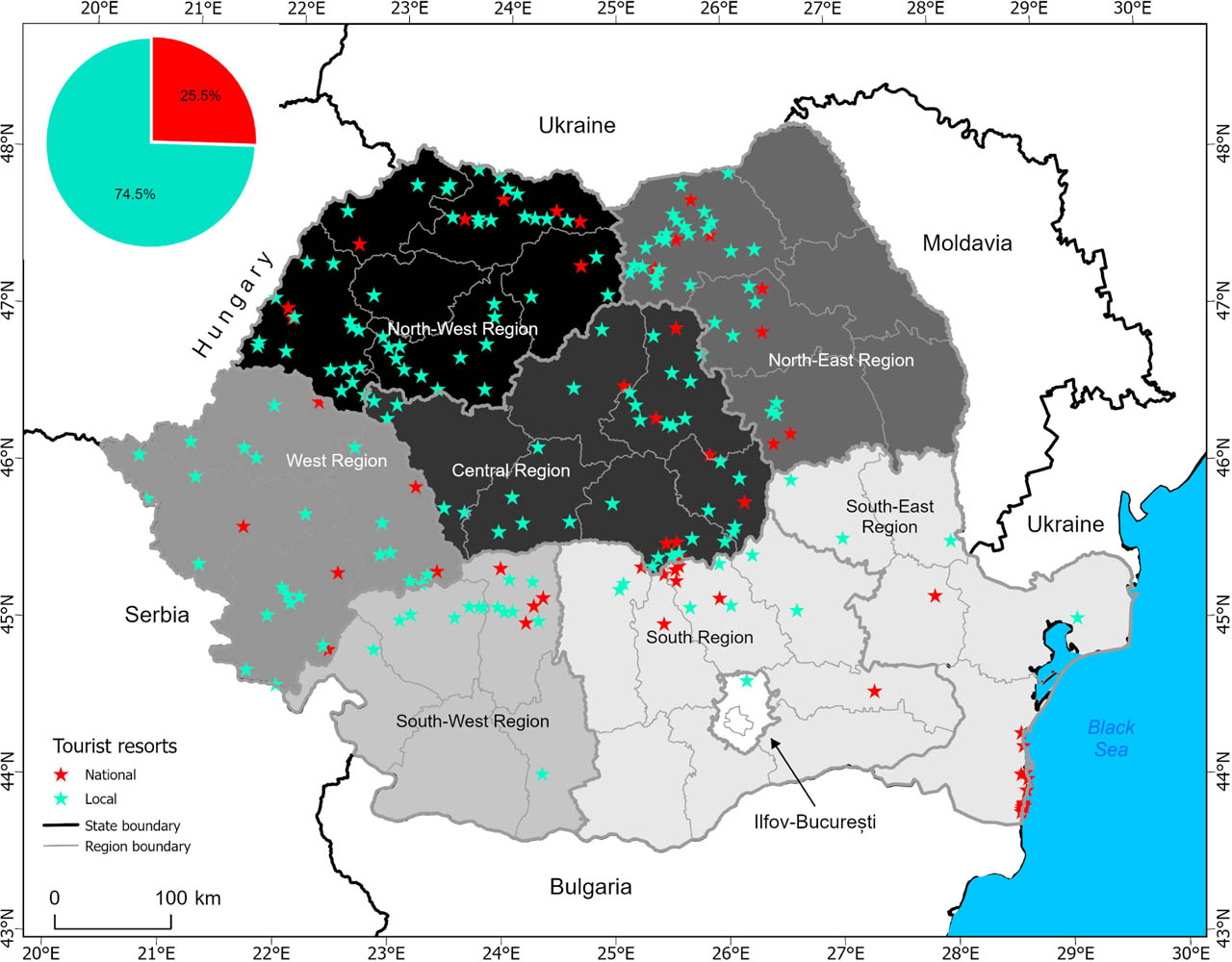
Figure 1.
Tourist resort distribution in Romania, at the level of the development region
Source: own elaboration
Regarding the tourist resorts by type, that is, national or local, at the level of development regions, some changes occur. Therefore, most resorts of national interest are located in the development regions: south-east (13 resorts, 23.6%); north-east (eight resorts, 14.5%) and south (eight resorts, 14.5%). Meanwhile, most resorts of local interest are located in the development regions north-west (47 resorts, 29.3%), centre (35 resorts, 21.7%) and north-east (31 resorts, 19.3%) (Figure 1).
The analysis of the spatial distribution at the development region level provides us with a general picture of Romanian tourism at the regional scale. To capture some tourist-related information at the county level, an analysis of the distribution of tourist resorts at this level was conducted. Most resorts were identified in the counties of Suceava (26 resorts), Bihor (18 resorts) and Maramureș (16 resorts), while there are no tourist resorts in eight counties. The analysis of the spatial distribution of tourist resorts by national and/or local type at the county level highlighted the existence of deviations from this rule (Figure 2).
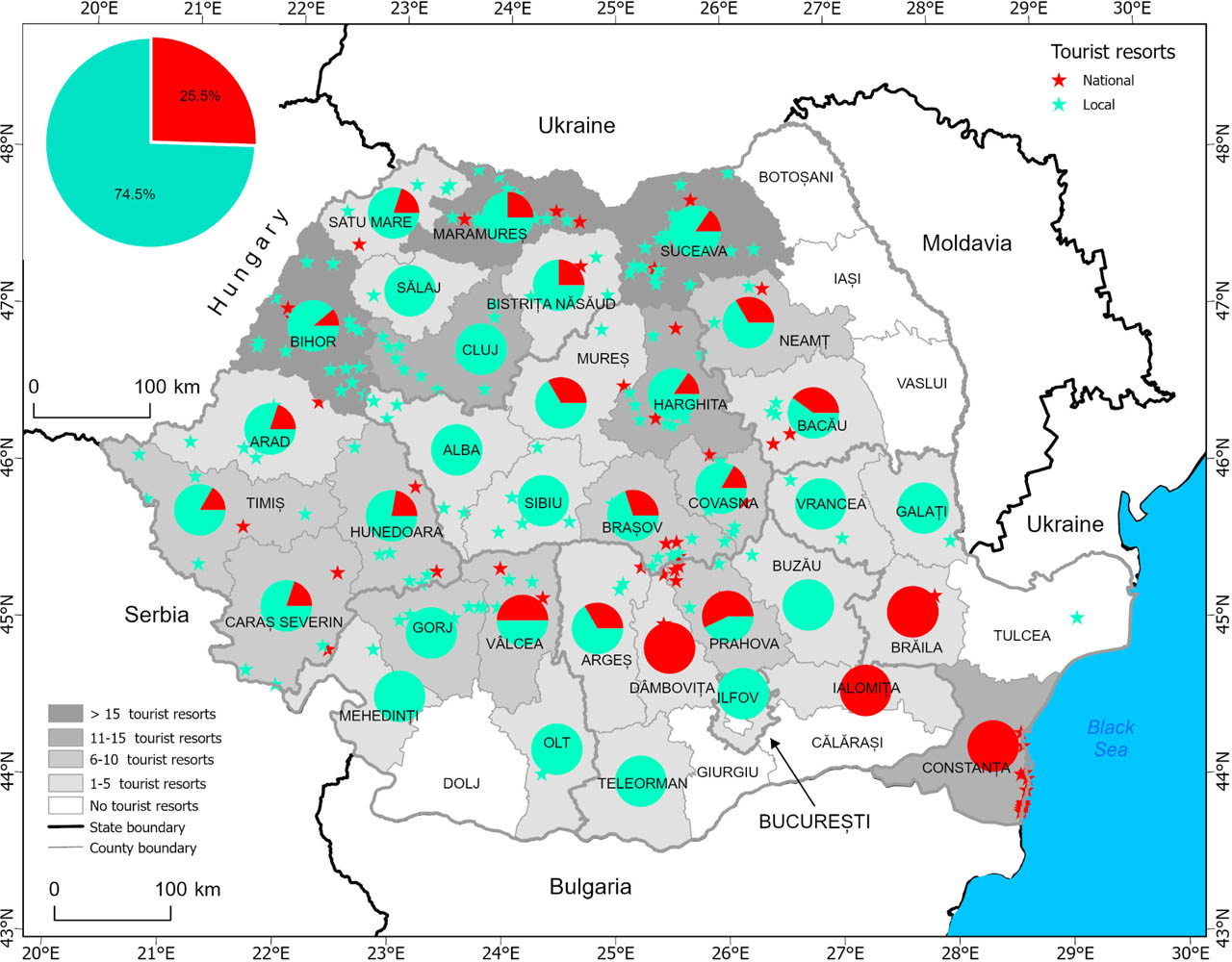
Figure 2.
Tourist resort distribution in Romania at the county level
Source: own elaboration
County classification according to the number of resorts showed five typological categories of counties, namely, without tourist resorts (eight counties, 19%), with an extremely small number of resorts between one and five (45.2%), with a small number of resorts between one and five (21.4%), with between one and five resorts (7.1%) and with a large number of resorts between one and five (7.1%) (Figure 3).
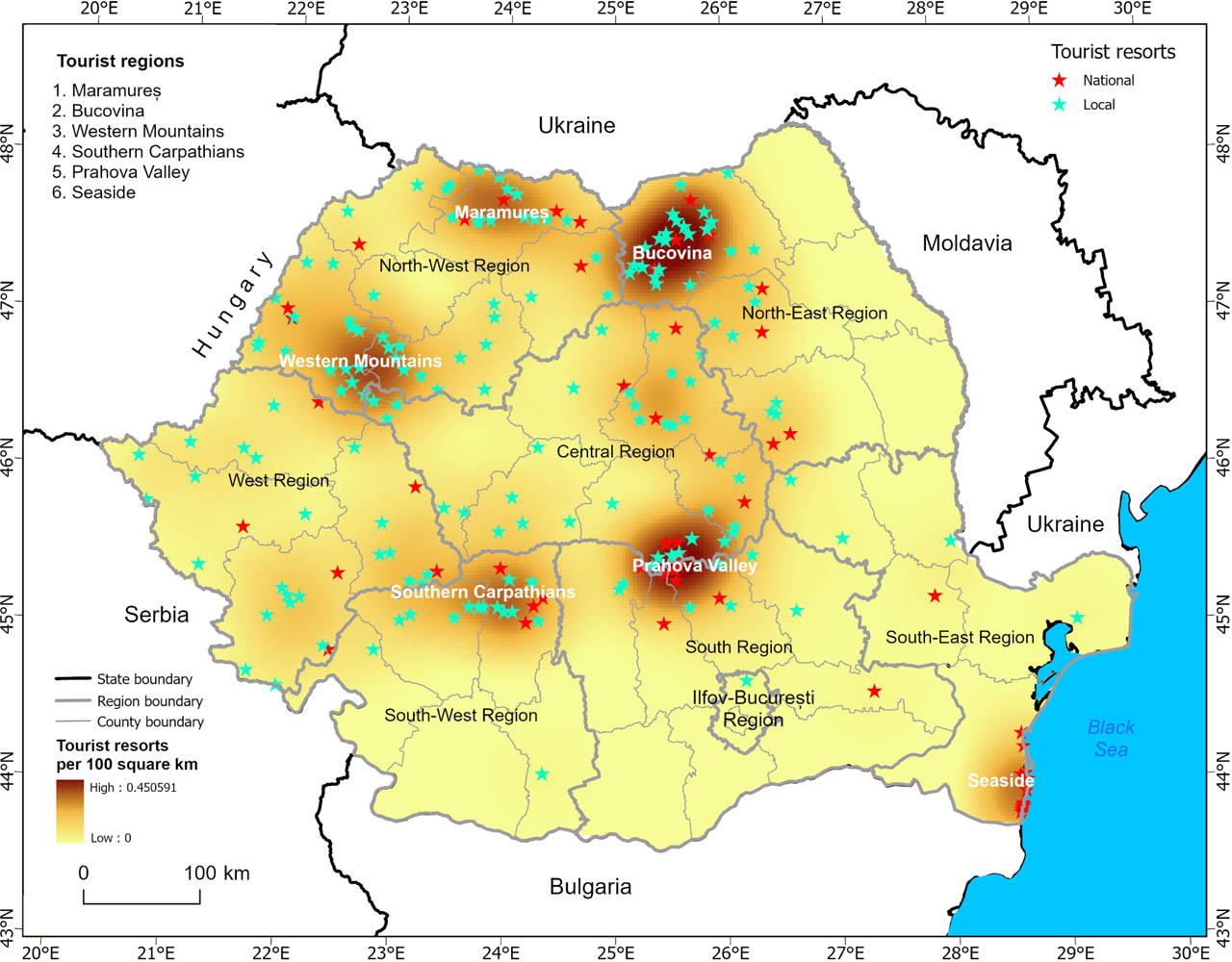
Figure 3.
Tourist resort density
Source: own elaboration
The analysis of the tourist resorts density highlighted six agglomerations overlapping tourist regions, namely, Maramureș, Bucovina, Western Mountains, Southern Carpathians, Prahova Valley and the Black Sea coast. These regions represent the heart of Romania's cultural and natural heritage. They offer a blend of breathtaking landscapes and highlight Romania's unique identity, making them essential destinations for any traveller seeking both adventure and culture. Each of these regions incorporates a certain number of resorts, both of national and local interest. An exception is the coastal region, which has 12 national interest resorts, where the 3S (sand, sea, sun) elements are highly capitalized.
The previously mentioned tourist regions are defined by complexity and diversity in terms of alternatives and possibilities to spend free time in the most pleasant way. For example, the tourist region Prahova Valley specializes in leisure tourism and winter sports tourism, mainly skiing, where the most important resorts of this type are located (Herman et al., 2021). Prahova Valley is a home for winter sports and leisure tourism with attractions such as a panoply of ski resorts in Sinaia, Predeal, Bușteni, the kingly Peleș Castle and mountain trails with amenities for winter sports, luxury hotels, ski equipment rentals and wellness centres (Voiculescu et al. 2012). The coastal tourist region is known for 3S leisure, which includes Navodari, Mamaia, Techirghiol, Costinesti, Neptun, Jupiter, Cap Aurora, Venus, Saturn, Mangalia, Eforie Sud and Eforie Nord, and spa tourism in the Eforie Nord and Mangalia resorts. The seaside area reaches the beach and leisure tourism lovers with natural and historical attractions such as sandy beaches, resorts lining the Black Sea coast such as Mamaia and Constanța, and historical sites including the ancient Roman of Capidava and the Greek Histria Fortress with amenities related to beachfront hotels, water sports facilities and vibrant nightlife (Dumitrescu et al. 2021). A special region due to its cultural and religious specificity is Bucovina, where there are the famous monasteries of Voroneţ, Humor, Moldoviţa, Suceviţa, Arbore, Pătrăuţi, Suceava and Probota, included in the UNESCO World Heritage area. Bucovina emphasizes its role in sustainable development through rural and religious tourism with such attractions as painted monasteries, which are UNESCO World Heritage Sites, fir-tree forests, mountain lakes and local traditions such as egg painting (Simeanu et al. 2025) and amenities such as guided tours, local artisan workshops and a varied range of accommodation infrastructure. Rural and cultural tourism related to the ancestral traditions that define and give identity to the Maramureș Country is specific to the Maramureș region. Maramureș features mostly cultural and rural tourism with attractions such as wooden churches (UNESCO World Heritage Sites), Merry Cemetery in Săpânța, Mocănița steam train, traditional villages, local crafts including wood carving and pottery and amenities such as traditional and modern guesthouses with specific cuisine and spa facilities for the salty baths of Ocna-Șugatag (Mateoc-Sîrb et al. 2022). The western mountains region is representative of ecotourism and rural tourism, such as the Pădurea Craiului ecotourism destination, spa tourism, including the Băile Felix-Băile 1 Mai spa destination, mountain tourism encompassing the western Carpathian Mountains and cultural tourism in the Western Plain. The western Carpathian Mountains are a key destination for adventure and ecotourism with attractions including hiking trails, caves, waterfalls and wildlife observation with amenities such as mountain lodges, camping sites, guided hiking tours and eco-friendly accommodation (Ilieş et al. 2017; Gozner et al. 2017; Toma & Lincă 2013). The southern Carpathians is an area with great resonance in terms of the past, continuity and identity of the Romanian people. In this area are located the Dacian fortresses of Sarmisegetuza, Costești-Blidaru, Costești-Cetățuie, Piatra Roșie, Bănita, Căpâlna, included in the UNESCO heritage. The southern Carpathians are a focus for adventure and nature tourism, encompassing the highest mountain peaks of Romania such as Moldoveanu (2544 m), Negoiu (2535 m) and Omu (2514 m), glacial lakes and trekking routes with cabins and amenities related to climbing gear rentals, ecotourism facilities and mountain guides services in national parks such as Retezat and Piatra Craiului (Gratton et al. 2015). From the total of 216 tourist resorts certified according to the legislation in force, 37 localities were declared balneoclimatic resorts (82.2%), five localities were climatic resorts (11.1%) and three localities were balneotherapeutic spas (6.7%) (Table 1).
Table 1.
List of government decisions regarding the granting of the spa, balneoclimatic and climacteric resort status, for some localities and areas that have natural healing factors
| Ref.no. | Legislative acts | Resort type | Total | ||
|---|---|---|---|---|---|
| Balneo climatic | Balneotherapeutic spa | Climatic | |||
| 1 | HG nr. 226 / 5 Mai 1992 | 0 | 0 | 1 | 1 |
| 2 | HG nr. 962 / 29 December 1994 | 0 | 0 | 1 | 1 |
| 3 | HG nr. 901 / 2 October 1996 | 0 | 0 | 1 | 1 |
| 4 | HG nr. 1016 / 12 October 2011 | 27 | 4 | 0 | 31 |
| 5 | HG nr.1318 / 28 October 2022 | 4 | 0 | 0 | 4 |
| 6 | HG nr. 898 / 13 July 2022 | 0 | 1 | 0 | 1 |
| 7 | HG nr. 926 / 8 December 2016 | 6 | 0 | 0 | 6 |
| Total | 37 | 5 | 3 | 45 | |
Balneoclimatic resorts are specialized tourist destinations that offer natural alternatives in treating and strengthening the human body based on mineral and thermal waters, therapeutic muds and the specific climate of the area (Wendt 2016). Most balneoclimatic resorts are located in the south-east development region (10 resorts, 27.0%), followed by the north-west regions (seven resorts, 18.9%), centre (six resorts, 16.2%), north-east (four resorts, 10.8%), west (four resorts, 10.8%), south-east (three resorts, 8.1%), south (three resorts, 8.1%) while in the Ilfov–Bucharest Development region there is no spa resort (Figure 4). Regarding the balneoclimatic resorts' distribution at the county level, the following stood out: Constanța (nine resorts), Bihor (three resorts), Bacău (three resorts), Vâlcea, Timiș, Sibiu and Harghita, each with two resorts. In 14 counties, they approved one resort each, while in 21 counties, no resort of this type was certified (Figure 5).
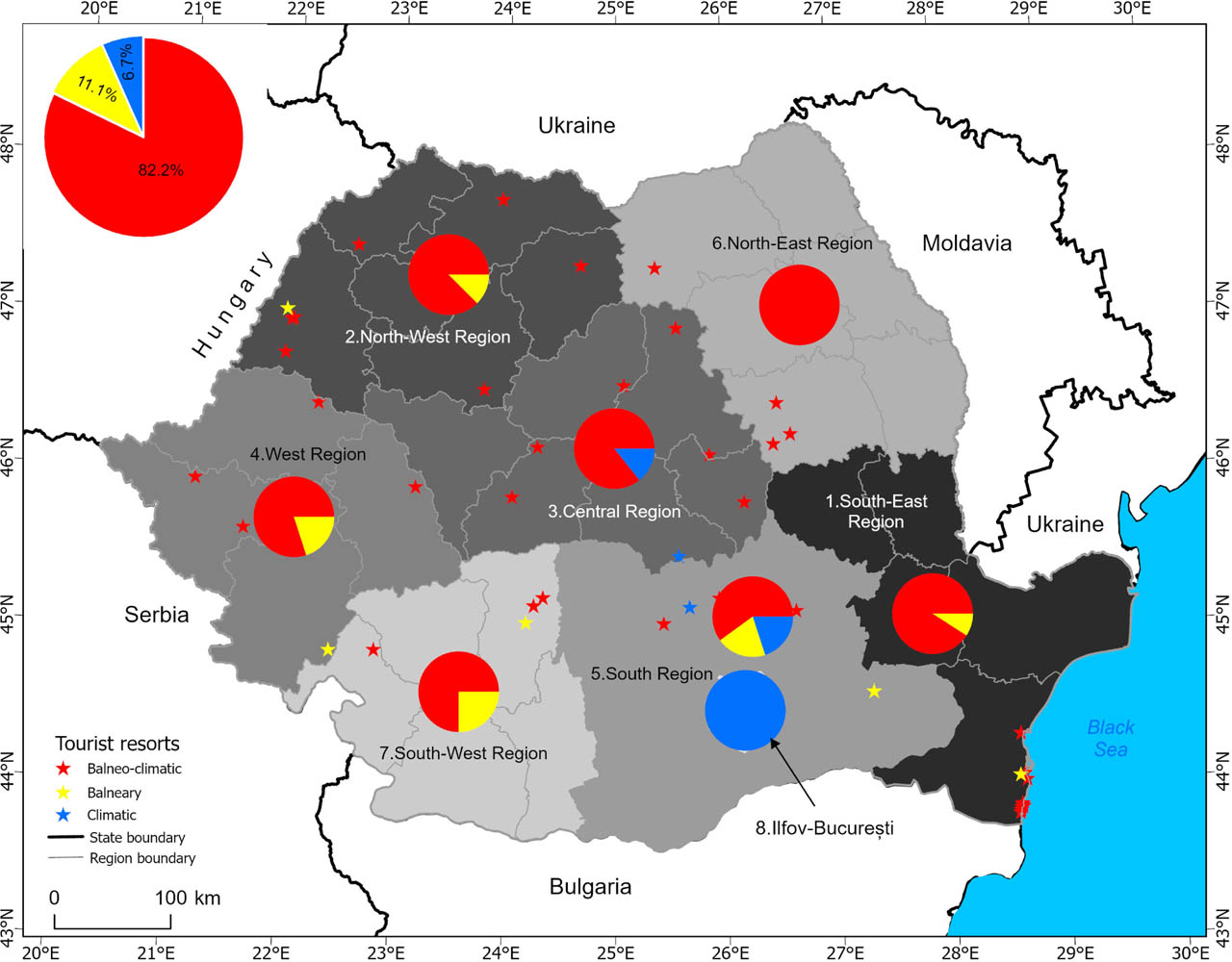
Figure 4.
Distribution of balneoclimatic, spas and climatic resorts of Romania, at the level of development region
Source: own elaboration
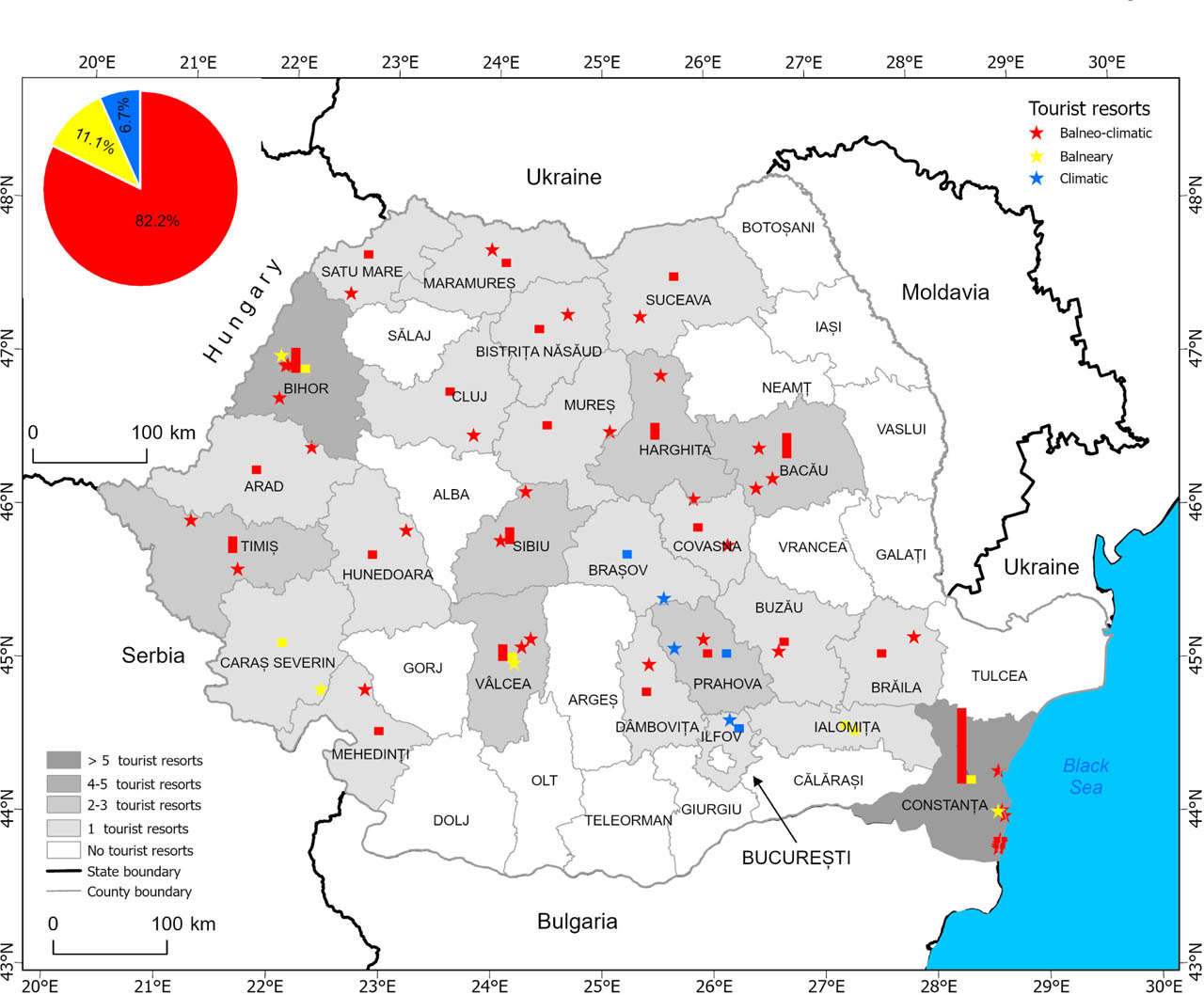
Figure 5.
Distribution of balneoclimate, spas and climatic resorts of Romania, at the county level
Source: own elaboration
The spa resorts of Techirghiol, Amara, Baile Herculane, Baile Govora (certified in 2011) and Oradea (certified in 2022) are localities that have ‘resources of mineral substances, scientifically proven and traditionally recognized as therapeutically effective, specific cure amenities and is properly planned to provide spa medical assistance conditions' (Ordinance no. 109 of August 31, 2000).
The climatic resorts of Snagov, Breaza and Predeal, certified in 2002, are localities ‘in areas with beneficial climatic factors and which have conditions for ensuring the maintenance and improvement of health and/or work capacity, as well as rest and comfort’ (Ordinance no. 109 of August 31, 2000).
In addition to the classifications imposed by the Romanian legislation, tourist resorts can also be classified in numerous categories based on some criteria. Among these, we mention tourist function (leisure/entertainment, conferences/business); geographical setting (coastal, plain, plateau/hill and mountain); size (extremely large, large, medium, small and extremely small); according to the duration of the tourist activity, that is, seasonal or permanent (Simoni 2017). Tourist resorts have several functions, of which one or two may be dominant. The Băile Felix Resort has as its main function the spa, while the business and entertainment functions are secondary.
Temporal analysis of tourist resorts in Romania
The history of the localities with a tourist vocation where leisure, physical, mental and medical recovery activities were developed dates back to antiquity. Archaeological evidence from Băile Herculane (Aqua Herculis) and Geoagiu Băi (Germisara) stand as living proof (Băile Herculane tourist resort 2024; National Centre for Tourist Information and Promotion 2024).
According to the current legislation regarding the certification of tourist resorts in Romania, the first certified resort was Poiana Brașov, by government decision number 113 of February 27, 1995. Meanwhile, the last 15 tourist resorts, of which one is national and 14 are local, were certified by government decision number 120 of February 22, 2024. Therefore, currently, in the territory of Romania, several of the 216 localities or parts of them have been certified as tourist resorts.
Analyzing the evolution of the tourist resort numbers during 1995–2024 highlighted three timeframes, that is, 1995–2001, 2001–2016 and 2016–2024. The first two periods are characterized by a relatively constant evolution, while the last time interval was defined by an upward trend in which the number of resorts increased from 84 resorts to 216 (Figure 6).
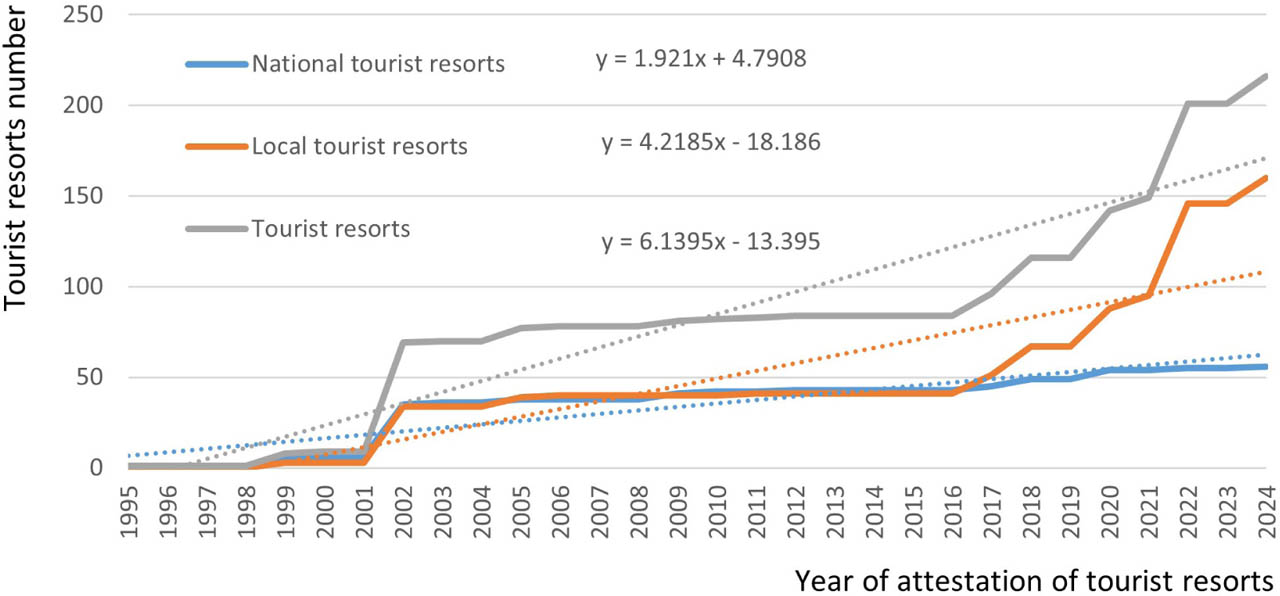
Figure 6.
Temporal evolution of tourist resorts
Source: own elaboration
The analysis of the evolution of the tourist resort numbers by type followed a relatively similar, but slightly different pattern from the evolution of national tourist resorts. In the last time interval of 2016–2024, this did not experience a strong numerical evolution, which is similar to the local resorts that increased from 41 resorts in 2016 to 160 resorts in 2024. Practically, the evolution of the number of tourist resorts in 2016–2024 was due in weight of 90.1% to the increase in the number of local tourist resorts (Figure 6).
Discussion
The present study has highlighted the tourist resorts' spatiotemporal distribution in Romania, including the tourist evolution, situation and trend at a spatial level. The tourist resort distribution in Romania shows similarities through their concentration in historically and naturally attractive regions such as Maramureș, Bucovina, the Prahova Valley, and the Black Sea coast. Here, national and local resorts coexist and support multifunctional tourism-including leisure, spa, cultural and adventure activities-reflecting a nationwide tendency toward clustered development in areas with strong natural, cultural and infrastructural appeal. Nonetheless, despite general clustering, there are significant differences in the distribution of Romania's tourist resorts, with regional imbalances in resort density, a higher concentration of national resorts in less populous areas such as the south-east, versus a dominance of local resorts in the north-west and centre. This is alongside functional specialization, such as winter sports in Prahova Valley, cultural tourism in Bucovina and Maramureș, coastal leisure on the Black Sea, and balneary tourism in spa-rich counties. This has highlighted uneven development strategies, typological diversity and contrasting regional tourism roles.
To date, studies on the spatial evolution of tourist resorts have focused on spatiotemporal analysis and the factors influencing tourist resorts (Zhu & Yan 2024; Ma et al. 2020; Ding et al. 2020); the relationship between regions of origin and tourist resorts (Papatheodorou 2004); and the economy of resorts (Grecu et al. 2019). Zhu & Yan (2024) used the methods of nearest neighbour index, kernel density analysis and geographic concentration index to analyze the spatial and temporal distribution of tourist resorts in China. Meanwhile, Ma et al. (2020) combined participatory rural appraisal (PRA), GIS spatial analysis and Google Earth remote sensing images to analyze the spatial evolution and influencing factors of tourist destinations. Ding et al. (2020) analyzed the spatial distribution of 30 tourist resorts in China using the nearest neighbour index (NNI), Gini coefficient and kernel density estimation (KDE). They used a spatial regression model to identify factors influencing the spatial distribution. Papatheodorou (2004) proposed a new theoretical model that graphically illustrates the interaction between market and spatial forces and studies the implications for resort development. Grecu et al. (2019) examined the specifics of the sustainable structural dynamics of the local economy in the tourist resorts in Romania and mapped the tourist resort distribution in Romania, which only aimed to highlight the study area. Constantin and Reveiu (2018) used territorial and spatial statistics and GIS to identify the agglomerations of catering and accommodation companies in Romania and assess their performance and contribution to the economic development of the corresponding regions. Drăguleasa et al. (2025) also use the spatiotemporal technique to map glamping locations in south-west Oltenia, Romania. Unlike these studies, the present research focused on three levels of analysis, namely, analysis at the resort, county and development region level. The defining indicators were the number of resorts, their type and the year of certification. The results obtained can be used by decision-makers as a supportive tool in managing tourism at a spatial level. Also, the findings can provide informational support for other approaches regarding the analysis of tourist resorts. This depends on criteria including the number and capacity of accommodation structures, the number and capacity of public catering structures, the number and capacity of health and treatment facilities, access to transport infrastructure and proximity to tourist information centres.
Conclusions
As a tourist destination, Romania includes 216 tourist resorts, of which 74.5% are local interest and 25.5% are national interest resorts. Their attestation was based on 36 government decisions approving some localities or parts of localities as tourist resorts of national and local interest. In addition to the tourist resort status, some of them also received the status of balneoclimatic resort (37 resorts), spa (five resorts) and climate resort (three resorts), having as legislative support seven government decisions regarding granting of the status of balneoclimate resort and climacteric for some localities and areas that have natural healing factors.
Following their spatial analysis at the level of development region, county and locality, our findings confirm the research hypothesis, highlighting the discontinuous tourist evolution trend of the geographical space related to Romania as a tourist destination. The tourist resorts are unevenly temporally and spatially distributed, and most are located in the north-west and central development regions, respectively, in the Suceava, Bihor, Maramureș and Harghita counties. Analyzing the tourist resorts at the locality level showed trends of tourism concentration in six complex tourist regions, that is, Maramureș, Bucovina, Western Mountains, Southern Carpathians, Prahova Valley and Seaside, where one or more types of tourism dominate. Regarding the temporal evolution, provided by the tourist resorts' certification year according to the government decisions adopted in this regard, there were three time intervals (1995–2001; 2001–2016; 2016–2024), of which the first two had similar trends. Meanwhile, the last interval was characterized by a major increase in the number of tourist resorts from 84 to 216 tourist resorts.
The strengths of the method currently used render an image in time and space regarding the situation of tourist resorts in Romania, by type and at the level of development region, county and locality. The limitations of the research are derived from the morpho-structural and functional complexity of tourism. Therefore, in the future, new approaches are required regarding the analysis of tourist resorts in time and space. Approaches based on multicriteria analyses can better capture some details that were not highlighted by the current method. With these limitations, the research generates an artificial image regarding the temporal and spatial distributions of tourism in Romania, knowing that tourist resorts are the primary service providers. Understanding the temporal and spatial evolution of tourist resorts can inform further research and support local and central public authorities in planning strategies and tourism development in Romania.