
Introduction
The assessment of transport safety is a key consideration when selecting a mode of travel. Accidents are a core component of this evaluation, with human error frequently identified as the primary cause (WHO 2023; Stewart 2023). Transport safety remains a widely debated issue, both in Poland and globally (Wachnicka 2013). While trams may not be considered a principal driver of economic growth, they offer compelling ecological, economic, and social benefits that justify continued investment (Brown, Nixon & Ramos 2015; Hinners & Larice 2016; Hinners, Nelson & Buchert 2018). Sustainable transportation aims to control emissions from exhausts and, in the long term, to transition from fossil-fuel-based transport systems to those powered by renewable energy. This also entails reducing car traffic in urban centres and enhancing the competitiveness of public transportation (Kujda & Pawlak 2020). In growing urban areas such as Wrocław, trams have become an increasingly vital element of public transport, complementing bus services. With the increase in population, the tram network has expanded through the construction of new track sections. Minimizing unplanned stoppages is essential for ensuring efficient and reliable public transport operations. Stoppages may result from vehicle malfunctions, infrastructure failures, power outages, or external events such as traffic collisions or fallen trees. A disadvantage of tram travel is that an unplanned stop by one tram can block the passage of others, causing standstills and disrupting smooth travel (Durzyński & Orczyk 2019; Durzyński & Orczyk 2020). Unplanned tram stoppages occur almost daily and contribute to disruptions in the flow of tram traffic in the city. Factors affecting the smooth operation of public transport mainly include traffic intensity and the capacity of certain track sections (Bryniarska & Jastrząb 2016). Maintaining the tram network in good condition, through regular inspections and measurements, is also in line with the concept of sustainable transport, which ensures ecological and economic stability in the long term (Szymalski 2021; Szymalski, Kassenberg & Stainforth 2021). Interestingly, research shows that people tend to overestimate the cost of public transport and underestimate the cost of cars. Taking these perceptions into account can help improve sustainable urban mobility policies (Meira et al. 2020; Dubé, Legros & Devaux 2018; Anonymous 2024). These issues have been actively discussed and widely commented upon in Wrocław due to the high number of derailments and unplanned stoppages, which have significantly impacted travel comfort for the city’s residents. At the end of 2019, the Wrocław Municipal Transport Company (MPK Wrocław) took over the management of the tram track infrastructure from the Board of Road and City Maintenance (ZDiUM). From that point on, measures were taken to establish a comprehensive database of Wrocław’s tram tracks and develop methods for assessing track conditions, aiming to minimize the causes of unplanned stoppages – particularly those within the new operator’s direct sphere of influence. The initial step involved commissioning track condition measurements from the Deutzer Technische Kohle company, which had previously conducted similar assessments in numerous cities worldwide. The primary objective of the specialist survey commissioned by MPK was to identify and analyse the most critical deficiencies in the technical condition of the tram tracks before launching the TORYwolucja (TORYvolution) modernization initiative (MPK 2020). In the commentary accompanying the release of the report, MPK Wrocław emphasized the absence of clearly defined standards specific to tram infrastructure. As a result, experts also referred to railway track regulations, although these do not always yield appropriate results when applied to tram systems (Gazeta Wrocławska 2021). The management of MPK Wrocław, in collaboration with the author of this article, undertook initial steps towards the development of a comprehensive tram track database, which includes the assessment of track condition, the spatial distribution of unplanned stoppages, and the analysis of their underlying causes. These were the first studies of this kind to be conducted in Wrocław. Their primary objective was to investigate the correlation between unplanned tram stoppages and the technical condition of the tracks, as well as to establish a classification framework for such incidents. For the analysis, the track inventory that had been conducted in early 2020 was selected, as it most accurately reflected the condition of the infrastructure during the unplanned stoppages of 2019. Spatial analysis techniques are often used in road safety studies (Dereli & Erdogan 2017; Young & Park 2014; Park et al. 2020). To visualize the spatial distribution of unplanned tram stoppages in Wrocław, heat maps were utilized. Heat maps are graphical representations of the spatial intensity of geographic phenomena, typically presented as raster surfaces generated through the application of kernel density estimation (KDE) to point or linear datasets within a defined search radius (Słomska-Przech, Panecki & Pokojski 2021). The generation of heat maps in cartographic practice involves several methodological considerations, including the nature of the input data, the estimation technique employed, the choice of base map, the colour scheme, the design of the legend, and the level of data generalization. Transforming discrete spatial data into continuous surfaces is typically achieved through KDE or alternative density estimation techniques such as point or line density estimation (Yin 2020).
Methodology
The primary dataset used in this study was provided by the Municipal Transport Company Ltd. (Miejskie Przedsiębiorstwo Komunikacyjne Sp. z o.o., MPK Wrocław) and comprises records of unplanned tram service disruptions from the years 2015–2023. A detailed analysis was conducted on the 2019 data, as this was the year MPK Wrocław assumed operational responsibility for the tram infrastructure. Furthermore, this timeframe corresponds with the track condition inventory carried out in early 2020. The dataset includes 1,084 records of service disruptions (collected continuously from 1 January to 31 December 2019). Each entry contains detailed information about the event, including the date and time of the stoppage, the location (street or intersection), the tram direction, the cause description, and the vehicle number. The study presents a statistical analysis of the frequency of tram stoppages by month and day of the week, the underlying causes of these events, and their spatial distribution. For the purpose of correlating tram stoppages with infrastructure condition, a subset of 109 events was extracted from the dataset. These were classified by the infrastructure manager as unplanned stoppages directly attributable to the poor technical condition of the tracks. At the time of data collection, Wrocław had no formal classification system for such incidents, and the causes were documented in an unstructured, descriptive format. The principal objective of the study is to support MPK Wrocław in infrastructure-related decision-making, particularly regarding track condition assessment, maintenance planning, and identifying the root causes of unplanned service disruptions. To achieve this objective, a geospatial database of Wrocław’s tram infrastructure was developed. In this database, the centre line of the tram network was spatially referenced and enriched with relevant attributes. To determine the spatial correlation between the events and infrastructure conditions, a map of event locations was generated. For each street, cumulative diagrams representing the frequency of incidents were superimposed on the tram network map, with track segments colour-coded according to their assessed condition. As part of the empirical investigation, classification systems for unplanned tram service disruptions that had been used in other Polish cities – namely Kraków, Warsaw, and Poznań – were reviewed. Based on this comparative analysis, a classification scheme adapted to the specific context of Wrocław is presented in this paper.
Classification of unplanned tram disruptions
There is no standardized or legally mandated classification system for unplanned tram stoppages; rather, each city develops its own typology to address local operational and administrative needs. The causes of such incidents vary widely, and a well-defined classification allows for the differentiation between human error, external environmental factors, and random or accidental occurrences. Moreover, such classifications are essential for operational accountability, particularly in resolving liability in service contracts, where identifying the responsible party is critical to determining whether scheduled transport services were duly executed. Based on empirical research and information provided by tram infrastructure managers, a comparative summary of unplanned stoppage classifications used in Warsaw, Kraków, and Poznań was developed (Table 1).
Table 1.
Classification of unplanned tram stoppages in selected Polish cities
| City | Classification Basis | Number of Main Categories |
|---|---|---|
| Warsaw | Incident types; categories are treated equally without assigning responsibility | 16 |
| Kraków | Based on responsibility: third-party fault, city infrastructure fault, or operator fault | 3 (with subtypes) |
| Poznań | Responsibility-based with detailed subcategories under three main groups: vehicle-related, driver-related, and external causes | 3 (with multiple subtypes) |
In Warsaw, the classification consists of sixteen equally weighted categories: infrastructure damage, vandalism, derailment without injuries, power shutdown, accident, work-related accident, obstructed crossing, theft, collision with a pedestrian, crew time loss, single-track section, fire, unauthorized route change, technical failure, destruction, and traffic collision. These categories focus on the nature of the incident rather than on determining responsibility and serve primarily statistical purposes. In Kraków, the classification is structured around the entities responsible for the stoppages. Maintenance and supervision of tram infrastructure (excluding depots) fall under the jurisdiction of ZDMK, a municipal authority responsible for the roadway corridor. MPK operates as a municipally owned company providing transport services under contract, supervised by the Public Transport Authority (ZTP), which is also a municipal entity. These institutional relationships influenced the design of the classification system, which aims to immediately identify the responsible party. The Kraków system divides incidents into three main categories: third-party fault, city responsibility, and operator responsibility. Third-party fault includes random events such as passenger-induced contamination, unauthorized use of the emergency brake, and accidents on the tracks. City responsibility pertains to infrastructure-related failures, such as track malfunctions or power outages. Operator responsibility includes vehicle failures, driver errors, and operator-related collisions. In Poznań, the classification is also divided into three main categories: causes related to the vehicle, those related to the driver, and external factors (Table 2). Each category contains a set of detailed subcategories. This system represents the most extensive classification framework for unplanned tram stoppages among the cities studied.
Table 2.
Classification of unplanned tram stoppages in Poznań
| Related to the Vehicle | Related to the Operator | External Causes |
|---|---|---|
| Technical fault in the pantograph contact strip | Accident involving pedestrians/cyclists/other road users | Accident involving foreign vehicles in the track or its gauge |
| Pantograph actuator malfunction; pantograph structural damage (breakage) | Accident involving passengers | Blocking the track gauge by a badly parked vehicle |
| Converter malfunction – no charging of the tram battery | Vehicle accident with injured | Power outage – no voltage in the DC network |
| Derailment | Negative sobriety test of the operator on the route | Overhead contact system damage |
| Collision with another vehicle | Fainting of the driver, feeling unwell | Flooding of tracks after heavy rainfall |
| Vehicle controller and master controller (drive controller) failure | Vehicle halted on a section insulator – battery-powered departure not possible. / Failure of the sectional power converter – no possibility to leave from the battery | Frozen water in rails or switches – no possibility of passage |
| Failure – axle seizure | Vehicle entering a closed section of track – track work Power outage in the overhead contact system due to planned tram network outages - the driver’s lack of knowledge about planned tram network shutdowns | Other obstacles lying on the tracks: sand, stones, tree branches, shed, advertisement, etc |
| Damage to hinges/cardan wheels threatening derailment | Damage to track rails caused by their wear, threatening derailment | |
| Broken rail brake | Unplanned stop of another tram within the junction | |
| Unplanned stop of the preceding tram | ||
| Disruptions in tram traffic related to unplanned difficulties in the city: marches, events, emergency services, fire brigade, building supervision, etc. |
When developing a classification system for unplanned tram stoppages, it is essential to consider the intended function of the database. If the primary goal is contractual accountability – aiming to determine who or what caused the incident – then the classification should reflect this need. In Wrocław’s case, the classification is intended both for statistical reporting and for providing clear records of derailments, which are among the events most frequently inquired about by the public.
Structure of the causes of unplanned tram stoppages in Wrocław in 2019
The data used in this analysis were obtained from the Road and City Maintenance Authority in Wrocław. Figure 1 presents the number of unplanned tram stoppages recorded in Wrocław in 2019. During that year, a total of 1,084 events were reported, described using approximately 100 distinct terms. The location of each event was most commonly identified by street name alone, without precise spatial reference. Of these, 109 stoppages were attributed directly to infrastructure-related issues, specifically track damage. This indicates that approximately 10% of all recorded events were related to conditions over which the infrastructure operator has direct influence. In contrast, many other causes of unplanned stoppages – such as blocked crossings, traffic accidents, power outages, and health issues affecting passengers or drivers – are either impossible or extremely difficult to mitigate through infrastructure management alone. Notably, 42% of all recorded events were associated with tram vehicle failures. It is worth noting that the condition of the tracks may contribute to the accelerated wear of certain tram components, such as running wheels. The reliability and usefulness of any classification system depend strongly on the quality and consistency of the underlying database, as well as on how the data are recorded. For the purpose of this study, particular attention was given to identifying stoppages that resulted specifically from poor track condition. Unfortunately, in Wrocław, no data are systematically collected regarding the duration of each stoppage or the number of vehicles blocked on the track at a given time.
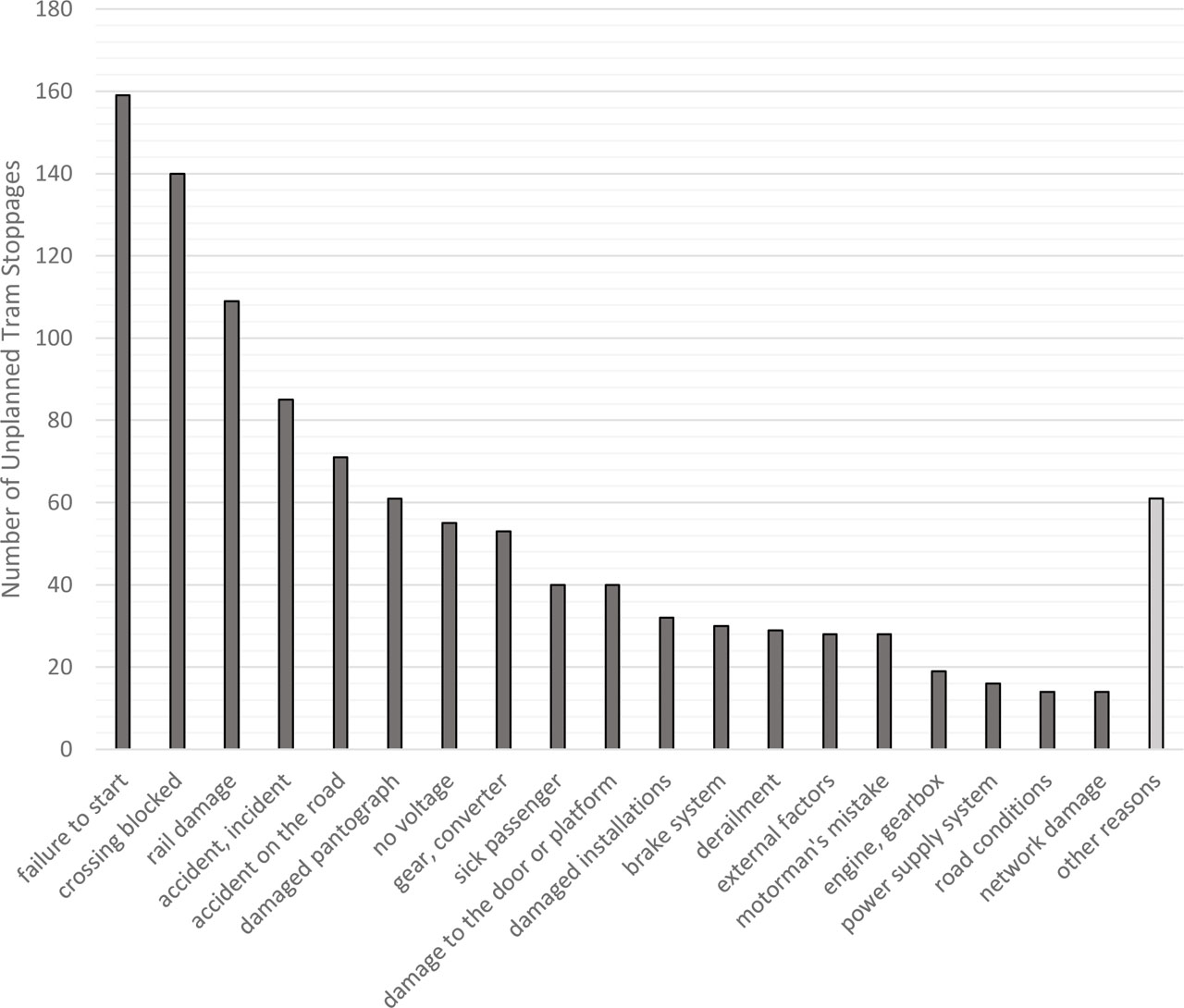
Figure 1.
Causes of unplanned tram stoppages in Wrocław in 2019
Source: own elaboration based on data provided by the Road and City Maintenance Authority in Wrocław.
The monthly distribution of unplanned tram stoppages in Wrocław in 2019 ranged from a minimum of 74 in February to a peak of 119 in January (Fig. 2). Other outlier months included October, with over 100 incidents, and April, with 81 recorded events. A statistical test at the significance level of α = 0.15 provided no grounds to reject the null hypothesis that the distribution of stoppages across months was random.
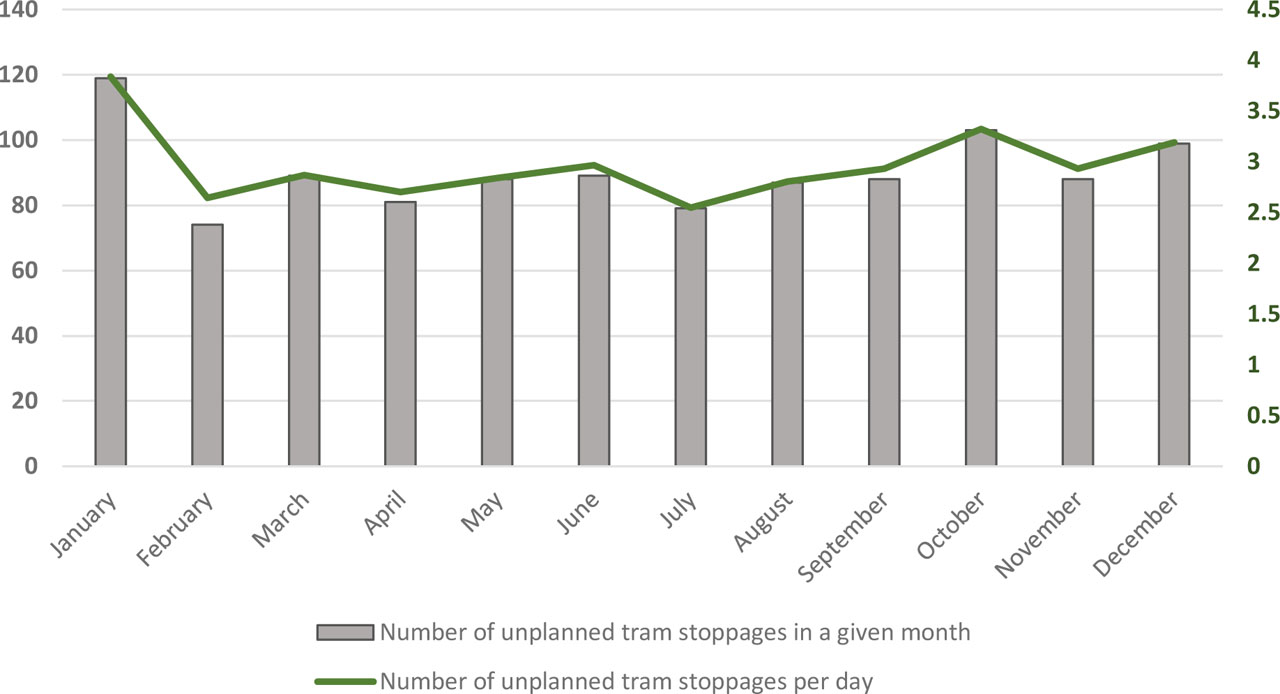
Figure 2.
Monthly distribution of unplanned tram stoppages in Wrocław in 2019
Source: own elaboration based on data provided by the Road and City Maintenance Authority in Wrocław
The weekly distribution of unplanned stoppages (Fig. 3) indicates a lower average number of incidents on weekends (Saturdays and Sundays) compared to weekdays. On weekdays, the number of stoppages generally ranged between 160 and 170, whereas Saturdays averaged 130 and Sundays approximately 120. This pattern reflects reduced tram frequency and lower overall traffic volumes during weekends.
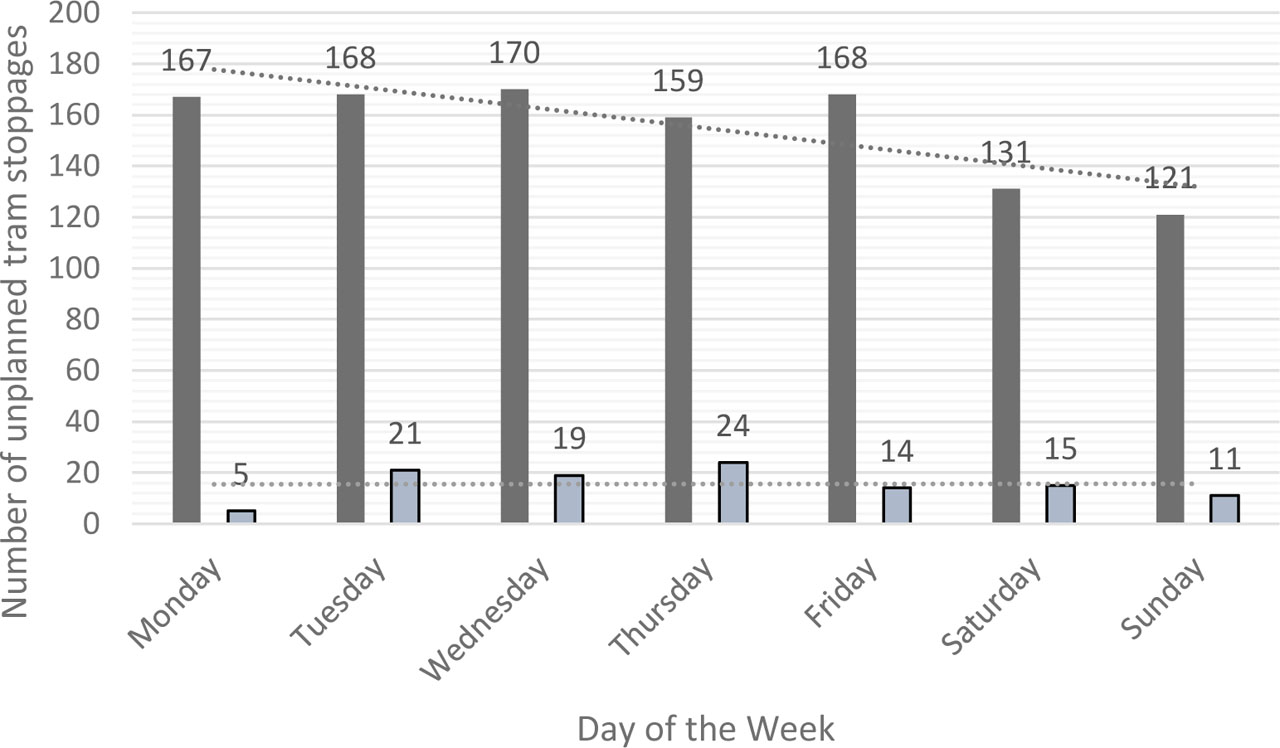
Figure 3.
Weekly distribution of unplanned tram stoppages in Wrocław in 2019
Source: own elaboration based on data provided by the Road and City Maintenance Authority in Wrocław
However, when considering stoppages caused by poor track conditions only, the analysis shows no significant correlation with the day of the week. In 2019, the fewest such events occurred on Mondays, while the highest number was recorded on Wednesdays. This suggests that infrastructure-related stoppages are not influenced by weekday traffic intensity, further supporting the interpretation that they stem from long-term technical deficiencies rather than operational conditions.
Condition of the tram tracks in Wrocław
The condition of tram tracks is a key determinant of the quality and safety of public transport in any urban setting. In Wrocław, the tram infrastructure plays a vital role in daily urban mobility, and maintaining its condition is of paramount importance for ensuring the reliability of the city’s transport network. With a history dating back to the early 20th century, Wrocław’s tram system is one of the oldest in Poland, and its tracks have undergone multiple expansions and refurbishments throughout the years. However, ongoing challenges related to the network’s age, increased traffic volume, and limited maintenance resources make the condition of the tracks a crucial concern. Wrocław’s tram network is extensive, covering the central urban areas and extending into suburban districts. The total length of tram tracks in the city exceeds 200 kilometres, with over 20 tram lines connecting various neighbourhoods. Although the extent of the network is impressive, a significant portion of the infrastructure is ageing and in need of modernization. The tram tracks in Wrocław are exposed to heavy use, as trams operate frequently, often in mixed traffic with other vehicles, which accelerates the wear and tear of the infrastructure. Additionally, environmental factors such as changing weather conditions, humidity, and frequent freezing and thawing cycles contribute to the degradation of the track components. Not one tram line in Wrocław was characterized by a minimum ‘good’ condition along its entire course. In 2018, according to data collected by the Municipal Transport Company in Wrocław, 79 derailments were recorded. In the following years, 2019 and 2020, this number exceeded 100 derailments. Many factors influence this, but the analysis results from Deutzer (whose services were also used by cities such as Paris, Sydney, Vienna, and Brussels) show that sections with sufficient or unsatisfactory geometric conditions constitute 78% of the entire network (Matejuk 2021). In 2018, the Road and City Maintenance Authority in Wrocław carried out an audit of the condition of the tracks. It showed that 58% of the tracks were in very good condition, 31% in average condition, and only 11% in very bad condition (Matejuk 2020). After performing specialized measurements in 2020 and evaluating the tracks according to the Id-14 instruction (PKP 2005), the indicators (suitable for railways) were as follows: 5.43% in very good condition, 5.92% in good condition, 54.68% in average condition, and 33.97% in bad condition (Deutzer 2020) (Wilczyńska et al. 2024) (Table 3).
Table 3.
Comparison of the condition of tracks in 2018–2020 (Wilczyńska et al. 2024)
| State | 2018 | 2020 | 2020 (aggregation) | Difference |
|---|---|---|---|---|
| Very good | 58% | 5.43% | 11% | −47% |
| Good | - | 5.92% | - | - |
| Average | 31% | 54.68% | 55% | +24% |
| Bad | 11% | 33.97% | 34% | +23% |
The change in track conditions over two years was substantial, both in terms of usage and evaluation methodology. In 2020, the assessment of the condition of the tracks was based on the W5 index, commonly used in the rail industry. Many sections that were categorized as being in very good or good condition in 2018 were classified as poor or average according to the 2020 railway standards. For visualization purposes, all maps were created using a topographic map as the base layer. The base also displays the condition of the tracks in Wrocław as of 2020, which is shown in figure 4.
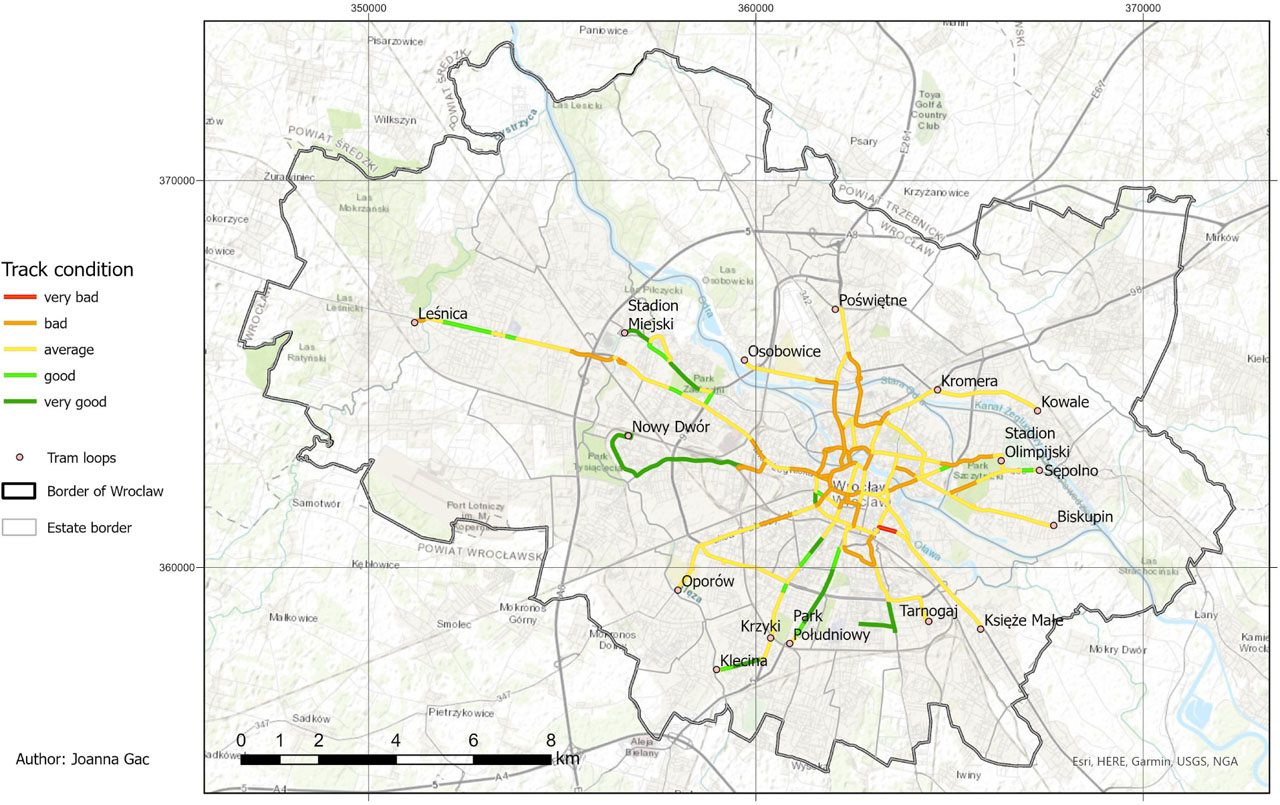
Figure 4.
Track condition in Wrocław in 2020
Source: own elaboration
Tram derailment maps in the city of Wrocław
Tram derailment maps in Wrocław provide valuable insights into the locations and frequency of unplanned tram stoppages caused by derailments throughout the city. These maps are crucial for understanding the relationship between track conditions and derailment occurrences. By visually representing the spatial distribution of incidents, the maps highlight areas with high frequencies of derailments, which can inform maintenance and infrastructure improvement strategies. In this study, a map was created to illustrate the locations of unplanned tram stops. This map enabled the determination of the relationship between these events and track conditions. The locations of unplanned stops were typically described only by street name. The data for these events were aggregated and presented on a map for each street. The analysis focused on unplanned stops from 2019, while the condition of the tracks was assessed based on measurements taken in the first half of 2020. The map was generated using ArcGIS Pro software. The map presented in figure 5 was created using the heat map function, which displays the density of points as a continuous colour gradient.
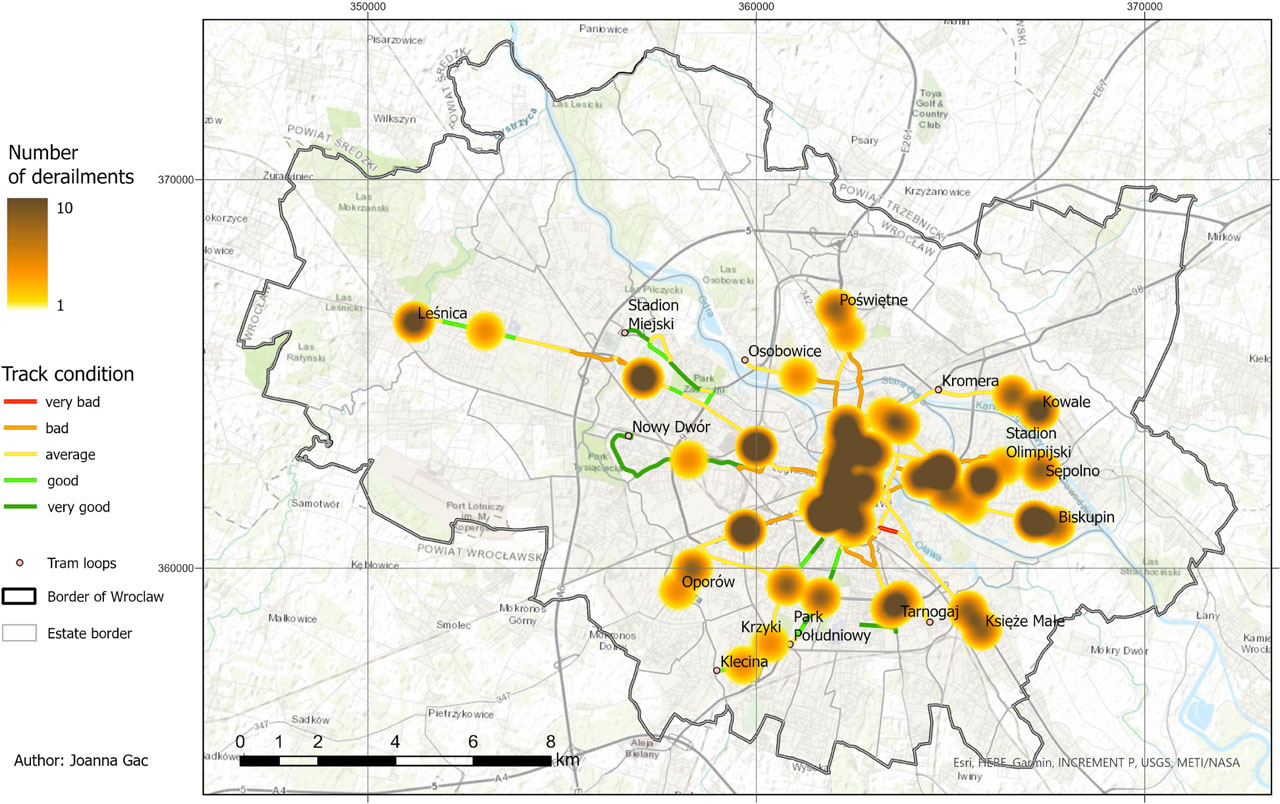
Figure 5.
Tram derailments in Wrocław in 2019
Source: own elaboration
As shown in the maps, the high frequency of unplanned stops does not necessarily correlate with poor track conditions. The highest number of unplanned stops in 2019 occurred at Dominikański Square, where the track condition was considered to be average. This observation allowed for conclusions regarding the classification of unplanned stops (a concept not previously established in Wrocław) and the differentiation between rail and switch damage. After the switches at Dominikański Square were replaced or repaired, there was a significant reduction in unplanned stops in the following years. These findings are further confirmed by the chart in figure 6, which illustrates that unplanned stops attributed to poor track conditions only overlap with tracks in poor condition by 38%. The majority of these events (57%) occurred on tracks in average condition, with some even occurring on tracks in very good or good condition (5%). This indicates the need for the development of a more appropriate classification system for unplanned stops and the standardization of terminology.
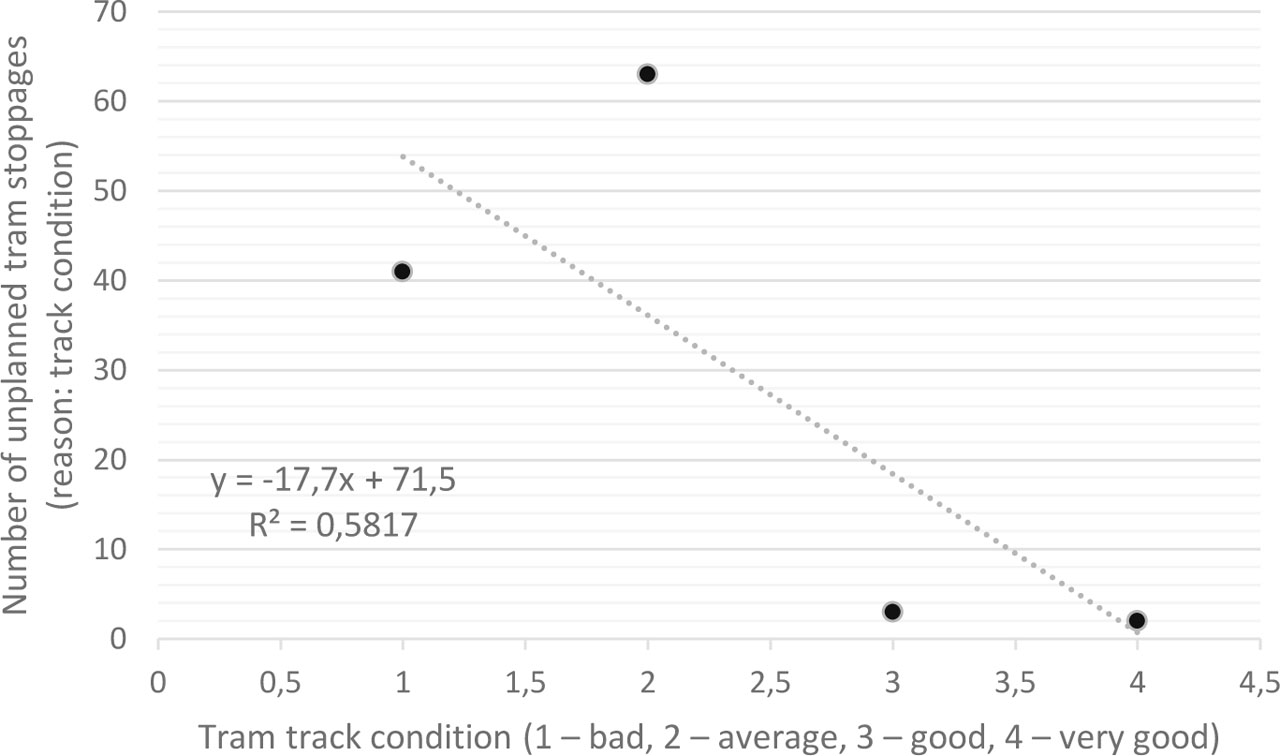
Figure 6.
Proportion of unplanned stoppages related to track condition in 2019 in Wrocław, categorized by track condition classification
Source: own elaboration
In the correlation analysis, the Pearson correlation coefficient was applied, yielding a value of r ≈ −0.763, which indicates a relatively strong linear relationship between tram stoppages associated with track condition and the actual condition of the track at the given location. A ‘good’ or ‘very good’ track condition virtually guarantees the absence of derailments in that area. To assess the spatial correlation of derailments, Moran’s I test was performed based on 109 derailments that occurred in 2019. The Moran’s I coefficient was found to be I ≈ 0, which confirms the absence of spatial dependence between these events.
Conclusions
Unplanned tram stoppages represent a significant challenge in the efficient operation of urban public transport systems. Analyzing these stoppages offers valuable insights into operational weaknesses and areas for improvement. The study emphasized the importance of a robust and clear classification system tailored to the specific needs and administrative structures of each city, as well as the need to implement a system for assessing tram track conditions. The analyses performed allowed for the formulation of conclusions regarding the causes of unplanned tram stoppages. In 2019, 10% of unplanned stoppages were attributed to poor track conditions. In 62% of cases, unplanned stoppages attributed to poor track conditions occurred on tracks rated as ‘average’, ‘good’, or even ‘very good’. Furthermore, these unplanned stoppages were primarily associated with junctions and switches. This led to the conclusion that the real cause of these stoppages was damage to the switch points. After replacing 70 switches, a significantly lower number of unplanned stoppages due to poor track conditions was recorded in the subsequent year (2020). Another conclusion was the need to implement a classification system for unplanned stoppages in Wrocław. In 2019, the track manager did not have a classification system for unplanned stops. In subsequent years, a classification system with six categories was introduced: collisions with vehicles, collisions with objects, incidents involving people, derailments, traction network failures, and vandalism. This classification is less detailed than those in other cities and is not intended to hold responsible parties accountable; rather, it serves statistical purposes. Analysis of unplanned stoppages in other cities also suggests supplementing the database with information on the stoppage duration and the number of vehicles involved. This would enable more comprehensive analyses regarding traffic flow. Based on the research, the need was highlighted for a procedure to assess the technical condition of the tracks. Current devices measure the condition of the rails, but during field measurements, the condition of the switches is not considered. Therefore, the assessment of track condition should consider factors beyond just the geometric condition of the rails. Spatial analyses help identify the causes and locations of unplanned stoppages, support repair scheduling, indirectly contribute to improving road safety, and influence organizational actions by the track manager. The study concluded that track condition assessment should encompass a broader range of factors beyond the geometric properties of the tram track. Additionally, it underscored the necessity of a comprehensive classification system for unplanned stoppages and the need to incorporate data on stoppage duration and the number of vehicles involved to enhance traffic flow and improve safety.