
Introduction
Social inequalities are one of the greatest challenges of the 21st century (Therborn 2012; Alvaredo et al. 2018). While this primarily refers to wealth differences, they also encompass access to other resources such as education, health or power. Previously assumed to diminish with economic and technological progress, inequalities have grown instead – both subjectively and objectively. They not only exist between continents or countries but also within individual countries and even smaller units such as municipalities or cities.
By 2050, nearly 70% of the global population will reside in urban areas, representing a substantial increase from the current 55%. In Europe, this percentage may rise above 83% (United Nations 2019). As cities become focal points of inequality, disparities in access to public services strongly impact quality of life and social mobility (Phillips, Sung & Whitsett 2013). Urban social inequalities are multidimensional, spanning economic and spatial disparities in essential services (Tonon 2024; Martinez 2005). Unequal access to education, healthcare and recreational spaces reinforces socioeconomic divides and spatial exclusion. Despite efforts to create compact, service-rich environments, mismatches persist due to historical patterns and socioeconomic stratification. Urban planning can mitigate but not eliminate these inequalities, especially in rapidly changing regions.
High urban inequalities have several consequences, including residential segregation and gated communities (Grzegorczyk et al. 2019). Residents of lower-income neighbourhoods face barriers to quality education, healthcare and employment opportunities, further entrenching the poverty cycle. This spatial segregation adversely affects the prospects of children growing up in disadvantaged conditions, limiting their ability to break free from poverty in adulthood (Tammaru et al. 2021). These factors directly impact their quality of life and may contribute to heightened crime and violence. Social inequalities erode trust and social cohesion, potentially leading to polarization and conflict (Pickett & Wilkinson 2010). These dynamics hinder sustainable urban development and deepen social divisions.
In this study, we examined social inequalities in Warsaw through spatial accessibility to key services. This approach has enabled a connection between inequality and quality of life, as reflected in spatial accessibility to essential urban resources.
Literature review
Due to their interdisciplinary nature, social inequalities are studied across various scientific fields, including economics, sociology, psychology and geography. Geography focuses on three key areas, that is, spatial patterns of inequality, the neighbourhood effect, and the differences in quality of life that arise from variations in space, encompassing objective and subjective dimensions (Świerkocki 2024a). Phillips, Sung and Whitsett (2013) have emphasized that inequalities extend beyond wealth and service availability, shaping social mobility and quality of life. Developed by Amartya Sen (1999), the capability approach provides a theoretical lens for understanding these disparities. This approach suggests that inequalities not only arise from unequal resource distribution but also from differences in individuals’ ability to use them. In the urban context, this means that access to services such as healthcare, education and green spaces is insufficient if residents lack the means to benefit from them (Tonon 2024). Martinez (2005) has further highlighted the role of spatial factors in reinforcing inequalities, demonstrating that intra-urban disparities often persist, including in cities with strong public service networks.
The first component of the study examines spatial segregation in cities, seeking to understand how and why such inequalities emerge and persist. This includes poverty, marginalization and social exclusion (van Ham et al. 2022). The second area, that is, the neighbourhood effect, explores how a person’s environment influences their life outcomes. This is crucial for understanding the intergenerational transmission of inequality. Children from disadvantaged areas have restricted access to education (Nieuwenhuis et al. 2021; Tammaru et al. 2021). The third area – connecting social inequality to quality of life – remains less well developed compared to the previous two, yet it holds considerable promise. The third area connects social inequality to quality of life, integrating previous perspectives and emphasizing how spatial segregation deepens disparities across urban areas. Studies on urban quality of life have considered the spatial dimensions of this issue (Marans & Stimson 2011). This includes the importance of infrastructure, public transport, services, air quality and processes such as residential segregation and gentrification. Local QOL indicators are more effective than national averages in identifying disparities and informing policy (Phillips, Sung & Whitsett 2013), aiding urban planners in addressing spatial mismatches and ensuring equitable service distribution. Spatial accessibility strongly affects urban quality of life. Taylor (1999) has defined accessibility as the opportunity to engage in various activities. Access to services such as education, healthcare and employment improves residents’ quality of life (Dimian & Barbu 2012; Czepkiewicz & Jankowski 2015; Addas 2023). Tonon (2024) stated that spatial inequalities not only stem from service distribution but also from residents’ ability to use them, aligning with Sen’s capability approach. Disparities in healthcare, education and green space access reinforce social exclusion and lower quality of life (Martinez 2005). This assertion is supported by evidence indicating that property prices tend to be higher in areas with better service access (Downes & Zabel 2002; Crompton & Nicholls 2022; Zhou et al. 2022).
The literature lacks a clear definition of equitable public service access. However, several key concepts exist. The ‘needs-based city’ model allocates services based on local population needs (Brambilla, Michelangeli & Peluso 2013). However, this approach risks homogenising neighbourhoods, exacerbating social inequalities, or even leading to ghettoization or fuelling gentrification (Dobrowolska & Kopczewska 2024).
Another concept, namely, that of the ‘just city’, emphasizes equal service distribution, regardless of socioeconomic status. Talen claims that (1998, p. 24) residents are entitled to either equal input or equal benefit. This aligns with Harvey’s (1973) call for social justice in cities and aims to reduce social inequalities by promoting equal opportunities (Dobrowolska & Kopczewska 2024). Equal public amenity distribution improves the quality of urban life (Brambilla, Michelangeli & Peluso 2013).
The concept of the ‘15-minute city’ (Moreno et al. 2021) has been adopted globally, with variations such as Singapore’s ‘20-minute towns’ and Melbourne’s ‘20-minute neighbourhoods’. This idea played a crucial role in the re-election of Paris’s Mayor Anne Hidalgo in 2020 (Willsher 2020). The core of this concept is that all essential services, both public and private, should be accessible within 15 minutes by walking or cycling. It also embodies ‘chronourbanism’, emphasizing how the quality of urban life is strongly influenced by the time required for daily commutes (Moreno et al. 2021).
Methodology
Various methods have been used to analyze public service accessibility in urban areas, differing in accuracy, data aggregation and techniques. In this study, we have focused on social inequalities in Warsaw, using the Municipal Information System (MSI 1) areas as the unit of measurement (Figure 6). Therefore, to ensure accessibility, the method is straightforward, aiding policymakers in interpreting findings. Martinez (2005) has also highlighted that GIS-based spatial indicators are essential for identifying intra-urban disparities.
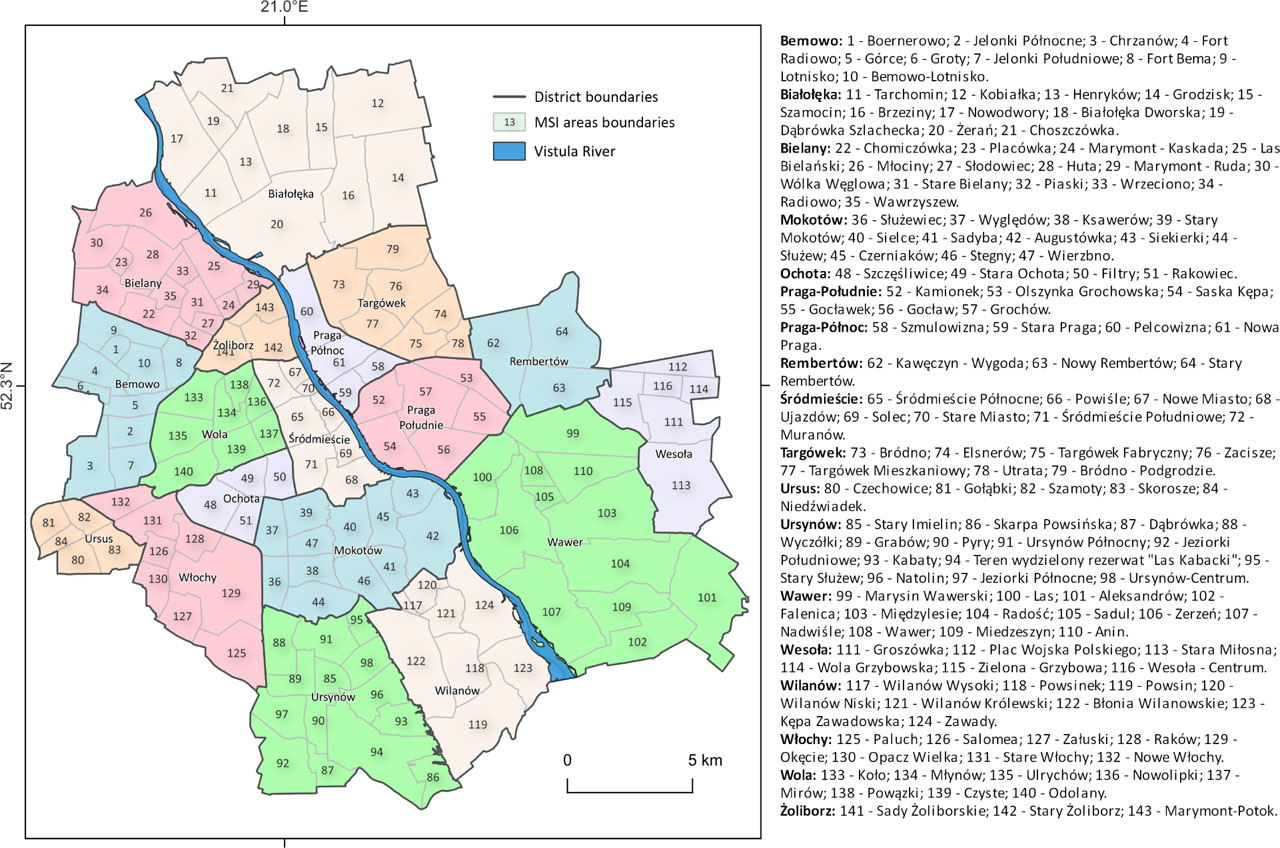
Figure 6.
Map of MSI areas of Warsaw
Source: own elaboration
The accessibility was measured as the percentage of residential buildings within MSI areas with access to services. We assumed an even population distribution per building, which is a simplification. However, this approach results in higher spatial resolution than census enumeration areas. One facility type per service was analysed, namely, primary schools (education), primary care clinics (health services) and urban green spaces (recreation). A composite indicator was used to combine these. To evaluate accessibility, three buffers were set, that is, 300, 600 and 900 m for green spaces; 400, 800 and 1200 m for schools; and 500, 1000 and 1500 m for clinics.
Green spaces are vital for mental and physical health, cognitive functions and reducing disease risk and mortality (European Environment Agency 2022). The availability of parks contributes to social participation, well-being and community cohesion (Nordbø et al. 2019). Green spaces also contribute to social well-being, air quality and biodiversity (Maes et al. 2018). The WHO recommends every resident live within 300 m of a park (WHO Regional Office for Europe 2016), aligning with the 3–30–300 rule, which is widely endorsed (Browning et al. 2024) and justifies the selected buffers of 300, 600 and 900 m.
Access to education has financial, cultural, social and spatial dimensions. Equal access encourages sustainable urban growth and reduces inequalities (AlQuhtani 2023; Zangana et al. 2024). The absence of equal educational opportunities hinders social mobility and cohesion, exacerbating existing inequalities. This is largely due to the fundamental role of modern education systems in creating a level playing field (Świerkocki 2024b). Warsaw’s urban standards specify that schools should be within 800 m2. The buffers of 400, 800, and 1200 m align with WHO guidelines (World Health Organization & UN-Habitat 2016).
Healthcare accessibility impacts urban residents’ quality of life (World Health Organization 2015; WHO Regional Office for Europe 2016; Jakab et al. 2018). The World Health Organization & UN-Habitat (2016) suggest that healthcare should be within walking distance. Researchers advocate that every urban area needs access to primary healthcare services (Macintyre et al. 2002). Therefore, access radii for clinics are set at 500, 1000 and 1500 m.
Data on services came from Warsaw’s mapping services, district websites and OpenStreetMap. Green areas not publicly accessible or smaller than 1 ha were excluded. This is because smaller spaces may not meet recreational needs, with some sources suggesting that public recreation spaces should be a minimum of 2 ha in size (Statistics Poland 2024). Data were digitized in QGIS (ver. 3.34) using fixed-diameter buffers, simplifying interpretation over footpath analysis. This provided clear results and identified key areas of concern, making it easier to focus on essential variables and enhance result interpretation. Service availability was estimated by weighing (1 for the first buffer, 0.75 for the second, and 0.25 for the third) residential buildings within each buffer to assess service availability. Accessibility indicators were calculated per MSI area, and a synthetic indicator was derived as the arithmetic mean of individual service indicators.
Results
The collected data and calculations (Figures 1–5) highlight spatial inequalities in access to public services. Each figure illustrates accessibility to a specific service, while the two final figures present a distribution of the comprehensive accessibility index. The findings identify areas facing service shortages, requiring urgent investment to reduce inequalities and improve quality of life.
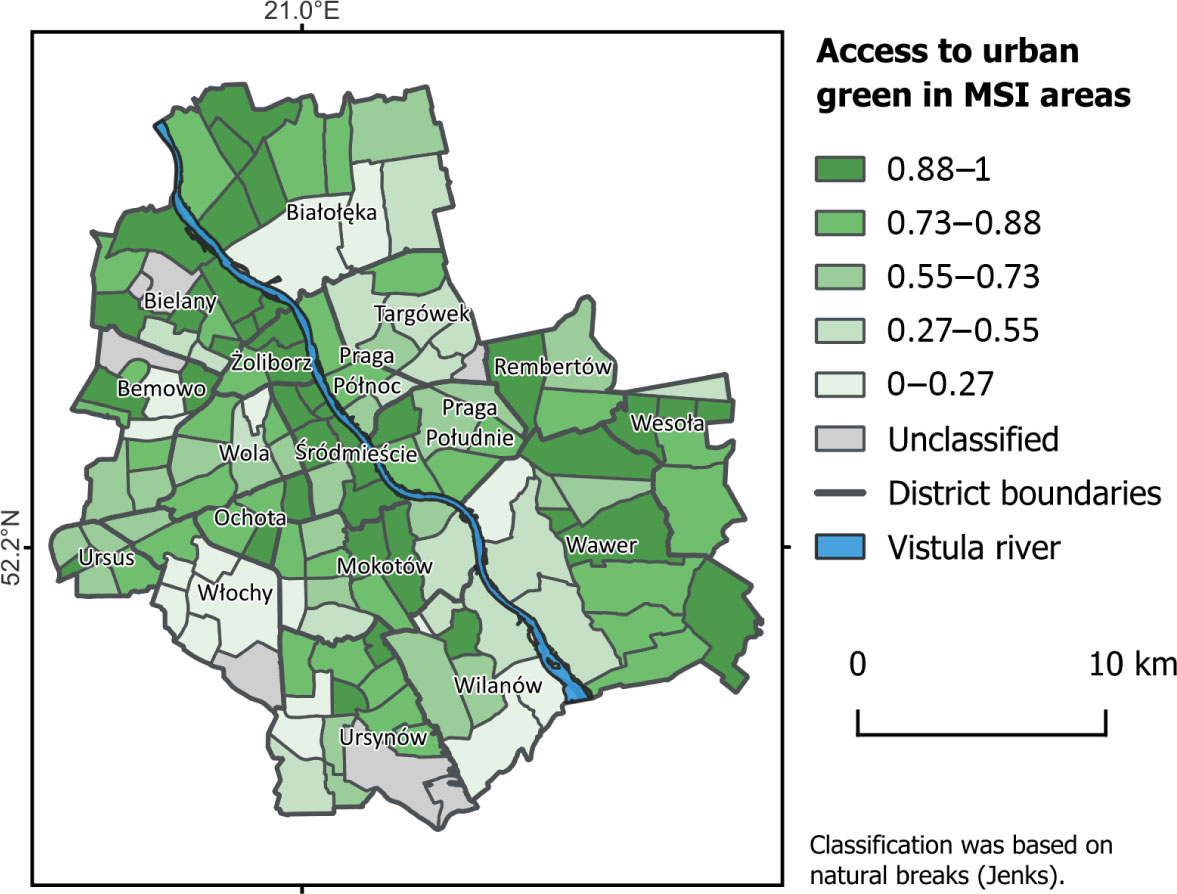
Figure 1,
Map of access to green areas in Warsaw
Source: own elaboration
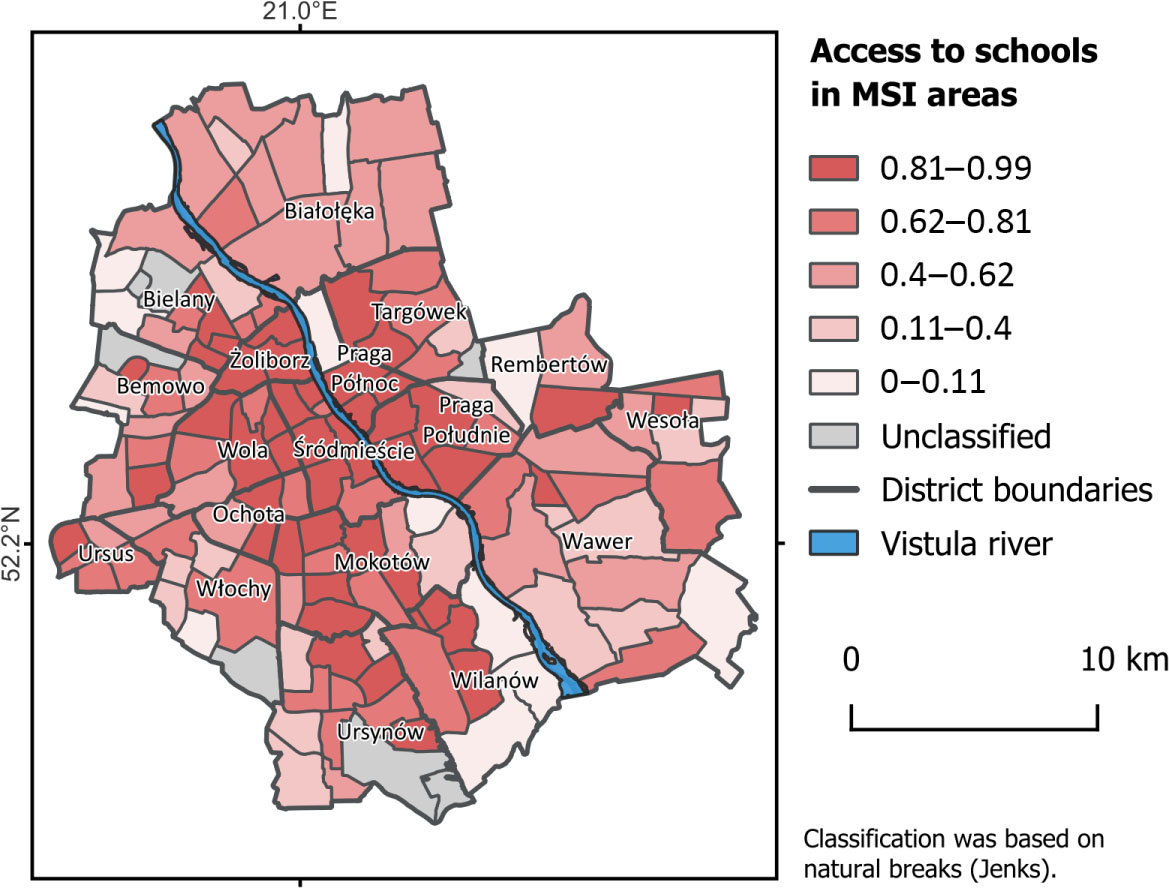
Figure 2.
Map of access to primary schools in Warsaw
Source: own elaboration
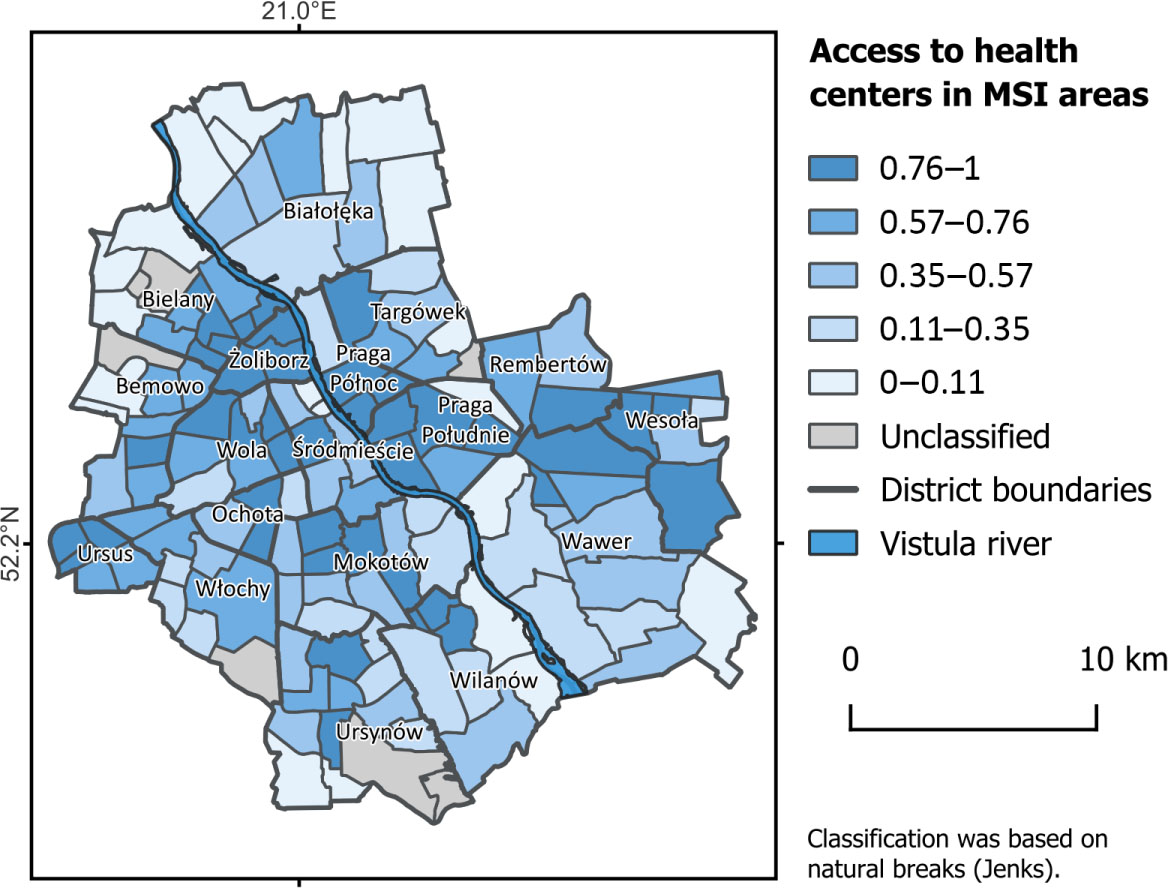
Figure 3.
Map of access to primary health clinics in Warsaw
Source: own elaboration
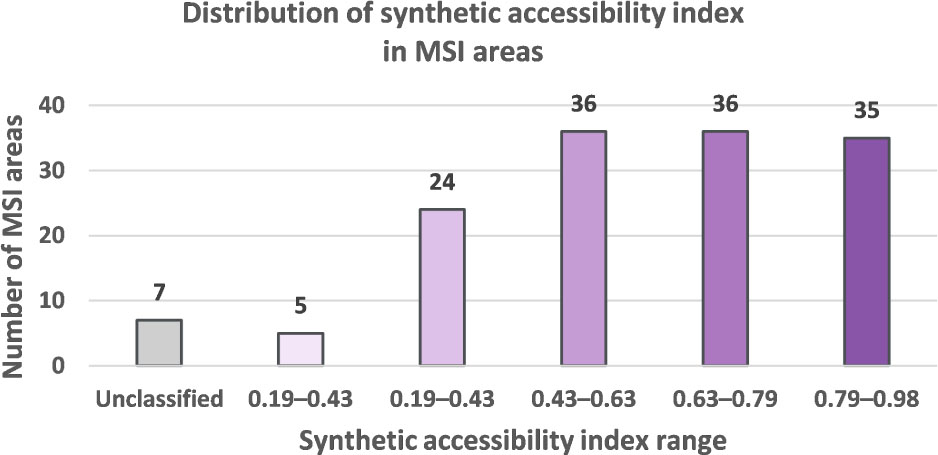
Figure 4.
Distribution of synthetic accessibility index in MSI areas
Source: own elaboration
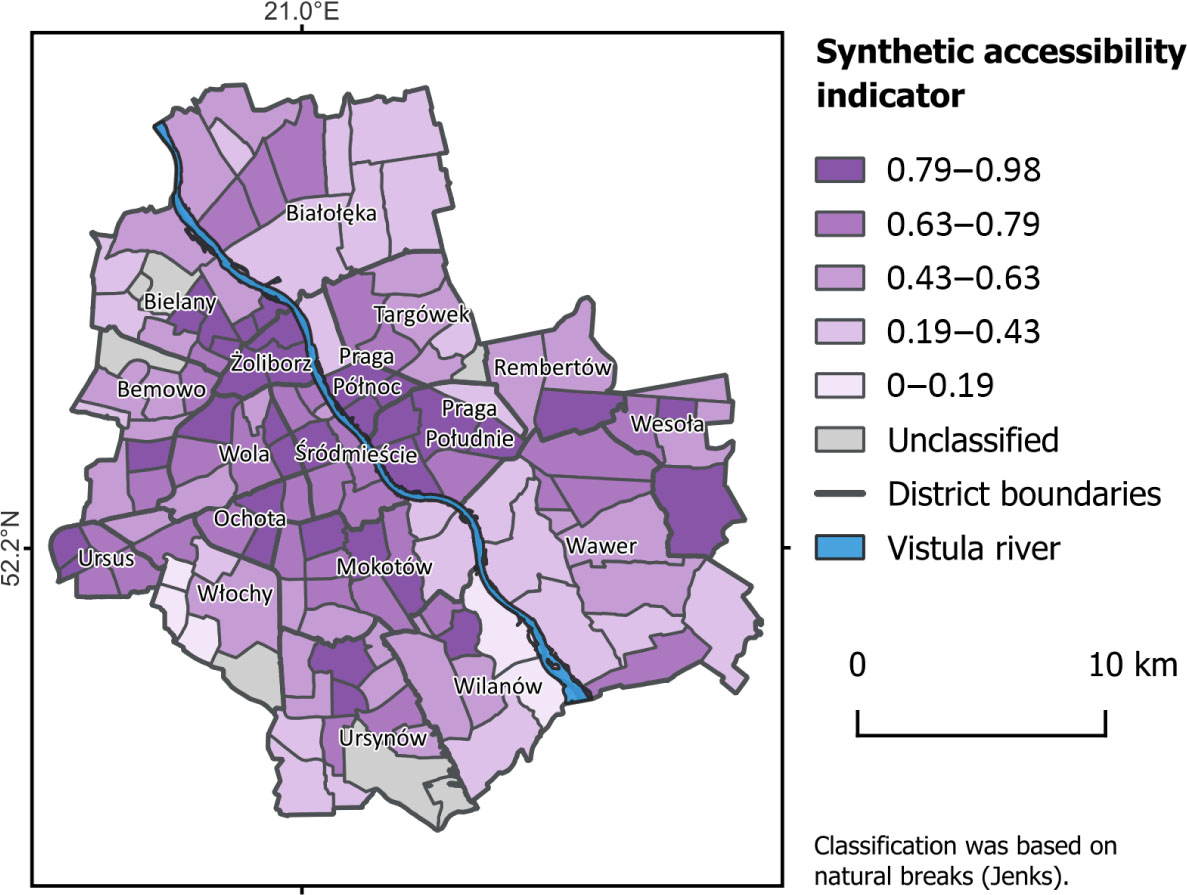
Figure 5.
Map of synthetic accessibility index distribution
Source: own elaboration
Access to urban greenery
The green space accessibility index varies significantly, with values ranging from extremely low, such as zero or near zero, meaning no residential buildings within the buffers, to a maximum value of 1 with all buildings being within 300 m of green areas. Approximately 42% of Warsaw’s residents live within 300 m of a green area, which is a distance recommended by the WHO (World Health Organization & UN-Habitat 2016).
There was higher accessibility in specific MSI areas of central districts, including Śródmieście, Ochota and Praga-Południe and certain areas of peripheral districts. Various factors contribute to the disparities in access to green spaces, including the city’s historical development and urban planning policies. Central districts preserve historic park complexes including Łazienki Królewskie, Pole Mokotowskie and Park Skaryszewski. There were also high accessibility rates in neighbourhoods with former recreational functions in districts such as Wawer, Rembertów and Wesoła. Lower accessibility was observed along the Vistula in southern districts including Mokotów, Wilanów and Wawer, in addition to the Włochy district and certain parts of other peripheral districts. These areas were formerly agricultural and have not been fully developed as green space. This is also the case for former industrial districts such as Targówek and Włochy (Gawkowski, 2010), which require further investment to enhance green space access.
It is essential to focus on areas with relatively little access to green spaces that also have a high population density, as interventions are particularly necessary in these contexts. Key examples include parts of districts such as Białołęka, Bemowo and Mokotów.
Access to primary schools
Access to quality education is crucial for creating equitable opportunities and reducing social inequalities. The spatial accessibility of primary schools affects the daily experiences of children and their families, including commuting times and overall convenience. This analysis applied 400, 800, and 1200-m buffers according to Warsaw’s spatial planning standards.
Primary school accessibility varies significantly across the city. In certain areas of Warsaw, there are no residential buildings located within 1,200 m of a school. Meanwhile, in others, nearly all residences were situated within 400 m of an institution. Approximately 43% of residential buildings are located within 400 m of a school, and 82% are within 800 m, which would be in line with optimal accessibility standards.
Central districts such as Śródmieście, Żoliborz, Ochota and Praga-Południe have high accessibility, while peripheral districts including Wawer, Wesoła, and Wilanów have lower accessibility rates. However, central areas of these districts generally offer better access than outer areas, likely due to more dispersed development in the more remote locations.
These disparities may stem from delays in planning and investment in rapidly urbanizing neighbourhoods. In former agricultural areas, where development has occurred rapidly and often without a master plan, many communities lack nearby schools and essential services. These areas are continuing to expand, and many newly urbanized regions are still awaiting educational investment.
Planned residential neighbourhoods tend to have better accessibility. For example, the housing estates in Grochów, designed in the 1950s and 1960s, included numerous schools, kindergartens, and other services. The plan of the Grochów-Kinowa estate, for example, included four primary schools, four kindergartens, two crèches and 36 service units for 3,600 planned flats (Orlańska et al., 1968).
However, good spatial access does not always equate to the actual availability of schools. High-density areas often require two-shift schooling, highlighting the necessity for further investments. The most critical shortages appear in densely populated areas such as Odolany in Wola, Chrzanów in Bemowo, Siekierki in Mokotów and Pelcowizna in Praga-Północ. Here, public service development has not kept pace with the increasing population.
Access to primary health centres
Access to primary health care is a key factor in UQoL, affecting preventive care, response times to health issues and overall well-being. In this analysis, we used 500, 1000, and 1500-m buffers, aligning with the WHO standards for walkable access to health services (World Health Organization & UN-Habitat 2016). The results have highlighted the spatial variations in accessibility to health clinics in Warsaw and identified areas experiencing a shortfall in these services.
Despite larger access radii, health clinics showed lower accessibility than other services analyzed. Fewer MSI areas exhibit high levels of access, while more areas lack access to clinics within the buffers. Only approximately 30% of residential buildings in Warsaw are within a 500-m radius of health facilities.
Central districts, such as Praga-Południe, Wola and Żoliborz, benefit from better access to services. However, despite its central location, areas of Śródmieście report lower accessibility metrics, potentially attributable to the depopulation trends (Wiszniowski 2018). Peripheral districts face the greatest challenges, where the centralization of health services is apparent – central areas of districts offer greater accessibility compared to their outskirts.
Contributing factors include demographic changes, such as the depopulation of certain city areas, service centralization and insufficient public health investments relative to urbanization. Consequently, many densely populated areas face limited healthcare access, particularly Białołęka, where nearly 16% of residential buildings lack access to a clinic within a 1500-m radius.
Synthetic accessibility indicator
Calculated as the arithmetic mean of access to green spaces, primary schools, and health clinics, a synthetic accessibility index accessibility showed significant spatial disparities throughout Warsaw.
Areas of central districts such as Śródmieście, Żoliborz, Ochota and Praga-Południe had the highest accessibility values, benefiting from proximity to green spaces, well-developed educational infrastructure and health services. These areas generally provide balanced access to all three service types.
In contrast, districts such as Wola, Mokotów, Bielany and Praga-Północ have varied accessibility rates. While densely populated MSI areas offer satisfactory access, rapidly developing areas, for example, Odolany, Siekierki and Pelcowizna require further public infrastructure investment.
Peripheral districts, including Białołęka, Wawer, Wilanów, Rembertów and Wesoła, score lowest, with health and education services concentrated in central areas, exacerbating inequalities in outer regions. Ursus stands out with high accessibility despite its peripheral location, likely due to its historical development as an industrial and residential hub with essential services such as a railway station, public school, and post office, even before World War II (Domżalski, 2002).
Beyond identifying spatial disparities, it is also important to examine the distribution of accessibility scores. The distribution of the synthetic accessibility index across MSI areas further illustrates the spatial variations in access to public services (Figure 4). Most MSI areas (36) fall within moderate accessibility ranges (0.43–0.63 and 0.63–0.79). There are 35 high-accessibility areas (>0.79), predominantly located in central districts. Conversely, 24 MSI areas fall into the lower accessibility category (0.19–0.43), while five exhibit the lowest levels of accessibility (0–0.19). Seven MSI areas remain unclassified due to low population – these areas are also characterized by low accessibility.
In conclusion, the results confirm significant inequalities in access to public services across Warsaw. Most areas of central districts benefit from high accessibility, while peripheral districts face major challenges. These findings highlight the urgent need for strategic planning and investment, particularly in peripheral areas, to address disparities and enhance residents’ quality of life.
Summary
Integration of results within the existing literature
The study findings confirm substantial disparities in access to public services between the central and suburban areas of Warsaw. The findings highlight the need for compact urban development and strategic spatial planning to integrate social infrastructure with residential growth. These results align with previous research on Warsaw’s accessibility patterns.
Małachowski, Dąbski and Wilk (2020) identified a concentric pattern in education, healthcare and transport access, with the inner city dominating. Similarly, Dobrowolska and Kopczewska (2024) found that the left-bank districts of Warsaw have a distinct advantage in service accessibility and quality of life. Despite methodological differences, the consistency of findings validates the study’s approach to identifying spatial inequalities.
Warsaw’s disparities reflect broader trends in European cities. Martinez (2005) notes that in highly stratified urban areas, public services tend to favour central districts. Similarly, studies conducted in Western Europe have highlighted that even well-planned metropolitan areas face challenges in achieving equitable service distribution (Tonon 2024).
Implications for urban policy
The findings have highlighted the pressing need to enhance public services in Warsaw, particularly in historically underserved areas. Among these, the region along the southern banks of the Vistula stands out as strongly underserved, requiring substantial improvements in accessibility to essential services.
City planners are confronted with challenging decisions regarding the development strategies for various districts and neighbourhoods. While the centralization of large health and education facilities may be cost-effective, it can reduce accessibility for residents and may compromise the daily quality of life for residents. An equilibrium is needed between addressing practical needs and ensuring equitable service distribution.
Future planning should optimize urban density while prioritizing local needs, ensuring a balanced distribution of services that meets residents’ daily requirements and minimizes accessibility gaps. To achieve this, Phillips, Sung and Whitsett (2013) suggest integrating QOL indicators into urban policymaking, as cities using data-driven approaches are better equipped to implement equitable urban strategies. Martinez (2005) further emphasizes that such planning ensures that urban investments target underserved areas rather than reinforcing existing disparities.
Limitations and further research
The primary limitation of the current study is the lack of granular data on the quality of individual services. Additionally, the study did not consider users’ perceptions of the quality of services or their actual access to services. For instance, a school may experience double shift learning or extended waiting times to see a doctor may hinder access to healthcare. Additionally, the study assumes that building locations correspond to the number of residents benefiting from services. While this approach enables more precise spatial analysis than census enumeration areas, it does not account for population density variations within buildings. Future research should explore ways to integrate demographic data to refine accessibility assessments.
Beyond spatial accessibility, future studies should evaluate service quality. This broader approach can deepen the understanding of inequalities in the population’s quality of life. However, access to data at a detailed level is often limited, which may present methodological challenges. Further research could aim to clarify the variations in accessibility across the city and in individual neighbourhoods. Such studies could incorporate a dynamic analysis that tracks infrastructure changes over time. It could also be beneficial to explore other services, both public and commercial. Comparative studies with other cities could provide insights into Warsaw’s urban dynamics.
Summary of main findings
This study has revealed substantial disparities in public service accessibility between central and peripheral MSI areas. Central areas, particularly in districts such as Śródmieście, Ochota, Praga-Południe and Żoliborz, have the highest levels of accessibility. Among other factors, this can be attributed to more compact urban development and a well-established social infrastructure.
In contrast, peripheral neighbourhoods in districts such as Białołęka, Wawer, Wilanów and Wesoła have limited access to education and healthcare services. These regions are often characterized by inadequate connectivity and underinvestment, which strongly impact the quality of life for residents. The most pronounced deficits occur in southern and more peripheral areas, including southern regions along the Vistula River. Furthermore, rapid expansion, coupled with a lack of public services, requires urgent attention.
These findings emphasize the need for strategic spatial planning to promote the equitable development of social infrastructure across the city. Concentrating public services in central locations may marginalise residents in peripheral areas, making it vital to ensure fair access to services – especially in neighbourhoods undergoing dynamic growth.