
Introduction
The aim of this article is to present the revolutionary changes in the economy of the Maldives over the last half-century that have led to a significant diversification of the types of social and economic spaces, and to consider possible scenarios for the future, taking internal and external threats into account.
Countries in the Global South, alongside advancing globalization, are increasingly attempting to use their resources more consciously, consciously, following the rising demand from around the world. However, the traditional approach, which focuses on mineral and agricultural resources, seems too limited in relation to the territories of the Global South, especially in island areas. In the last fifty years, tourism has joined the fastest-growing sectors of the world economy, with its resources hidden in the features of the natural and social environment. Resources per se are also evolving. The Maldives are a prime example – just half a century ago, they were inhospitable and inaccessible to tourists, but today, as of 2024, they welcome over 1.5 million visitors annually.
Literature Review
The Maldives, as geographical entities, have only relatively recently appeared in global geographical literature. Until the 19th century, and for most of the 20th century, their presence was usually only noted – sometimes their genesis was described (see Darwin 1887), and accounts rarely delved into social or economic issues. Changes in specialization and economic strategy, described later in this article, led to a significant increase in publications, particularly regarding their potential (Giacottino 1987; Connell 1988; Guébourg 1998, 1999; Ryavec 1995; Jędrusik 2005), forms of development (Domroes 1990; Cazes 1989), political and social solutions (Bonniol 1987; Baldacchino 1998; Jędrusik 2003 a, b), and the economic role of tourism (Dowling, R. 2000; Domroes 2001; Jędrusik 2002). During this period, the archipelago and its development were the subject of intensive research by French geographers from the nearby Université de La Réunion, resulting in notable works by V. Cazes-Duvat (2001) and J.-Ch. Gay (2001). In the former, the author analysed the natural potential and barriers to development of very small and ecologically sensitive entities like the islands of the archipelago; in the latter, the author provided an excellent synthesis of the creation of new, touristic micro-worlds, organizing the sequences and schemes of the micro-space arrangement of islands designated for tourists. The rapid changes – in all aspects – attracted researchers who focused on assessing environmental sensitivity and evaluating dysfunctions in the economy, and the number of publications concerning the Maldives increased significantly. Noteworthy are the works by the teams of R. Schevvens (2011), A. Shakeela (2011), and S. Malatesta (2015, 2017, 2021), as well as the work by S.K. Kundur (2012). Publications by V. Duvat (2020), K.E. McNamara et al. (2019), A. Borg et al. (2023), and B. Cowburn et al. (2018) merit special mention, as they not only documented the scale of environmental transformation but also estimated the approaching limits of ecosystem resilience. It is no surprise that authorities are seeking options for artificially enlarging the territory at a scale and pace rarely seen in the world; this has been documented and assessed by subsequent researchers (T. van der Pol et al. 2023), who have often warned of impending disaster (Storlazzi 2018; Yamamoto, Esteban 2017) and social risk (Doma Lama 2018).
Research Methods
The materials for this article were collected during two visits to the Maldives: in 2000, on the Ari Atoll, and in 2023, on the Baa Atoll. The field observations made at those times complemented a long-term library inquiry that has been underway since the early 1990s. Significant assistance came from statistics prepared by agencies and governmental offices in the Maldives, especially the Ministry of Tourism and Civil Aviation. The data obtained through these means allowed for:
An assessment of the natural and social environmental resources;
An analysis of economic, social, and natural changes from 1970 to 2023;
A classification of the functional roles of the islands forming the Maldives;
An evaluation of the strengths, weaknesses, opportunities, and threats for development, leading to the formulation of possible scenarios for the future. It is worth emphasizing that, in light of the significant variability of conditions, and the number and diversity of the examined collection, the SWOT analysis serves as a supplementary tool in reasoning rather than a foundation.
Discussion
Resources
The Maldives is an island country in the Indian Ocean covering a total land area of 298 km2. It consists of about 1,200 islands, clustered in 26 atolls, located on both sides of the equator, and scattered over a body of water covering nearly 90,000 km2. The largest island has an area of approximately 5 km2, while the average island size does not exceed 0.25 km2. The highest point of the country rises to 2.4 m above sea level. The islands are formed from coral limestone sand, which, along with low rainfall and the high permeability of the substrate, causes significant problems in relation to obtaining freshwater and its retention. The poor, alkaline soils have low agricultural potential. Thus, their extremely small size, the lack of fresh water, their significant dispersion, and their isolation present ongoing developmental barriers.
As noted by K. Ryavec (1995), “on average each atoll has approximately up to 10 inhabited islands and 20 to 60 uninhabited islands”. More than 500,000 people live in the Maldives, spread across 187 inhabited islands. Some 860 islands are uninhabited, and 159 (as of 2023) have been transformed into resort islands. The most significant resources for tourism are the warm, mild climate all year round, the warm ocean, the favourable conditions for beach tourism and water sports, the clean waters, teeming with marine fauna, and the rich coral reefs. The Maldives are not subject to major natural threats such as droughts or tropical cyclones. Tourists visit the islands throughout the year.
The Past
Before 1972, the Maldives remained uninteresting to the outside world. The aforementioned environmental barriers hindered economic development. Contact between the archipelago and the rest of the world was very limited. There were practically no air connections or even phone lines. It wasn't until 1968 that an airport with a short runway (1,400 m) was built. The economy was dominated by limited fishing. The organization of social life and land use showed no significant differences between atolls. The exception was the capital, Malé, where the political life of the country was concentrated. Up to this point, the world of the islands was homogeneous and natural – without attempts to transform it through human intervention.
Evolution and the Present
In 1971, the islands were discovered for tourism by the Italian George Corbin, who, one year later, along with a group of tourism entrepreneurs, created two resorts: Kurumba Village (30 bungalows) and Bandos Village Resort (110 bungalows). Contact with the outside world was facilitated by the expansion of Hulhulé Airport (now Velana), near the capital Malé, and the expansion of the ports of Hulhulé and Malé. The first tourist resorts – “hotel islands” – were located near these airports (3 km and 8 km away, respectively). Gradually, the hotel zone expanded, taking over additional islands in the northern and then the southern atolls of Malé. In 1973, four more islands, with 244 bungalows (no further than 16 km from the airport), were developed; in 1977, the first resort on Rashdoo Atoll (Kumarathi), opened; and between 1979 and 1982, 27 new hotel islands were created, of which 24 in both of the Malé (Kaafu) atolls.
In 1981, the airport runway was extended to 2,840 m, allowing for the service of large aircraft arriving directly from Europe. Transportation between the islands was improved, which allowed for the development of a tourism base on Ari (Alifu Alifu) Atoll (in its northern part), starting in 1982. The southern part of this atoll (Alifu Dhaalu) was only targeted for tourism investments after 1990 but, by 1997, it was there that a quarter of the entire accommodation base of the Maldives was concentrated. Since the late 1990's, new developments were developed in the Lhaviyani, Baa, Raa, Meemu, Faafu, and Dhaalu atolls, followed by Seenu (Gan) – the largest island of the archipelago, where a second large international airport was built. By 2021, there were two major international airports in the archipelago – Velana and Gan, three regional airports (with flights to India and Sri Lanka), and 13 domestic ones (to various atolls), as Trans Maldivian Airways operated the largest fleet of seaplanes in the world, with 60 aircraft in 2023. Since 2000, with improvements to internal transport, hotel islands began to be built on increasingly remote northern and southern atolls. As a result, the number of resorts steadily increased – there were 124 in 2017, 159 in 2020, and 174 in 2024 (Ministry of Tourism 2024) (Fig. 1).
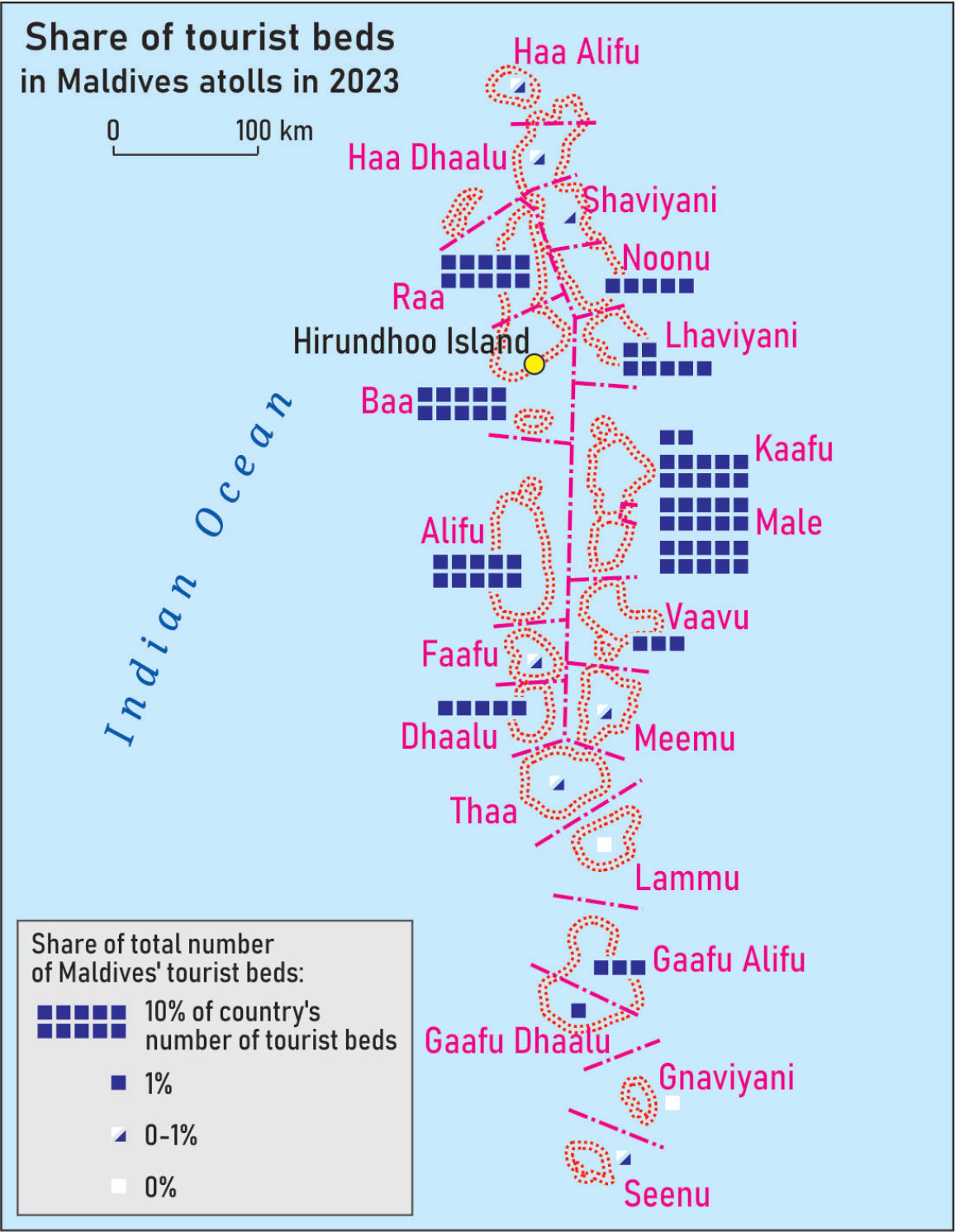
Figure 1.
Share of tourist beds in Maldives atolls in 2023
Source: own elaboration based on Statistical Yearbook of Maldives 2024. Authors: I. Gołębiowska and M. Jędrusik
The construction of hotel islands required innovation and significant capital investment, as nature had to be deeply transformed, and barriers had to be overcome for tourism needs. The main investors were from abroad. The world's largest hotel chains began to establish a presence in the Maldives. After the year 2000, the increasingly tourism-prosperous country started to attract China's interest, and it began to invest in infrastructure beyond tourist resorts. One of the results of these efforts was the construction of a bridge connecting Malé with the airport.
The more recent construction concerned only uninhabited islands, creating a “foreign” world within the nation, with features of nature unknown and inaccessible to the locals that were perceived by tourists as “paradise”. In reality, artificial worlds were being created using the most important natural resources while eliminating barriers through modern technology. The natural environment of the islands was nearly completely transformed following this scheme, which encompassed:
Building a dock and access to it;
Enlarging the islands' areas to a maximum;
Creating beaches (if necessary) – by 2000, artificial beaches were created on nearly half of the 87 hotel islands; 28 had a port or dock built;
Protecting the island, dock, and beach from erosion.
After completing these preliminary works, the flora of the islands was subjected to transformation. Most coconut palms were cut down because their overabundance and falling coconuts posed a danger to tourists. New palms were planted in places far from paths, ensuring they did not grow excessively. Old palms were meticulously harvested for coconuts. Coastal thickets of pandanus and breadfruit trees were thinned, and ornamental shrubs and trees that produce colourful flowers were planted. Pesticides are commonly and systematically used. In more luxurious resorts, large vegetable gardens and even freshwater lakes surrounded by thickets were created in cleared areas. Soil to create arable land was brought in from India and Bangladesh; freshwater was obtained by desalinating seawater; electricity was provided by generators; water supply and sewage systems were built; and waste was removed to areas outside the hotel islands, including Malé, where it served as material for building artificial islands. The process of artificially enlarging the territories of the islands – not just the tourist ones – has intensified since the first decade of the 21st century. Research conducted from 2004 to 2016 (with interruptions) by V. Duvat, on 104 native islands and 82 hotel islands, showed that, during this period, 59.1% of them were enlarged, with 13 native and 6 tourist islands increasing in area by over 50% (Duvat 2020). This applied, in particular, to the northern atolls, while the southern ones (Gaafu-Alifu Dhaalu) remained “natural”. Of course, such significant reconstruction did not leave the natural environment unaffected (Shakeela, Ruhanen, Breakey 2011). Obtaining building materials from coral reefs, pumping sand to fill post-storm losses, and the accumulation of waste and pollution have damaged coral reefs, although research conducted in 2018 on seven tourist islands showed that the scale of damage from tourism to reefs is relatively smaller than elsewhere in the world (Cowburn et al. 2018).
Social solutions were also significantly adapted. Changes occurred gradually, and more lenient contact rules between locals and tourists were implemented. Initially, in 1980, strict separation between hotel islands and islands inhabited by Maldivians was imposed. Tourists visited “native” islands two to three times per week for short, organized trips. These visits, and the purchases they entailed, were the only moments of contact between the two worlds – tourist and local – outside the capital Malé (a unique case – home to most of the population and nearly all tourists before they were transported to the tourist resorts). Locals were employed in tourist facilities. Local women were forbidden from staying on tourist islands after 6 PM. Similar prohibitions applied to foreigners on non-tourist islands. The hotel islands were still operating under laws that are different from Maldivian laws, including those concerning the possibility of selling and consuming alcohol. The official time on these islands often differed by one to two hours from the official Maldivian time, so tourists can sleep longer and sit down for dinner at sunset (Jędrusik 2003b).
In 2011, tourists were allowed to visit native islands – under different rules than those on hotel islands. Guesthouses run by locals were established. Prohibition and restrictions against public nudity outside remote and sometimes fenced beaches (such as the so-called bikini beach) were enacted. The culinary offerings on these islands are modest.
These changes stemmed from a shift in the tourism strategy in 2007, which sought to create an ideal image of tourist spots on the islands, proposing several models of leisure, including: Eco Tourism Resorts, Health Resorts, Luxury Islands, Floating Resorts, Budget Resorts, Live-aboards, Luxury Yachts, and Training Resorts (MTCA 2007, p. 50).
The tourist islands offer different standards. However, certain features related to their development are common. In essence, this amounts to the almost total transformation of the natural environment, and its adaptation to the needs of tourism. Therefore, each tourist island possesses similar elements and infrastructure schemes. Near the beach, bungalows are scattered relatively evenly across the island, ensuring that their entrances are no more than a few metres from the sea, and that they are located at an appropriate distance from technical facilities. The central part of the island is designated for tourist service areas: reception, one or more restaurants with kitchen facilities, a bar, a souvenir shop, a water sports centre, and equipment rental sites. In the most luxurious resorts, this area often includes a freshwater pool. In the centre of the island – especially in islands shaped like a circle – or on the opposite shore are facilities for staff that sometimes include a mosque and always comprise laundry facilities, a generator, a seawater desalination plant, and a nearby vegetable garden. On the coast, typically near the reception, there is a pier, a dock, and sometimes a helipad. Adjacent lagoon waters serve as a runway and landing area for seaplanes (Fig. 2). Visitors rarely realize the scale of the transformation of the original environment. Thus, an artificial world was created within the Maldives.
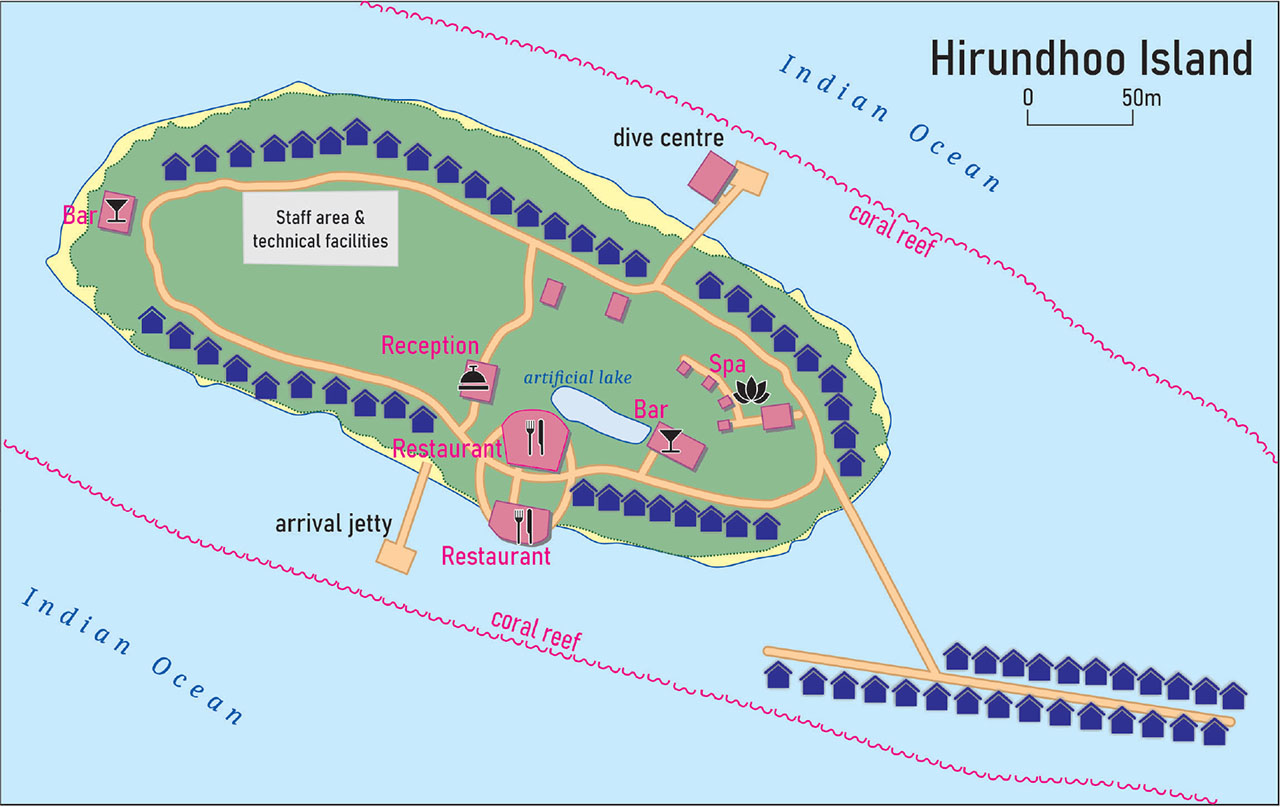
Figure 2.
Hirundhoo Island in 2023. Development scheme
Source: Authors: I. Gołębiowska and M. Jędrusik
One artificial world or many?
The space of the archipelago can indeed be divided into several “worlds”.
1. Natural, untransformed, uninhabited islands – over 800 islands remain uninhabited; some are still pristine, with nature unmodified; others are treated as a reserve for the construction of resorts, the number of which is rapidly increasing due to the sharply rising tourist traffic (Fig. 3).
2. Natural, minimally transformed, native islands, some with guesthouses (Figs 4–6).
3. Artificial, with significant remodelling of the characteristics and functions of the natural environment – these are hotel islands; the evolving variety of hotel island development forms prompts the question of how many such artificial worlds exist (Figs 7–10).
4. Mixed, artificially enlarged, and connected islands forming the Malé agglomeration; also, modernized Gan – an alternative tourist entry point to the Maldives and former British air base (Fig. 11).
- Artificial – not utilized for tourism, including Hulhumalé (an artificial island designed for residential development), Hulhulé (the airport), Thilafushi (a district of Malé built from waste and refuse – industrial zone) (Fig. 12).
6. Economic support – sites for obtaining building materials or waste storage (Figs 13–14).
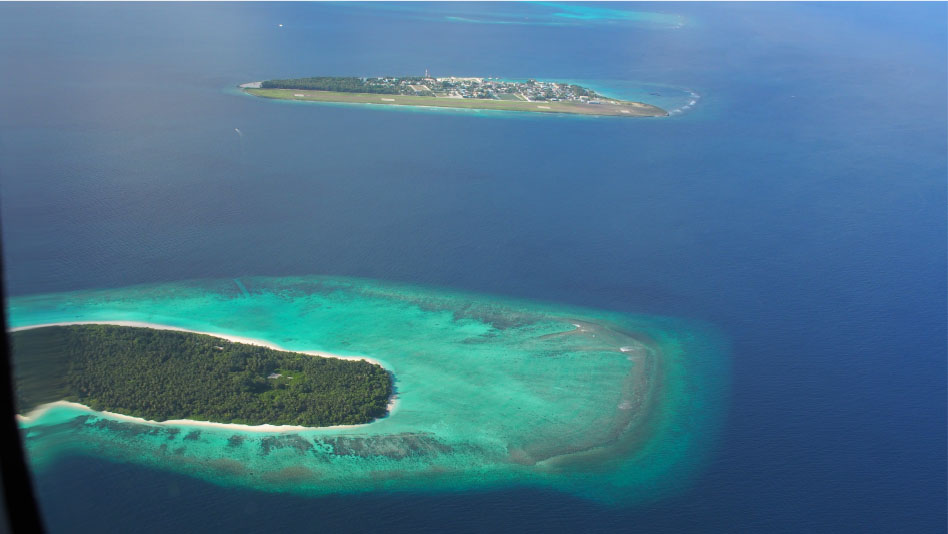
Figure 3.
World 1 – Hibalhidhoo, and World 3 – Dharavandhoo
Source: photo by Author
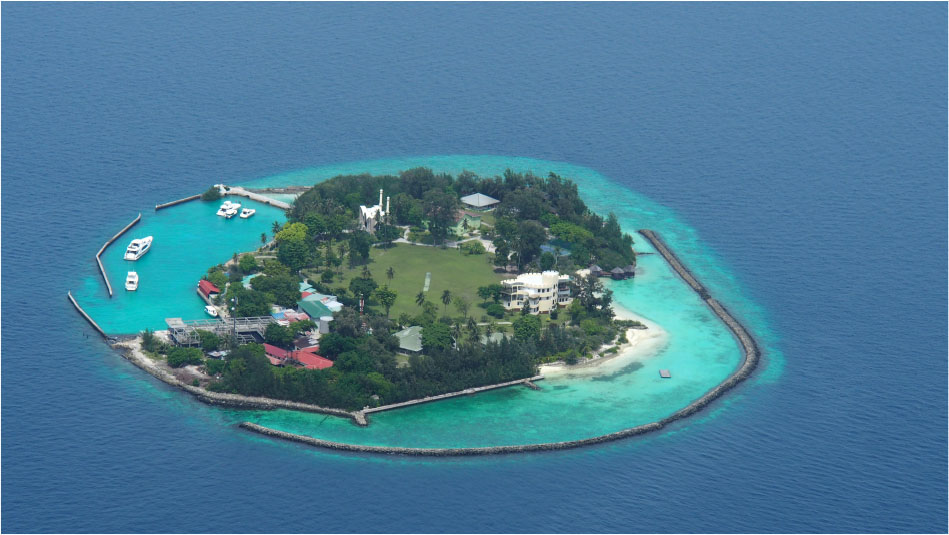
Figure 4.
Example of World 2 (a) – Malé Atoll
Source: photo by Author
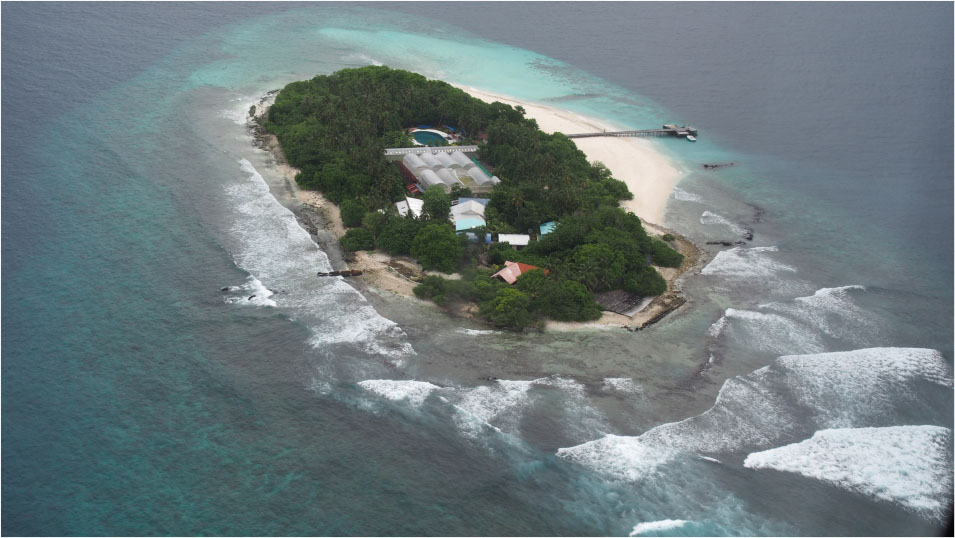
Figure 5.
Example of World 2 (b) – North Malé Atoll
Source: photo by Author
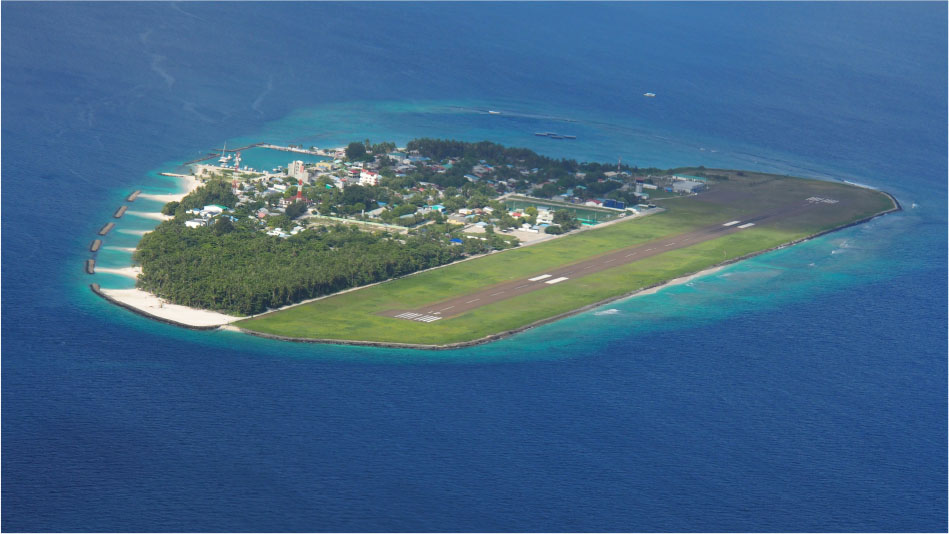
Figure 6.
Example of World 2 (c) – Dharavandhoo
Source: photo by Author
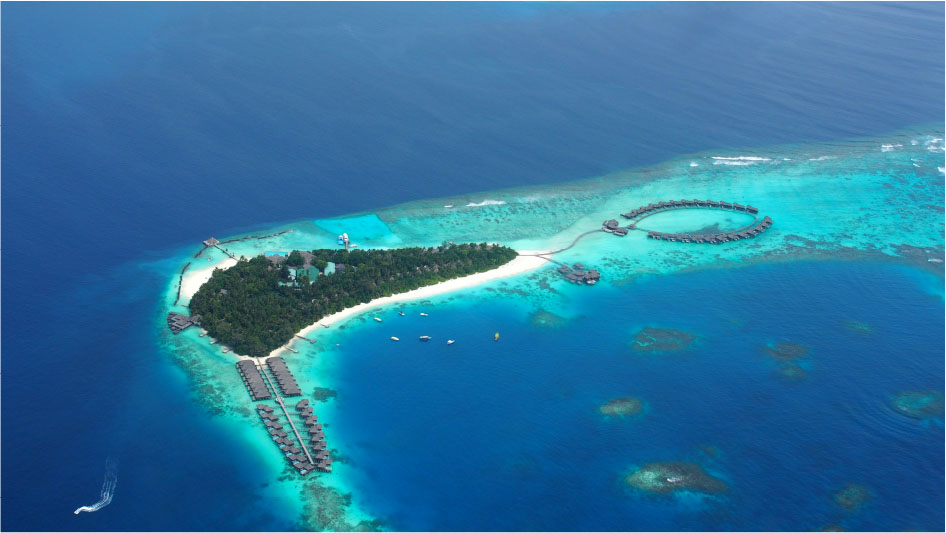
Figure 7.
Example of World 3 (a) – Boduhiti
Source: photo by Author
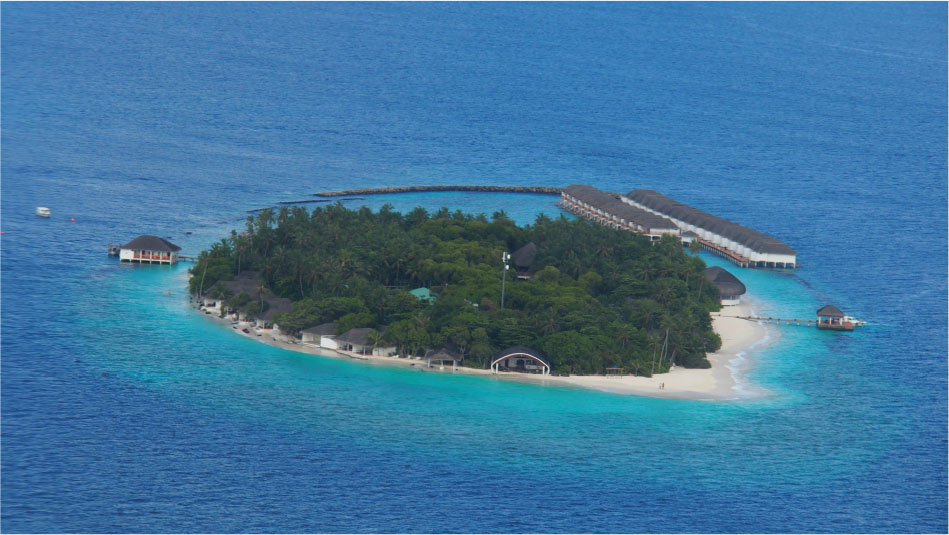
Figure 8.
Example of World 3 (b) – Hirundhoo
Source: photo by Author
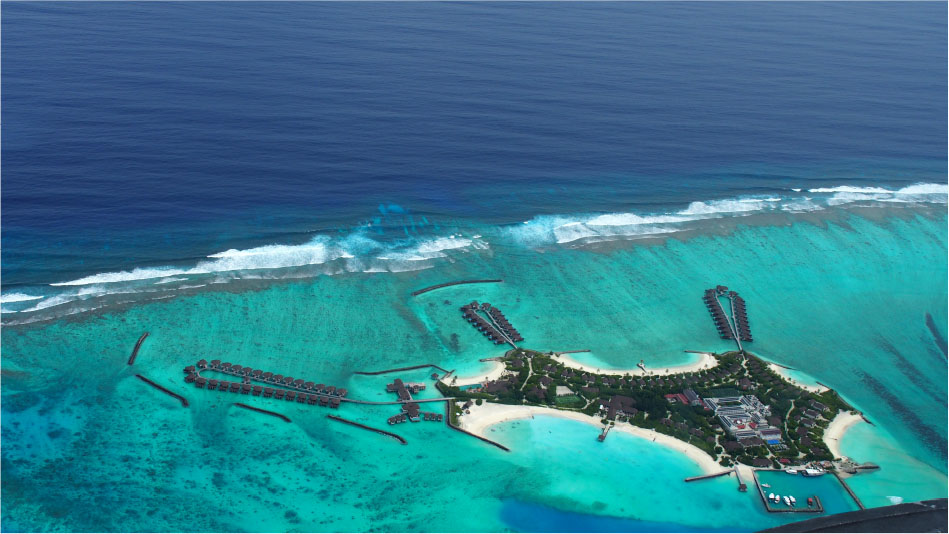
Figure 9.
Example of World 3 (c) – Varu – North Malé Atoll
Source: photo by Author
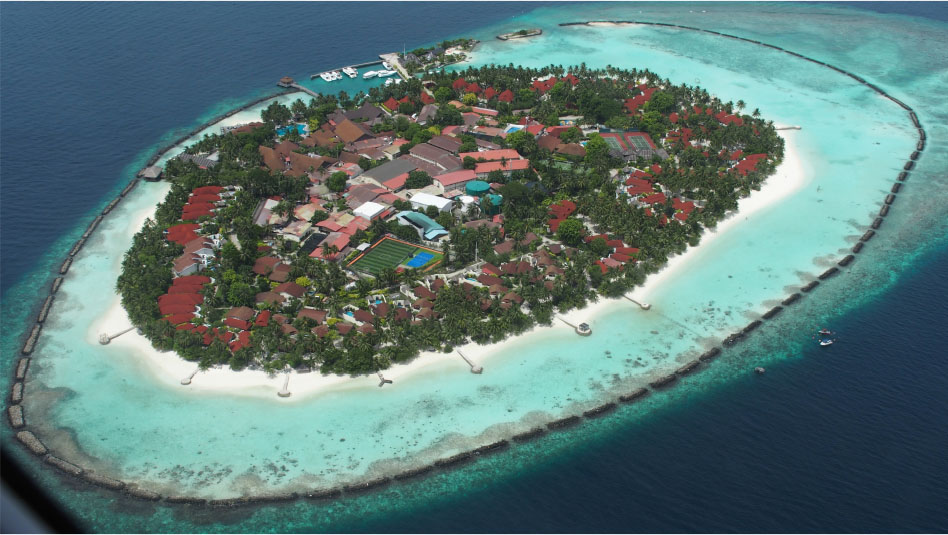
Figure 10.
Example of World 3 (d ) – Vihamanaafushi
Source: photo by Author
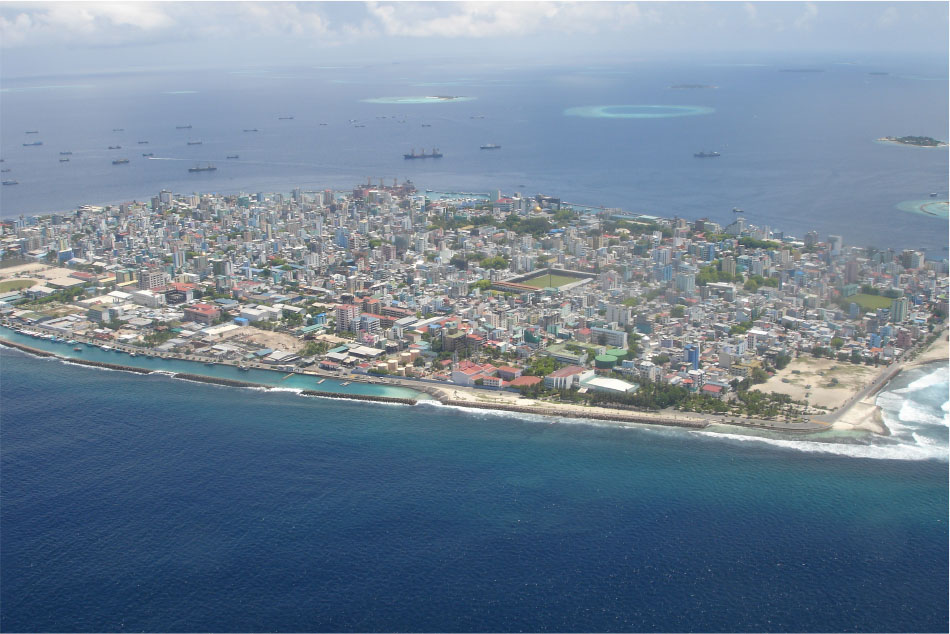
Figure 11.
Example of World 4 – Malé
Source: photo by Author
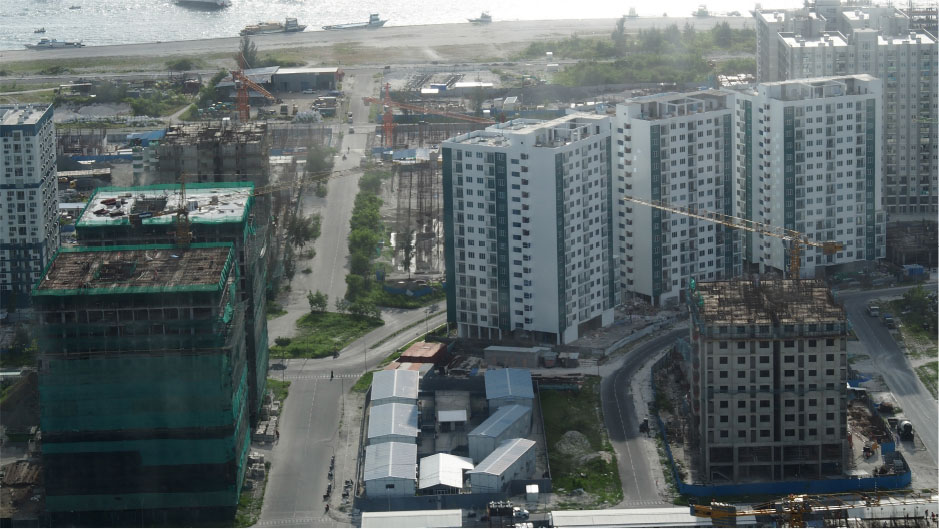
Figure 12.
Example of World 5 – Hulhumalé
Source: photo by Author
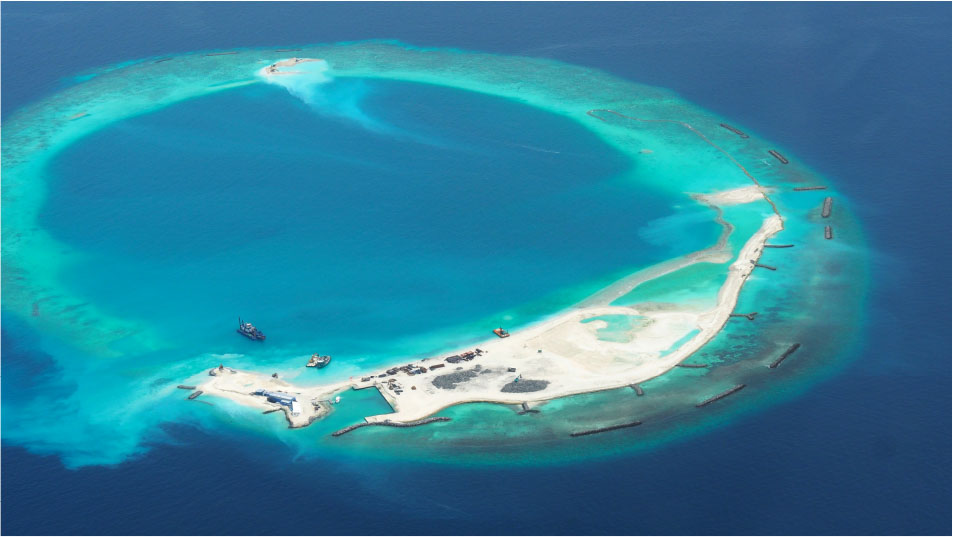
Figure 13.
Example of World 6 (a)
Source: photo by Author
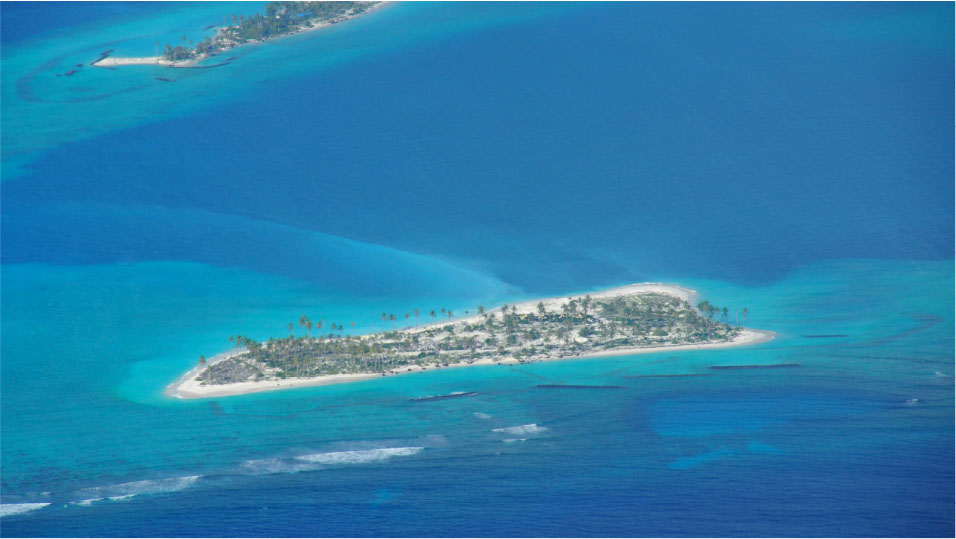
Figure 14.
Example of World 6 (b)
Source: photo by Author
The Future
Thus, from a homogeneous territory in the 1970s, the Maldives has become a very diverse territory. Conditions originally absent have been created over a significant area. It is worth asking what the chances are for the survival of this “brave new world” amid intense internal pressure on limited resources and external pressures related to global warming.
The threats to the future lie both in the external environment and within the area itself. The most significant internal threats include:
Depletion of resources:
(a) A decreasing number of islands available for tourism;
(b) Ongoing environmental degradation – particularly of coral reefs and marine fauna;
(c) Overexploitation related to growing demand, with slower service supply rates;
Rapidly increasing waste and pollution linked to tourism activities;
Depletion of groundwater resources due to overexploitation, fuelled by demographic pressure on native islands and increasing tourist flows on hotel islands;
Erosion of original economic functions;
Acculturation and changing customs, leading to social pathologies;
Increasing social stratification amid uneven income distribution;
Unknown impacts of building artificial islands from waste – potentially a “toxic bomb” (Thilafushi: Bluepeace 2024);
External threats include:
Rising ocean water levels – estimates suggest that by 2050, 80% of the country could become uninhabitable due to global warming (Ministry of Environment 2007). Some reports, including those from the World Bank, indicate that by 2100, all atolls will be submerged (Storlazzi et al. 2018);
Storms, leading to flooding and tsunamis (e.g. the 2004 disaster);
Ongoing erosion of the islands;
Economic dependence on tourism monoculture, which makes it vulnerable to economic, political, and pandemic crises.
Conclusions
In light of these threats, along with the presence of the aforementioned resources and barriers, at least four scenarios can be anticipated for the future functioning of the state.
1. Optimistic scenario – assuming principles of sustainable development and sustainable tourism – presents lasting and equitable growth, with incomes fairly distributed within the population. An abundance of resources and rational management outweigh internal and external threats. The realization of such a scenario is facilitated by the area's uniqueness and its globally unique model of tourist product. One significant condition is the stabilization of economic, political, and epidemiological situations worldwide.
2. Instability scenario – growing demographic pressure and economic claims from society destabilize the system, limiting the ability to sustain the functioning of the current model. Revenues from tourism in the monocultural economy will decrease. This will deepen instability, as there are no alternative economic solutions.
3. Pessimistic scenario – prolonged external impulses: political conflicts, wars, economic crises, disasters, and epidemics will hinder, discourage, or completely obstruct both tourism travel and access to adequate technological solutions.
4. Extreme scenario – annihilation of the archipelago due to rising ocean waters.
It is worth noting that the first three scenarios refer to the presence or dominance of “artificial worlds” within the Maldivian space. This is evidence of how significantly a peripheral country has become dependent on them over the last half-century. The comparison of the first two scenarios indicates that rich Northern contact with the Global South could yield benefits for both sides – provided restraint and rationality are applied – or disasters. The third and fourth scenarios prompt reflection on the responsibility of the North for the fates of weaker nations.