
Introduction
One of the crucial factors in developing a modern economy is the transport infrastructure, with air transport being especially significant. Air transport connects cities, countries, and continents, and facilitates the global and regional movement of goods and workforces. Air connectivity enables countries to participate in the world economy, enter international markets, and contribute to globalization. According to the International Air Transport Association (2020), air transport accounted for 35% of global trade turnover in 2019, with nearly 61 million tons of cargo moved, at a value of $6.5 trillion.
The COVID-19 pandemic had a negative impact on many areas. Barczak et al. (2022) stated that tourism was one of the most sensitive sectors of the economy to the impact of COVID-19. They claim that the crisis in air transport was a derivative of the crisis in tourism. The International Air Transport Association (2021) declares that, before the COVID-19 pandemic, air transport significantly impacted international tourism revenues, estimated at $3.5 trillion in 2019, constituting 4.1% of global GDP and supporting 87.7 million jobs. The pandemic had a severe negative impact worldwide, causing air connections between and within countries and continents to be cut in order to limit human contact. The number of international routes fell to the levels of twenty years ago, with significantly reduced frequency. Before the pandemic, each international destination benefited from an average of forty-three flights per month, which dropped to twenty by the end of 2020 – in other words, less than one flight per day.
Despite the decline in passenger traffic, air transport demonstrated its capability in swiftly solving logistical problems during the pandemic – providing quick delivery of supplies and transporting medical staff between countries. According to Bowen and Rodrigue (2020), in the early weeks of the COVID-19 pandemic, air cargo carriers were crucial in rushing ventilators and other equipment worldwide. Later in the pandemic, the same carriers helped speed the distribution of vaccines. The International Air Transport Association (2021) claims that in March 2020, special cargo flights delivered 1.5 million tons of medical equipment to the most pandemic-stricken areas, while repatriation flights brought home almost 5.4 million people.
It is evident that the interruption of air traffic significantly impacted the global economy, which highlights the importance of the air industry for international connectivity. These global summaries and statistics are widely published and easily accessible. In the review paper by Sun et al. (2022), nearly 200 published papers on the direct and indirect impact of the COVID-19 pandemic on aviation – and vice versa – in the years 2021 and 2022 were collected. However, the results of spatial and temporal analyses that reveal the time patterns and nature of the changes in air traffic caused during the COVID-19 pandemic are almost absent or barely touch on the subject. One approach to conduct such analyses and present the results in a very visual way is geovisualization, followed by visual analysis. Slocum et al. (2022) define geovisualization as an activity where unknowns are revealed in a highly interactive environment.
Objectives
This paper aims to reveal the spatial and temporal changes in European air traffic induced by the 2020 COVID-19 pandemic through visual analysis of interactive maps. Interactive maps are a powerful tool for processing large volumes of diverse spatial data. According to Andrienko et al. (2007), spatial awareness and literacy can be improved by providing a comprehensive view of territories and their relationships. As demonstrated by Popelka and Voženílek (2013), interactive maps engage users in discovering proto-relationships and patterns by allowing them to explore and interact with the map. Users can not only zoom in, zoom out, pan, and customize the map but also query detailed descriptive information and continue to work with the data for advanced analysis. For example, Piňos et al. (2020) used interactive maps to facilitate research collaboration and communication by sharing a platform for multiple users to access and interact with the same map simultaneously. Vondráková and Vozenilek (2016) stated that interactive maps provide an environment for visual data analysis that is easier to perform and interpret than raw data or textual information. The tools and functionality of interactive maps are visually appealing to many users and allow them to work with data intuitively.
As defined by Barvir and Vozenilek (2020), visual analysis involves evaluating cartographic works solely through visual perception. Users can derive phenomena values, spatial relationships, distribution, and conclusions through observation, and without quantification or statistical evaluation. During visual analysis, unanswered questions may arise, emphasizing the need to display additional variables or remove unnecessary ones from the maps. Common methods include comparison, filtering, aggregation, highlighting, and zooming/scrolling. Interactive visual analysis tool design considers factors such as representing aggregated data at different map scales, designing geovisualization products, arranging map layers logically, and utilizing effective interactive map tools.
The International Air Transport Association (2021) roughly divides 2020 into three periods for statistical purposes. The first period was paralysis, when the industry faced an unprecedented event and air travel between countries was almost non-existent. The second period was the adaptation period, when the industry began to react and adapt to the situation. The third period started with a slow increase in air traffic frequency following the unification of hygiene requirements.
Interactive air traffic maps enable users to identify and locate temporal changes and spatial patterns during these periods through visual analysis, especially within Europe. The work aims to uncover key connections between countries, showcasing resilient routes and pivotal points, despite the notable decrease in air traffic. The resulting visualization emphasizes the importance of preserving these links during disruptions, which will aid efficient crisis responses in the future. Gössling (2020) claims that the future development of a sustainable aviation system must take into consideration, as a starting point, how well-developed the adaptation component of the current system is. By compiling interactive air traffic maps for the year 2020, and their visual analysis, it is possible to follow the unique process of shaping the main transport routes of the European air transport network.
Methodology
One approach to solving the objectives is to visualize spatiotemporal data through flow map format. According to Boyandin et al. (2011), flow maps are visualizations that represent entities flowing between geographical locations on a map overlaid with lines connecting the flow origins and destinations. In this research, flows consist of air traffic data, and are determined as a two-way process banding the spatial points from which flows originate and those to which these flows are directed. The study is based on incoming and outgoing flight data, recorded for each European airport with an official code from the International Civil Aviation Organization. Since this article considers the concept of interaction between countries rather than individual cities and their airports, in order to relieve the visual component, all data for each country were collected at one point, specifically the country’s geographical center. Visualizations based on this approach are also known as origin-destination data-built visualizations.
Origin-destination data are often available in tabular format, where each row represents one flow, and each column represents one attribute. This type of data is widely used. In research by Ahas et al. (2007), Caseres et al. (2007), Guo and Zhu (2012), Zhu and Guo (2014), Iqbal et al. (2014), Alexander et al. (2015), Yang et al. (2016), Koylu and Guo (2017), Huang et al. (2018), Ni et al. (2018), Bachir et al. (2019), Jia et al. (2020), and Halás et al. (2020), origin-destination data are used to identify the relationship between points and to analyze the movement of objects in space and time. Pregi et al. (2022) stated that spatial process data analysis is important in order to better understand complex systems and their dynamics in various fields such as urban planning, transport network planning, traffic flow analysis, logistics and supply chain, migration and commuting studies, commuter traffic, and emergency management.
In traditional cartography, origin-destination data are most often represented graphically by the flowchart method. In this method, the magnitude of flows between two points is defined by bands or lines of different widths. However, this method has several drawbacks and limitations. One of the main logical follow-up problems in spatial flow mapping interpretation using this method is the challenge of placing multiple flows on the same map without negatively affecting readability. In their research, Tobler (1987), Nielsen and Hovgesen (2008), Guo (2009), Rae (2009), Wood et al. (2010, 2011), Guo and Zhu (2012, 2014), Zhu and Guo (2014), Koylu and Guo (2017), Yang et al. (2016, 2018), Zhu et al. (2019), and Jenny et al. (2018) also pointed out the problem of visualizing a large number of origin-destination streams in the limited space of a map. In addition, Pregi et al. (2022) claim that most origin-destination classic flow mapping studies either work with a small dataset or show only the most important flows, which not only indicates a significant loss of information but can also result in misleading maps. Their conclusions were obtained from a case study, in which the benefits of interactive flow maps were demonstrated through a worked example. Several visualization applications currently offer the concept of interactive flow maps; however, not all can handle large datasets. Sometimes, the number of origin and destination points, and the interactions between them, can amount to tens of thousands of rows. Moreover, affordability for some users is also a concern. Advanced software such as ArcGIS Pro requires a license. Nevertheless, in addition to commercial products, free options can also compete. Furthermore, Wielebski and Medyńska (2019) stated that, along with the expanding possibilities of presenting the same spatial phenomena in many different ways, questions emerge about the usability of the particular graphical solutions in conveying information. Since the main requirement of such interactive maps is their readability and informativeness, one way to meet the abovementioned requirements is to visualize spatial processes using the FlowmapBlue mapping application. The biggest advantage of this tool is the ability to display many origin-destination streams in a very efficient visual form.
FlowmapBlue is a freely distributed interactive web application, created in JavaScript, for visualizing spatial data. The creator of this mapping application is the Russian software engineer Ilya Boyandin. In addition to static mapping interpretation, this application allows for dynamic simulation or animation of origin-destination flows over different periods, and displays even the smallest flows that may remain hidden on a static map.
FlowmapBlue is user-friendly and relatively quick, and it is easy to compile a map directly on the map application website. The procedure for making a map comprises three stages:
- the user must open the Google Sheets platform and upload the relevant data within the prepared draft provided;
- the data must then be saved and shared with the FlowmapBlue platform by providing public access to the file;
- the resulting visualization must be opened in a new tab using any internet browser; in order to apply new changes, the tab must be reloaded to edit the data inside the file.
If the user experiences issues with data conversion or placing correct coordinates, the platform offers special tools that require a matrix converter and geocoding tool.
Data
To create the abovementioned visualization, searching for a suitable data source is crucial; this requires free access to archived flight information and a large airport database. According to requirements, OpenSky Network is an acceptable source of information. The OpenSky Network was originally produced for air traffic analysts. Data from the OpenSky Network are free for academic and governmental institutions. Its main purpose is to collect, process, and store air traffic data, and provide the public with open access. Many researchers, in various fields, use the database mainly to analyze and improve air traffic technologies and processes.
Polishchuk et al. (2019), for example, used OpenSky Network data to evaluate the performance of Stockholm Arlanda Airport. Their study identified causes of delays, optimal flight paths in poor weather conditions, and more efficient vertical flight profiles for landing. OpenSky flight data are regularly used to analyze various environmental problems. Other examples are the analysis of noise emissions in a study by Tengzelius and Abom (2019) and the calculation of black carbon particle emissions in the work of Zhang et al. (2019). In addition, Strohmeier et al. (2021) processed an extensive analysis of OpenSky Network data usage over the last five years. It was noted that, since mid-2020, OpenSky received more than 70 requests for air traffic data specifically related to the COVID-19 pandemic. The authors also mentioned that over 100 academic groups had used OpenSky data in the last five years. Since the COVID-19 outbreak, the demand for operational and historical aircraft flight data has greatly increased. Researchers worldwide are using air traffic data not only to analyze the spread of the pandemic but also to examine the impact of global containment measures on the economy, the climate, and other systems. In the first case, modelling the possible spread of COVID-19 was of critical interest in the early stages of the pandemic, and will be important for future travel safety assessments; the usefulness of flight data was illustrated in a study by Bogoch et al. (2020) on the speed of the spread of the virus. In the second case, flight data can be further used to understand the impact of the sudden drop in air traffic in many global systems. This conclusion was drawn by Miller et al. (2020) in their research on the direct relationship between air traffic density and GDP. Since the airline industry is a key driver in many economies, its impact on GDP is extremely high. The use of OpenSky Network for such a comprehensive analysis of complex and big data once again confirms its authority among the scientific community.
Results
The analysis covers data from 1 January to 31 October 2020. Data for November and December 2020 were not considered in order to increase webpage loading speed. Since traffic data for these two months were almost identical to October, this didn’t affect the overall picture. A large amount of data and a lengthy processing and visualization process could create a negative user experience. The visualization outputs consist of eleven maps, several parts of a single interactive map, two tables, and five charts with descriptions. The elements of subsequent maps include two main aspects in their legends (see Figures 1–4, 7–12, 16). The first is the width of the flows; wide flows intuitively represent high traffic, and thin flows the opposite. In other words, the flow width is a quantitative notation of the traffic between two separate points/countries in a certain period. The second is the bar at the bottom of the map; this is composed of a series of columns, where each column represents the sum of traffic counts – for all directions for one particular day. The higher the column, the busier the traffic on that day. The web version of the maps compiles all maps into a single interactive visualization, to which the user has full access for manipulation. When the user moves the cursor over a specific point on the map, the value for that particular country is displayed. Thus, the user can observe and compare the dynamics of these values for the entire period under study. As mentioned by Wielebski et al. (2020), it is important to design visualizations in such a way that they can be linked to one another.
January–April 2020: period of paralyses
The COVID-19 viral disease pandemic occurred after the virus was first identified in December 2019 in Wuhan, China. As early as January 2020, different countries began to announce various strict measures affecting travel and, by extension, air travel. The World Health Organization (2020) declared a global health emergency outbreak on 30 January 2020, and a pandemic in March 2020. According to the World Health Organization’s coronavirus disease (COVID-19) weekly and monthly epidemiological operational update reports (2023), by 8 March 2023, a total of 676.57 million cases had been confirmed in 201 countries, leading to 6.88 million deaths, which were attributed to COVID-19. Air travel for passengers was restricted and often banned. For example, the number of incoming flights to the United Kingdom decreased from 60,562 in January 2020 to 5,770 in April 2020 (see Table 1). The period from January to April 2020 can be described as air transport paralysis.
Table 1.
Statistics of the busiest countries by number of incoming and outgoing flights in Europe from January to April 2020
| Country | January | February | March | April | Flight change from January to April [%] | |||||
|---|---|---|---|---|---|---|---|---|---|---|
| Incoming | Outgoing | Incoming | Outgoing | Incoming | Outgoing | Incoming | Outgoing | Incoming | Outgoing | |
| United Kingdom | 60 562 | 60 445 | 59 369 | 59 263 | 42 495 | 42 370 | 5 770 | 5 781 | −90,47 | −90,44 |
| Germany | 59 121 | 59 273 | 57 305 | 57 348 | 38 987 | 38 736 | 9 043 | 9 046 | −84,70 | −84,74 |
| France | 40 030 | 40 070 | 39 116 | 39 163 | 25 248 | 25 275 | 3 546 | 3 539 | −91,14 | −91,17 |
| Spain | 37 979 | 38 050 | 37 635 | 37 615 | 25 351 | 25 433 | 2 285 | 2 261 | −93,98 | −94,06 |
| Italy | 32 711 | 32 689 | 31 419 | 31 505 | 11 780 | 11 799 | 2 066 | 2 048 | −93,68 | −93,73 |
| Netherlands | 21 830 | 21 820 | 20 628 | 20 604 | 15 019 | 14 906 | 2 687 | 2 673 | −87,69 | −87,75 |
| Switzerland | 18 659 | 18 607 | 17 761 | 17 806 | 10 777 | 10 778 | 1 162 | 1 166 | −93,77 | −93,73 |
| Poland | 13 929 | 13 926 | 12 963 | 12 952 | 6 957 | 6 962 | 695 | 695 | −95,01 | −95,01 |
| Austria | 13 042 | 13 060 | 12 827 | 12 855 | 7 193 | 7 143 | 823 | 829 | −93,69 | −93,65 |
| Belgium | 12 404 | 12 407 | 11 996 | 11 975 | 8 519 | 8 496 | 2 475 | 2 475 | −80,05 | −80,05 |
| Portugal | 11 533 | 11 575 | 11 339 | 11 375 | 7 933 | 7 924 | 549 | 560 | −95,24 | −95,16 |
| Sweden | 9 912 | 9 889 | 9 657 | 9 650 | 6 844 | 6 860 | 1 130 | 1 119 | −88,60 | −88,68 |
| Ireland | 9 857 | 9 830 | 9 444 | 9 448 | 7 725 | 7 704 | 1066 | 1071 | −89,19 | −89,10 |
| Norway | 8 565 | 8 553 | 8 365 | 8 356 | 5 892 | 5 862 | 1 515 | 1 498 | −82,31 | −82,49 |
[i] Source: own study using data from OpenSky Network 2022
These crucial changes in air connections can be seen more clearly in the maps in Figures 1–4. They reveal that the UK and Germany consistently emerge as the leading countries for incoming and outgoing flights, indicating their central roles in international traffic during this period. France also plays a significant role as an important corridor for air traffic. Together with Spain and Italy, they made up the top five major air transport arteries in European airspace from January to April 2020. This result can be proven by map visual analysis (see Figures 1–4). Moreover, it is clear from the maps that the other flows are less busy and less prominent. Despite massive restrictions across Europe, air connections between the UK, Germany, Spain, and France were still the main corridors for air traffic, as the maps in Figures 1–4 show.
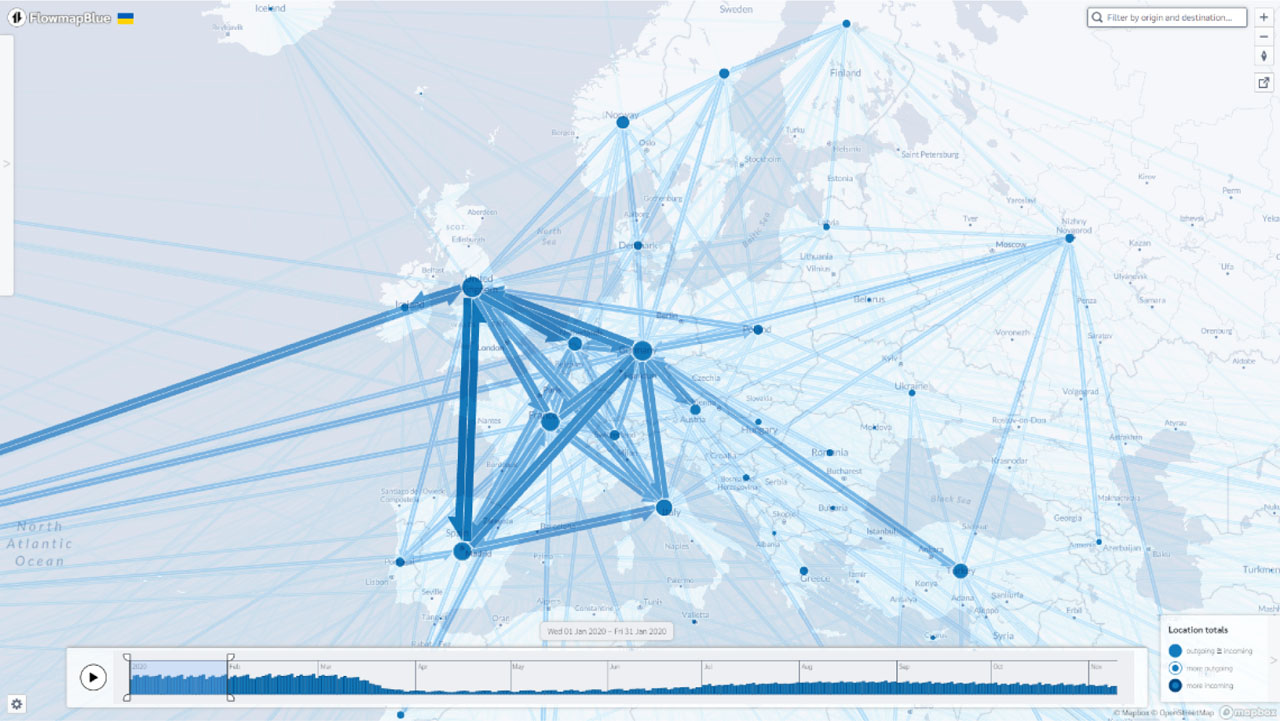
Figure 1.
Flow map of European air traffic in January 2020
Source: own study using data from OpenSky Network 2022
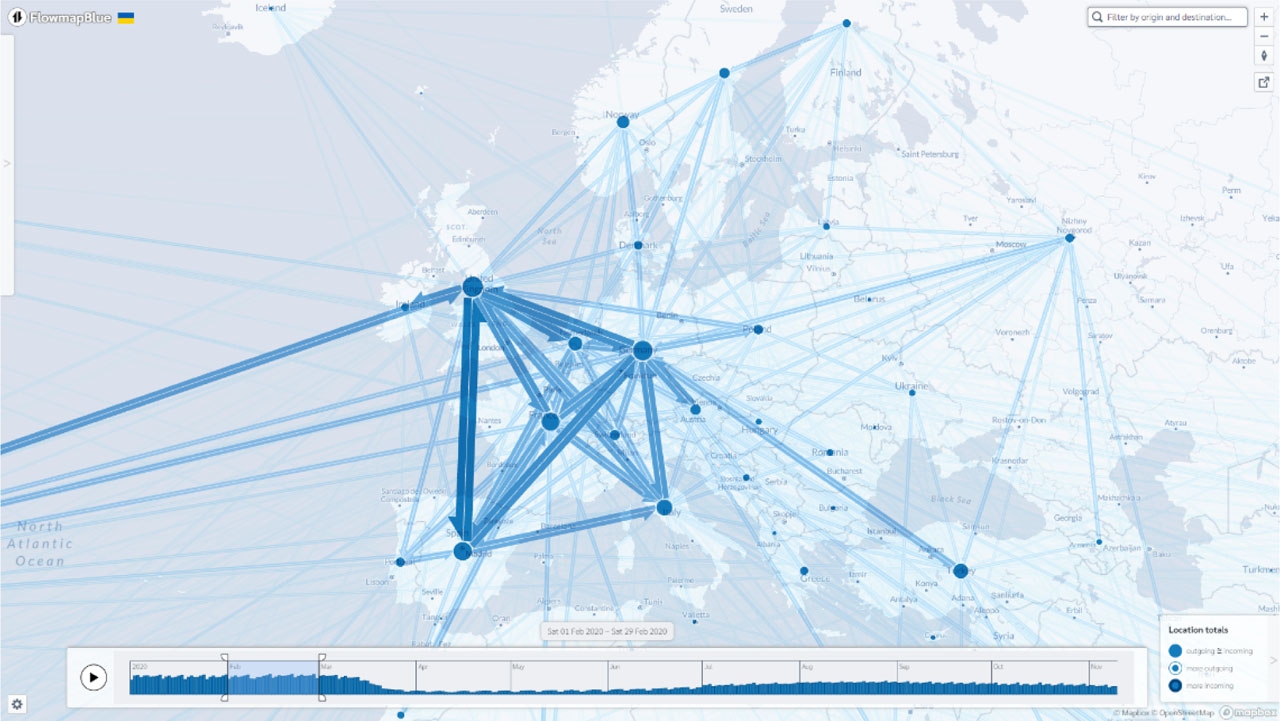
Figure 2.
Flow map of European air traffic in February 2020
Source: own study using data from OpenSky Network 2022
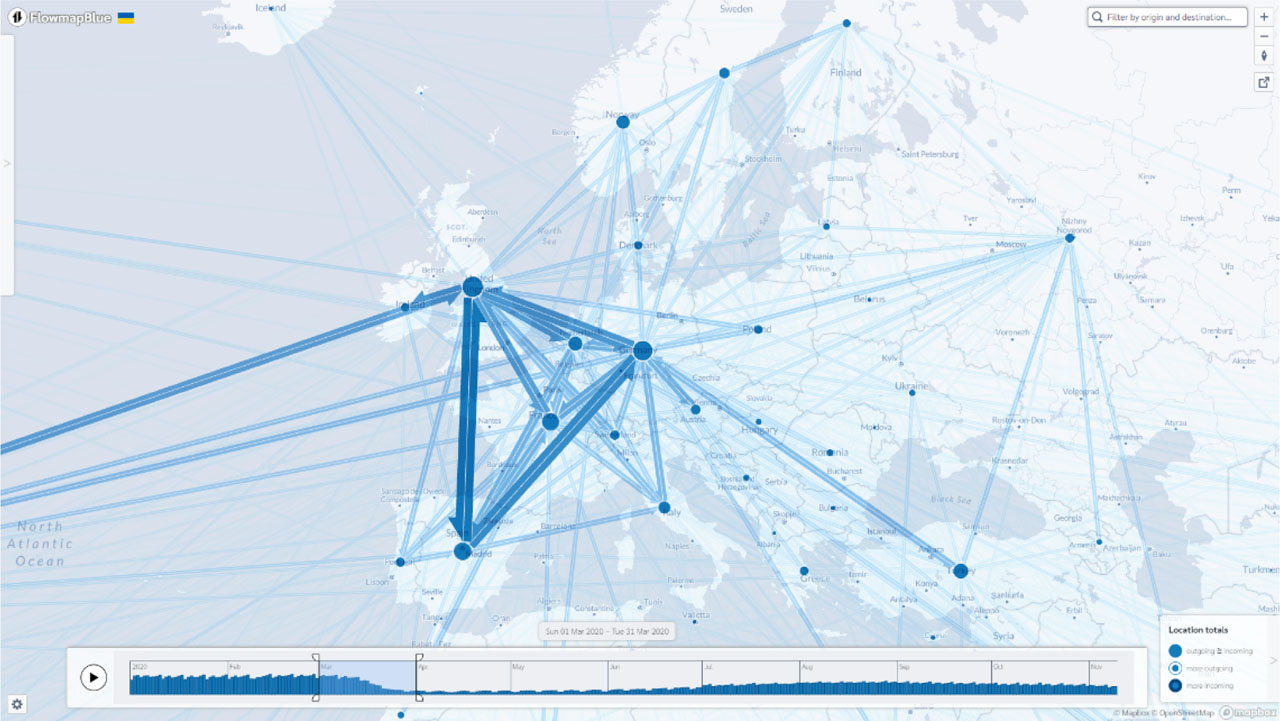
Figure 3.
Flow map of European air traffic in March 2020
Source: own study using data from OpenSky Network 2022
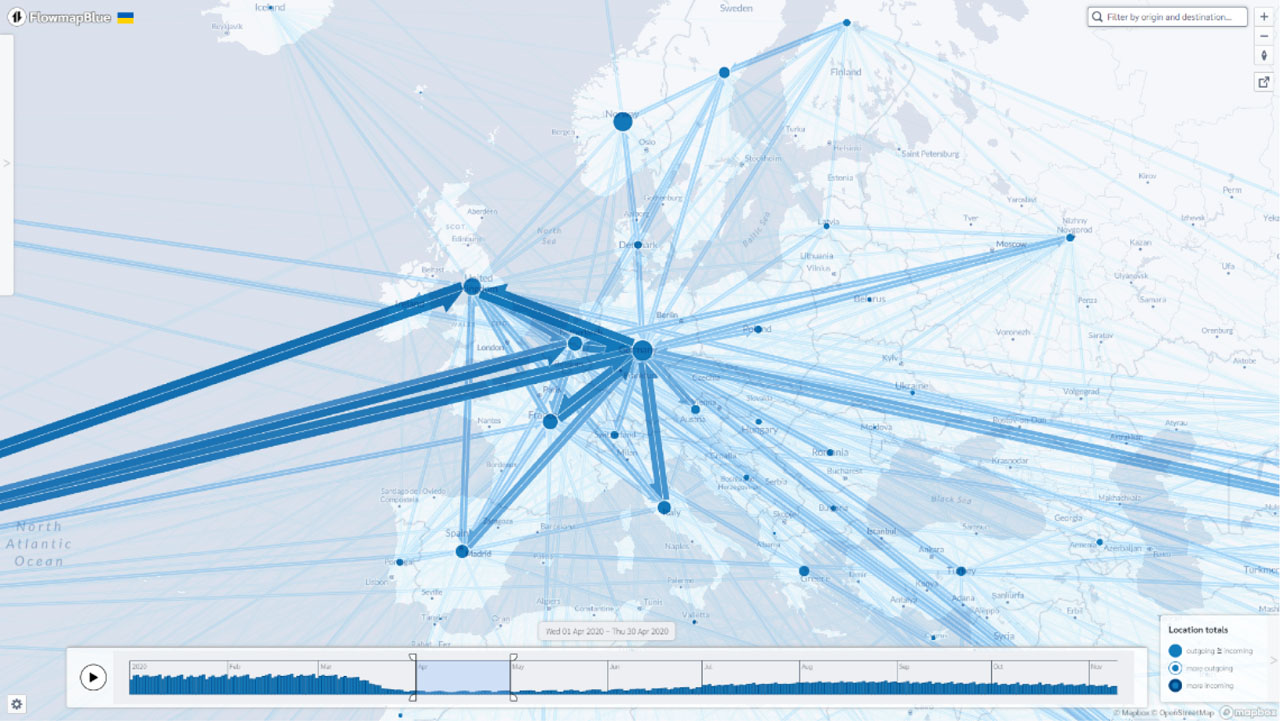
Figure 4.
Flow map of European air traffic in April 2020
Source: own study using data from OpenSky Network 2022
Statistical evidence of the visual findings is presented as charts in Figures 5–6. There was a significant decrease in incoming and outgoing flights in March compared with February for all countries. The largest decrease was for Italy, where the number of incoming flights decreased by 62.5%, and the number of outgoing flights decreased by 62.6%. This sharp decline in flight traffic was due to the spread of the COVID-19 pandemic, which rapidly affected all countries.
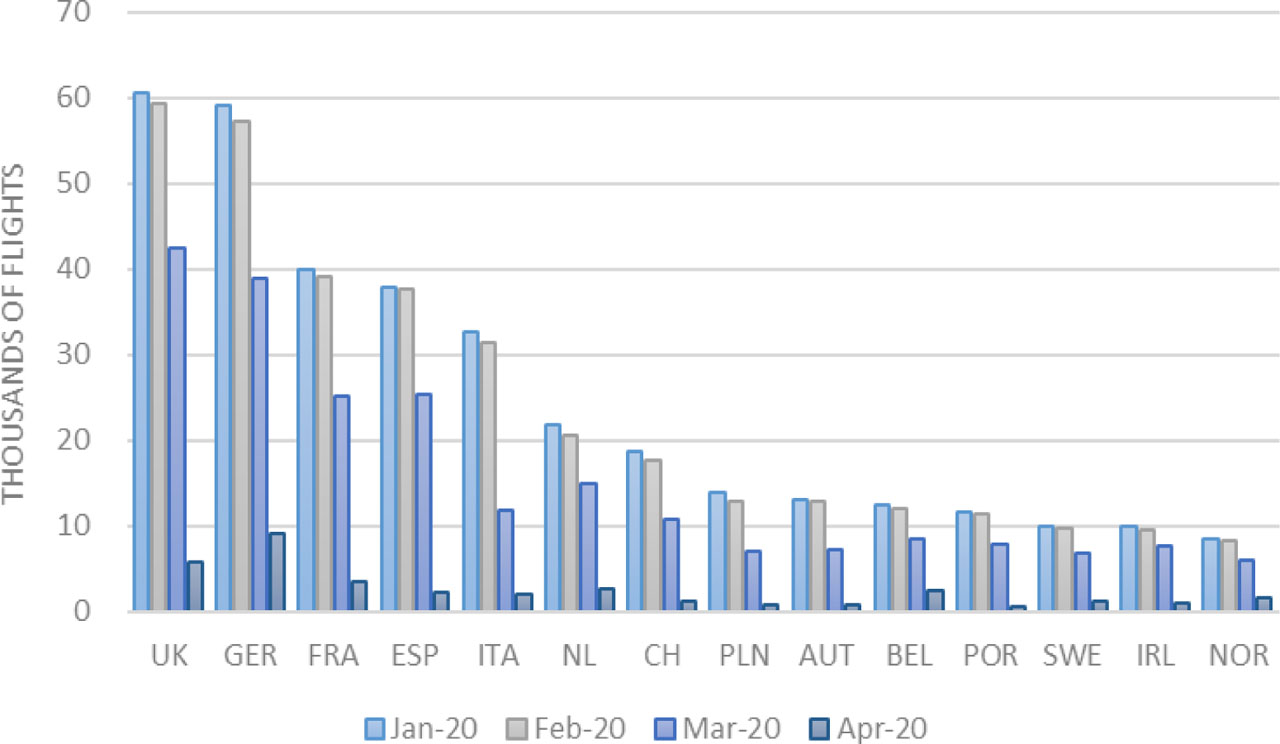
Figure 5.
Incoming flight changes from January to April 2020 within European airspace
Source: own study using data from OpenSky Network 2022
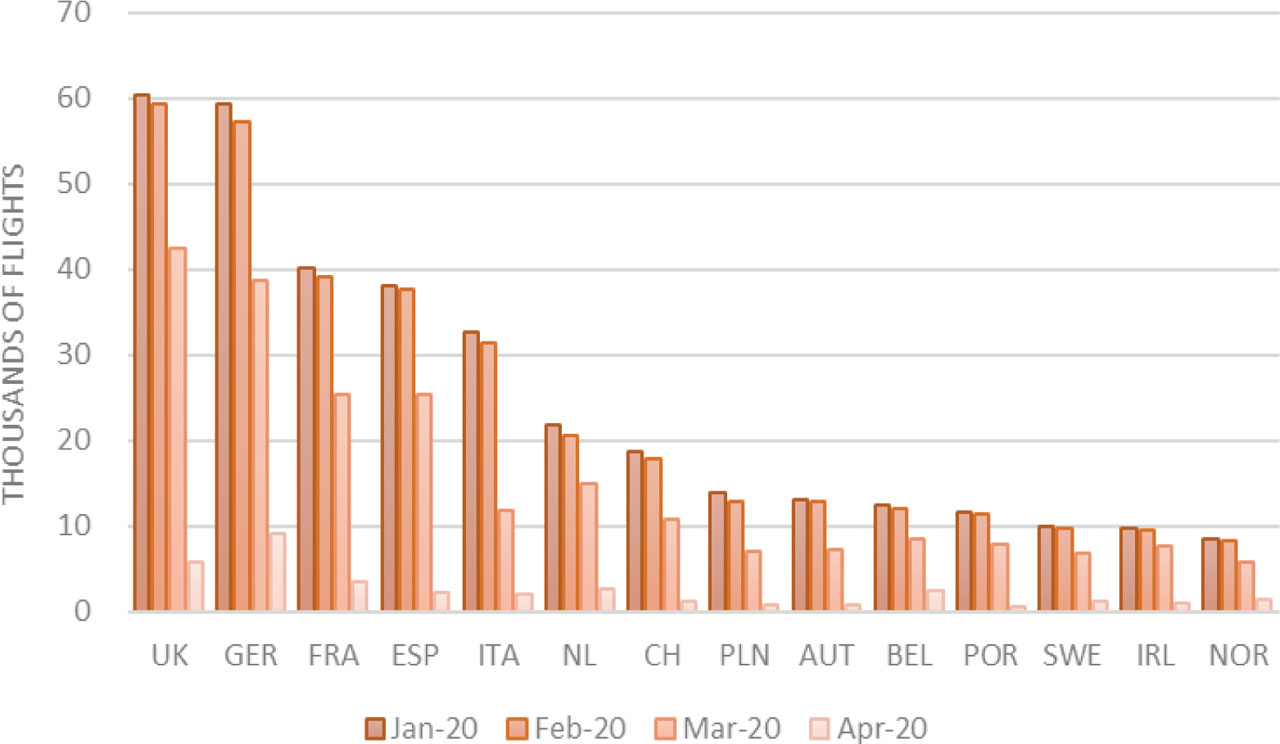
Figure 6.
Outgoing flight changes from January to April 2020 within European airspace
Source: own study using data from OpenSky Network 2022
The April data show the ongoing impact of the COVID-19 pandemic on general European air traffic. Compared with March, there was a substantial reduction in incoming and outgoing flights for all analyzed countries, highlighting the persistent disruption caused by the pandemic. The magnitude of the decline varied across countries, but the overall trend was consistent: a sharp drop in air travel activity across Europe. Germany experienced a 76% decrease in incoming and outgoing flights compared with March, followed by an 87% decline in the United Kingdom. France, Spain, and the Netherlands also witnessed significant decreases of around 85%, 89%, and 82%, respectively. Belgium, Italy, Norway, Switzerland, Sweden, Ireland, Austria, Poland, and Portugal all saw substantial decreases, ranging from 71% to 93% for incoming and outgoing flights.
To summarize, air transport experienced a small decline between January and February; in contrast, March saw a large decrease and, in April, there was a massive decline. As previously mentioned, the decrease in incoming flights reached 90.47% in the UK from January to April 2020; the reductions gradually intensified: January–February 1.97%, February–March 28.42%, and March–April 86.42%. Although, statistically, air traffic decreased considerably, the table, maps, and charts show that the main arteries for air transport remained unchanged. Moreover, interesting observations reveal that there was active Transatlantic and Eurasian air traffic in April. This is likely related to the active exchange of humanitarian aid between Europe, North America, and Asia.
May–August 2020: period of adaptation
Summer data unveil a remarkable surge in traffic frequency, indicating the beginning of the recovery phase. However, key factors behind that are the start of simplified travel restrictions and the onset of the holiday season. For example, the number of incoming flights to Italy in May 2020 increased from 2,563 to 23,439 in August 2020 (see Table 2). The period from May to August 2020 can be described as air transport adaptation.
Table 2.
Statistics of the busiest countries by number of flights in Europe from May to August 2020
| Country | May | June | July | August | Flight increase from May to August [%] | |||||
|---|---|---|---|---|---|---|---|---|---|---|
| Incoming | Outgoing | Incoming | Outgoing | Incoming | Outgoing | Incoming | Outgoing | Incoming | Outgoing | |
| Germany | 10 611 | 10 731 | 16 040 | 16 136 | 31 241 | 31 386 | 36 046 | 36 023 | + 239,70 | + 235,69 |
| United Kingdom | 7 374 | 7 310 | 9 311 | 9 434 | 23 918 | 23 968 | 36 218 | 36 141 | + 391,16 | + 394,40 |
| France | 4 899 | 4 879 | 8 916 | 8 852 | 22 716 | 22 628 | 27 956 | 28 018 | + 470,65 | + 474,26 |
| Netherlands | 3 848 | 3 839 | 5 533 | 5 519 | 11 063 | 11 089 | 14 876 | 14 894 | + 286,59 | + 287,97 |
| Belgium | 3 024 | 3 037 | 4 040 | 4 031 | 7 476 | 7 483 | 7 959 | 7 952 | + 163,19 | + 161,84 |
| Spain | 2 748 | 2 721 | 4 224 | 4 184 | 22 253 | 22 195 | 28 857 | 28 947 | + 950,11 | + 963,84 |
| Italy | 2 563 | 2 527 | 5 628 | 5 595 | 17 268 | 17 184 | 23 439 | 23 408 | + 814,51 | + 826,32 |
| Switzerland | 1 834 | 1 836 | 4 296 | 4 290 | 9 114 | 9 232 | 10 314 | 10 346 | + 462,38 | + 463,51 |
| Norway | 1 619 | 1 616 | 2 253 | 2 239 | 3 661 | 3 650 | 4 127 | 4 119 | + 154,91 | + 154,89 |
| Sweden | 1 297 | 1 286 | 1 054 | 1 091 | 2 843 | 2 844 | 3 570 | 3 585 | + 175,25 | + 178,77 |
| Ireland | 1 224 | 1 222 | 1 434 | 1 423 | 3 991 | 3 976 | 4 950 | 4 955 | + 304,41 | + 305,48 |
| Austria | 1 054 | 1 091 | 2 595 | 2 602 | 6 053 | 6 099 | 7 558 | 7 538 | + 617,08 | + 590,93 |
| Portugal | 873 | 862 | 1 702 | 1 695 | 6 028 | 6 019 | 8 787 | 8 816 | + 906,53 | + 922,74 |
| Poland | 725 | 715 | 1 481 | 1 474 | 7 021 | 7 024 | 9 016 | 9 002 | + 1143,59 | + 1159,02 |
| Greece | 751 | 758 | 1 492 | 1 486 | 10 192 | 10 147 | 15 397 | 15 401 | + 1950,20 | + 1931,79 |
[i] Source: own study using data from OpenSky Network 2022
From May to August, there is a general trend of increasing numbers of incoming and outgoing flights for most countries, reflecting the gradual easing of travel restrictions and the reopening of borders. Within the biggest air transport corridors, Germany took the lead. There was a significant increase in both incoming and outgoing flights, with a percentage increase of 239.70% for incoming flights and 235.69% for outgoing flights from May to August. The United Kingdom, France, and the Netherlands saw substantial increases in flights, too, with percentage increases ranging from 391.16% to 470.65% for incoming flights and from 394.40% to 474.26% for outgoing flights. Other countries also experienced varying degrees of growth in the number of flights, as indicated by their percentage increases. This growth in air connections can be seen more clearly in the maps in Figures 7–10.
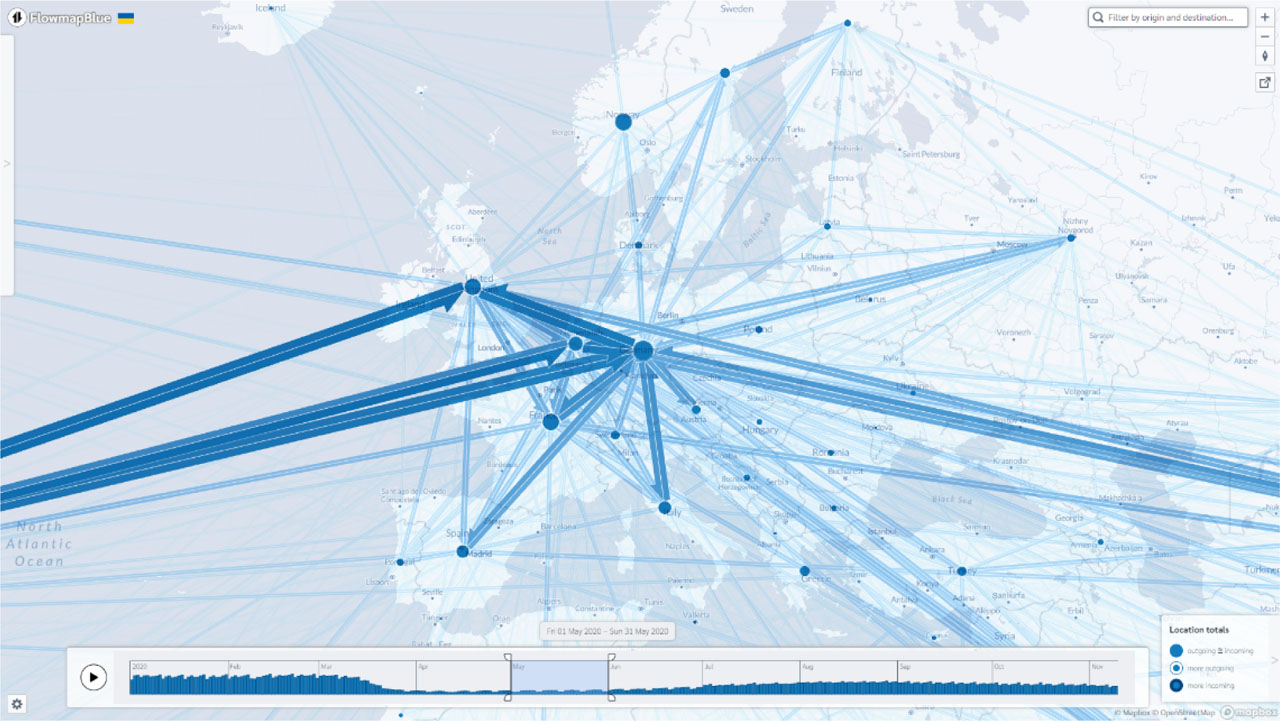
Figure 7.
Flow map of European air traffic in May 2020
Source: own study using data from OpenSky Network 2022
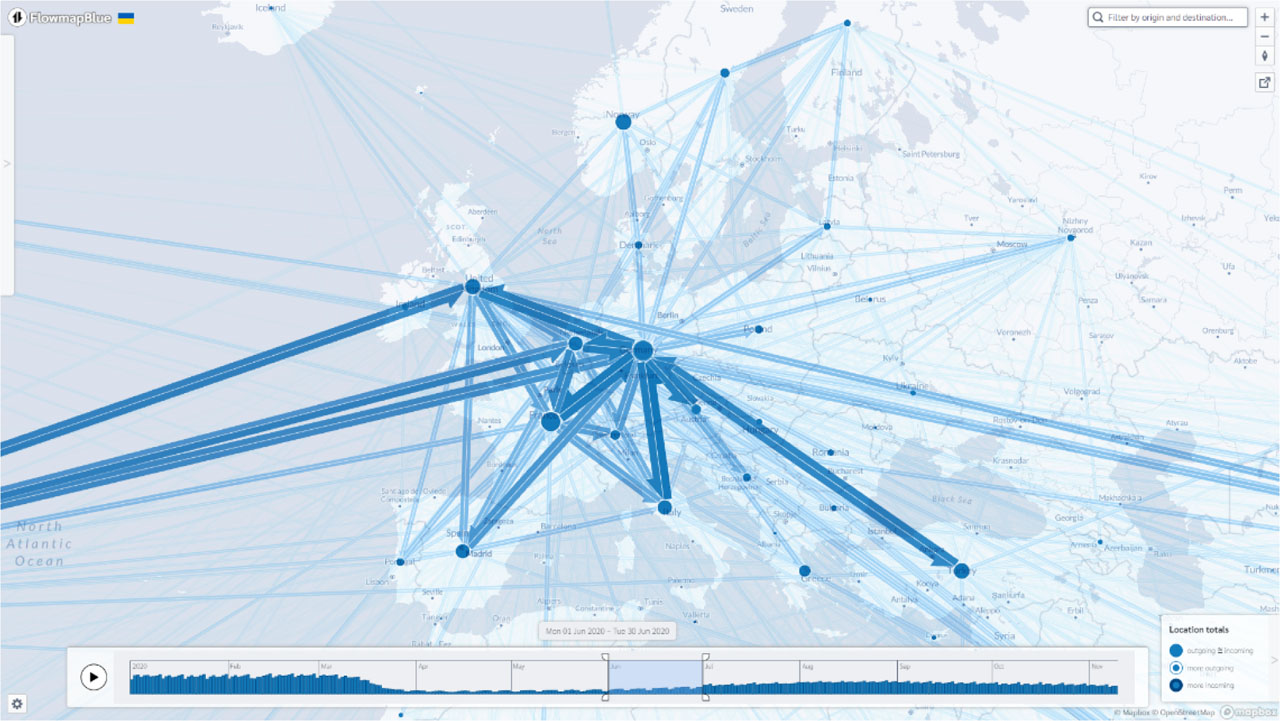
Figure 8.
Flow map of European air traffic in June 2020
Source: own study using data from OpenSky Network 2022
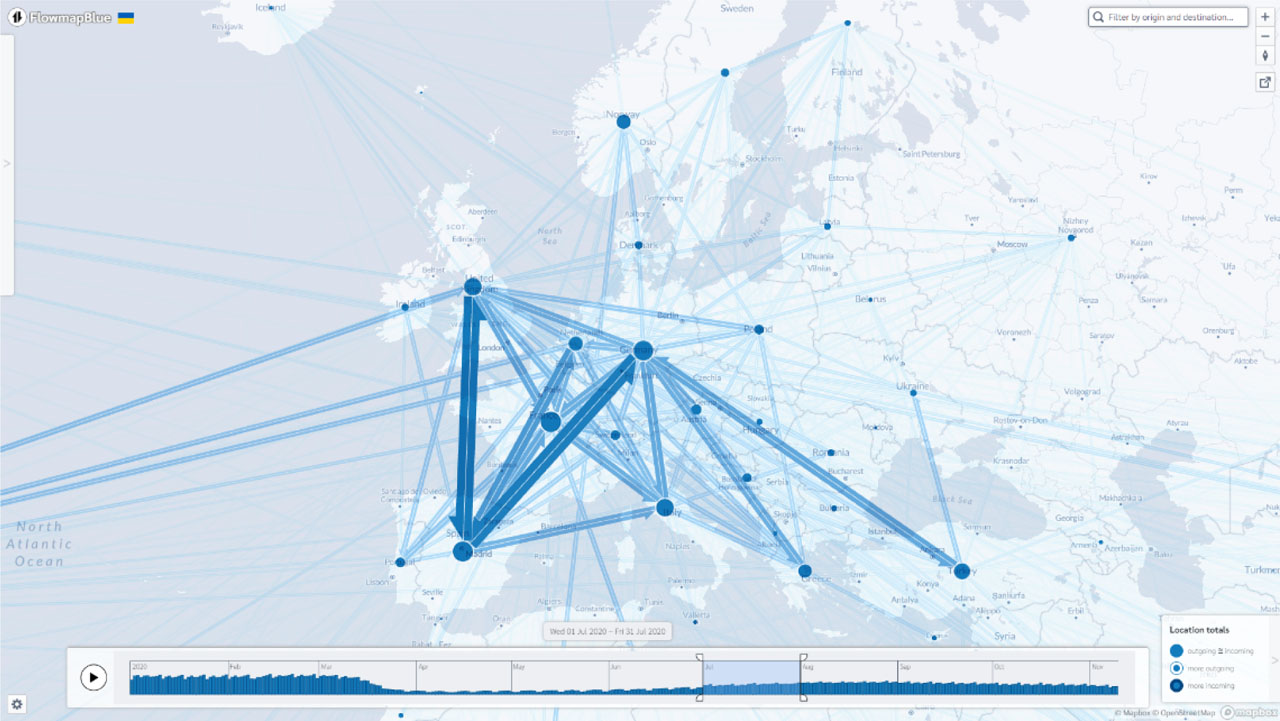
Figure 9.
Flow map of European air traffic in July 2020
Source: own study using data from OpenSky Network 2022
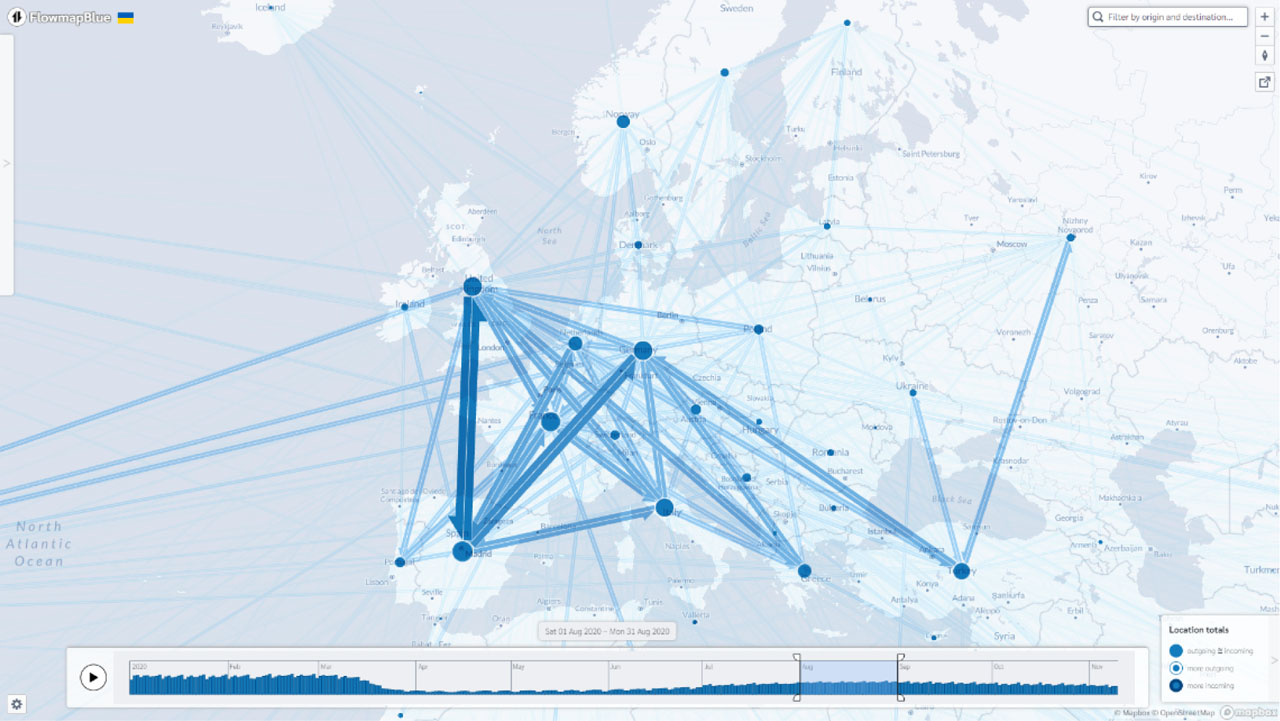
Figure 10.
Flow map of European air traffic in August 2020
Source: own study using data from OpenSky Network 2022
In the visualization, the width of the flows between Germany, the United Kingdom, France, Spain, Italy, and the Netherlands is noticeable (see Figures 7–10). According to July and August data, air traffic frequency doubled. As in previous months, these corridors formed the main arteries for European air transport. Some flows also show traffic growth of three and four times, such as Ireland and Switzerland and some even six and seven times – for example, to and from Austria and Poland. This can also be confirmed visually on the maps without referring to statistical data (see Figures 7–10). Countries unified their sanitary requirements, which positively impacted the increase in international traffic and, consequently, the intensity of air transport. However, it is also worth considering the peak tourist season factor. In addition, the data reflects an uneven recovery in different countries due to different pandemic strategies and travel restrictions imposed by governments. For example, flows from and to Norway and Sweden are still experiencing fewer flights than in January 2020. Moreover, from interesting observations, it can be visually noted that, in July, the Transatlantic and Eurasian air flows lost their intensity and became barely visible on the map. This phenomenon is probably due to the saturation of humanitarian resources within countries during that period and the absence of the need for exchange between Europe, North America, and Asia.
September–October 2020: period of tenuous stability
The data from September and October reveal a slight general decline in air traffic compared with the summer. This decline is evident across most countries, most likely due to the end of the travel season. However, despite the expected drop following the summer season, it is the first time the decrease or increase in incoming and outgoing flights is not significant over the course of the year; this is visible on the maps (see Figures 11–12). The period from September to October 2020 can be described as stable.
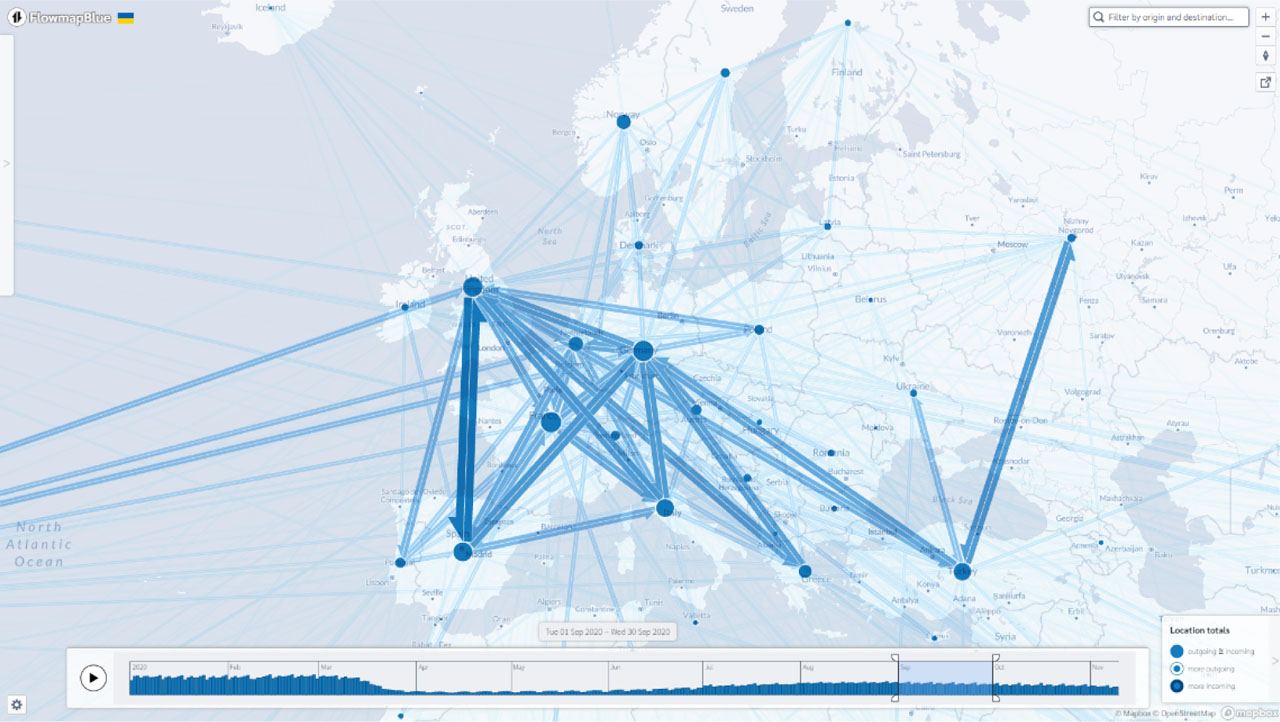
Figure 11.
Flow map of European air traffic in September 2020
Source: own study using data from OpenSky Network 2022
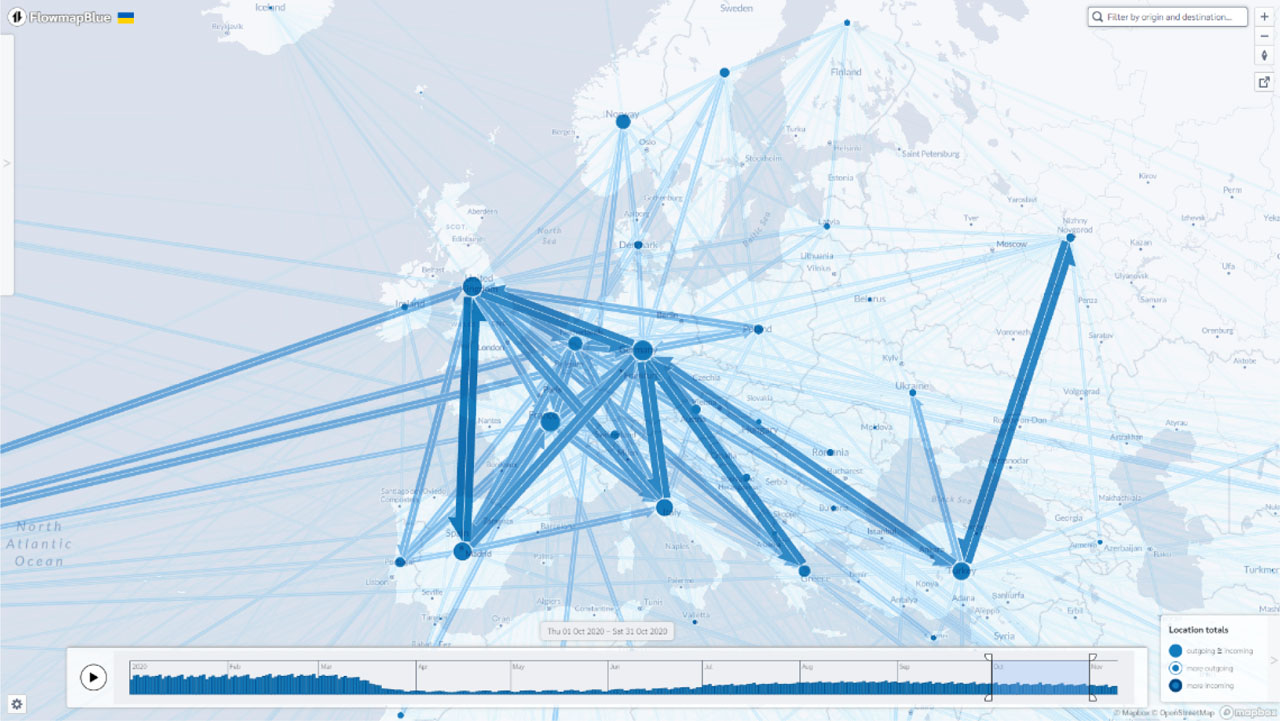
Figure 12.
Flow map of European air traffic in October 2020
Source: own study using data from OpenSky Network 2022
As mentioned earlier, the visualized data show a slight decrease in air corridor activity, averaging 4.3% in all directions. However, these small changes are barely visible to viewers on the map, and the main corridors of air transport haven’t transformed notably. This phenomenon can be partly explained by the autumn outbreaks of viral diseases with similar symptoms to the coronavirus infection, as well as the general trend in society to refrain from traveling for health reasons. Undoubtedly, this trend impacted the density of the aviation arteries. The visualization proves that statement by indicating only small changes in the thickness of flows on the map (see Figures 11–12). Moreover, interesting observations suggest that, although air traffic activity slightly declined in nearly all countries, it increased somewhat in Sweden. This is likely due to the popularity of this destination in October (see Figures 13–14).
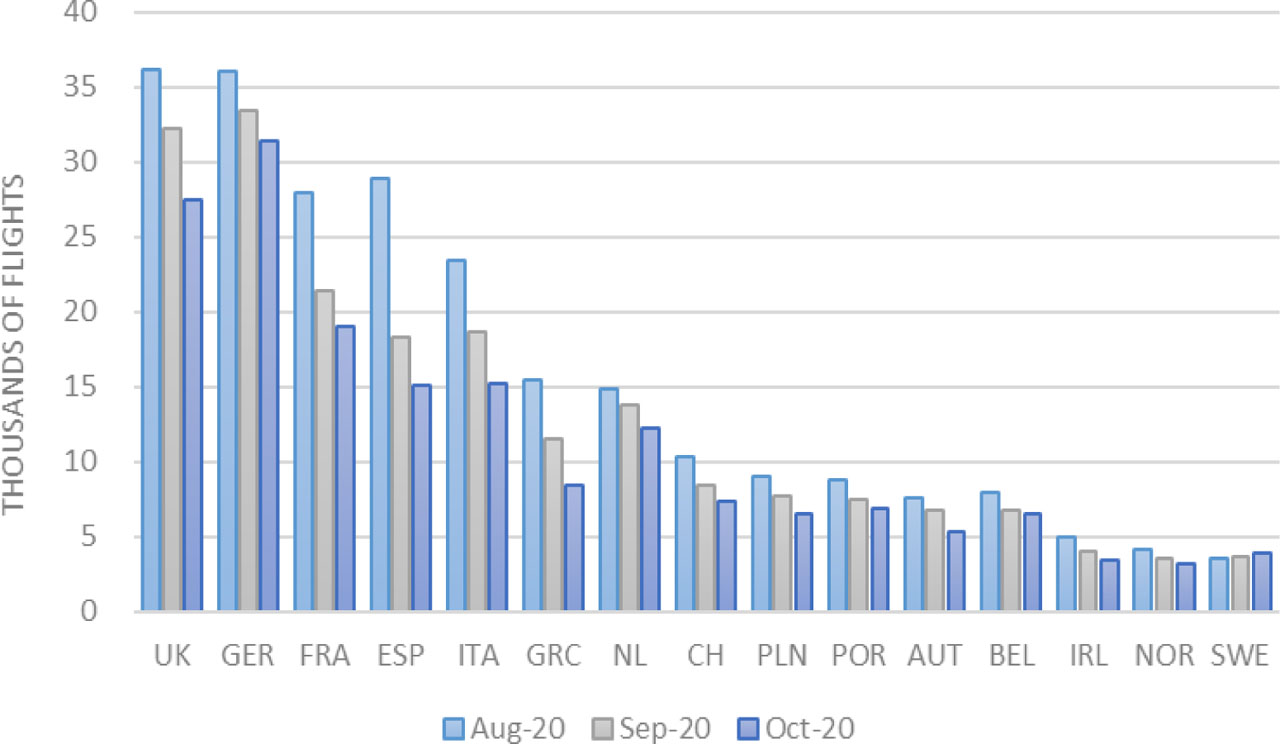
Figure 13.
Incoming flight changes from August to October 2020 within European airspace
Source: own study using data from OpenSky Network 2022
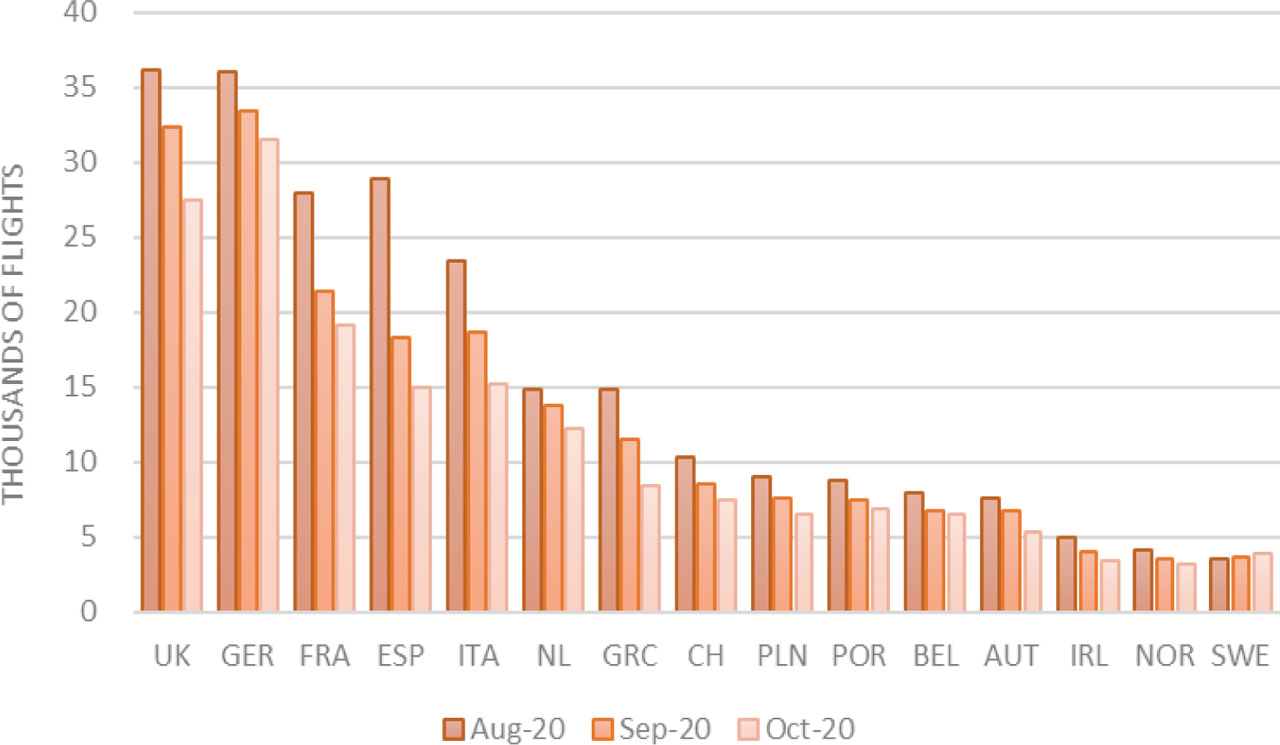
Figure 14.
Outgoing flight changes from August to October 2020 within European airspace
Source: own study using data from OpenSky Network 2022
The COVID-19 pandemic had a profound impact on global air travel (see Figure 15). However, amid this disruption, visual and statistical analysis of air traffic data from January to October 2020 reveals resilience among key air traffic corridors connecting the United Kingdom, Germany, France, Spain, and Italy (see Figure 16). Visual and statistical analysis of air traffic data from January to October 2020 reveals a resilience pattern amidst the pandemic-driven disruptions. The network of critical connections between these countries exhibited remarkable stability in the early months of the pandemic, indicating their enduring importance as the primary drivers of air traffic in Europe.
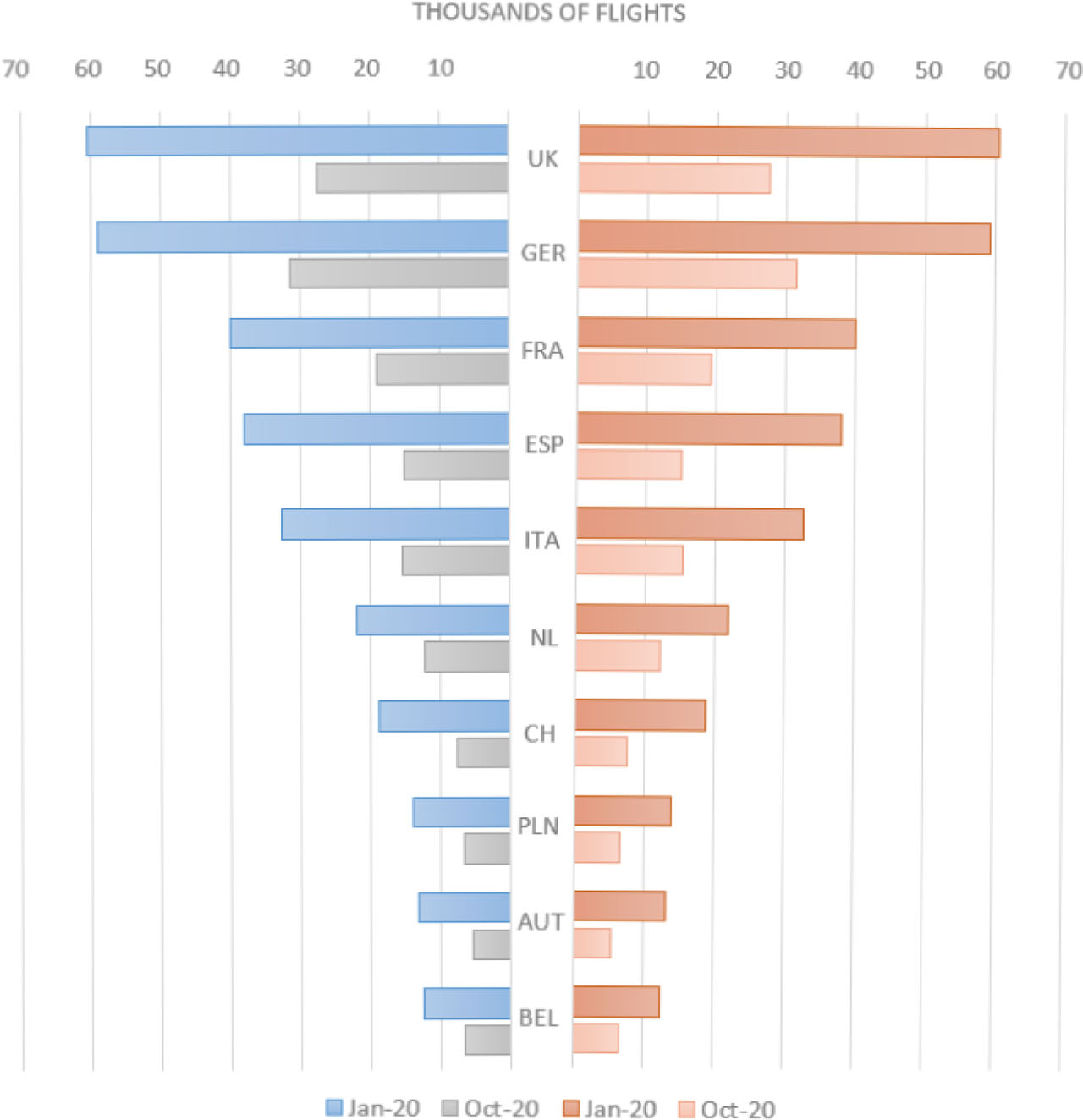
Figure 15.
Changes among the ten busiest countries (by number of incoming and outgoing flights) between January and October 2020 in European airspace
Source: own study using data from OpenSky Network 2022
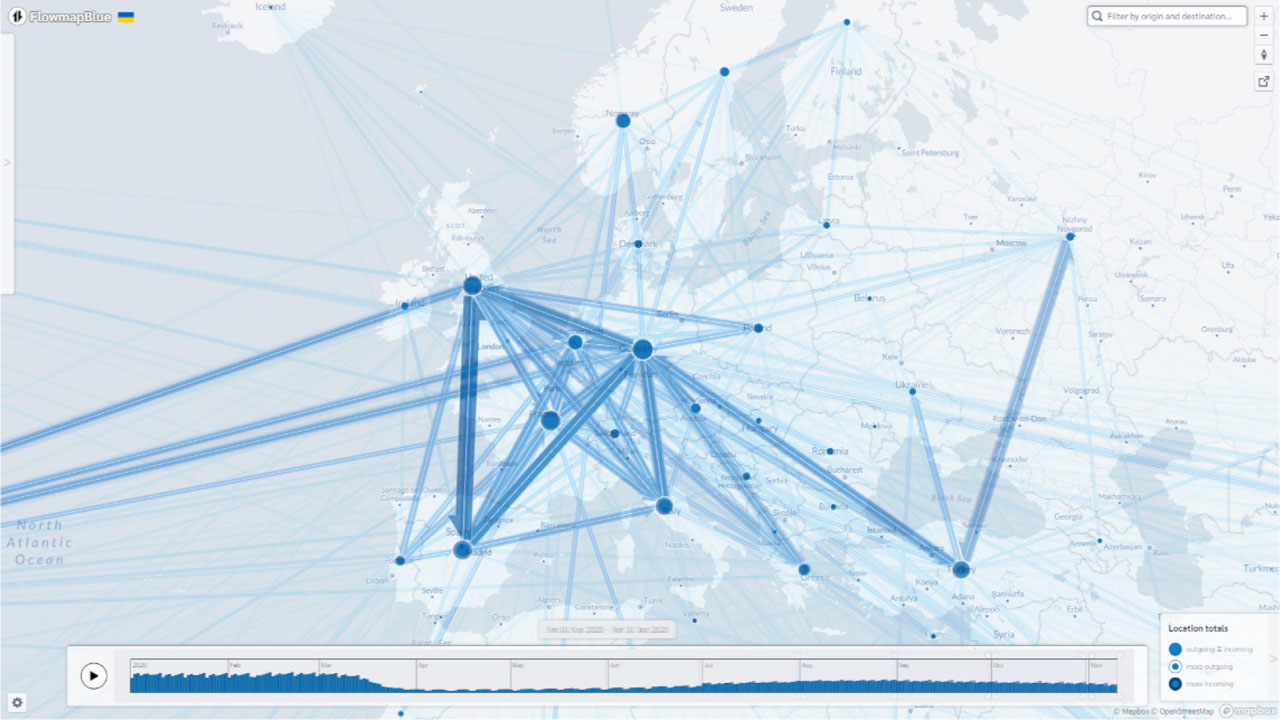
Figure 16.
Overlay of air traffic from maps between January to October 2020
Source: own study using data from OpenSky Network 2022
As the pandemic escalated in March, the network faced a noticeable downturn, particularly between the key countries. However, the resilience of these connections was evident, as they retained a degree of operational continuity. This resilience was further tested in April when the number of incoming and outgoing flights reached a record low, reflecting the widespread disruption to global travel due to the pandemic. The gradual easing of lockdown measures in May brought about a slight uptick in air traffic. This positive trend continued in June and July, as the reopening of economies further boosted air traffic. Despite these encouraging signs, recovery remained fragile, highlighting the industry’s vulnerability to potential setbacks. The peak summer season, in July, significantly boosted air traffic, propelling the number of flights to their highest levels since the beginning of the pandemic. However, this growth was not without fluctuations, reflecting the ongoing adjustments to the “new normal” of air travel. In August, after the peak summer season, air traffic declined slightly.
Nevertheless, levels remained above pre-pandemic levels for all the key countries, indicating that the aviation industry was recovering. September marked a significant milestone, with air traffic surpassing pre-pandemic levels for all the key countries for the first time. This achievement highlights the remarkable resilience of these key air traffic corridors and the aviation industry in the face of the COVID-19 pandemic.
Conclusions
Analysis of the incoming and outgoing flight data for 2020 provides valuable insights into the impact of the COVID-19 pandemic on European air traffic. It allows us to understand the spatial and temporal changes in flight patterns, revealing the challenges faced by the aviation industry during this unprecedented crisis. As mentioned earlier, the data demonstrate that 2020 can be divided into three distinct periods. The first period witnessed a state of paralysis, with air travel between countries almost halting. The second period marked the adaptation phase, during which the industry reacted and adapted to the evolving situation. Finally, the third period showed a slow increase in air traffic frequency due to the unification of European sanitary requirements.
The study contributes to the knowledge of the effects of the pandemic on the European air transport network. By examining the incoming and outgoing flight data, it was possible to create a comprehensive understanding of the changing dynamics and patterns of air traffic during different phases of the crisis. This information enhances the ability to develop effective strategies for managing future disruptions and ensuring the resilience of the air transport system. What sets this research apart is using interactive maps and visual analysis techniques. By leveraging the power of data visualization and geographic information systems, it is possible to uncover spatial relationships and patterns in air traffic.
This unique approach enables us to explore and interpret the data more intuitively and comprehensively. The interactive air traffic maps are valuable tools for further research and analysis. They allow us the possibility of identifying and locating temporal changes and spatial patterns, which provide insights into the routes that remained operational throughout the crisis. These findings can inform future strategies and policies to prevent similar collapses in the air transport system, contributing to its long-term sustainability.
It is important to acknowledge both the strengths and limitations of this study. The main advantage lies in utilizing interactive maps to visualize large spatial datasets, allowing for a comprehensive view of European air traffic dynamics. However, disadvantages include the reliance on historical flight data, potential data gaps or inaccuracies, and the need for additional deep research to fully understand the long-term implications of the pandemic on air traffic. Nevertheless, it should be noted that the selected approach focuses on visualization and cognitive processes in order to understand the topic, but measurement methods have not been implemented since the primary focus is on visualization. In conclusion, this research advances our understanding of the impact of the COVID-19 pandemic on European air traffic during 2020.