
Table 1.
Age ranges of Generation Z in literature
| Age range | Author(s) |
|---|---|
| Born 1990 or later | Świerkosz-Hołysz (2016, p. 441); Żarczyńska-Dobiesz & Chomątowska (2014, p. 407); Wiktorowicz & Warwas (2016, p. 22); Wojtaszczyk (2013) |
| Between 1990 and 1999 | Half (2015) |
| Between 1991 and 2000 | Tulgan (2009, p. 5) |
| Between 1993 and 2012 | White (2017) |
| Between 1993 and 2005 | Turner (2013, p. 18) |
| Born 1994 or later | Williams & Page (2010) |
| Born after 1995 | Opolska-Bielanska (2016, p. 37); Ensari (2017, p. 53); Dudek (2017, p. 144) |
| Between 1995 and 2010 | Borcuch (2010) |
| Between 1996 and 2010 | McNeil (2018) |
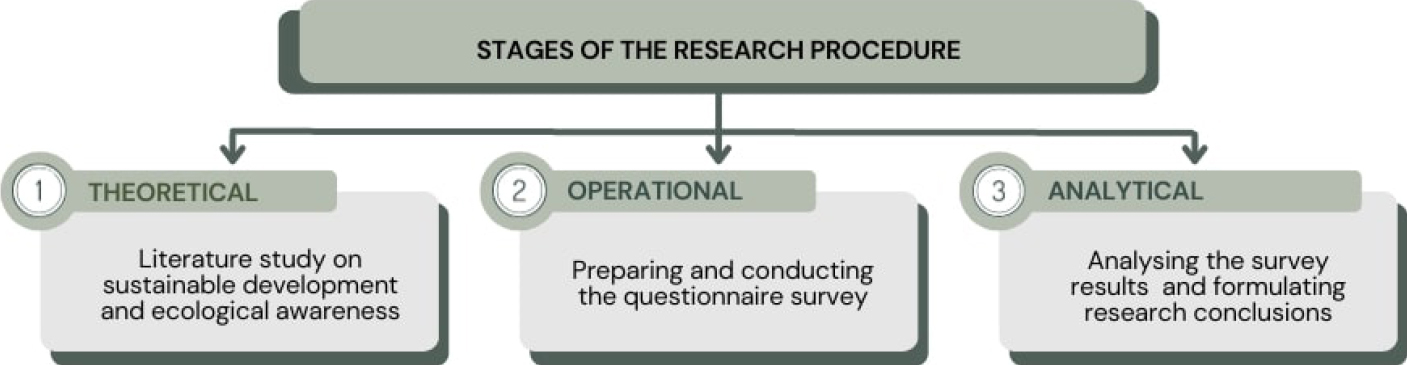
Figure 1.
Research procedure
Source: own elaboration
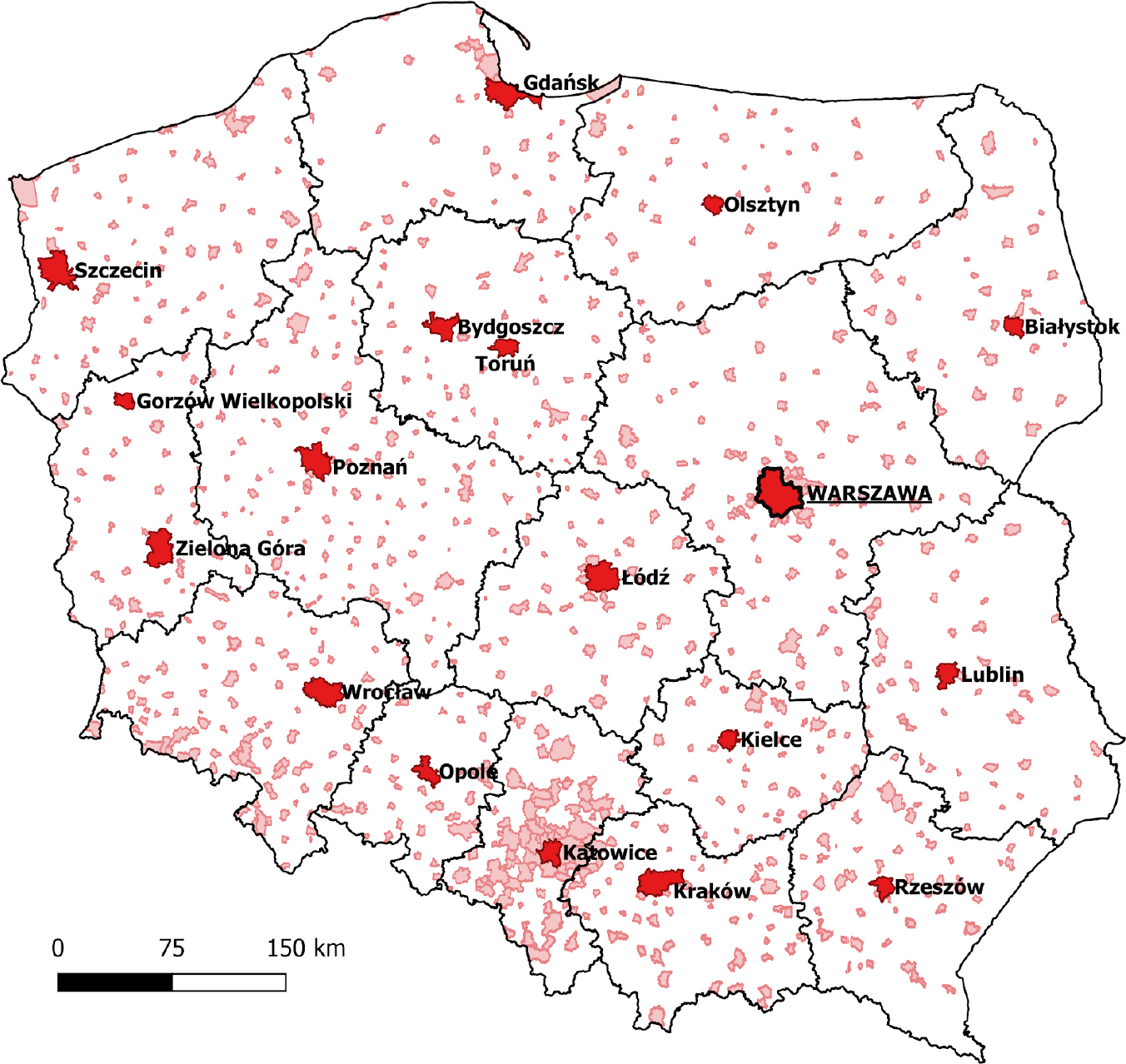
Figure 2.
Spatial scope of the survey – cities and towns in Poland Explanation: names of the cities are used to describe the provincial capitals
Source: own elaboration
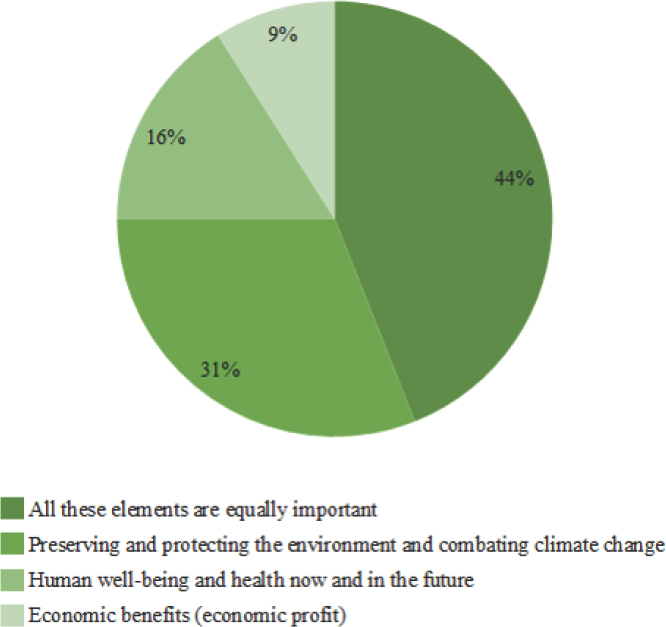
Figure 3.
Structure of responses to the question: “Which sustainable development goals do you think are the most important?”
Source: own elaboration based on the survey (N=1172)
Table 2.
Level of interest in sustainable development by generation (compared with Gen Z)
| Parents | Grandparents | Peers | |
|---|---|---|---|
| Less interested | 29% | 48% | 23% |
| Equally interested | 40% | 27% | 33% |
| More interested | 29% | 25% | 46% |
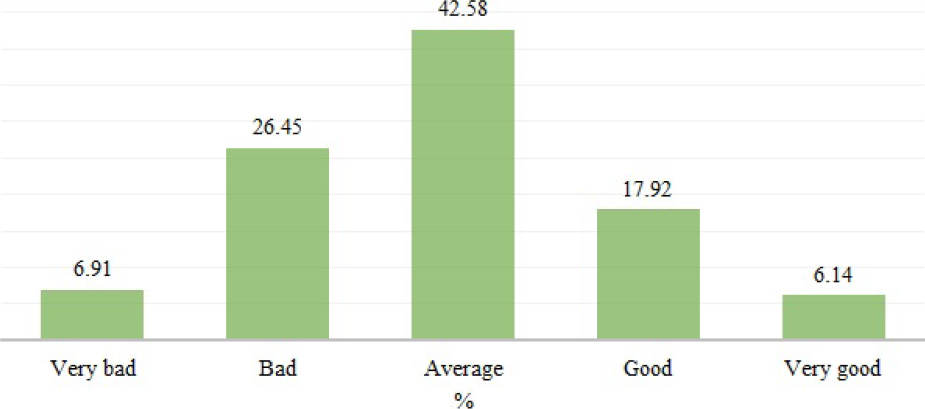
Figure 4.
Structure of responses to the question: “How do you assess the interest of the general public in the idea of sustainable development in Poland?”
Source: own elaboration based on the survey (N=1172)
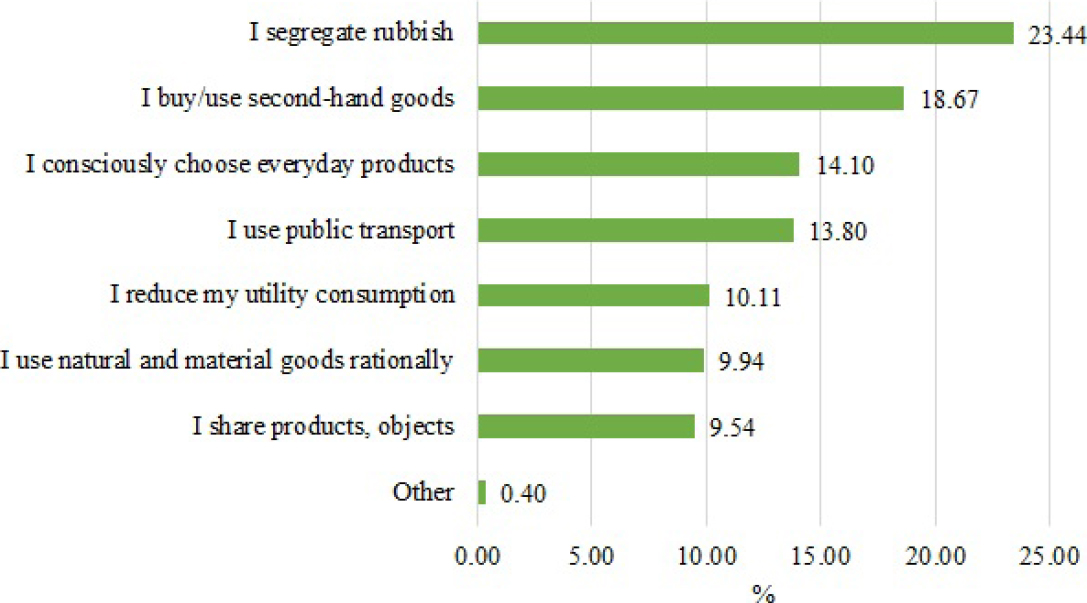
Figure 5.
Structure of responses to the question: “Which of these activities do you actively pursue in your daily life?” (3 max)
Source: own elaboration based on the survey (N=1172)
Table 3.
Assessment of knowledge levels in relation to the components of sustainable development (Structure of responses to the question: “How would you rate the level of knowledge of the public on sustainable development in the following areas?”
| low | average | high | |
|---|---|---|---|
| Sustainable transport | 36% | 49% | 15% |
| Sustainable waste management (e.g. waste segregation) | 29% | 46% | 26% |
| Sustainable water management (e.g. water retention) | 37% | 45% | 18% |
| Sustainable energy management (e.g. renewable energy sources) | 30% | 46% | 24% |
| Sustainable environmental and biological management (e.g. biodiversity of fauna and flora) | 36% | 45% | 19% |
| Sustainable agriculture | 32% | 47% | 20% |
| Sustainable business and entrepreneurship | 35% | 47% | 18% |
| Sustainable planning of infrastructure and settlement systems | 39% | 45% | 15% |
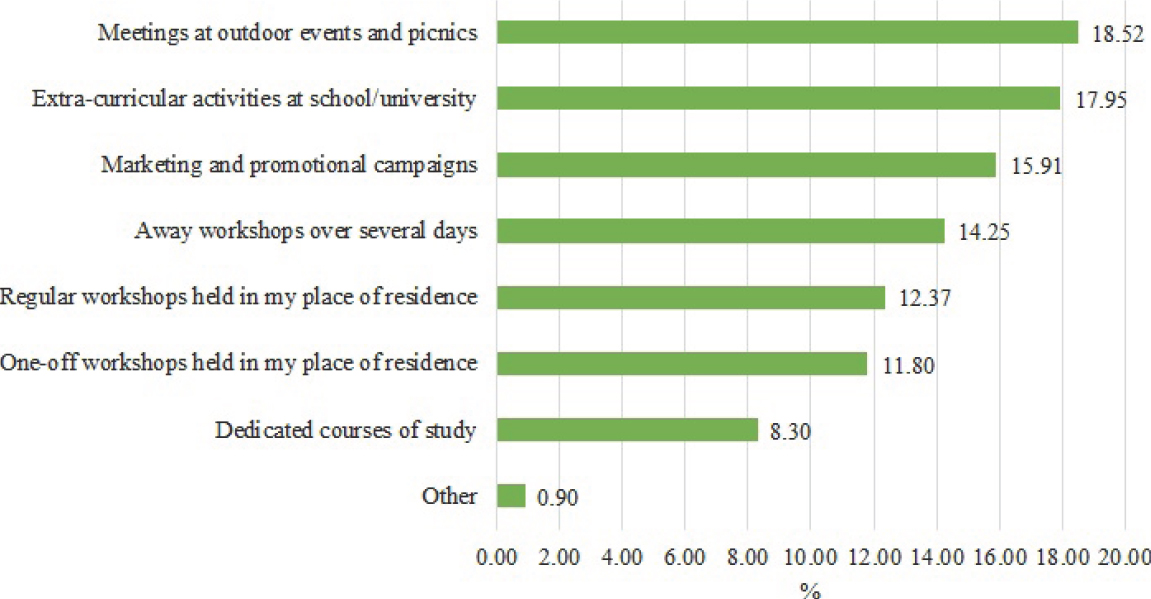
Figure 6.
Structure of the responses to the question: “What sustainability education activities would you be interested in?” Source: own elaboration based on the survey (N=1172)
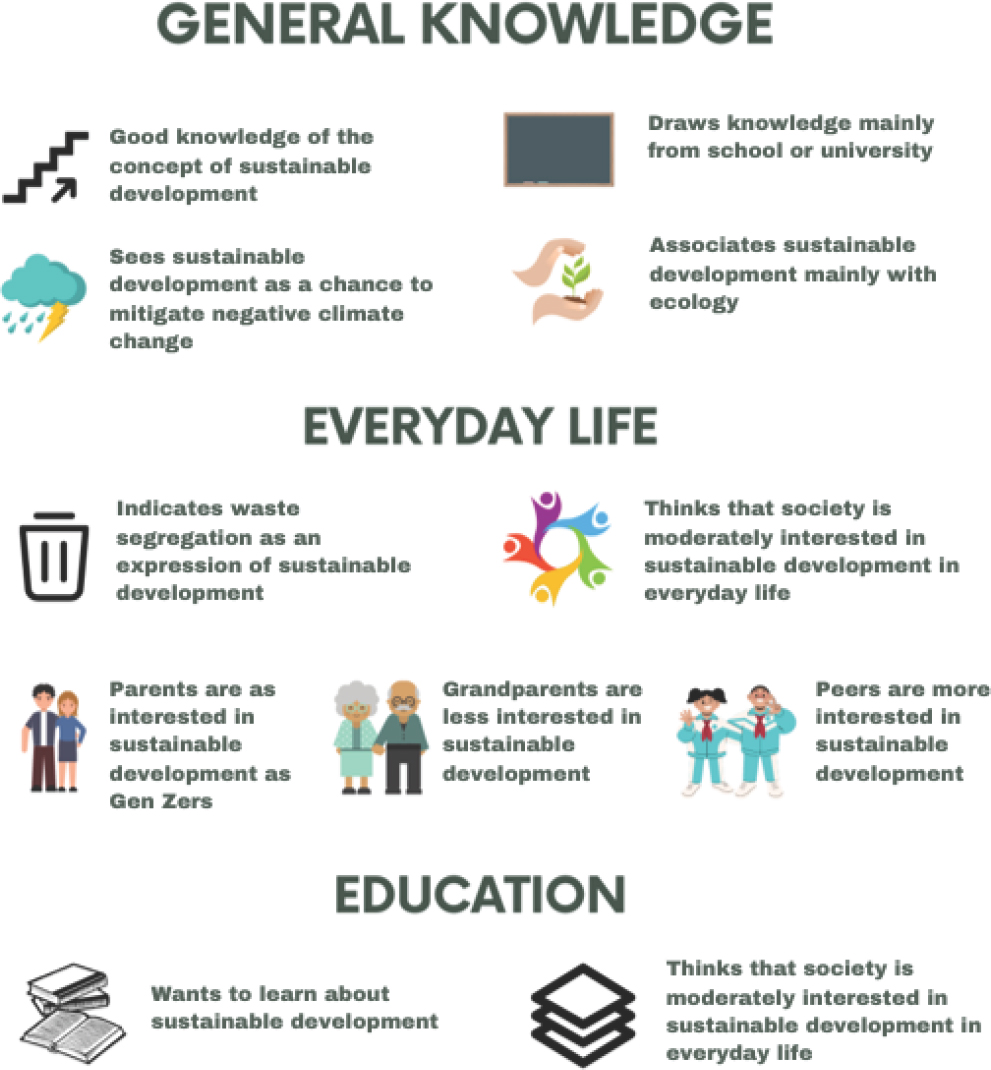
Figure 7.
Average mental path of the respondent about perceptions of sustainable development
Source: own elaboration