
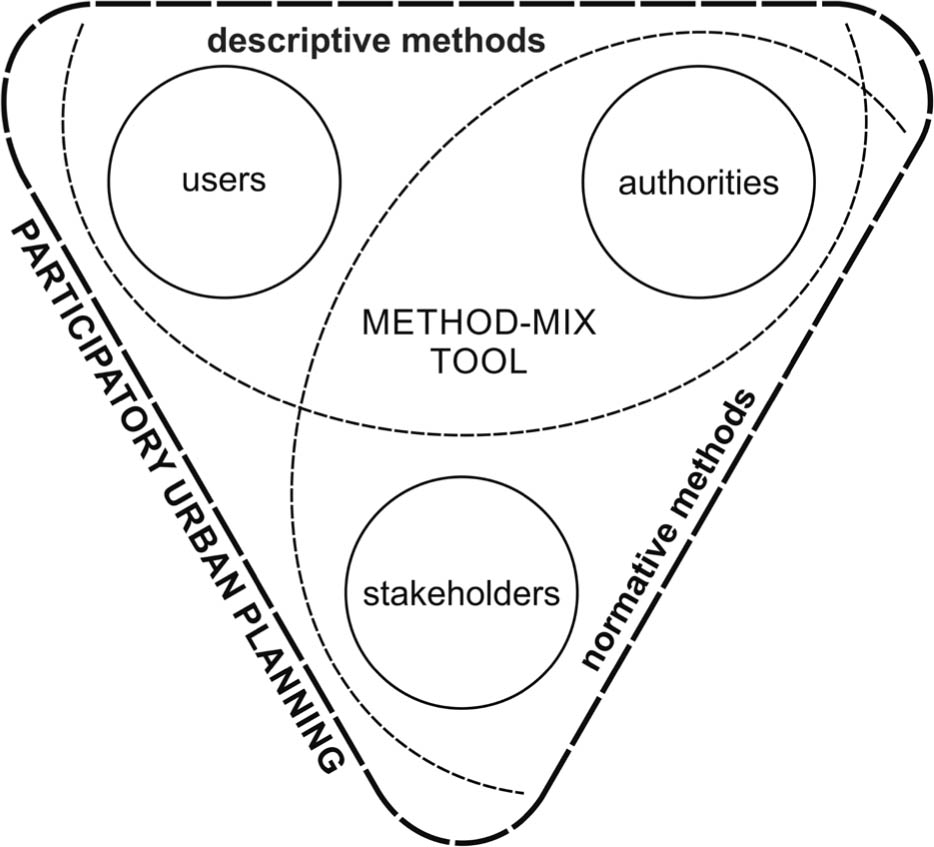
Figure 1
The idea of combining descriptive and normative methods in participatory urban planning
Source: authors’ elaboration
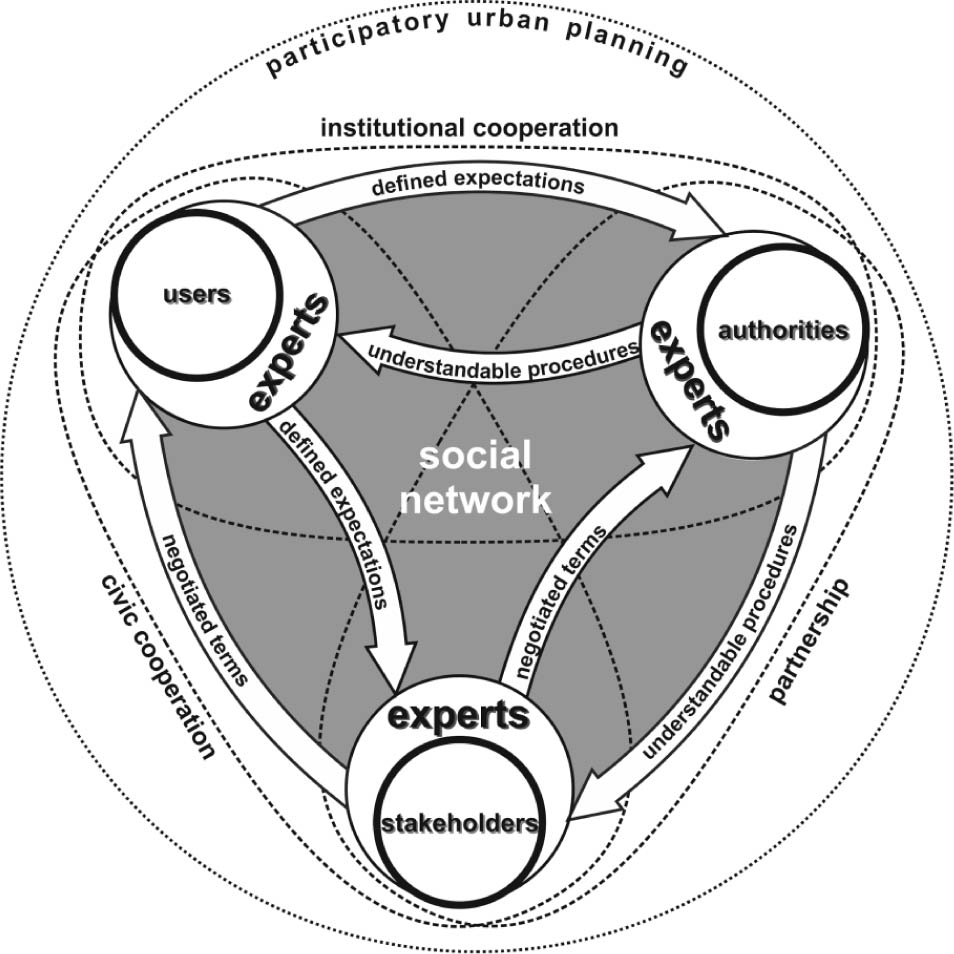
Figure 2
The role of experts in participatory urban planning
Source: authors’ elaboration
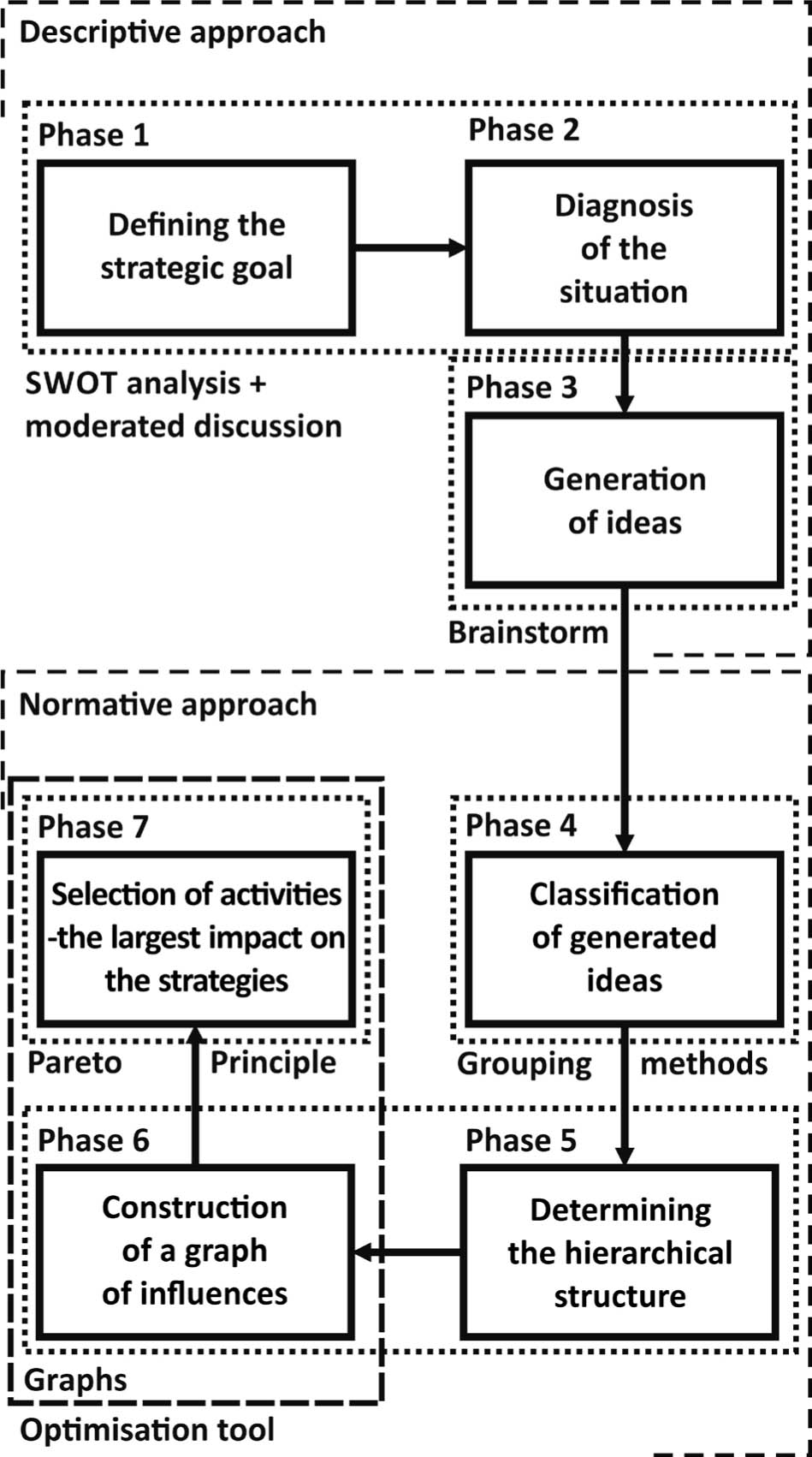
Figure 3
The principle of combining descriptive and normative approaches using the optimization
Tool Source: authors’ elaboration
Table 1
Summary of comments reported, as SWOT analysis
| STRENGTHS | WEAKNESSES | ||
|---|---|---|---|
| weight | weight | ||
| 5 | historical area | 5 | lack of information about the place and its attractions |
| 5 | integration of business entities/fair competition | 5 | darkness in the evening/lack of proper street lights |
| 4 | catering zone [offer clustering: note by author] | 5 | inaccessibility of attractive sacral and educational facilities |
| 3 | coziness | 5 | poor legibility of the urban layout/architectural composition/separation, interrupted transport route/lack of integration with Ostrów Tumski |
| 3 | location | ||
| OPPORTUNITIES | THREATS | ||
|---|---|---|---|
| weight | weight | ||
| 5 | combination of the offer of Śródka and Ostrów Tumski | 5 | incoherent investment policy |
| 5 | opportunity to work up a common strategy of development, instead of separate tourist and cultural offers | 5 | no cohesive thinking about Śródka shared by a variety of stakeholders (inhabitants, entrepreneurs, local politicians, the municipal authorities, the Church), in this lack of coherent spatial planning policy |
| 5 | local media publicity | 5 | traffic jams/transit traffic every day in Śródka district (in the morning and at about 4 pm) – in this, many collisions and accidents at Śródka Roundabout |
| 3 | organization of municipal events that prevent access to Śródka | ||
| 3 | competition – other districts of the city (e.g. Jeżyce or Wilda) | ||
[i] Source: compilation by authors
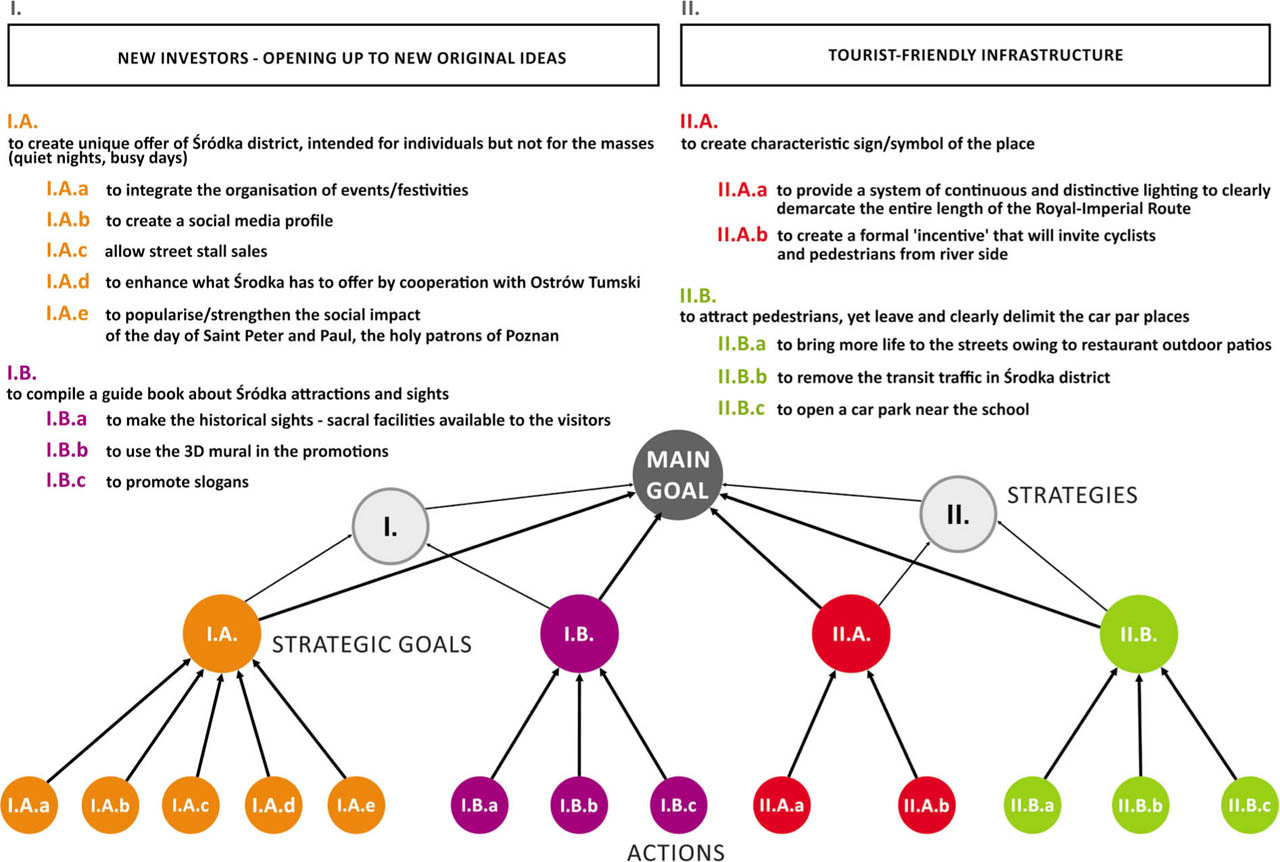
Figure 4
Ideas Classification Scheme
Source: authors’ elaboration
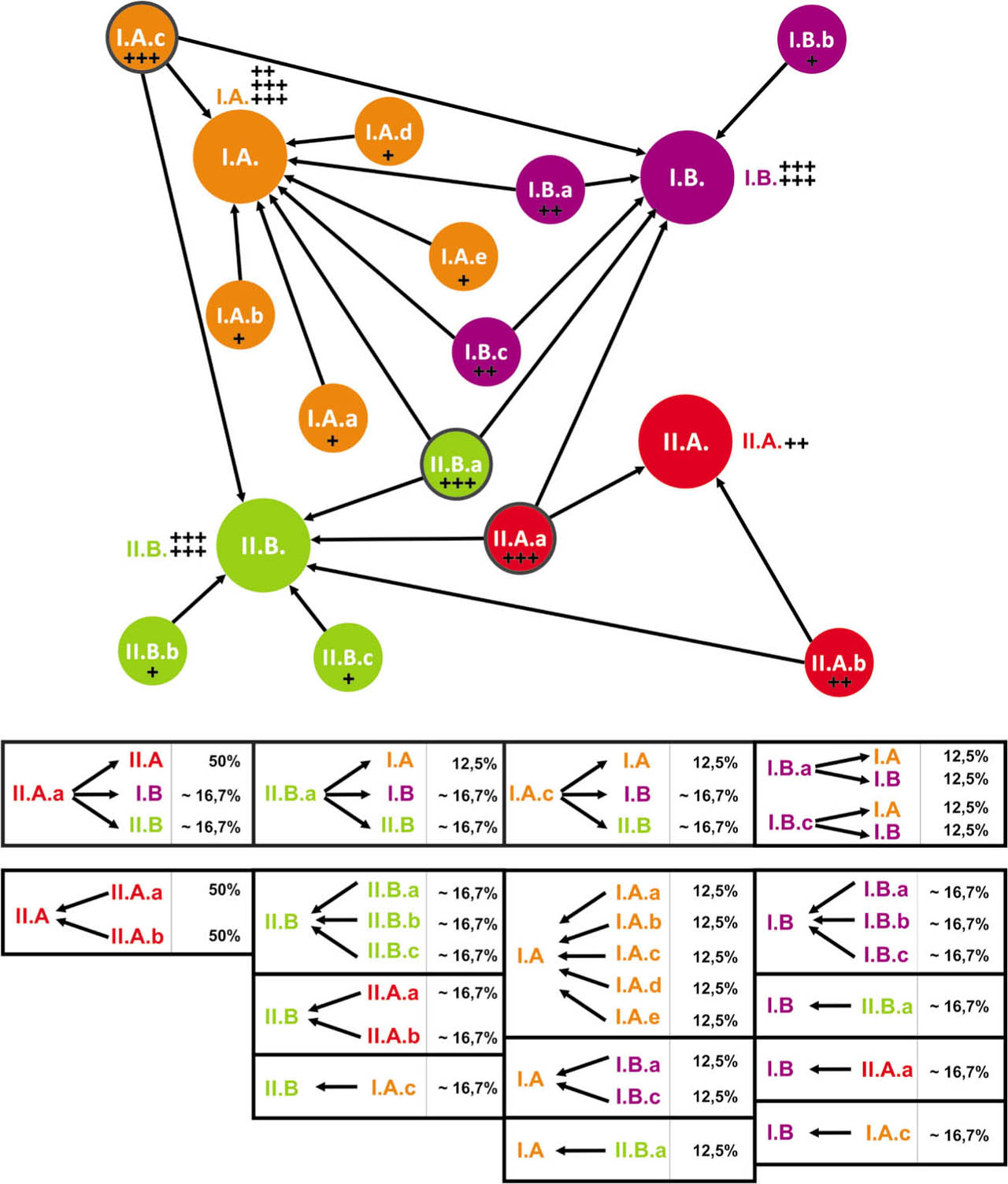
Figure 5
Map of interdependencies between strategic goals and activities
Source: authors’ elaboration