
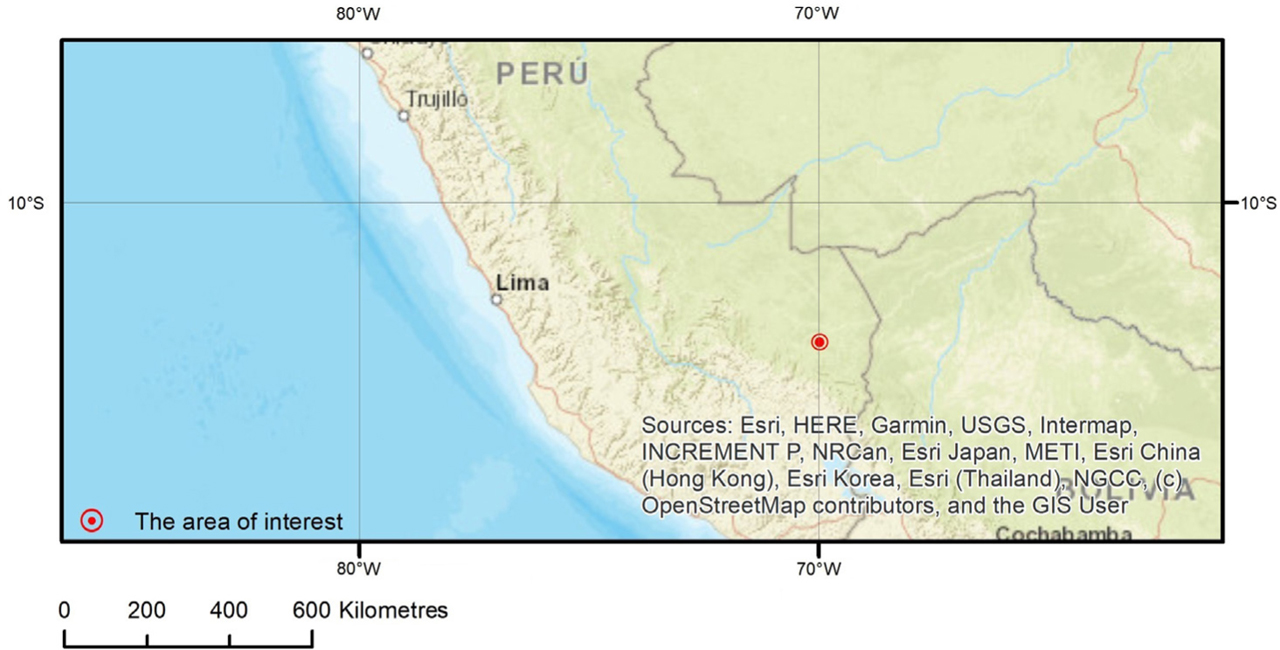
Figure 1
Location of the area of interest
Source: Own elaboration
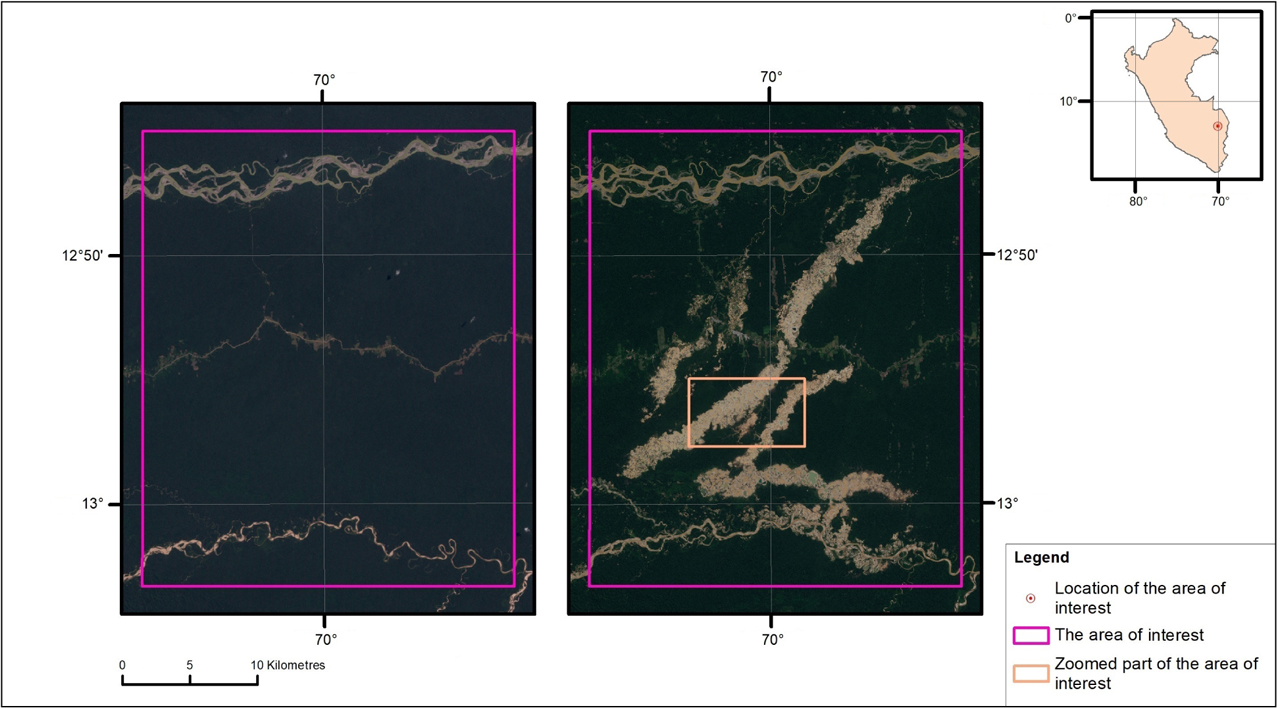
Figure 2
The appearance of the mine site revealed on satellite images. Left: 30 August 2001 (Landsat 7 imagery); right: 24 July 2017 (Sentinel-2 imagery)
Source: Own elaboration
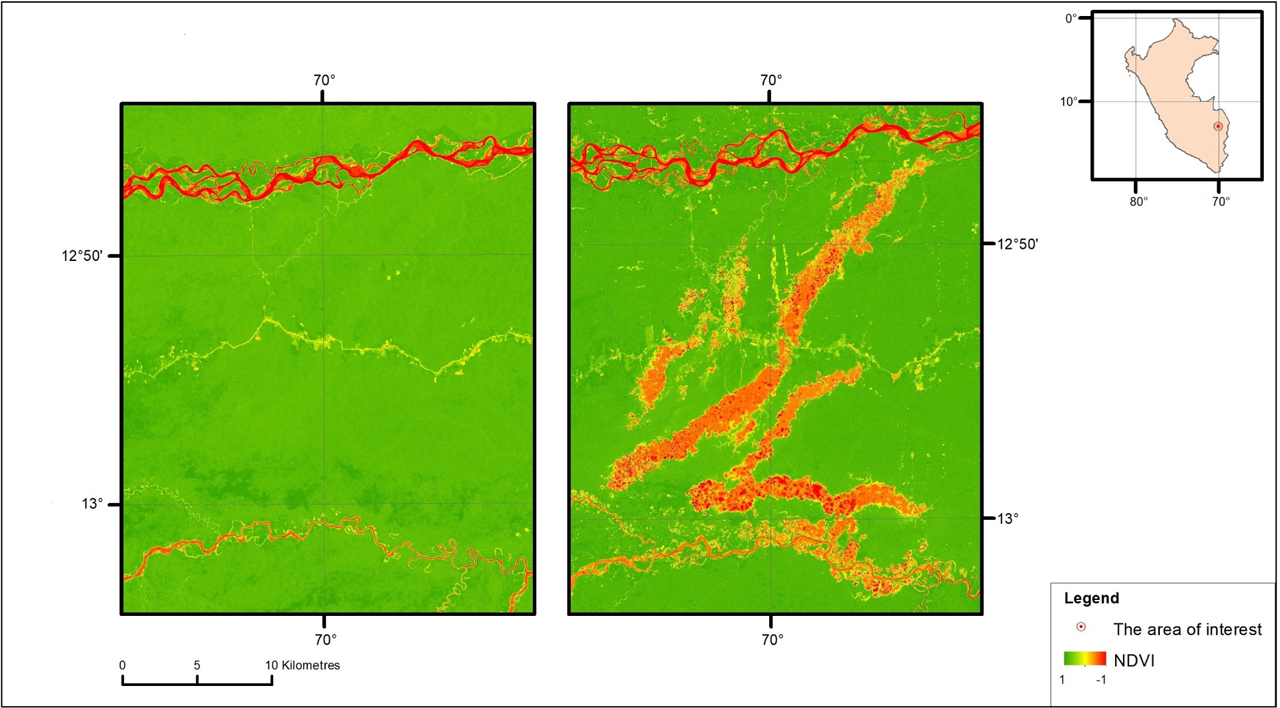
Figure 3
Vegetation loss visible through the NDVI ratio. Left: 30 August 2001 (Landsat 7 imagery); right: 24 July 2017 (Sentinel-2 imagery)
Source: Own elaboration
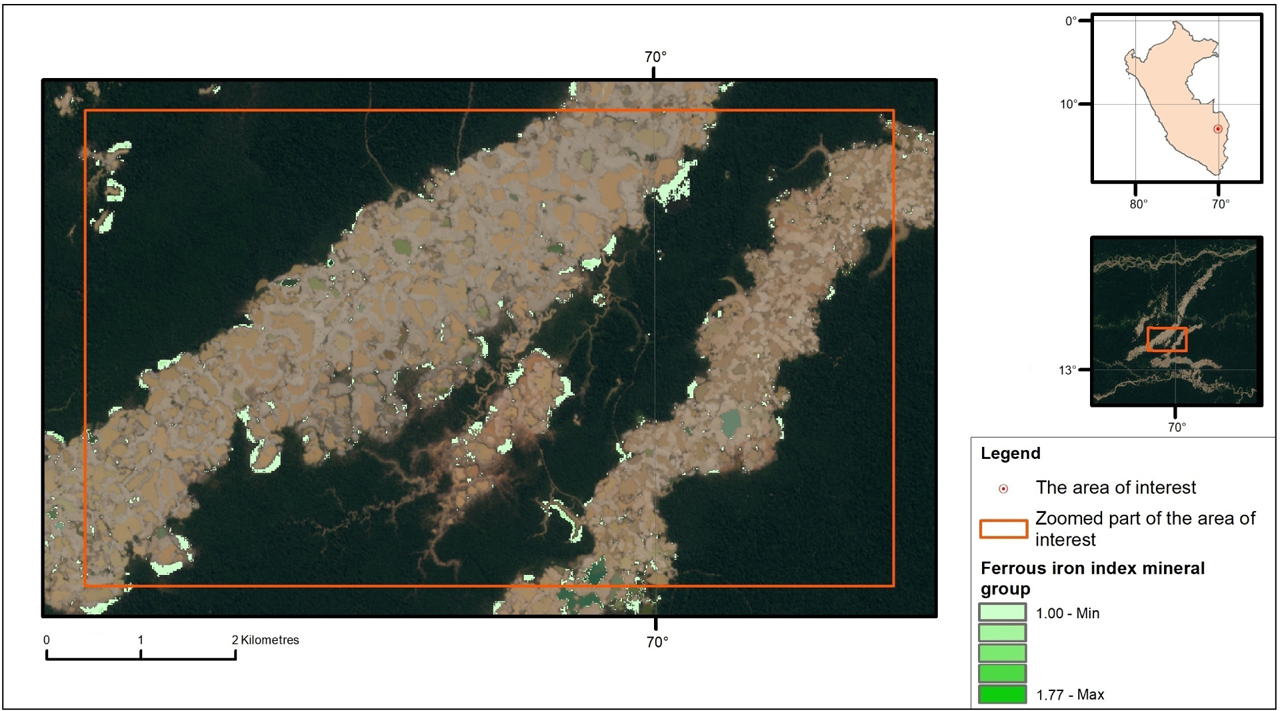
Figure 4
Zoomed part of the area of interest with ferrous iron index mineral group (ferrous iron – coarse-grained ferric iron – moist soils – fire ashes) highlighted
Source: Own elaboration
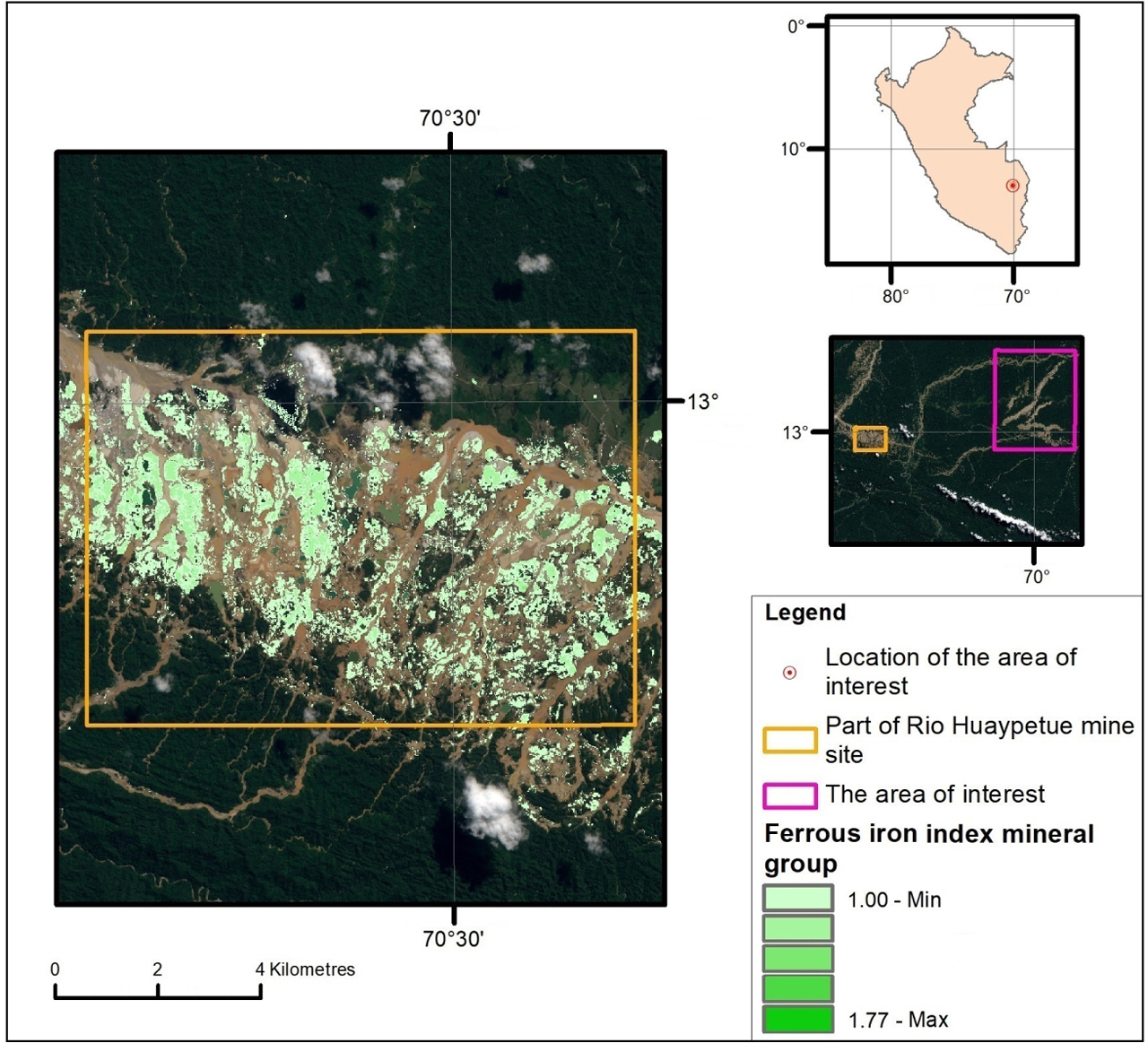
Figure 5
Zoomed part of the Rio Huaypetue mine site with ferrous iron index mineral group (ferrous iron – coarse-grained ferric iron – moist soils – fire ashes) highlighted
Source: Own elaboration
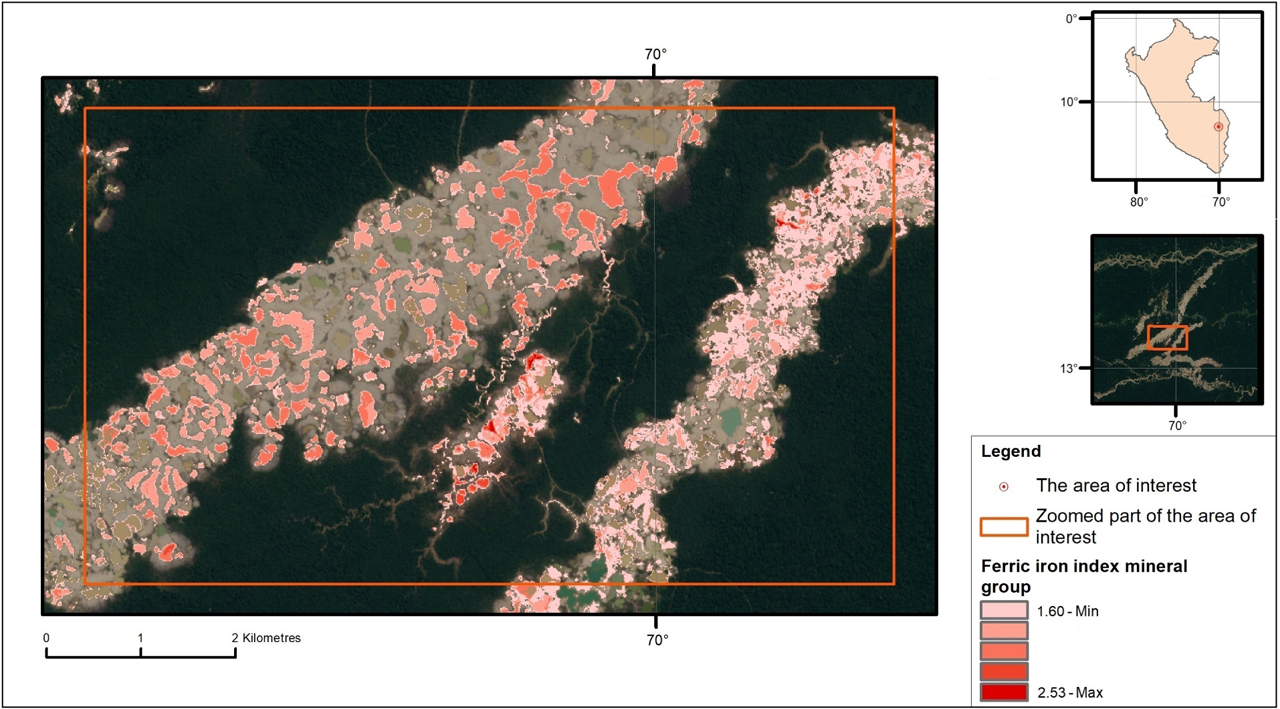
Figure 6
Zoomed part of the area of interest with ferric iron index mineral group (minor ferric iron) highlighted
Source: Own elaboration
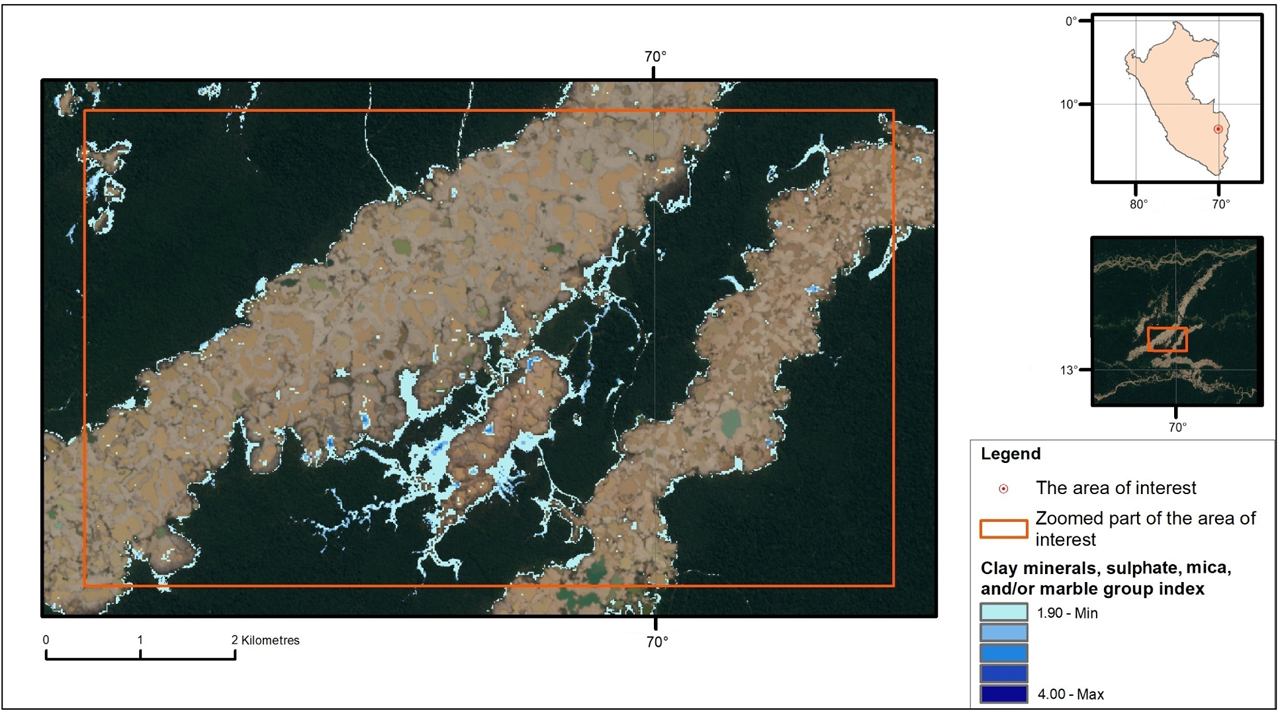
Figure 7
Zoomed part of the area of interest with clay-sulphate-mica-marble index mineral group (minor ferric iron) highlighted
Source: Own elaboration