
Introduction
The proper interrelation among budgeting, planning, implementation, and control as interacting processes is regarded as a resultant efficiency effect and, ultimately, as excellence in enterprise accounting management (Nguyen, 2024). Earlier researchers emphasized that the main elements of the budgeting process-participation, preparation, implementation, and evaluation directly associate with overall budget performance (Khoo et al., 2024). Budget management is widely recognized as good organizational governance in resource allocation optimization and expenditure controls accompanied by accountability enhancement. A well-developed budgeting process structurally acts not only as a financial planning function but also serves as a strategic tool that shapes decision-making, inculcates employee participation, and improves firm performance. Recognized as important, the link of budget process to performance has been and is still a matter of academic debate. Some researchers highlighted its role in managerial control and financial discipline. Other scholars for their part found the negative impacts of formalization emphasized in that too much formalization creates rigidity, behavioral distortions, and lack of adaptability to changing environments. These views clearly show insight fragmentation in literature thus strongly calling for a systematic synthesis of existing evidence.
The relationship between budget processes and performance is easier to observe in firms operating under high information uncertainty and with complex organizational structures. Particularly firms with long-tenured management teams and large CEO ownership (Pham, 2022). Financial performance depends on the effectiveness with which the budgeting process is carried out (Abdi & Mutswenje, 2023). Robust mechanisms for planning and evaluation of budgets enhance the performance of budgeting by reducing budgetary slack both directly and indirectly through the imposition of constraint (Zhou et al., 2025). There has been no comprehensive bibliometric synthesis of empirical and theoretical works that have burgeoned over the last two decades regarding comparative studies of budgeting practices in public and private organizations. Therefore, it is difficult to understand how the discipline develops, what major thematic domains it embraces, or where conceptual and methodological gaps exist.
The theoretical and practical argument on the link between budgetary participation and work performance still rages on (Nguyen et al., 2019). The changing information needs of today’s managers have inspired the creation of techniques and tools through which organizations can be further developed and better understood in terms of their present and future dynamics concerning performance (Melhem et al., 2021). Strategic budget management is one of the leading factors spearheading financial performance while providing SMEs with handy tools to resolve market complexities to ensure continuous development (Takwa et al., 2024). To bridge the gap within existing research, this paper conducts a bibliometric analysis and science mapping using VOSviewer. VOSviewer is among the most powerful visualization tools for network analysis of co-authorship, keyword co-occurrence, and citations link available today (Van Eck & Waltman, 2010). The use of bibliometrics is gradually extending to all disciplines (Aria & Cuccurullo, 2017). Based on data from the Web of Science Core Collection, major research clusters and thematic evolutions as well as an overall intellectual trajectory shaping the intersection between budgeting practices and organizational performance will be highlighted.
The findings make three major contributions. First, a fully detailed landscape of research is provided with a quantitative synopsis of the intellectual evolution regarding scholarship on budget management and its development over time. Second, thematic domains that are most dominant and less reported are highlighted to channel future inquiry and theoretical advancement. Third, it draws out practical lessons for managers and policymakers because maintaining good health in adapting strategically aligned budget processes enhances organizational agility, transparency, and performance.
Despite the growing body of empirical and conceptual research on budget processes and firm performance, the literature remains fragmented across disciplines, theoretical perspectives, and methodological approaches. Existing studies have largely examined isolated aspects of budgeting, such as participation, control mechanisms, or performance outcomes, without offering a comprehensive synthesis of how the field has evolved over time. Prior reviews tend to focus on specific budgeting techniques or organizational contexts, rather than systematically mapping the intellectual foundations, dominant research streams, and emerging themes that collectively shape the budgeting– performance nexus. As a result, it remains unclear how different theoretical lenses—such as agency theory, contingency theory, and the resource-based view—interact, converge, or diverge in explaining the role of budgeting in organizational performance. This fragmentation limits cumulative knowledge development and obscures promising directions for future research.
To provide a clearer analytical structure and to guide the bibliometric investigation, this study is driven by four research questions. First, it seeks to identify the main publication trends and growth patterns in research examining the relationship between budgeting processes and firm performance. Second, it aims to uncover the dominant intellectual foundations, theoretical perspectives, and research streams that shape this field. Third, it examines how the thematic emphases and conceptual orientations of budgeting-performance research have evolved over time. Finally, the study explores emerging research directions and underexplored themes that may inform future research agendas.
In response to this gap, the present study offers several contributions to the literature. First, it provides a comprehensive bibliometric synthesis of research on budgeting processes and firm performance by systematically mapping publication trends, influential works, and major research streams over a thirty-five-year period. Second, by integrating science-mapping techniques with a theory-oriented interpretation, the study clarifies how agency theory, contingency theory, and the resource-based view jointly structure the intellectual foundations of the field. Third, the analysis identifies emerging thematic directions—such as digitalization, sustainability, governance, and strategic alignment— that have received increasing scholarly attention in recent years but remain insufficiently theorized. Through these contributions, the study advances understanding of budgeting not merely as a financial control mechanism, but as an evolving strategic management system embedded within broader organizational and institutional contexts.
Literature review
The budget process is defined as the planning, allocation, and monitoring of the control of financial resources towards the attainment of both strategic and operational objectives within a structured system. The stages are interrelated; formulation, approval, implementation, and evaluation which develop actionable financial plans from strategic intentions (Tuan & Rajagopal, 2022). Budgets are therefore systems that function both as planning mechanisms and control mechanisms in guiding the allocation of resources across departments while setting expectations on performance besides aiding in assessing accountability among managers as well as efficiency at an organizational level.
Firm performance can be defined as the level of achievement attained by the organization about its strategic and operational goals regarding efficiency, effectiveness, and competitiveness in its environment. It expresses the ability of the organization to convert inputs into targeted financial, operational, and strategic outputs while perpetuating long-term value creation (Vuong & Rajagopal, 2020). Firm performance within management and accounting literature is mostly assessed based on a composite set of financial and non-financial metrics.
Holding explicit meetings on the budget and using a digital collaboration tool, putting monitoring and controlling systems in place to check the actual flow of finances against real-time tracking, and enforcing top management decision linkages between strategic decisions and budget planning are important elements of long-term sustainability-oriented competitive advantage (Takwa et al., 2024). Besides, a valid theory is required that would explain processes between financial planning, managerial behavior, strategy at an organizational level, and performance in order to understand the relation between budgeting process and firm performance. Agency theory, contingency theories, and resource-based viewing perspectives additively contribute insights into such relation where in budgeting is conceived both as a controlling mechanism and a strategic management practice supporting adaptation while enhancing effectiveness and hence performance.
Agency Theory (Jensen & Meckling, 1976) provides a basic understanding of interpreting budgeting as a mechanism of control and accountability within organizations. The theory discusses the major principal-agent relationship problems wherein shareholders (principals) delegate decision-making authority to managers (agents). Hence, potential conflicts of interest due to divergence in utility maximization between the principals and the agents are depicted. The budget process is construed within this context as a means of governance, attempting to institutionalize managerial conduct towards meeting the objectives of the organization through explicit performance standards and result monitoring with remuneration linked to achievements against budgets. Even then, overdependence on strict budgetary controls can result in counterproductive effects-intense short-term orientation or intentional creation of slack wherein managers deliberately understate targets to secure easy approvals for attainable targets
Contingency theory, as put forward by Otley (1980), underlines the fact that budget systems are effective when they appropriately coincide with organizational context while Agency Theory highlights budgeting as a control mechanism. Therefore, instead of proposing any universal model, from this perspective, appropriate forms of budgeting practices must be determined in relation to specific situational variables such as environmental uncertainty and organization size and technological complexity and culture and management style. The structure of an organization can only ‘work’ well if it is able to adjust itself to internal as well as external contingencies-including being consistent (in terms of structure/process) with strategic objectives. Budgeting is not a technical exercise but a dynamic management process which should be changed by contextual demands in the interest of improved organizational performance. This, therefore, provides an explanation for mixed empirical results on the relationship between budgeting and performance. Superior performance emanates from well-aligned internal capabilities and external conditions of a firm with its actual budgeting practice (Vuong, 2025). Hence, strategic alignment is proposed by Contingency Theory as a prime determinant in effective budget management wherein organizations continuously develop relevant approaches to budget management within changing business environments.
The Resource-Based View (Barney, 1991) regards budgeting as a strategic resource supporting the firm’s sustained competitive advantage. Therefore, the budget extends beyond financial control in developing a mechanism through which resource orchestration such as coordinating financial, human, and technological resources towards building unique organizational capabilities is achieved. A good budgeting process enforces strategic coherence by supporting innovation and ensuring the enforcement of activities that create maximum value for an organization. Firms develop better routines of budgeting, precision, transparency, and adaptability and convert them into intangible assets that are valuable, rare, inimitable, and non-substitutable.
These three theoretical perspectives give a summary of explanations on the influence of the budgeting process towards firm performance. Agency theory views budgeting as a mechanism for control and accountability in ensuring the alignment of managerial actions with organizational objectives. Contingency theory stresses contextual adaptation and proposes that effective budgeting takes place when it fits environmental, structural, and strategic conditions.
In general, agency theory, contingency theory, and the resource-based view offer complementary yet non-redundant explanations of how budgeting processes influence firm performance. While agency theory emphasizes control and incentive alignment, contingency theory highlights contextual fit, and the resource-based view frames budgeting as a strategic capability. Integrating these perspectives allows for a more nuanced understanding of budgeting as an adaptive management system rather than a purely financial control mechanism, thereby providing a robust theoretical foundation for interpreting the bibliometric findings.
In addition to the substantive literature on budgeting and firm performance, this study is informed by a growing body of methodological research on bibliometric analysis and science mapping. Bibliometric methods have been widely employed to systematically examine the intellectual structure, knowledge domains, and thematic evolution of research fields by analyzing large-scale publication and citation data. Science-mapping techniques, including co-citation analysis, keyword co-occurrence, and bibliographic coupling, are particularly useful for identifying dominant theoretical foundations, research streams, and emerging topics within fragmented and interdisciplinary literatures. Prior methodological studies emphasize that such approaches are especially appropriate when the objective is not to evaluate individual empirical findings, but to visualize knowledge structures, trace conceptual developments over time, and detect research frontiers. By drawing on these methodological foundations, the present study adopts a rigorous and well-established bibliometric approach to support the interpretation of patterns observed in the budgeting–performance literature.
Material and methods
Bibliometric analysis is a widely used and robust approach for examining and interpreting large bodies of scientific literature (Donthu et al., 2021). Given the fragmented and multidisciplinary nature of research on budgeting processes and firm performance, bibliometric analysis provides a particularly suitable methodological lens. Unlike traditional narrative or systematic reviews, bibliometric approaches enable the identification of structural patterns, intellectual linkages, and thematic dynamics across a large corpus of studies, thereby offering a more comprehensive and objective overview of the field.
Research design
Open-source, easy-to-use bibliometric tools that are available and accessible freely have been applied widely around the globe for academic and research purposes worldwide. Their use in this study allowed a deep analysis of the data and clear results to be interpreted (Yumnam et al., 2024). Therefore, the present study applies a systematic bibliometric analysis of intellectual ground, publication dynamism, and theme evolution in studies concerning the relationship between the budgeting process and firm performance.
Accordingly, this study adopts a bibliometric review approach combined with science-mapping techniques. Unlike a traditional systematic review that focuses on in-depth qualitative synthesis, the purpose of this study is to visualize the intellectual structure, thematic evolution, and research fronts of the budgeting–performance literature through large-scale publication and citation data.
Data source and search strategy
The identification, screening, and inclusion of records followed the PRISMA guidelines to enhance transparency and reproducibility. The initial search in the Web of Science Core Collection yielded 286 records. After removing duplicates and non-relevant document types, 241 records remained for screening. Titles and abstracts were subsequently reviewed, resulting in the exclusion of studies that did not explicitly address both budgeting processes and firm performance. Following full-text assessment, a final sample of 222 documents was retained for bibliometric and science-mapping analysis. A PRISMA flow diagram illustrating this process has been included to visually summarize the data selection procedure.
Bibliometric data were retrieved from the Web of Science (WoS) Core Collection. The WoS Core Collection is selected due to its strict indexing policies and wide coverage of peer-reviewed journals, providing a dependable database for cross-disciplinary research pattern analysis.[1] To ensure the retrieval of literature that discusses both budgeting and performance, the following search query was applied to the Title, Abstract, and Keyword fields: Topic search (TS) = (“budget process”) AND (“firm performance”). Additionally, the search was performed in October 2025 for all available years up to that date. The data set was restricted to articles, review papers, and conference proceedings published in the English language. To keep the data consistent and maintain rigor within the research, editorials, book chapters, and non-academic materials were eliminated.
The Web of Science Core Collection was selected as the primary data source due to its stringent journal selection criteria, standardized indexing structure, and strong coverage of high-impact journals in management, accounting, and business research. Compared to Scopus, Web of Science offers greater consistency in citation indexing and facilitates longitudinal bibliometric analysis, which is essential for mapping intellectual structures and thematic evolution over extended time periods. While Scopus provides broader journal coverage, particularly for conference proceedings and regional outlets, this study prioritizes depth, quality control, and citation reliability over breadth. Consequently, the exclusive use of Web of Science may limit the inclusion of some region-specific or emerging studies; however, this trade-off ensures methodological rigor and comparability in the bibliometric results.
Data cleaning and normalization
The dataset of this bibliometric study contains 222 documents extracted from the Web of Science (WoS) Core Collection. The documents are peer-reviewed articles, reviews and conference papers explicitly discussing the relationship between budget process and firm performance. The timespan for the dataset is from 1990 to 2025 with more than three decades’ scholarly development in this domain. The retrieved records were exported in plain text format. Duplicates and obviously irrelevant entries were removed using Microsoft Excel processing. Typographical variations in author names, institutional affiliations, and keywords were corrected to make them consistent with one another. This preprocessing was necessary to allow accurate bibliometric networks be generated by VOSviewer.
The final bibliometric dataset consists of 222 documents published between 1990 and 2025 and retrieved exclusively from the Web of Science Core Collection. The dataset includes peer-reviewed journal articles, review papers, and conference proceedings written in English. In terms of disciplinary coverage, the publications are primarily concentrated in business and economics, followed by engineering and management science, reflecting the interdisciplinary nature of research on budgeting processes and firm performance. This textual overview is provided to ensure transparency regarding the scope, composition, and characteristics of the data analyzed, without relying on tabular presentation.
Bibliometric and science mapping analysis
The analysis was performed using VOSviewer, a specialized software tool for constructing and visualizing bibliometric networks. Four major analyses were conducted:
Co-authorship analysis: Identified leading researchers, institutions, and countries contributing to the field;
Co-citation analysis: Revealed the intellectual base and seminal works shaping the discipline;
Keyword co-occurrence analysis: Mapped dominant themes and emerging research trends;
Bibliographic coupling: Examined recent publications with overlapping reference patterns to detect topical convergence.
Core knowledge areas and evolving research directions related to budgeting and performance were identified through cluster density, link strength and frequency of occurrence visualizations. Research productivity and development indicators were applied involving number of publications, total citations, average citations per document and annual growth rate as descriptors of bibliometric indicators. This articulated the country’s overall research performance with the evolution of institutional and regional interest and contribution
Findings
In line with the research questions, the findings are organized to first describe publication trends, then identify dominant theoretical foundations and research streams, followed by an analysis of thematic evolution over time, and finally highlight emerging research directions for future inquiry.
Publication trends by year
Research on the relationship between the budget process and firm performance began to steadily grow right from the early years that this topic attracted scholarly attention, with the first works appearing in 1990. Since then, until 2005, there have been on average less than five works published per year on this topic.
After 2009, a slow conceptual build began to take place spiking noticeably in 2012 (11 publications) and 2014 (11 publications). This is therefore reflective of a period of conceptual expansion accompanied by academic interest that had just been kindled. The field picks up better and steadier momentum from 2018 until 2020 when the year registered the highest number of publications since 2021-13 until present year 2024-16 which again is the highest number recorded in this dataset.
The spike in publications for the years 2019-2024 clearly indicates that academic budgeting is a strategic management tool linked to firm performance and efficiency, hence resulting in growing knowledge. A slight drop of 6 publications in 2025 can articulate the fact that the year indexing is not yet complete. The line goes upward to show budget management research and organizational performance from a small topic to mainstream inquiry in business and management studies. More details can be seen in Figure 1.
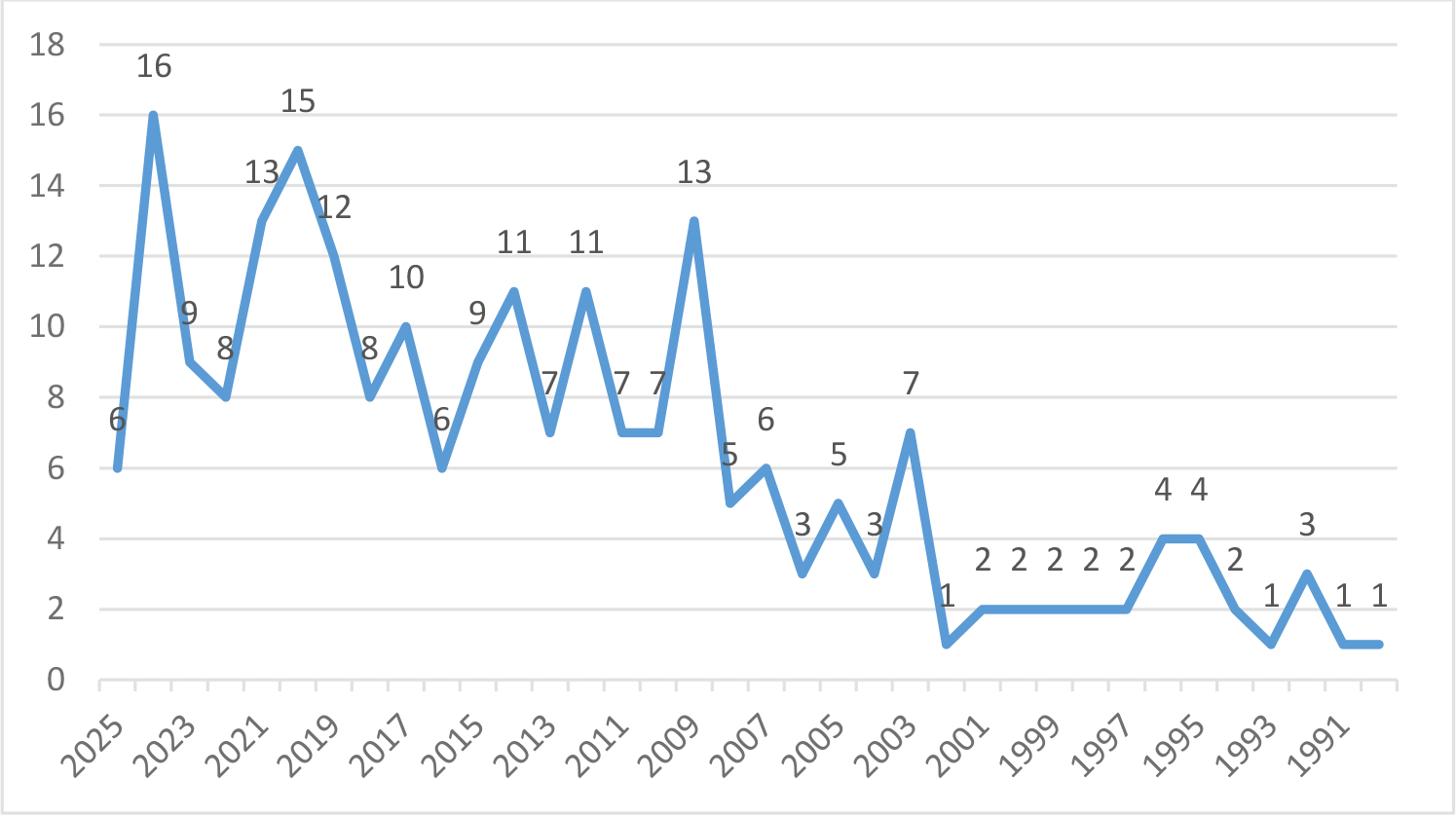
Figure 1.
Publication trends by year
Source: own processing
Leading institutional contributions
To further assess the distribution and concentration of scholarly output, the study applies Bradford’s Law to group sources according to their productivity. The results indicate a clear core–periphery structure within the budgeting–performance literature. A relatively small set of core journals accounts for a disproportionately large share of publications, reflecting their central role in shaping theoretical and empirical debates in the field. These core outlets are predominantly specialized in management accounting, management control systems, and strategic management. Beyond this core, a second zone consists of journals with moderate productivity that contribute to the diffusion of budgeting research across adjacent disciplines. A third and more extensive zone comprises a large number of journals with low publication frequency, indicating the broad interdisciplinary reach and dispersion of budgeting–performance research. This Bradfordian pattern confirms both the maturity of a core knowledge base and the expanding influence of the field into diverse scholarly domains.
Figure 2 affirms that research on links between budget processes and firm performance is a globally diffused topic, with strong representation from both American and European universities when institutional affiliations are considered. The University of California System leads five publications reflecting consistent contributions to management and financial research topics. Copenhagen Business School and the University of Pennsylvania follow very closely with four publications each.
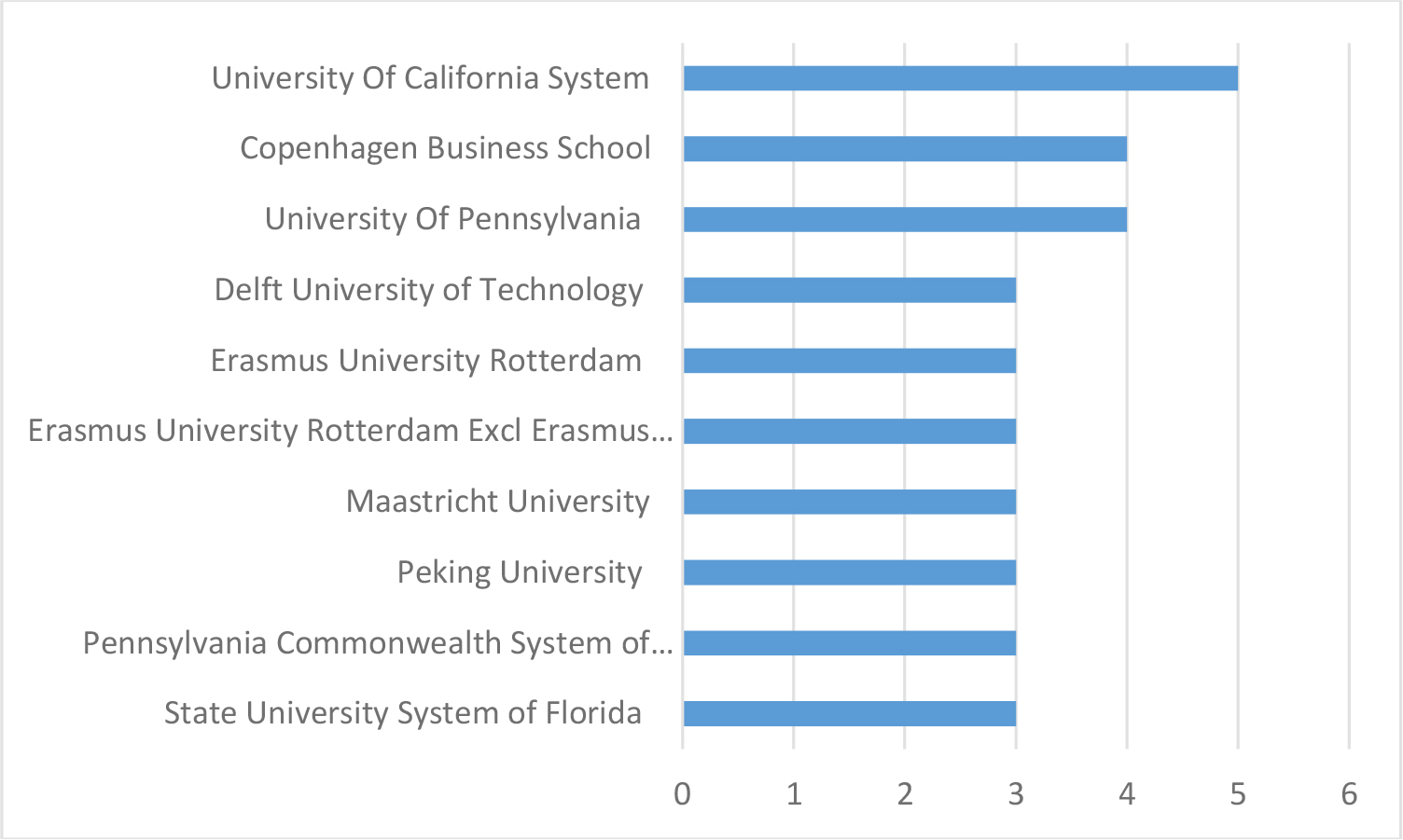
Figure 2.
Leading institutional contributions
Source: own processing
Three publications are equally shared between Delft University of Technology, Erasmus University Rotterdam, Maastricht University, Peking University, the Pennsylvania Commonwealth System of Higher Education (PCSHE), and the State University System of Florida. This means that there is a wide academic landscape in which universities from North America, Europe, and Asia are involved.
Additionally, this pattern suggests that top researchers of budget management and firm performance hail from institutions with traditions in business administration, finance and organization studies. The trans-continental spread is also indicative of increasing international collaboration and the growing global relevance of budgeting as a driver of corporate efficiency and performance excellence.
Leading countries in publication output
Figure 3 also reflects a publication base which, though opening up to other regions, is still primarily located within advanced academic infrastructures. The United States has 68 publications, attributable to its long-established lead role in management and accounting research. China follows with 16 publications signalling increasing involvement in studies pertaining to corporate governance and financial management. Australia and England have 13 publications each from both the Asia-Pacific and European research communities demonstrating active engagement.
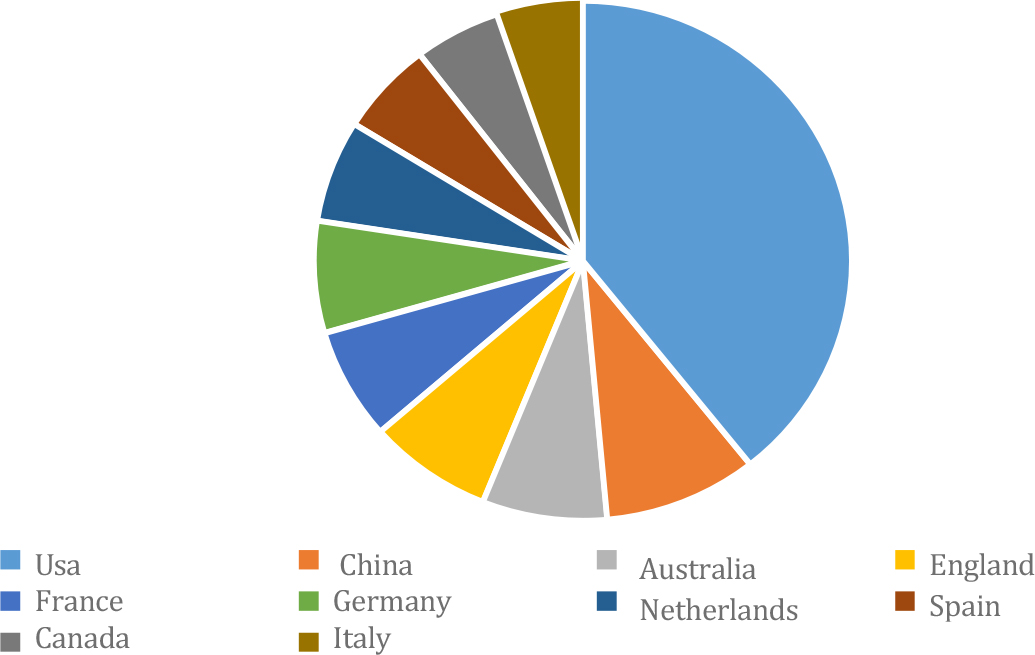
Figure 3.
Leading countries in publication output
Source: own processing
European countries France (12), Germany (12), and the Netherlands (11) also help in adding strength to the continent by playing a major role in the field of research on performance management and organizational behavior. Spain (10), Canada (9), and Italy (9) complete the top ten countries, thereby indicating increasing diversification at a global level in this area of research. Generally, it can be observed from the dominance of OECD countries that high-income economies are still very much involved at the core of scholarly discussions about budgeting and performance. However, growing involvement from non-Western low-and middle-income economies indicates increasing globalization of the academic field.
Figure 3 also reflects a publication base which, though opening up to other regions, is still primarily located within advanced academic infrastructures. The United States has 68 publications, attributable to its long-established lead role in management and accounting research. China follows with 16 publications signalling increasing involvement in studies pertaining to corporate governance and financial management. Australia and England have 13 publications each from both the Asia-Pacific and European research communities demonstrating active engagement.
European countries France (12), Germany (12), and the Netherlands (11) also help in adding strength to the continent by playing a major role in the field of research on performance management and organizational behavior. Spain (10), Canada (9), and Italy (9) complete the top ten countries, thereby indicating increasing diversification at a global level in this area of research. Generally, it can be observed from the dominance of OECD countries that high-income economies are still very much involved at the core of scholarly discussions about budgeting and performance. However, growing involvement from non-Western low-and middle-income economies indicates increasing globalization of the academic field.
Leading publishers and research areas
Table 1 clearly shows that a few big international publishing houses continuously carry publications on research regarding the budget process and firm performance. It comes out with 44 publications leading the field and thus underlining its strong journal portfolio in accounting, finance, and management. Emerald Group Publishing carries 36 publications ranking second with journals specializing in research on organizational behavior, strategic management, and business performance. Other publishers include Wiley and Taylor & Francis with 17 and 15 publications, respectively. Both have high-impact journals dealing with business administration and economics.
Table 1.
Leading publishers
| Publishers | Number of publications |
|---|---|
| Elsevier | 44 |
| Emerald Group Publishing | 36 |
| Wiley | 17 |
| Taylor & Francis | 15 |
| Springer Nature | 10 |
| IEEE | 9 |
| Amer Accounting Assoc | 8 |
| MDPI | 6 |
| Asce-Amer Soc Civil Engineers | 4 |
| Acad Conferences Ltd | 3 |
Springer Nature produces ten publications exhibiting its broad reporting in both multi-discipline and management science journals while IEEE (9) reflects the increasing interface between financial management and technology-based decision systems. The American Accounting Association (8) and MDPI, Basel, Switzerland (6) are also strongly represented, the latter reflecting the recent increase in open-access publishing. Finally, ASCE (4) and Academic Conferences Ltd, Reading, UK (3) are minor contributors but indicate some cross-disciplinary engagement of budgeting research in engineering management and academic conference proceedings (Table 1).
Additionally, commercially established publishers such as Elsevier and Emerald dominate. Scholarly work on budgeting and firm performance is strongly embedded in mainstream management and accounting literature. Other newer platforms, mostly open access, freely available to the rest of the world are gradually expanding the global reach of the field.
Classified by research area, publications demonstrate that studies on the budget process-firm performance relationship span several disciplines reflecting its cross-functional nature (Table 2).
Table 2.
Leading research areas
| Research areas | Number of publications |
|---|---|
| Business Economics | 152 |
| Engineering | 55 |
| Operations Research Management Science | 24 |
| Computer Science | 19 |
| Information Science Library Science | 11 |
| Environmental Sciences Ecology | 9 |
| Construction Building Technology | 6 |
| Science Technology Other Topics | 6 |
| Social Sciences Other Topics | 6 |
| Public Administration | 4 |
The leading discipline is business and economics with 152 publications firmly placing budgeting and performance analysis within the core topics of management and financial research. Engineering follows next with 55 publications demonstrating the increasing integration of budgeting concepts into project management, industrial systems, and operations planning.
Operations Research and Management Science (24) and Computer Science (19) publications further highlight the increasing trend toward research on data analytics, optimization models, and decision-support tools that support budget management. Information Science & Library Science (11) and Environmental Sciences & Ecology (9) show how the field is spreading into areas of digital knowledge management and sustainability budgeting. Other areas include Construction & Building Technology (6), Science & Technology - Other Topics (6), Social Sciences - Other Topics (6), and Public Administration (4), which again prove the multidimensional relevance of budgeting research crossing over from its traditional corporate settings.
Co-occurrence and citation analysis
A thematic evolution analysis reveals a clear transition in the focus of budgeting– performance research over time. In the early period (1990–2005), the literature primarily concentrated on budgeting as a financial control and planning mechanism, with dominant themes related to cost control, efficiency, and compliance. During the intermediate period (2006–2015), research attention shifted toward behavioral and organizational dimensions, including budget participation, information asymmetry, managerial incentives, and performance evaluation. In the most recent period (2016–2025), the thematic focus expanded further to encompass strategic and dynamic perspectives, with increasing emphasis on digitalization, sustainability, governance, innovation, and strategic alignment. This evolution illustrates a progressive re-conceptualization of budgeting from a static control tool to an adaptive management system embedded within broader organizational and institutional contexts (see Figure 4).
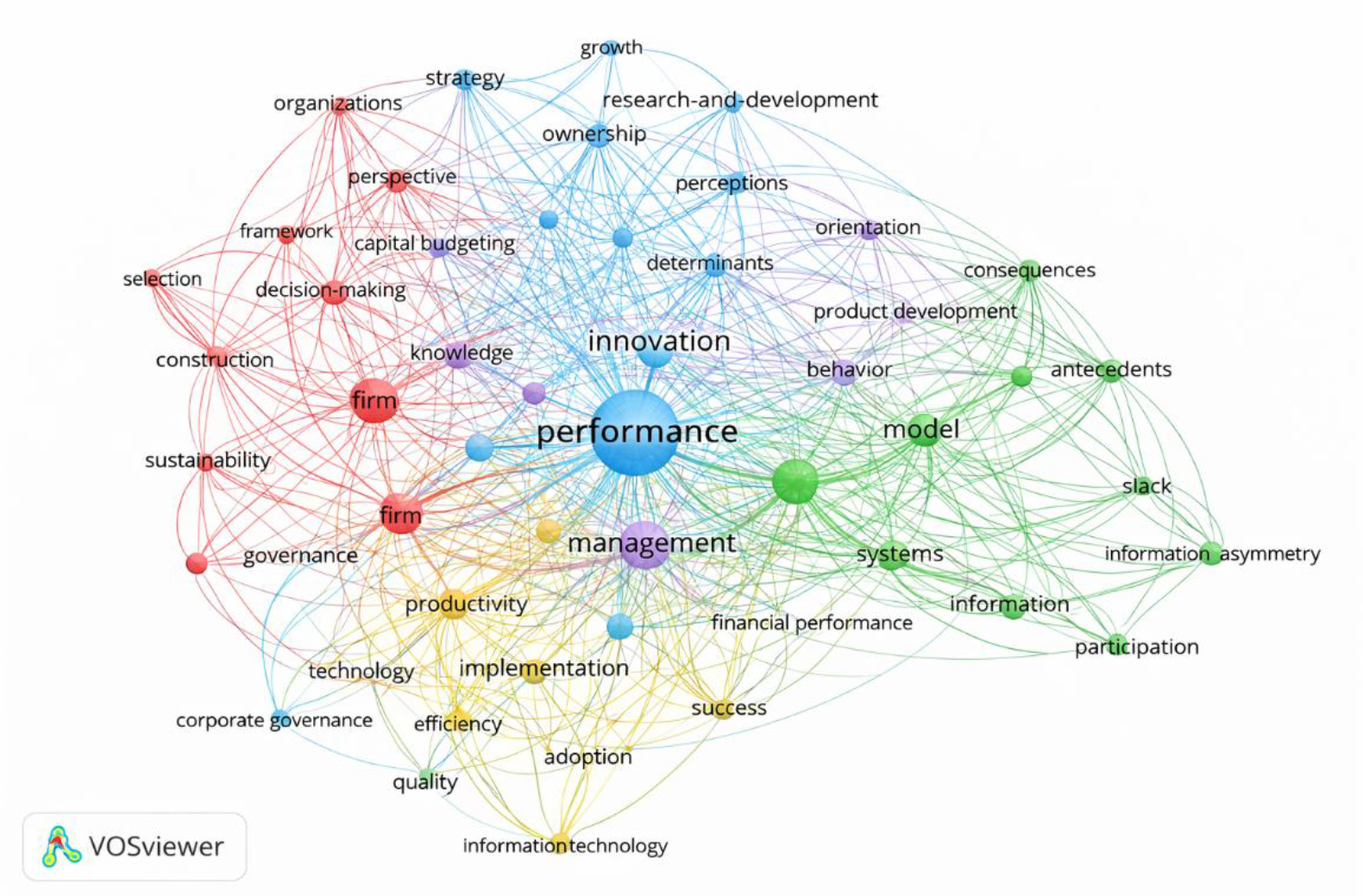
Figure 4.
Keyword co-occurrence analysis
Source: own processing
The keyword co-occurrence network in Figure 4, presents the intellectual structure and thematic relations of studies between the budget process and firm performance. Several clear clusters were identified by VOSviewer (van Eck & Waltman, 2010), each representing an area of theme focus within the domain of research.
The blue cluster, around ‘performance’ and ‘management’, links budgeting with managerial control, productivity, and efficiency. This is the stream of core concepts of the field. It reflects how performance measurement systems and management control frameworks are often integrated with budgeting practices to improve decision quality and organizational effectiveness. The keywords found in this cluster include “model,” “information,” “participation,” “financial performance,” and “information asymmetry.” These keywords relate to research based on Agency theory, which emphasizes how budgeting as an information and control mechanism is used to align managerial behavior with firm objectives.
The red cluster orbits around ‘firm’, ‘strategy’, ‘decision-making’, ‘governance’ and ‘sustainability’. This theme is aligned with Contingency theory, which focuses on contextual and strategic factors-such as governance structures, organization design and sustainability orientation affecting the budgeting–performance nexus. The yellow cluster contains words such as ‘technology’, ‘efficiency’, ‘implementation’, and ‘adoption’. It is research motivated by the resource-based view (RBV), which considers budgeting a strategic capability for managing resource allocations, integrating technology, and enhancing performance.
Finally, innovation, growth, knowledge, and research and development are all peripheral yet closely connected nodes that evidence the widening of the field’s boundaries. This is an indication of the increasing integration of innovation management studies and knowledge-based performance studies with budgeting research.
The citation network in Figure 5 lists the most influential studies and authors supporting the intellectual foundation of research on budgeting and firm performance. Several distinct clusters are clearly visible, representing different theoretical and methodological traditions within the field.
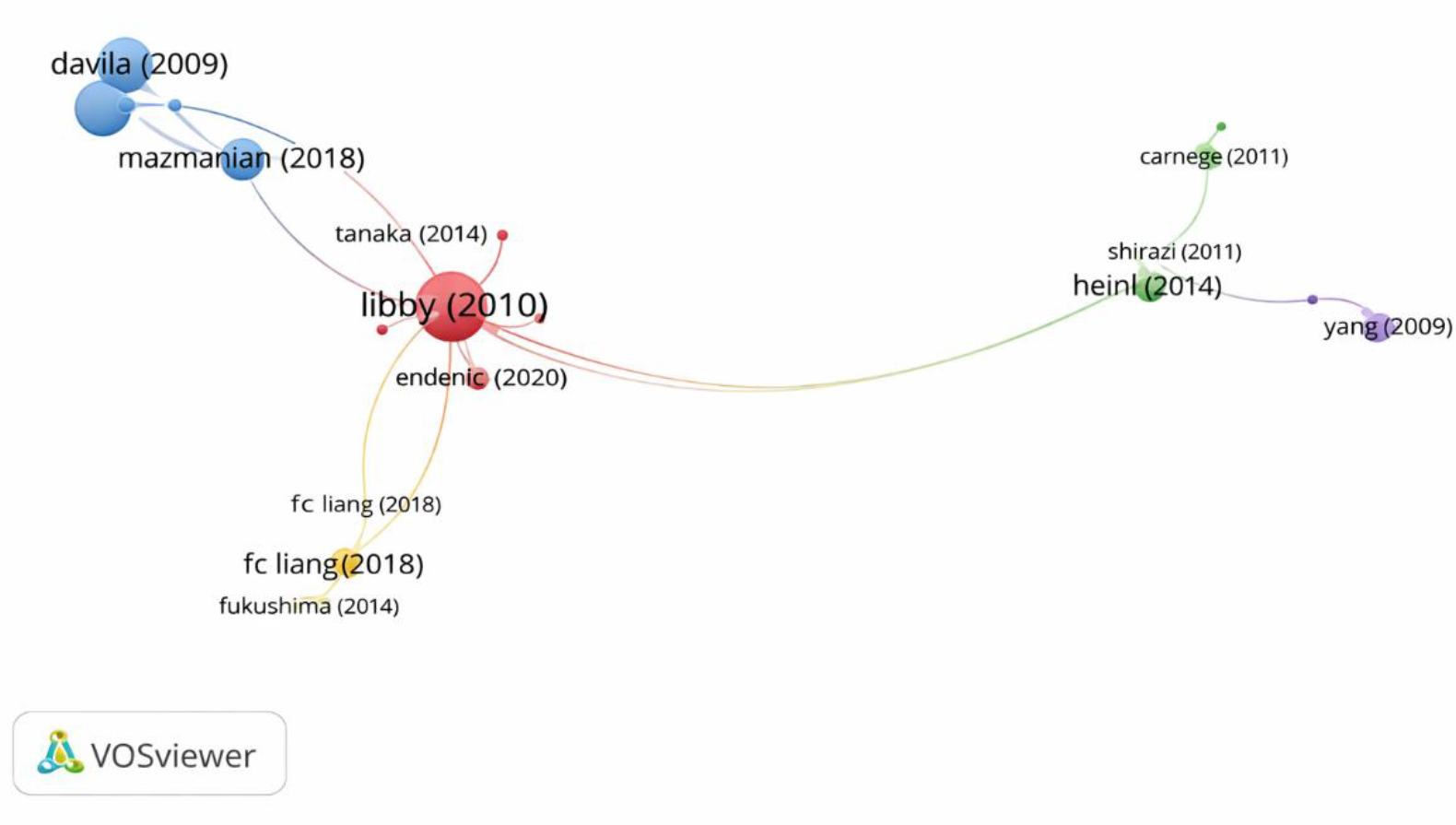
Figure 5.
Citation analysis
Source: own processing
The red cluster led by Libby and Lindsay (2010) turns out to be the main intellectual node, with dense citation links to other important works, such as Endenich and Trapp (2020), and to mainstream management control systems and the behavioral aspects of budgeting literature. Their work focuses on how managerial cognition, information use, and incentive structures influence performance outcomes.
The blue cluster, spearheaded by Davila et al. (2009), Hart et al. (2003), and Mazmanian and Beckman (2018), discusses innovation and strategy management. In their works, the development of budgeting practices within dynamic and entrepreneurial contexts is articulated through links among capital budgeting, strategic alignment, and corporate evolution towards adaptability.
In the green cluster, growing research is reflected in the works of Heinle et al. (2014), Kramer and Hartmann (2014), and Chen and Huang (2021) on information asymmetry and participative budgeting, which are closely aligned with Agency Theory. Their study investigates how information sharing, participation, and incentives reduce managerial bias in the.
The yellow cluster extends from Feichter et al. (2018), Grabner and Moers (2021), and Fukushima and Yamada (2024) to contribute to the Contingency and Resource-Based perspectives, adding discussion on how budgeting capabilities interact with environmental uncertainty, technology adoption, and organizational learning to attain better performance.
A small but clear purple cluster is formed by Yang et al. (2009) and Mohd Sairazi et al. (2024), representing analytical or model-based approaches to budgeting decisions and performance evaluation.
Citation analysis also clearly positions the study of Libby and Lindsay (2010) as conceptual bridging work among the behavioral, strategic, and control-oriented streams of budgeting research. Such links further exemplify how the discipline has firmly broken away from classic financial control concepts to develop various dimensions, be they behavioral or strategic management processes, through which to understand ‘budgeting’.
Bibliographic coupling analysis
The bibliographic coupling network (Figure 6) displays the shared intellectual foundations between contemporary studies of the budget process and firm performance. Several tightly connected clusters of documents have been identified through this analysis that collectively define the current research front of the field.
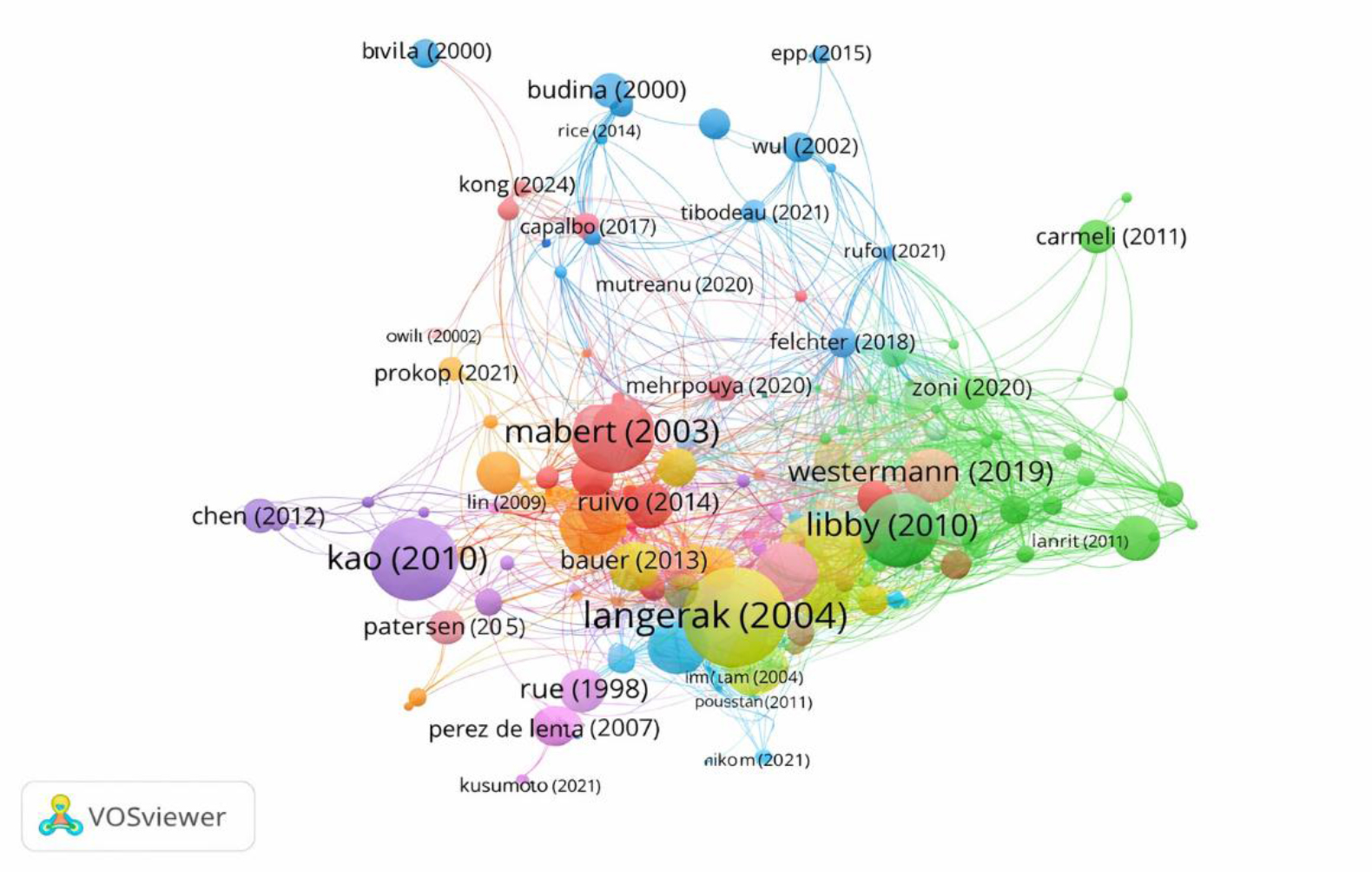
Figure 6.
Bibliographic coupling analysis
Source: own processing
Libby and Lindsay (2010) and Westermann et al. (2019) drive a dominant stream in management control systems, performance measurement, and behavioral budgeting highlighted by the green cluster. Their work accommodates findings from Agency Theory on information asymmetry, incentive alignment, and participative budgeting as means to enhance managerial responsibility and firm performance.
The orange cluster comprises information systems, technology adoption, influential authors such as Mabert et al. (2003) and Langerak et al. (2004), and operational performance. This is very closely related to the RBV, which proposes effective budgeting processes and technological integration as strategic resources that support efficiency and productivity improvements, cushion against slack, and translate into enhanced competitiveness.
The works of Budina et al. (2000), Wulf (2002), Thibodeau et al. (2007), Grabner and Moers (2021), and Epp (2015) discuss blue cluster strategic and financial decision-making in various organizational contexts, including innovation management and capital budgeting. These works reflect an evolution toward linking financial control with strategic flexibility.
The purple cluster includes works such as Kao and Hwang (2010) and Chen et al. (2005), which encompass model-driven and analytical approaches that develop frameworks for optimizing budget allocation and performance assessment. Further, the red cluster is represented by the works of Capalbo et al. (2021), Munteanu et al. (2020), and Sablin et al. (2021). Governance, sustainability, and accountability in budgeting practices appear to be emphasized by this group of authors. Here, institutional theory perspectives on financial management and corporate responsibility seem to be merging.
Synthesizing the clustered findings, three overarching thematic domains can be identified. The first domain focuses on budgeting as a control and accountability mechanism, emphasizing performance measurement, information asymmetry, and incentive alignment, largely grounded in agency theory. The second domain conceptualizes budgeting as a context-dependent management practice, highlighting the role of organizational structure, environmental uncertainty, governance, and strategic fit, consistent with contingency theory. The third domain frames budgeting as a strategic capability that supports innovation, digital transformation, and sustainability-oriented performance, reflecting a resource-based perspective. The observed transitions across these domains suggest an increasing integration rather than fragmentation of themes, with recent studies combining behavioral, contextual, and strategic elements to explain how budgeting systems contribute to firm performance in complex and dynamic environments.
Discussions
A bibliometric mapping of the 222 documents found in the Web of Science Core Collection provides a detailed map of both intellectual and thematic currents in research on the evolution of studies examining connections between the budgeting process and firm performance. The results, derived from co-word, citation, and bibliographic coupling analyses, reveal a range of dominant theoretical perspectives, including Agency Theory, Contingency Theory, and Resource-Based View (RBV)-related explanations of how budgeting functions as both a controlling device and a strategic resource in organizational management.
The keyword co-occurrence network displays strong interconnections among terms such as information, participation, model, financial performance, and behavior. These clusters are closely related to the conceptual foundation of Agency Theory, which interprets budgeting as a process of reducing information asymmetry between the principal and the agent. The green cluster visibly dominates keywords of (information) asymmetry, participation and behavior.
This is further proven by a citation analysis that places studies such as Libby and Lindsay (2010), Heinle et al. (2014), Kramer and Hartmann (2014) at the very core of behavioral budgeting research. A group of works that argue for the enhancement of transparency, communication, and due diligence from managers through participative budgeting to unlock improved performance at the aggregate organization level. The map shows strong links among recent articles, such as Westermann et al. (2019), that highlight sustained scholarly attention to performance evaluation, managerial control, and information systems as mechanisms for resolving agency issues.
Moreover, bibliometric evidence confirms that Agency Theory remains the dominant theoretical foundation for understanding the functional and behavioral dynamics of budgeting. It underscores control, accountability, and incentive alignment as critical determinants of firm performance, thereby illustrating how budgeting practices operate as both governance mechanisms and behavioral tools within modern organizations.
The red cluster in the co-occurrence network is dominated by terms such as “firm,” “strategy,” “decision-making,” “governance,” and “sustainability.” This indicates the presence of Contingency Theory. According to this point of view, the effectiveness of budgeting is determined by how well it matches contextual variables-environmental uncertainty, organization structure, and strategic orientation among them. Bibliographic coupling links (e.g., Langerak et al., 2004; Mabert et al. 2003; Ruivo et al., 2014) support this reading, as these studies focus on the fit among management control systems, organizational design, and environmental complexity. Feichter et al. (2018) and Endenich and Trapp (2020), via citation links, show that research on budgeting is moving from static control models to adaptive strategic frameworks. In other words, it means the mechanism’s contextual responsiveness is adjusted due to external volatility (Sustainability goals and Corporate Governance expectations), rather than being merely a financial planning tool.
The yellow cluster contains words such as “technology,” “efficiency,” “implementation,” “adoption,” and “productivity.” This research is viewed from the Resource-Based View (RBV). In this respect, the budgeting process enhances the firm's performance by developing unique capabilities that are valuable, rare, inimitable, and non-substitutable. Feichter et al. (2018), Grabner and Moers (2021), and Ruivo et al. (2014) observed in both citation and bibliographic coupling networks that effective budgeting systems enable firms to better allocation of resources integrate technology and support innovation this capability results in operational efficiency and strategic alignment making budgeting a dynamic resource rather than a static administrative tool the data indicate toward competence in budgeting has evolved into a strategic advantage particularly in technologically intensive or innovation-driven firms.
Synthesizing the results of all analyses, a clear theoretical convergence emerges. Agency Theory explains the behavioral control dimension of budgeting. Contingency Theory contextualizes its adaptability to organizational and environmental settings. The RBV highlights its strategic potential as a source of long-term advantage.
The bibliometric maps display the growing overlap of these perspectives in recent publications (2018–2025). Research does not treat budgeting as a financial process but as an integrated management system that connects behavior, context, and strategic capability. This is reflective of changes taking place first in the paradigms, from viewing budgets as constraints to understanding them as enablers of innovation, adaptation, and sustainability performance.
Conclusions
This study provides a comprehensive bibliometric synthesis of research examining the relationship between budgeting processes and firm performance, drawing on 222 publications indexed in the Web of Science Core Collection between 1990 and 2025. The empirical findings reveal several robust and recurring patterns that characterize the development of this research field. First, publication trend analysis shows a pronounced acceleration of scholarly output after 2018, indicating growing recognition of budgeting as a strategic management tool rather than a purely accounting or control mechanism. Second, citation and co-occurrence analyses identify agency theory, contingency theory, and the resource-based view as the dominant intellectual foundations shaping the literature, with increasing convergence among these perspectives in recent studies.
The thematic and clustering analyses further show a clear evolution in research focus over time. Early studies primarily emphasized budgeting as a financial planning and control device, while subsequent research increasingly incorporated behavioral dimensions such as participation, information asymmetry, and incentive alignment. More recent contributions extend this perspective by linking budgeting to strategic alignment, digitalization, governance, sustainability, and innovation, thereby reframing budgeting as an adaptive management system embedded within dynamic organizational contexts. Thematic evolution and bibliographic coupling results confirm that these emerging themes are not isolated but increasingly integrated with established theoretical frameworks.
Finally, the findings suggest that contemporary budgeting research has moved beyond fragmented and discipline-specific approaches toward a more holistic understanding of budgeting as both a governance mechanism and a strategic capability. By systematically mapping publication patterns, intellectual structures, and thematic transitions, this study clarifies how budgeting processes contribute to firm performance through behavioral control, contextual adaptation, and capability development. These insights not only advance theoretical understanding but also offer practical implications for managers seeking to redesign budgeting systems to enhance organizational responsiveness, transparency, and long-term performance.
Theoretical and practical implications
From a theoretical perspective, this study makes several contributions to the literature on budgeting processes and firm performance. First, by adopting a bibliometric and science-mapping approach, the study systematizes a highly fragmented body of research and reveals the field’s underlying intellectual structure. Second, the findings demonstrate a clear convergence among agency theory, contingency theory, and the resource-based view, showing that these frameworks are increasingly integrated rather than applied in isolation. This convergence advances existing theory by reconceptualizing budgeting as a multi-dimensional management system that simultaneously performs control, coordination, and capability-building functions. Third, the identification of thematic transitions over time provides a dynamic understanding of how theoretical emphases have shifted from static financial control toward behavioral, contextual, and strategic perspectives. Together, these contributions extend prior conceptualizations of budgeting and offer a more holistic theoretical foundation for future research.
The findings extend existing budgeting literature by demonstrating a clear theoretical convergence rather than theoretical competition among dominant frameworks. While earlier studies tended to treat agency theory, contingency theory, and the resource-based view as separate explanatory lenses, recent research increasingly integrates these perspectives to explain budgeting as a multi-dimensional management system. This convergence reflects a paradigm shift in which budgeting is no longer conceptualized as a static control tool, but as a dynamic capability that shapes organizational learning, strategic responsiveness, and long-term performance. Such integration opens new avenues for theory development by encouraging hybrid models that link behavioral controls, contextual adaptation, and capability-building mechanisms.
From a practical perspective, the findings offer several implications for managerial decision-making. The bibliometric evidence indicates that effective budgeting systems balance control with flexibility by integrating accountability mechanisms, contextual alignment, and strategic capability development. Managers can use these insights to redesign budgeting processes that not only monitor performance but also support learning, innovation, and adaptation in uncertain environments. In particular, the growing emphasis on digitalization, governance, and sustainability suggests that budgeting should be aligned with broader organizational strategies rather than treated as a purely administrative routine. By leveraging budgeting as a strategic management tool, firms can enhance transparency, improve resource allocation, and strengthen long-term performance outcomes.
This study places budgeting at the intersection of behavioral economics, strategic management, and organizational theory. The bibliometric evidence suggests that integrating these theoretical lenses would enable deeper insight into the enhancement of decision-making quality, learning, and adaptation abilities through budgeting in an environment of uncertainty.
From a managerial perspective, the results indicate that successful budgeting emanates from balancing control with flexibility. Firms should develop budgeting systems that maintain accountability (Agency Theory), support contextual alignment with strategy and environment (Contingency Theory), and promote the development of internal capabilities and innovation (Resource-Based View). In essence, budgeting must be transformed from a compliance exercise into a strategic approach for managing resources through institutionalized mechanisms of continuous improvement and value creation.
Directions for future studies
These perspectives further reinforce the view of budgeting as both a behavior-control mechanism and a strategic resource that ensures organizational adaptation and improved performance. The bibliometric analysis reveals several promising avenues for future research in this stream.
First, future research should primarily focus on the deeper behavioral and psychological aspects of budgeting, while slightly shifting away from the usual control-oriented approach. This includes aspects of managerial cognition, motivation, and cognitive biases toward participation, goal setting, and budgetary outcomes. Managerial cognition refers to the individual processes by which a manager acquires knowledge and understanding through thought, experience, and senses. An integration of human judgment-oriented learning concepts with organizational learning will explain effective/inadequate uses of budgets by organizations.
Second, scholars should be able to draw comparisons and conduct contextual analyses of how market characteristics, volatility, and institutional frameworks shape and influence the outcomes of budgeting systems. Such a study would provide insight into the governance structures of emerging economies, which cross-cultural norms, regulatory regimes, and governance structures frame the budget–performance relationship.
Third, future research should reconceptualize budgeting as a dynamic strategic capability, drawing from the Resource-Based View. This means investigating how firms develop adaptive budgeting routines that integrate resources to foster innovation and support competitiveness. The interaction between budgeting and other organizational capabilities, for instance, knowledge management, sustainability orientation, or digital transformation, remains largely an unexplored frontier.
In addition to managerial relevance, the findings provide clear guidance for future research agendas. The identified thematic evolution highlights the need for further investigation into how budgeting interacts with emerging organizational phenomena such as digital transformation, sustainability orientation, and governance complexity. Future studies may build on the observed theoretical convergence by developing integrative models that explicitly link behavioral controls, contextual contingencies, and dynamic capabilities. Moreover, the concentration of research in advanced economies suggests opportunities for comparative and cross-contextual studies that examine budgeting practices in emerging and transitional markets. By grounding future inquiries in the patterns revealed by this bibliometric analysis, scholars can move toward more cumulative and theoretically informed research on budgeting and firm performance.
Finally, scholars should examine how artificial intelligence, automation, and data analytics transform budgeting into a predictive and adaptive management system as digital technologies reshape managerial decision-making. This implies leveraging real-time analytics to enable a more agile budgeting practice based on evidence reflecting past and present conditions.
Limitations
Despite its contributions, this study has several limitations that should be acknowledged. First, the analysis is based exclusively on publications indexed in the Web of Science Core Collection, which may exclude relevant studies available in other databases such as Scopus or regional repositories. Although this choice ensures data quality and consistency, it may limit the coverage of emerging or context-specific research. Second, the bibliometric approach focuses on quantitative mapping of publication and citation networks and therefore provides limited qualitative insight into the contextual richness or methodological rigor of individual studies. Finally, the results of science-mapping analyses are sensitive to parameter settings and threshold choices, which may influence cluster configurations and network structures. Future research may address these limitations by integrating bibliometric techniques with systematic or qualitative reviews and by incorporating multiple data sources to broaden literature coverage.