
Table 1.
Summary of existing reviews on waste management in Sri Lanka
| Source of the review | Insights |
|---|---|
| (Kularatne, 2023) | The review identifies significant issues with hazardous waste management in Sri Lankan EA laboratories. Despite low effluent volumes, there is high pollution due to contamination. Laboratories produce 80–100 kg/year of chemical-contaminated waste, with inadequate disposal methods—ranging from mixing with non-hazardous waste to dumping and burning, though one lab uses coprocessing. |
| Current management practices and regulations are insufficient, underscoring the need for improved waste management strategies and cleaner production practices. | |
| (Welivita, Wattage, & Gunawardena, 2015) | The study investigates difficulties with solid waste management (SWM) in developing nations, emphasising household solid waste (HSW). It emphasizes the significance of the "4R" activities: reducing, reusing, recycling, and recovering in minimizing waste. |
| The Waste Management Charge (WMC) is seen as a successful instrument for encouraging these habits. After assessing several charging methods, the report proposes a 'pre-paid bag-based charging system’ as the best fit for Sri Lanka, taking into account social, economic, and political issues. The findings recommend implementing Quantity-Based Charging (QBC) systems in similar developing countries. | |
| (Weerasundara, 2014) | This article examines waste management techniques, legislative and institutional frameworks, and technologies employed in Sri Lanka to determine the scope of non-hazardous and hazardous waste issues. |
| The study, which is based on a literature analysis, has concluded that while Sri Lanka has a well-developed legislative and institutional framework with established laws and norms, novel technologies are required to improve existing waste management practices. | |
| The study also cites considerable opportunities for private-sector involvement in garbage management. It finds that a thorough technical assessment and the development of new technologies are required to adequately manage all forms of garbage in the country. | |
| (Widanapathirana, Perera, & Bellanthudawa, 2023) | This study explores e-waste management in Sri Lanka, noting important issues such as ineffective policies, insufficient recycling procedures, and a lack of knowledge. It identifies the necessity for strategic planning in the technological, financial, and institutional domains. |
| Key ideas include adopting e-waste legislation, establishing central management bodies, assisting informal recyclers, and incorporating ewaste management into education to enhance practices and understanding. | |
| (Nayanarangani, Dissanayaka, & Jaya, 2022) | The study has explored that tourism considerably enhances Sri Lanka's economy, accounting for 12.6% of GDP, but also produces a huge amount of solid garbage. Depending on tourist behaviour, seasons, and local legislation, tourist destinations generate between 1 and 12 kg of waste per guest per day. |
| Key issues include insufficient facilities, bad administration, and financial limits. The report underlines the importance of improving waste management for Sri Lanka's long-term tourism and economic growth. |
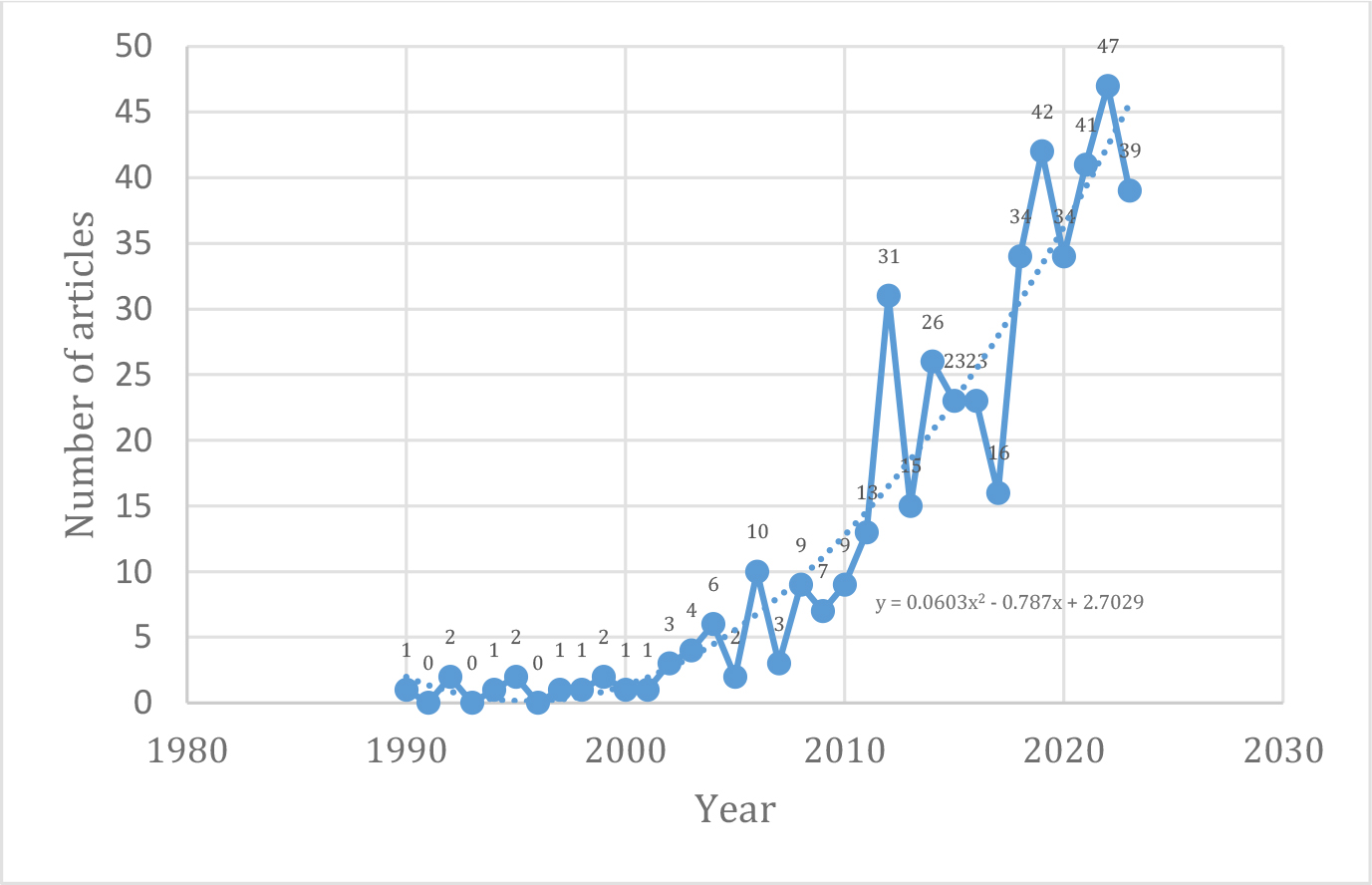
Figure 1.
Annual production of articles
Source: own processing
Table 2.
Summary of data
| Description | Results |
|---|---|
| Timespan | 2003:2024 |
| Sources (Journals, Books, etc) | 559 |
| Documents | 1247 |
| Annual Growth Rate % | 19.34 |
| Document Average Age | 5.35 |
| Average citations per doc | 28.5 |
| References | 20009 |
| Keywords Plus (ID) | 327 |
| Author's Keywords (DE) | 327 |
| Authors | 2794 |
| Authors of single-authored docs | 102 |
| Single-authored docs | 110 |
| Co-Authors per Doc | 4.03 |
| International co-authorships % | 0 |
| article | 1247 |
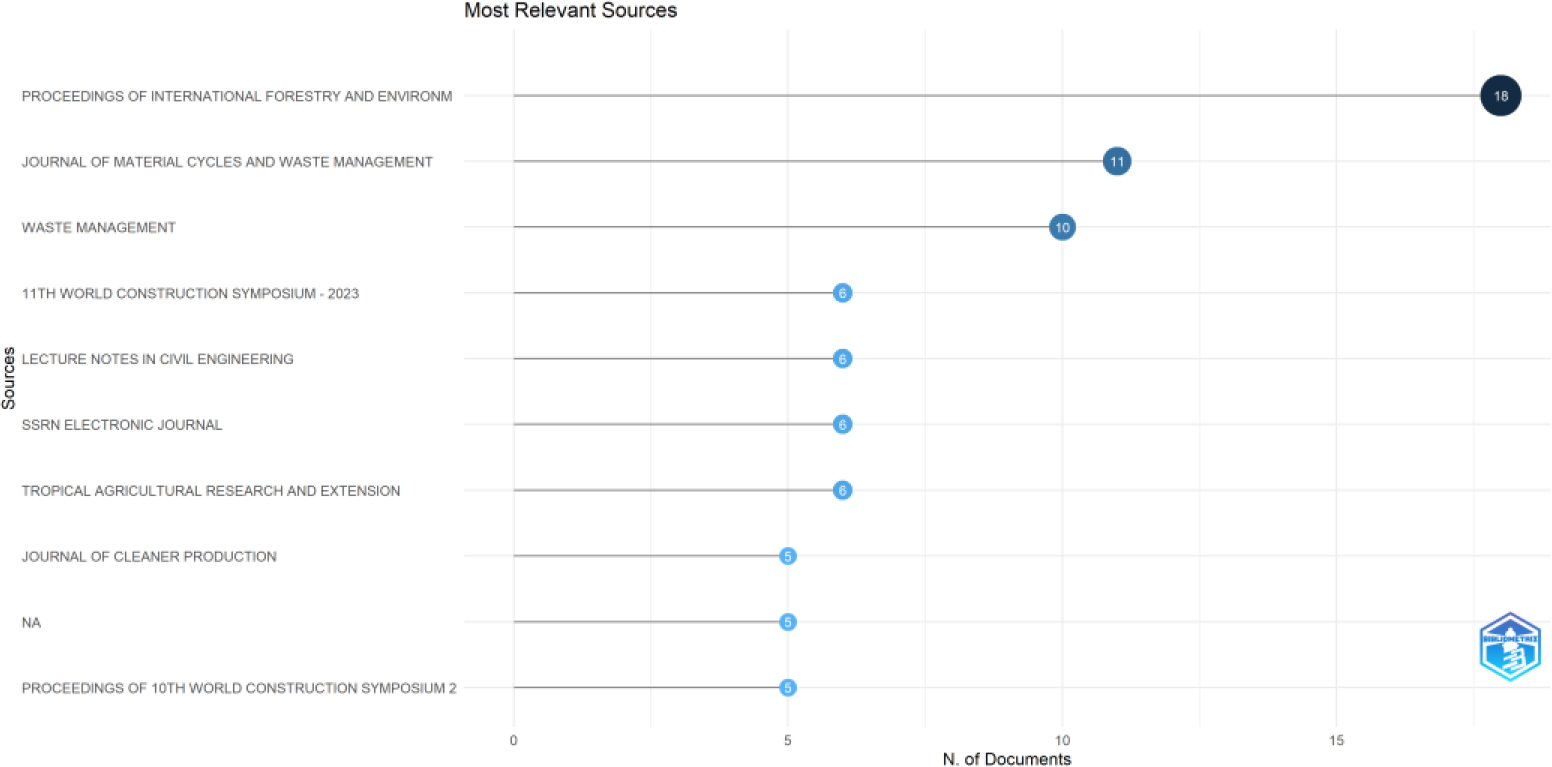
Figure 2.
Top 10 journals
Source: own processing
Table 3.
Top ten globally cited articles
| Authors | Year | DOI | Source | TC |
|---|---|---|---|---|
| Nilanthi J. G. J. Bandara, J. Patrick A. Hettiaratchi, S. C. Wirasinghe, Pilapiiya, S. | 2007 | 10.1007/S10661-007-9705-3 | Environmental Monitoring And Assessment | 188 |
| Kularatne, T., Wilson, C., Månsson, J., Hoang, V., Lee, B. | 2019 | 10.1016/J.TOURM AN.2018.09.009 | Tourism Management | 145 |
| Aleluia, J., Ferrão, P. | 2016 | 10.1016/J.WASM AN.2016.05.008 | Waste Management | 133 |
| Morgan, O., Sribanditmongkol, P. Perera, W., Sulasmi, Y., Van Alphen, D., Sondorp, E. | 2006 | 10.1371/JOURNA L.PMED.0030195 | Plos Medicine | 129 |
| Dissanayake, D., Tilt, C., Xydias-Lobo, M. | 2016 | 10.1016/J.JCLEPR O.2016.04.086 | Journal Of Cleaner Production | 126 |
| Kulatunga, U., Amaratunga, D., Haigh, R., Rameezdeen, R. | 2006 | 10.1108/14777830610639440 | Management Of Environmental Quality | 119 |
| Vidanaarachchi, C. K., Samuel, T., Yuen, S., Pilapitiya, S. | 2005 | 10.1016/J.WASM AN.2005.09.013 | Waste Management | 112 |
| Lalitha, R., Fernando, S. | 2018 | 10.1016/J.WASM AN.2018.11.030 | Waste Management | 100 |
| Abeyewickrema, W., Wickremasinghe, A. R., Sommerfeld, J., Kroeger, A. | 2015 | 10.1179/2047773212Y.00000000 60 | Pathogens and Global Health | 66 |
| Menikpura, S. N. M., Shabbir, H. Gheewala, S. | 2018 | 10.1007/S10163-012-0055-Z | Journal of Material Cycles and Waste Management | 64 |
Table 4.
The most prolific authors
| Authors | Articles | Articles Fractionalized |
|---|---|---|
| Manfred Lenzen | 45 | 9.78 |
| Kuishuang Feng | 41 | 7.91 |
| Richard Wood | 41 | 8.80 |
| Bin Chen | 36 | 9.05 |
| Klaus Hubacek | 31 | 5.77 |
| Thomas Wiedmann | 30 | 7.29 |
| Dabo Guan | 28 | 4.46 |
| Sai Liang | 24 | 3.91 |
| Jing Meng | 23 | 4.39 |
| Daniel Moran | 22 | 4.94 |
Table 5.
Top ten most relevant authors
| Authors | Articles | Articles Fractionalized |
|---|---|---|
| Karunasena G | 9 | 3.75 |
| Amaratunga D | 7 | 2.67 |
| Basnayake Bfa | 6 | 1.78 |
| De Alwis A | 6 | 1.92 |
| Ariyawansha Rtk | 5 | 1.28 |
| Pilapitiya S | 5 | 1.42 |
| Dissanayake P | 4 | 1.50 |
| Haigh R | 4 | 1.17 |
| Jayasinghe-Mudalige Uk | 4 | 1.83 |
| Karunarathna A | 4 | 1.12 |
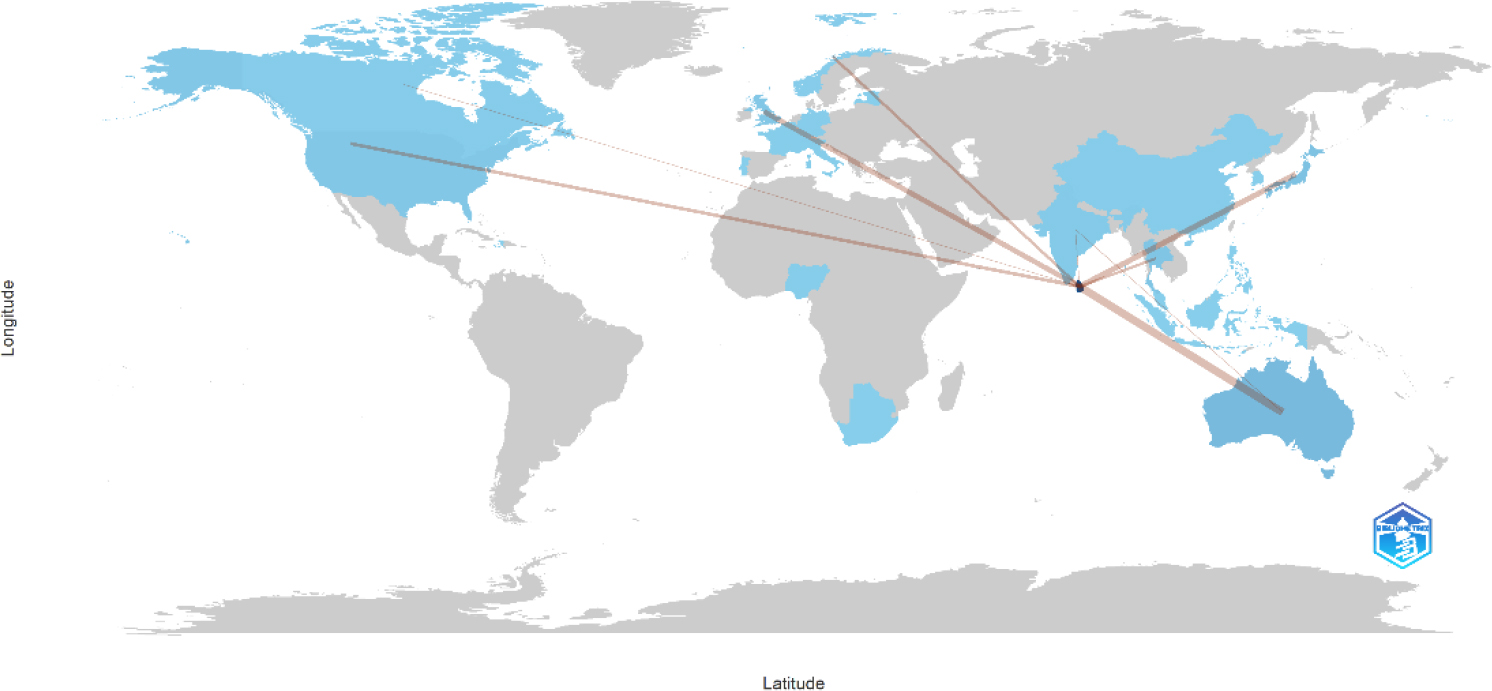
Figure 3.
Countries' collaboration world map
Source: output of Biblioshiny software
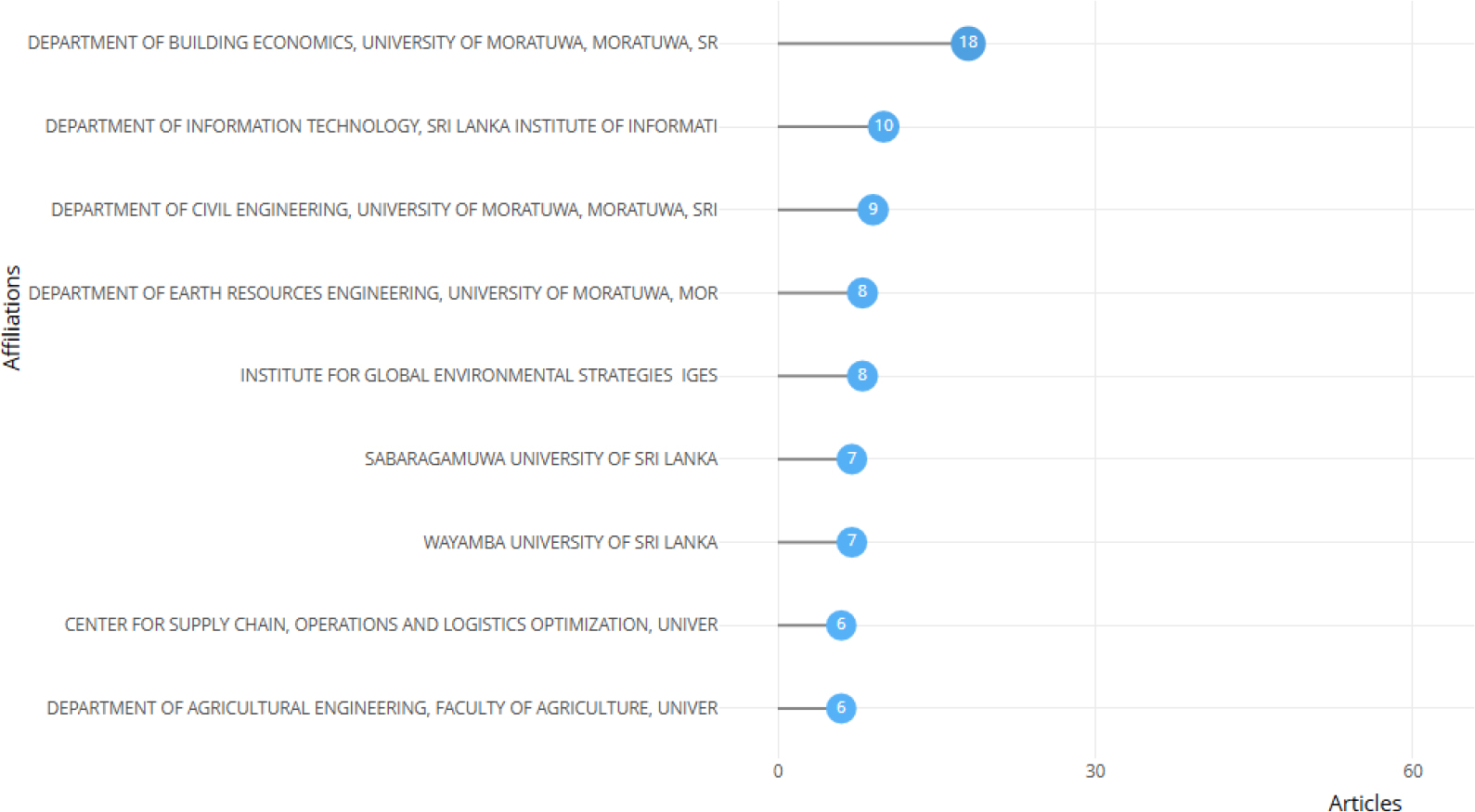
Figure 4.
Most relevant affiliations
Source: output of Biblioshiny software
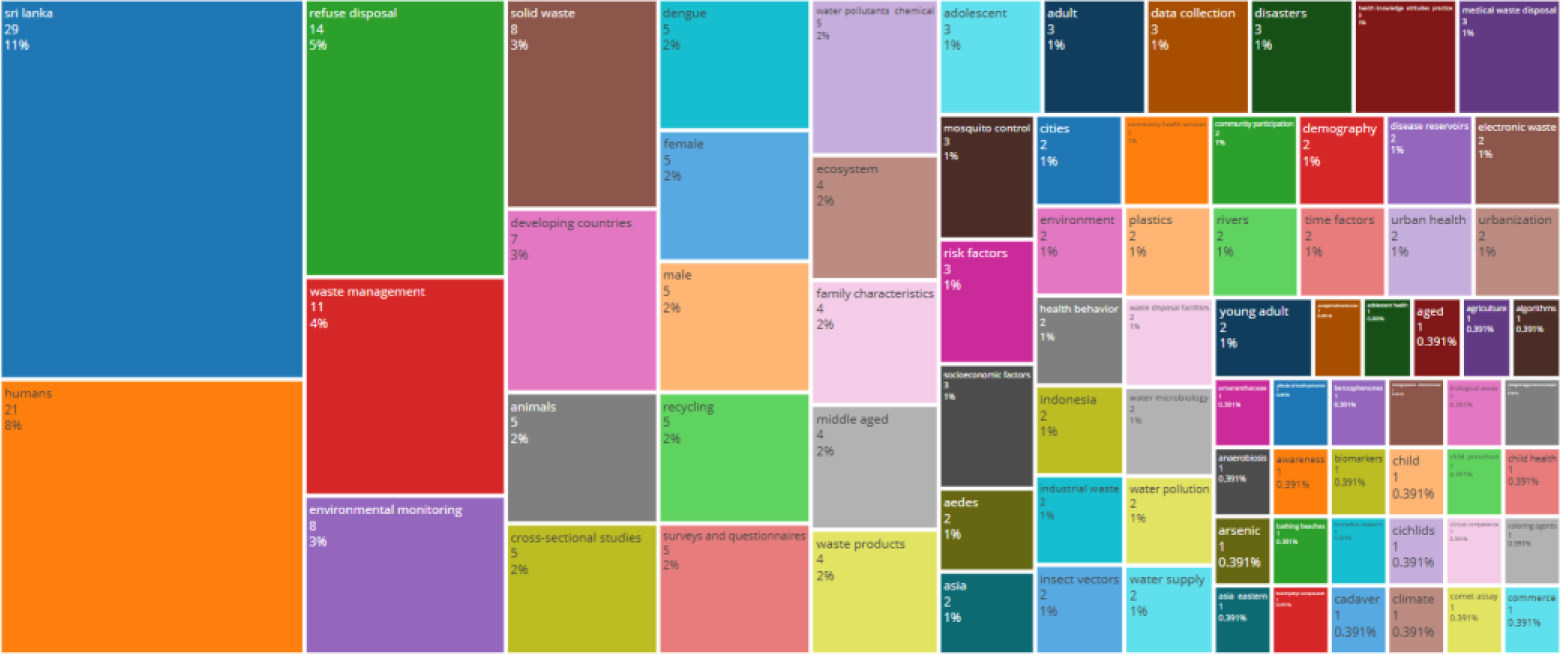
Figure 5.
Tree mapping of the most relevant words used
Source: output of Biblioshiny software
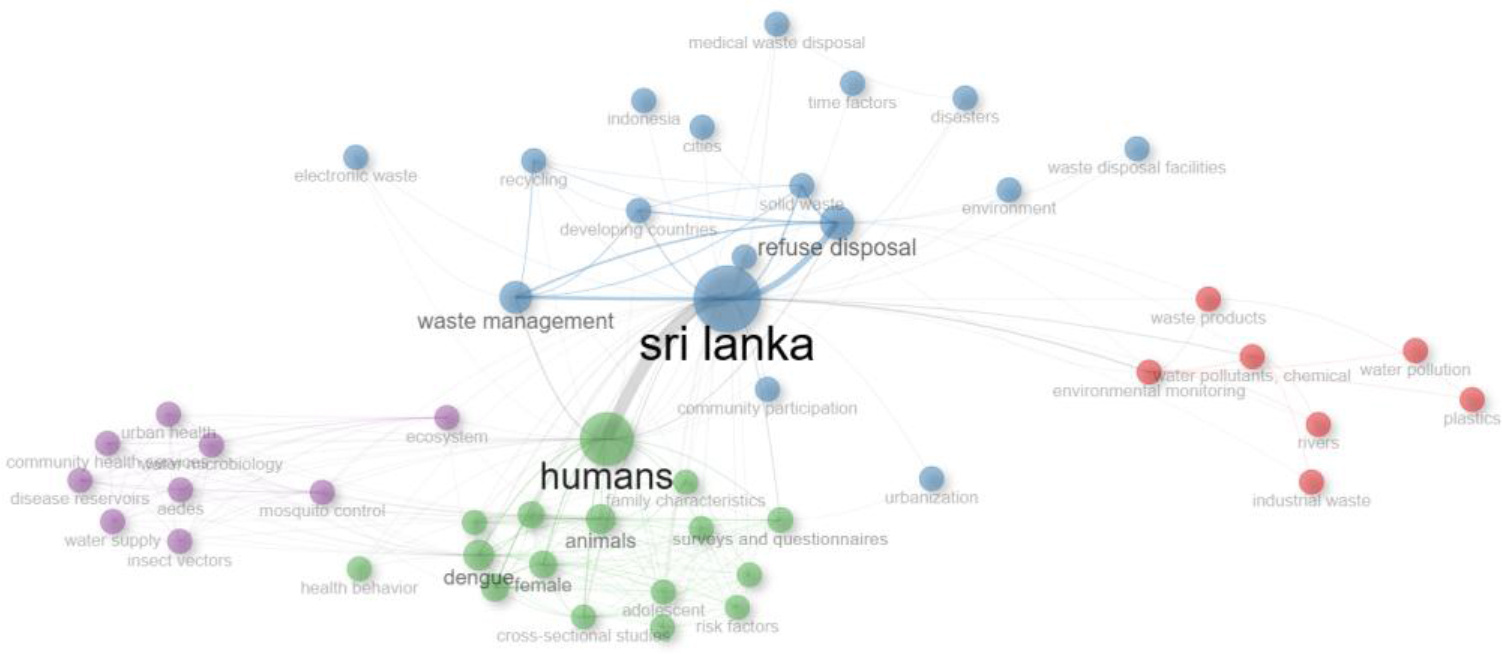
Figure 6.
Keyword co-occurrence analysis
Source: output of Biblioshiny software
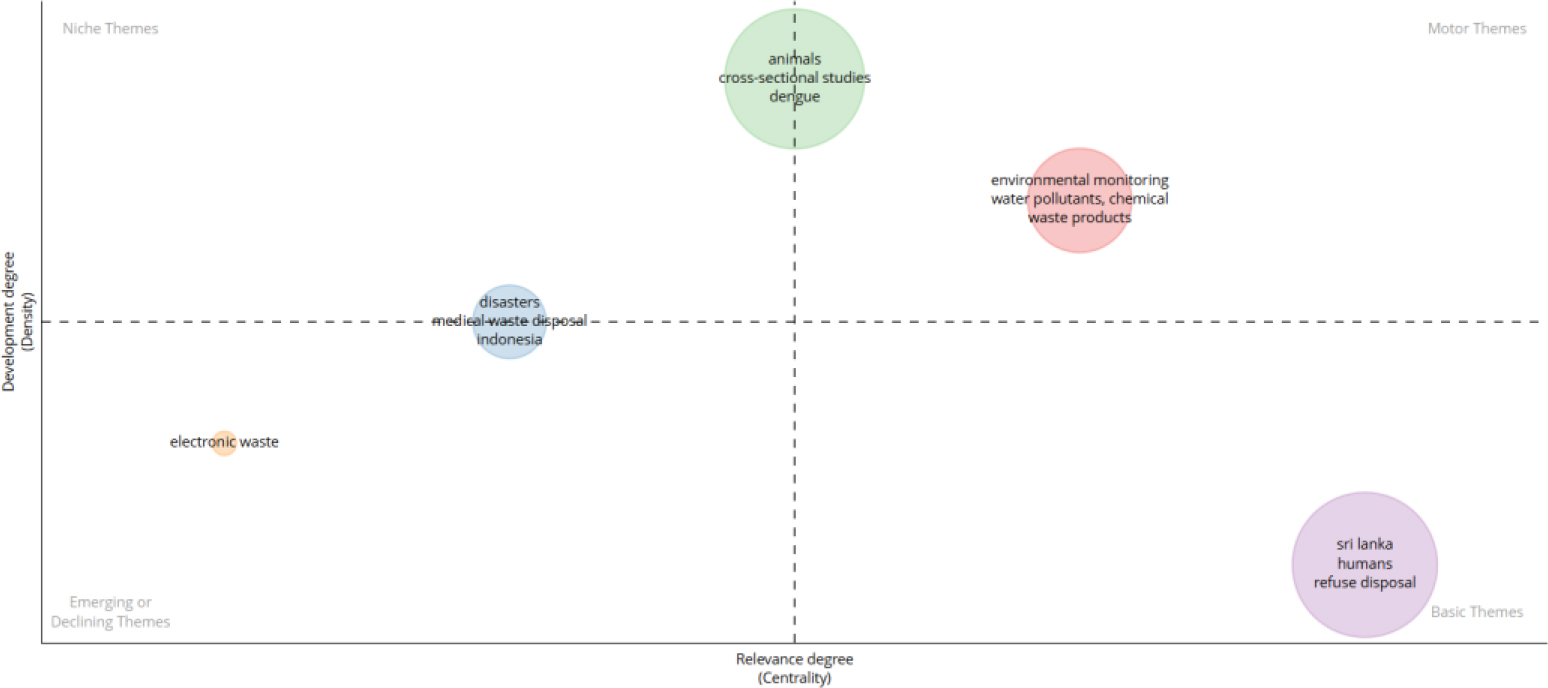
Figure 7.
Thematic map of keywords
Source: output of Biblioshiny software
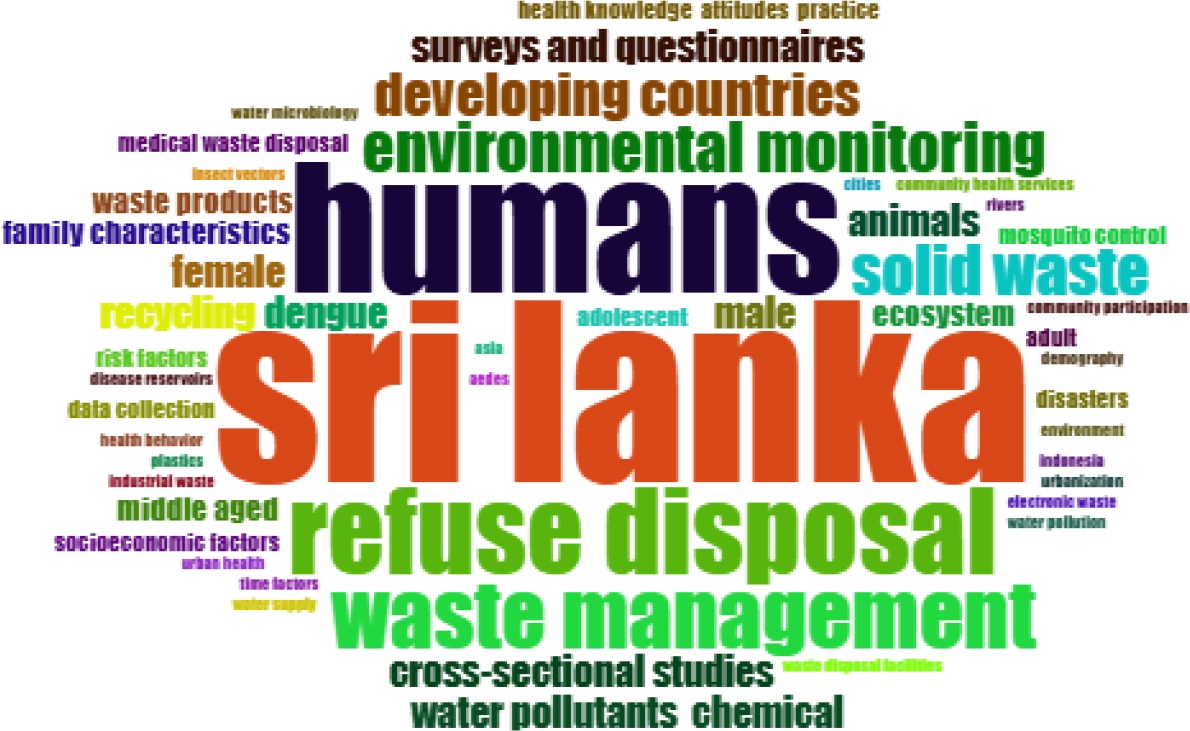
Figure 8.
Keyword cloud
Source: output of Biblioshiny software
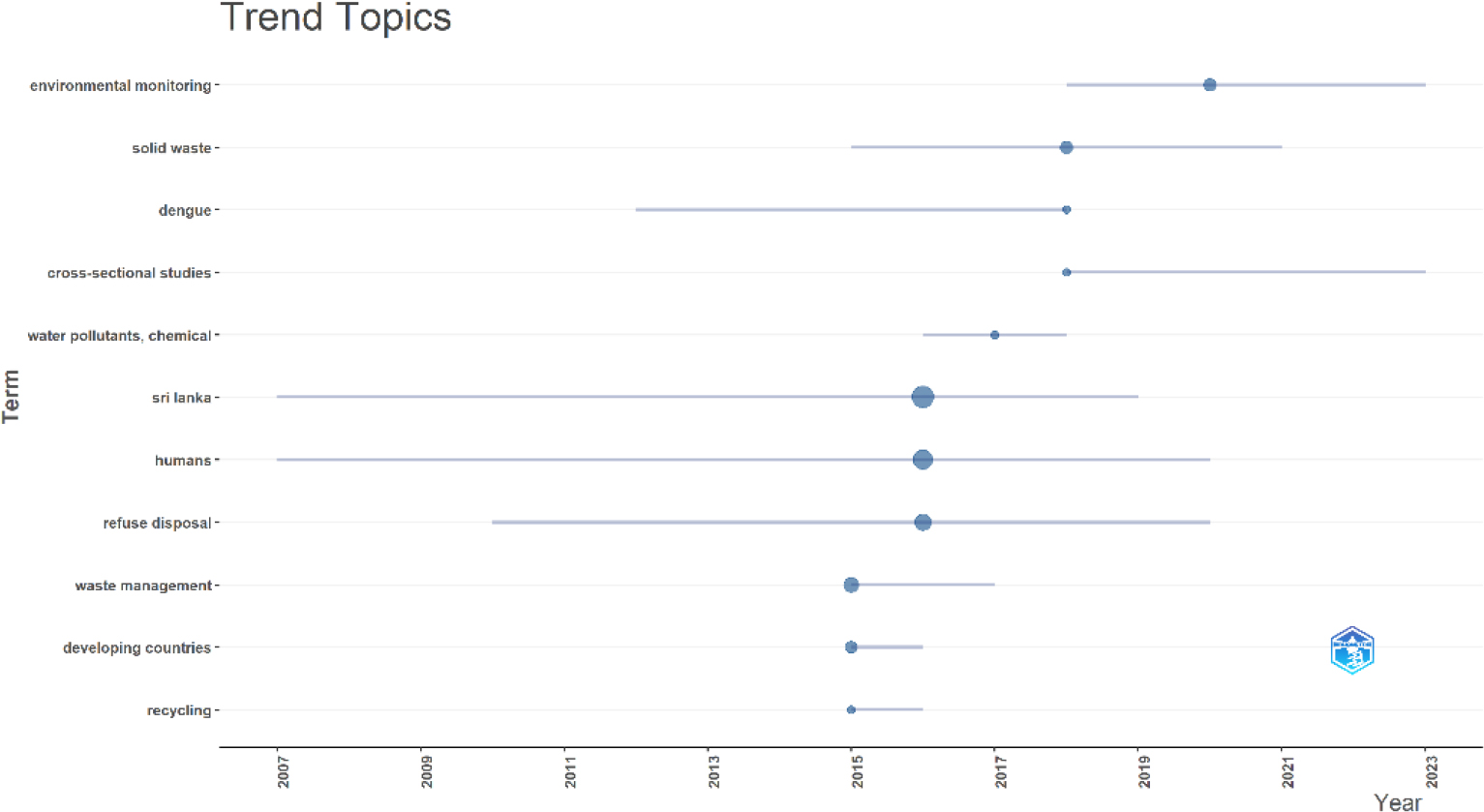
Figure 9.
Trend topics
Source: output of Biblioshiny software