
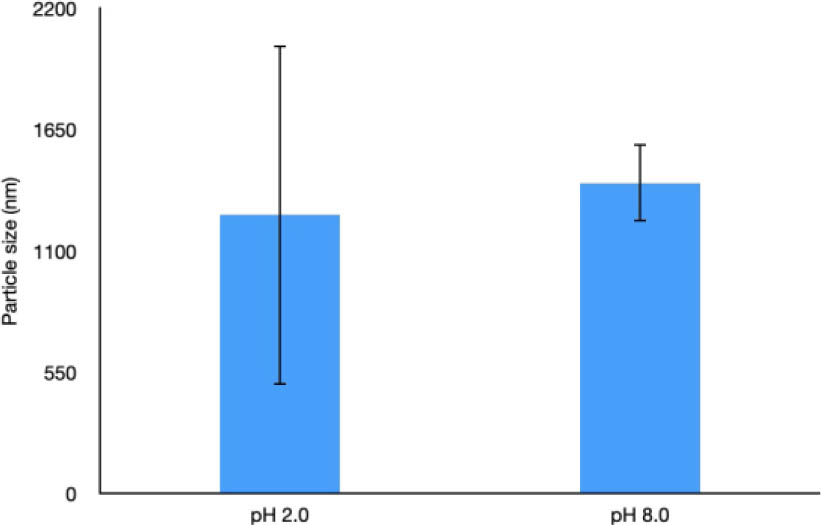
Fig. 1.
Hydrodynamic particle size of nano-system probiotics for broiler chickens in pH 2.0 and 8.0
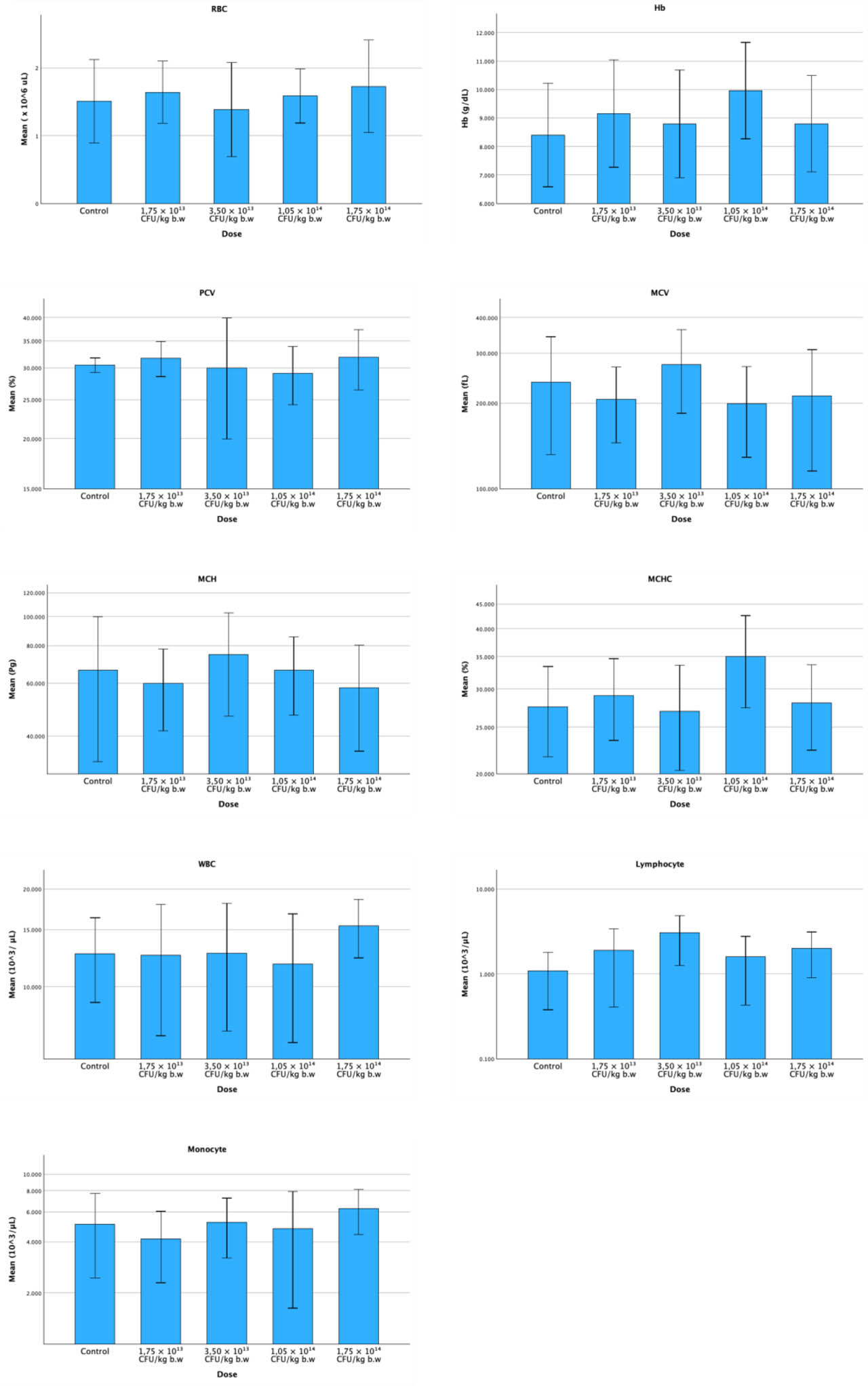
Fig. 2.
Complete blood count of broiler chickens in an acute toxicity study of nano-system probiotics. CFU – colony-forming units; b.w. – body weight; Hb – haemoglobin; PCV – packed cell volume (haematocrit)
Table 1.
Results of acute safety assessment of nano-system probiotics in broiler chickens
| Dose | Toxicity | Interpretation |
|---|---|---|
| 0 | Non-toxic | Non-toxic |
| 1.75 × 10¹³ | Minimal and reversible toxicity | No observed adverse effect level |
| 3.50 × 10¹³ | Light–mild toxicity | Low observed adverse effect level |
| 1.05 × 10¹⁴ | Mild–heavy toxicity | Moderately toxic |
| 1.75 × 10¹⁴ | Heavy toxicity | Severe toxic effect |
Table 2.
Radiochemical composition of bulk technetium-99m [99mTc] eluate and [99mTc]Tc–nano-system probiotics and their labelling efficiency
| Sample | % Free 99mTcO4− | % Radiocolloid | % Labelling efficiency |
|---|---|---|---|
| 99mTc solution | 99.81 | 0.29 | — |
| [99mTc]Tc–nano system probiotic | 4.69 | 2.69 | 92.62 |
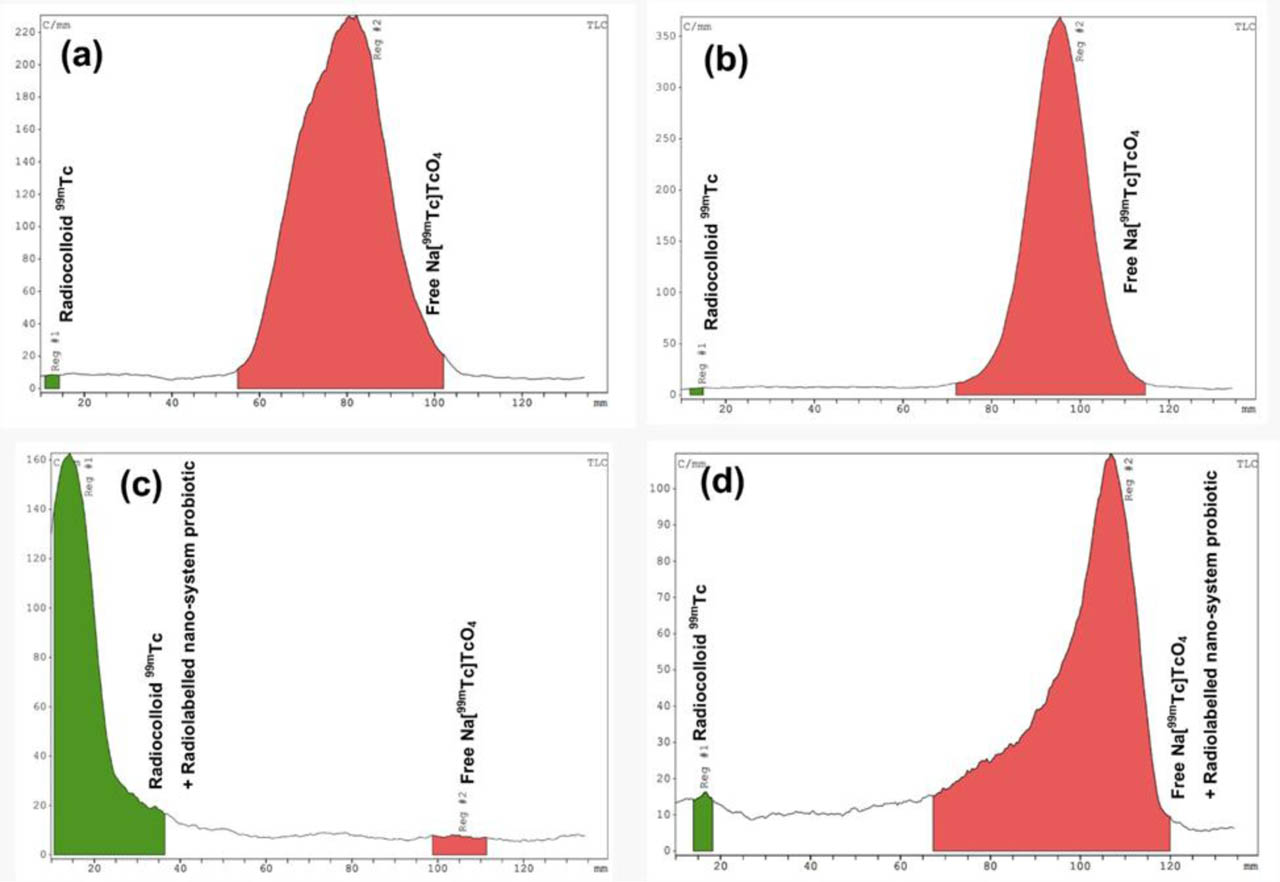
Fig. 3.
Radiochromatograms of the bulk technetium-99m [99mTc] solution developed in (a) acetone and (b) pyridine/acetic acid/water (3 : 5 : 1.5, v/v/v), and of [99mTc]Tc–nano-system probiotics developed in (c) acetone and (d) pyridine/acetic acid/water (3 : 5 : 1.5, v/v/v)
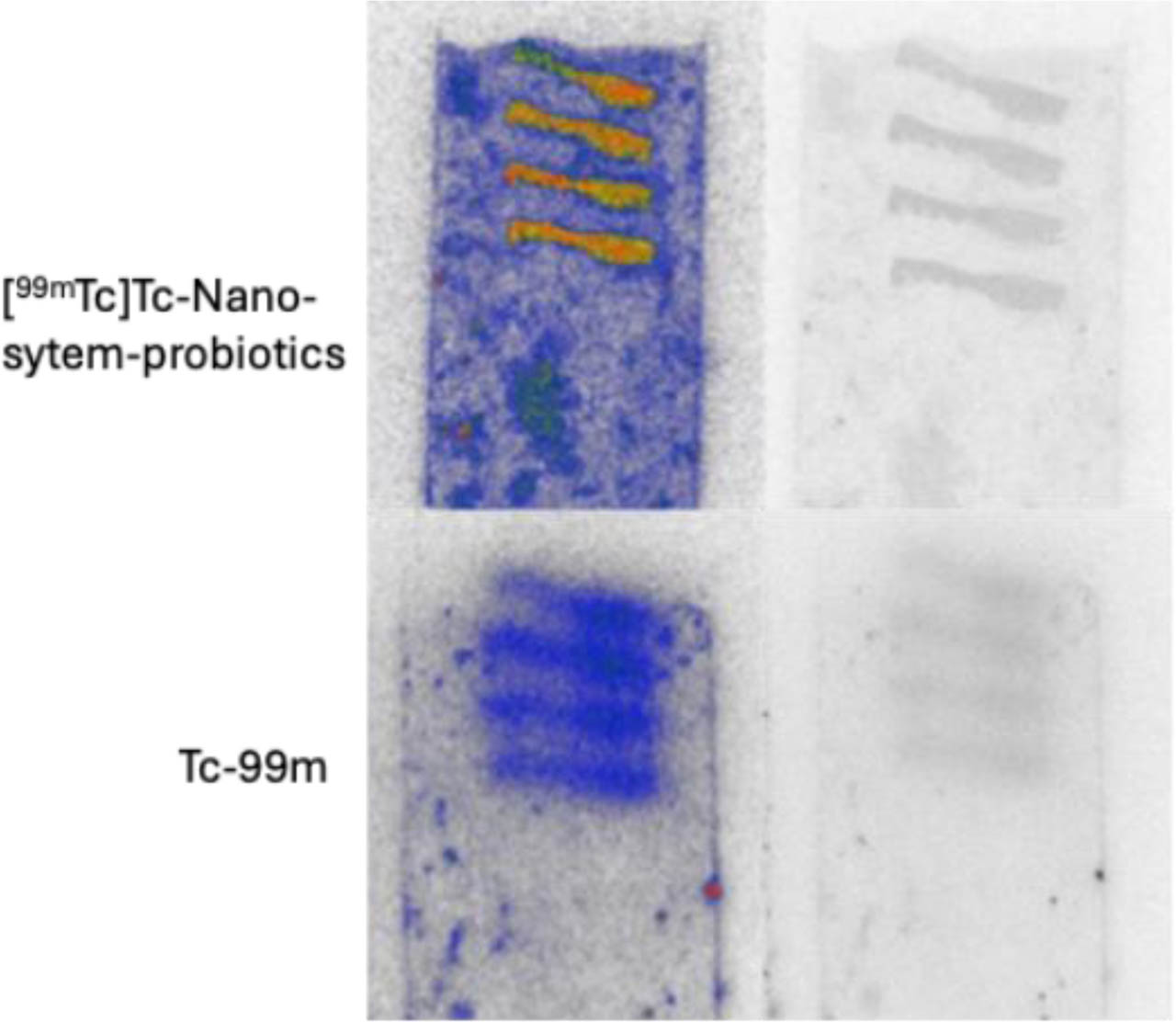
Fig. 4.
Ex vivo autoradiography of technetium-99m (Tc-99m/[99mTc])Tc–nano-system probiotics in broiler chicken intestine sections
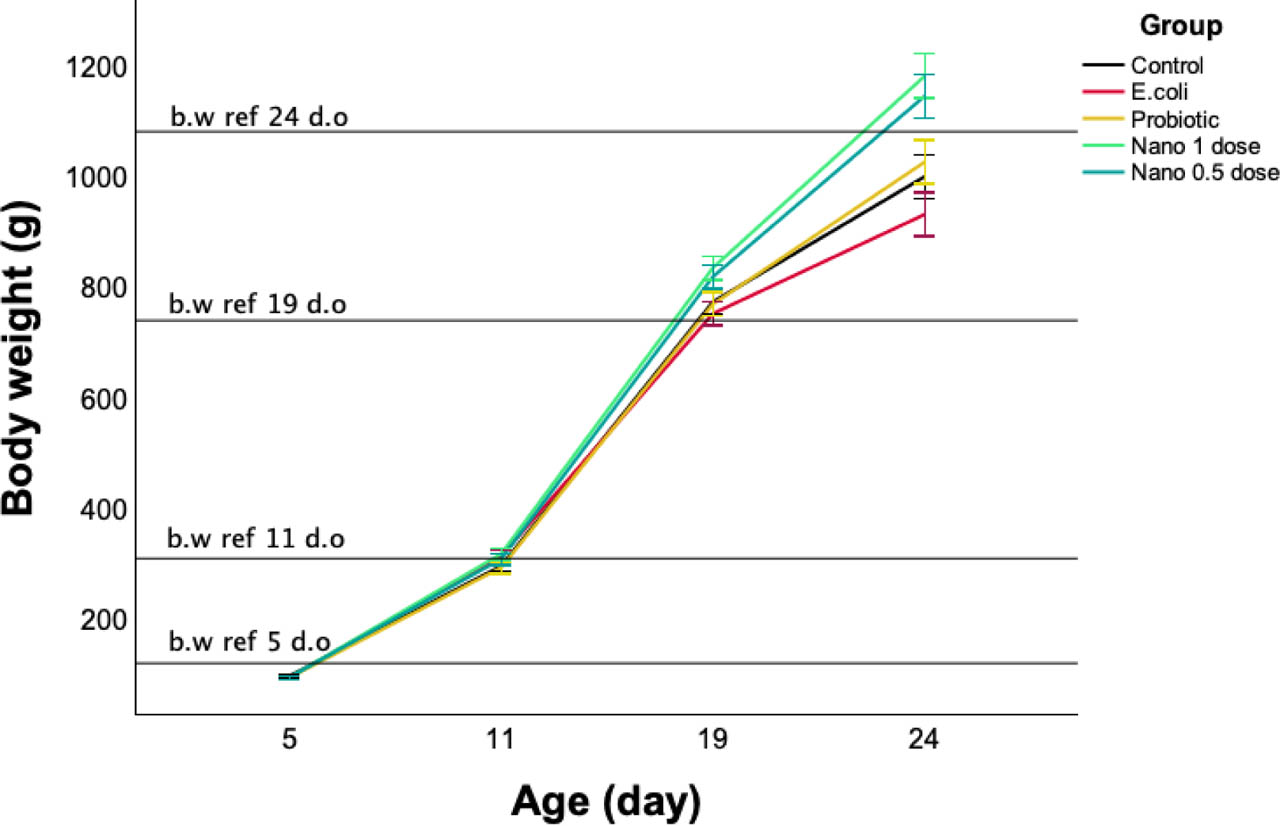
Fig. 5.
Body weight (b.w.) changes over 24 d of observation during the administration of nano-system probiotics for 21 d after broiler chickens were challenged with avian pathogenic E. coli (APEC). Horizontal lines are indicate the reference body weight (b.w.) at 5, 11, 19, and 24 d old and error bars/whiskers show the mean ±SD. Control – broilers neither infected with APEC nor treated; E. coli – broilers infected with APEC but not treated; Probiotic – broilers infected with APEC and treated with unencapsulated probiotics; Nano 1 dose – broilers infected with APEC and treated with nano-system probiotics at 1.4 × 10¹² CFU/kg b.w.; Nano 0.5 dose – broilers infected with APEC and treated with nano-system probiotics at 7 × 10¹¹ CFU/kg b.w.; d.o. – days old
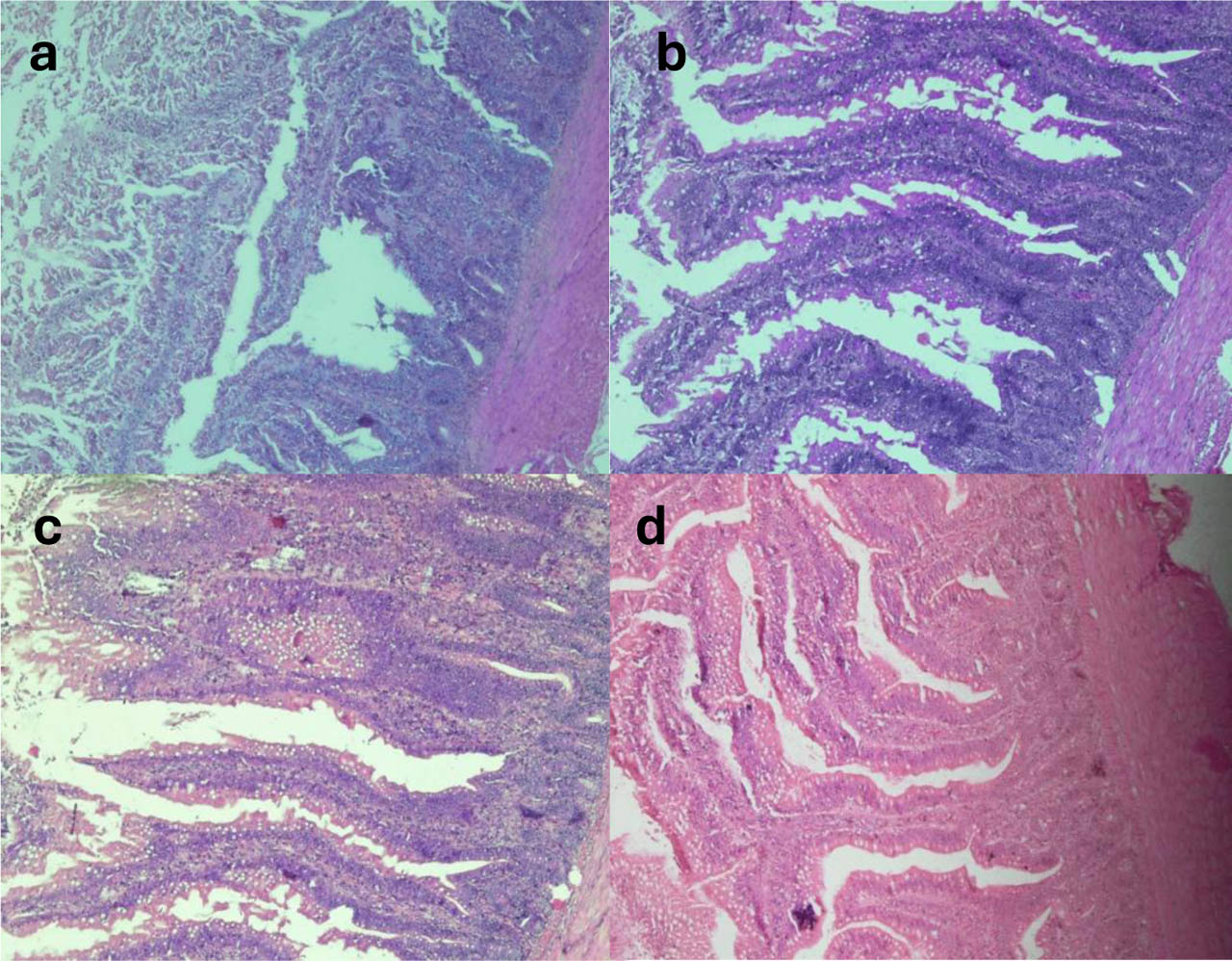
Fig. 6.
Histopathology images of 24-day-old broiler chicken jejuna after a 21-d challenge with avian pathogenic E. coli (APEC). a) Untreated APEC infection; b) APEC + unencapsulated probiotics; c) APEC + nano-system probiotics at 1.4 × 10¹² CFU/kg b.w. (1 dose); d) APEC + nano-system probiotics at 7.0 × 10¹¹ CFU/kg b.w. (0.5 dose). HE, 100× magnification
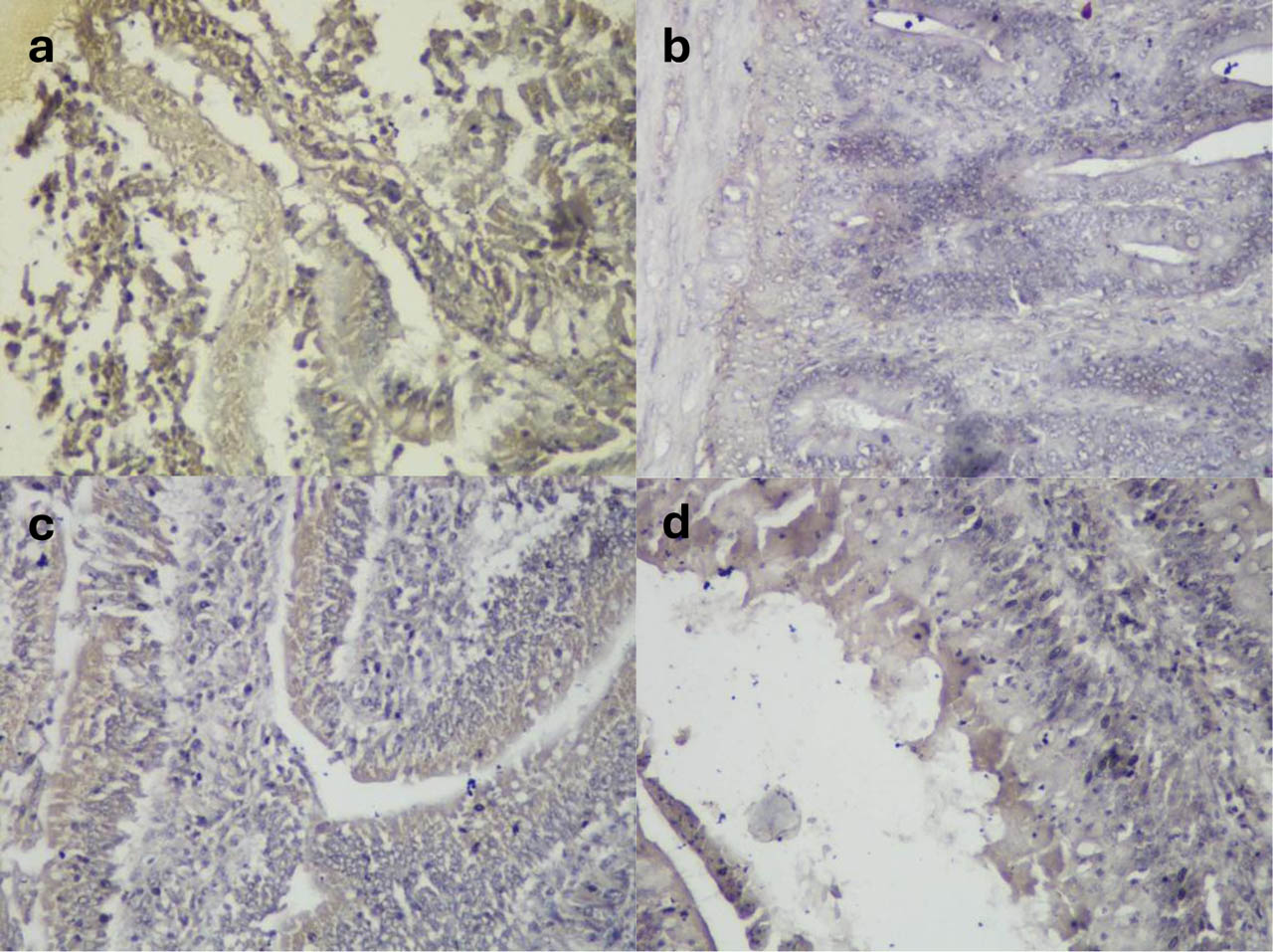
Fig. 7.
CD3 expression in 24-day-old broiler chicken jejuna after a 21-d challenge with avian pathogenic E. coli (APEC). a) Untreated APEC infection; b) APEC + unencapsulated probiotics; c) APEC + nano-system probiotics at 1.4 × 10¹² CFU/kg b.w. (1 dose); d) APEC + nano-system probiotics at 7.0 × 10¹¹ CFU/kg b.w. (0.5 dose). 100× magnification