
Table 1.
List of primers used in the study and thermocycler settings for the amplification of Campylobacter virulence genes
| Target gene | Sequences (5ʹ–3ʹ) | Annealing temperature (°C) | Reference |
|---|---|---|---|
| 16S rRNA for Campylobacter spp. | F-ATCTAATGGCTTAACCATTAAAC R-GGACGGTAACTAGTTTAGTATT | 55 | (56) |
| mapA for C. jejuni | F-CTATTTTATTTTTGAGTGCTTGTG R-GCTTTATTTGCCATTTGTTTTATTA | 55 | (56) |
| ceuE for C. coli | F-AATTGAAAATTGCTCCAACTATG R-TGATTTTATTATTTGTAGCAGCG | 55 | (56) |
| flaA | F-AATAAAAATGCTGATAAAACAGGTG R-TACCGAACCAATGTCTGCTCTGATT | 53 | (9) |
| flaA-SVR | F-CTATGGATGAGCAATT(AT)AAAAT R-CAAG(AT)CCTGTTCC(AT)ACTGAAG | 50 | (39) |
| cadF | F-TTGAAGGTAATTTAGATATG R-CTAATACCTAAAGTTGAAAC | 45 | (30) |
| iam | F-GCGCAAAATATTATCACCC R-TTCACGACTACTATGCGG | 50 | (9) |
| ciaB | F-TGCGAGATTTTTCGAGAATG R-TGCCCGCCTTAGAACTTACA | 62 | (5) |
| pldA | F-AAGCTTATGCGTTTTT R-TATAAGGCTTTCTCCA | 47 | (9) |
| cdtA | F-CCTTGTGATGCAAGCAATC R-ACACTCCATTTGCTTTCTG | 55 | (9) |
| cdtB | F-CAGAAAGCAAATGGAGTGTT R-AGCTAAAAGCGGTGGAGTAT | 55 | (9) |
| cdtC | F-CGATGAGTTAAAACAAAAAGATA R-TTGGCATTATAGAAAATACAGTT | 53 | (9) |
| pebA | F-GCTCTAGGTGCTTGTGTTGC R-GTAGTTGCAGCTTGAGCCAC | 50 | (51) |
| porA | F-TCAACTGGACACTTGAAGGTGC R-CCACCATATACGAAGTCAGCACC | 52 | (51) |
| jlpA | F-GCACACAGGGAATCGACAGC R-AAATGACGCTCCGCCCATTAAC | 52 | (51) |
| virB11 | F-TCTTGTGAGTTGCCTTACCCCTTTT R-CCTGCGTGTCCTGTGTTATTTACCC | 55 | (9) |
| cgtB | F-TAAGAGCAAGATATGAAGGTG R-GCACATAGAGAACGCTACAA | 52 | (35) |
| wlaN | F-TGCTGGGTATACAAAGGTTGTG R-ATTTTGGATATGGGTGGGG | 54 | (42) |
Table 2.
Characteristics of backyard Polish poultry holdings and sampled birds
| Backyard No. | Location | Number and species of birds sampled | Breeds samples | Other animals kept | Number of positive samples (%) | ||
|---|---|---|---|---|---|---|---|
| Dogs and cats | Others | Total | |||||
| 1 | Rural area | 35 ducks 10 geese | Polish Pekin duck Toulouse goose | 3 dogs | 8 goats 4 horses | 15 | 3/45 (6.7%) |
| 2 | Rural area | 15 ducks 30 geese 25 ornamental chickens | Khaki Campbell duck Polish White goose Satsumadori, Yamato, Ayam Cemani | 6 dogs 4 cats | 0 | 10 | 3/70 (4.3%) |
| 5 | Rural area | 94 ornamental chickens | Araucana, Leghorn, Shamo, Denizli, Satsumadori, Yamato, Ko-Shamo, Ayam Cemani, Polish Bantam | 0 | 0 | 0 | 0/94 (0.0%) |
| 6 | Rural area | 56 ornamental chickens | Silkie, Shamo, Chabo, Onagadori, Ayam Cemani, Bantam Cochin | 2 dogs 2 cats | 6 goats | 10 | 1/56 (1.8%) |
| 3 | Semiurban | 10 ducks | Polish Pekin duck | 2 dogs 12 cats | 2 cows 6 pigs | 22 | 1/10 (10.0%) |
| 4 | Semiurban | 40 ornamental chickens | Onagadori, Ko-Shamo, Tomaru, Chabo, Totenko, Ohiki, Minohiki, Silkie | 2 dogs 7 cats | 0 | 9 | 8/40 (20.0%) |
Table 3.
Gene patterns and profiles of Campylobacter jejuni isolates from backyard-reared Polish ducks and ornamental chickens
| Gene profile | Gene pattern | Number of isolates (%) |
|---|---|---|
| adhesion | pebA-porA-jlpA | 1/14 (7.1) |
| invasion | ciaB-virB11 | 2/14 (14.3) |
| ciaB-pldA | 4/14 (28.6) | |
| cytotoxicity | cdtA-cdtB-cdtC | 1/14 (7.1) |
| cdtA-cdtB | 1/14 (7.1) | |
| cdtA-cdtC | 2/14 (14.3) | |
| GBS | cgtB | 2/14 (14.3) |
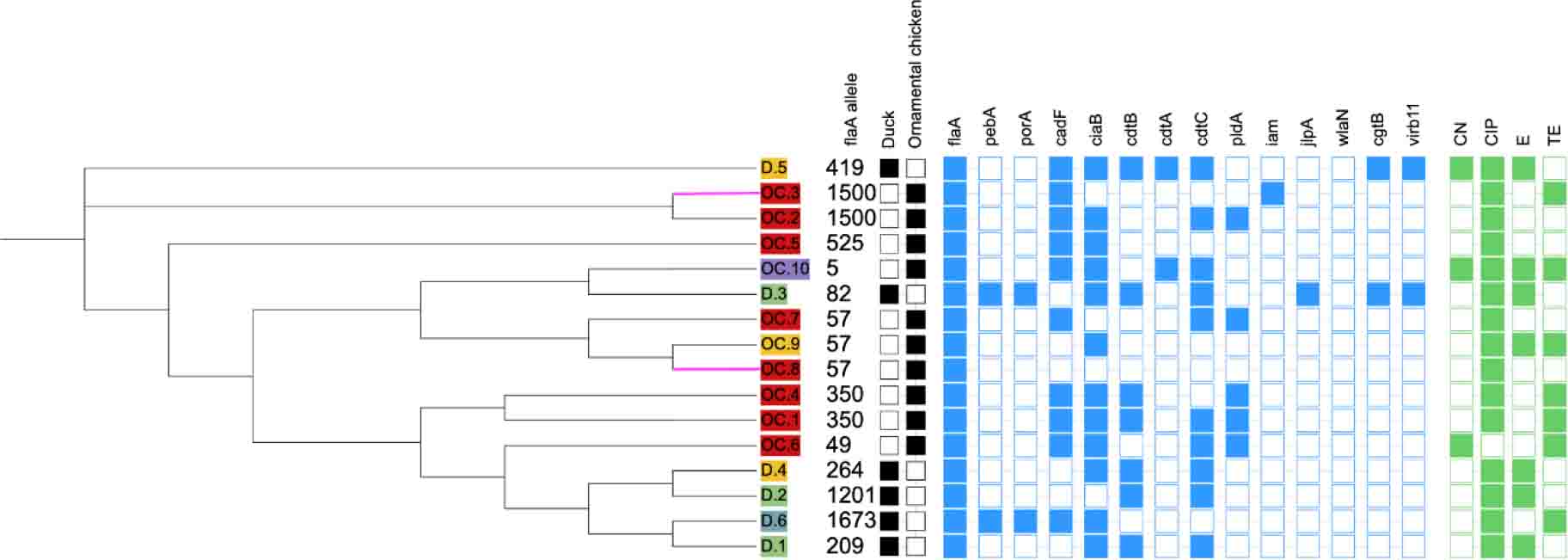
Fig. 1.
Maximum-likelihood phylogenetic tree of Campylobacter isolates from backyard poultry in Poland. Green – Backyard No. 1; yellow – backyard No. 2; blue – backyard No. 3; red – backyard No. 4; purple – backyard No. 6. Solid black square – species of origin; hollow white square – not species of origin; solid blue square–virulence gene detected; hollow blue square – virulence gene not detected; solid green square – resistance exhibited; hollow green square – resistance not exhibited. Branches highlighted in pink on the tree represent C. coli isolates. CN – gentamicin; CIP – ciprofloxacin; E – erythromycin; TE – tetracycline