Have a personal or library account? Click to login
Fatal Sarcoptes scabiei and Demodex sp. co-infestation in wolves (Canis lupus) at the Białowieża National Park, Poland – is it a consequence of climate change? Cover

Fatal Sarcoptes scabiei and Demodex sp. co-infestation in wolves (Canis lupus) at the Białowieża National Park, Poland – is it a consequence of climate change?

Open Access
|Dec 2024

Figures & Tables

Fig. 1.

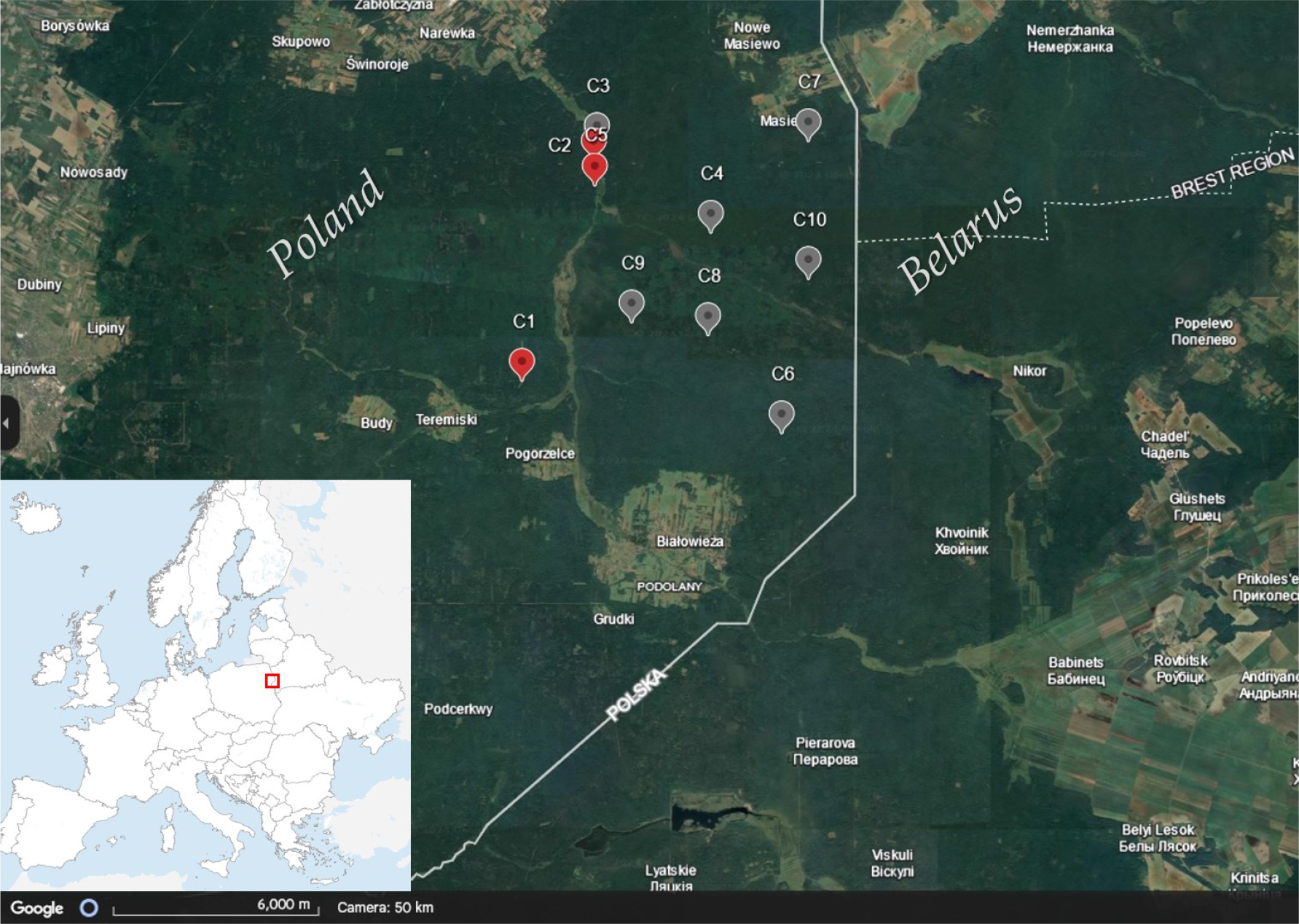
The distribution of camera traps (C1–C10, Table 1) installed for the monitoring of mange cases in wolves in the Białowieża National Park in winter 2021/2022. Red tags – locations where severely alopecic wolves were observed. Red square in the bottom left corner map – the location of the BNP in Europe
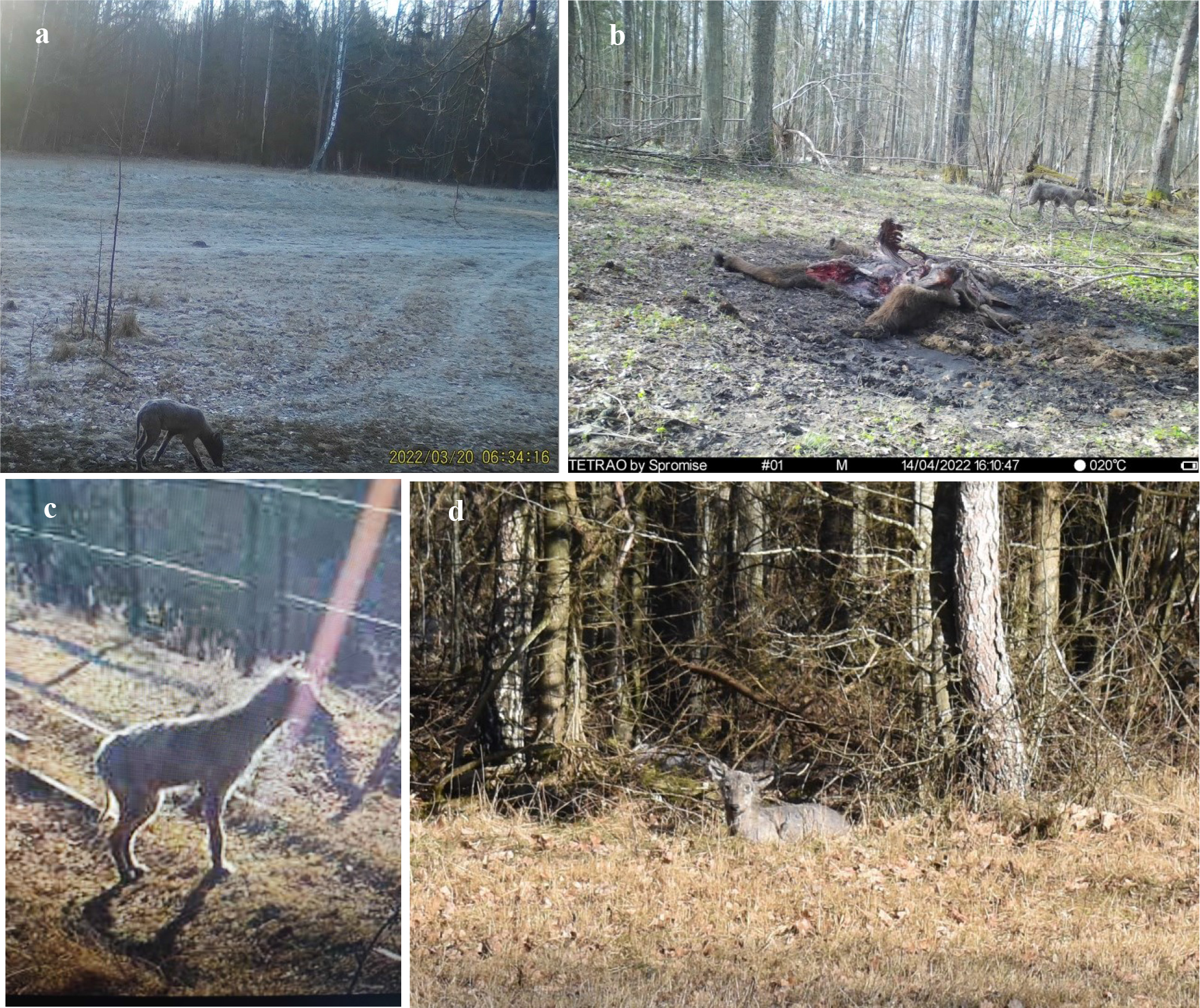

Fig. 2.

Observations of severely alopecic wolves in Białowieża National Park: a – camera trap image of the wolf found dead a day later (Table 1, C1 and Fig. 3); b – camera trap image from the camera positioned on a European bison carcass (Table 1, C4); c – photo taken by a Polish border guard on the border with Belarus on the bridge over the Narewka river (Kosy Most; 52.7996N, 23.8284E) near location of trap C2 (Table 1); d – photo taken by a forest ranger in the same midforest meadow as trap C1 (Table 1)
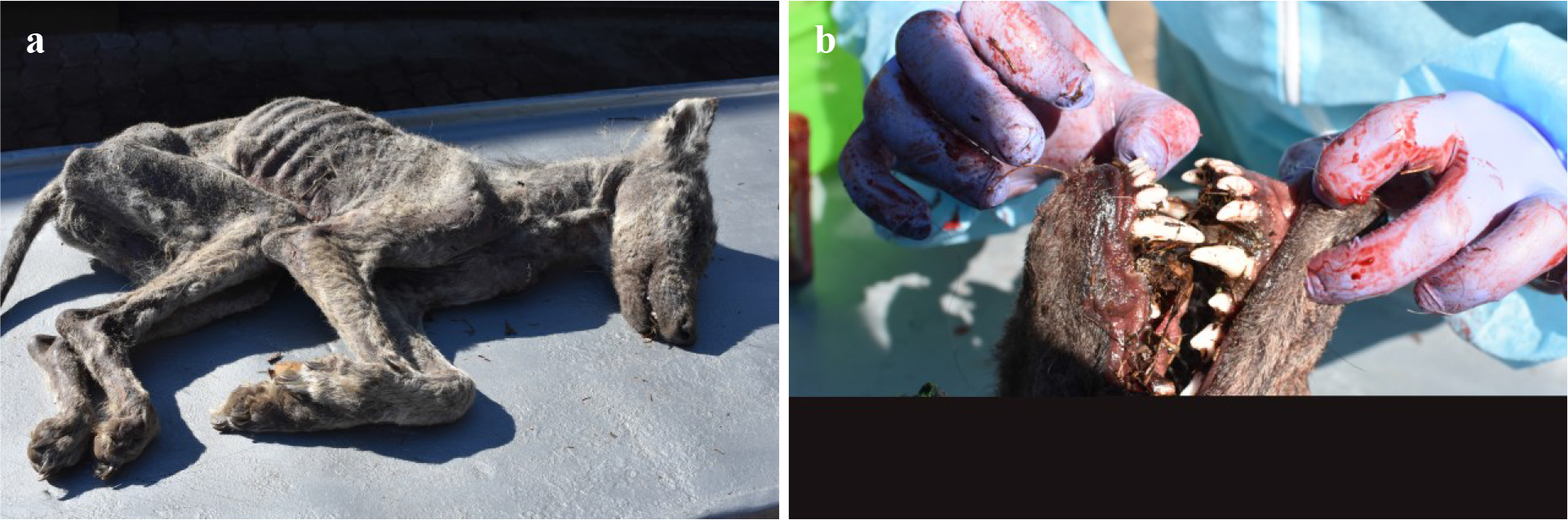

Fig. 3.

External inspection of a wolf carcass showing: a – advanced alopecia; hyperkeratosis; emaciation and severe dehydration and anaemia; b – presence of soil and fragments of vegetation in the mouth suggestive of some neurological symptoms, which were nevertheless ruled out by a negative rabies test result
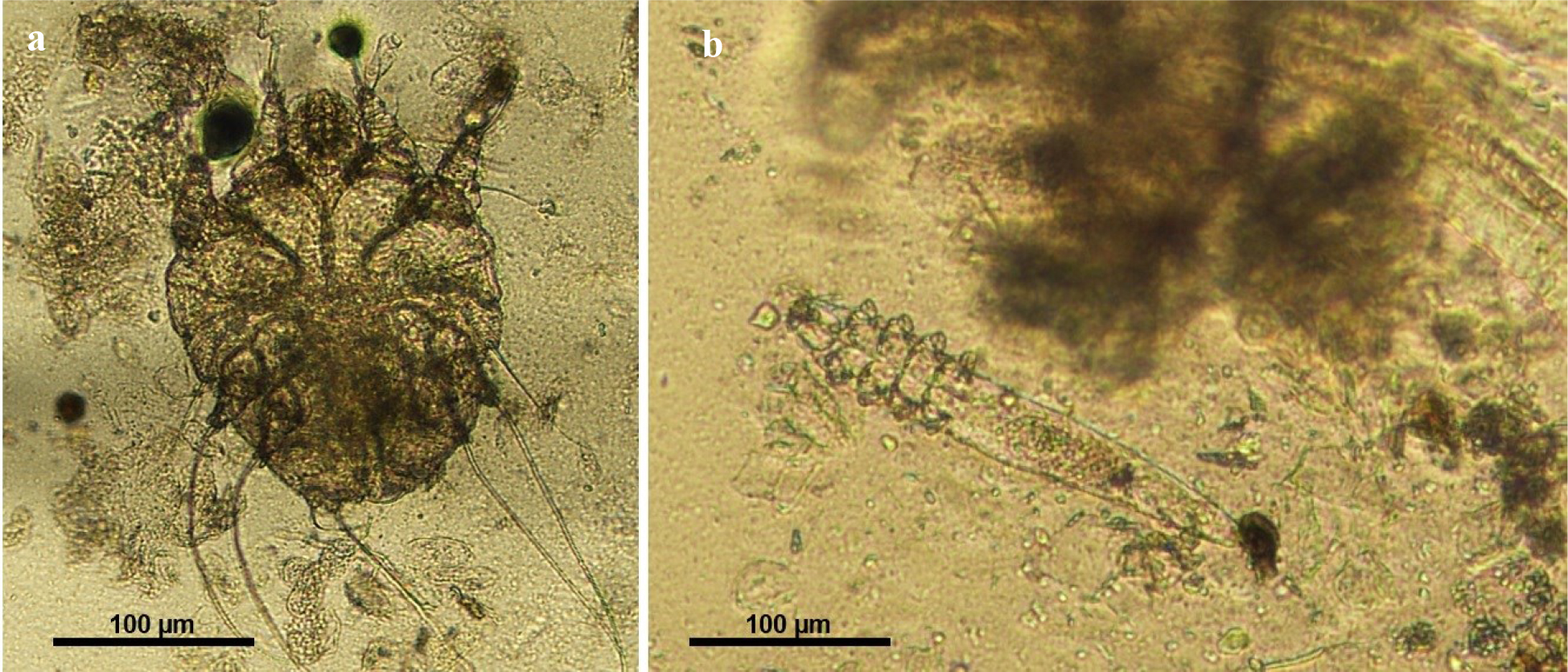

Fig. 4.

Ventral views of a Sarcoptes scabiei male (a) and Demodex sp. (b) isolated post mortem from the skin of an affected grey wolf from Białowieża National Park
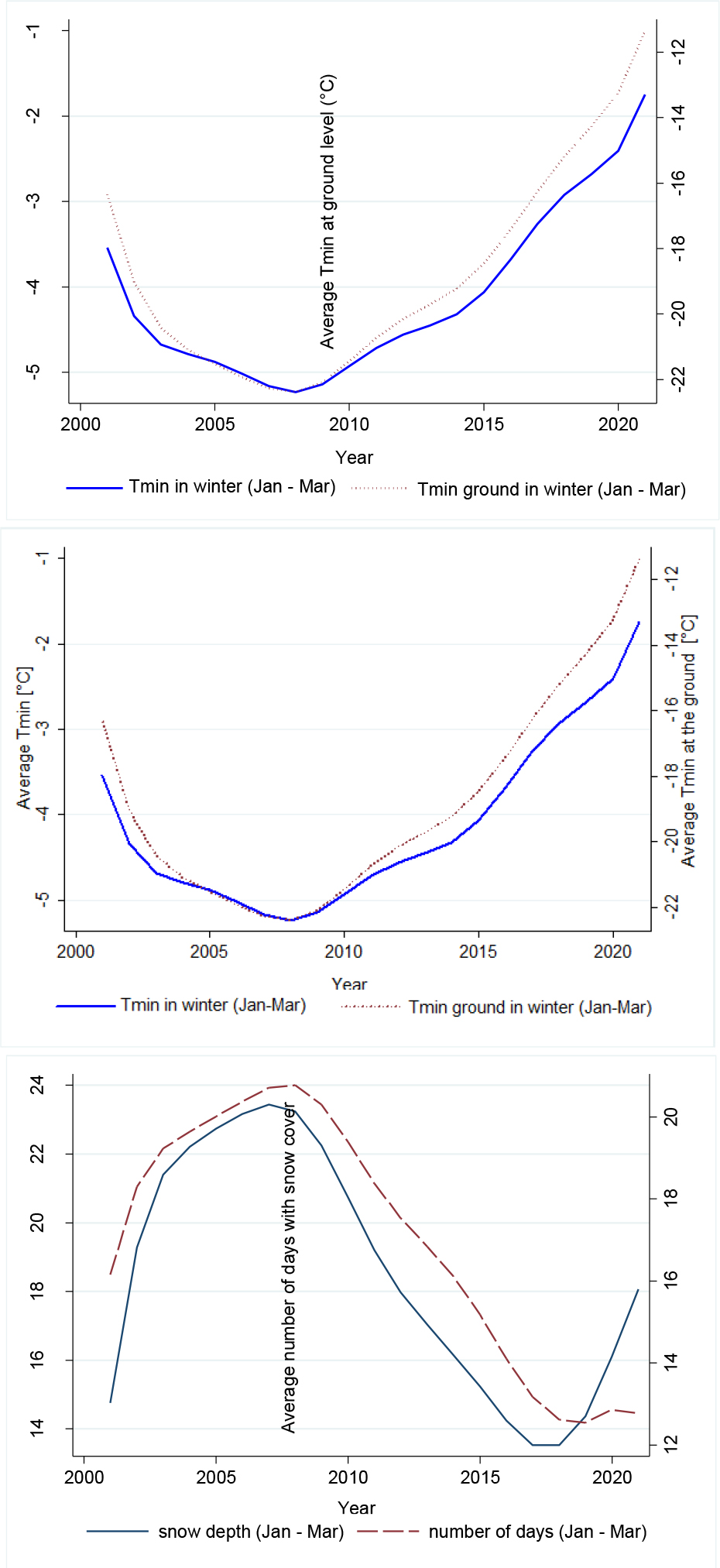

Fig. 5.

Local polynomial smoothed lines of the distribution of selected monthly meteorological data for Białowieża Forest, obtained from the Polish Institute of Meteorology and Water Management in the winter months of January–March between 2001 and 2021. a – solid blue line: average minimum temperature (Tmin); dotted maroon line: average minimum temperature at ground level (Tmin ground); b – solid navy-blue line: average maximum snow depth in cm; dashed maroon line: average number of days with snow cover

Locations of sampling sites for wolf monitoring by camera traps in the Białowieża National Park

No.Division No.GPS coordinatesPresence of alopecic/sick wolves (number)
C1339C52.7418N; 23.7959EYes (2)*
C2159B52.7991N; 23.8267EYes (1)
C3130C52.8031N; 23.8280ENo
C4226A52.7803N; 23.8770EYes (1)
C5159D52.7926N; 23.8271EYes (1)
C6374A52.7282N; 23.9074ENo
C7135D52.8041N; 23.9189ENo
C8287C52.7537N; 23.8758ENo
C9284B52.7570N; 23.8430ENo
C10259B52.7683N; 23.9189ENo
Language: English
Page range: 551 - 562
Submitted on: May 21, 2024
Accepted on: Dec 12, 2024
Published on: Dec 20, 2024
Published by: National Veterinary Research Institute in Pulawy
In partnership with: Paradigm Publishing Services
Publication frequency: 4 issues per year
Keywords:

© 2024 Michał K. Krzysiak, Agnieszka Świątalska, Elwira Plis-Kuprianowicz, Andrzej Konieczny, Sławomir Bakier, Krzysztof Tomczuk, Magdalena Larska, published by National Veterinary Research Institute in Pulawy
This work is licensed under the Creative Commons Attribution-NonCommercial-NoDerivatives 3.0 License.