Have a personal or library account? Click to login
First molecular characterisation of Sarcocystis miescheriana in a pig carcass condemned during routine meat inspection in Poland Cover

First molecular characterisation of Sarcocystis miescheriana in a pig carcass condemned during routine meat inspection in Poland

Open Access
|Dec 2024

Figures & Tables

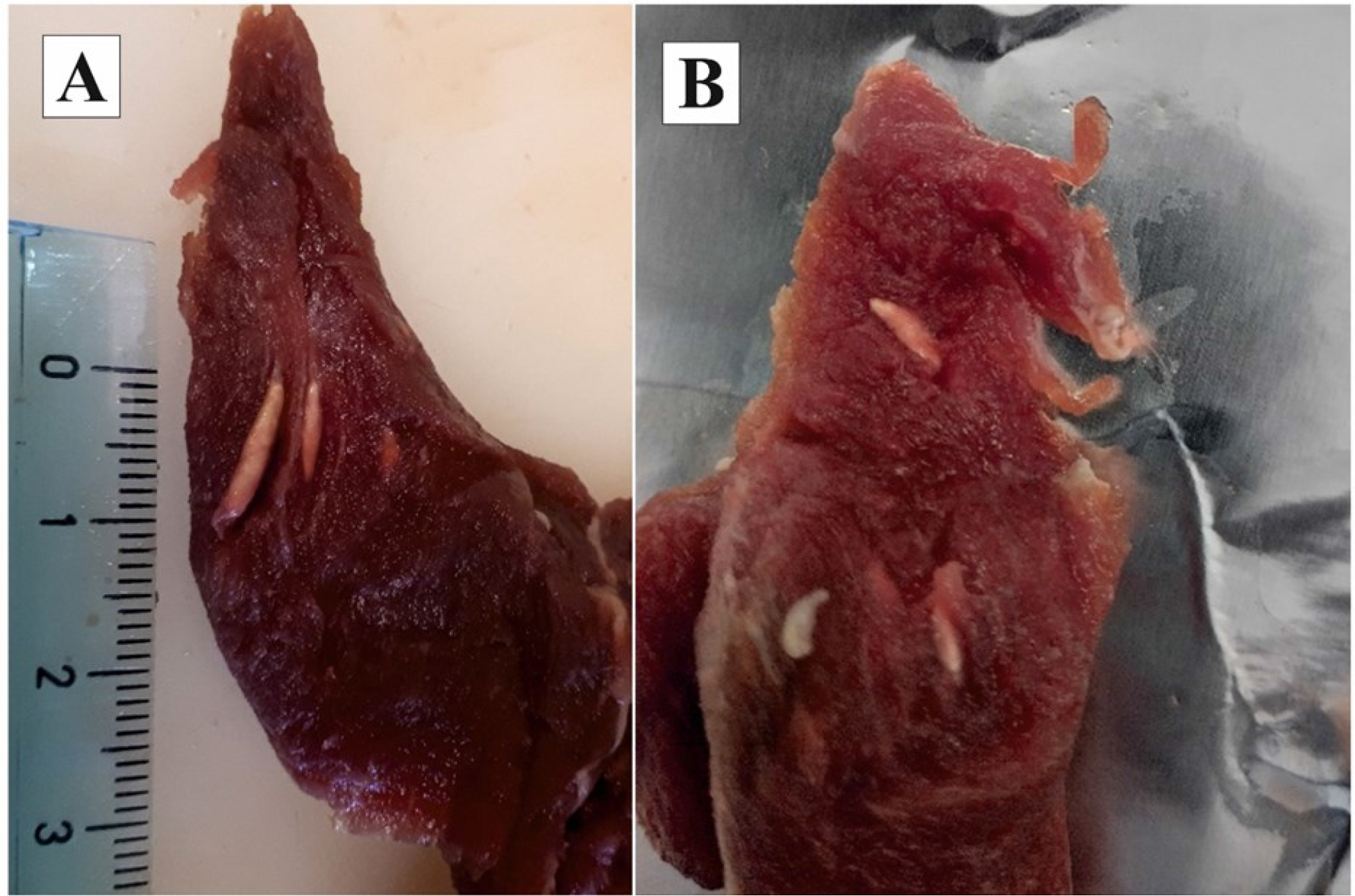
Fig. 1.

Macroscopic cystic lesions observed in swine muscle tissue
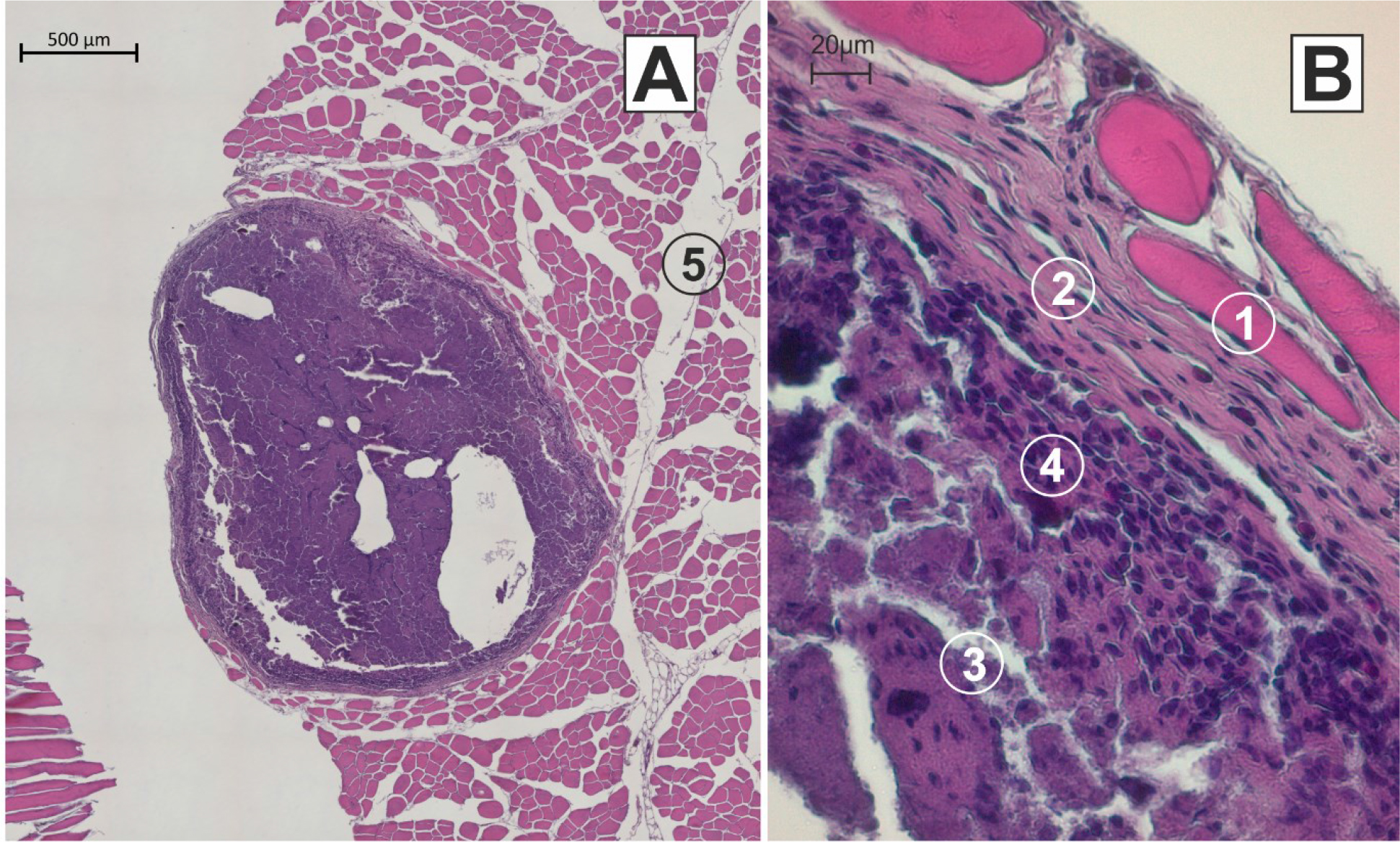

Fig. 2.

Cross-sections of a calcified gross cystic lesion and the surrounding skeletal muscle tissue from a condemned pig carcass observed after staining with haematoxylin and eosin solution. Histopathological changes in the muscle tissue are shown. 1 – muscle fibres; 2 – connective tissue fibres forming a capsule around the cyst; 3 – necrotic lesions in the centre of the cyst; 4 – dense lymphocytic inflammatory infiltrate; 5 – oedema in the connective tissue of the muscle
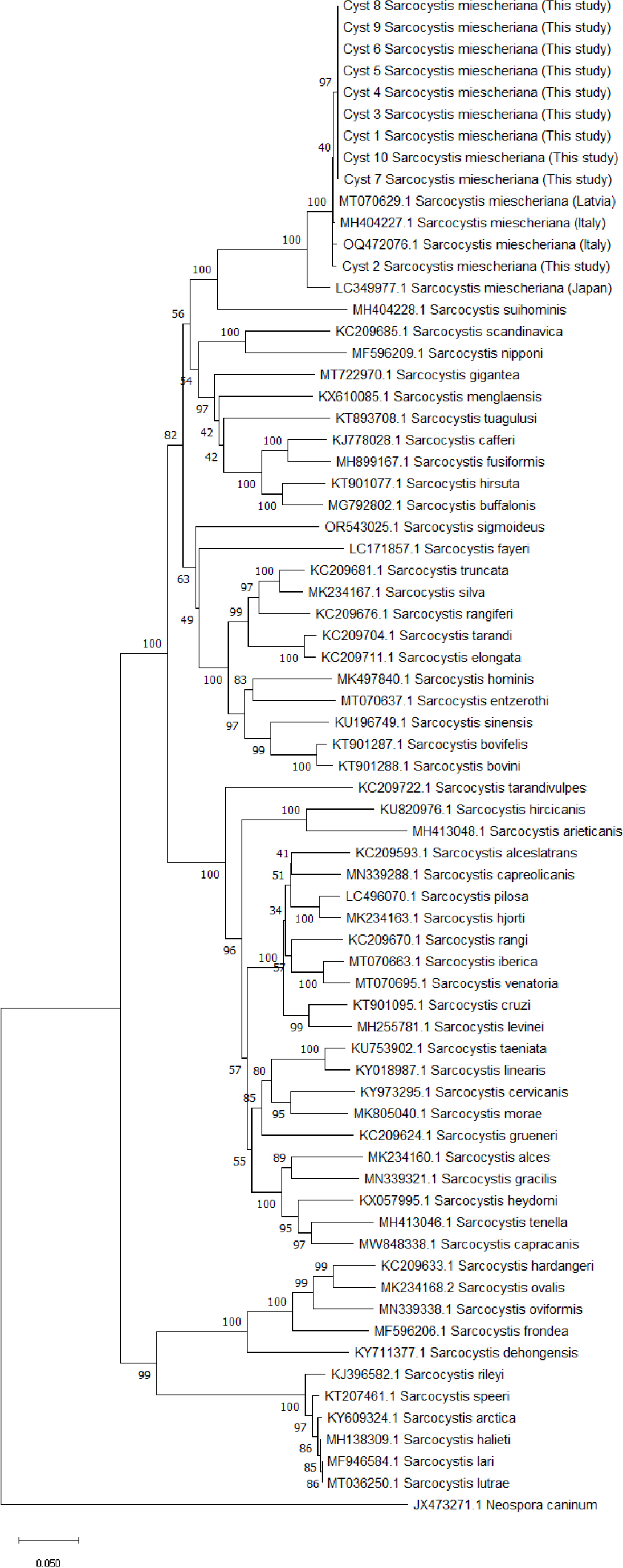

Fig. 3.

Neighbor-Joining phylogenetic tree based on 70 partial sequences from 57 taxa of the cox1 mtDNA gene, including 56 members of the Sarcocystidae family and a Neospora caninum sequence as outgroup. The percentages of replicate trees in which the associated taxa clustered together in the bootstrap test are shown next to the branches (1,000 replicates), together with the accession numbers of GenBank partial sequences
Language: English
Page range: 563 - 569
Submitted on: Jun 11, 2024
Accepted on: Dec 11, 2024
Published on: Dec 20, 2024
Published by: National Veterinary Research Institute in Pulawy
In partnership with: Paradigm Publishing Services
Publication frequency: 4 issues per year

© 2024 Weronika Korpysa-Dzirba, Selene Rubiola, Ewa Bilska-Zając, Mirosław Różycki, Francesco Chiesa, Aneta Bełcik, Małgorzata Samorek-Pieróg, Jakub Kubacki, Anna Łukomska, Jacek Karamon, Jacek Sroka, Tomasz Cencek, published by National Veterinary Research Institute in Pulawy
This work is licensed under the Creative Commons Attribution-NonCommercial-NoDerivatives 3.0 License.