
Table 1.
PCR reaction system for amplification of Mycoplasma isolates from air-sac tissue of Chinese geese inoculated with Mycoplasma gallisepticum
| Component | Volume (μL) |
|---|---|
| TaKaRa Taq Version 2.0 plus dye | 5 |
| Forward primer (10μM) | 0.3 |
| Reverse primer (10μM) | 0.3 |
| ddH2O | 3.4 |
| Bacteria solution | 1 |
Table 2.
Primers used for PCR analysis of amplicons of Mycoplasma from air-sac tissue of Chinese geese inoculated with Mycoplasma gallisepticum
| Species | Primer sequences 5’→3’ | Fragment length (bp) | Annealing temperature (°C) |
|---|---|---|---|
| IGSR-F:GTAGGGCCGGTGATTGGAGTTA | |||
| Mycoplasma gallisepticum | IGSR-R:CCCGTAGCATTTCGCAGGTTTG | 792 | 57 |
Table 3.
The bioinformatics software used for the prediction and annotation of Mycoplasma gallisepticum strain MG-GD01/22 isolated from inoculated Chinese geese
| Database | Website |
|---|---|
| NR | HYPERLINK https://www.ncbi.nlm.nih.gov/refseq/about/nonredundantproteins/ |
| SwissProt | HYPERLINK http://www.ebi.ac.uk/swissprot/ |
| COG | HYPERLINK https://www.ncbi.nlm.nih.gov/research/cog-project/ |
| GO | HYPERLINK http://www.geneontology.org |
| KEGG | HYPERLINK http://www.kegg.jp/orhttp://www.genome.jp/kegg/ |
| VFDB | HYPERLINK http://www.mgc.ac.cn/VFs/ |
| CARD | HYPERLINK http://arpcard.mcmaster.ca |
| PHI-base | HYPERLINK http://www.phi-base.org/index.jsp |
| CAZy | HYPERLINK http://www.cazy.org/ |
1 NR – Non-redundant Protein Database; COG – Clusters of Orthologous Groups (of proteins); GO – Gene Ontology; KEGG – Kyoto Encyclopedia of Genes and Genomes; VFDB – Virulence Factor Database; CARD – Comprehensive Antibiotic Resistance Database; PHI-base – Pathogen Host Interactions; CAZy – Carbohydrate-Active enZYmes
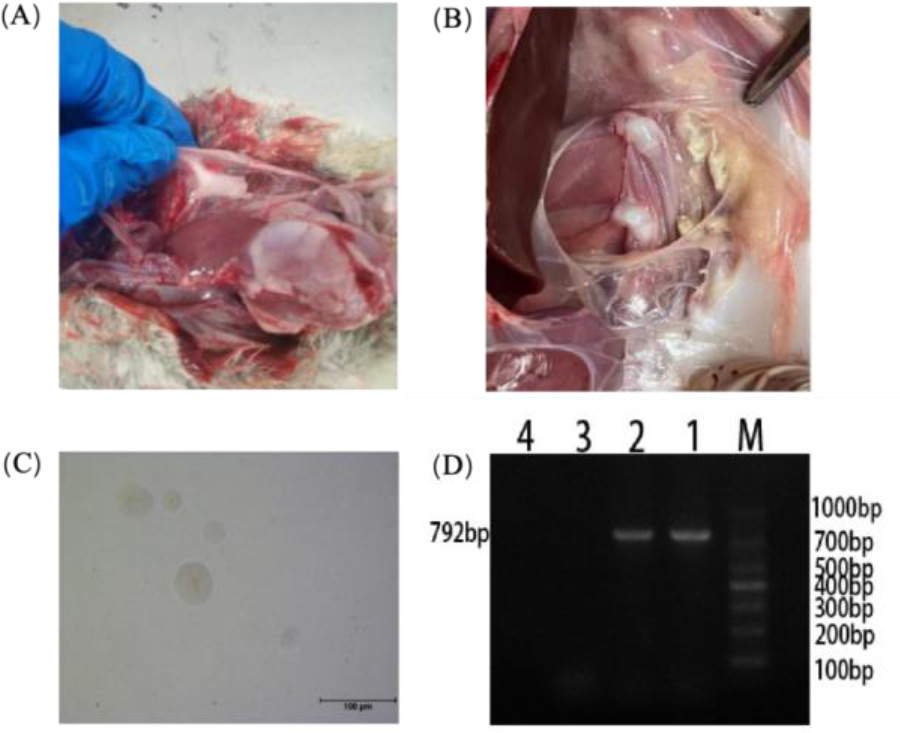
Fig. 1.
Isolation and identification of goose-origin Mycoplasma gallisepticum. A – thickened air-sac wall of an affected goose: wall with white viscous liquid; B – blood in statis in the lung tissue of an affected goose, and large amounts of yellow and white cheese-like material in the air sacs; C – colonies of clinical MG from goose isolates (100×); D – the PCR identification result of goose-origin MG. M – DL1000 Marker; 1 – MG-GD01/22; 2 – MG S6; 3 – Mycoplasma synoviae strain MS wvu1853; 4 – Control
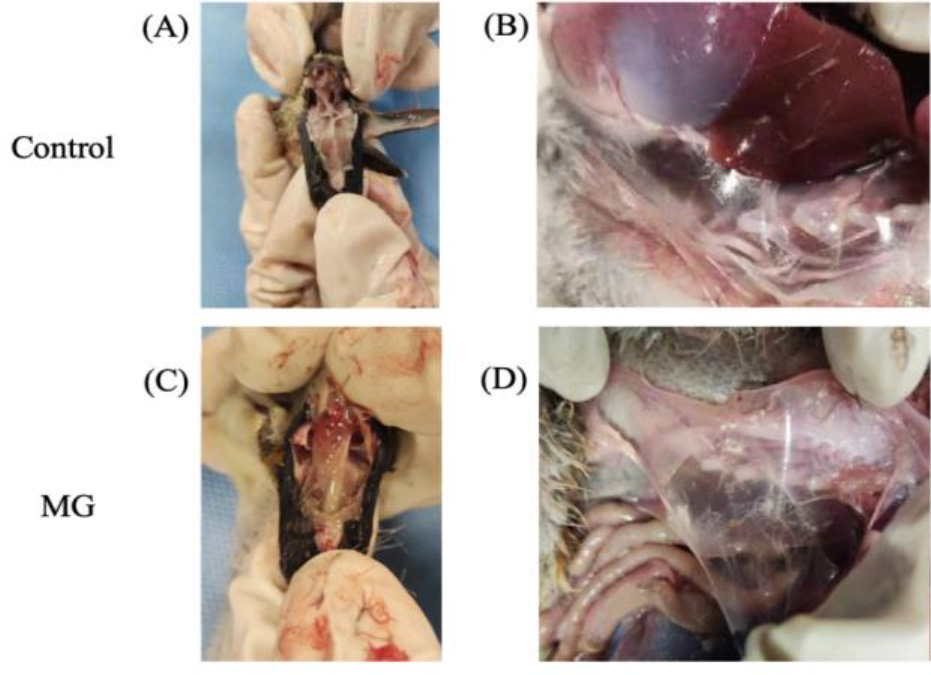
Fig. 2.
Changes caused by Mycoplasma gallisepticum in geese. A – clean nasal cavity; B – normal, thin and transparent air sacs in a control-group goose; C – yellow, viscous secretion in the nasal cavity of an infected-group goose; D – slightly thickened air sacs withs cloudy, light-yellow cheese-like exudation in an infected-group goose
Table 4.
Minimum inhibitory concentrations (MICs) of antimicrobials against a Mycoplasma gallisepticum reference strain (MG S6) and the isolate obtained in the experiment (MG-GD01)
| Drug name | MG S6 MIC | MG-GD01 MIC |
|---|---|---|
| Danofloxacin | 0.8 | 3.2 |
| Enrofloxacin | 0.4 | 3.2 |
| Tilmicosin | 0.2 | 0.4 |
| Tylosin | 0.2 | 0.4 |
| Acetylisovalery ltylosin tartrate | 0.1 | 0.3 |
| Tiamulin | 0.00625 | 0.0125 |
| Valnemulin | 0.00625 | 0.0125 |
| Spectinomycin | 0.4 | 3.2 |
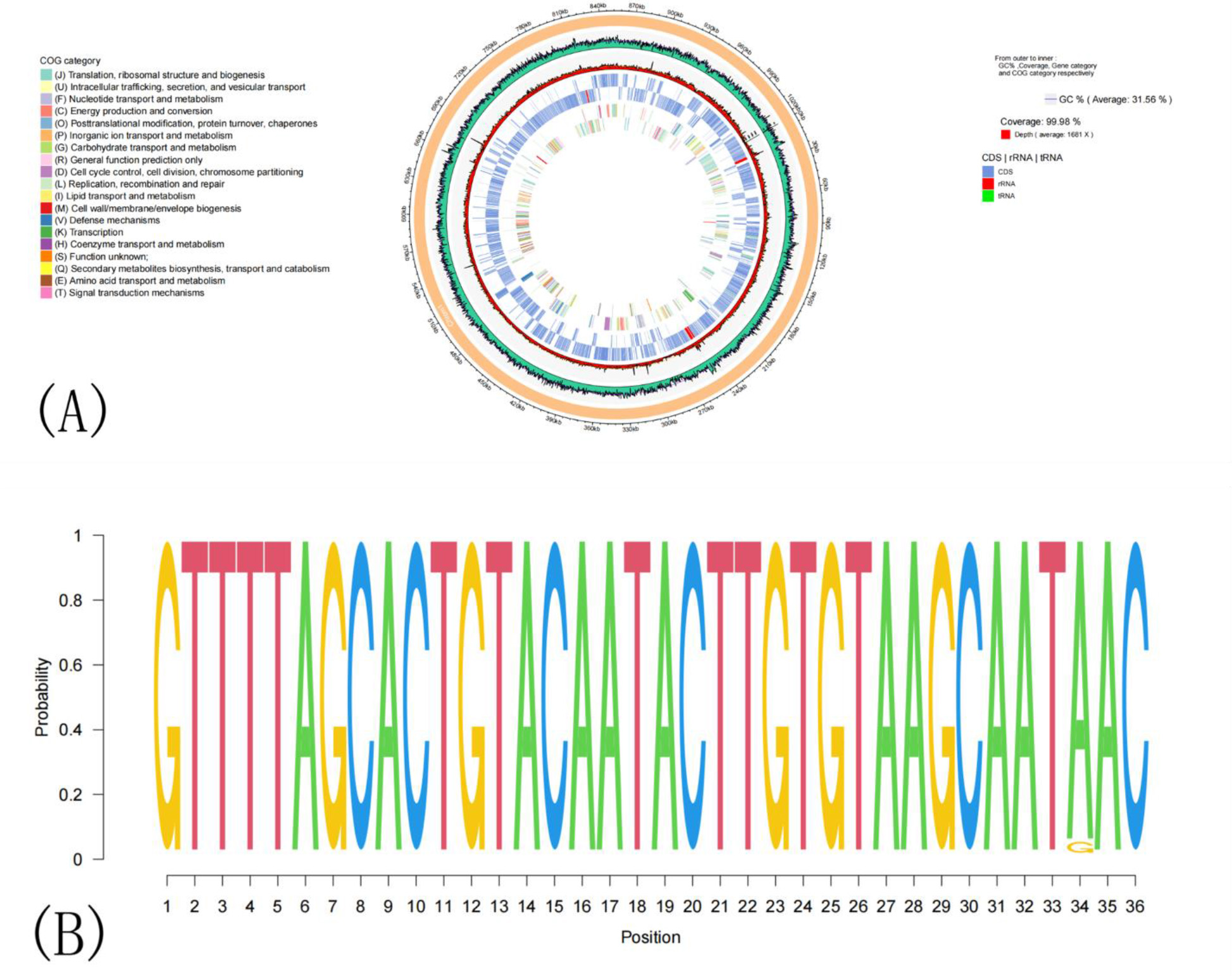
Fig. 3.
Basic information and bioinformatics prediction for Mycoplasma gallisepticum strain MG-GD01/22 isolated from inoculated Chinese geese. A – visualisation of the MG-GD01/22 genome; B – clustered, regularly interspaced short palindromic repeat fragment SeqLogo of MG-GD01/22. COG – clusters of orthologous groups; GC – guanine + cytosine; CDS – coding sequence; rRNA – ribosomal RNA; tRNA – transfer RNA
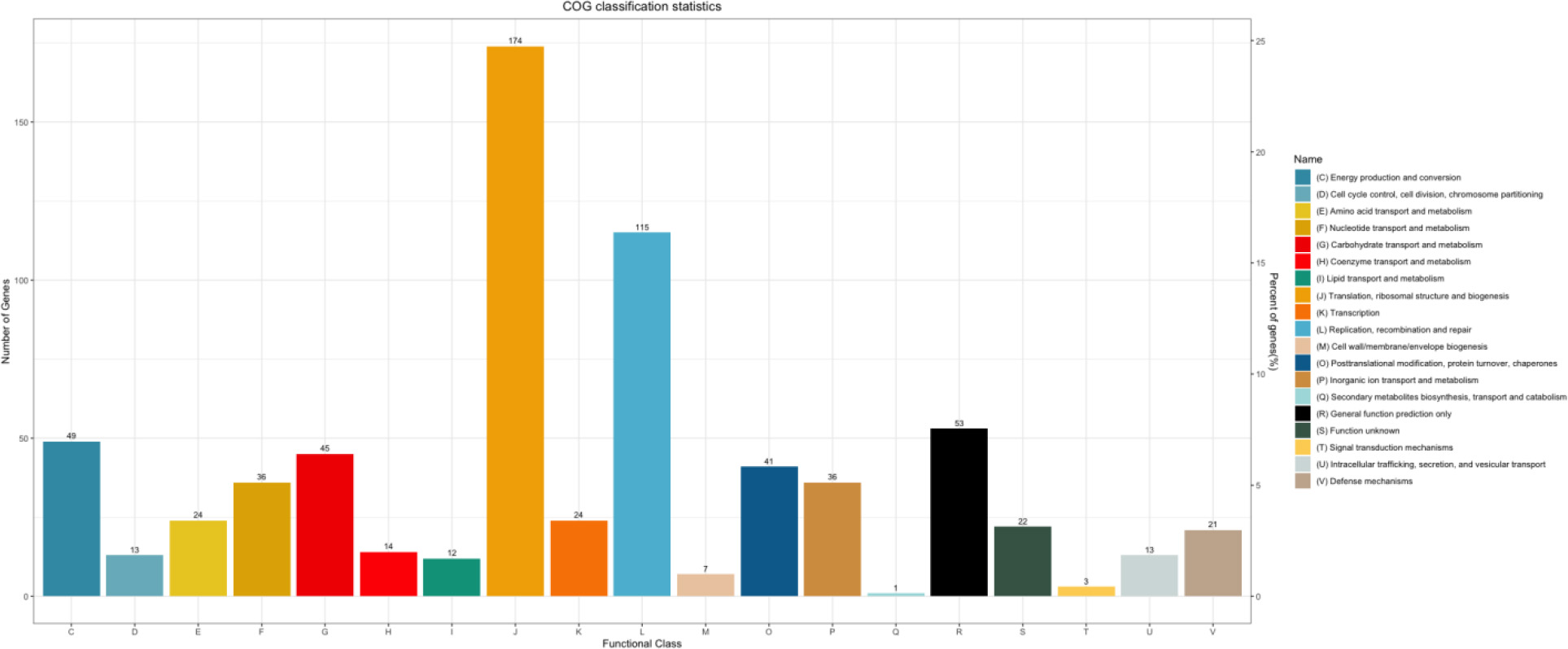
Fig. 4.
Functional analysis of the Mycoplasma gallisepticum strain MG-GD01/22 isolated from inoculated Chinese geese based on Cluster of Orthologous Groups (of proteins) (COG) database annotation results
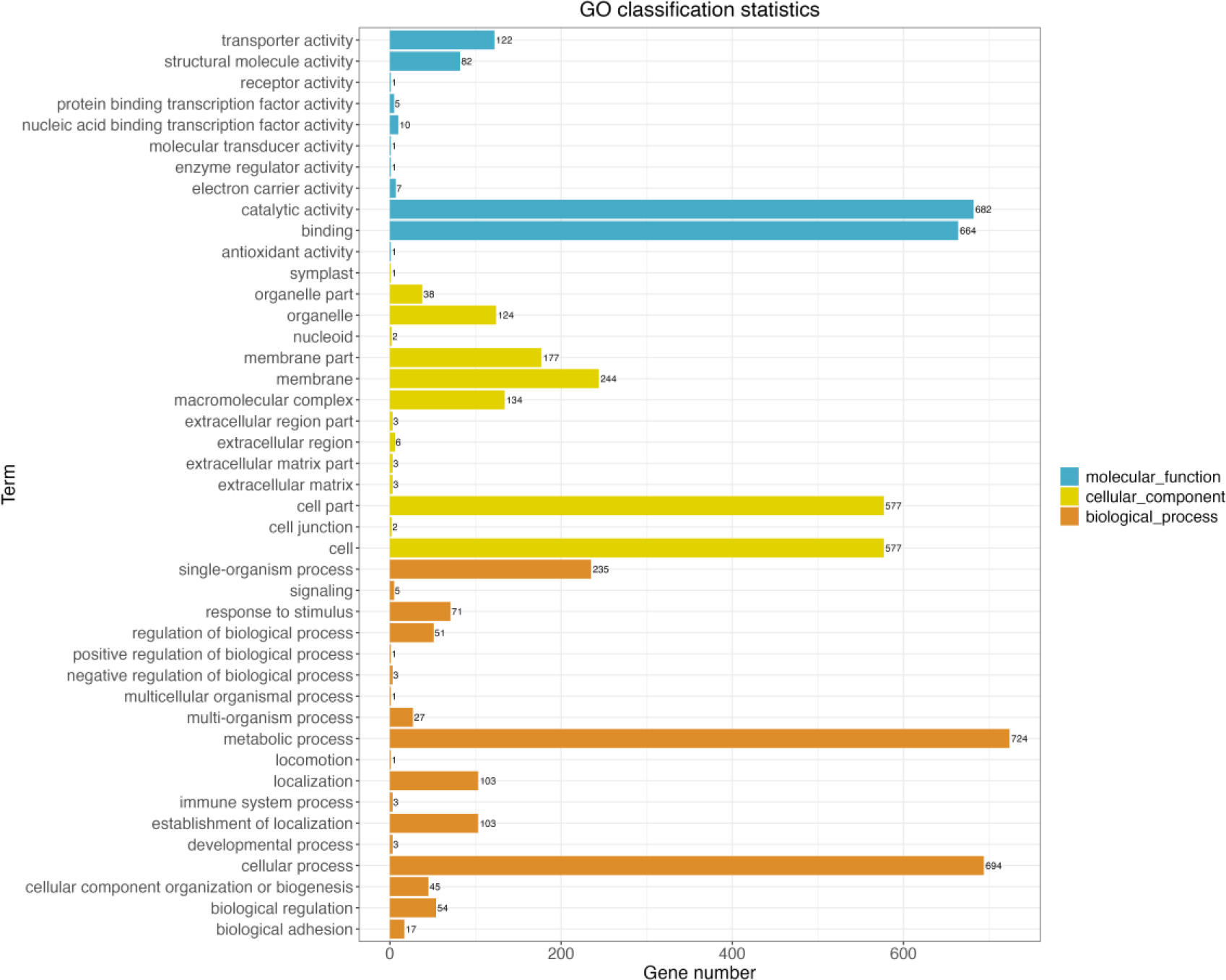
Fig. 5.
Functional analysis of the Mycoplasma gallisepticum strain MG-GD01 isolated from inoculated Chinese geese based on the Gene Ontology (GO) database annotation results
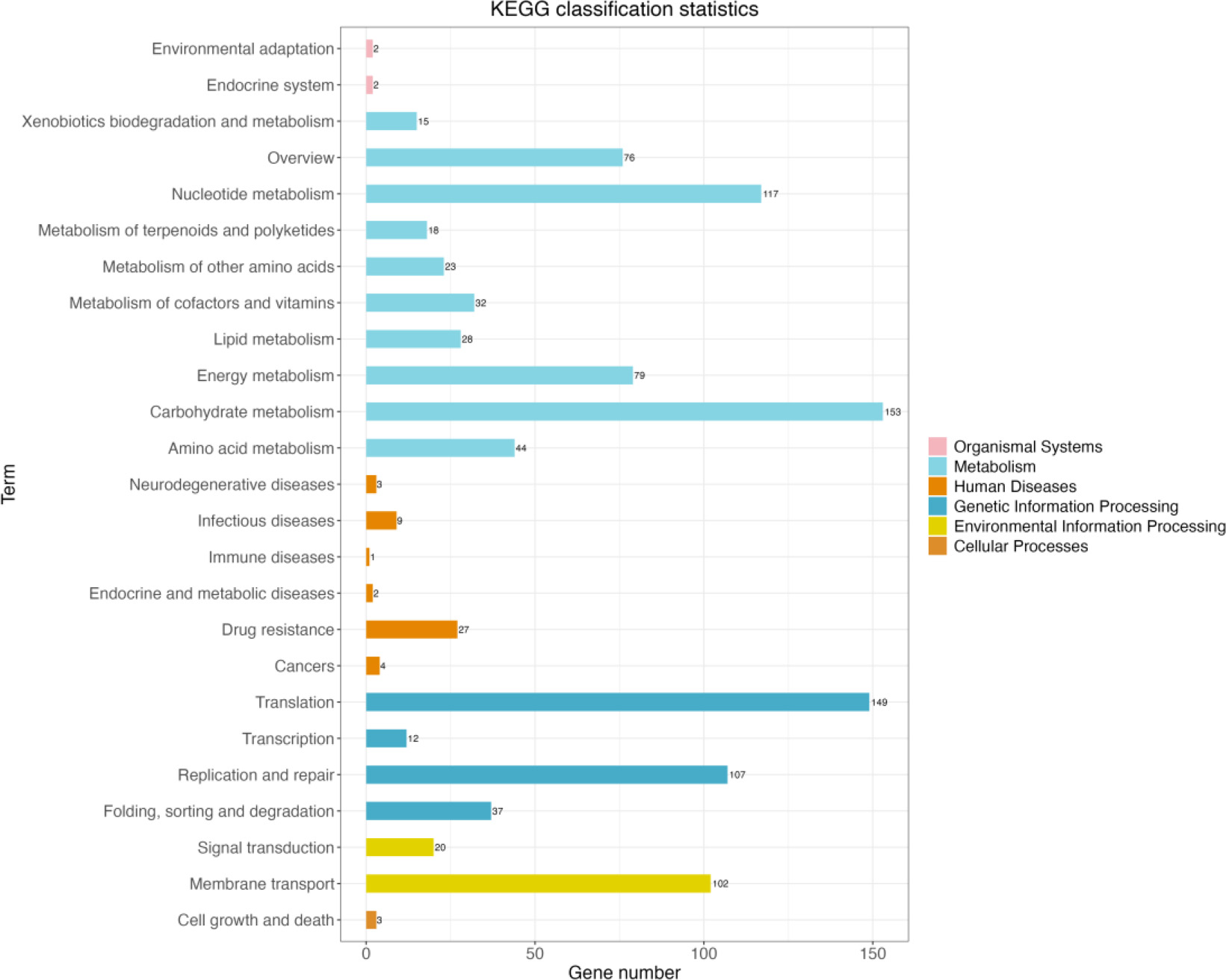
Fig. 6.
Functional analysis of the Mycoplasma gallisepticum strain MG-GD01 isolated from inoculated Chinese geese based on Kyoto Encyclopedia of Genes and Genomes (KEGG) database annotation results
Table 5.
Pathogen Host Interactions database analysis of the Mycoplasma gallisepticum strain MG-GD01 isolated from inoculated Chinese geese
| Taxon | Gene name | Gene number |
|---|---|---|
| Loss of pathogenicity | pmc1, cls | 10 |
| Increased virulence | algT, gyrA, glyA | 7 |
| Effector | pstB, groEL | 7 |
| Unaffected pathogenicity | FTT0673p/prsAp, secA2 | 3 |
| Reduced virulence | secA, Calcium-transporting | 2 |
Table 6.
The Comprehensive Antibiotic Resistance Database analysis of the Mycoplasma gallisepticum strain MG-GD01 isolated from inoculated Chinese geese
| Antibiotic type | Gene name | Gene number |
|---|---|---|
| Fluoroquinolone | parC, gyrB, parE, gyrA | 10 |
| Streptomycin | rpsL | 1 |
| Aminocoumarin | alaS, gyrB, parE, parY | 7 |
| Daptomycin | rpoB, rpoC | 3 |
| Rifamycin | rpoB | 2 |
| Other antibiotics | macB, dfrE | 2 |
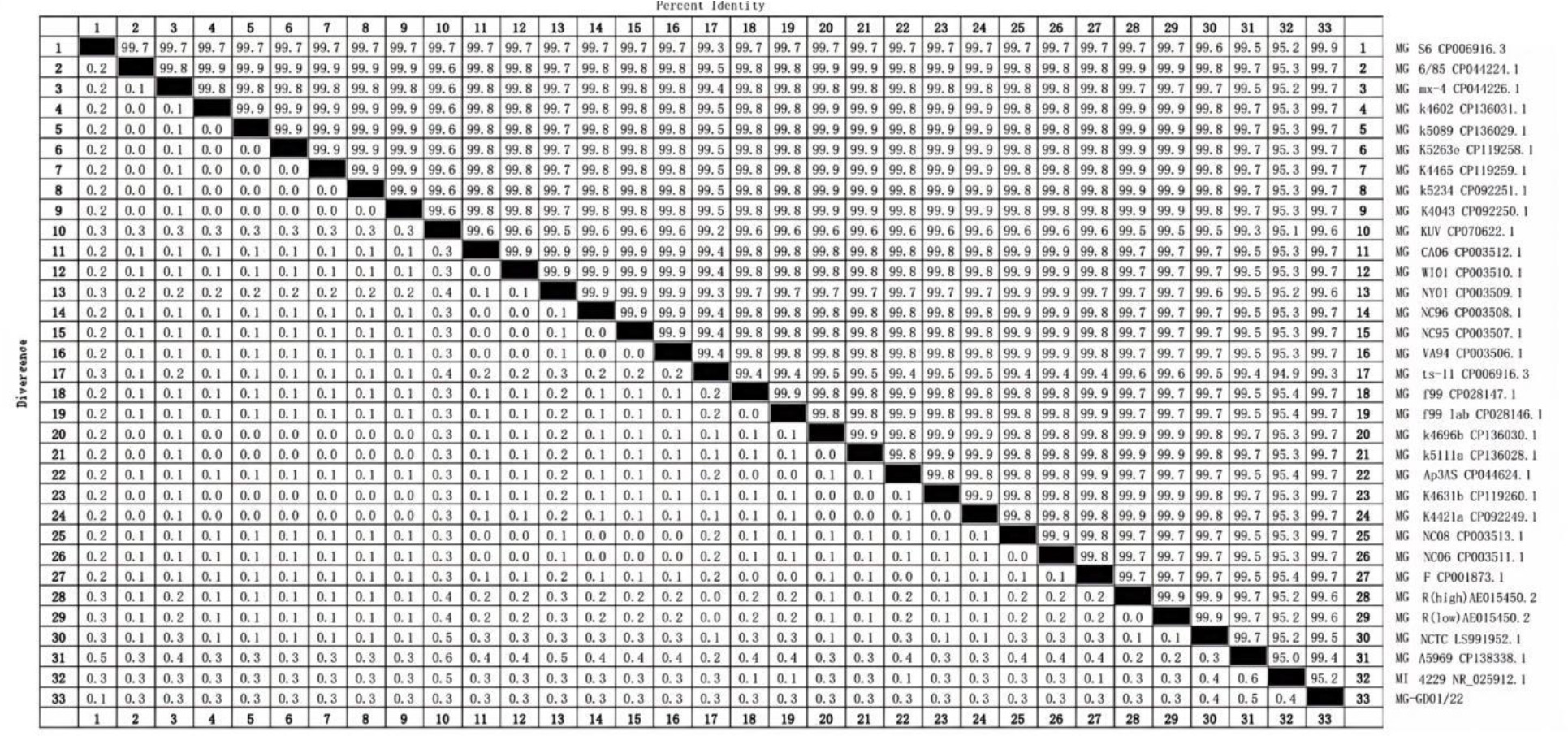
Fig. 7.
Nucleotide sequence homology analysis of the 16S ribosomal RNA of the Mycoplasma gallisepticum strain MG-GD01/22 isolated from inoculated Chinese geese
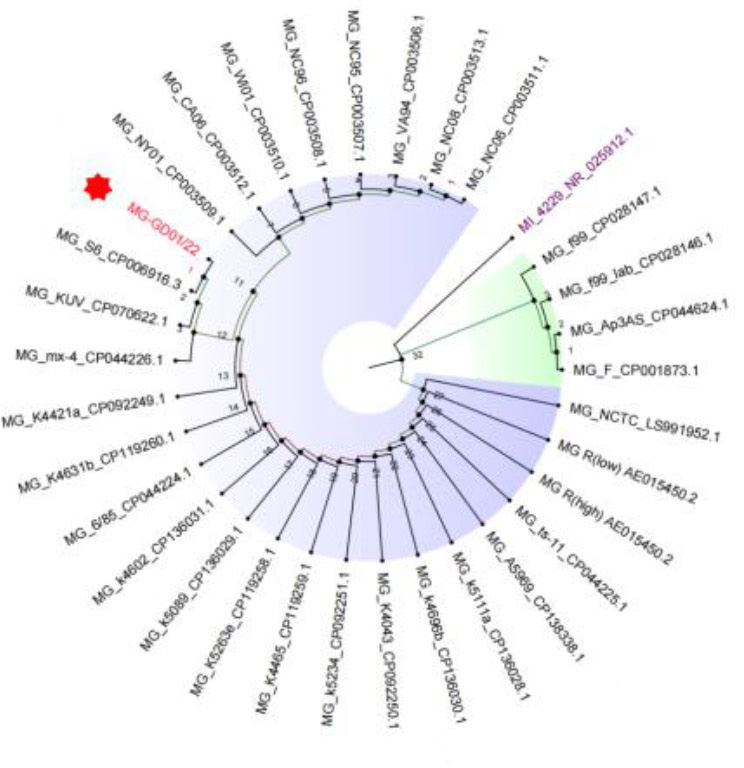
Fig. 8.
Phylogenetic tree of 16S ribosomal RNA of the Mycoplasma gallisepticum strain MG-GD01/22 (indicated by the red star) isolated from inoculated Chinese geese
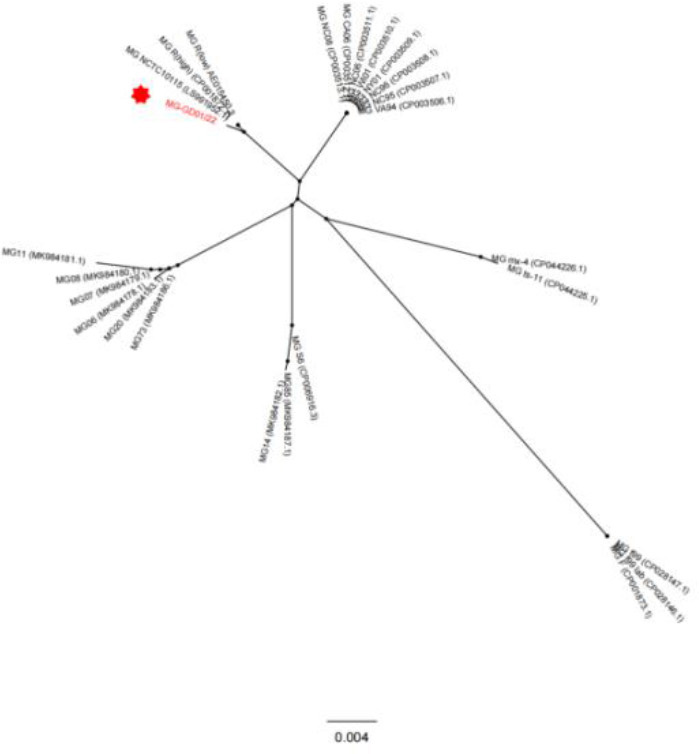
Fig. 9.
Phylogenetic tree of mgc2 of MG-GD01/22 (indicated by the red star) isolated from inoculated Chinese geese
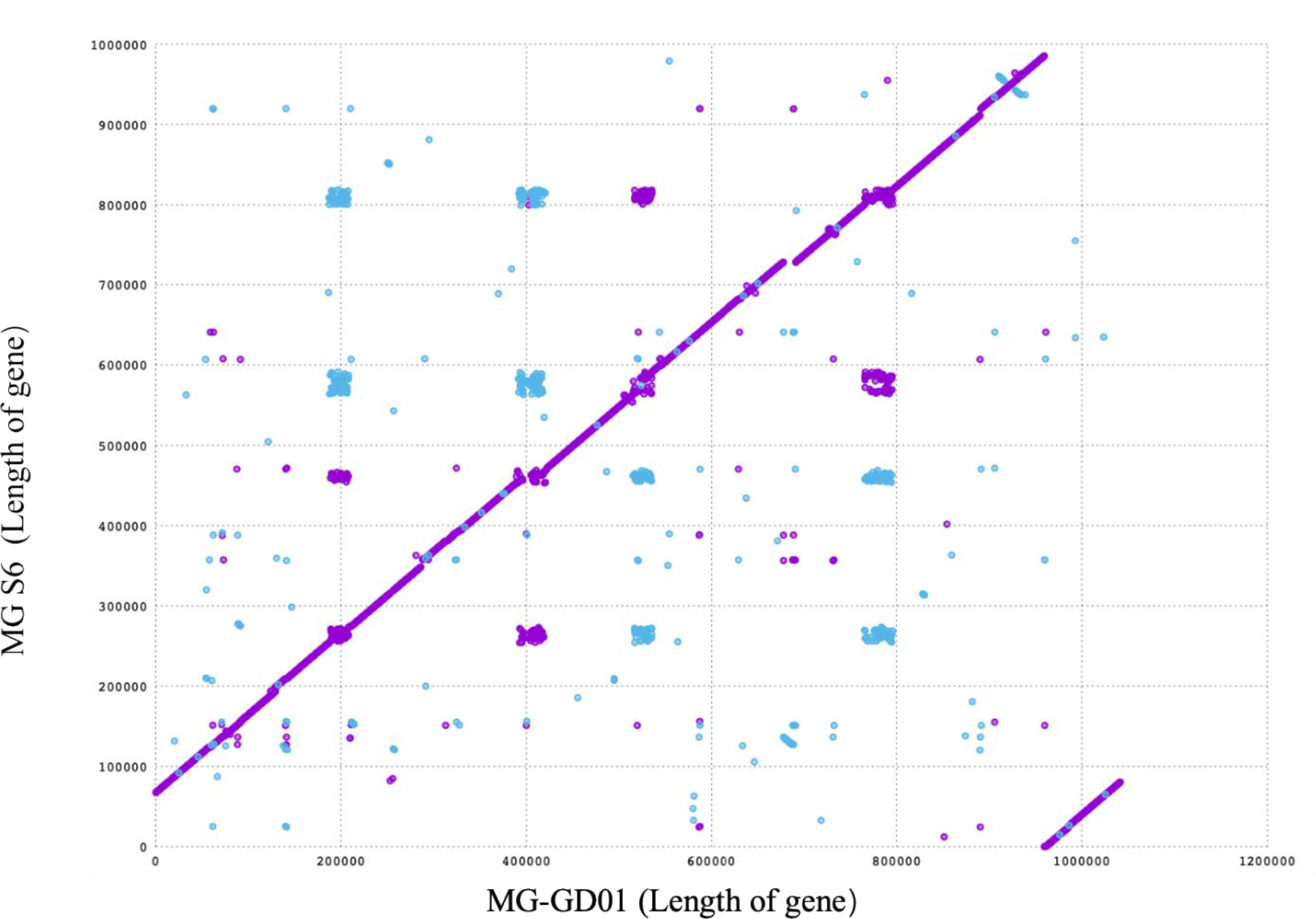
Fig. 10.
Collinearity analysis of the genomes of the Mycoplasma gallisepticum strain MG-GD01/22 (x-axis) isolated from inoculated Chinese geese and the MG S6 strain (y-axis). Forward maximal unique matches (MUMs) are plotted as red lines/dots while reverse MUMs are plotted as blue lines/dots. A line of dots with slope = 1 represents an undisturbed segment of conservation between the two sequences, while a line of slope = −1 represents an inverted segment of conservation between the two sequences