Have a personal or library account? Click to login
The effect of prenatal fumonisin B exposure on bone innervation in newborn Wistar rats Cover

Figures & Tables

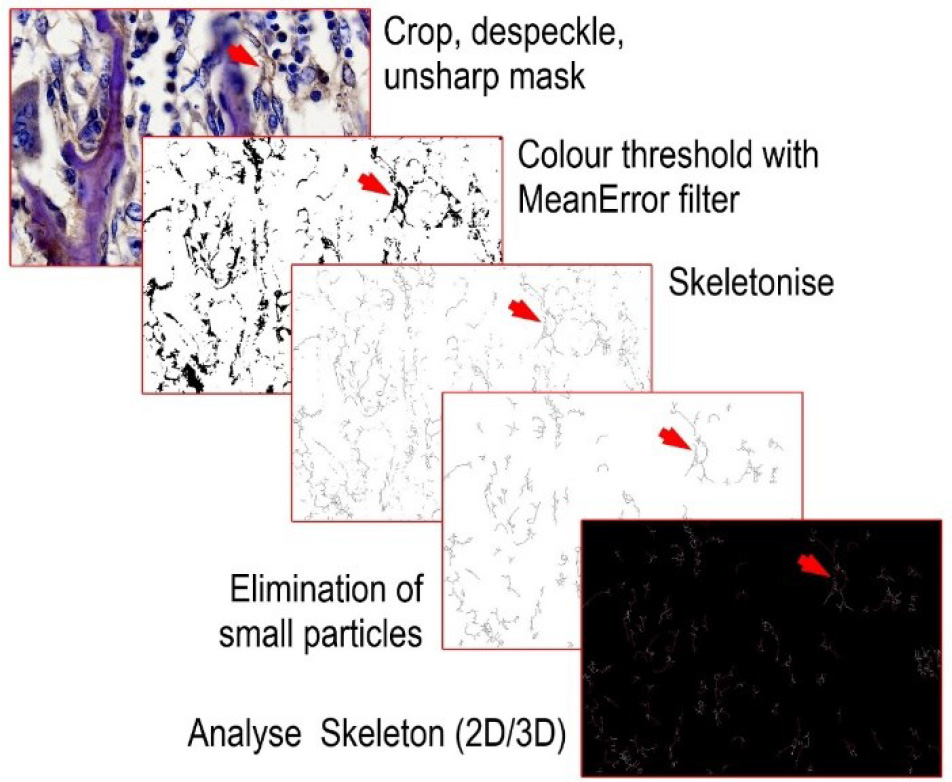
Fig. 1.

A diagram showing the graphical analysis steps for image segmentation and bone neuronal net analysis. Red arrows indicate an example of an identified neuronal element in subsequent processes of image transformation
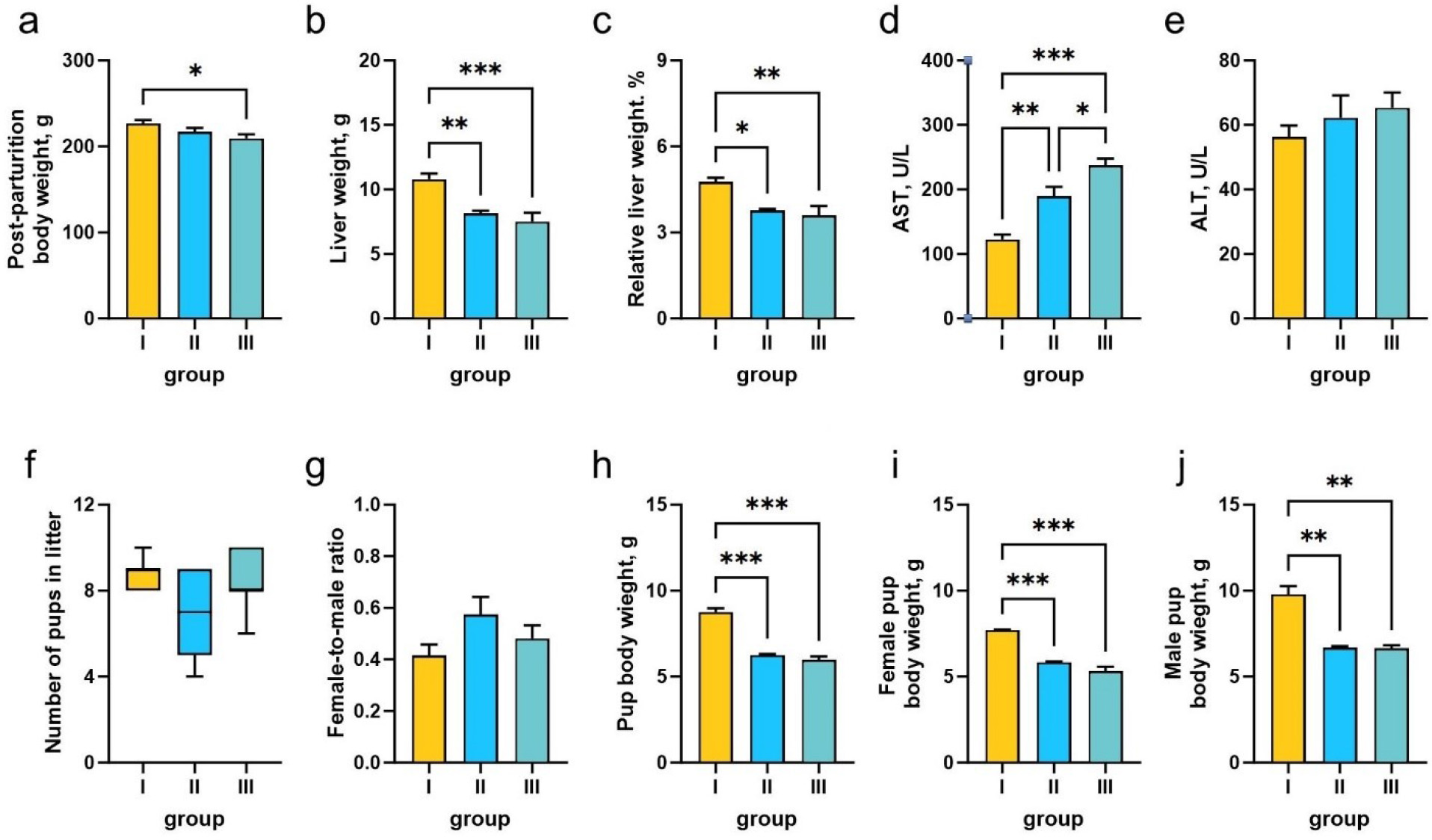

Fig. 2.

Effects of fumonisin exposure on Wistar rat dams. a – post-parturition body weight; b – liver weight; c – relative liver weight (percentage of total body weight); d – serum aspartate aminotransferase (AST) activity; e – serum alanine aminotransferase (ALT) activity; f – litter size (number of live pups); (g) – offspring sex ratio (female-to-male); h – average pup body weight; i – female pup body weight; j – male pup body weight. Group I – control group; Group II – dams intoxicated with 60 fumonisins B (FB)/kg b.w. during gestation; Group III – dams intoxicated with 90 FB/kg b.w. during gestation. The data are presented as mean values ± standard error of the mean (n = 6), except for (f), where the line indicates the median, the box represents the interquartile range, and the whiskers show minimum and maximum value ranges. * – statistical significance at P-value < 0.05; ** – P-value < 0.01; *** – P-value < 0.001
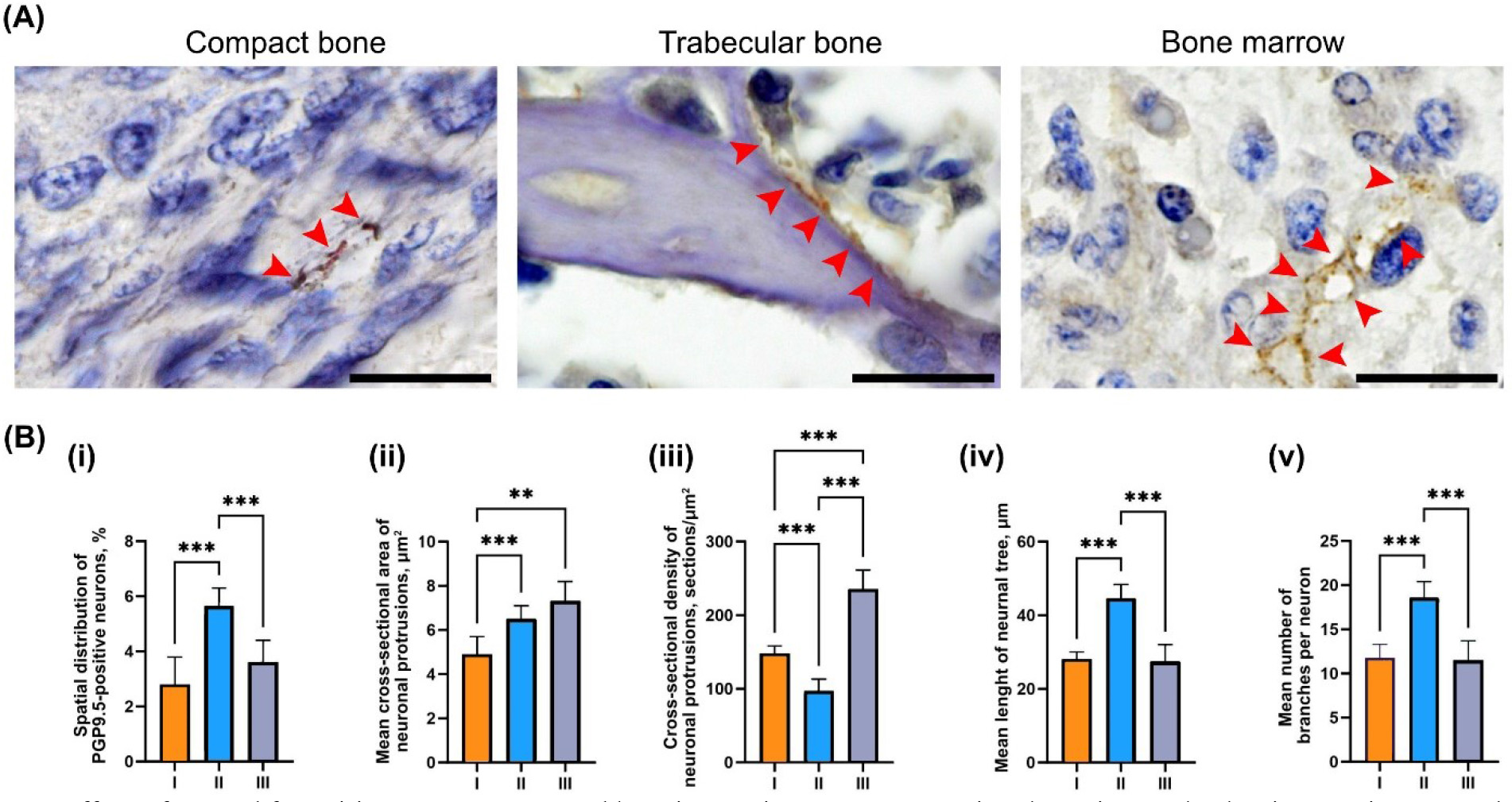

Fig. 3.

Effects of prenatal fumonisins exposure on general bone innervation: A – representative photomicrographs showing protein gene product 9.5 (PGP9.5)-positive neuronal nets (arrowheads) in compact bone, trabecular bone and bone marrow; B – general bone innervation pattern quantified by morphology of the PGP9.5-positive neurons: i – spatial distribution of PGP9.5-positive neurons; ii – average cross-sectional area of PGP9.5-positive neuronal protrusions; iii – neuronal protrusion cross-sectional density of PGP9.5-positive neurons; iv – average length of neuronal trees in PGP9.5-positive neurons; v – mean number of branches in PGP9.5-positive neurons. Group I – control group; Group II – newborns from dams intoxicated with 60 fumonisins B (FB)/kg b.w. during gestation; Group III – newborns from dams intoxicated with 90 FB/kg b.w. during gestation. The data are presented as mean values ± standard error of the mean (n = 6); * – statistical significance at P-value < 0.05; ** – P-value < 0.01; *** – P-value < 0.001; scale bars – 20 μm
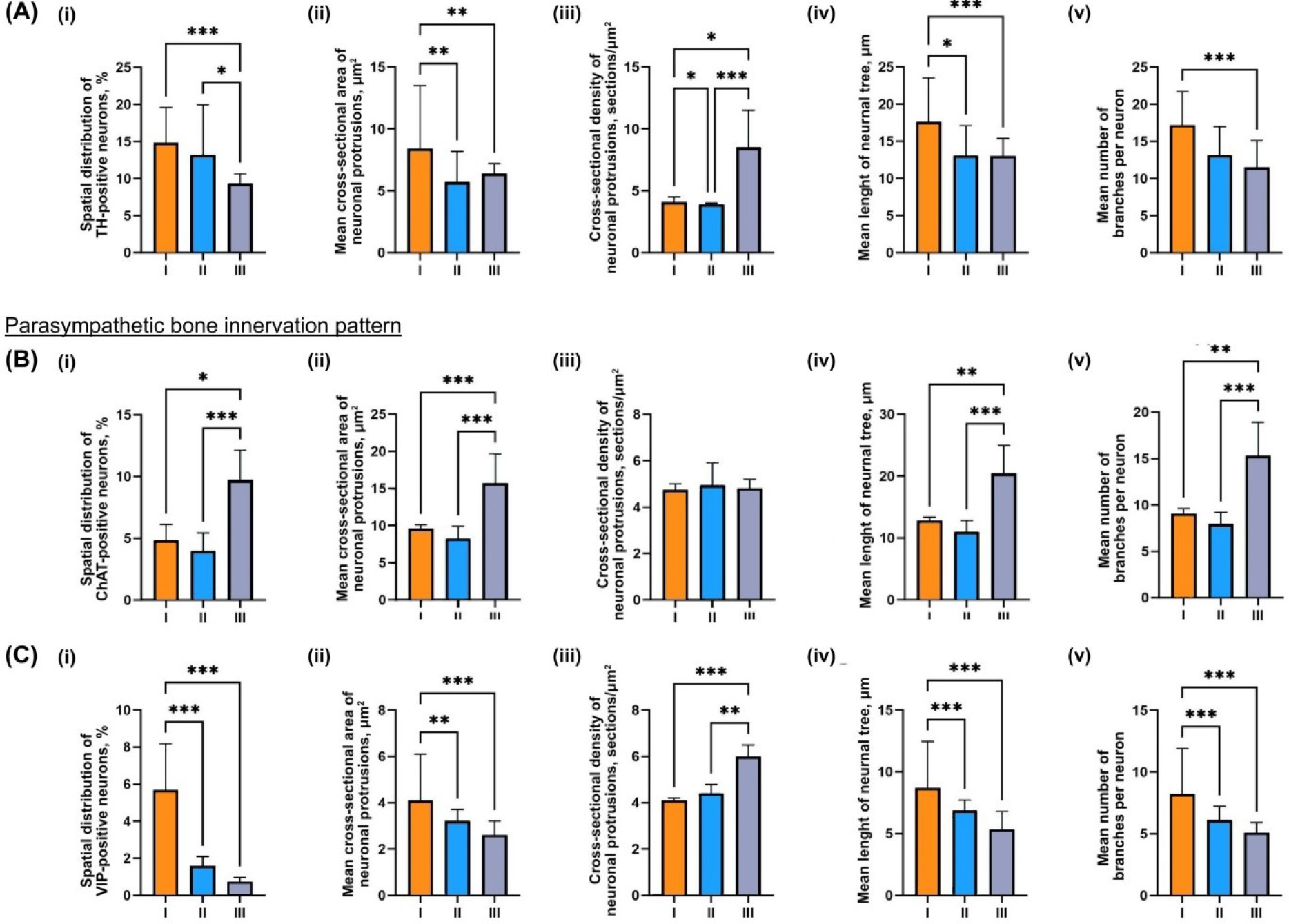

Fig. 4.

Effects of prenatal fumonisin exposure on bone innervation: A – sympathetic and B and C – parasympathetic patterns quantified by morphology of the immunoreactive (IR) neurons. A – tyrosine hydroxylase (TH)-positive; B – choline acetyltransferase (ChAT)-positive; C – vasoactive intestinal peptide (VIP)-positive neurons: i – spatial distribution of IR neurons; ii – average cross-sectional area of IR neuronal protrusions; iii – neuronal protrusion cross-sectional density of IR neurons; iv – average length of neuronal trees in IR neurons; v – mean number of branches in IR neurons. Group I – control group; Group II – newborns from dams intoxicated with 60 fumonisins B (FB)/kg b.w. during gestation; Group III – newborns from dams intoxicated with 90 FB/kg b.w. during gestation. The data are presented as mean values ± standard error of the mean (n = 6); * – statistical significance at P-value < 0.05; ** – P-value < 0.01; *** – P-value < 0.001
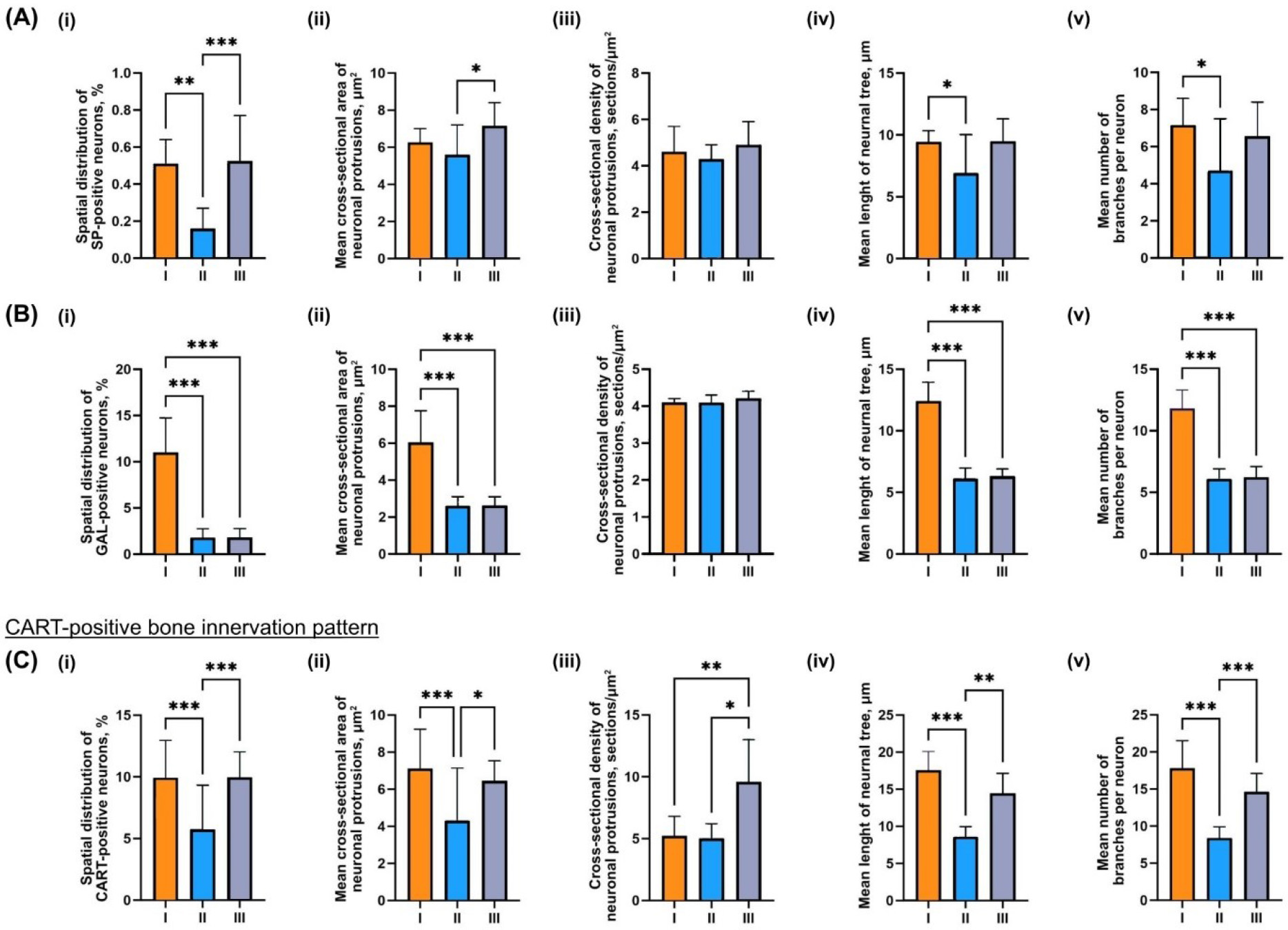

Fig. 5.

Effects of prenatal fumonisins exposure on bone innervation: A and B – sensory and C – cocaine- and amphetamine-regulated transcript (CART)-positive patterns quantified by morphology of the immunoreactive (IR) neurons. A – SP-positive; B – GAL-positive; C – CART-positive neurons; i – spatial distribution of IR neurons; ii – average cross-sectional area of IR neuronal protrusions; iii – neuronal protrusion cross-sectional density of IR neurons; iv – average length of neuronal trees in IR neurons; v – mean number of branches in IR neurons. Group I – control group; Group II – newborns from dams intoxicated with 60 fumonisins B (FB)/kg b.w. during gestation; Group III – newborns from dams intoxicated with 90 FB/kg b.w. during gestation. The data are presented as mean values ± standard error of the mean (n = 6); * – statistical significance at P-value < 0.05; ** – P-value < 0.01; *** – P-value < 0.001
Language: English
Page range: 633 - 642
Submitted on: Apr 24, 2024
Accepted on: Sep 23, 2024
Published on: Oct 9, 2024
Published by: National Veterinary Research Institute in Pulawy
In partnership with: Paradigm Publishing Services
Publication frequency: 4 issues per year

© 2024 Ewa Tomaszewska, Piotr Dobrowolski, Aleksandra Dajnowska, Liwia Arbatowska, Iwona Puzio, Halyna Rudyk, Oksana Brezvyn, Ihor Kotsyumbas, Janine Donaldson, Jadwiga Śliwa, Marcin B. Arciszewski, Siemowit Muszyński, published by National Veterinary Research Institute in Pulawy
This work is licensed under the Creative Commons Attribution-NonCommercial-NoDerivatives 3.0 License.