
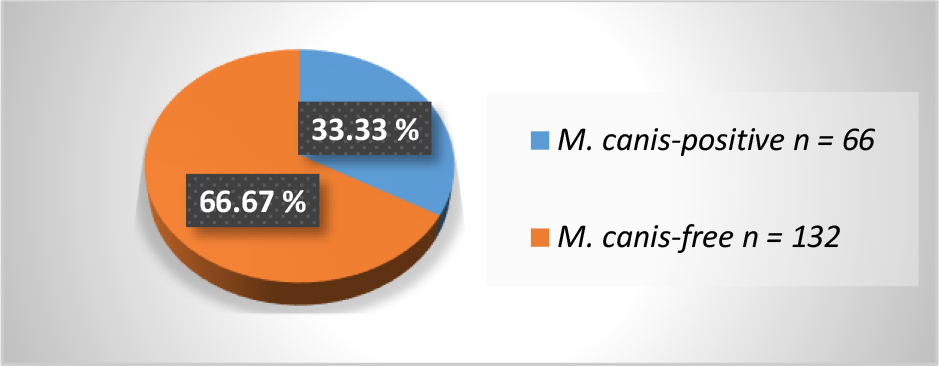
Fig. 1.
The prevalence of Mycoplasma canis in the problem-free (healthy) group of breeding bitches (n = 198)
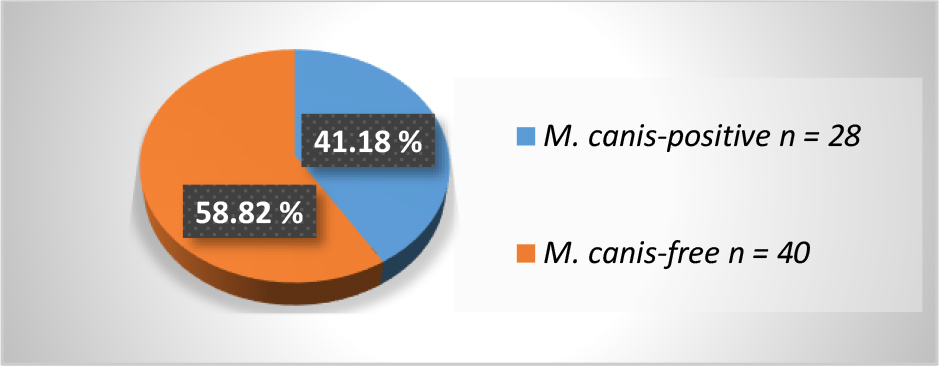
Fig. 2.
The prevalence of Mycoplasma canis in the group of breeding bitches with fertility disorders (n = 68)
Table 1.
Prevalence of aerobic bacteria in population of breeding bitches
| Number of bitches | Percentage of bitches | |
|---|---|---|
| Streptococcus spp. | 107 | 38.91 |
| Staphylococcus spp. | 106 | 38.55 |
| M. canis | 96 | 34.91 |
| E. coli | 88 | 31.99 |
| Bacillus spp. | 45 | 16.36 |
| Proteus spp. | 32 | 11.64 |
| Pseudomonas spp. | 11 | 4.00 |
| Klebsiella spp. | 7 | 2.55 |
| Citrobacter spp. | 1 | 0.36 |
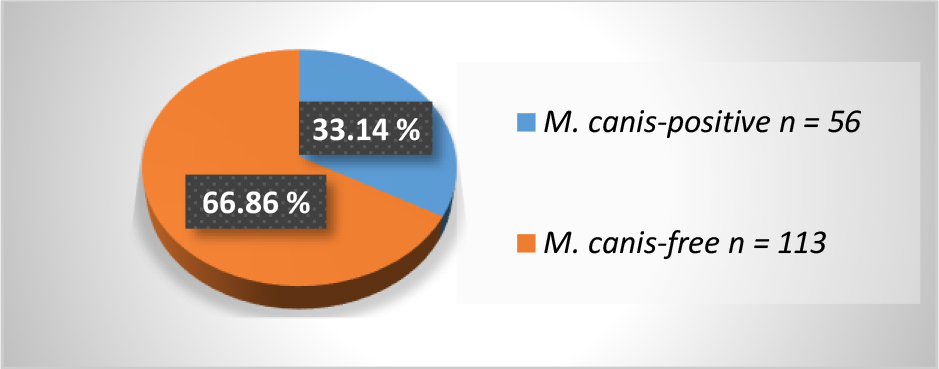
Fig. 3.
The prevalence of M. canis in the group of bitches which had naturally mated at least once (n = 169)
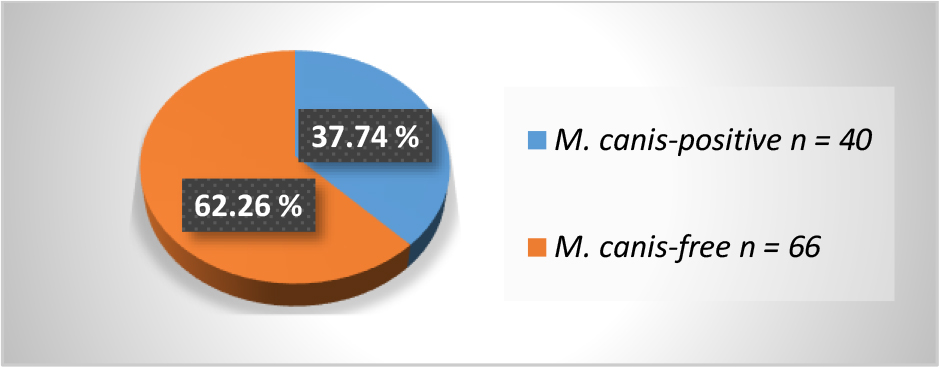
Fig. 4.
The prevalence of Mycoplasma canis in the group of bitches which had never naturally mated (n = 106)
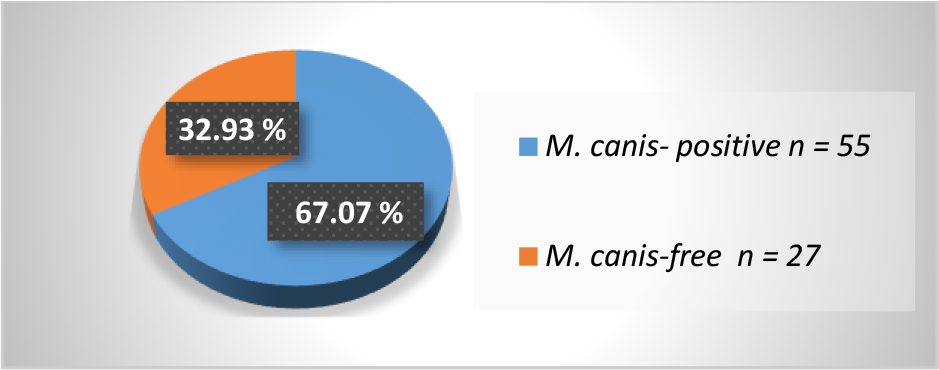
Fig. 5.
The prevalence of Mycoplasma canis in the dog kennels of breeding bitches (n = 82)
Table 2.
The association between the presence of Mycoplasma canis in the kennel and the incidence of selected reproductive disorders
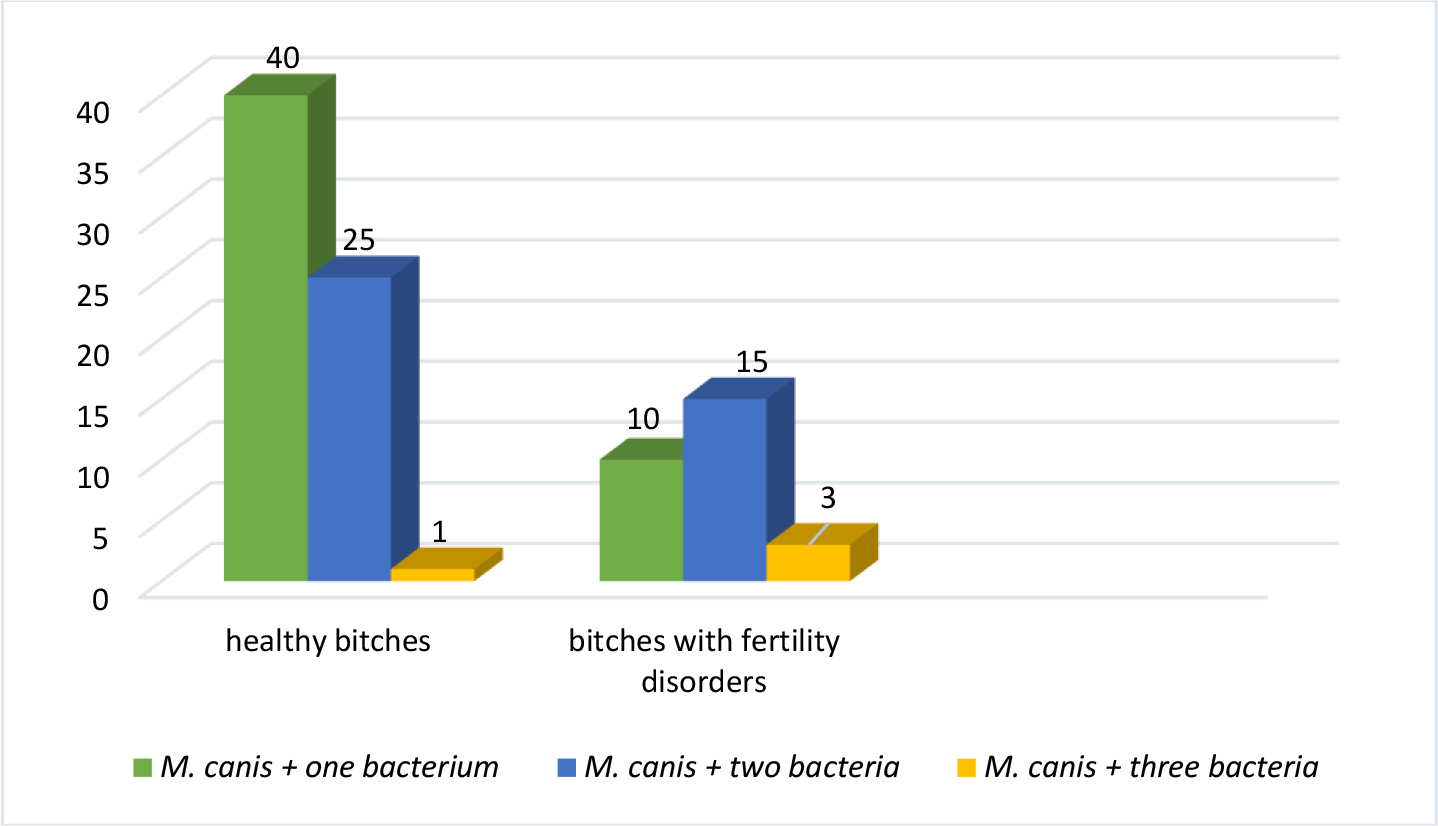
Fig. 6.
The correlation between Mycoplasma canis-positive bitches and the number of additional bacterial strains