
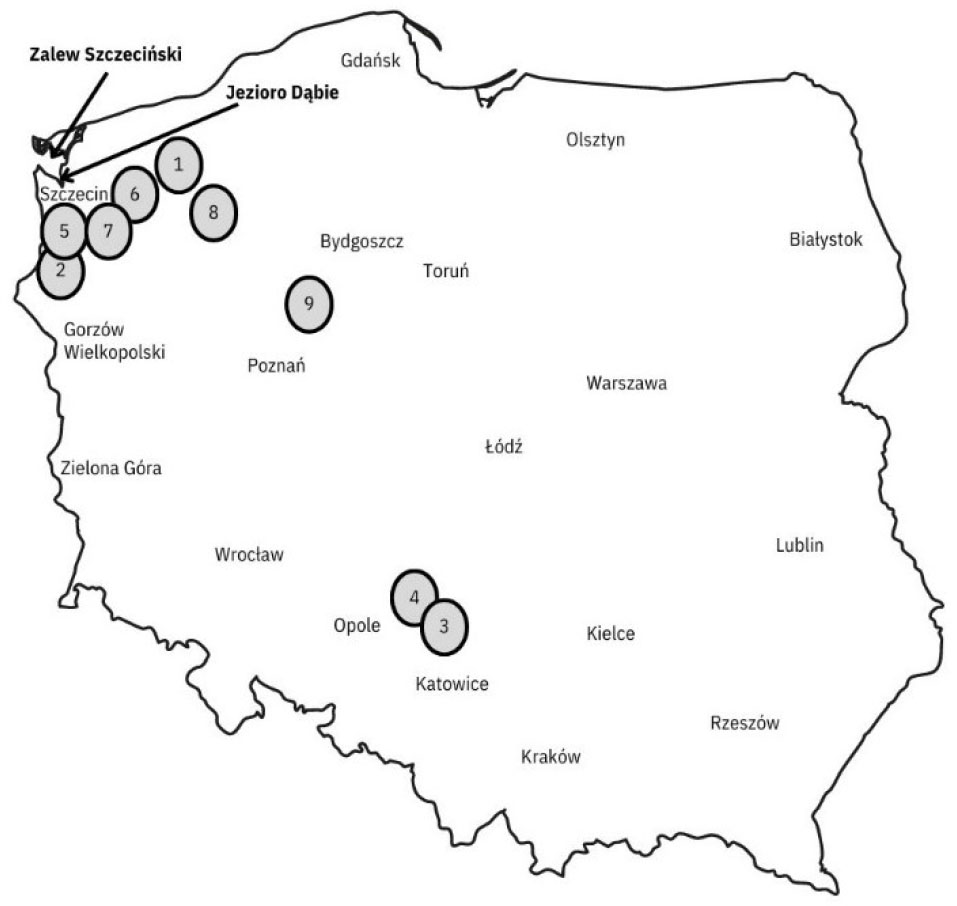
Fig. 1.
Locations of fish sampling sites
Table 1.
Primers used for the detection of the carp oedema virus P4a protein in conventional and nested PCRs
| Primer name | Primer sequence | Product size (base pairs) | Reference |
|---|---|---|---|
| CEV qFor1 | 5′-ATGGAGTATCCAAAGTACTTAG-3′ | 528 | |
| CEV for B | |||
| CEV rev J | 5′-CTCTTCACTATTGTGACTTTG-3′ | 528 | 12 |
| CEV for B - int | 5′-GTTATCAATGAAATTTGTGTATTG-3′ | 478 | |
| CEV rev J - int | 5′-TAGCAAAGTACTACCTCATCC-3′ | 478 |
Table 2.
Composition of the PCR mixture used for detection of the carp oedema virus P4a protein in a second nested PCR
| Deionised water (PCR grade) | GoTaq G2 Green Master Mix | Forward primer | Reverse primer | Template DNA |
|---|---|---|---|---|
| 6.5 mL | 12.5 mL | 0.5 mL | 0.5 mL | 5 mL |
Table 3.
Primers used for the detection of the carp oedema virus P4a protein in a real-time PCR
| Primer name | Primer sequence | Reference |
|---|---|---|
| CEV qFor1 | 5′-AGTTTTGTAKATTGTAGCATTTCC-3′ | |
| CEV qRev1 | 5′-GATTCCTCAAGGAGTTDCAGTAAA-3′ | 12 |
| CEV qProbe1 | 5′-AGAGT TTGTTTCTTGCC ATACAAACT-3′ |
Table 4.
Composition of the real-time PCR mixture for detection of carp oedema virus P4a protein
| Distilled water (PCR grade) | GoTaq G2 Green Master Mix | Forward primer | Reverse primer | TaqMan probe | Template DNA |
|---|---|---|---|---|---|
| 6.25 mL | 12.5 mL | 0.5 mL | 0.5 mL | 0.25 mL | 5 mL |
Table 5.
Summary of carp tissue samples (kidney, spleen, gills and skin) subjected to in situ hybridisation
| Sample collection site | Study material | Species | Symbol |
|---|---|---|---|
| Farm 2 | kidney, spleen | Carp (Cyprinus carpio) | DC1 |
| Farm 2 | gills, skin | Carp (Cyprinus carpio) | DC1 |
| Farm 2 | kidney, spleen | Carp (Cyprinus carpio) | DC2 |
| Farm 2 | gills, skin | Carp (Cyprinus carpio) | DC2 |
| Farm 2 | kidney, spleen | Carp (Cyprinus carpio) | DC4 |
| Farm 2 | gills, skin | Carp (Cyprinus carpio) | DC4 |
| Farm 2 | kidney, spleen | Carp (Cyprinus carpio) | DC7 |
| Farm 2 | gills, skin | Carp (Cyprinus carpio) | DC7 |
| Farm 2 | kidney, spleen | Carp (Cyprinus carpio) | DC8 |
| Farm 2 | gills, skin | Carp (Cyprinus carpio) | DC8 |
| Farm 2 | kidney, spleen | Carp (Cyprinus carpio) | DC9 |
| Farm 2 | gills, skin | Carp (Cyprinus carpio) | DC9 |
| Farm 9 | kidney, spleen | Carp (Cyprinus carpio) | 9SK |
| Farm 9 | gills, skin | Carp (Cyprinus carpio) | 9SK |
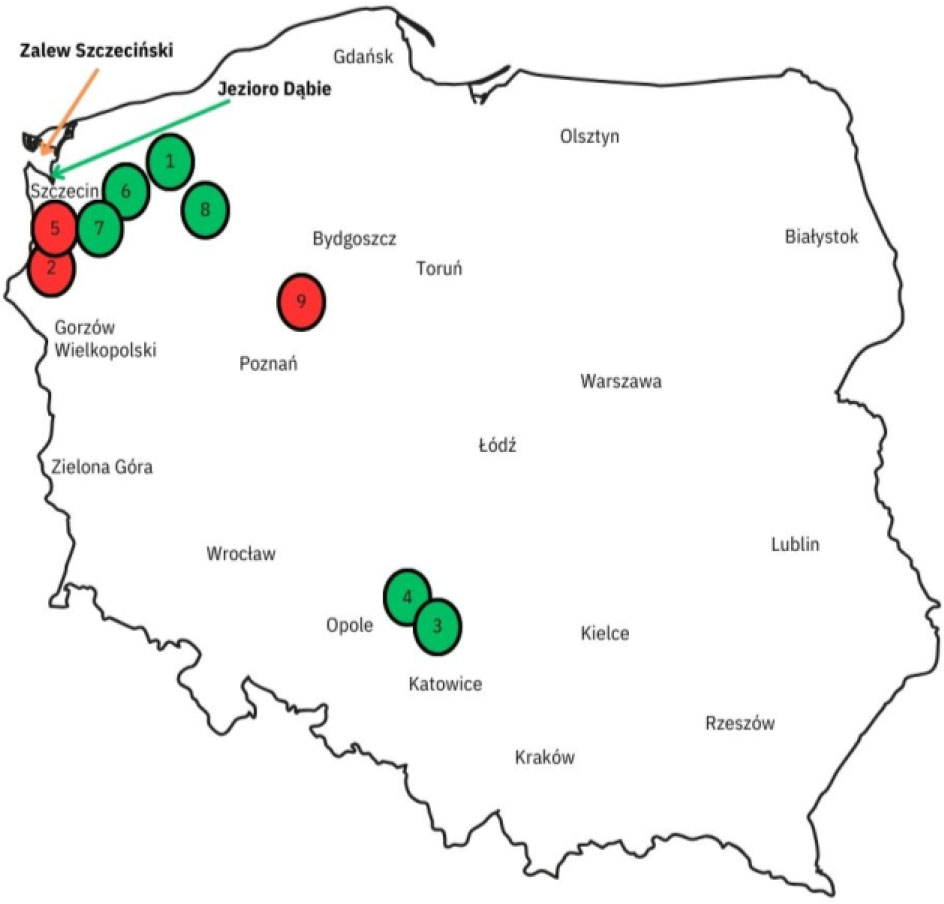
Fig. 2.
Sampling sites in the study. Locations with positive test results (in red) and locations free from carp oedema virus (in green). Outline of the map obtained from the website fabrykapuzli.pl and graphically processed by the author using canva.com
Table 6.
Carp oedema virus–positive samples in common carp (Cyprinus carpio) detected using real-time PCR
| No. | Sample code | Sample collection site | Threshold cycle |
|---|---|---|---|
| 1 | DC 4 | Farm 2 | 36.67 |
| 2 | DC 7 | Farm 2 | 28.26 |
| 3 | DC 8 | Farm 2 | 24.44 |
| 4 | DC 9 | Farm 2 | 23.47 |
| 5 | DC 10 | Farm 2 | 25.08 |
| 6 | DC 11 | Farm 2 | 24.55 |
| 7 | DC12 | Farm 2 | 24.82 |
| 8 | DC 5 | Farm 5 | 28.2 |
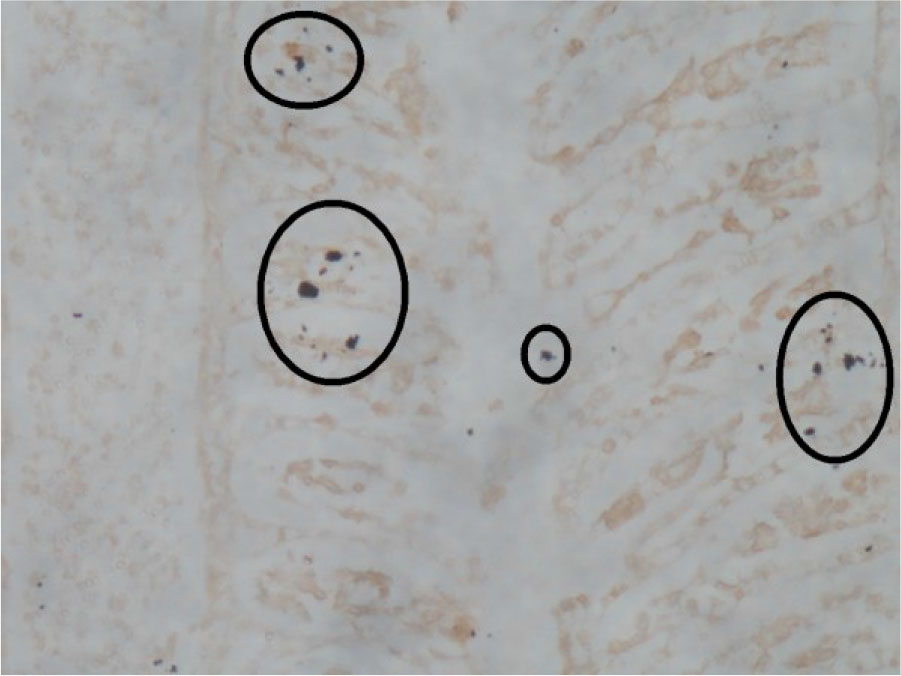
Fig. 3.
Confirmation of CEV genetic material in carp gills
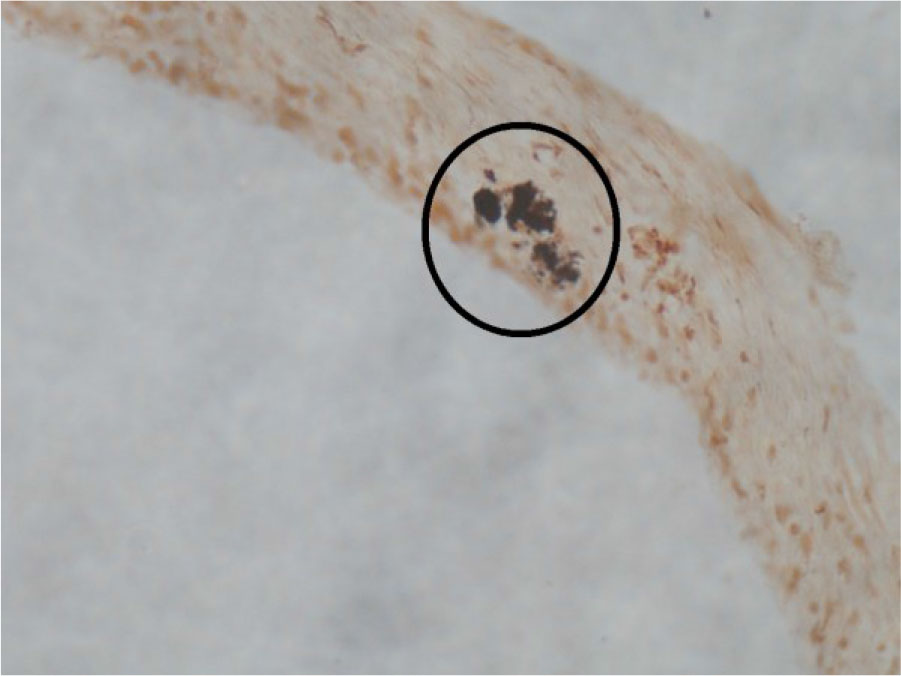
Fig. 4.
Confirmation of CEV genetic material in skin
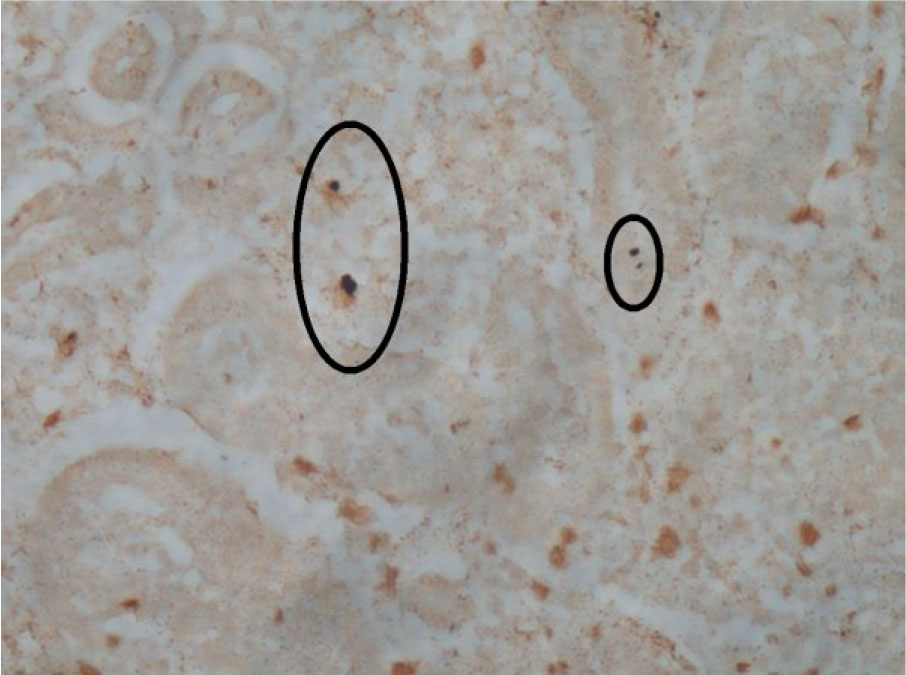
Fig. 5.
Confirmation of CEV genetic material in kidney
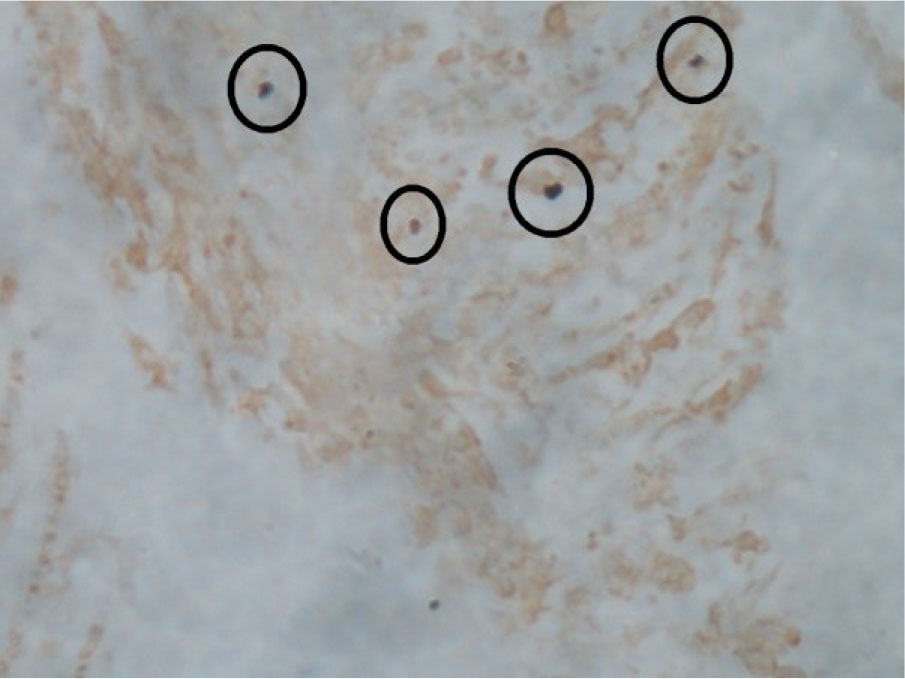
Fig. 6.
Confirmation of CEV genetic material in gills
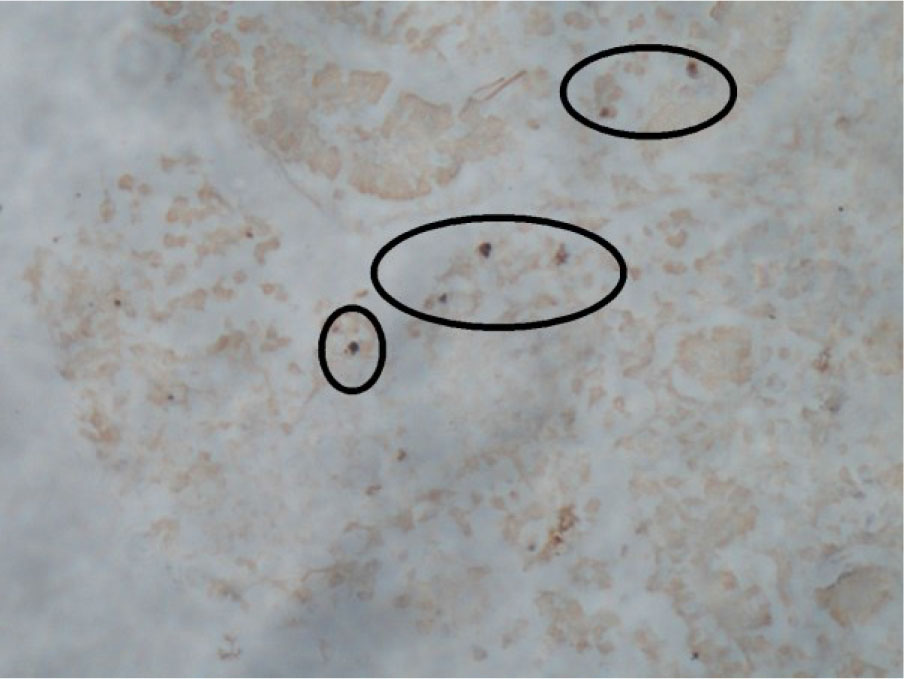
Fig. 7.
Confirmation of CEV genetic material in kidney
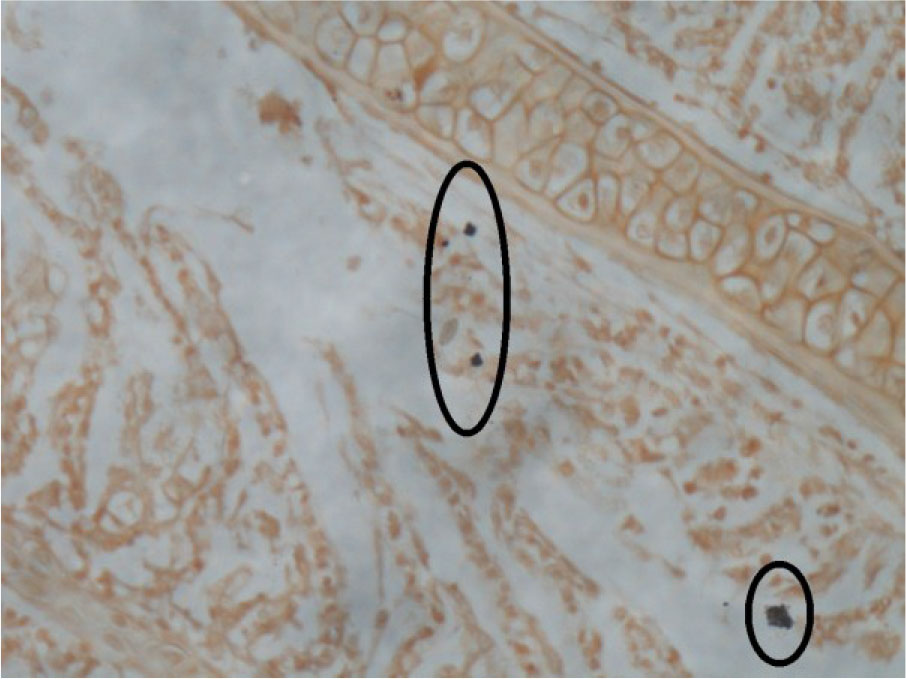
Fig. 8.
Confirmation of CEV genetic material in gills
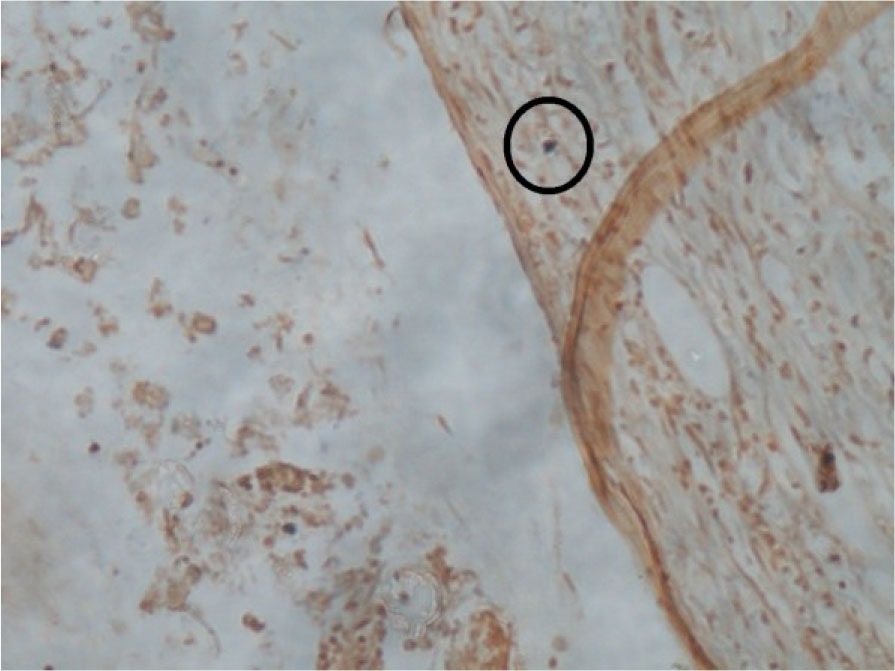
Fig. 9.
Confirmation of CEV genetic material in skin
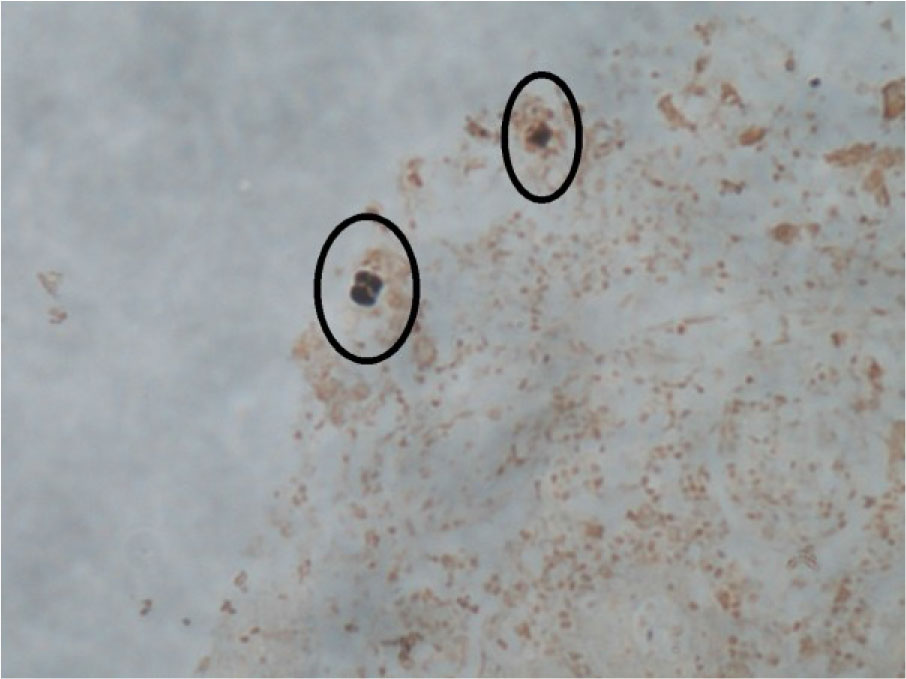
Fig. 10.
Confirmation of CEV genetic material in kidney
Table 7.
List of positive samples in carp obtained from kidney, spleen, gills and skin using in situ hybridisation
| Sample collection site | Code | Kidney | Spleen | Gills | Skin |
|---|---|---|---|---|---|
| GR 2 | DC1 | − | − | + | + |
| GR 2 | DC2 | + | − | + | + |
| GR 2 | DC4 | − | − | + | − |
| GR 2 | DC7 | + | − | + | − |
| GR 2 | DC8 | + | − | + | − |
| GR 2 | DC9 | + | − | + | − |
| GR 9 | 9SK | + | − | + | + |
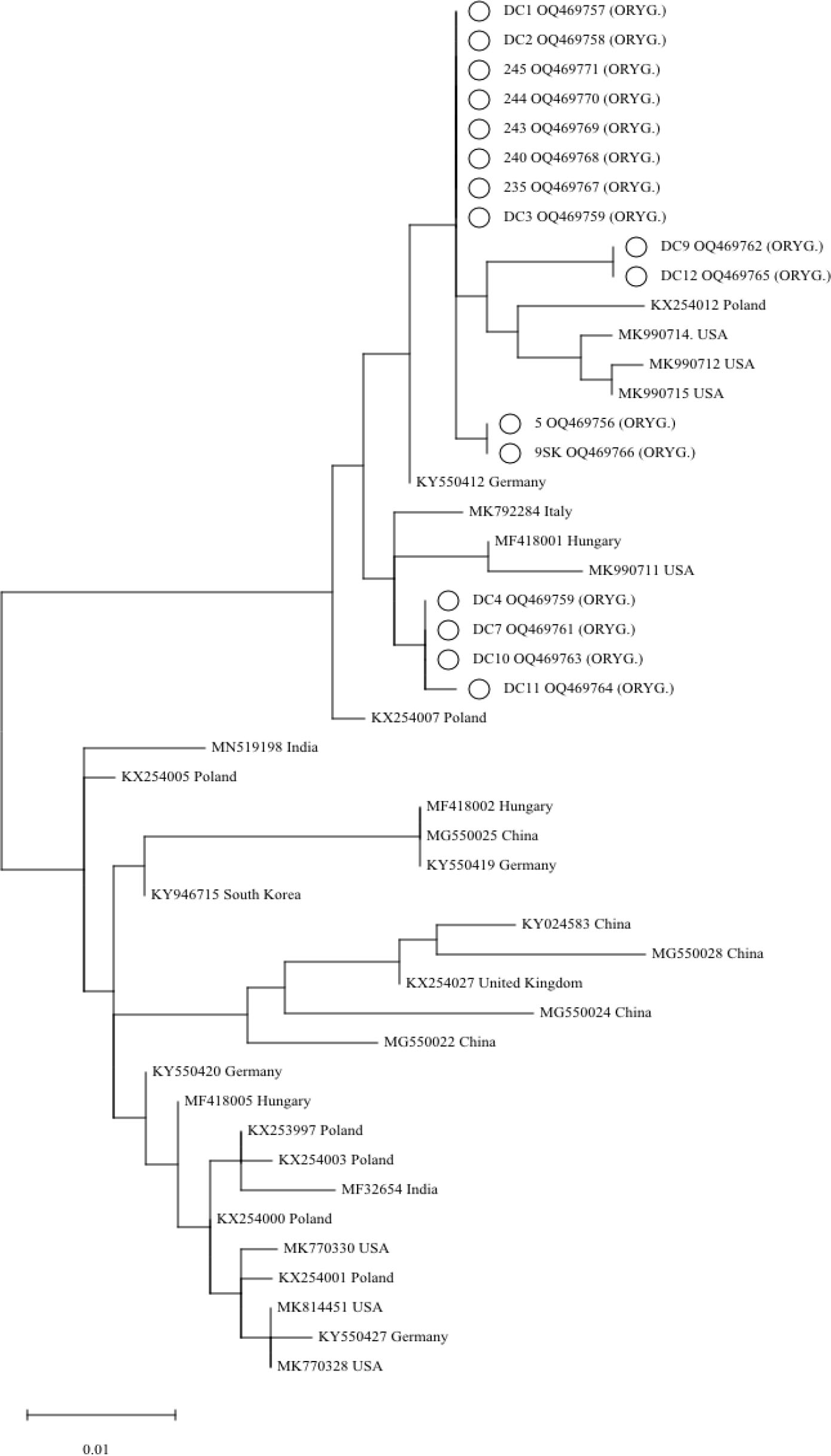
Fig. 11.
Maximum-likelihood tree constructed using the Tamura–Nei (TN93) model for the gene P4a sequences of carp oedema virus obtained from GenBank and the authors’ sequences (designated by “ORYG.”) with accession numbers OQ469756–OQ469771. Scale – substitution frequency