
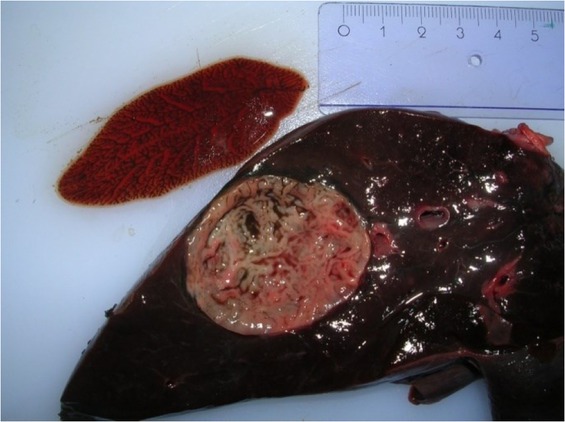
Fig. 1
Fascioloides magna isolated from a pseudocyst in the liver parenchyma of an infected red deer
Table 1
Prevalence and intensity of infection of Fascioloides magna in the livers of red deer from the Lower Silesian Wilderness during the three hunting seasons of the study
| Year | Number of examined red deer | Number of infected red deer | Prevalence (CI 95%) | Intensity |
|---|---|---|---|---|
| 2014 | 30 | 2 | 6.7 (1.8–21.3) | 2, 9 |
| 2016 | 34 | 9 | 26.5 (14.6–43.1) | 2–19 a |
| 2017 | 35 | 10 | 28.6 (16.3–45.1) | 9, 3–24 b |
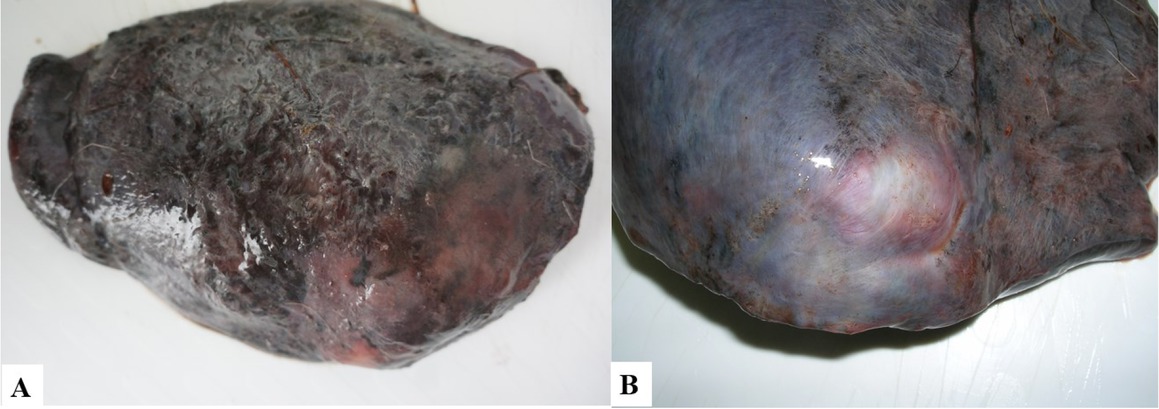
Fig. 2
A – Surface of infected red deer liver covered with fibrin; B – A pseudocyst visible through the liver capsule
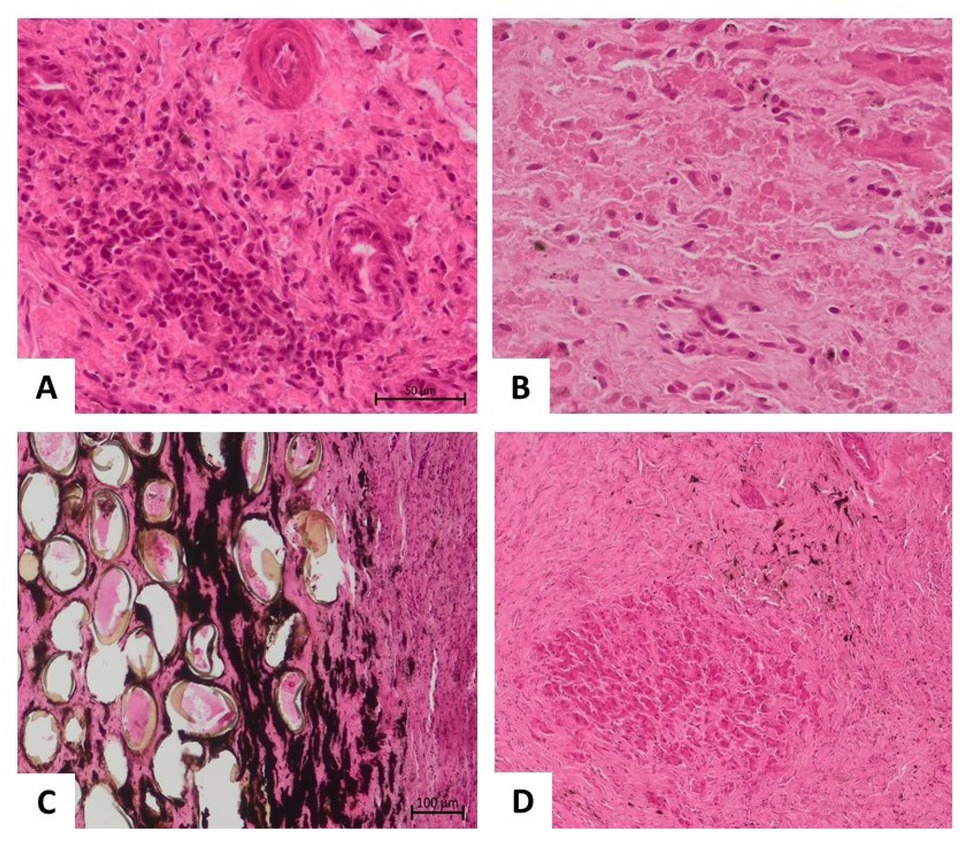
Fig. 3
Histopathological picture of the liver parenchyma in the course of trematode infection. A – Focus of lymphoplasmacytic inflammatory infiltrates in the liver parenchyma; B – Coagulative necrosis of individual hepatocytes mixed with inflammatory cells; C – Oval structures with an opaque sheath embedded in the liver parenchyma suggestive of parasite eggs; D – Extensive areas of fibrosis of the liver parenchyma with a central focus of the necrotic area
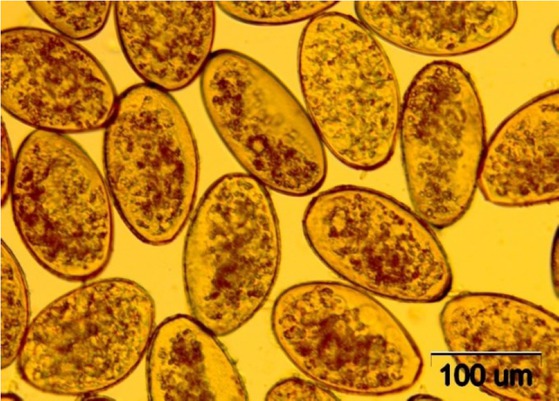
Fig. 4
Eggs of Fascioloides magna isolated from the liver of an infected red deer
Table 2
Prevalence and number of Fascioloides magna eggs per gram of faeces (EPG) in roe deer, red deer and fallow deer in 2015 and 2017
| 2015 | 2017 | P value | |
|---|---|---|---|
| Roe deer | |||
| n = 35 | n = 17 | ||
| Prevalence a | 16 (45.7; 30.5–61.8) | 5 (29.4; 13.3–53.1) | 0.256 |
| FEC (EPG) b | 18, 4–35 (1–84) | 2, 1–6 (1–83) | 0.160 |
| Red deer | |||
| n = 61 | n = 12 | ||
| Prevalence a | 32 (52.5; 40.2–64.5) | 7 (58.3; 32.0–80.7) | 0.709 |
| FEC (EPG) b | 25, 11–43 (1–97) | 31, 11–219 (3–395) | 0.419 |
| Fallow deer | |||
| n = 33 | n = 12 | ||
| Prevalence a | 16 (48.5; 32.5–64.8) | 7 (58.3; 32.0–80.7) | 0.558 |
| FEC (EPG) b | 12, 5–26 (1–76) | 33, 14–57 (11–63) | 0.181 |