
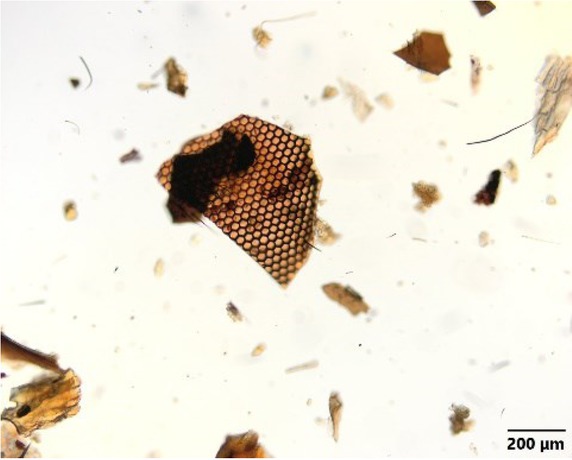
Fig. 1
Fragment of Hermetia illucens cuticula with visible honeycomb-like structure
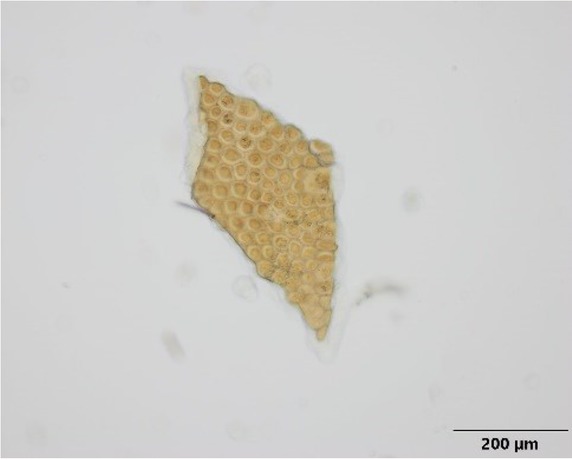
Fig. 2
Typical fragment of Hermetia illucens cuticula with honeycomb-like structure
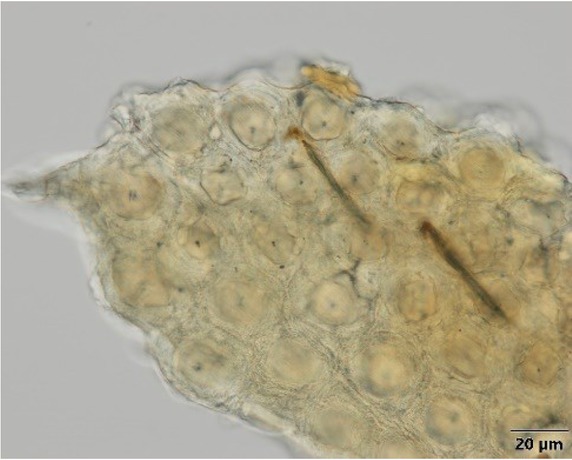
Fig. 3
Fragment of Hermetia illucens cuticula with visible dark dots in the centre of cells in the honeycomb-like structure
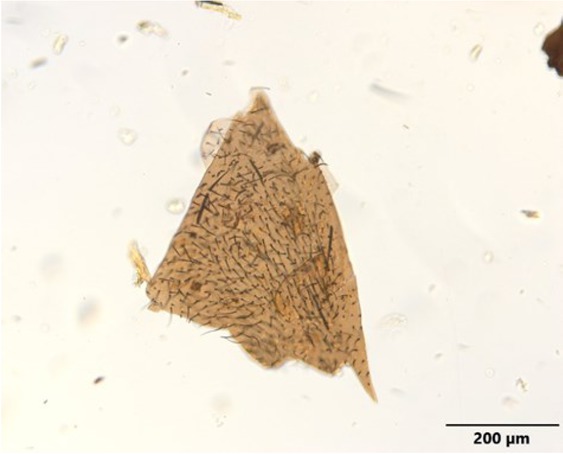
Fig. 4
Fragment of Hermetia illucens cuticula with characteristic bristles
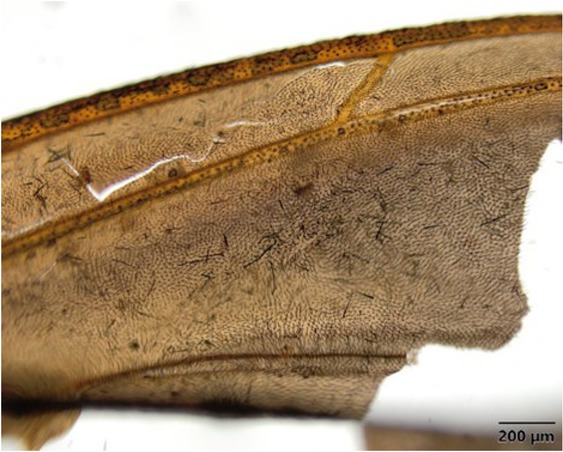
Fig. 5
Fragment of Hermetia illucens wing with characteristic bristles
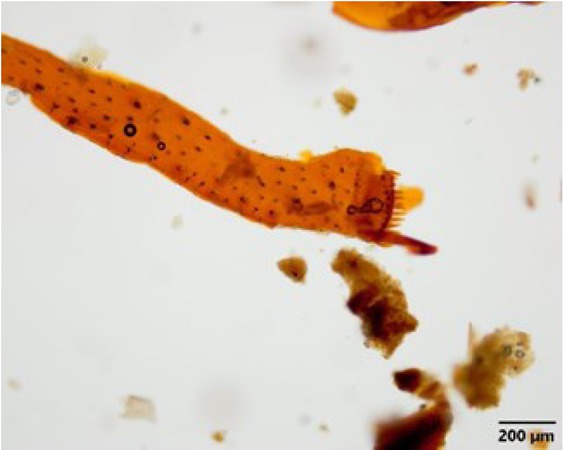
Fig. 6
Fragment of Tenebrio molitor cuticula with characteristic black dots
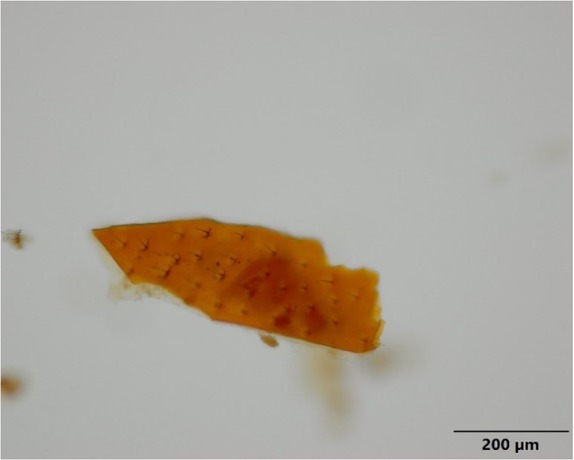
Fig. 7
Fragment of Tenebrio molitor cuticula with black dots and short, dark bristles
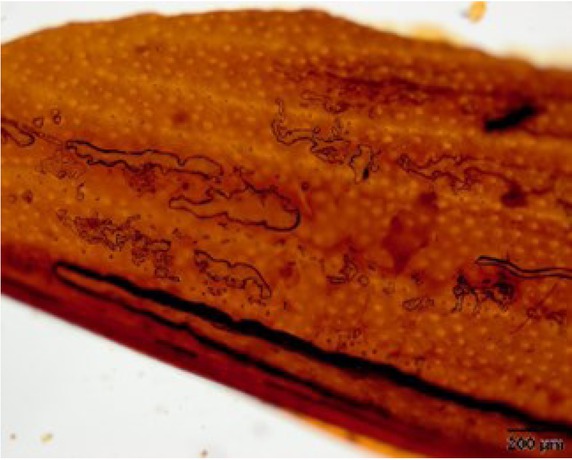
Fig. 8
Fragment of Tenebrio molitor cuticula with irregular light spots
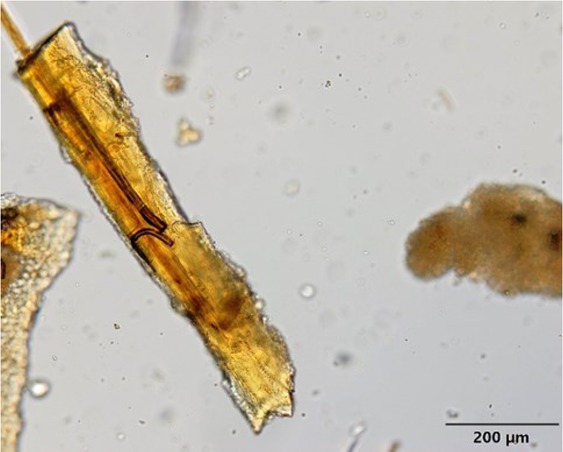
Fig. 9
Fragments of muscles with visible tracheoles
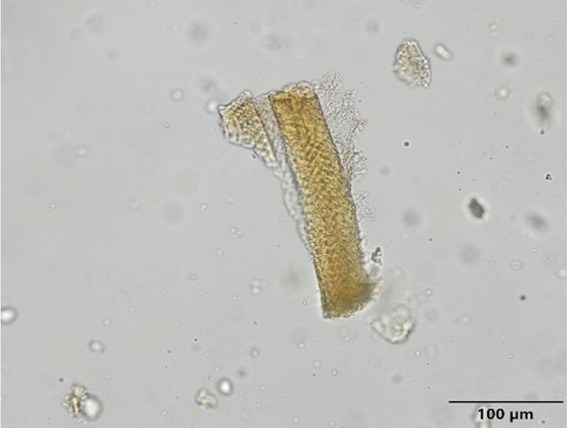
Fig. 10
Fragments of muscle with zigzag striation
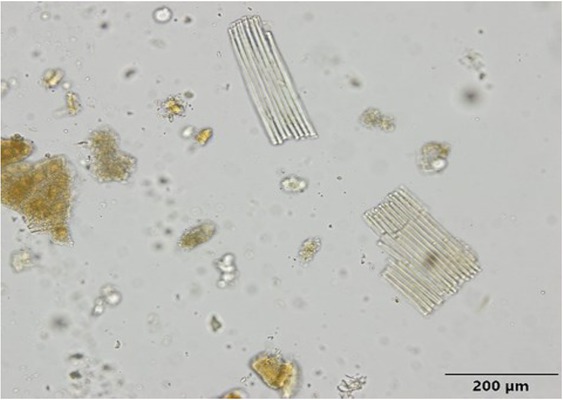
Fig. 11
Fragments of a tracheole with circumferential thickening
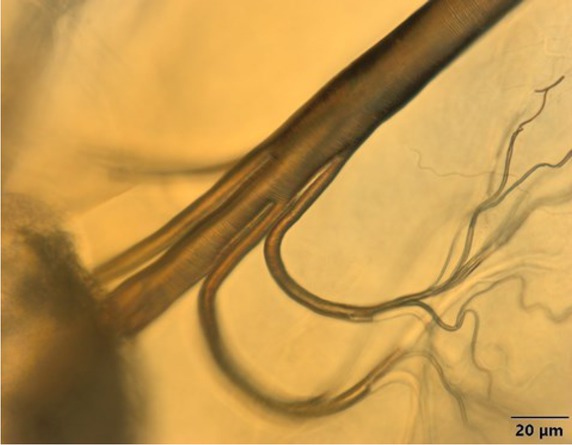
Fig. 12
Tracheoles with circumferential thickening of the cuticle inside
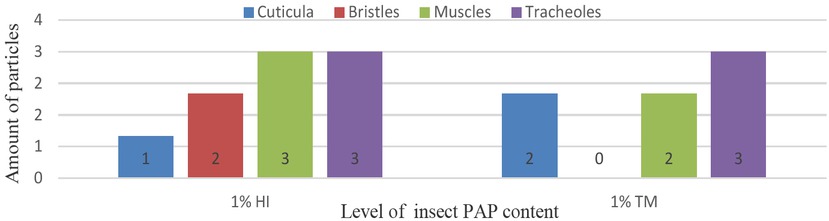
Fig. 13
Comparison of the mean numbers of insect particles of Hermetia illucens (HI) and Tenebrio molitor (TM) in the samples of poultry feed spiked with 1% of insect processed animal protein (PAP) content
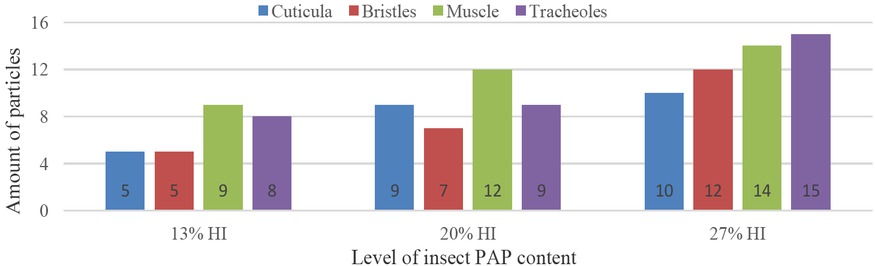
Fig. 14
Correlation of the mean numbers of Hermetia illucens (HI) particles per slide with the level of insect processed animal protein (PAP) content in poultry feed
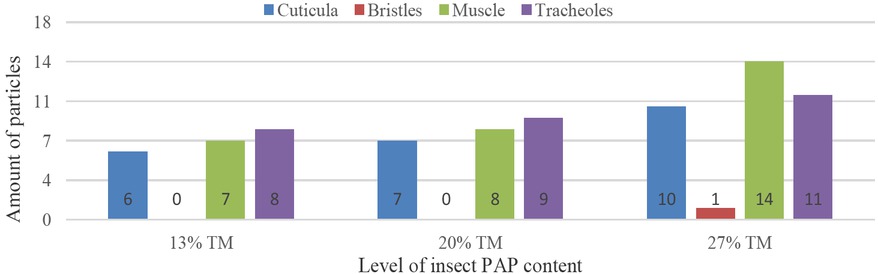
Fig. 15
Correlation of the mean numbers of Tenebrio molitor (TM) particles per slide with the level of insect processed animal protein (PAP) content in poultry feed