
Table 1
Number of samples used in this study
| Swabs | Tissue | |||||
|---|---|---|---|---|---|---|
| 2015 | 67 | 66 | 1 | 11 (16.42) | 10 | 3 |
| 2016 | 17 | 10 | 7 | 6 (35.29) | 5 | 5 |
| 2017 | 14 | 14 | - | 0 | 0 | 0 |
| 2018 | 10 | 8 | 2 | 6 (60) | 6 | 2 |
| 2019 | 20 | 17 | 3 | 14 (70) | 13 | 3 |
| 2020 | 5 | 3 | 2 | 4 (80) | 4 | 0 |
| Total | 133 | 118 | 15 | 41 (30.83) | 13 |
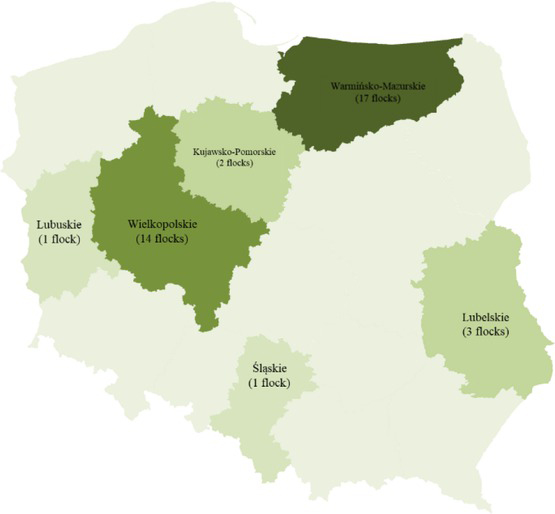
Fig. 1
Map of Poland showing the number of positive cases (n = 38) of ORT per province in turkey flocks between 2015 and 2020
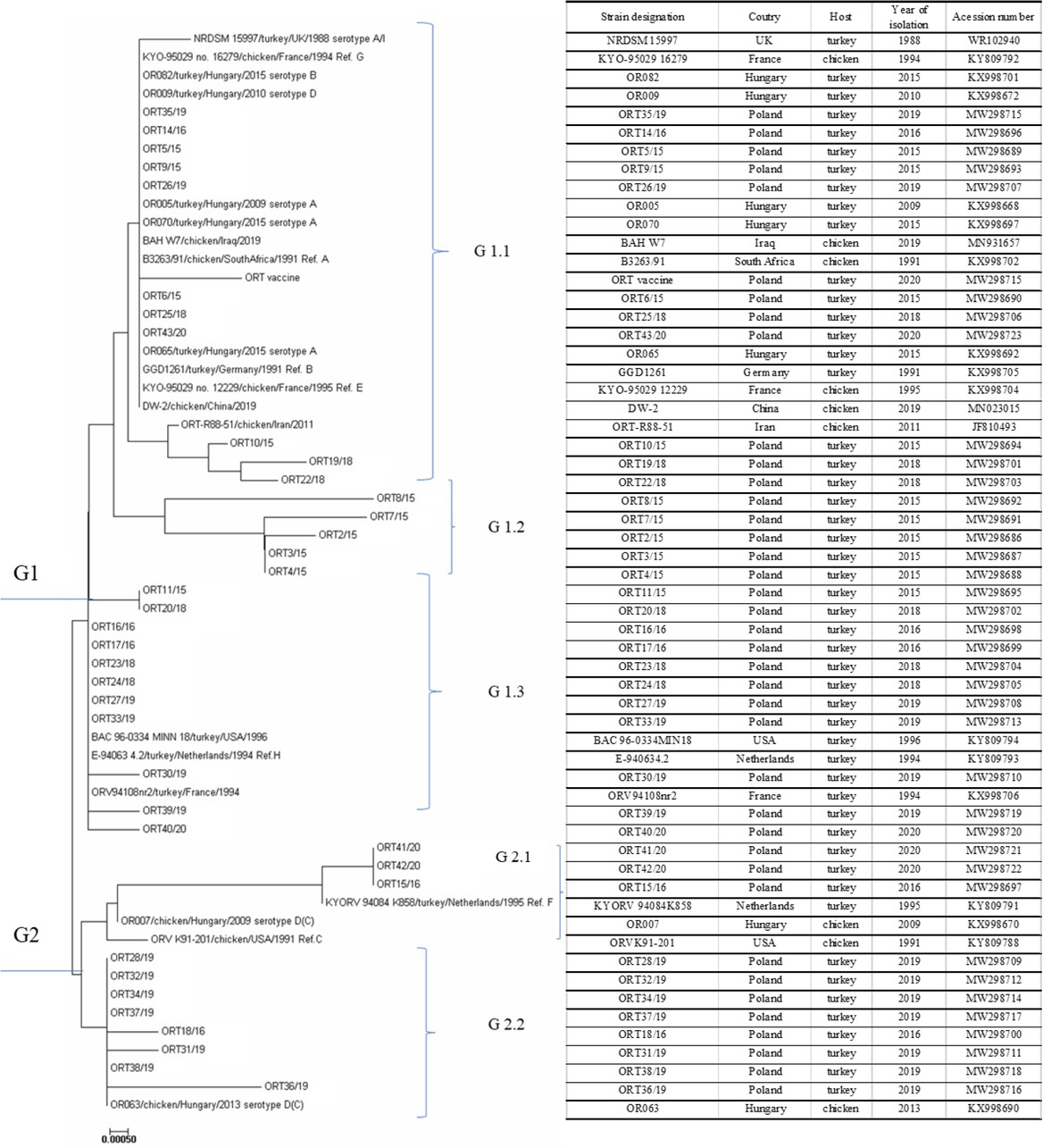
Fig. 2
Phylogenetic tree showing the relationship of O. rhinotracheale sequences from GenBank (n = 20), sequences used in this study (n = 38) and a sequence of the commercial Ornithobacterium rhinotracheale (ORT) vaccine strain in the Ornitin product from Abic Polska, based on the neighbour-joining analysis of their 16S rRNA gene sequences
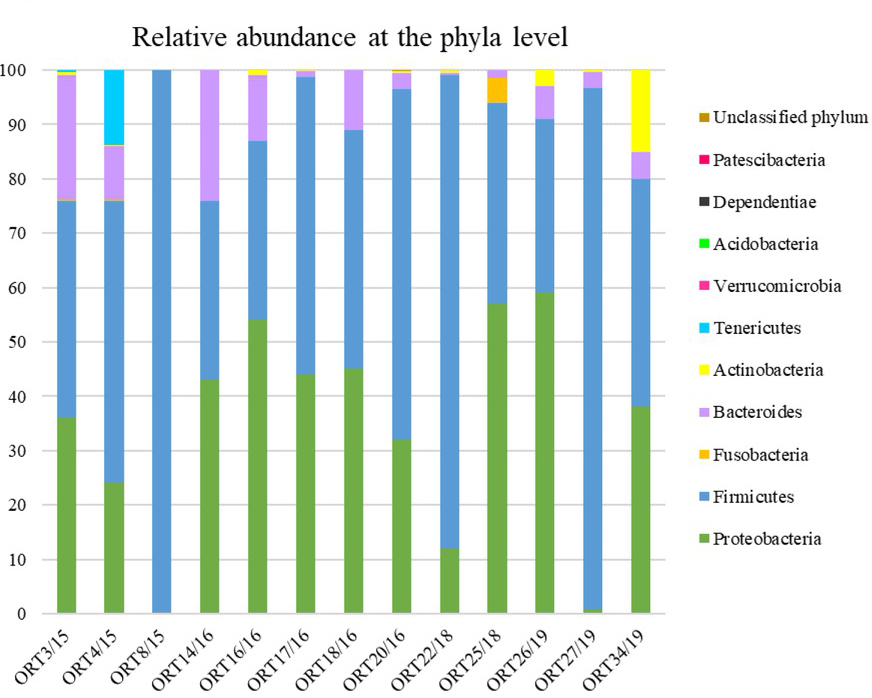
Fig. 3
Relative abundance of all organisational taxonomic units at the phylum level
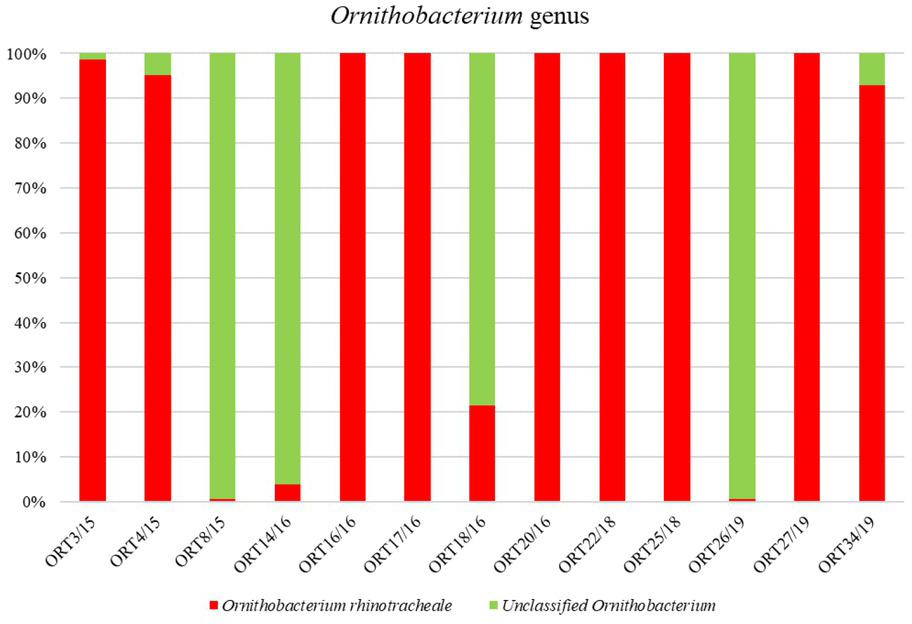
Fig. 4
Relative abundance in the Ornithobacterium genus