
Table 1
Primary and secondary antibodies used for Western blotting
| Antibody | Dilution | Catalogue number | |
|---|---|---|---|
| Beclin1 | 1:1,000 | 11306-1-AP | |
| LC3 | 1:1,000 | 14600-1-AP | |
| BDNF | 1:1,000 | 28205-1-AP | |
| FNDC5 | 1:1,000 | 23995-1-AP | |
| p-p65 | 1:1,000 | 19771-1-AP | |
| p65 | 1:2,000 | 10745-1-AP | |
| Primary | p-p38 | 1:1,000 | 19771-1-AP |
| p38 | 1:1,000 | 14064-1-AP | |
| IκB-α | 1:1,000 | 10268-1-AP | |
| P-ERK1/2 | 1:1,000 | 9101 | |
| ERK1/2 | 1:1,000 | 4695S | |
| ERRα | 1:1,000 | 13826 | |
| Tubulin | 1:15,000 | 11224-1-AP | |
| β-actin | 1:15,000 | 60008-1-lg | |
| HRP-conjugated Affinipure Goat Anti-Mouse IgG (H+L) | 1:8,000 | SA00001-1 | |
| Secondary | HRP-conjugated Affinipure Goat Anti-Rabbit IgG (H+L) | 1:8,000 | SA00001-2 |
[i] LC3 – light chain 3; BDNF – brain-derived neurotrophic factor; FNDC5 – fibronectin type III domain containing protein 5; IκB-α – inhibitor of nuclear factor of kappa light polypeptide gene enhancer in B-cells, alpha; P-ERK1/2 – phosphor-ERK1/2; ERK1/2 – extracellular signal–regulated kinase 1/2; ERRα – oestrogen-related receptor alpha; HRP – horseradish peroxidase
Table 2
Primers used for protein amplification
| Protein | Forward primer | Reverse primer |
|---|---|---|
| IL-4 | 5ʹ-GGTCTCAACCCCCAGCTAGT-3ʹ | 5ʹ-GCCGATGATCTCTCTCAAGTGAT-3ʹ |
| IL-10 | 5ʹ-GCTCTTACTGACTGGCATGAG-3′ | 5′-CGCAGCTCTAGGAGCAT GTG-3′ |
| IL-6 | 5ʹ-CCGGAGAGGAGACTTCACAG-3′ | 5′-GGAAAT TGGGGTAGGAAGGA-3′ |
| TNF-α | 5ʹ-TACTGAACTTCGGGGTGAT TGGTCC-3ʹ | 5ʹ-CAGCCTTGTCCCTTGAAGAGAAC-3ʹ |
| P65 | 5ʹ-GTATTGCTG TGCCTACCCGAAAC-3ʹ | 5ʹ-GTTTGAGATCTGCCCTGATGGTAA-3ʹ |
| P62 | 5'-GTTATGGCGTCGTTCACGGT-3′ | 5′-TCACAATGGTGGAGGGTGC-3′ |
| HIF-1 α | 5ʹ-GATGGGTTATGAGCCGGAAGA-3ʹ | 5ʹ-CTGTGGCTGGGAGTTCTTC G-3ʹ |
| β-actin | 5ʹ-CGTTGACATCCGTAAAGACC-3′ | 5′-AACAGTCCGC CTAGAAGCAC-3′ |
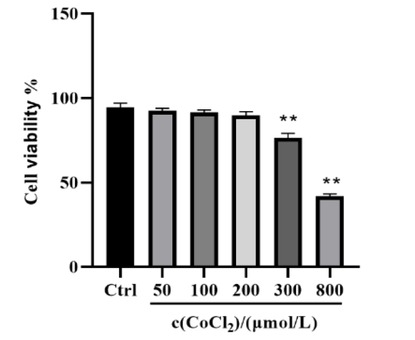
Fig. 1
The effects of CoCl2 on BV2 cell activity. Values represent the mean ± standard deviation for three independent experiments. **P < 0.01
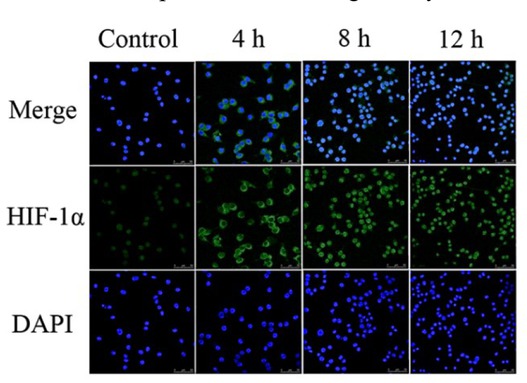
Fig. 2
The effects of different CoCl2 treatment times on the expression of hypoxic inducible factors. The nucleus is indicated with blue fluorescence (4′,6-diamidino-2-phenylindole – DAPI) and the hypoxic-inducible factor 1-alpha (HIF-1α) protein is indicated with green fluorescence. Scale bar: 50 μm
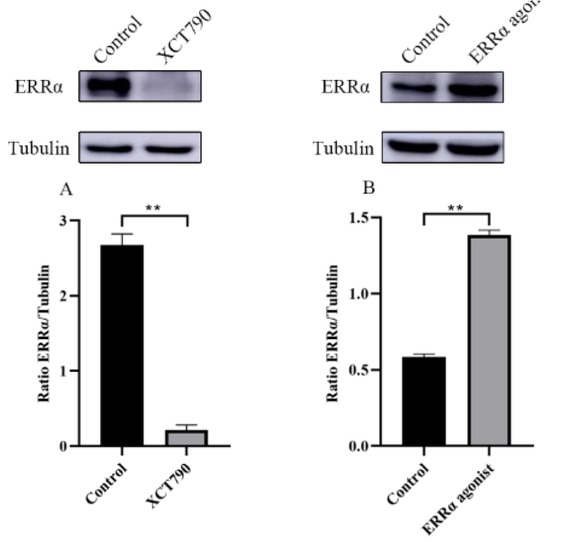
Fig. 3
Expression of ERRα in BV2 cells. A –Expression of ERRα in the control, and XCT790 groups; B –Expression of ERRα in the control and ERRα agonist groups. Values represent the mean ± standard deviation for three independent experiments. **P < 0.01
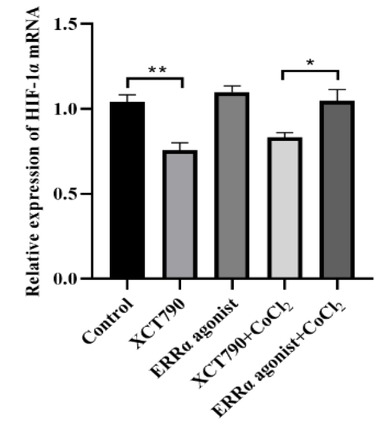
Fig. 4
The changes in hypoxic-inducible factor 1-alpha (HIF-1α) mRNA levels in BV2 cells after corresponding treatments. Values represent the mean ± standard deviation for three independent experiments. *P < 0.05; **P < 0.01
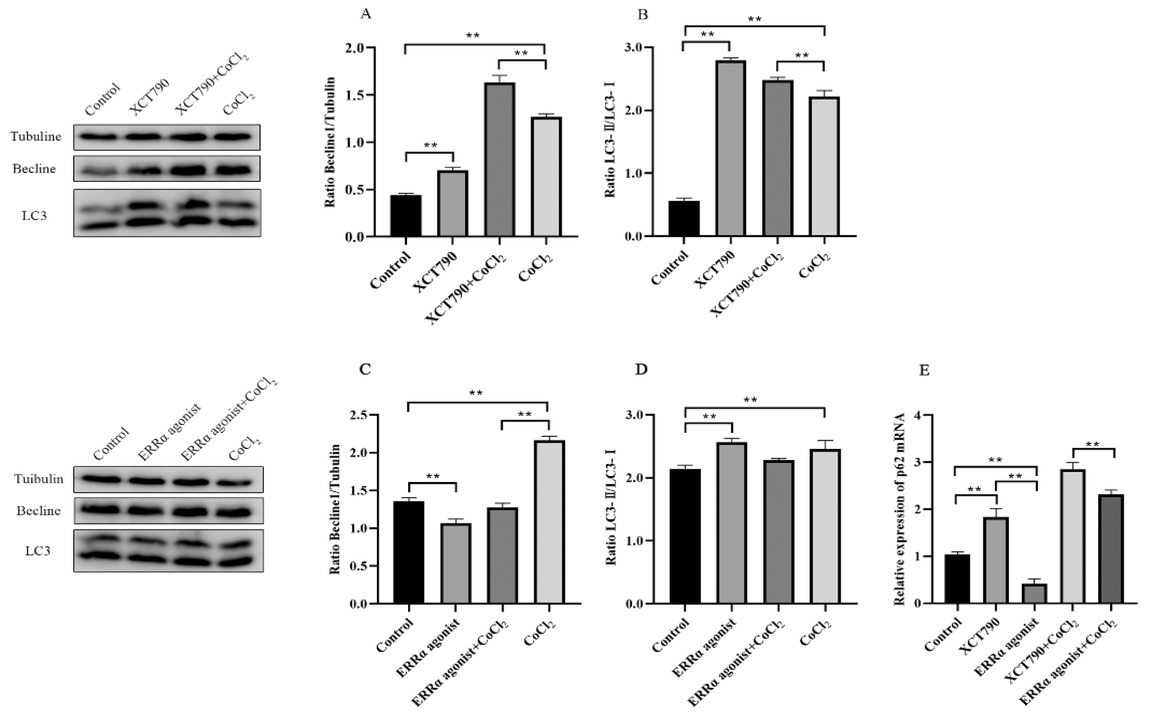
Fig. 5
Expression of Beclin1 and light chain 3 (LC3) in BV2 cells. A – Expression of Beclin1 in the control, XCT790, XCT790+CoCl2 and CoCl2 groups; B – The light chain (LC)3-II/LC3-I ratio in the control, XCT790, XCT790+CoCl2 and CoCl2 groups; C – Expression of Beclin1 in the control, oestrogen-related receptor alpha (ERRα) agonist, ERRα agonist+CoCl2 and CoCl2 groups; D – The LC3-II/LC3-I ratio in the control, ERRα agonist, ERRα agonist+CoCl2 and CoCl2 groups; E – The changes in p62 mRNA levels in BV2 cells after corresponding treatments. Values represent the mean ± standard deviation for three independent experiments. **P < 0.01
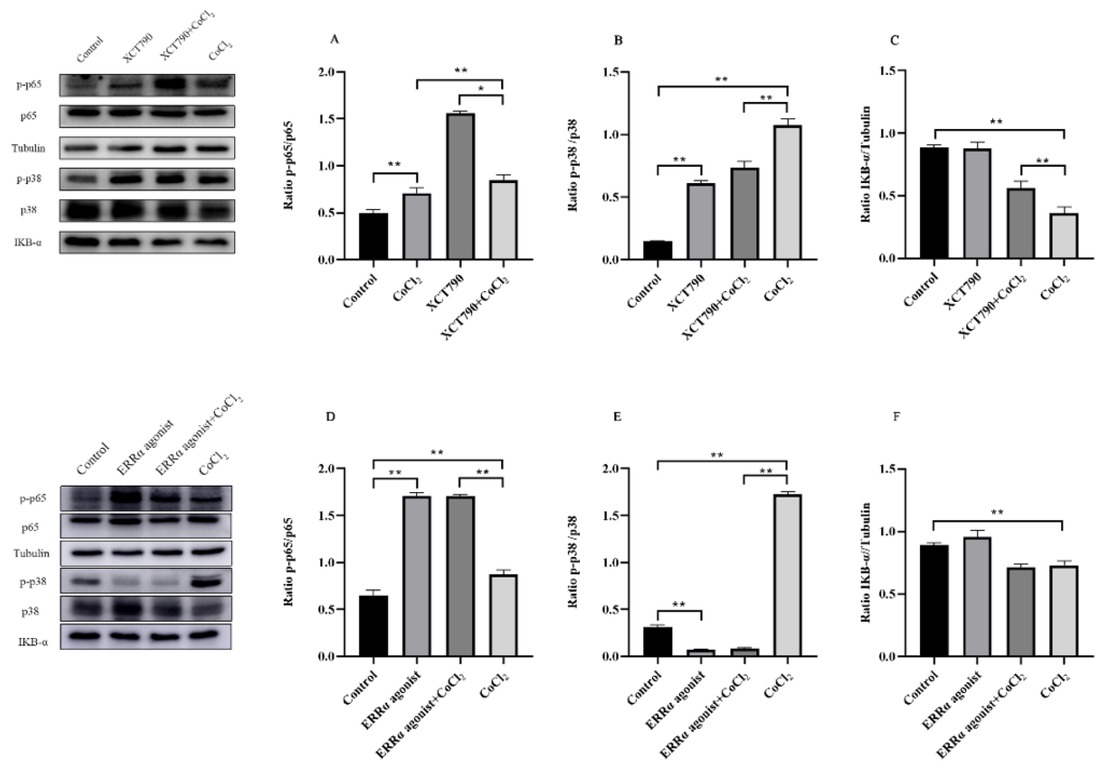
Fig. 6
Expression of p65, p38 and inhibitor of nuclear factor of kappa light polypeptide gene enhancer in B-cells, alpha (IκB-α) in BV2 cells. A – The p-p65/p65 ratio in the control, XCT790, XCT790+CoCl2 and CoCl2 groups; B – The p-p38/p38 ratio in the control, XCT790, XCT790+CoCl2 and CoCl2 groups; C – Expression of IκB-α in the control, XCT790, XCT790+CoCl2 and CoCl2 groups; D – The p-p65/p65 ratio in the control, oestrogen-related receptor alpha (ERRα) agonist, ERRα agonist+CoCl2 and CoCl2 groups; E – The p-p38/p38 ratio in the control, ERRα agonist, ERRα agonist+CoCl2 and CoCl2 groups; F – Expression of IκB-α in the control, ERRα agonist, ERRα agonist+CoCl2 and CoCl2 groups. Values are expressed as means ± standard deviation. *P < 0.05; **P < 0.01
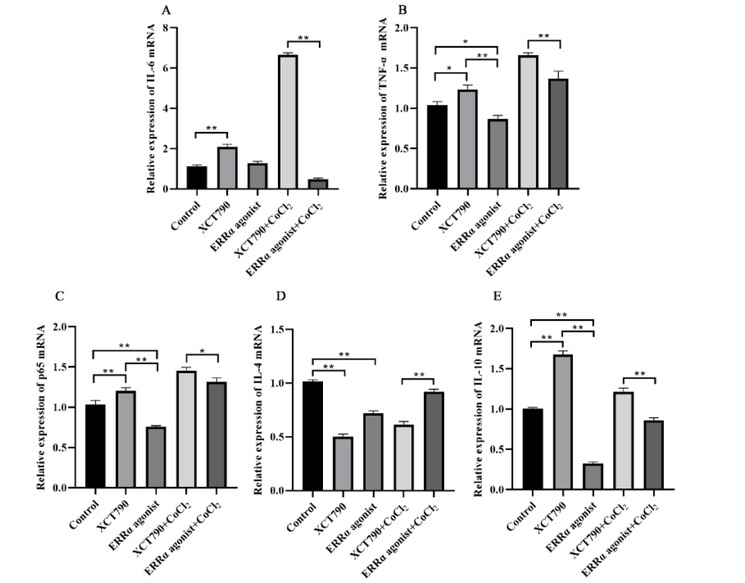
Fig. 7
The mRNA expression in BV2 cells after the corresponding treatments. A– Interleukin 6 (IL-6) mRNA; B – Tumour necrosis factor alpha (TNF-α) mRNA; C – p65 mRNA; D – Interleukin 4 (IL-4) mRNA; E – Interleukin 10 (IL-10) mRNA. Values represent the mean ± standard deviation for three independent experiments. *P < 0.05; **P < 0.01
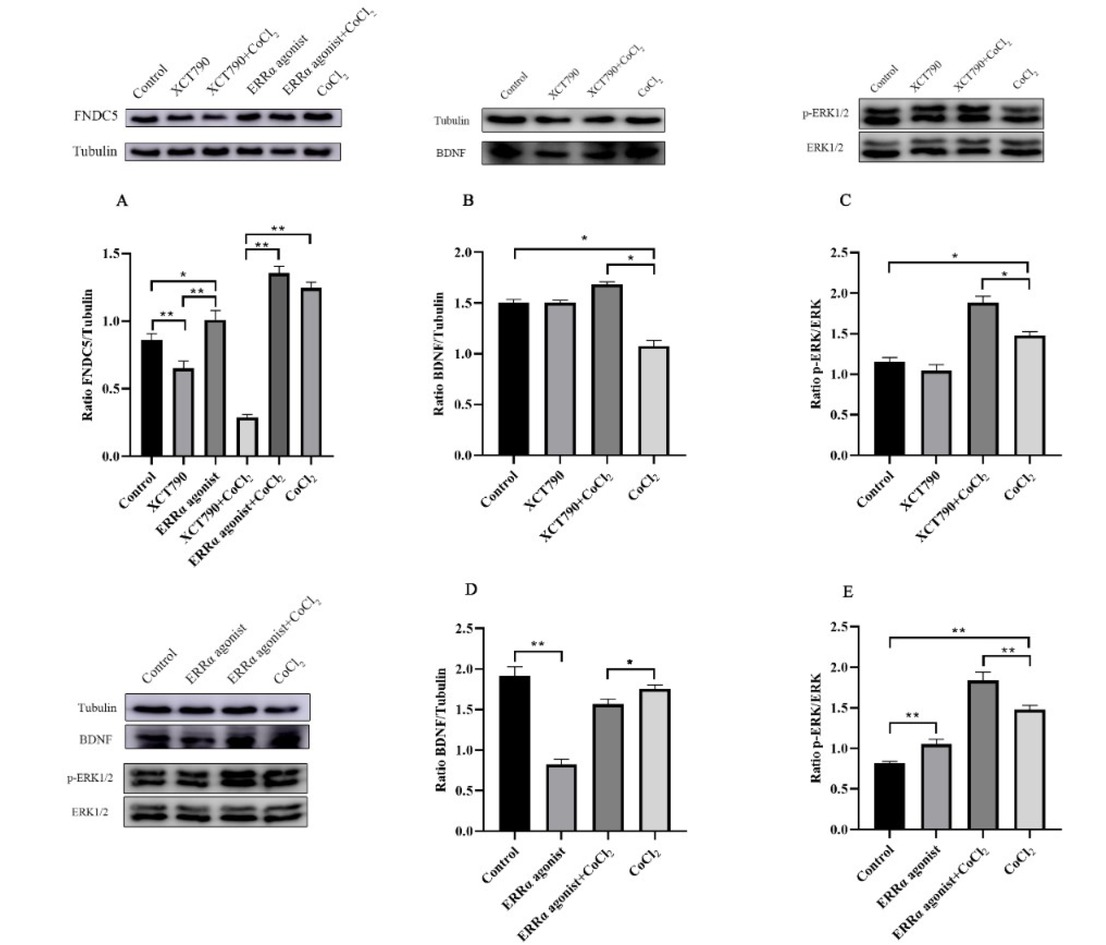
Fig. 8
Expression of fibronectin type III domain containing protein 5 (FNDC5), brain-derived neurotrophic factor (BDNF) and extracellular signal-regulated kinase 1/2 (ERK1/2) in BV2 cells. A– Expression of FNDC5 in the control, XCT790, ERRα) agonist, XCT790+CoCl2, ERRα agonist+CoCl2 and CoCl2 groups; B– Expression of BDNF in the control, XCT790, XCT790+CoCl2 and CoCl2 groups; C– The p-ERK/ERK ratio in the control, XCT790, XCT790+CoCl2 and CoCl2 groups; D– Expression of BDNF in the control, ERRα agonist, ERRα agonist+CoCl2 and CoCl2 groups; E– The p-ERK/ERK ratio in the control, ERRα agonist, ERRα agonist+CoCl2 and CoCl2 groups. Values represent the mean ± standard deviation for three independent experiments. *P < 0.05; **P < 0.01
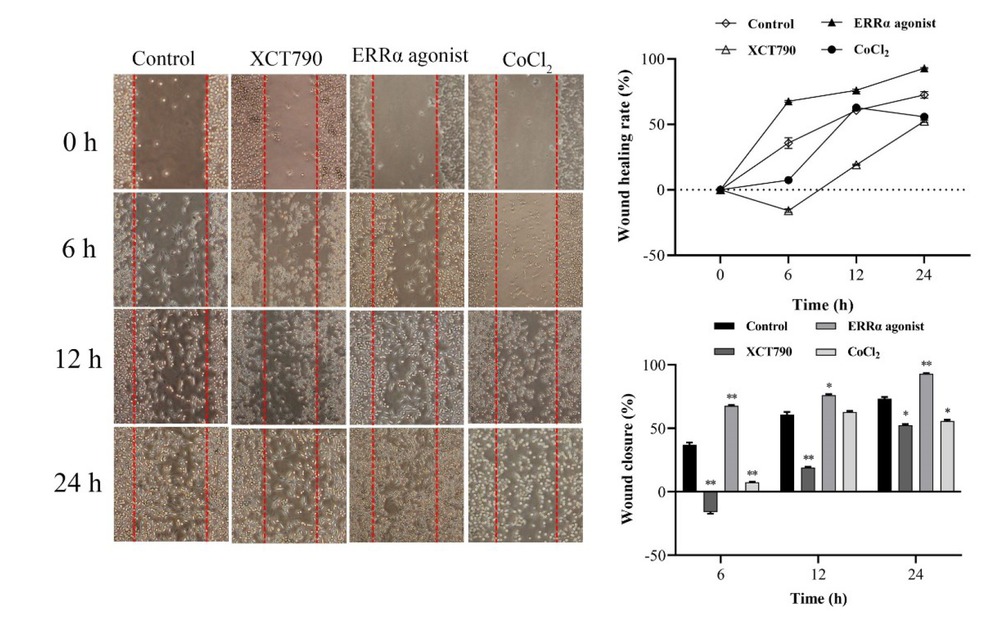
Fig. 9
Wound-healing assay of BV2 cells (400×). Values represent the mean ± standard deviation for three independent experiments. ERRα – oestrogen-related receptor alpha; *P < 0.05; **P < 0.01