Have a personal or library account? Click to login
Glibenclamide ameliorates the expression of neurotrophic factors in sevoflurane anaesthesia-induced oxidative stress and cognitive impairment in hippocampal neurons of old rats Cover

Glibenclamide ameliorates the expression of neurotrophic factors in sevoflurane anaesthesia-induced oxidative stress and cognitive impairment in hippocampal neurons of old rats

By: Yan Ma and  Xi Chen  
Open Access
|Dec 2021

Figures & Tables

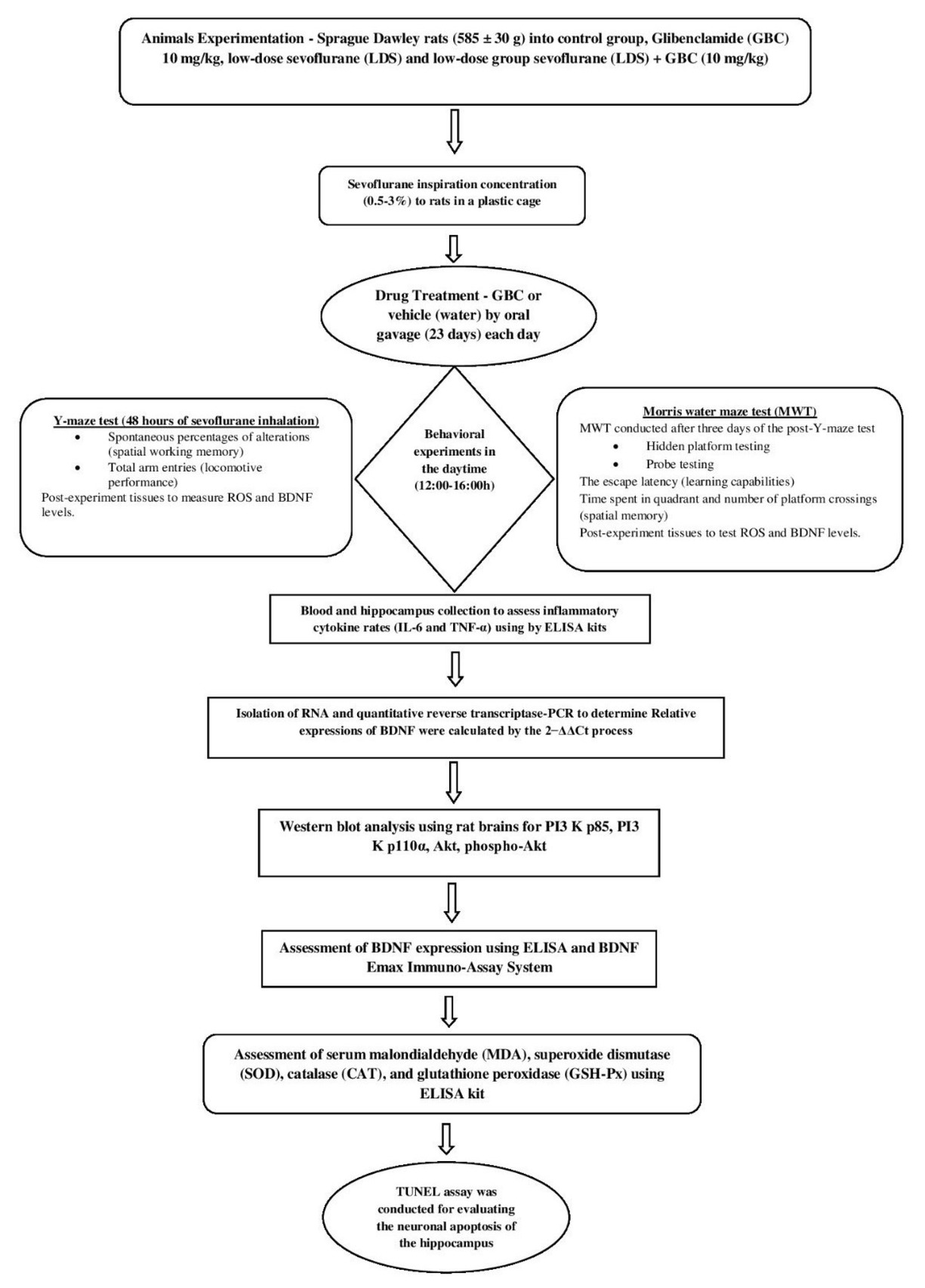
Fig. 1

Experimental protocol
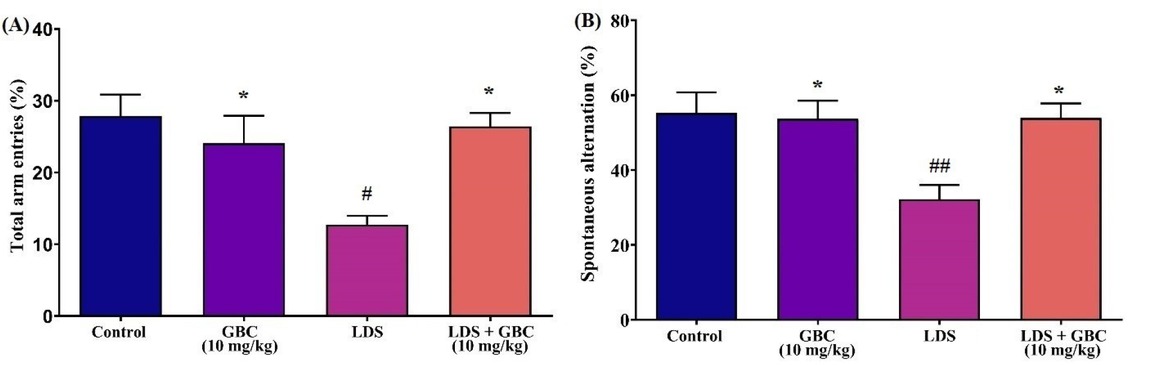

Fig. 2

Effects of glibenclamide on memory in rats with sevoflurane-induced cognitive impairment as demonstrated by the Y maze test. Values are presented as (A) mean ± SEM (n = 15) of total arm entries and (B) percentage of spontaneous alternations: # – p < 0.05 and ## – p < 0.01 for significant difference versus the control group; * – p < 0.05 for significant difference versus the low-dose sevoflurane group; GBC – glibenclamide; LDS – low-dose sevoflurane
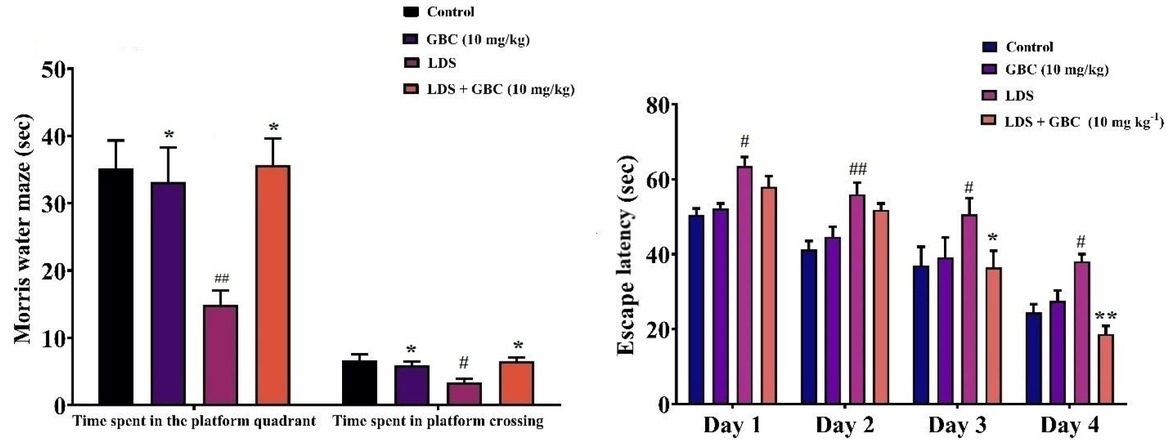

Fig. 3

Effects of glibenclamide treatment on learning and memory in rats with sevoflurane-induced cognitive impairment in the Morris water maze test. Values are presented as mean ± SEM (n = 15) escape latency, time spent in the platform quadrant or the platform crossings. # – p < 0.05 and ## – p < 0.01 for significant difference versus the control group; * – p < 0.05 and ** - p < 0.01 for significant difference versus the low-dose sevoflurane group
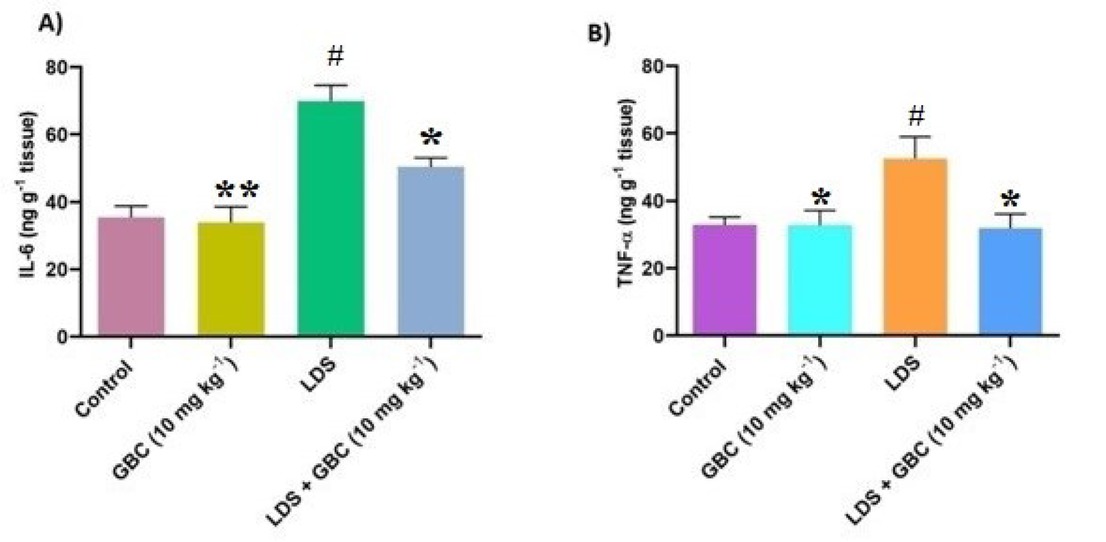

Fig. 4

Effects of glibenclamide treatment on interleukin 6 (IL-6) (A) and tumour necrosis factor alpha (TNF-α) (B) levels in the hippocampus of rats with sevoflurane-induced cognitive impairment. Values are presented as mean ± SEM (n = 15) of the concentrations. # –p < 0.05 for significant difference versus the control group; * – p < 0.05 and ** - p < 0.01 for significant difference versus the low-dose sevoflurane group; GBC – glibenclamide; LDS – low-dose sevoflurane
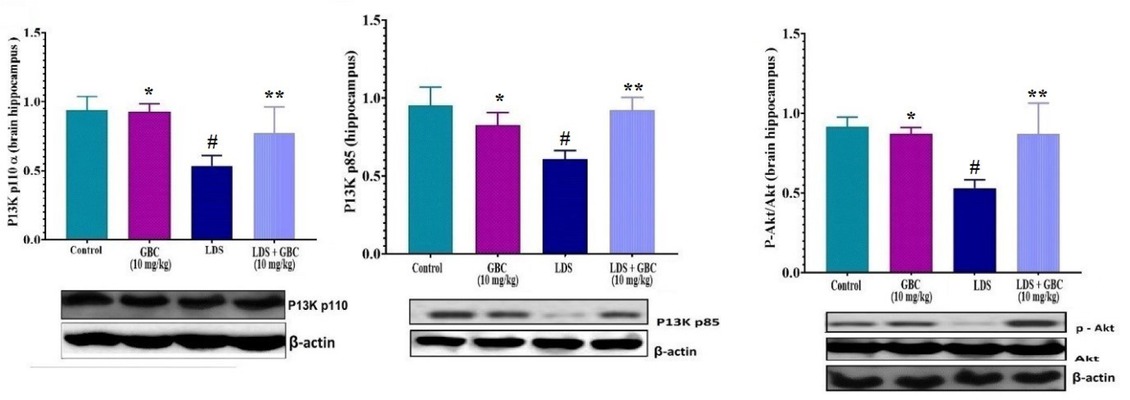
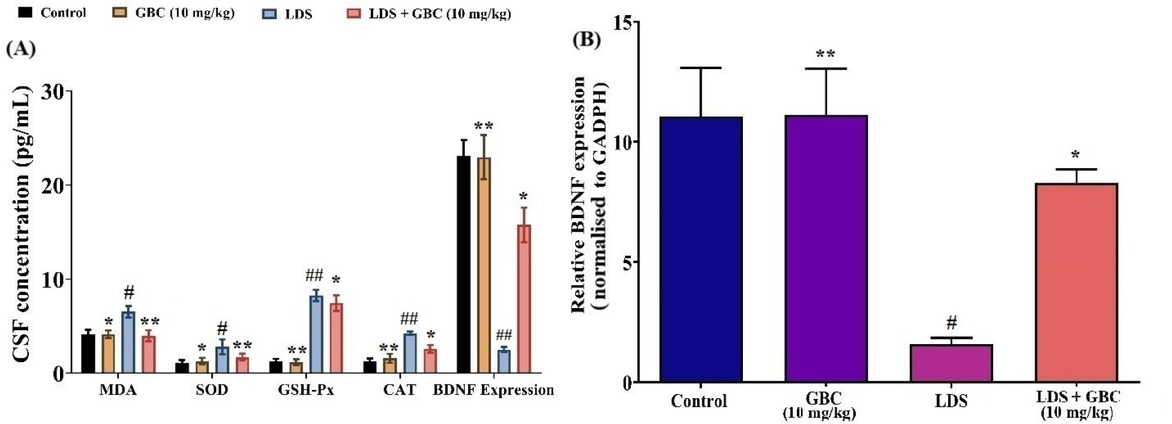
Fig. 5

Effects of glibenclamide treatment on attenuation of phosphoinositide 3-kinase (PI3K)/Akt signalling pathways in sevoflurane-induced cognitive impairment in the hippocampal regions of aged rats. Values are presented as mean ± SEM (n = 15) of the concentrations. # – p < 0.05 for significant difference versus the control group; * – p < 0.05 and ** - p < 0.01 for significant difference versus the low-dose sevoflurane group; GBC – glibenclamide; LDS – low-dose sevoflurane
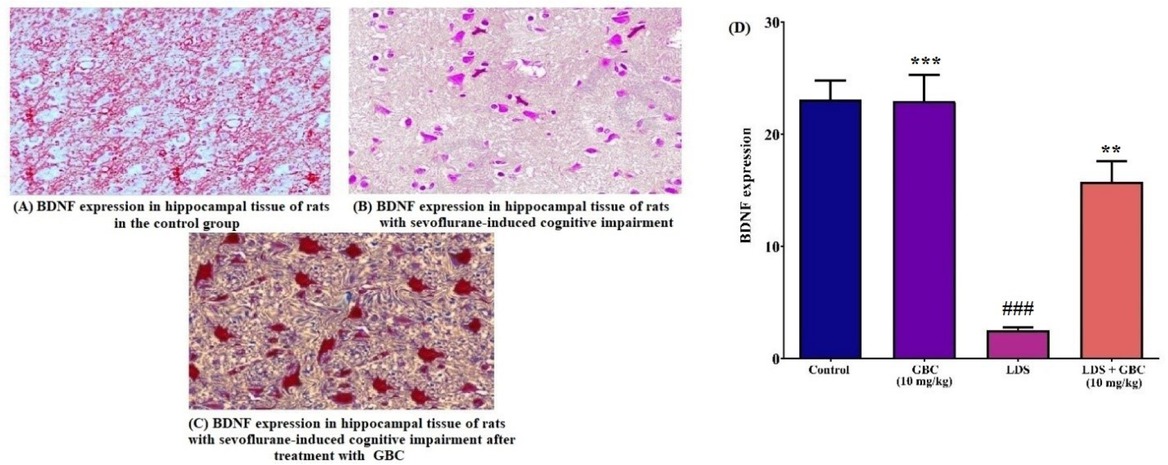

Fig. 6

Effects of glibenclamide treatment on BDNF expression in sevoflurane-induced cognitive impairment in rats. (A) Serum levels of BDNF and indicated oxidative stress markers in rats with or without effects of sevoflurane inhalation; (B) Expression of BDNF mRNA in sevoflurane-induced cognitive impairment in the hippocampal regions of aged rats. Data represent mean ± SEM (n = 15). # – p < 0.05 and ## – p < 0.01 for significant difference versus the control group; * – p < 0.05 and ** - p < 0.01 for significant difference versus the low-dose sevoflurane group; GBC – glibenclamide; LDS – low-dose sevoflurane

Fig. 7

Brain-derived neurotrophic factor (BDNF) expression in sevoflurane-induced cognitive impairment in rats. (A) Expression of BDNF protein in the control group; (B) BDNF expression in sevoflurane-induced cognitive impairment in the hippocampal regions of aged rats; (C) Expression of BDNF protein after treatment with glibenclamide in sevoflurane-induced cognitive impairment in the hippocampal regions of aged rats; (D) Relative quantification of BDNF expression in the control group, GBC-only group, low-dose sevoflurane group without GBC, and low-dose sevoflurane group with GBC (n = 5). Significant differences versus the low-dose sevoflurane group: ### – p < 0.01 for significant difference versus the control group; ** – p < 0.01 and *** - p < 0.001 for significant difference versus the low-dose sevoflurane group; GBC – glibenclamide; LDS – low-dose sevoflurane
Language: English
Page range: 527 - 538
Submitted on: Apr 4, 2021
Accepted on: Nov 19, 2021
Published on: Dec 2, 2021
Published by: National Veterinary Research Institute in Pulawy
In partnership with: Paradigm Publishing Services
Publication frequency: 4 issues per year

© 2021 Yan Ma, Xi Chen, published by National Veterinary Research Institute in Pulawy
This work is licensed under the Creative Commons Attribution-NonCommercial-NoDerivatives 3.0 License.