
Table 1
Results of clinical examination, serum biochemical changes and haematological changes observed in six dogs infected with B. canis during the first visit to the clinic
| Dog No. | Description | Basic serum biochemical changes | Basic haematological changes | Clinical signs |
|---|---|---|---|---|
| I | Border collie, M, 1 y old | ALT 64, AST 206, ALP 153, T. Bil. 1.24, Glu. 97, Creat. 2.1, Urea 204, T. Prot. 63, Alb. 26 | RBC 5.97, Hb 8.76, Ht 0.39, WBC 3.40, Plt 48 | Apathy, anorexia, diarrhoea, dehydration, pale mucosal membranes, normal body temperature, dark brown urine, DD 2 days |
| II | Mixed breed, F, 8 y old | ALT 127, AST 618, ALP 790, T. Bil. 6.25, Glu. 156, Creat. 14.2, Urea 393, T. Prot 54, Alb. 25 | RBC 3.07, Hb 8.53, Ht 0.20, WBC 29.8, Plt 152 | Apathy, anorexia, diarrhoea, vomiting, dehydration, pale and yellow mucosal membranes, normal body temperature, oliguria (yellow urine), DD 3 days |
| III | Mixed breed, M, 4 m old | ALT 46, AST 117, ALP 124, T. Bil. 1,14, Glu. 72, Creat. 3.8, Urea 331, T. Prot. 41, Alb. 20 | RBC 1.54, Hb 2.18, Ht 0.09, WBC 9.14, Plt 7 | Apathy, anorexia, diarrhoea, vomiting, dehydration, pale mucosal membranes, tachycardia, hyperventilation, vocalisation, normal body temperature, oliguria (dark brown urine), DD 1 day |
| IV | St. Bernard, F, 7 y old | ALT 49, AST 273, ALP 119, T. Bil. 0.9, Glu. 195, Creat. 5.1, Urea 264, T. Prot. 58, Alb. 26 | RBC 6.56, Hb 9.56, Ht 0.42, WBC 6.7, Plt 41 | Apathy, anorexia, diarrhoea, epileptic seizures, menace deficit and lack of PLRs in both eyes, tachycardia, hyperventilation, congestion of mucosal membranes, fever (40.2°C), haematuria, DD 2 days |
| V | American Staffordshire terrier, M, 7 y old | ALT 200, AST 103, ALP 1408, T. Bil. 8.7, Glu. 103, Creat. 3.8, Urea 277, T. Prot. 69, Alb. 30, | RBC 4.34, Hb 5.59, Ht 0.30, WBC 11.0, Plt 133 | Apathy, anorexia, vomiting, dehydration, yellow mucosal membranes, fever (39.5°C), oliguria (dark brown urine), DD 3 days |
| VI | Siberian husky, F, 7 m old | ALT 61, AST 116, ALP 198, T. Bil. 1.41, Glu. 105, Creat. 1.0, Urea 39, T. Prot. 55, Alb. 26 | RBC 4.09, Hb 6.16, Ht 0.27, WBC 4.1, Plt 32 | Apathy, anorexia, pale mucosal membranes, fever (40.0°C), dark brown urine, DD 1 day |
[i] M – male; F – female; m – months; y – years; ALT – alanine aminotransferase (reference interval 3–60 U/L); AST – aspartate aminotransferase (reference interval 1–45 U/L); ALP – alkaline phosphatase (reference interval 20–155 U/L); T. Bil. – total bilirubin (reference interval 0.3–0.9 mg/dL); Glu – glucose (reference interval 70–120 mg/dL); Creat. – creatinine (reference interval 0.8–1.7 mg/dL); Urea (reference interval 20–45 mg/dL); T. Prot. – total protein (reference interval 55–75 g/L); Alb. – albumin (reference interval 29–43 g/L); RBC – red blood cells (reference interval 5.5–8.0 T/L); Hb – haemoglobin (reference interval 7.45–11.17 mmol/L); Ht – haematocrit (reference interval 0.37–0.55 L/L); WBC – white blood cells (reference interval 6.0–12.0); Plt – platelets (reference interval 200–580 G/L); DD – duration of the disease (according to the owner of the dog) before the first visit to the clinic; PLRs – pupillary light reflexes
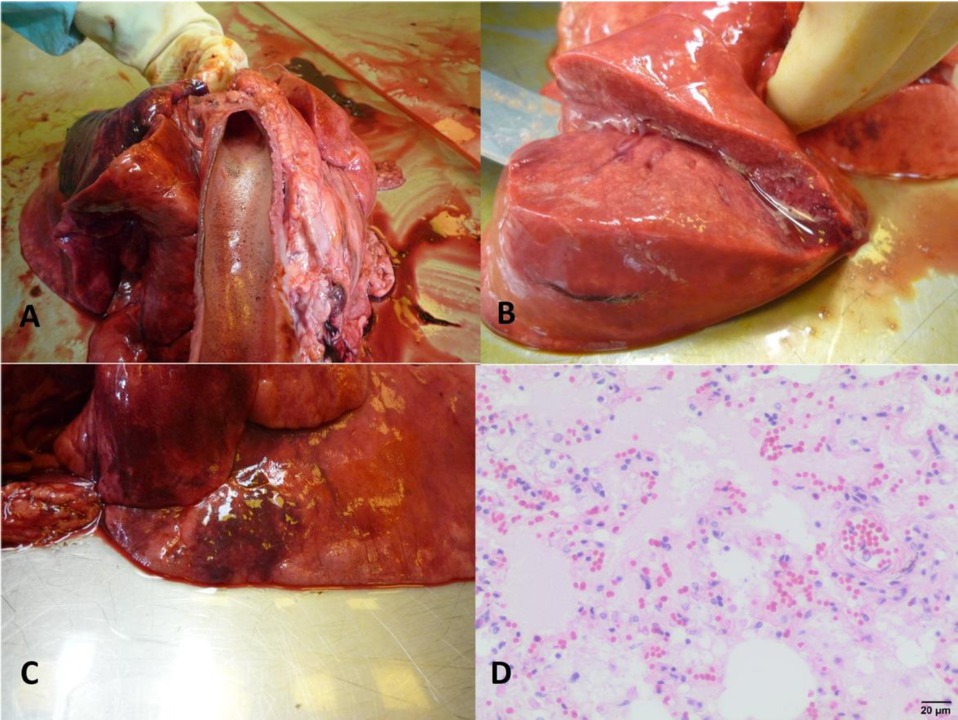
Fig. 1
Pulmonary changes in dogs infected with B. canis
A – Foamy exudate in the trachea of dog No. II; B – Pulmonary oedema in dog No. II; C – Pulmonary congestion and foci of emphysema in dog No. IV; D – Microphotograph of pulmonary oedema in dog No. VI, visible oedema fluid filling alveoli and dilatation of blood vessels (haematoxylin and eosin staining)
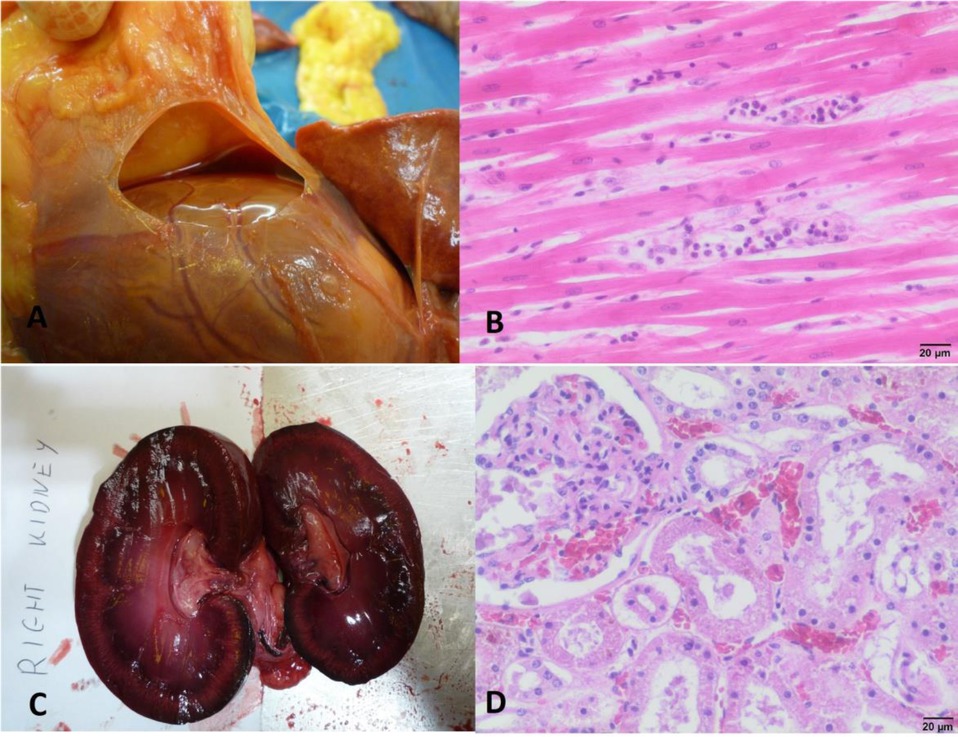
Fig. 2
Cardiac and renal changes in dogs infected with B. canis
A – Hydropericardium observed in dog No. II; B – Necrosis of the myocardium, visible fragmentation of cardiomyocytes and inflammatory infiltration in dog No. VI (haematoxylin and eosin staining); C – Congested right kidney of dog No. IV; D – Congestion of renal cortex and tubular necrosis in dog No. I (haematoxylin and eosin staining)
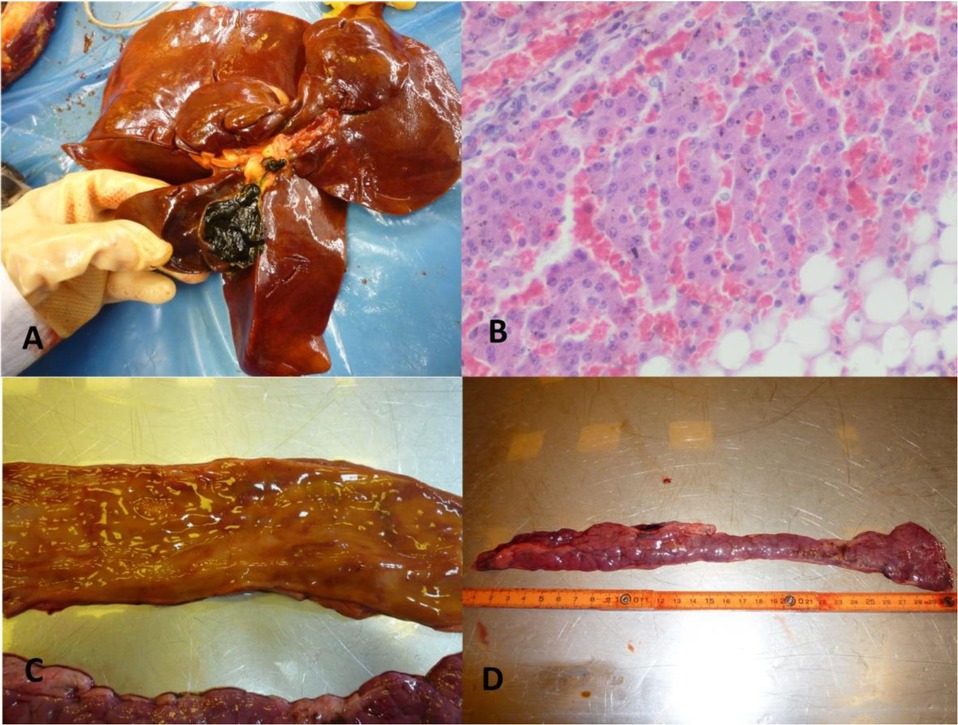
Fig. 3
Changes in the alimentary system in dogs infected with B. canis
A – Congestion and lipid degeneration of the liver with almost solid bile in the gallbladder in dog No. II; B – Microphotograph of liver congestion and lipid degeneration of hepatocytes in dog No. I (haematoxylin and eosin staining); C – Petechiae in the mucosal membrane of duodenum in dog No. IV; D – Congestion of the pancreas in dog No. IV
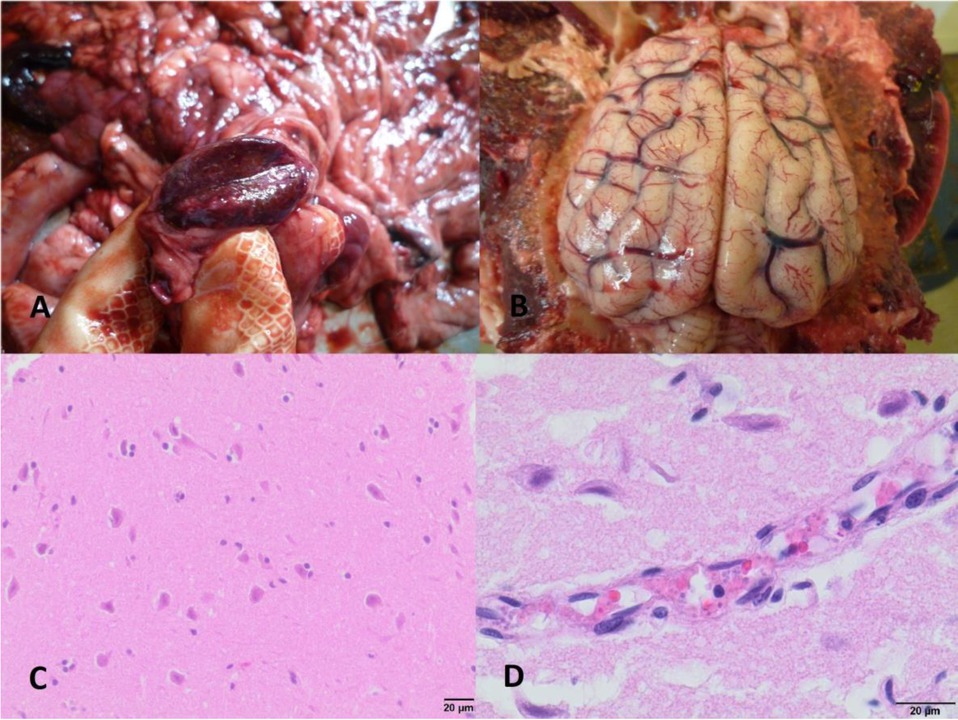
Fig. 4
Changes in the mesenteric lymph nodes and the brain in dogs infected with B. canis
A – Congestion of the mesenteric lymph node in dog No. IV; B – Congestion of the brain and brain meninges in dog No. IV; C – Microphotograph of the brain, visible neuronal degeneration and necrosis, and neuronophagia in dog No. I (haematoxylin and eosin staining); D – Microphotograph of the brain, visible brain oedema and sequestration of B. canis-infected red blood cells in cerebral capillary vessels in dog No. IV (haematoxylin and eosin staining)