Have a personal or library account? Click to login
Effect of goose parvovirus and duck circovirus coinfection in ducks Cover

Effect of goose parvovirus and duck circovirus coinfection in ducks

Open Access
|Jul 2020

Figures & Tables

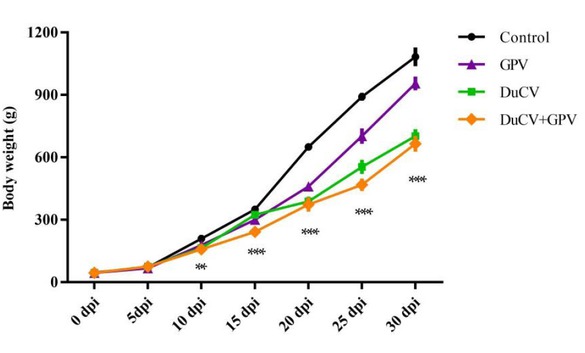
Fig. 1

Weight gain of infected ducks. **P < 0.01 and ***P < 0.001
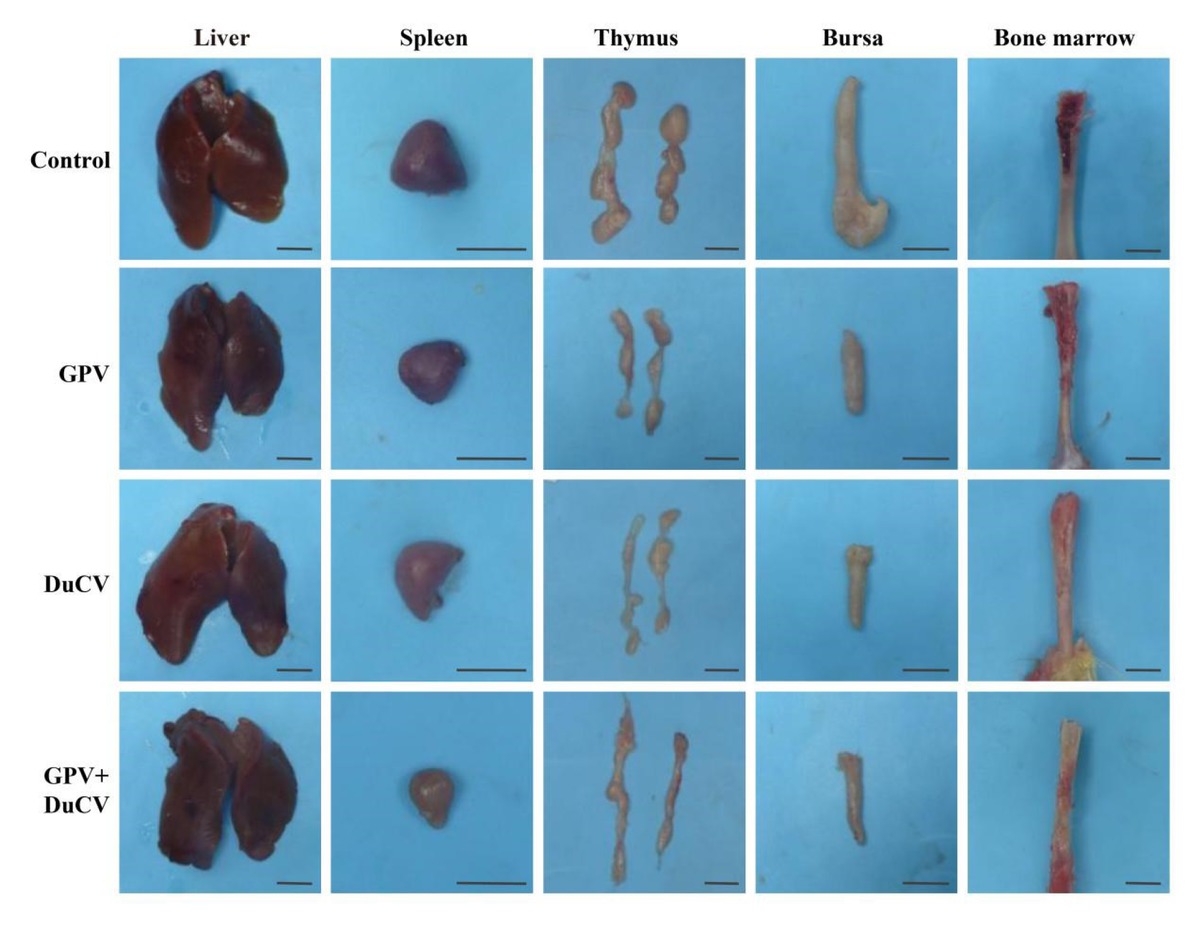

Fig. 2

Gross lesions of infected ducks. They were severe thymic atrophy, a mild to moderately atrophied spleen and bursa of Fabricius, pale bone marrow and spleen, and hepatic necrosis in the GPV and DuCV coinfected group. Scale bar = 1 cm
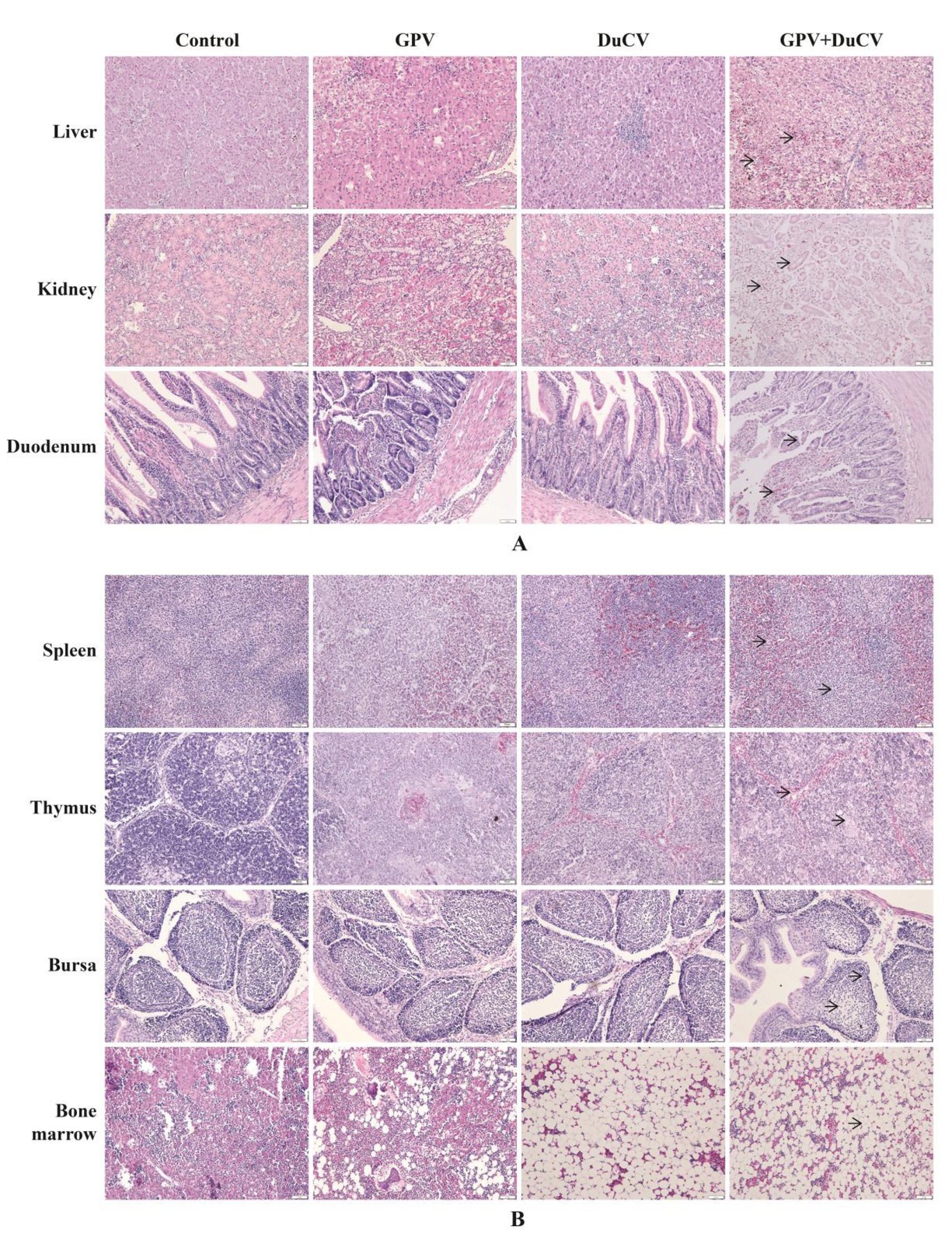

Fig. 3

Histological lesions of infected ducks at 30 dpi (200×). A. Lesions of the liver, kidneys, and duodenum. Extensive hepatocellular vacuolar degeneration, necrosis, and lymphocyte infiltration in the liver, severe degeneration, necrosis, exfoliation, and heterophilic granulocyte infiltration in renal tubular epithelial cells, and necrosis and exfoliation, haemorrhage, glandular tube atrophy, and lymphocyte infiltration in the duodenal villi are visible. B. Lesions of immune organs. Lymphocyte loss and haemorrhage in the spleen, infiltrating heterotropic granulocytes, thymic corpuscle disintegration, loss of lymphocytes in the cortex and medulla of the bursa, and histiocyte loss in the bone marrow are visible
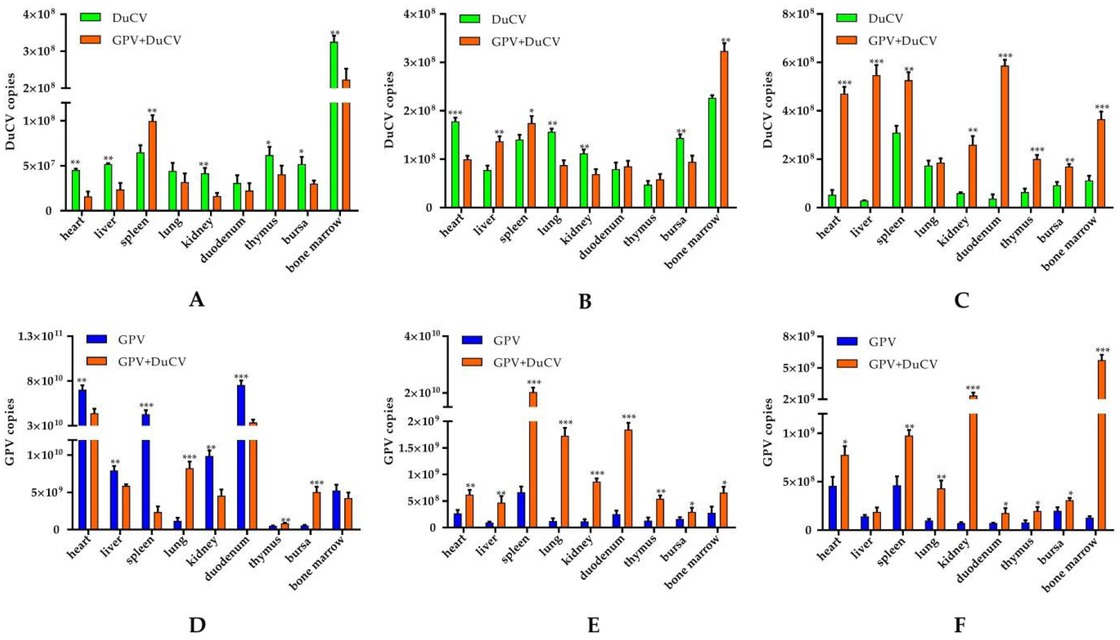

Fig. 4

Dynamic changes of GPV and DuCV loads in tissues of experimentally infected ducks. A. DuCV loads at 10 dpi; B. DuCV loads at 20 dpi; C. DuCV loads at 30 dpi; D. GPV loads at 10 dpi; E. GPV loads at 20 dpi; F. GPV loads at 30 dpi. *P < 0.05, **P < 0.01, and ***P < 0.001

Experimental design

GroupNumber of ducksDuCV (104.37 ID50/0.1 mL)GPV (105.75TCID50/0.1 mL)
Control15
DuCV150.1 mL
GPV150.1 mL
GPV+DuCV150.1 mL0.1 mL
Language: English
Page range: 355 - 361
Submitted on: Dec 2, 2019
Accepted on: Jun 26, 2020
Published on: Jul 14, 2020
Published by: National Veterinary Research Institute in Pulawy
In partnership with: Paradigm Publishing Services
Publication frequency: 4 issues per year

© 2020 Jie Liu, Xiaoxia Yang, Xiaojing Hao, Yongsheng Feng, Yuli Zhang, Ziqiang Cheng, published by National Veterinary Research Institute in Pulawy
This work is licensed under the Creative Commons Attribution-NonCommercial-NoDerivatives 3.0 License.