Have a personal or library account? Click to login
Cloning and differential expression analyses of Cdc42 from sheep Cover

Cloning and differential expression analyses of Cdc42 from sheep

Open Access
|Mar 2018

Figures & Tables

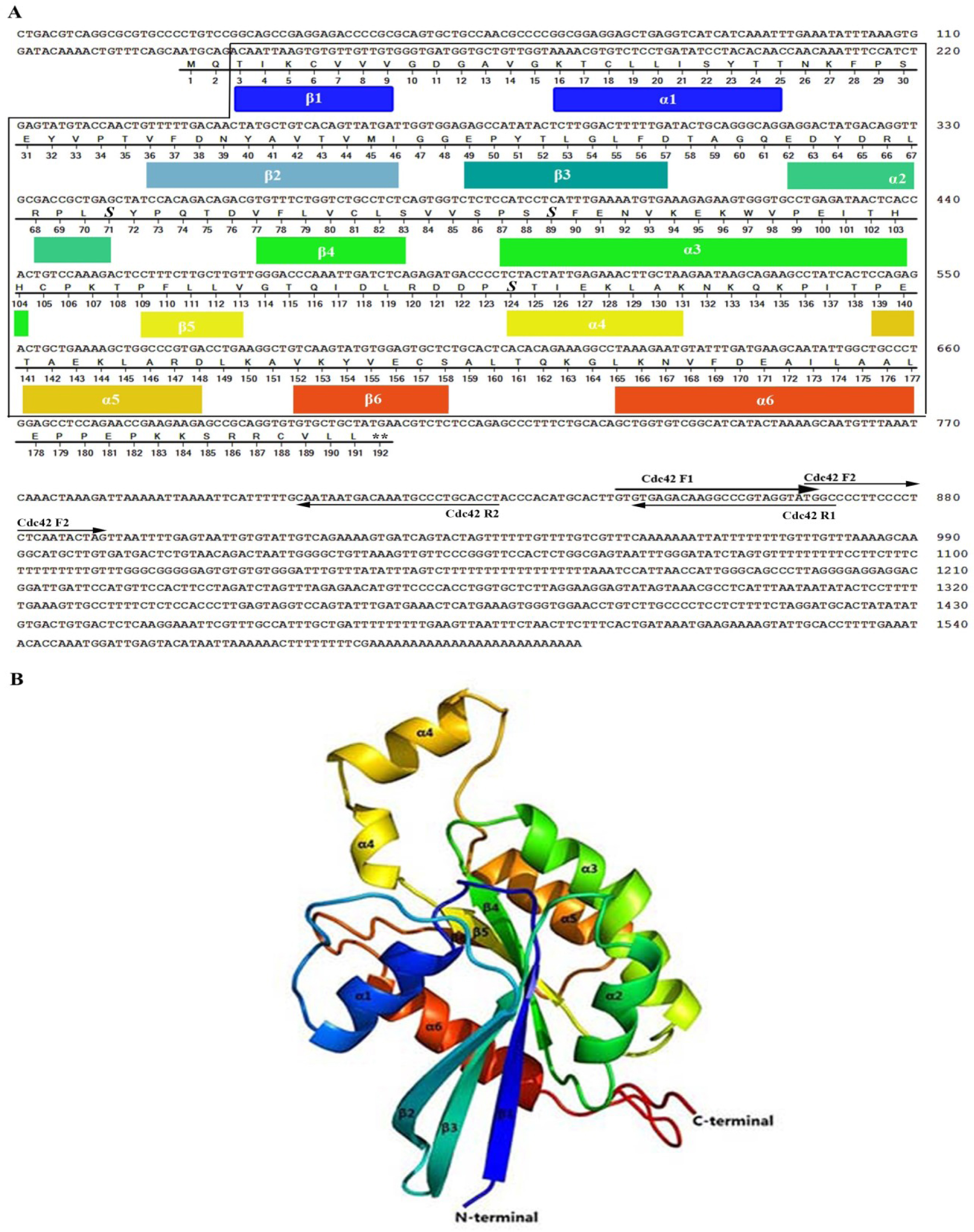
Fig. 1

Sequence analyses of OaCdc42. A. The full-length cDNA and deduced amino acid sequences of OaCdc42. GenBank accession number for OaCdc42 cDNA was KC425615. The conserved domain (CD) was in the frame. Double asterisks (∗∗) represent stop codon (TGA). Primers for 3′-, 5′-RACE are marked with underlined arrows. “S” in bold and italics indicates the predicted phosphorylated sites. Residue numbers of secondary structure are coloured per domain as in panel. B. The three-dimensional structure of OaCdc42. Each of α- helices and β-sheet is indicated by a different colour
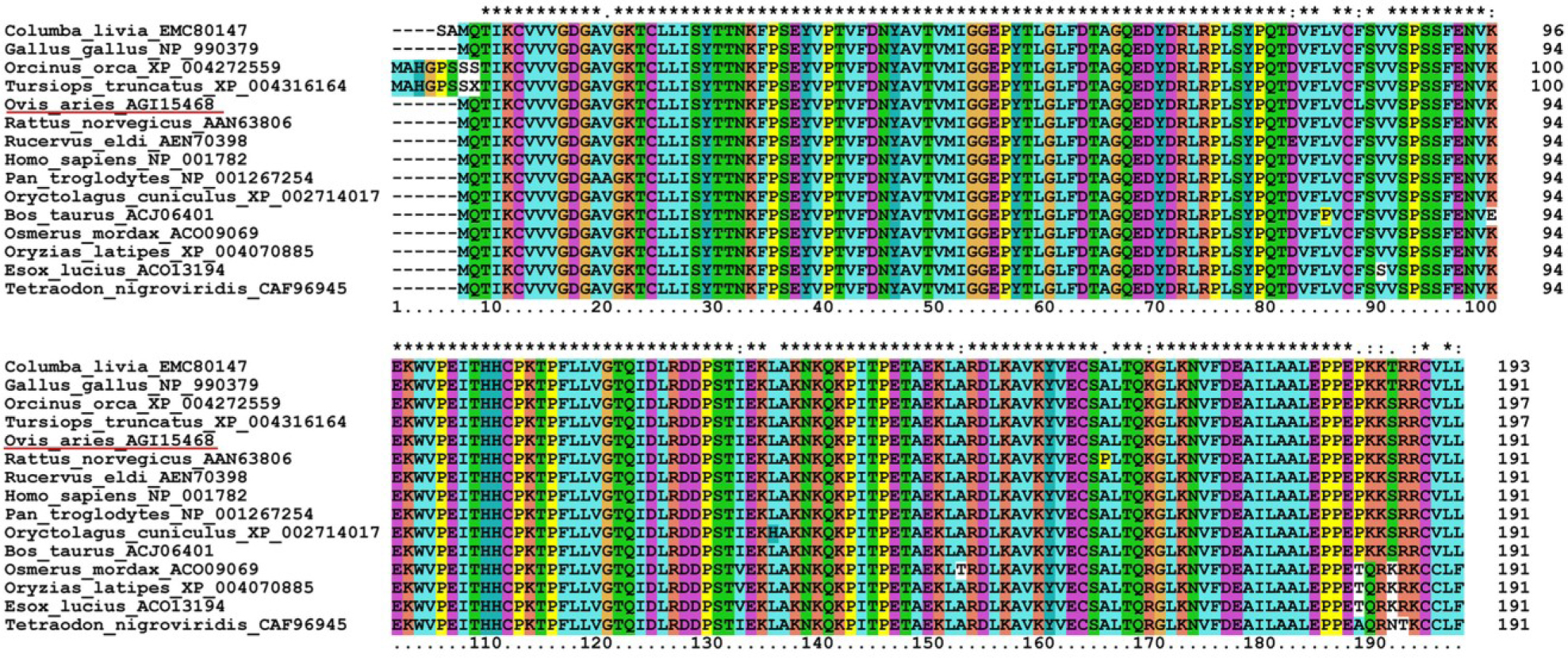

Fig. 2

Multiple alignments of Cdc42 between sheep and other species. The amino acid sequence of OaCdc42 is underlined. (∗) – 100% identical; (:) – highly conserved; (.) – semi-conserved
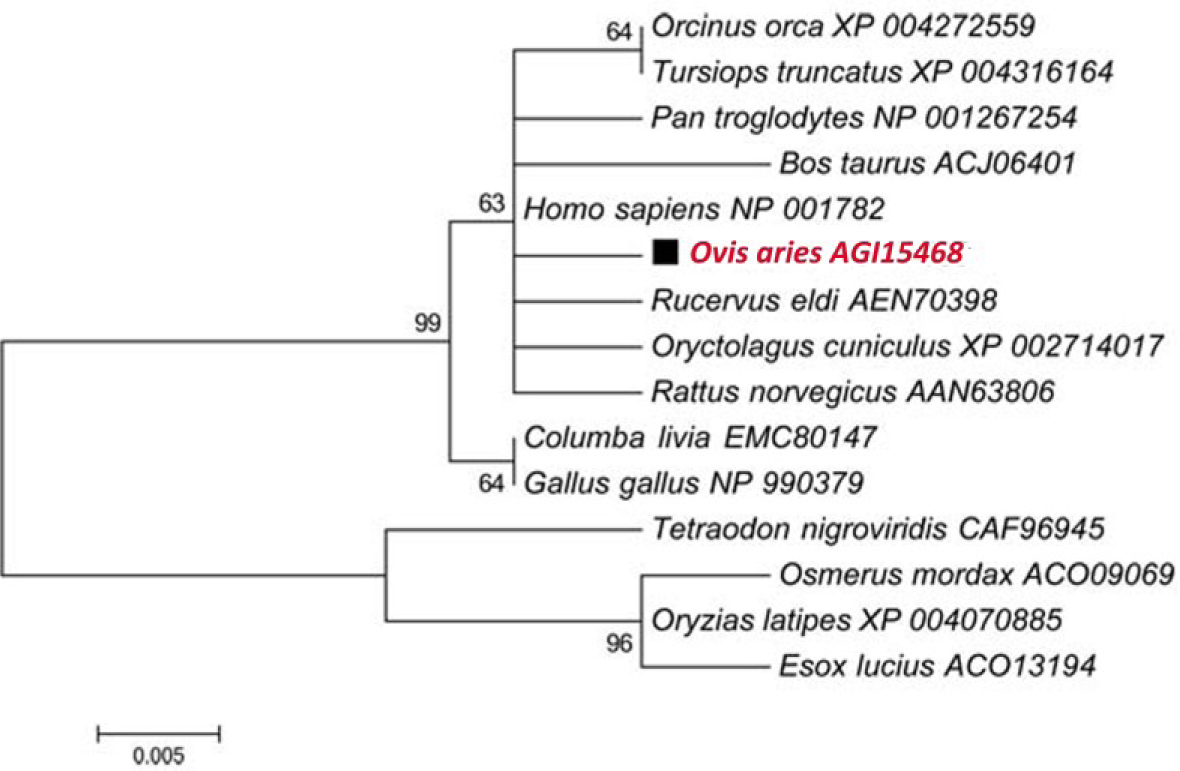

Fig. 3

Phylogenetic analysis of Cdc42 from sheep compared with other species. The phylogenetic tree was constructed by MAGA5.1 software using neighbour-joining (NJ) method. The numbers on the nodes reveal percentage frequencies in 1,000 bootstrap replications. The scale bar indicates 0.005 substitutions per site
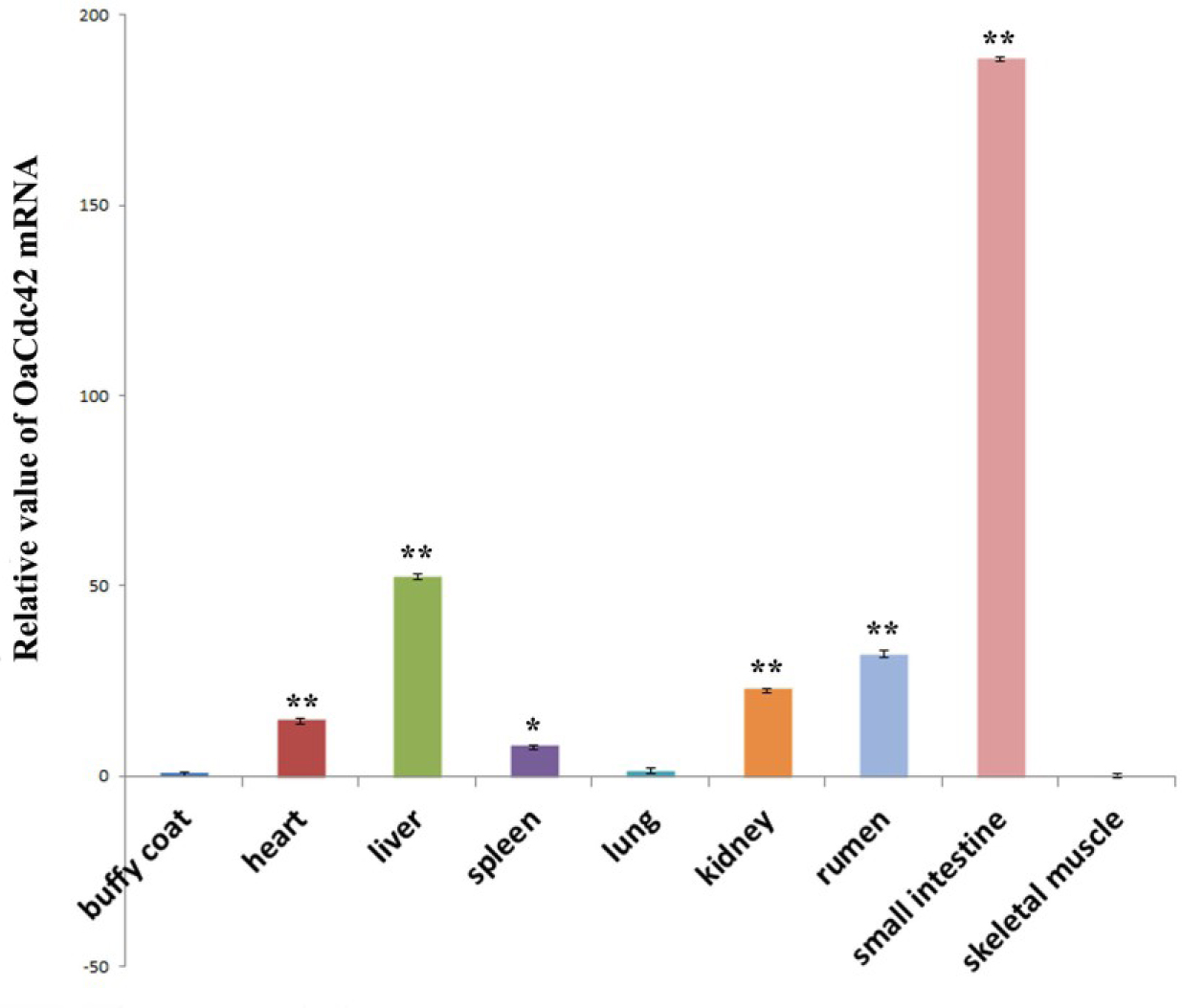

Fig. 4

Tissue distribution of OaCdc42 mRNA from healthy sheep. The relative value of OaCdc42 mRNA was calculated using 2-ΔΔCt method and β-actin as the reference gene. Data were presented as mean ±SD (n = 3, ∗ P < 0.05; ∗∗ P < 0.01 vs. buffy coat). Error bars showed the SD. All tests were performed in triplicate
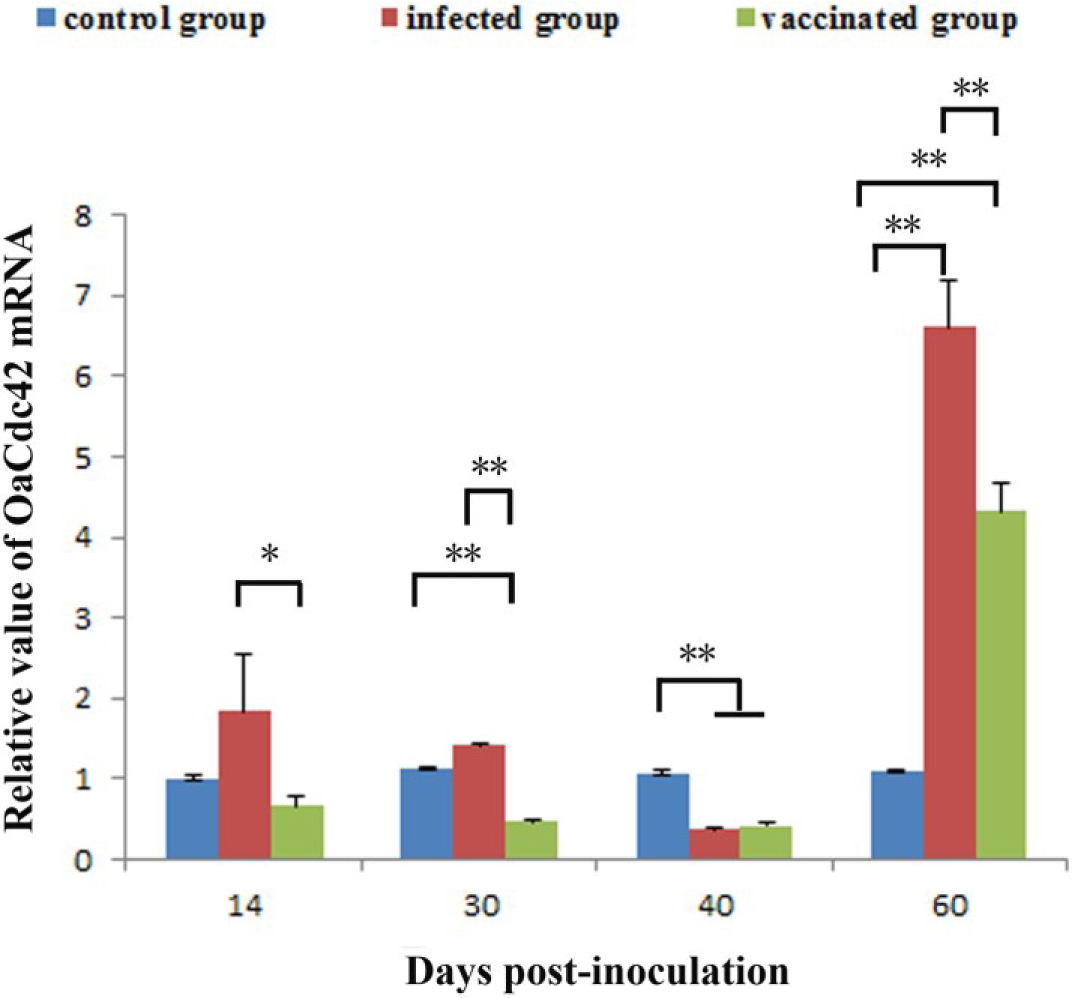

Fig. 5

The differential expression of OaCdc42 mRNA between Bm-infected sheep and S2-vaccinated sheep. Relative value of OaCdc42 mRNA was calculated using 2-ΔΔCt method and β-actin as the reference gene. Data were presented as mean ±SD (n = 9, ∗P < 0.05; ∗∗P < 0.01). Error bars showed the SD. All tests were performed in triplicate

Primers used for PCR amplification

PrimerNucleotide sequence (5’-3’)Method
Cdc42 F1GTGTGAGACAAGGCCCGTAGGTATG3’- RACE; outer
Cdc42 F2TGGCCCCTTCCCCTCTCAATACTAG3’-RACE; inner
Cdc42 R1GCCATACCTACGGGCCTTGTCTCAC5’-RACE; outer
Cdc42 R2AGGTGCAGGGCATTTGTCATTATTG5’-RACE; inner
Cdc42 F’GTTGTTGTGGGTGATGGTGCTGTTGReal-time PCR
Cdc42 R’CACTGAGAGGCAGACCAGAAACACGReal-time PCR
β-actin F’CCCAAGGCCAACCGTGAGAAGATGAReal-time PCR
β-actin R’CGAAGTCCAGGGCCACGTAGCAGAGReal-time PCR
Language: English
Page range: 113 - 119
Submitted on: Sep 7, 2017
Accepted on: Feb 14, 2018
Published on: Mar 30, 2018
Published by: National Veterinary Research Institute in Pulawy
In partnership with: Paradigm Publishing Services
Publication frequency: 4 issues per year

© 2018 Yong-Jie Yang, Zeng-Shan Liu, Shi-Ying Lu, Pan Hu, Chuang Li, Waqas Ahmad, Yan-Song Li, Yun-Ming Xu, Feng Tang, Yu Zhou, Hong-Lin Ren, published by National Veterinary Research Institute in Pulawy
This work is licensed under the Creative Commons Attribution-NonCommercial-NoDerivatives 3.0 License.