
1. Introduction
The Internet of Things(IoT) is an systematic approach towards creating the global relations among the humans, things and service through the Internet and collaborate with each other to contribute towards the collection, storage, exchange and monitoring of data[1]. It can reduce the complex tasks, reduce the human efforts and minimize the time consumption in every day life. IoT is an amalgamation of electronic components such as sensors, microcontrollers, communication transceivers[2–5]. These components can collect the information that can be shared over the cloud, can be analysed in the real time and can provide the real time assistance and services to the users.
The one of the main applications of IoT paves a way for the implementation of ambient – assisted living systems for providing assistance in health monitoring and even monitoring and even in the day-to-day activities of an individual. &e patients monitored in hospitals, especially in Intensive Care Units (ICUs) by medical assistants sometimes, causes errors since the errors are inevitable for humans.[6]
These IoT device s accurately collects and generates the enormous and exploding data varieties makes the cloud to face the various challenges due to lack of resources in the cloud and increased traffic in the entire network[7,8]. To face the challenges, fog computing has shown the brighter light of deployment in terms of processing the data which is highly sensitive at the network edge near the source devices rather than sending the huge bulk of IoT generated data for cloud processing [9–12].
These factors prompted the adoption of an alternative computational framework referred to as fog computing [13]. This novel paradigm possesses distinguishing traits of managing information that is extremely time-sensitive. It undertakes instantaneous evaluation of data, delivering feedback within milliseconds based on predefined guidelines. It transmits solely a fraction of information to the cloud that necessitates prolonged retention or retrospective examination.
Moreover, to resolve the challenges associated with substantial bandwidth, widely distributed, ultra-minimal latency, and privacy-centric applications, there exists a fundamental requirement for a computational approach that operates in closer proximity to interconnected devices. Fog computing has been advocated by both the commercial sector and scholarly researchers [14,15] to tackle these challenges and fulfill the demand for a computational strategy near connected devices.
Fog computing establishes a linkage between the cloud and IoT devices by facilitating computation, storage, communication, and information governance on the network nodes situated near IoT devices. Consequently, processing, storage, communication, decision-making, and information management transpire along the trajectory between IoT devices and the cloud, as information transitions from IoT devices to the cloud.
1.1. Motivation and Contribution
To achieve the much lower latency and high performance, this research article proposes the Health FoTS – A Fog based health care monitoring system integrated with the IoT data collection systems. Moreover, distributed fogs are introduced in which the Fogs are placed between the IoT devices based on the novel principle of Distance Aware Placement Algorithm (DAPA). The main contribution of the paper is as follows
Proposes the Fog Based Health care Monitoring systems-Health-FoTs which integrates the Fogs between the IoT data and Cloud server to achieve the higher performance and least latency.
Introduces the distributed fogs which is deployed based on the principle of Distance Aware Placement Algorithm (DAPA) for an efficient capturing of the IoT medical data with an effective utilization of bandwidth and less communication cost.
Experimental test –beds are designed based on NodeMCU boards interfaced with the medical sensors and raspberry pi model b+ which acts as distributed fog gateways (DFG) between the NodeMCU triggered IoT devices and Cloud servers. MQTT (Message Queuing Telemetry Transportation) and ThingSpeak Cloud is used for communication and monitoring of the data respectively.
Evaluation metrics such as latency, communication overhead, bandwidth utilization are measured and compared with the other existing IoT and Fog based healthcare infrastructures. The proposed model has shown the more brighter light of the deploying the distributed fogs for an efficient monitoring the health care data.
1.2. Organization of the Paper
The research article is structured as follows as : Section-2 presents the related works by more than one authors. Section-3 presents the complete system model used for the experimentation. The proposed methodology with its detailed description is presented in Section-4. The experimental analysis, results discussions are presented in Section-5.Finally the paper is concluded with the future enhancement in Section-6.
2. Related Works
Singh et al. (2021) [16] developed a fog-centric IoT-based framework aimed at monitoring and controlling the swine flu epidemic. The method involved using a hybrid classifier for early disease classification and the iFogSim simulator to evaluate system performance parameters like accuracy, energy consumption, and latency. The approach effectively combined fog and cloud computing to enhance network bandwidth reliability and reduce response time. However, the system’s reliance on fog computing raises concerns about scalability and resource constraints, particularly in areas with limited infrastructure. Additionally, integrating the hybrid classifier with fog computing might pose challenges in real-time processing accuracy and efficiency.
Quy et al. (2021) [17] compared cloud, edge, and fog computing technologies to address high service response times in emergency healthcare scenarios. They proposed a framework for Fog-IoHT applications, which aims to reduce latency and improve emergency response times. The framework demonstrated significant potential in enhancing healthcare service delivery. However, integrating fog computing into IoT healthcare applications presents challenges, such as complex data management, real-time processing, and maintaining consistency across diverse healthcare environments. The study highlights that while fog computing offers improvements, there are still issues related to the practical implementation and integration with existing systems.
Kashyap et al. (2022) [18] provided a comprehensive survey on fog and IoT-driven healthcare, focusing on various technologies, techniques, and performance parameters. They emphasized the benefits of fog computing in reducing latency, improving storage capacity, and enhancing scalability. The survey also noted challenges, including the complexity of implementing fog computing in real-world scenarios and ensuring scalability. Issues such as integrating fog computing with existing healthcare systems and managing diverse data sources were highlighted as areas requiring further research. The survey effectively outlines the current state of the field but also underscores the need for continued development to address these challenges.
Kumari and Jain (2022) [19] proposed a fog-based healthcare monitoring system within SDN-IoT networks. Their system used three sensing devices to collect health data, which was analyzed using a novel fog computing interface. The study highlighted improvements in cost, power usage, and latency compared to traditional systems. Despite these advantages, the system faced drawbacks related to high power consumption and ensuring real-time data accuracy. The challenges included managing the computational load and ensuring the system's performance under varying conditions. The integration of fog computing with SDN-IoT networks also posed difficulties in balancing performance and resource utilization.
Elhadad et al. (2022) [20] developed a healthcare monitoring framework utilizing fog computing for real-time notifications. The system monitored various patient metrics, including body temperature, heart rate, and blood pressure, and provided real-time alerts to caregivers. Machine learning algorithms were employed to enhance the accuracy of notifications. However, the framework encountered issues with real-time processing, especially in complex scenarios, and faced challenges in maintaining consistent performance across different environments. Ensuring reliable and timely notifications remained a critical concern, highlighting the need for further optimization of the system.
Mala et al. (2022) [21] introduced an IoT-enabled smart healthcare system leveraging fog computing and deep learning for detecting heart-related issues. The system utilized the Healthfog concept to analyze data from IoT devices, providing real-time heart disease diagnosis. Although the system demonstrated effectiveness in early detection, it faced challenges related to power consumption, accuracy, and managing large data volumes in real-time. The integration of deep learning with fog computing required significant computational resources, which could impact system efficiency and scalability in practical applications.
Ahmad et al. (2023) [22] proposed an IoT-fog-based healthcare system incorporating blockchain technology for enhanced security and privacy. Their system used critical and non-critical fog clusters to manage patient data, with blockchain ensuring privacy protection. While the approach effectively reduced response times and safeguarded patient records, it also presented challenges in integrating blockchain with existing healthcare IoT ecosystems. The system needed to address issues related to data management, performance under heavy data loads, and maintaining a seamless user experience.
Tripathy et al. (2023) [23] developed an intelligent healthcare system on a fog platform, utilizing quartet deep learning and edge computing. Their approach aimed to optimize performance and reduce latency by integrating fog services with IoT devices. The system showed improvements in managing health data and resource usage. However, it faced limitations in balancing precision and response time, which are critical for real-time healthcare applications. Ensuring that the system met the diverse needs of users while maintaining high performance remained a significant challenge.
Navakauskas and Kazlauskas (2023) [24] conducted a systematic review of fog computing in healthcare, analyzing recent trends and benefits. They focused on how fog computing addresses issues like high response latency and large data volumes. The review highlighted the promise of fog computing in improving healthcare data management through real-time analytics and AI. Nonetheless, it also pointed out ongoing challenges, such as the maturity of fog computing solutions, integration with existing systems, and effectively handling big data. The study emphasized the need for continued research to address these challenges.
Quy et al. (2022) [25] presented an architectural framework for smart healthcare IoT applications based on fog computing. They discussed potential applications and challenges in integrating fog computing into healthcare IoT systems. The framework aimed to improve service delivery and reduce latency. However, the study identified challenges related to real-time data processing, managing diverse healthcare data sources, and ensuring seamless integration with existing cloud-based systems. The framework showed potential but required futher development to address these practical implementation issues.
3. System Model
The system model considered for IoT topology is shown in Figure 1. The model consist of multiple IoT devices connected to a Fog gateway. Each device can communicate with the other devices only through the gateways using wireless technologies such as WIFI. The IoT devices involved in this model are small-size, memory and energy constraint devices. NodeMCU devices interfaced with Temperature sensors(T), Blood Pressure sensor (BP) act as the IoT nodes where as raspberry pi model b+ act as the Fog gateways. A MQTT protocol is used for communication between the NodeMCU, Raspberry Pi Model B+ and Cloud server.
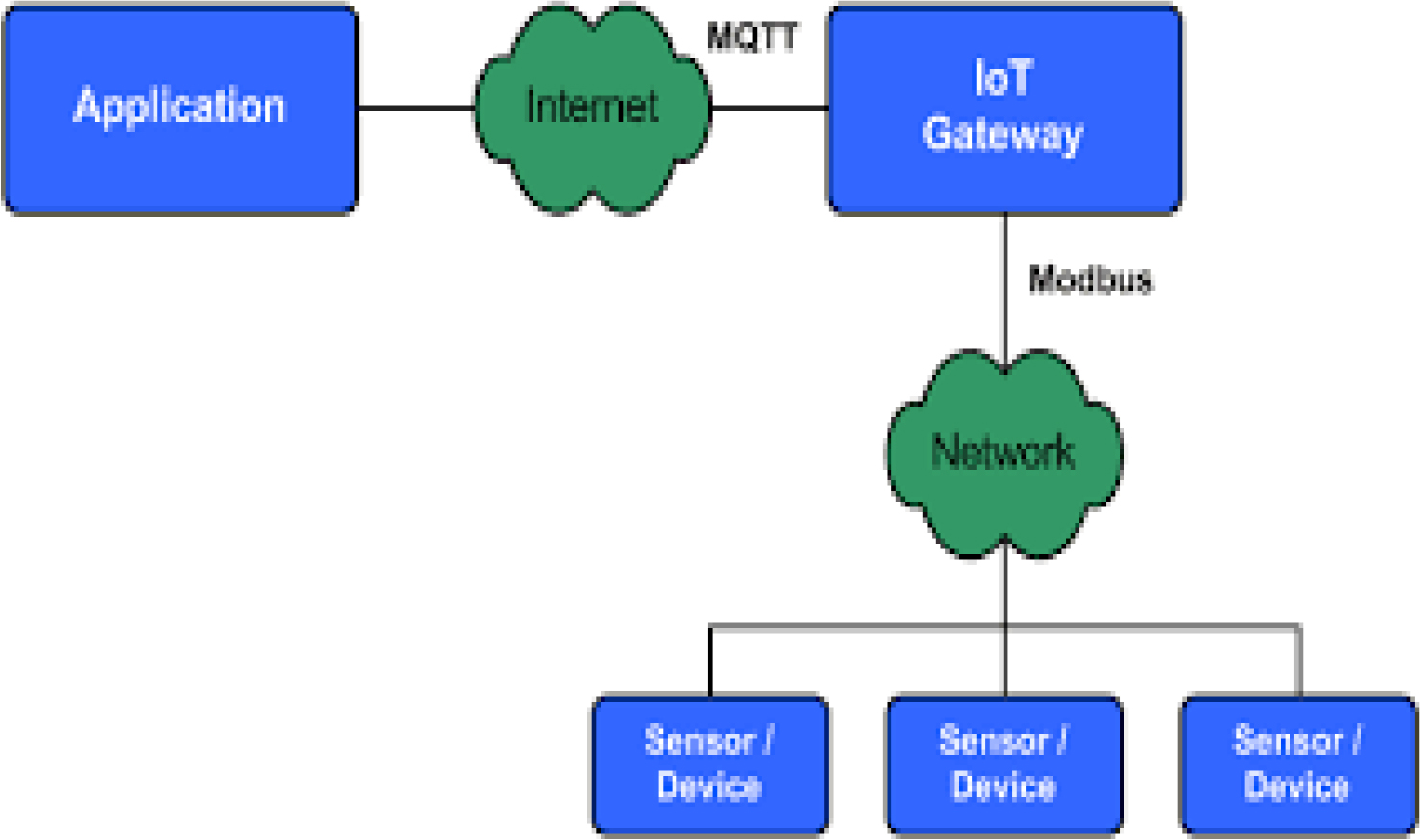
Figure 1:
IoT and Gateway System Model Used in the Proposed research
4. Proposed Methodology
The complete system architecture is shown in Figure 2. In the figure 2, five different IoT sensors exchange the medical data with a fog layers that allows for communicating them with the cloud servers. The detailed description of the proposed architecture is explained as follows
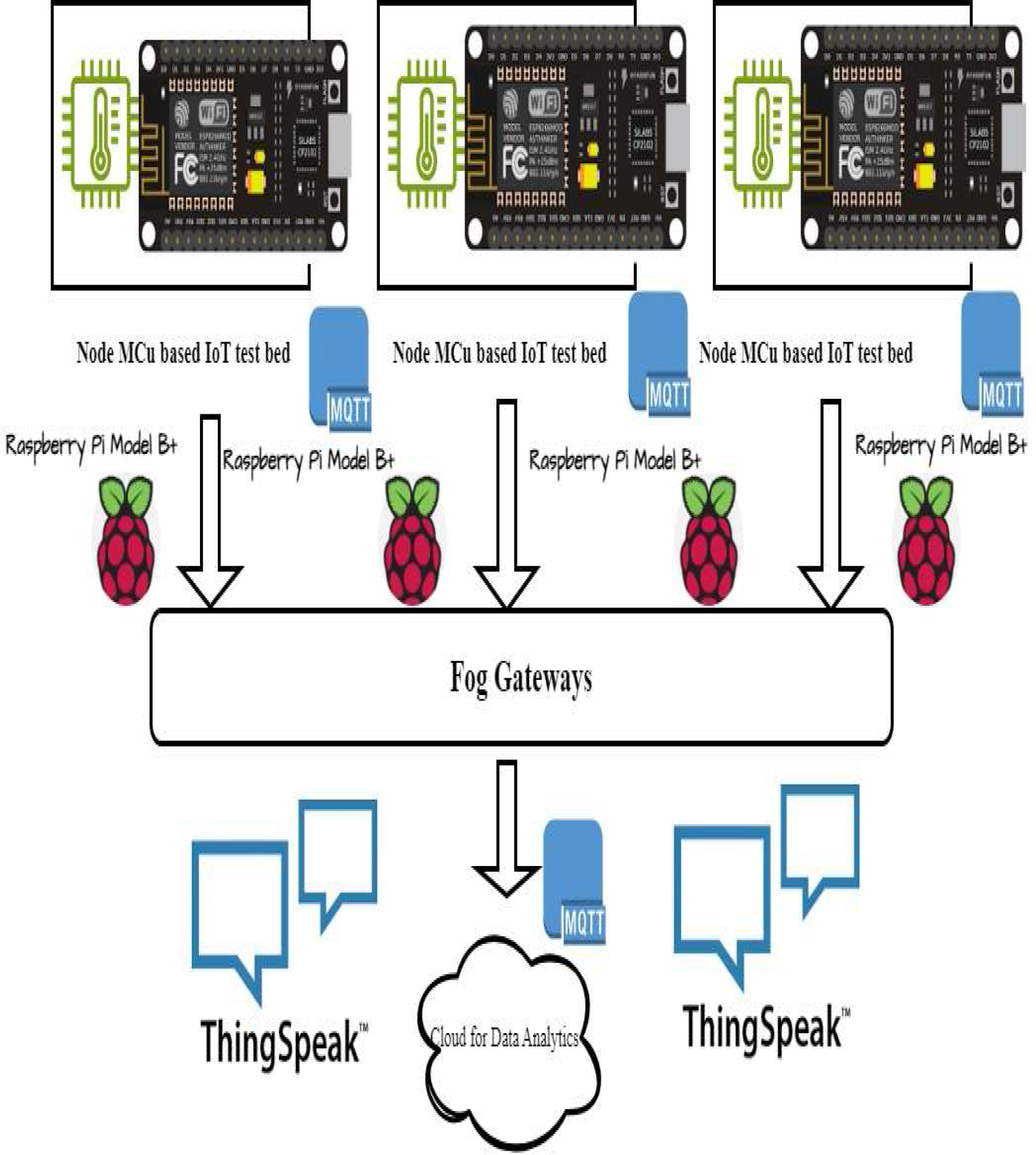
Figure 2
Proposed Block framework for the Fog - IoT Health care Devices
4.1. Sensor Network Layer
Bio-medical Sensors such as temperature sensors, blood pressure sensors, pulse rate are used in the experimentation. All the sensors are interfaced with the NodeMCU microcontrollers and then transmitted to the fog computing devices through the WIFI network.. As discussed, to collect the medical data, IoT systems with 8-BIT NODEMCU as main processing unit interfaced with the 10-BIT SPI (Serial peripheral Interfaces) based MCP3008 Analog-to-Digital Convertor (ADC) and ESP8266 WIFI transceivers. All the sensors are interfaced with the These boards are used to collect the medical data from the subjects and stores it in the ThingSpeak cloud for further testing. The IoT boards are powered with the 3.3V batteries and can be replaced with the other batteries when it is drained out. Table 1 illustrates the specification of the sensors and controllers used in the IoT layers.
4.2. Fog Layer
Fog layers consists of several distributed nodes placed near the IoT nodes. These fog node are called as fog gateways. These gateways are used for facilitating the storage, computing and network connections that is distributed near the sensors. The distribution of the fogs near the IoT nodes are responsible for the data reception, analysis of the fog nodes and finally storing all these data in the cloud. The placements of fog gateways are based on the distance aware placement algorithm (DAPA). The detailed description of the algorithm is as follows
4.2.1. DAPA in Fog Layers
The proposed DAPA model works on the principle of received signal strength measurement on the on-board units. The proposed algorithms measures the RSSI in which then measures the distance between the IoT nodes and Fog gateways. The mathematical expression for calculating the RSSI and distance is given as follows
Where P(t) is Power transmission P(D) – Path loss in Distance D where D is measured as
Where Po is the power of the signal (dBm) in the zero distance, Pris the Signal power (dBm) in the distance d, fis the signal frequency in MHz, Fmis the Fade margin and n is the path-loss exponent [26].
The network parameters that are measured act as the initially before the placement of fog nodes Experimentally, RSSI values can be calculated using AT (Attention commands) of transceivers interfaced with microcontroller of IoT devices. Table 2 illustrates the different network parameters used for measuring the distances.
Table 2:
Different RSSI parameters obtained Experimentally in the IoT devices
| Sl.no | RSSI (dbm) | Distance between the IoT devices and Gateways (meters) |
|---|---|---|
| 1 | -95 to -83 | 5 |
| 2 | -87 to -77 | 4 |
| 3 | -78 to -71 | 2.5 |
After calculating the network parameters, fog nodes are placed at the position near to the IoT nodes where the signal strength is higher. Algorithm-1 presents the complete procedure for the DAPA model in determining the distance between the nodes and fog gateways.
| Steps | Algorithm-1 // Pseudo-Code for the DAPA in Fog layers |
|---|---|
| 1 | Input : RSSI, Distance Measurements |
| 2 | Output : Distributed Fogs |
| 3 | Start : |
| 3 | Measure the RSSI and Distance using Equation(1) and (2) |
| 4 | If (RSSI > Threshold (By thumb Rule) && Distance< Thersold) |
| 5 | Shortest Distance detected |
| 6 | Distribute the Fogs near the IoT Nodes |
| 7 | End |
After placing the fogs near the IoT nodes, medical data are then processed and transmitted to the cloud for determining the emergency data.
4.3. Cloud Layers
It consists of the decentralized assets, the archives, and the hubs. The cloud administrator oversees handling all the instruments linked to the cloud level and aids in the patient’s information acquisition, computation, and storage. This information may be utilized for examining the patient’s medical background and present condition. The advantages of cloud layers used in the proposed research is to process the data from the fog layers and provides the larger storage space for saving the medical health are data for the future assessment and treatment process.
4.4. MQTT –Communication Protocol
MQTT is a universal communication standard that facilitates the exchange of information from pervasive gadgets (e.g., detectors, controllers, smartphones, integrated systems, or notebooks) and in systems with limited resources or significant delay. These communication standards adhere to a publish/subscribe framework adapted to systems. This research includes the Mosquitto libraries of the implementation of the MQTT based data transmission from IoT nodes to Fogs to cloud.
5. Proposed Methodology
The complete health care infrastructure was developed and deployed in the experimentation test bed consist of the NodeMCU and Rasberry Pi Model B+ as fog gateways. Embedded C and Python programming is used for deploying the complete infrastructure for the IoT-Fog based healthcare systems.
Figure 3 shows the experimental test beds using the NodeMCU boards and Raspberry Pi Model B+ as Fog gateways. For an effective experimentation, 5 nodes interfaced with the temperature sensors ad blood pressure sensors. Figure 3(b-c) shows the sensor data collected from the cloud from the fog gateways which are stored in the cloud for further processing. To monitor the RSSI and Sensor data in the fog gatways which are collected from the IoT nodes, Mobile App was developed using Flutter which is given in Figure 4(a-b)
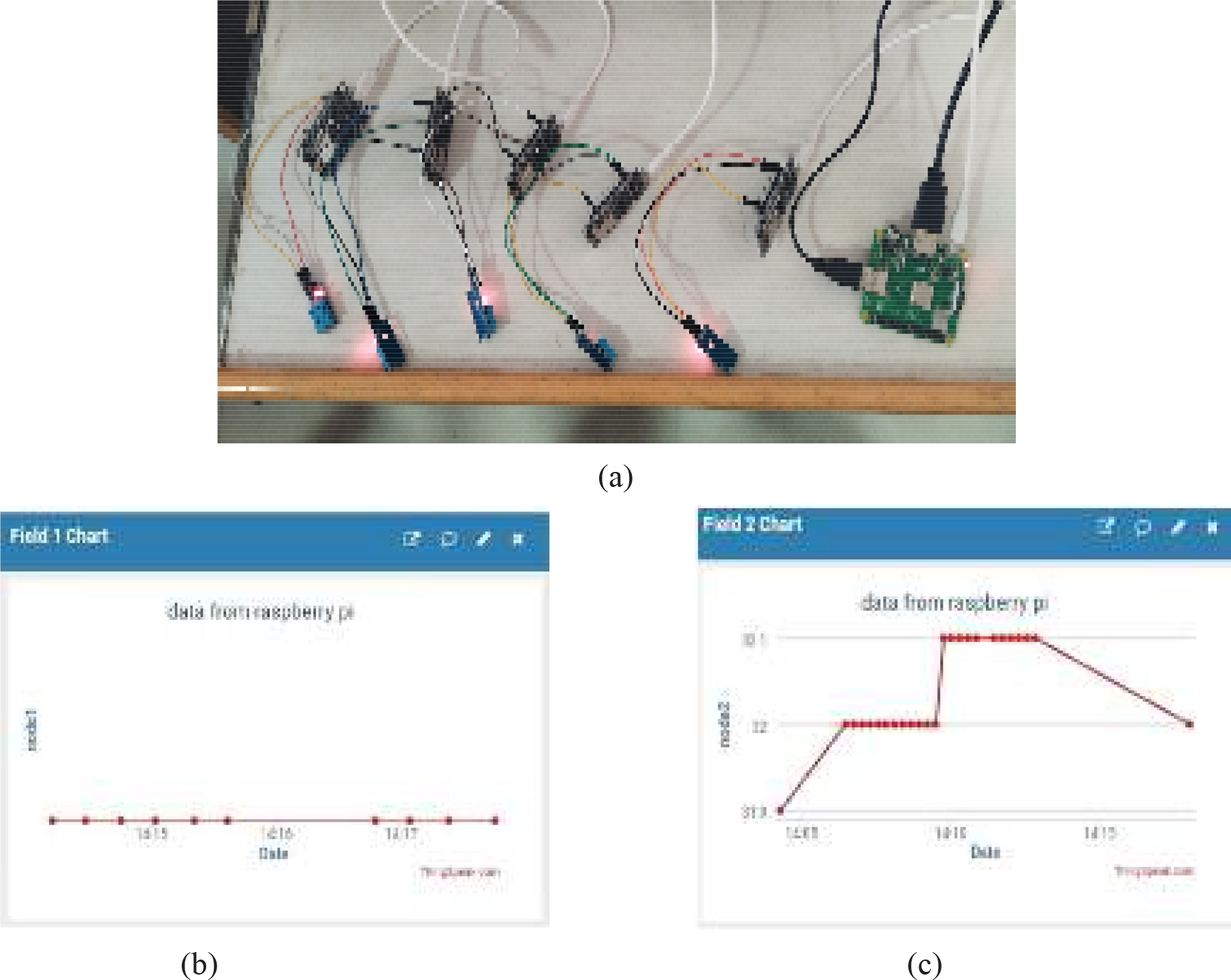
Figure 3:
a) Hardware Test Bed with NodeMCU as IoT board with the Raspberry Pi Model B+ as Fog Gateways b) & c) Cloud data stored in the ThingSpeak from Fog gateways
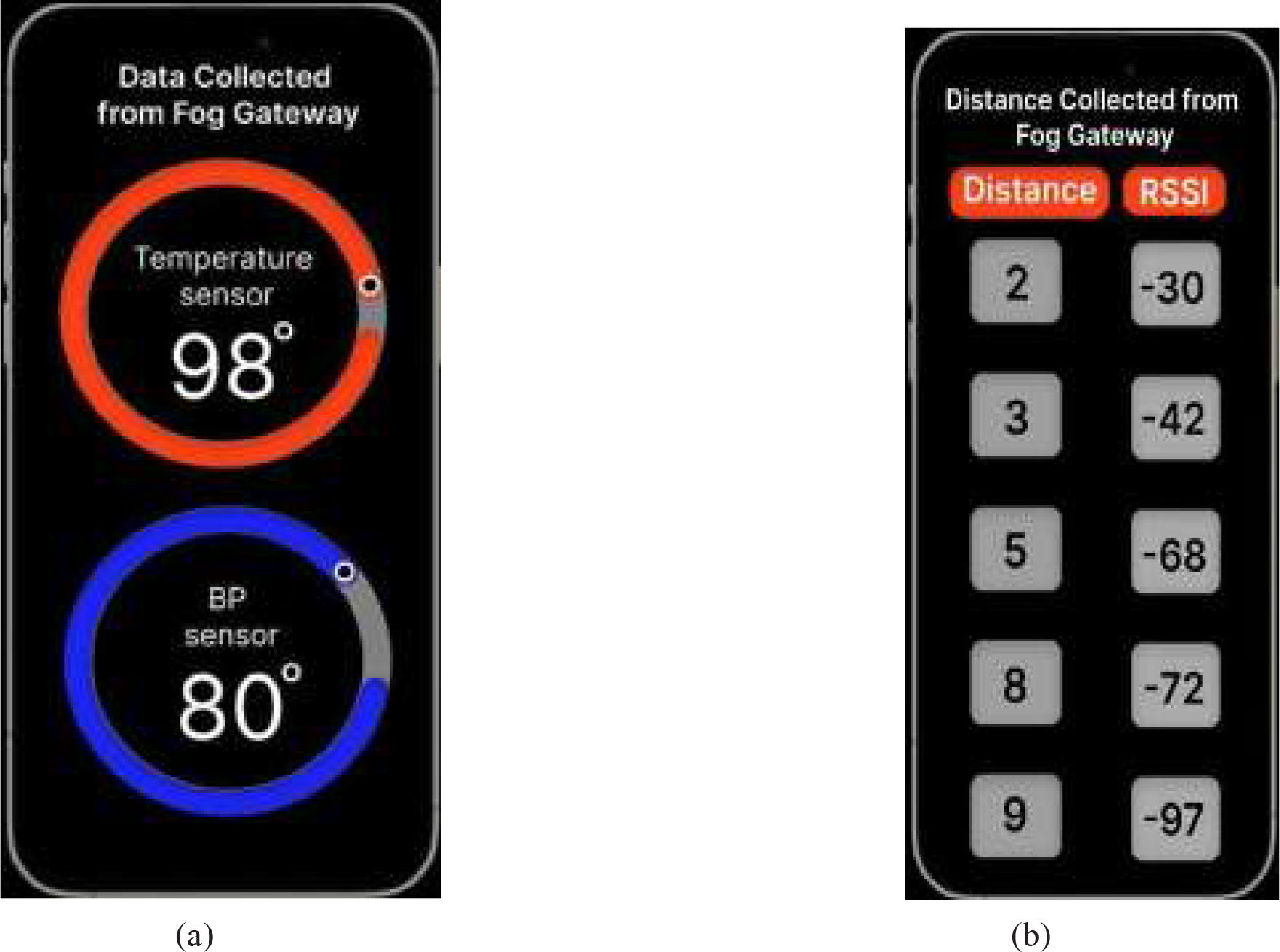
Figure 4:
a) Mobile Application developed for monitoring the IoT sensor values b) Mobile App developed for RSSI Measurement to deploy the DAPA model.
5.1. Results and Discussion
The various performance metrics such as latency, communication overhead, bandwidth utilization are measured and compared with the traditional IoT structure and proposed Fog structures. The traditional IoT structure is constructed without the fog gateways whereas the proposed architecture incorporates the distributed fogs for the data transmission.
5.1.2. Latency Analysis
Latency is measured as the time taken by the data from the source to destination. To demonstrate the excellence. of the fog based recommended approach, three existing models has been considered. IoT-Model-1[27] details about the traditional IoT model without any fog gateways. In the IoT-Model-2[28] describes about the IoT with Fog gatways in which the placing of fogs is based on the principle of randomized principle and IoT-Model-3 [29] details the IoT with the fog placements using Greedy method [30]. In this research, latency is requested time delay(T(D)), processing time delay(P(D)), queuing time delay((Q(D)) and propagation delay(Pr(D)). Mathematically the latency in the fogs is calculated as given in Equation (3)
5.1.2.1. Discussions
Figure 5 shows the latency of different IoT environments and proposed Fog model. In Figure 6, latency of 5 nodes and two medical sensors deploying the IoT-Model1 consumes 5 to 50 secs as the count of nodes increases in the network. In the similar fashion, IoT-Model2 and IoT-Model3 consumes from 5 to 39secs and 5 to 29.5secs as the count of networked nodes increases. But the Fog based proposed model consumes from 5 to 19.5secs as the count of nodes increases. It is very clear that latency is reduced to 50% than model-1, 39% less than model-2 and 21% less than model-3. The proposed fog based model has consumed less time. Figure 7-9 shows the latency of different networks by the transmission of variable data size. As shown in Figure 7, latency increases linearly as the size of the data s and no of nodes increases As the data size increases, latency of first three existing models increases from 5 to 20.2 secs for node -1 and node-2, 5 to 38.5secs for node-3,4,5 respectively. But the Fog based proposed model suffers from latency ranges from 5.4 to 12.5 secs for one nodes and 5 to 32.3secs for five nodes. Hence it is clear that the latency of the recommended approach is 50% less than other models for one node deployment and 25% less for the five nodes when the datasets increases. From the experimentation figures, it is very evident that recommended Fog based Model has less latency than the other existing models.
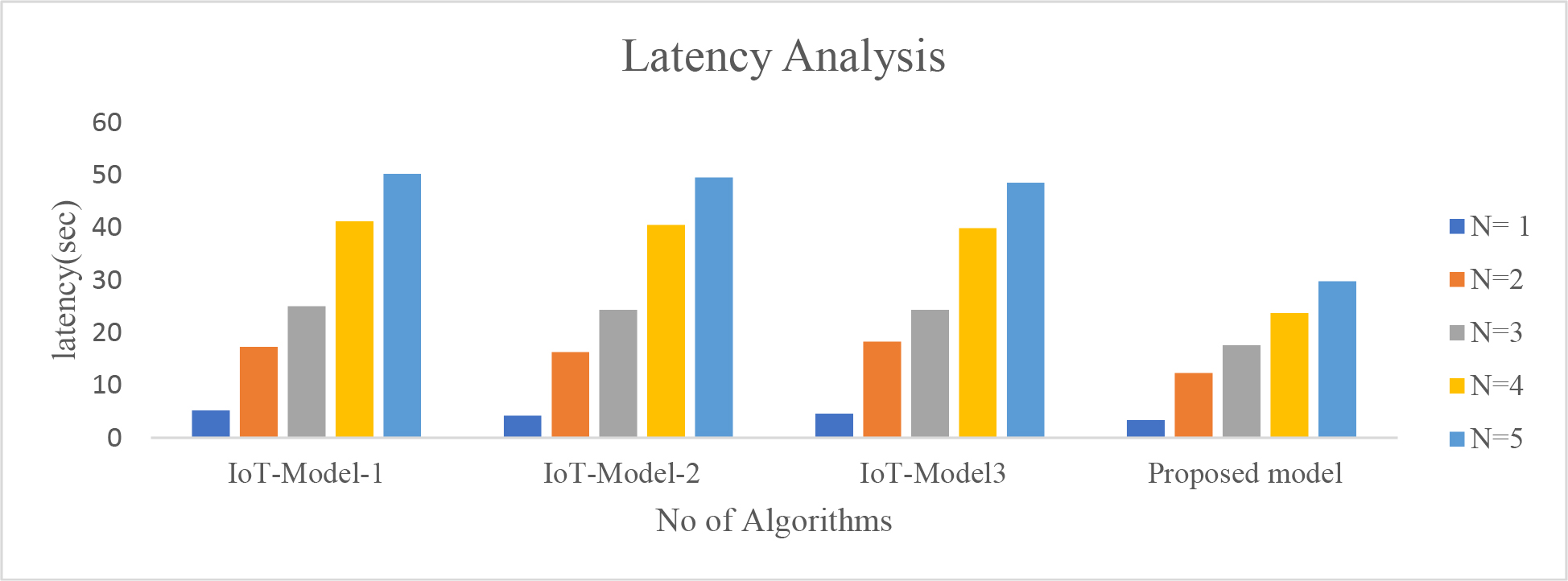
Figure 5:
Latency Analysis for the Different models deployed for the experimentation process(For N=number of IoT nodes interfaced with the medical sensors)
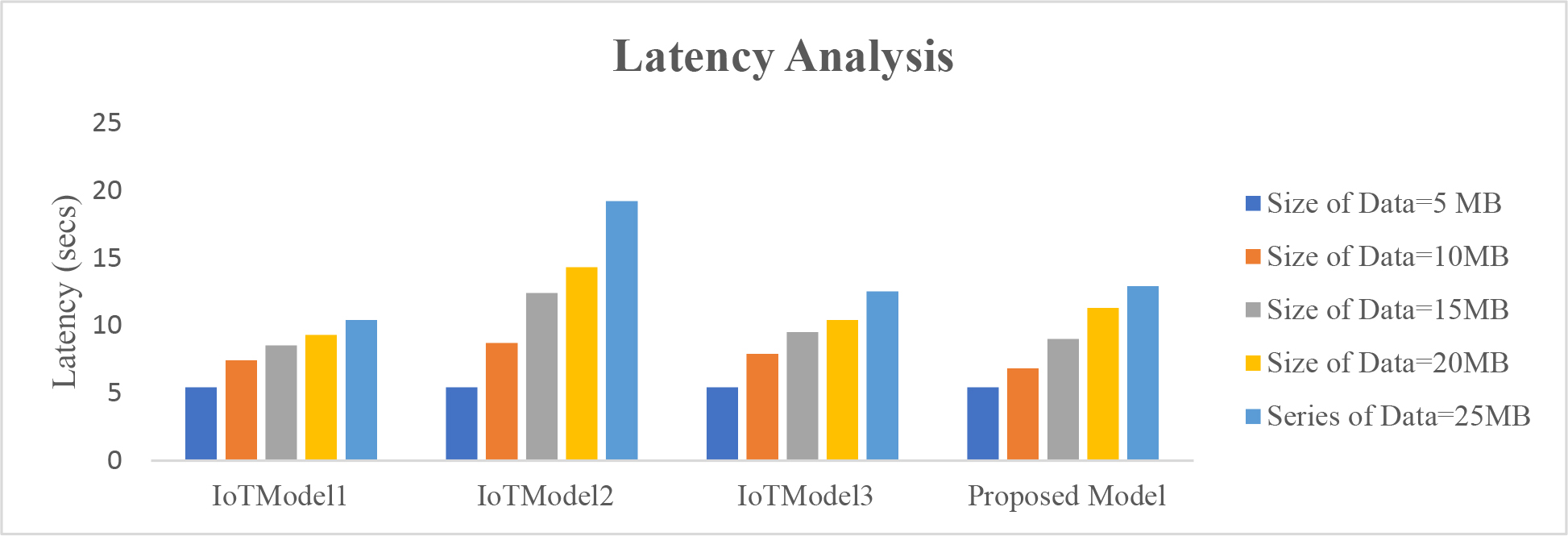
Figure 6:
Latency Analysis for the Different models deployed for Different size of data transmission
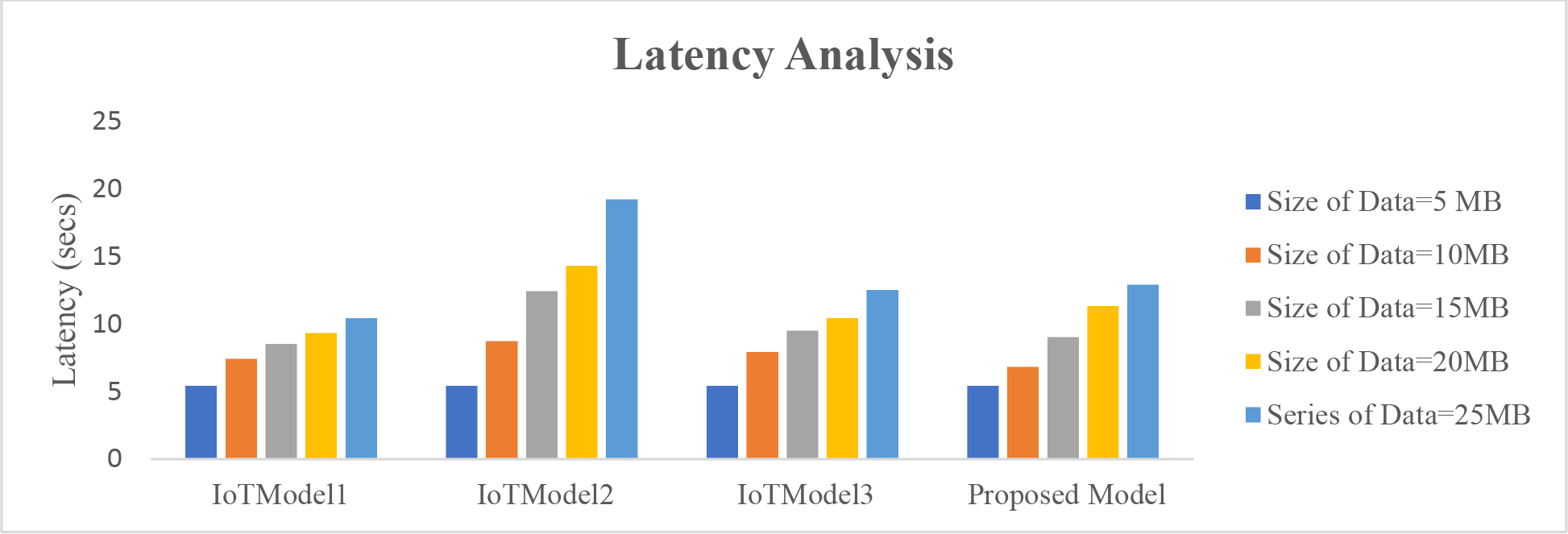
Figure 7:
Latency Analysis for the Different models deployed for Different size of data transmission
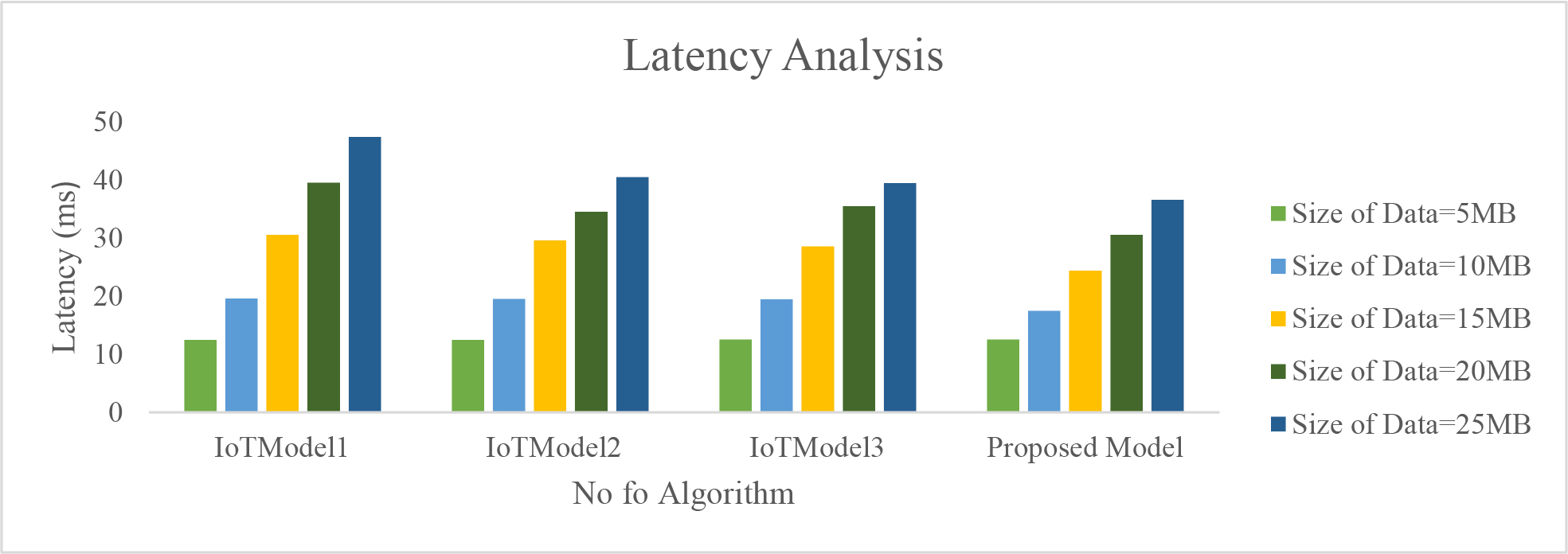
Figure 8:
Latency Analysis for the Different models deployed for Different size of data transmission
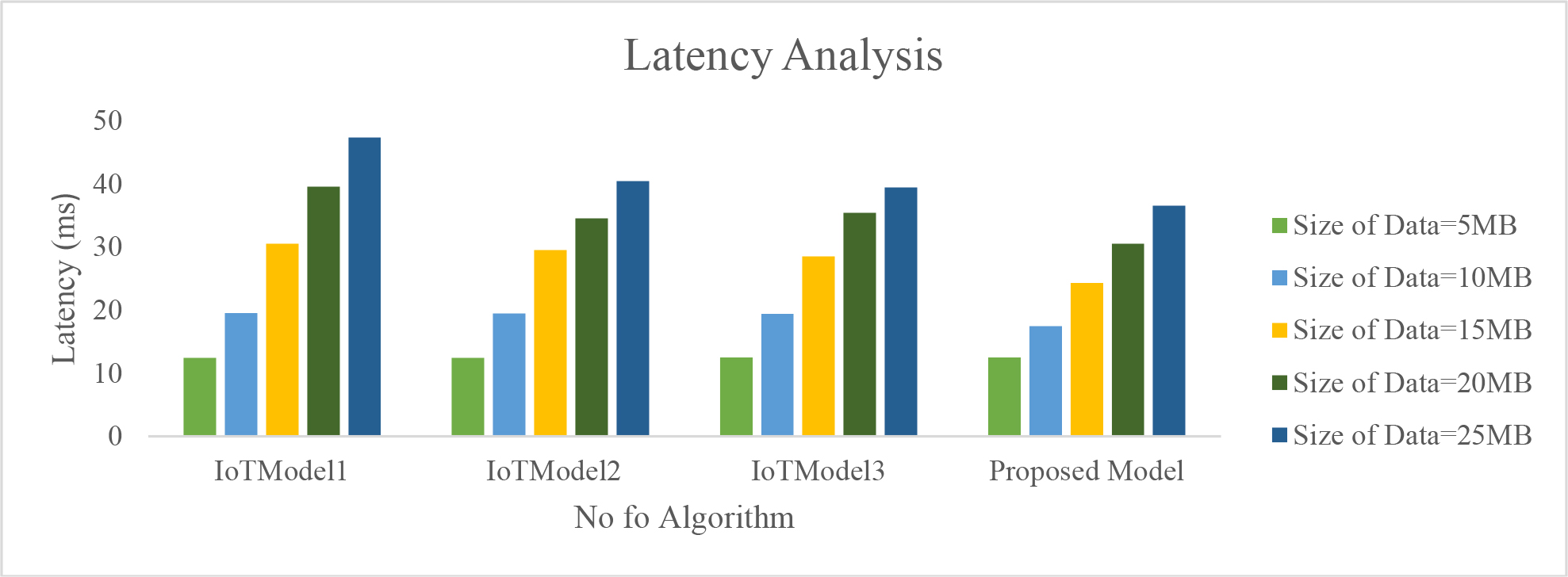
Figure 9:
Latency Analysis for the Different models deployed for Different size of data transmission
5.2. Throughput Analysis
Throughput is ratio between the amount of data transmitted from the source to the data received at the destination.
5.2.1. Discussion
Figure10 shows the throughput of the various IoT models and Fog models has been demonstrated. From the Figure, it is evident that throughput of the recommended approach has maintained the throughput from 100% to 99% as the data size increases whereas the other models throughput degrades from 100% to 88% as there data increases. From the Figure 10, it is evident that the recommended fog approach has more throughput than the other models.
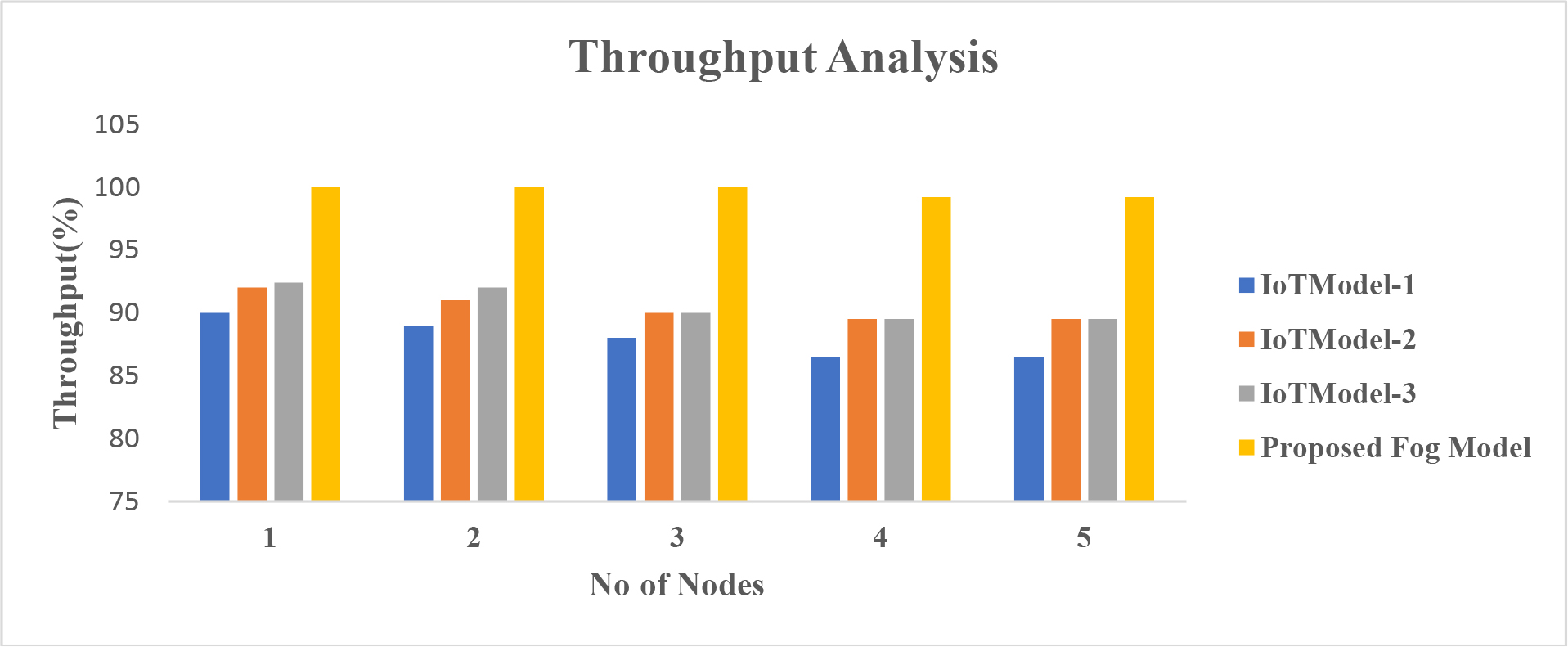
Figure 10:
Throughput Assessment of the Distinct methods in transmitting the medical data sensors
5.3. Computational Overhead
The computational overhead (CO) is calculated based on the running time of the algorithm on each and every fog gateways. Table 3 presents the computational overhead for the different models in the experimental test beds.
Table 3:
Computational Overhead for the Different Fog Based IoT Devices
| Data Size | Computational Overhead (secs) | |||
|---|---|---|---|---|
| IoT-Model-1 | IoT-Model-2 | IoT-Model-3 | Proposed Model | |
| 5MB | 4.2 | 3.9 | 3.5 | 2.8 |
| 10MB | 7.5 | 5.8 | 5.4 | 3.6 |
| 15MB | 10.2 | 9.2 | 9.1 | 5.9 |
| 20MB | 15.9 | 13.6 | 13.5 | 8.2 |
| 25MB | 21.9 | 19.4 | 19.2 | 11.5 |
5.3.1. Discussion
Table 3 presents the computational overhead for the different fog based IoT environment. From the table 3, it is evident the proposed model has consumed only 11.5secs for running the 25MB data which is 30% and 50 % less than the existing IoT models. As the data size increases, proposed DAPA based fog model has lesser computational overhead than the other models which is illustrated strongly in Table 3.
6. Conclusion and Future Direction
This research paper proposed a fog based IoT framework for the healthcare data with the novel DAPA distribution of fogs nodes. For an effective transmission of the medical data, distance aware placement algorithm is deployed for the fog nodes near the IoT nodes. Experimentation is conducted employing the real time test beds designed based on the NodeMCU and Raspberry Model B+ with MQTT protocol as the major communication media. Computational Overhead, Latency and throughput are calculated and measured with the traditional methods. Results demonstrates the recommended approach has shown 50% faster than the existing models and produces 99% throughput in transmitting the medical data. The DAPA based distributed Fogs proves its strength in handling the medical data with the less latency and high performance.
As the future direction, light weight security framework is needs more brighter light to ensure the security of data against the growing multiple attacks. The implementation of secured fogs in the proposed framework will increase the higher mitigation performance against the eavesdropping attacks.
Notes
[1] Conflicts of interest Conflicts of Interest: The authors declare that they have no conflicts of interest to report regarding the present study.