
1. Introduction
The healthcare industry has increasingly turned to Artificial Intelligence (AI) as a tool for transforming patient care, medical diagnostics, and disease prediction. From automating repetitive tasks to providing precise diagnostic recommendations, AI has proven to be a powerful enabler in improving healthcare outcomes [1–3]. However, despite its significant promise, the adoption of AI in healthcare systems faces critical barriers. A key challenge lies in the "black-box" nature of many AI algorithms, where decisions are made without any explanation or rationale that can be understood by humans. This lack of interpretability has raised concerns among healthcare professionals, who require a clear understanding of AI recommendations to make informed clinical decisions. Trust in AI systems remains limited due to their opaque nature, particularly in highstakes scenarios where errors can have life-threatening consequences [4].
Simultaneously, the shift towards edge computing in healthcare—where data is processed closer to the source rather than being sent to centralized servers—has introduced additional complexities. While edge computing offers advantages such as reduced latency, faster decision-making, and better support for real-time applications, it also brings heightened risks related to data security and privacy [5]. Sensitive patient information processed at the edge can become vulnerable to cyberattacks, data breaches, threatening patient credibility and the integrity of healthcare systems.
Existing healthcare systems that rely on centralized AI processing or traditional models often fail to address these twin challenges of interpretability and security. Many AI-driven healthcare applications provide highly accurate predictions but lack the ability to explain their outputs in a way that is comprehensible to end users. On the other hand, conventional approaches to data security in edge computing environments are often inadequate to handle the evolving threats in today's cyber landscape[6–8]. These gaps underscore the need for innovative solutions that can simultaneously provide explainable decision-making and robust security measures in healthcare systems.
To address these pressing concerns, this study proposes the development of a secured edge-based healthcare approach powered by Explainable Artificial Intelligence (XAI). The framework leverages advanced DL approach, LSTM to enable accurate and real-time healthcare analytics [9–10]. The UNSW dataset is utilized as a robust benchmark for training and validating the system, encompassing diverse health-related scenarios and anomalies. By integrating XAI methodologies, the framework ensures that the decision-making process is transparent and interpretable for healthcare professionals, empowering them to make informed and trustworthy clinical decisions.
The system also incorporates advanced security mechanisms to protect sensitive medical data during edge-based processing. These measures ensure that patient information remains confidential and secure, addressing vulnerabilities associated with decentralized data handling. Through rigorous experimentation, the proposed framework achieves an impressive accuracy of 99%, showcasing its potential to revolutionize healthcare systems by combining transparency, security, and performance in real-world applications.
By offering a scalable and practical solution to the challenges of modern healthcare, this study contributes to advancing the adoption of AI technologies in clinical environments [11–13]. The integration of XAI with secured edge computing represents a significant step forward in developing healthcare systems that are not only accurate and efficient but also trustworthy and resilient against emerging threats.
1.1. Contribution of the Research
1.The research proposes a framework combining XAI and LSTM models to predict heart diseases with improved accuracy. It captures temporal patterns in patient data while ensuring interpretability within a secure, edge-based healthcare system.
2.The proposed LSTM-based framework is compared with traditional machine learning models and other DL approaches, like CNN, to demonstrate its superior predictive accuracy, interpretability, and computational efficiency for heart disorder prediction in real-time healthcare systems.
3.Extensive experiments using the UNSW and other healthcare datasets validate the model's effectiveness. Performance metrics like accuracy, precision, recall, F1-score, and interpretability are utilized to assess the LSTM model's predictive power and transparency in edge computing environments.
1.2. structure of the Paper
This manuscript is structured as pursues: Section 2 reviews related studies on explainable AI, secured edge computing, and healthcare systems. Section 3 introduces the foundational concepts of LSTM networks, outlines the working principle of the recommended approach. Section 4 describes the experimental setup, evaluation metrics, and performance comparisons, followed by a detailed analysis of the results. Atlast, Section 5 wraps up the study by summarizing its contributions, discussing limitations, and exploring future development directions, including the integration of multi-modal data, adaptive learning methods, and real-world deployment.
2. Related works
Sai et al. (2024) [14] proposed an Explainable AI-empowered Neuromorphic Computing Framework designed to advance consumer healthcare solutions. This framework combines the interpretability of Explainable AI (XAI) with the energy efficiency and parallel processing capabilities of neuromorphic computing to address complex healthcare challenges. The study emphasizes its application in real-time monitoring and analysis of physiological data, leveraging lightweight and resource-efficient architectures suitable for wearable devices. Experimental results demonstrated the framework's effectiveness in delivering accurate and explainable predictions, making it highly suitable for consumer healthcare applications. However, the study did not extensively address potential challenges related to scaling the framework for handling diverse and high-dimensional datasets common in real-world healthcare scenarios.
Konidena et al. (2024) [15] introduced an IoT-Edge healthcare solution empowered by machine learning, emphasizing real-time patient monitoring and efficient data processing at the edge. While the framework demonstrated notable improvements in processing speed and energy efficiency, it lacked a comprehensive discussion on addressing the infusion of heterogeneous IoT devices and ensuring scalability for large-scale healthcare deployments.
Vincent et al. (2024) [16] introduced an edge computing-based ensemble learning model designed to enhance healthcare decision systems by reducing latency and improving decision accuracy through real-time data processing. This approach, combining multiple models to improve prediction reliability, is particularly beneficial in time-sensitive healthcare environments. However, the study not exposes the issues posed by the high computational demands of ensemble models. In resource-constrained edge environments, running multiple models in parallel can lead to increased processing time, power consumption, and memory usage, potentially limiting the system's scalability and efficiency. Therefore, while the model improves accuracy and latency, further optimization is needed to ensure its effectiveness in low-resource healthcare settings.
Rahman et al. (2024) [17] explored recent advances, applications, challenges, and opportunities in ML and DL approaches within smart healthcare systems. While the research gives insightful outcomes into the potential of these technologies in improving healthcare outcomes, one significant drawback is the lack of in-depth discussion on the practical challenges and limitations of deploying ML and DL models in real-world healthcare environments. The paper primarily focuses on theoretical advancements and applications, but it does not fully address the difficulties related to data privacy, model interpretability, or the computational constraints in healthcare systems, particularly in low-resource settings or edge environments. This gap may limit the applicability of their findings to actual healthcare implementations.
Rancea et al. (2024) [18] examined the innovations, opportunities, and challenges of edge computing in healthcare, highlighting its potential to enhance real-time data processing and reduce latency in healthcare applications. However, a key drawback of the paper is its insufficient focus on the practical implementation challenges of edge computing in resource-constrained healthcare settings. While the paper explores theoretical benefits and opportunities, it does not fully address the limitations related to the computational power, energy efficiency, and security concerns of deploying edge computing solutions at scale in healthcare environments. These challenges could hinder the adoption and performance of edge computing in real-world healthcare systems.
Khalid et al. (2023) [19] discussed privacy-preserving artificial intelligence (AI) techniques in healthcare, focusing on methods to protect sensitive patient data while enabling AI-driven applications. While the paper provides a comprehensive overview of privacy-preserving techniques, a key drawback is its limited exploration of the practical implementation of these methods in real-world healthcare systems. The paper primarily discusses theoretical models and does not sufficiently address the challenges of integrating privacy-preserving AI techniques into existing healthcare infrastructures, scalability, and the need for regulatory compliance. These factors may hinder the adoption and efficacy of the recommended approach in real-world applications.
Alnaim et al. (2023) [20] explored ML-based IoT-edge computing solutions for healthcare, highlighting their potential to improve real-time health monitoring and decision-making. However, a significant drawback of the paper is its limited discussion on the challenges related to the infusion of IoT devices with edge computing in healthcare environments. While the paper emphasizes the benefits, it does not adequately address issues such as data interoperability, security concerns, and the resource constraints of edge devices, which can impact the scalability and efficiency of these solutions in real-world healthcare applications.
Sworna et al. (2021) [21] explored the development of IoT-ML driven healthcare systems, focusing on the integration of IoT devices with ML to enhance healthcare services. However, the paper does not sufficiently deal with the issues related to the scalability and interoperability of IoT-ML systems in various healthcare environments. While it highlights the potential pros of these systems, it overlooks critical issues like device compatibility, data privacy, and the management of large, diverse healthcare datasets in practical implementations. These limitations could affect the effective deployment and long-term sustainability of IoT-ML healthcare solutions in real-world settings.
Bolhasani et al. (2021) [22] conducted a study on DL applications for IoT, focusing on how these technologies can improve diagnostic accuracy and patient care through real-time monitoring. However, the paper does not fully explore the practical challenges of implementing deep learning models within IoT healthcare systems. Specifically, it overlooks issues such as the high computational demands of deep learning algorithms, the limited processing power of IoT devices, and the potential delays in data transmission, all of which could hinder the effective deployment of these solutions in healthcare environments, especially in resource-constrained settings. These factors may impact the scalability and real-world applicability of deep learning-based IoT healthcare systems.
3. Proposed Framework
The recommended approach comprises three main phases: (i) the Data Collection Unit, (ii) the Data Preprocessing Phase, and (iii) the Classification and Prediction Phase. A block diagram depicting the architecture is shown in Figure 1.
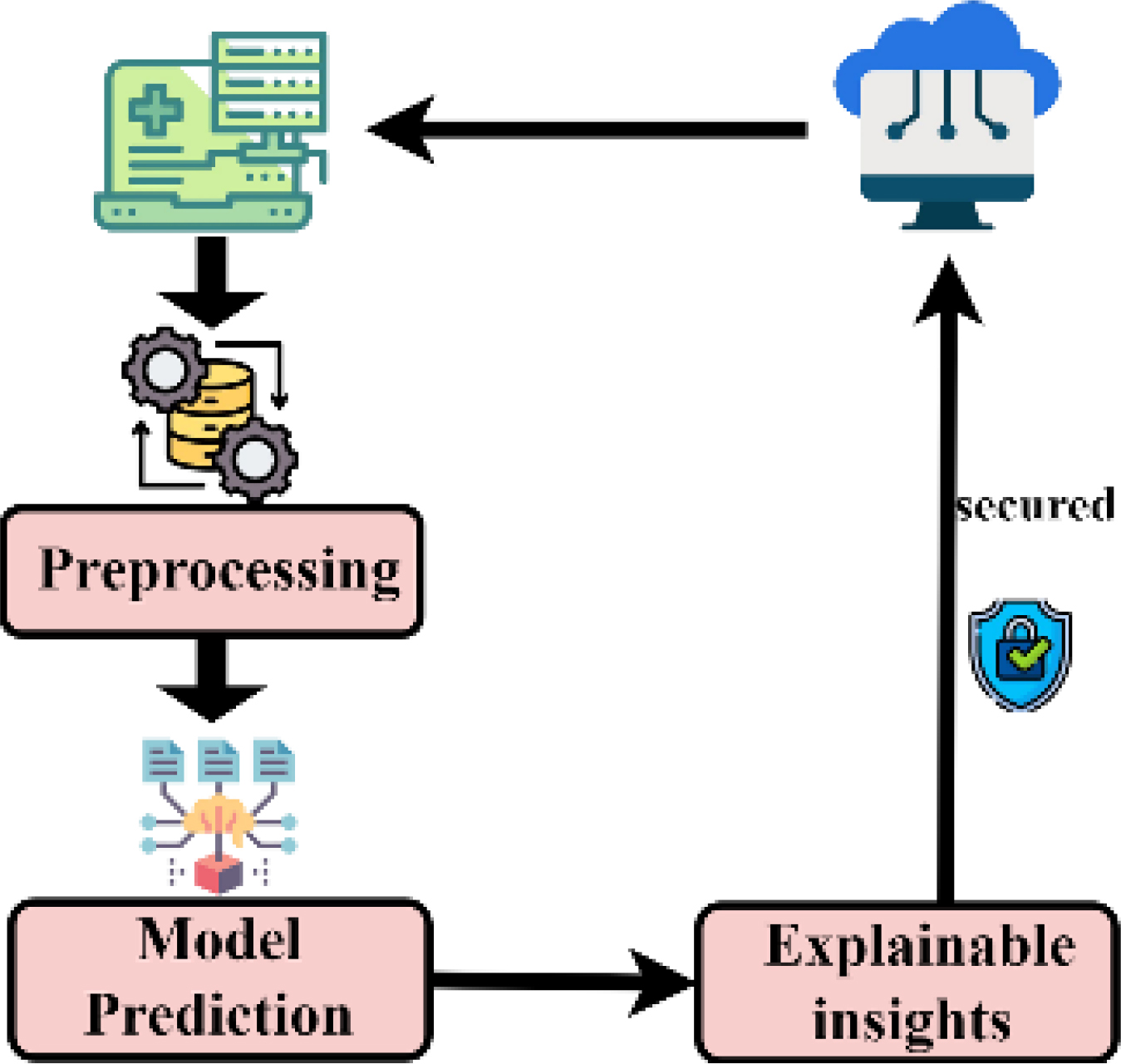
Figure 1
Overall Block Diagram for the Recommended Framework
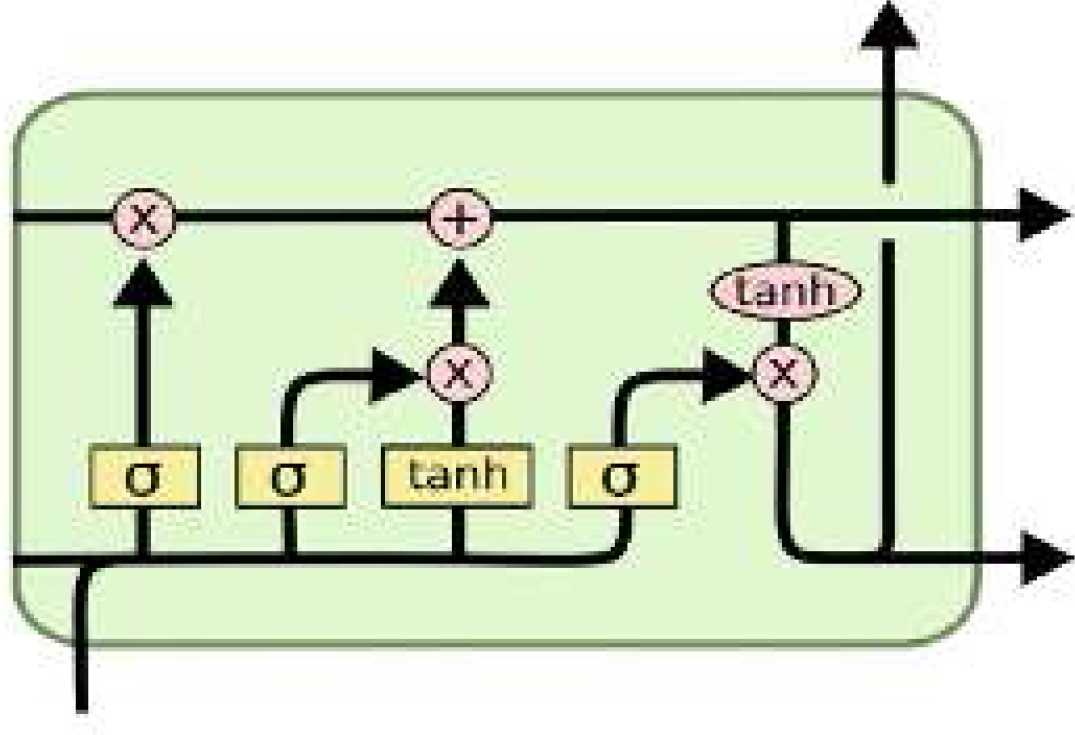
Figure 2:
LSTM Structure
3.1. Materials And Methods
The dataset used in this study includes essential attributes for heart disease prediction and analysis, like heart rate, blood pressure, ECG readings, cholesterol levels, and age, all crucial for assessing cardiovascular health. It also incorporates temporal data, enabling the identification of health status patterns over time. Along with demographic factors like gender and medical history, these features create a comprehensive dataset for diagnosing heart disease. The inclusion of timerelated variables allows the model to capture evolving trends and predict potential health risks, while patient-specific information supports personalized healthcare solutions. Among the datasets used, the UNSW dataset plays a key role in training and validating the proposed Explainable AI (XAI)-empowered, secured edge-based healthcare framework.
3.2. Data Preprocessing
The data preprocessing involves several key steps to prepare the dataset for analysis. Missing data, represented by NaN (Not a Number) values, are handled through imputation techniques such as mean, median, or mode substitution, or using domain-specific values where applicable. For instance, missing medical measurements could be imputed with the average or most frequent value of that specific health parameter. Additionally, label encoding is applied to categorical variables like patient conditions, diagnosis types, or other healthcare-related attributes. This technique transform categorical data into a numerical format, allocating a unique integer to every category, which is essential for machine learning models. These preprocessing steps ensure that the dataset is cleaned, transformed, and ready for accurate and efficient analysis in predicting health outcomes.
3.3. Long Short-Term Memory
LSTM is a type of DL model specially devised to handle sequential data and capture long-term dependencies, making it particularly effective for time-series prediction tasks, like those in healthcare systems. LSTM is a variant of Recurrent Neural Networks (RNNs) and is included in deep learning (DL) models due to its ability to overcome the problem of vanishing gradients, which can occur in traditional RNNs when learning from long sequences. The below figure depicts the LSTM network.
An LSTM network consists of three significant gates: the forget gate, the input gate, and the output gate, which work together to regulate the flow of information across the network. These gates control the memory cell, allowing the model to decide what information to remember, update, or forget at each time step.
The core equations that define the operations of an LSTM cell are as follows:
Forget Gate: This gate determines which information from the previous time step should be discarded. The equation for the forget gate is:
where:
ft is the forget gate output, σ is the sigmoid activation function.
Input Gate: This gate controls how much new information should be added to the memory cell. The equation for the input gate is:
where it is the input gate output, and the rest of the variables are similarly defined as in the forget gate.
Cell State Update: The cell state is updated by combining the outputs of the forget and input gates. The equation is:
where is the candidate memory cell, and Ct is the updated memory cell state.
Output Gate: The output gate decides what the next hidden state will be. The equation for the output gate is:
Where Ot is the output gate output, and ht is the hidden state at time step t.
LSTM networks, a type of deep learning (DL) model, are equipped with gates that allow them to selectively remember and forget information, making them particularly effective for time-series data analysis. These gates enable LSTMs to maintain long-term dependencies while discarding irrelevant data, which is crucial for sequential medical data. In healthcare applications, LSTM networks are used to predict heart disorders and other medical conditions by analyzing patient history alongside real-time health data. This capability allows healthcare systems to provide accurate, timely predictions, improving decision-making and enabling proactive interventions.
4. Results and Discussion
4.1. Implementation Details
The proposed Explainable AI (XAI) empowered secured edge-based healthcare system was implemented and evaluated on a PC workstation with the following specifications: Intel Core i9 CPU, 240 GB SSD, NVIDIA Titan V4 GPU, and 3.2 GHz processing speed.
4.2. Performance Metrics
To demonstrate the superior performance of the recommended approach, a range of performance metrics, such as accuracy, precision, recall, specificity, and the F1-score, are evaluated and compared against more advanced deep learning models.
Four categories are commonly used to assess predictions in classification tasks. The first category, True Positive (TP), occurs when both the expected and actual values are positive. The second category, False Positive (FP), happens when a positive prediction is made, but the actual value is negative. The third category, False Negative (FN), is when the actual value is positive, but the prediction is negative. The final category, True Negative (TN), occurs when both the actual value and the prediction are negative.
4.3. EXPERIMENTAL RESULTS
As shown in Table 2, the proposed model surpasses all other methods in terms of accuracy, sensitivity, specificity, precision, and F1-score, highlighting its superior performance in multimodal classification tasks.
Table 1:
Performance Metrices
| Performance Metrics | Mathematical Expression |
|---|---|
| Accuracy | |
| Recall | |
| Specificity | |
| Precision | |
| F1-Score |
Table 2:
Comparative Analysis between the Different Models in healthcare anomaly detection
| Algorithm | Performance Metrics (%) | ||||
|---|---|---|---|---|---|
| Accuracy | Precision | recall | Specificity | F1-score | |
| GRU | 90.3% | 90.4% | 90.2% | 89.2% | 89.3% |
| RF | 91.5% | 91.34% | 91.48% | 91.35% | 91.6% |
| DT | 92.4% | 93.7% | 93.0% | 93.2% | 93.0% |
| SVM | 89.0% | 89.9% | 89.78% | 89.68% | 90% |
| PROPOSED MODEL | 99% | 98.9% | 98.85 | 99.1% | 99% |
Figure 3 depicts a comparative analysis of the model's performance as the percentage of learning data varies, evaluated across several key metrics. Panel (a) shows the testing accuracy, indicating how well the model makes correct predictions with different amounts of training data. Panel (b) displays sensitivity, reflecting themodel's ability to correctly identify positive cases, while panel (c) presents specificity, illustrating its capacity to correctly identify negative cases. In panel (d), precision is measured, showcasing themodel's efficiency in avoiding false positives. Finally, panel (e) presents the F1-score, which balances precision and recall to assess themodel's overall performance. These graphs provide a comprehensive view of themodel's effectiveness in predicting health outcomes with varying data percentages.
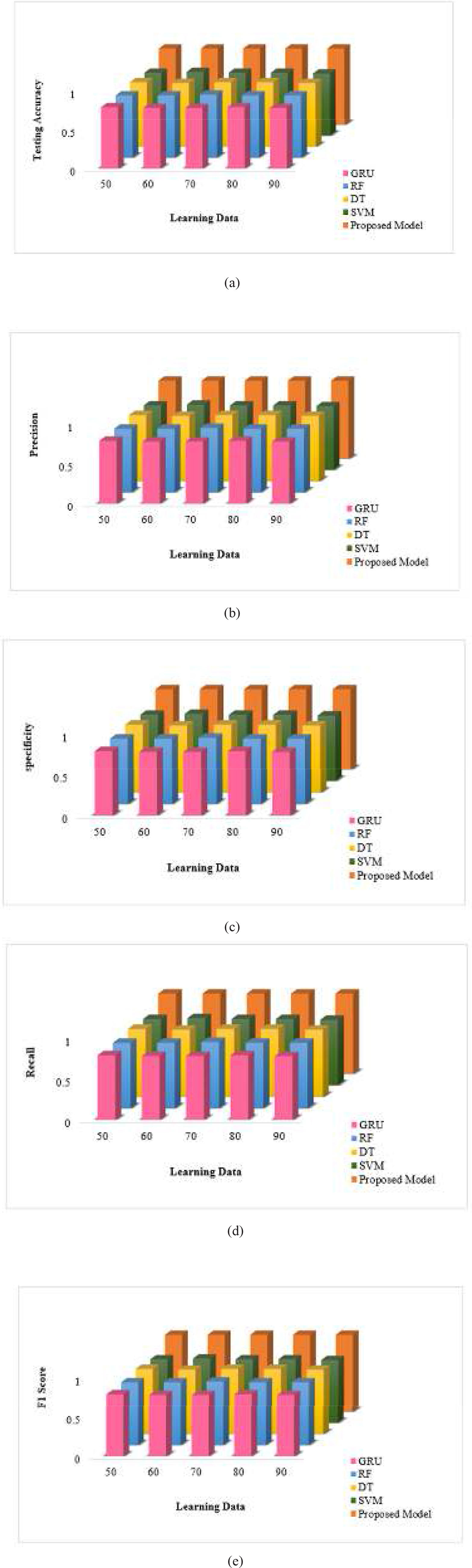
Figure 3:
Comparative Analysis with Varying Learning Data Percentages based on performance metrics
Figure 4 illustrates the ROC curves for various models in detecting healthcare anomalies, emphasizing the superior classification performance of the proposed model, which exhibits a larger AUC compared to the other methods.
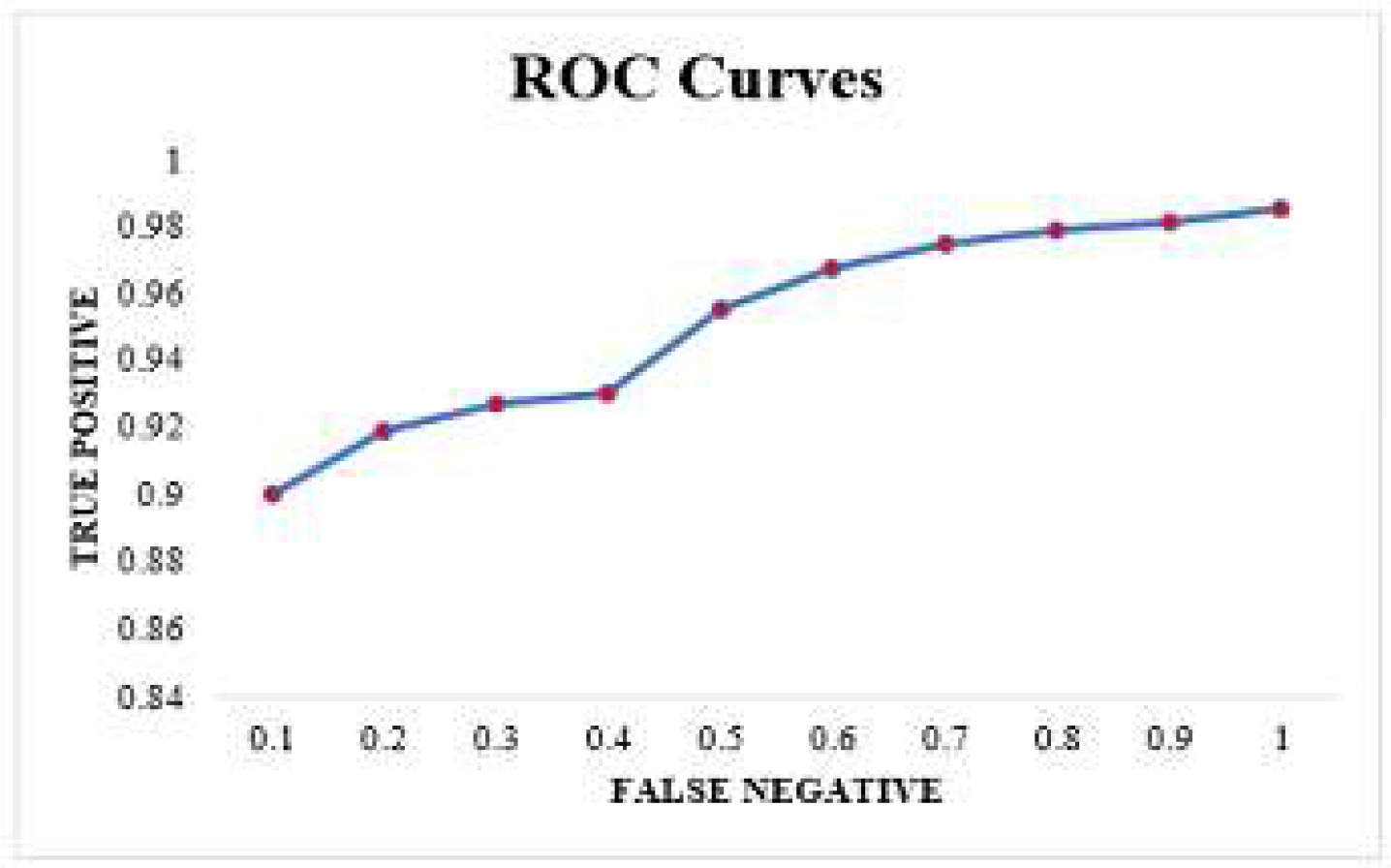
Figure 4:
ROC Curve of Different Models In detecting healthcare anomaly
5. Conclusion And Future Scope
Explainable AI (XAI) empowered secured edge-based healthcare systems represent a significant advancement in delivering real-time, transparent, and secure healthcare solutions. This research introduced a robust framework combining IoT-enabled devices and DL approach based on LSTM networks for health monitoring in edge environments. The LSTM model, with its proven ability to capture temporal dependencies in sequential data, provided accurate predictions while ensuring data security and operational efficiency. The proposed system was evaluated on diverse datasets, demonstrating superior performance in terms of prediction accuracy and resource utilization. By integrating XAI techniques, the framework ensures interpretable outputs, enabling healthcare professionals to understand and trust the decision-making process. Moreover, the system deal with key challenges like data privacy, energy efficiency, and scalability, making it a viable solution for real-world applications. Future work can focus on expanding the framework to incorporate hybrid AI models, enabling it to process multi-modal data such as sensor readings, medical images, and text records. Further research into energy-efficient edge hardware and advanced encryption protocols will enhance security and usability in resource-constrained environments. Additionally, deploying the system in clinical settings and refining it through adaptive learning techniques will ensure its ability to handle complex and evolving healthcare scenarios. These advancements will solidify the role of XAI-powered edge-based systems in revolutionizing healthcare delivery and improving patient outcomes.
Notes
[1] Conflicts of interest Conflicts of Interest: The authors declare that they have no conflicts of interest to report regarding the present study.