
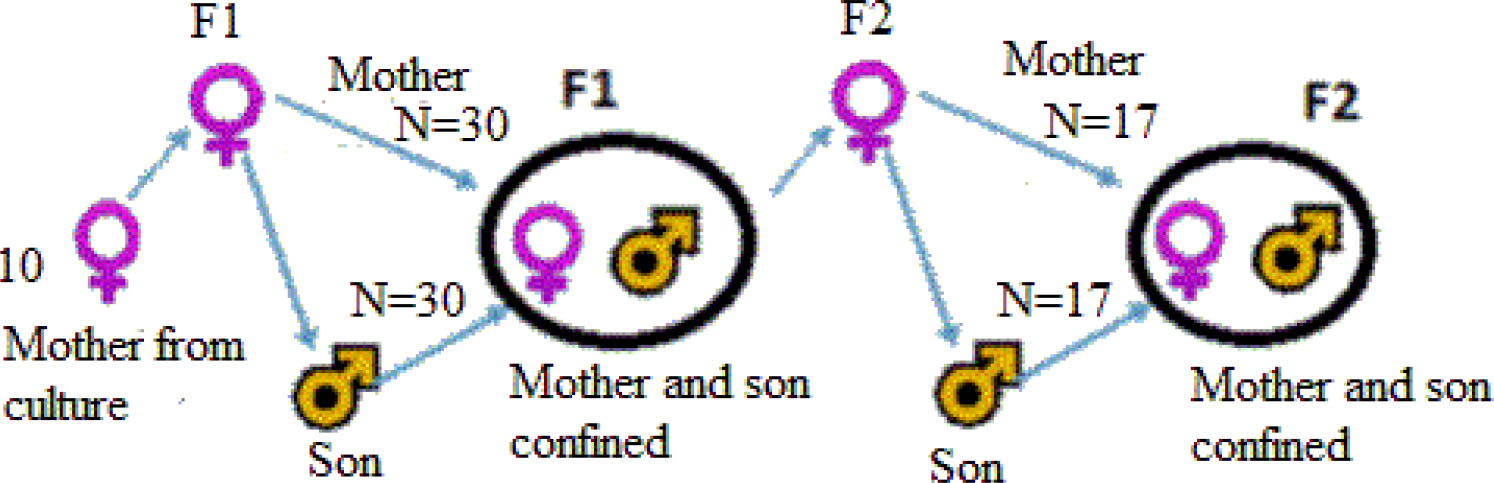
Fig. 1
Mother and son inbreeding scheme in T lineage: 10 females were taken from the stock culture and reared them to produce F1 progeny. Then, 30 F1 virgin females were reared to produce son and when the son became an adult; both mother and son were confined in the same tube for 48 h. The male was removed from the tube after 48 h and its mother kept reared on tobacco leaf discs and named as the F1 generation. Since then, F1 female allowed to produce a son to continue the F2 mother and son inbreeding and similar procedures were used with F1 inbreeding line
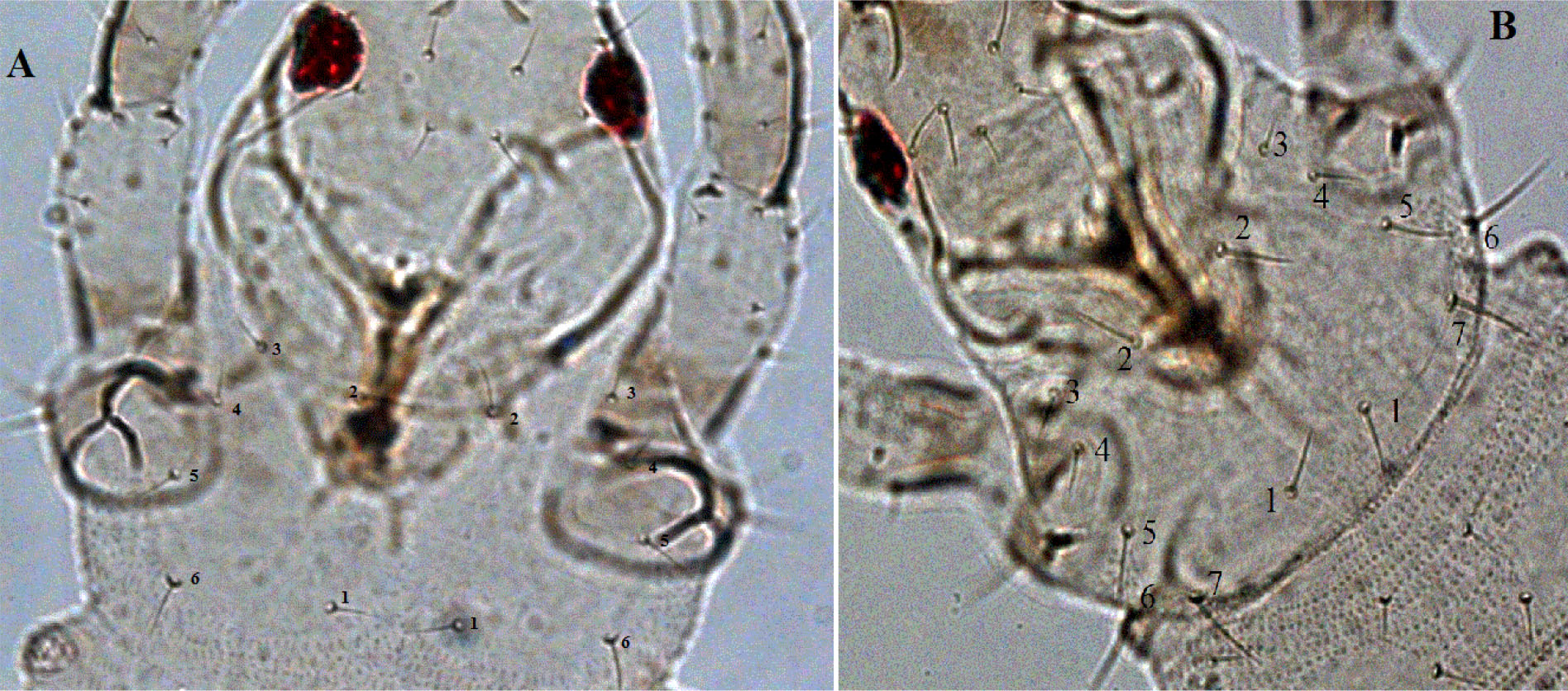
Fig. 2
(A) Indicated that the first instar larvae and the numbers are used to indicate the pairs of setae on the pronotum; (B) Indicated that the second instar larvae and the numbers are used to indicate the pair of setae on the pronotum
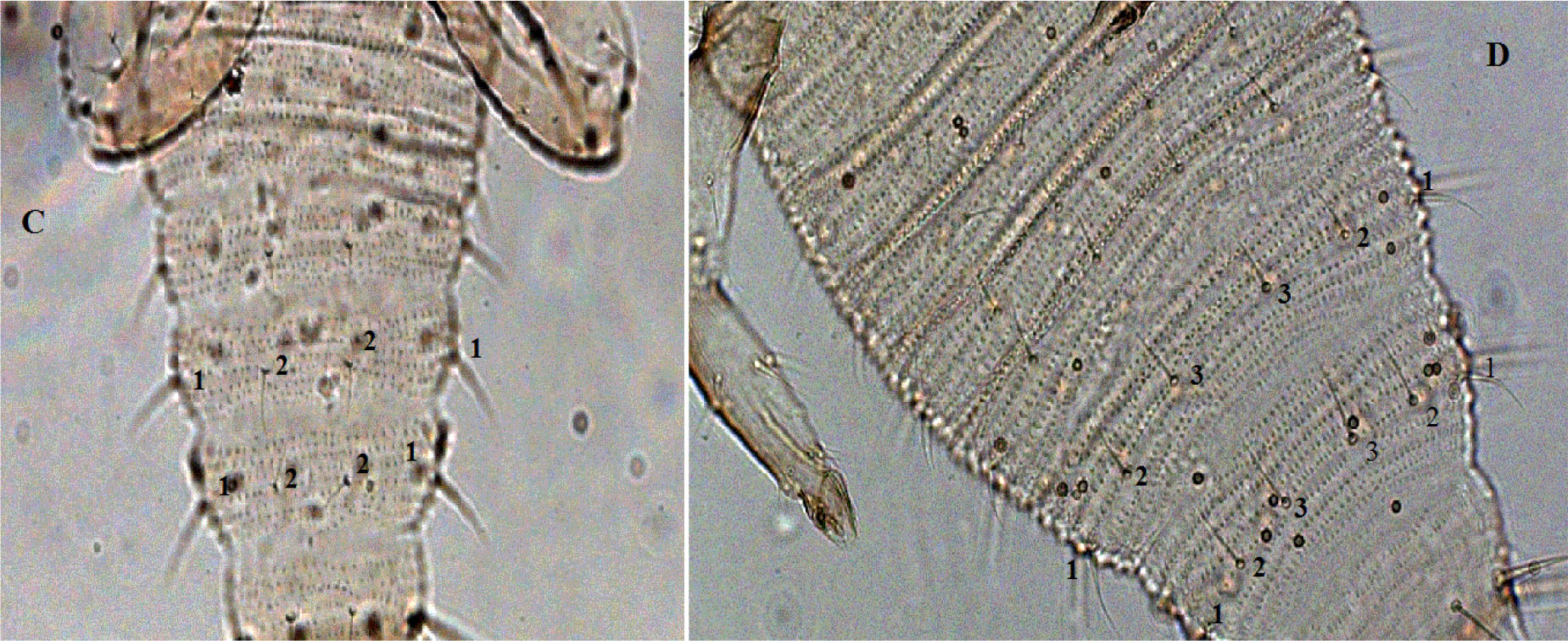
Fig. 3
(C) Indicated that the first instar larvae and the numbers are used to indicate the pairs of setae on the ventral part of the abdomen; (D) Indicated that the second instar larvae and the numbers are used to indicate the pair of setae on the ventral part of the abdomen
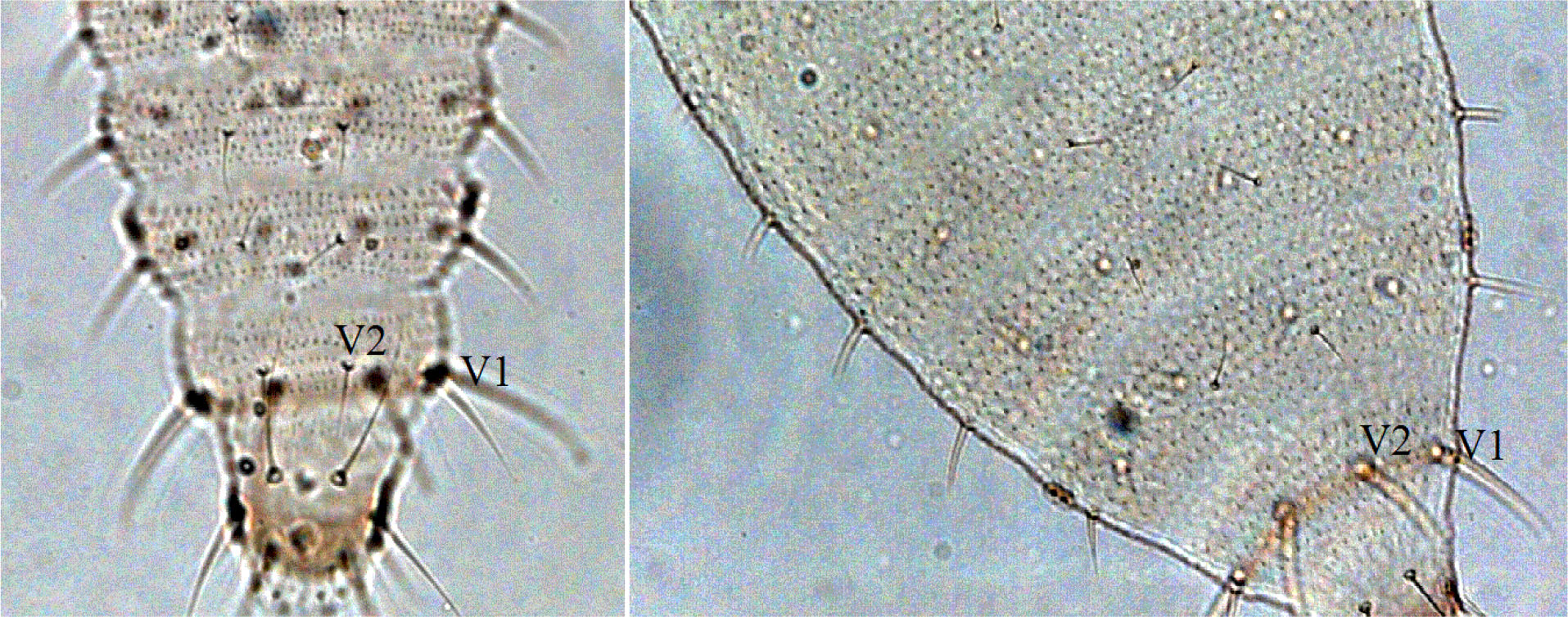
Fig. 4
First instar male. The numbers are used to indicate the pairs of setae on both dorsal and ventral abdominal segment IX
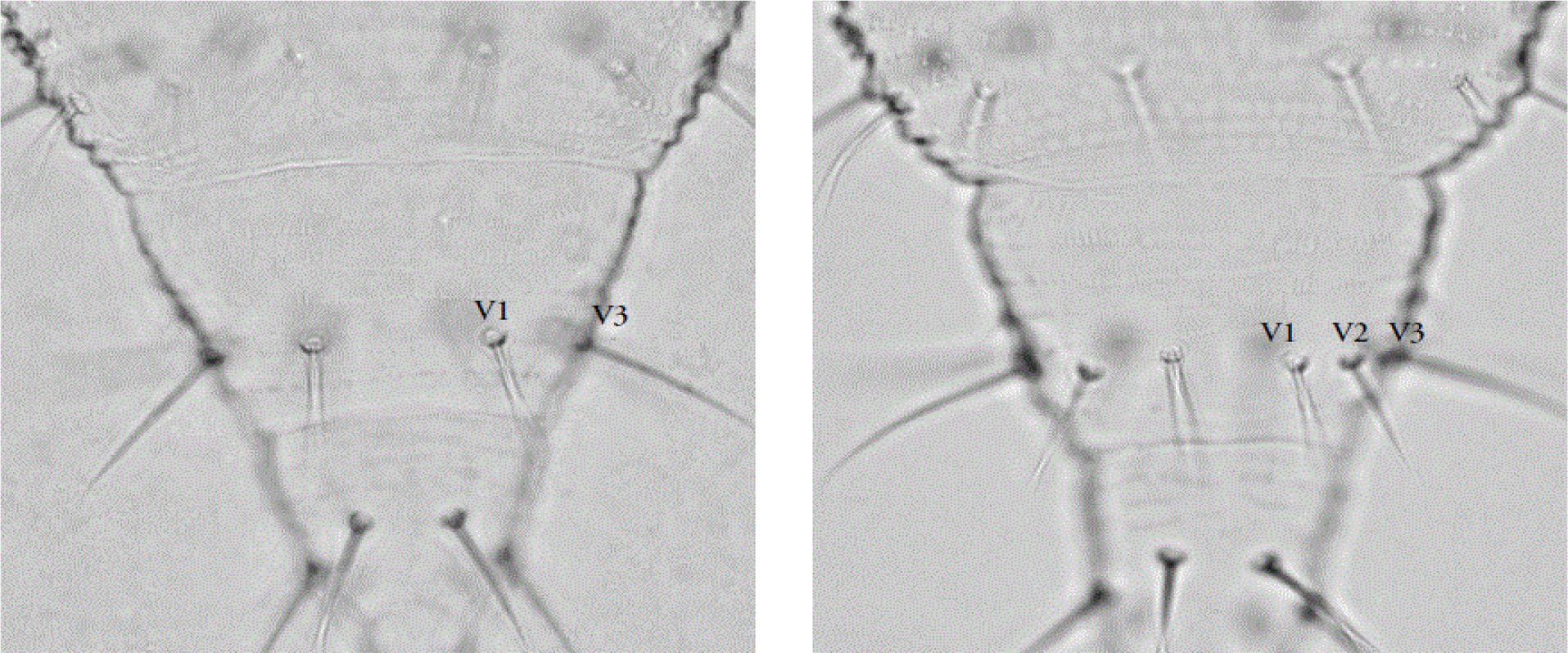
Fig. 5
Second instar male. The numbers are used to indicate the pairs of setae on both dorsal and ventral abdominal segment IX
Table 1
The sex of progeny produced from virgin L1 and T type females that were exposed to male adult at pupal stage
| Lineages | First instar male | Second instar male | Pupae progeny | Adult male progeny | Total male |
|---|---|---|---|---|---|
| L1 | 187 | 95 | 66 | 118 | 466 |
| T | 252 | 121 | 22 | 127 | 522 |
Table 2
The existence of deuterotokous mode of reproduction from F2 mother and son inbreeding
| Generation | No. of inbred female | Male | Female | Reproduction mode | Deuterotoky mother |
|---|---|---|---|---|---|
| F1 | 30 | ✓ | Arrhenotoky | 0 | |
| F2 | 17 | ✓ | ✓ | Deuterotoky | 1/17 |