
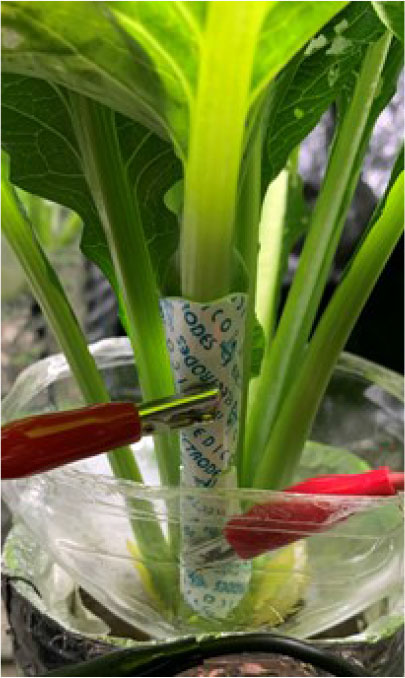
Fig. 1.
Experimental setup for EIS measurements. Two ECG electrodes were noninvasively attached to the petiole of a Komatsuna plant with an electrode separation of approximately 25 mm, enabling in situ impedance measurements without tissue penetration.
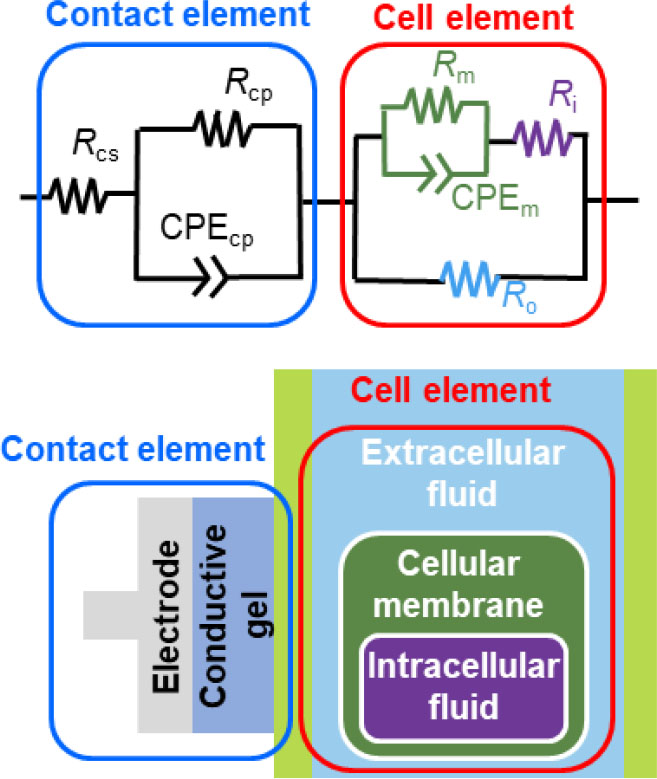
Fig. 2.
Equivalent circuit model used for analysis of EIS data obtained from plant tissues. The model consists of a contact element representing the electrode–plant interface and a cell element representing the electrical properties of plant tissues, including intracellular and extracellular fluids and membrane-associated components.
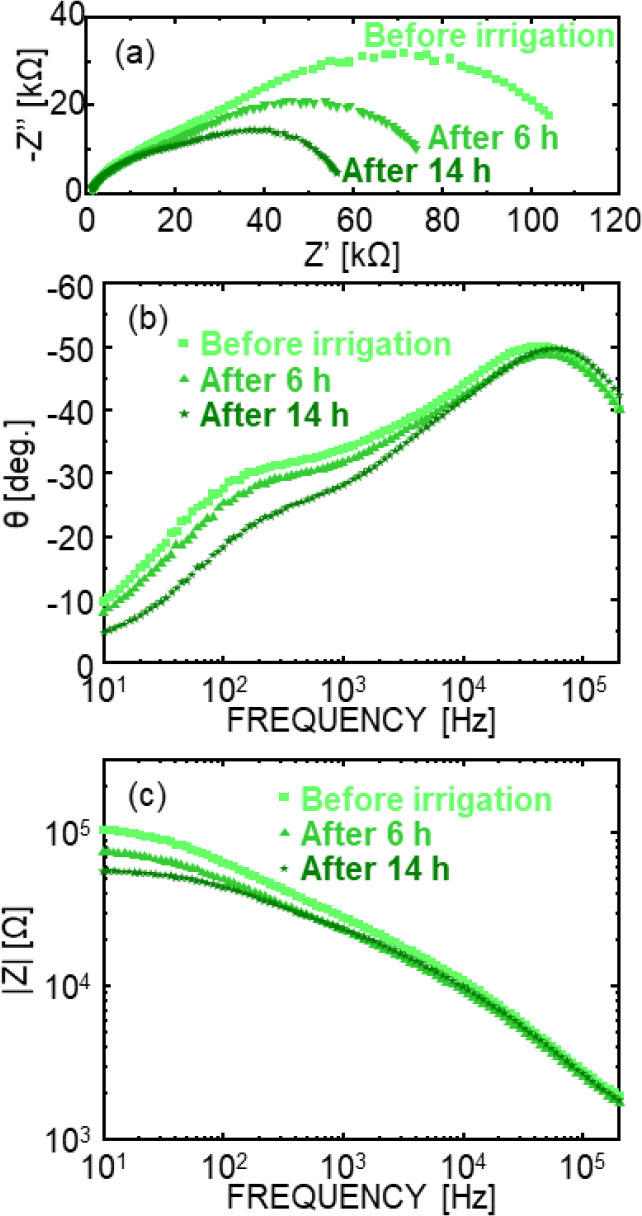
Fig. 3.
Representative impedance responses of Komatsuna following irrigation. (a) Nyquist plots, and Bode plots of (b) impedance magnitude |Z| and (c) phase angle θ measured at different elapsed times after irrigation. Pronounced changes were observed mainly in the low-frequency region, while the high-frequency response remained relatively stable.
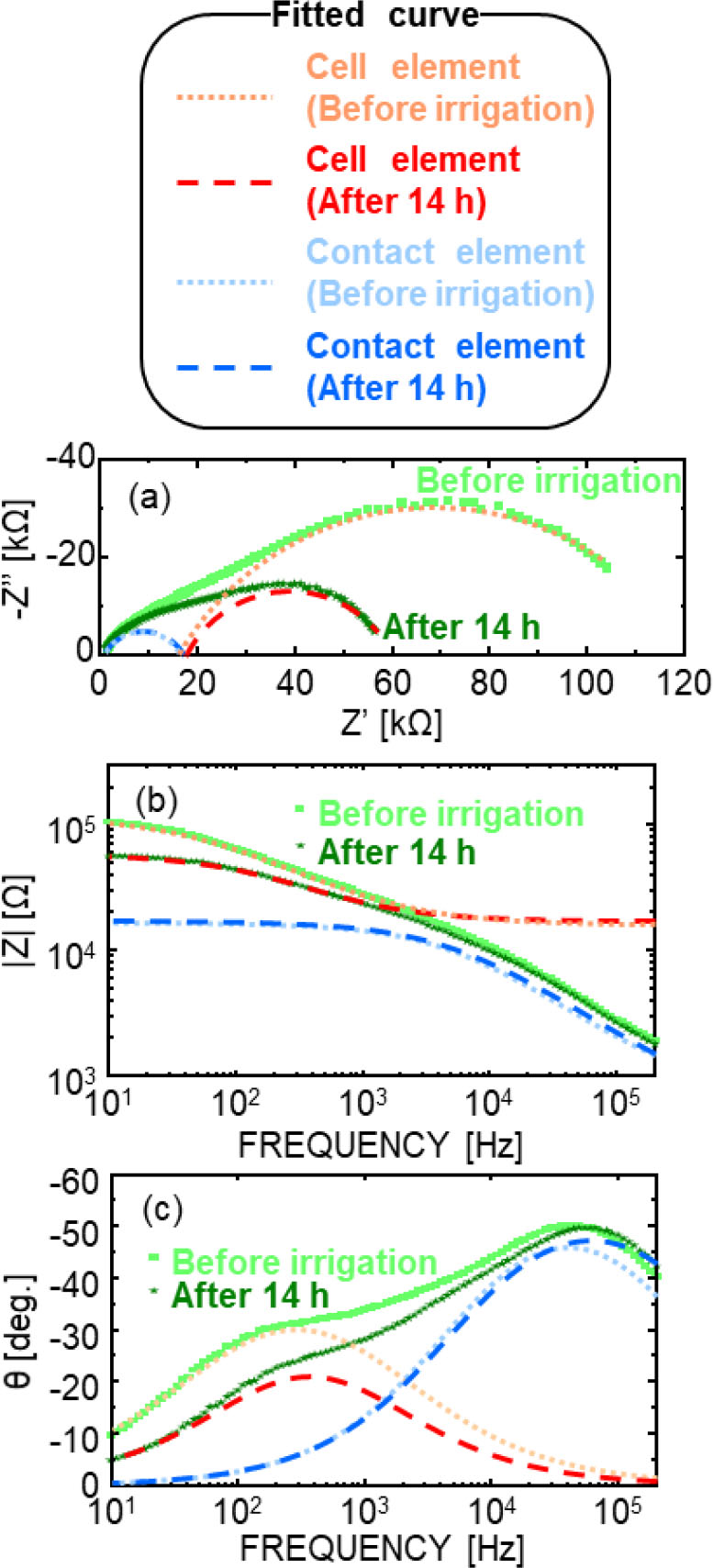
Fig. 4.
Representative impedance spectra and fitting results based on the equivalent circuit model. (a) Nyquist plots and Bode plots of (b) |Z| and (c) θ are shown together with fitted curves, illustrating the separation of the total impedance into contributions from the cell element and the contact element.
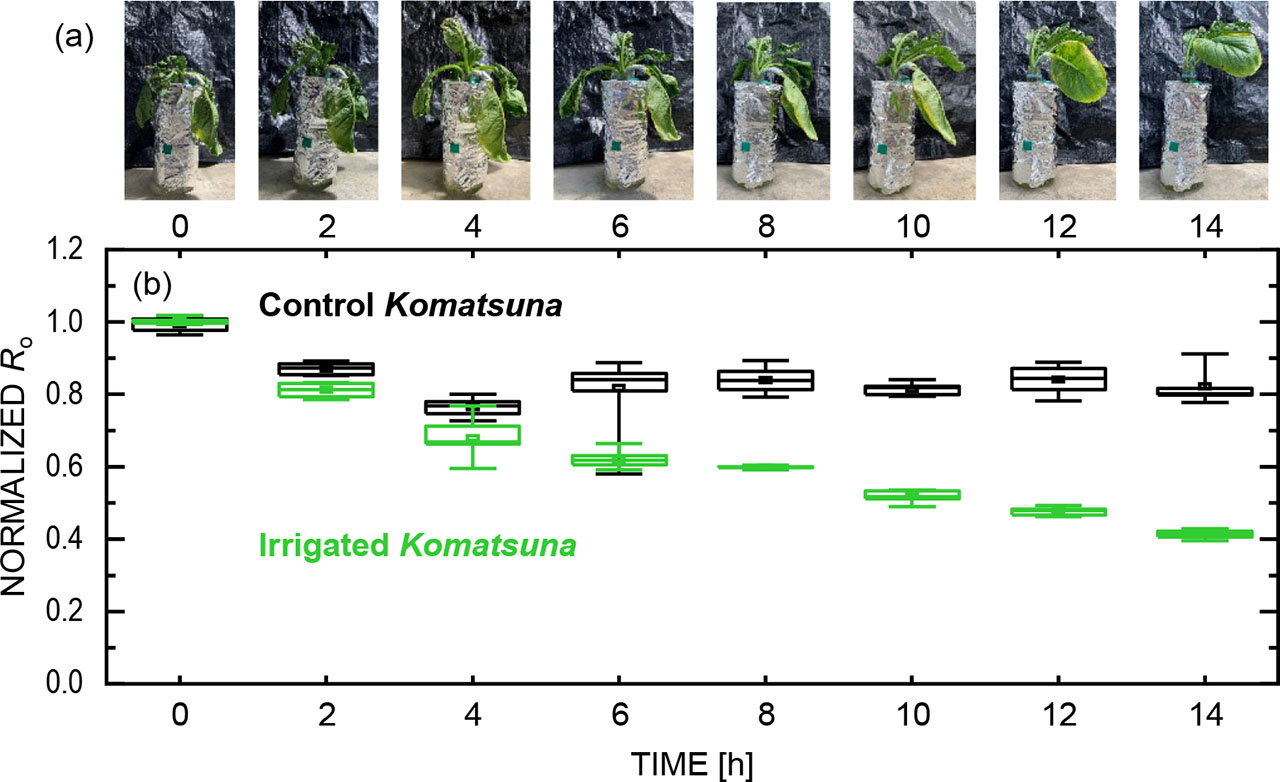
Fig. 5.
Physiological and electrical responses of Komatsuna during irrigation. (a) Time-dependent changes in the visual appearance of irrigated plants. (b) Normalized Ro values derived from equivalent circuit fitting as a function of elapsed time after irrigation, shown for irrigated and control conditions.
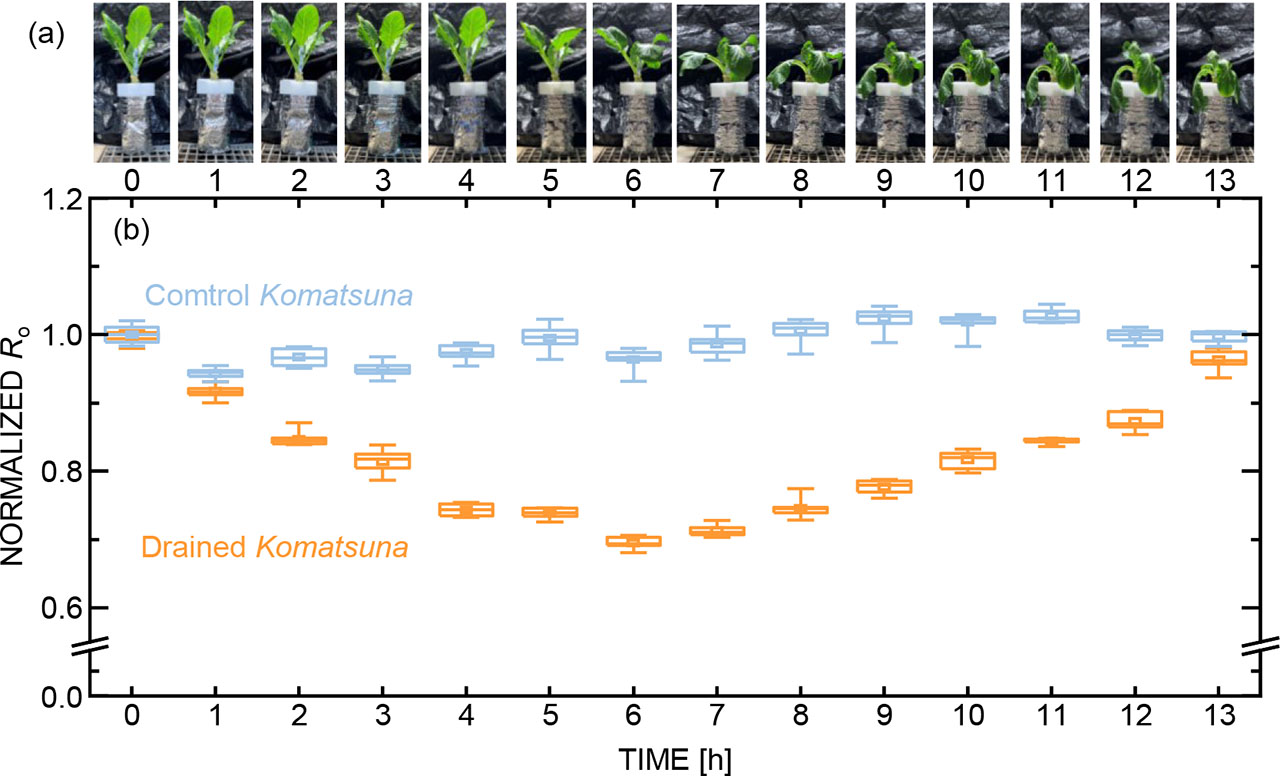
Fig. 6.
Physiological and electrical responses of Komatsuna during drying. (a) Time-dependent changes in the visual appearance of drained plants. (b) Normalized Ro values as a function of elapsed time after drying for drained and control conditions, highlighting impedance changes preceding and exceeding visually detectable stress.