

Introduction
“The struggle of man against power is the struggle of memory against forgetting”
(Kundera 1979, 3).
The Rationale and Subject of this Study
Modern Iranian historiography, particularly its official version, frequently invokes the processes of remembering and forgetting as tools for constructing the nation-state during the “modernization era.” This construction is centered on the exclusion and inclusion of socio-cultural elements selectively chosen by policymakers of the periods.
The management of collective memory in contemporary Iran began with the construction of the “Iranian Nation,” anchored in the “Persianization process,” targeting non-Persian ethnonational identities, including Turks, Kurds, Arabs, and Balochis. Authorities have employed various theoretical and methodological tools to implement this project, which spans two realms: cultural assimilation in the realm of informal relationships and culturicide in the realm of formal relationships against non-Persian identities.
The Persianization process in general and memory management in particular operate across three levels of social relationships:
Micro-level: Altering the habits and behaviors of non-Persian individuals.
Meso-level: Disrupting ethnonational organizations, such as commemorative ceremonies, educational training and demonstrations, that advocate for rights and freedoms.
Macro-level: Establishing a Persian-centric hegemonic discourse and bureaucratic dominance over all Iranian peoples.
This process is enforced through “reward-punishment” mechanisms; by using soft power through incentive stimuli, hard power through punitive laws and intelligent power with more complex components such as gradual displacement of the non-Persian people through investment policies.
If Norton’s (1993, 453) concept of ruling memory is applied to the case of Iran, it can be argued that Persianist dominance extends over objects, agents, and both space and time through the Persianization of historical narratives and the manipulation of collective memory.
The Persianist discourse, rooted in Aryanist ideology erases, exaggerate, or reinterpret past events to serve its narrative. The discourse frames Persianist narratives as a precursor to assimilation and culturicide against non-Persian ethno-nations.
Since the establishment of the Persianist regime in 1925, non-Persian identities, particularly Turks, have been cast into temporal exile, severed from their historical past and exile from their future. The Turkish population found themselves exiled from the history and memories that once bound them with their ancestors and an imagined posterity. They have been marginalized as the “other” in the nation-building process.
The rationale of this study is to examine and reveal the application forms and functions of the destruction and reconstruction of collective memory of non-Persian ethno-nations in the case of Turks in Iran since 1925 in three realms of the social world:
Cultural images and symbols.
Historical artifacts.
Names and language.
This study not only uncovers the mechanisms of memory manipulation but also contributes significantly to the literature on Iran’s ethnopolitical dynamics.
The Conceptual Framework of this Study
The conceptual framework of this study generally is based on the concepts mentioned in Paul Connerton’s study called Seven Types of Forgetting (2008, 60–9):
Repressive erasure, generally, is employed to highlight some histo-cultural elements and hide others by using soft or hard power. It can appear in two forms in totalitarian regimes: In its encrypted covert form without apparent violence and in its most brutal and malign form.
Prescriptive forgetting is generally decided by the government and implemented as an act of the state on behalf of public interest. It differs from repressive erasure because it is believed that it will bring a solution to the previous dispute and will be in the interest of all parties. The decision is publicly announced because it can be acknowledged publicly.
In the transition from conflict to resolution, there may be an implicit, rather than explicit, requirement to forget aimed at fostering societal cohesion and restoring state legitimacy. Totalitarian regimes often exploit this to undermine civil society and suppress civilian agency, driven by a deliberate effort to forget the recent past.
Forgetting that is constitutive in the formation of a new identity, prioritizing the benefits of constructing a new identity over the losses associated with forgetting. This process involves discarding memories deemed impractical for the construction and management of the new identity, integrating forgetting as a mechanism for creating shared memories and a collective identity in a new context. Such construction processes often include tacitly accepted silences, allowing space for contemporary projects to flourish.
No narrative of modernity as a historical project can overlook its reliance on forgetting. This historical transformation entails a prolonged process of cultural-discarding to establish a new identity framed by the emergence of two semantic categories: “new” and “obsolete.” Through this framework, collective memory is shaped to emphasize what is desirable while rendering other elements dispensable.
Structural amnesia was first identified by Barnes (1947, 52). This type of forgetting refers to the position and importance of cultural elements in the structure of social relations particularly in official relations. In the modern era, written texts have played a crucial role in the transmission of collective memory. Therefore, the number of cultural elements that can be held in written form is increased, whereas the number that can be held in the oral memory is decreased. For instance, both the standardization and the elaborateness of official historiography depends on the publication of the history books and the literacy of the citizens. The attraction and function of real historical events are tied to what grandparents have said and the methods of learning about nonofficial history are acquired by listening rather than by reading. In these circumstances the cultural elements that are not textualized are systematically forgotten.
Forgetting as annulment is enforced by the authorities to control the so-called “surfeit of information.” Targeted subjects should immediately get rid of all unnecessary information as deemed by policymakers. What is at issue here is a sort of cultural hegemony. Therefore, forgetting as annulment spreads itself to the whole of the culture through governmental machinery and the structure of feeling. Two facts played a vital role in this process: The systematic archiving implemented by the bureaucratic procedure and knowledge or content produced by knowledge producing institutions.
It shouldn’t be forgotten that these two elements are the essential ingredients of the modern nation-state.
“Taken together, the great archivalization and the new information technologies, the one centralizing, the other diffusive, have brought about such a cultural surfeit of information that the concept of discarding may come to occupy as central a role in the 21st century as the concept of production did in the 19th century”
(Connerton 2008, 65).
In this context, paradigm shifts in the realm of scientific activities and the changing contents of grand narratives regarding universe explanation models can be given as examples. The old narratives and the old core stories of targeted identities slowly become effaced by the hand of the state. “There may be a number of reasons for this, but one at least is a wish to circumvent the problems of overload that flow from the sheer excess of information” (Connerton 2008, 66).
Forgetting as planned obsolescence gives limits to the turnover time of material goods, ideological values, paradigmatic perspectives, and determinant conceptual frameworks. This type of forgetting provides and spurs the facility to exploit market fashions and dominated symbolic elements. The present attacks the rest of time. The present prevails over the past and the future—even the present that’s about to get obsolescence.
This dynamic destabilizes contemporary social identities, fostering ongoing dominant discourse about their altered state. Subjects are conditioned to understand obsolescence through the dominant normative system, which dictates what is considered “old” or “new.” Forgetting plays a critical role in manufacturing constructed obsolescence, serving as a key tool for the modern nation-state in marginalizing targeted identities.
Forgetting as humiliated silence often stems from political expediency, yet it is typically covert and unacknowledged rather than overtly enforced by state apparatuses. This phenomenon manifests as a collective, collusive behavior pattern within civil society, characterized by silence rooted in humiliation and shame. Such silence may reflect a tacitly imposed taboo, where individuals refrain from speaking due to fear, panic, or the inability to articulate their thoughts. However, equating silence with forgetting is not always a consistent or valid inference.
This form of forgetting encompasses two dimensions: The visible material and physical damage, and the deeper emotional or psychological wounds. As Connerton (2008, 68) suggests, acts of silence can repress traumatic memories while simultaneously serving as a survival mechanism, where the desire to forget becomes essential for coping and continuity.
In the context of seven types of forgetting, such as Connerton classified, many of materials related to the collective memory such as archival materials, organized ceremonies, festivals, museums, images, statues, monuments, inscriptions, tombs, attires, names of persons, rivers, mountains, cities, villages, provinces, workplaces, and so forth that are targeted as threats and enemies by the political authority should be destroyed or changed, with the explicit purpose of casting the collective memory of non-Persian ethno-nations into oblivion, and as trivial and unnecessary through the process of Persianization in contemporary Iran since 1925. Details will be shown in the findings section of the research.
Methodology, Method and Data Collection
Scope and delimitations of the study: This study investigates the socio-cultural consequences of collective memory management on Turkish identity within the Persianization process that has been implemented in Iran since 1925, as well as the reactions of Turkish activists to it. The nation-state building process in Iran’s multiethnic society has been marked by systematic discrimination, exclusion, selective inclusion, erasure, rewriting, forgetting, and remembering since 1925. This process has led to the destruction and reconstruction of collective and historical memory of autochthonous Turks as well as other ethnonational identities in the country. This study focuses exclusively on Turkish identity in Iran and does not extend to other ethnic entities, thereby excluding broader comparative analyses of ethnic identities within the country.
This research is delimited to three key realms of Turkish cultural value systems within the memory management process: Images and symbols, historical artifacts, and names and language. It explores manifestations of such practices, ranging from overt physical destruction to more subtle, institutionalized, and indirect discriminatory actions by public authorities.
The problem of the study is implementation of ethnocultural discrimination and its unfair consequences through destruction and reconstruction of collective and historical memory against non-Persian ethno-nations in the case of Turks in Iran since 1925. In this context, the answer to the following question was sought: On which ideological, discursive and aesthetic conception was the process of memory destruction and reconstruction constructed reflexively and what were the consequences?
The purpose of this study is to exhibit how collective memory management, as a form and means of discrimination, has been affecting the images, symbols, historical artifacts, names, and language as elements of Turkish culture in Iran since 1925, and how Turks for anti-discrimination have responded to it.
This study examines the interaction between ethnic politics and the reconstruction of collective memory in depth by addressing the practices of collective memory management towards Turkish identity in Iran. In particular, the adaptation of Connerton’s theory of the “seven types of forgetting” to the Iranian context provides both theoretical and empirical contributions. By simultaneously assessing how collective memory management is implemented at the micro, meso, and macro levels, as well as the reaction patterns of Turkish activists, this approach contributes to both the literature on memory studies and the understanding of Iran’s ethnopolitical dynamics. Thus, it can be regarded as an original study that explores the relationship between power and ethnic identity within the framework of collective memory management.
The literature review revealed that academic studies on collective memory management in contemporary Iran are primarily framed within the context of Persian-centered identity policies, with ethnic memory often treated as an epiphenomenon or, in some cases, as purely theoretical. Furthermore, the review indicated a lack of focused research on the management of ethnic memory, particularly autochthonous Turks in Iran, within the framework of Persianization policies implemented in Iran since 1925. In this context, this research contributes to filling a gap in the literature by examining the impacts of collective memory management policies implemented in the name of national unity on the ethnic memory of autochthonous Turks in Iran, as well as the responses of Turkish activists to these policies. In doing so, it provides a foundation for further in-depth investigations into the subject from multiple perspectives. The following studies were identified in the literature review:
Ebadollahi and Yazdan (2014) investigate Iranian collective memory using a quantitative approach and consider four social cadres of collective memory: Ethnicity, generation, religion, and education. The results of their study indicate that ethnicity, as one of the social cadres, is not highly influential, and collective memory among Iranians is primarily a national rather than an ethnic issue.
Davoodi (2012) states that his theoretical study titled The Role of Collective Memory in the Emergence of Ethnic Conflicts can make significant contributions to policy makers in preventing and managing possible ethno-sectarian conflicts and gaps in Iran.
Salehi Amiri (2009) in his book titled Managing Ethnic Conflicts in Iran, underlines that in Iran, which has a multi-ethnic structure, it is essential to manage diversity instead of assimilationist policies in order to achieve national convergence.
In his study, Memory Policy, Collective Memory, and National Security, Sadeghi Jegheh (2022) examines the approaches and challenges associated with preserving Iran’s cultural and historical capitals. The findings indicate that Iranian society is experiencing a collective memory crisis, driven by the rapid pace of social change, the decentralization of media from state monopoly to a multi-centered structure, and the growing influence of individualism.
Constructivist structuralism 1 and cultural sociological approaches were taken as the main methodological framework of the study, the basic assumptions of which don’t contradict each other (Bourdieu 1989, 14). The cultural sociological approach was used to try to reveal what the process of memory destruction and reconstruction means. Therefore, the answer to the following question was sought: On which ideological, discursive and aesthetic conception was the process constructed reflexively? A constructivist structuralism approach was operated to point to the interaction and relation between macro structural institutions and micro social agencies. By using this approach, it was attempted to indicate the oppressive effects of macro sociopolitical structures on targeted micro agencies and the reactions of subalterns to them during the Persianization process against Turks in Iran since 1925.
The concept of ‘method’ used here considers only the processes of data collection, analysis and evaluation. The type of the research is qualitative, and according to its purpose are both descriptive and interpretive research. Multiple data collection techniques such as observation, interview, and literature review were used to collect primary and secondary data.
The collected data were processed with an inductive investigation strategy. The data collected in visual, auditory and written form were first categorized by using open coding on the basis of semi-structured interview questions. Thus, first, data/information sets were created. As the second stage, the previous datasets were recategorized through axial coding on the basis of their common context, conceptual framework, and relationality. The following themes were revealed with axial coding: Memory destruction and construction processes related to images and symbols, historical artifacts, and names and language.
At the third stage, both the effects of the memory management process and the reactions of Turkish victims were revealed through selective coding. In sum, the collected data were coded according to their thematic similarities, as well as processed, analyzed, and interpreted.
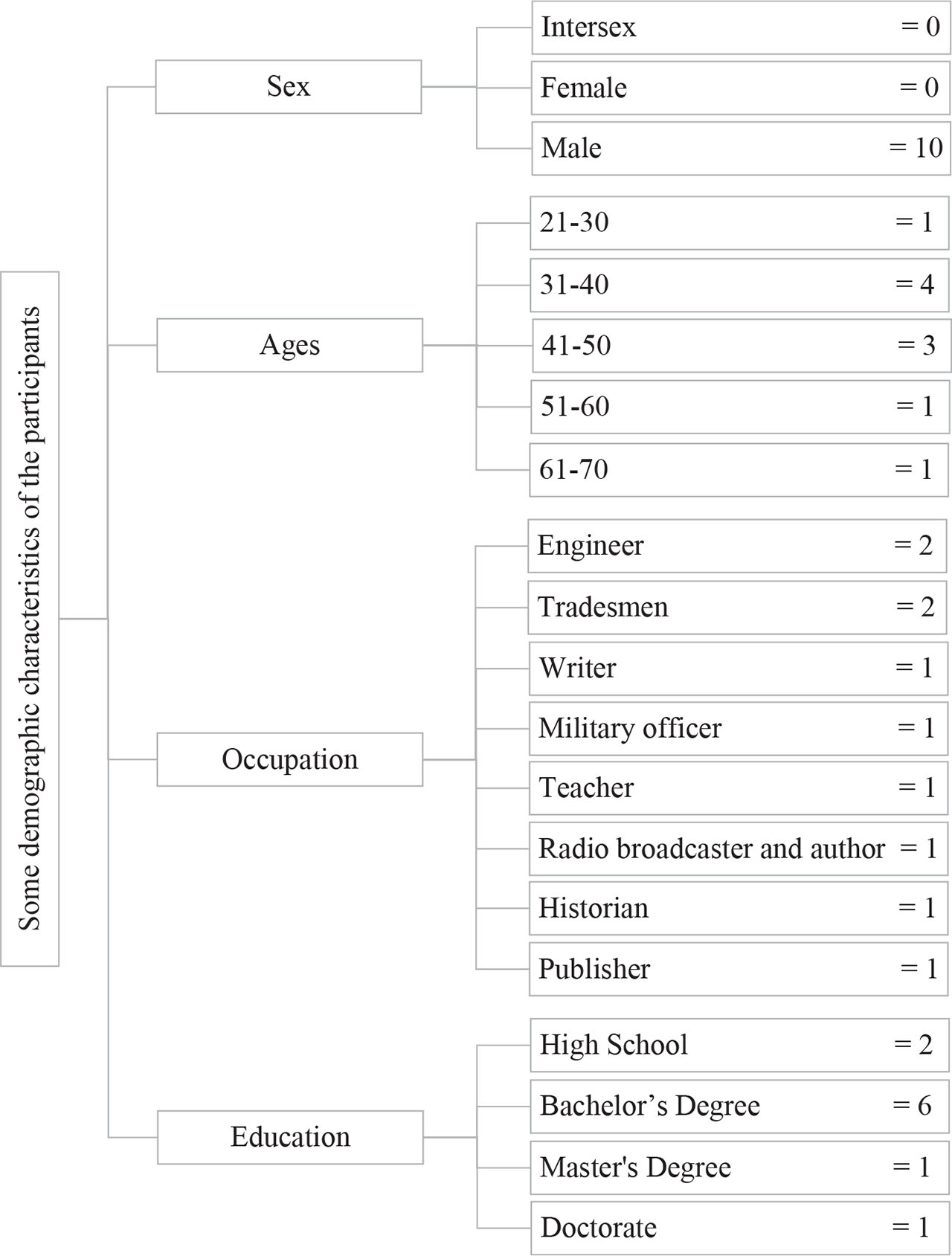
The study population includes elderly people who may have information on the subject, tradesmen, historians, anti-Persianization Turkish activists, and related literature. The sample of the study was determined by purposive cum convenience sampling. The sample for the study includes ten participants, relevant articles and news content, and address signs. Some demographic characteristics of the participants who participated in the face-to-face interviews are as follows:
The Findings and Evaluations
To exhibit the findings of the research, the collected data were subjected to a classification process with a three-stage inductive investigation strategy. The collected data were firstly sorted out by an open coding method on the basis of semi-structured interview questions and singular meaningful related cases in the literature. Thus, first, processed datasets were created. Secondly, the datasets were recategorized through axial coding on the basis of their common context, conceptual framework, and relationality. The main themes of the research findings were determined during memory management process in Iran since 1925, which included images and symbols, historical artifacts, and names and language. Finally, some of the effects of memory management and the reactions of autochthonous Turks as the target audience were presented using the selective coding technique.
Attitudes and Implentation Towards Autochthon Turkish Identity and its Symbols in Iran
Images, names and symbols are cultural codes of semantic world and the reminder of remembering, such as, Turk, the name of one of the largest ethnonational identities in Iran had taken positive meanings such as courage, honesty, beauty, shine, gentleness, purity, clarity, triumph, and conqueror until Pahlavi regime in most of Persian literature 2. However, in post-Qajar Iran during the process of building a Persian-based nation-state identity, the image of the Turk was used in the context of savage, destructive, other, vile, and etc. Then, in many times and places the image of the Turk is changed to Azeri or Iranian in the realms of formal and informal social relationships. This image change was applied to cleave the Turks from their own historical backgrounds and ethnonational identities in order to put them into the melting pot of Iranianization, indeed Persianization.
The Azeri thesis was first put forward in 1925 by Ahmad Kasravi (1946, 11). Notably, there is no historical script to suggest the existence of a language called “Azeri” that has purportedly been spoken by millions over the centuries.
Kasravi writes (1946, 11): “…it is clear that the language or half language had used in Azerbaijan at the time [until 12. Century] was branch of Persian Language which called Azeri.” He adds (1946, 21 and 25):
“I would rather say that this phenomenon has emerged from Median language, but it is not a Median language… And for this reason, we call it ‘half-language’. Azeri had been a ‘speaking (oral) language’, thus there had not been the written form of it, and if there existed any, it had been destroyed.”
Another image change for erasing the image of the Turk is an Iranian thesis put forward in the 1920s by Mahmoud Afshar Yazdi, one of the ultra-Persianist pioneers. Afshar writes (1989, 291): “The issue cannot be other than two statuses: an Azerbaijani is either Iranian or not. If s/he is Iranian, s/he cannot be Turk.”
Nearly a century later, the statements of Ali Younesi regarding Turk and Azeri identities, as President Hassan Rouhani’s adviser on Ethnic Affairs and Religious Minorities, can be interpreted as a clear indication that similar attitudes and policies continue to be officially upheld. Younesi stated (Ghanoondaily 2018):
“Of course, a distinction must be made between Turks and Azeris. Azeris have both Persian language and Persian descent, and they are more Persian than many other regions... A large number of Azeris adopted Turkish and Persianized it... Turkish has been strongly Iranized by Azeris; for instance, 50% of the names of places and their people are Persian... In fact, Azeris have consciously translated this language into Persian. Even in Azeri verbs and pronouns, there is Persian influence. In reality, the Azeri language is a dialect of Persian, and while a part of it is Turkish, a significant portion has become Persian. It could, in fact, be referred to as Persian or Iranian Turkish.”
A recent example of denial and erasure within the Persianist framework is evident in the remarks of Amir Ahmadian, a scholar specializing in Russia, Central Asia, and the Caucasus at Tehran University. During a specialized meeting addressing developments in the South Caucasus, Amir Ahmadian stated (2024): “My concern is that those residing in [Iranian] Azerbaijan identify themselves as ‘Turk.’ It should be noted that the term ‘Turk’ carries a negative connotation and contrary value in our literature. Instead, we should use terms like ‘Azari’ or ‘Tabrizi’.”
A similar allegation was made by Abolfazl Zohrevand, former Iranian ambassador to Afghanistan and Italy, during an exclusive interview with Najva, the political department of the Masaf organization, concerning ongoing regional issues, particularly the 2020 Karabakh War. In an audio file 3 released in July 2022, Zohrevand (2022) stated: “This evil nature of Turks... they are more treacherous than said. There is no such thing as Azerbaijan 4. They are either Iranian or not. They must leave this area.”
This mentality refrains even to pronounce the name of the Republic of Azerbaijan and Turkish people correctly and calls them the fake Baku Republic and Azeri people. This denialist claim displays a clear otherizing and demonizing attitude against the autochthonous Turks in Iran.
Besides the denying and erasing attitudes, the humiliation of the images of being Turk in Iran is another treatment against Turkish identity. Humiliation of Turks and Turkish cultural elements can be easily seen within everyday life activities, the media, and the literature.
Qazvini (1882–1934), a poet of Reza Khan’s era (1925–1941), expresses his emotions and thoughts against the Turks and their language in a poem (1924, 35–6):
“Turkish tongue should be taken from its root, the foots of the tongue should be cut off from the country, it should be jump by double horses over Aras River with Persian tongue, get up early in the morning and tell the people of Tabriz, that is not the time to speak of Genghis in the presence of Zarathustra.”
Qazvini in a lyric poetry addressed to Süleyman Nazif says (1924, 247, 249): “No one ever saw anything but donkeyness from Turks. If a Kurd becomes Turkish, then bring a donkey and act as a showman” and “I ran away from there and said thousand curses of God’s on Turks and their ancestors from kids to elders.”
Similar humiliating stigmatization of Turks can be encountered in the works of poets and writers such as Abul-Qâsem Ferdowsi Tusi (940–1019/1025), Abbas Eqbal Ashtiani (1896–1956), Gholam-Ali Ra’di Azarakhshi (1909–1999) and etc.
The systematic humiliation of autochthonous Turks in Iran is evident in various cultural and everyday contexts, including cinema, television, sports, industry, and public discourse.
In the film Atash (Thirst), a Turkish-speaking character is depicted as animalistic, dishonest, clumsy, and unintelligent (Farahbakhsh 2002, 01:09:15–01:09:42). Similarly, the Fitileh TV series, which aired on state TV Channel Two on November 6, 2015, portrayed Turkish actors as uncivilized and incapable of distinguishing between a toothbrush and a toilet brush, with an additional offensive depiction of bad breath. This led to widespread protests in Turkish-majority cities such as Tabriz, Urmia, and Tehran on November 9, 2015. In response, the series was suspended, and the producer issued an apology (Bezhan 2015).
Disparaging chants targeting Turks are frequently heard at football matches. For example, during a Persepolis Football Club match with Tractor Azerbaijan F.C. on December 29, 2017, thousands of fans repeatedly chanted “donkey” to humiliate Turks (Mashregh News 2017). A similar incident occurred two years earlier at a Malavan Bandar Anzali F.C. match on January 30, 2015, where fans directed the same insult at Tractor Azerbaijan F.C. supporters (IRNA 2015).
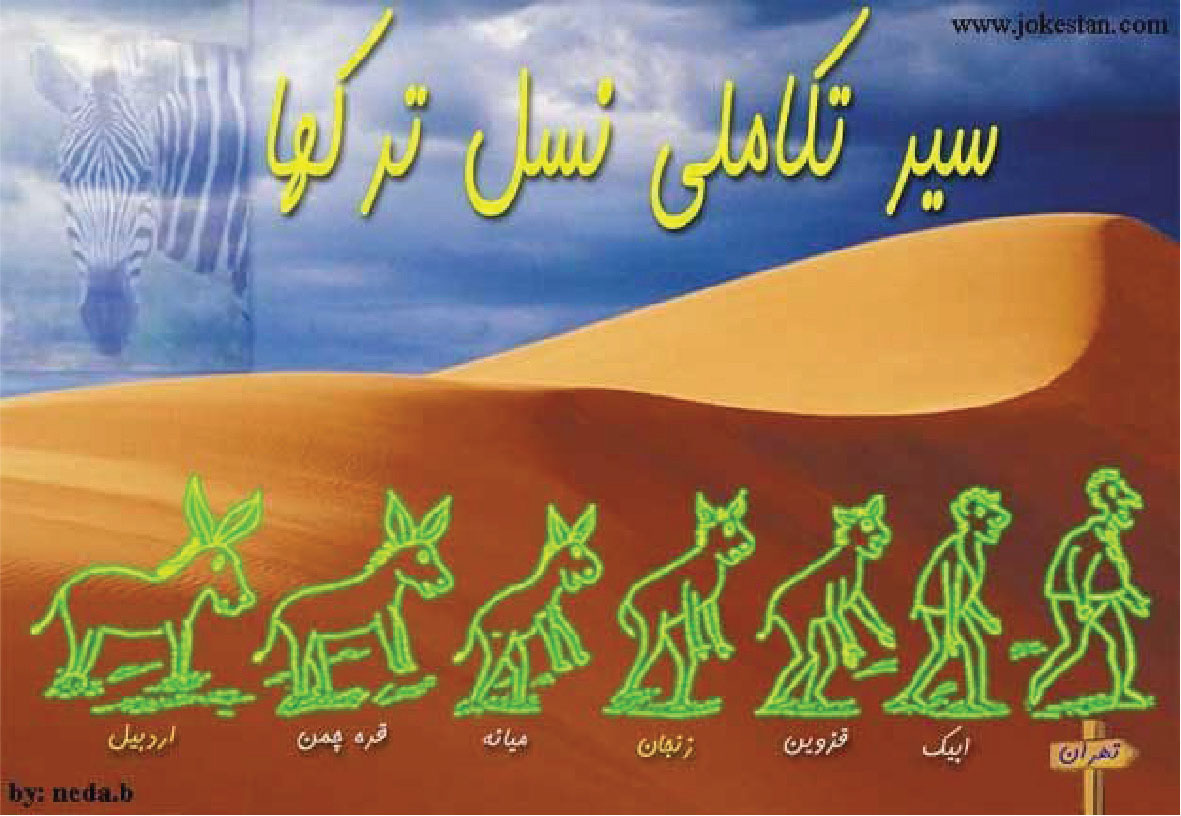
Figure 1:
Retrieved January 9, 2018, from www.jokestan.com.
Humiliating labels, such as “donkey Turks” for Turks and “lizard eaters” for Arabs, are commonly used in daily interactions. Satirical content further perpetuates these stereotypes, such as a caricature titled The Evolution Process of Turkish Generation on the Jokestan 5 (2018) site, depicting Turks evolving from donkeys to humans after moving from Ardabil to Tehran.
In 1940, Abdollah Mostoufi, governor of the Azerbaijan province, prioritized sending grain from Azerbaijan to Tehran, neglecting the starvation of the local population. After applying the pressure, official authorities decided to transport the rotten grains from Gorgan to the Azerbaijan’s poor and starved peoples. One of officers says to the governor that even the horses of army couldn’t have eaten the rotten grains. He dismissed concerns, stating: “If the army’s horses can’t eat it, the donkeys of Tabriz can.” According to the Setareh newspaper, in 23 November 1941, Mostoufi referred to a regional population census as a donkey census and sought to suppress Turkish cultural symbols, including language, ceremonies, even Turkish dirges 6 (as cited in JAMI 1983, 269, 271–2). He also remarked: “Azerbaijanis are Turks. They have eaten hay and taken the constitution; now they eat straw and burgeon Iran” 7 (as cited in JAMI 1983, 268).
The findings from the analysis of data collected by observations demonstrate that the Turkish knotted carpets, which have been integral to Turkish culture for centuries in Iran, comprise a significant portion of the country’s carpet export volume. Yet, these products are consistently marketed under the label of “Persian Carpet,” erasing their Turkish origins. Numerous household goods, factories, financial institutions, workplaces, and companies in Iran bear names such as “Pars” or “Fars,” or use imagery that exclusively symbolizes and represents Persian identity. Examples include Pars Khazar (household goods), Pars Khodro (automobiles), Pars Electric and Pars Oil factories, Parsian and Pasargad banks, Pars Pack and Pars Shoa workplaces. While these brands glorify Persian identity, symbols associated with non-Persian identities, including Turks, are often humiliated or prohibited.
Persianist attitudes extend to academic and literary works. For instance, Amir Hossein Arianpour’s Persian translation of Iqbal’s The Development of Metaphysics in Persia omits the special sentence indicating that “Farabi was a Turk” (Miri Meynagh 2023).
The headline of the news as “Destruction of the oldest sign of human civilization in Teimareh district of Khomein” is another sample of how non-Persian symbols are treated in nowadays Iran. Nasseri Fard, researcher of lithographs of Teimareh Khomein, says: conducting miners’ operations in the heart of the mountain destroyed about two thousand samples of lithographs in Ghidoo and Mazayen villages of the city. Referring to the issuance of licenses by the Industry and Mining Institution for miners, without coordination with the Cultural Heritage Institution, he added: “This inconsistency has turned the inscriptions left from the fifteenth millennium BC into a pile of soil” (Bashghahe Khabarnegharane Javan 2016).
In a video interview, lithograph researcher Nasseri Fard highlights the presence of ancient symbols associated with Turkish script in Teimareh and other regions of Iran. These linear signs, dating from the first to the ninth millennium, are also found in Central Asia and the Caucasus, areas historically linked to Turkic-speaking peoples. Nasseri Fard lamented the lack of field studies and preservation efforts for these unique historical artifacts (Aparat 2015).
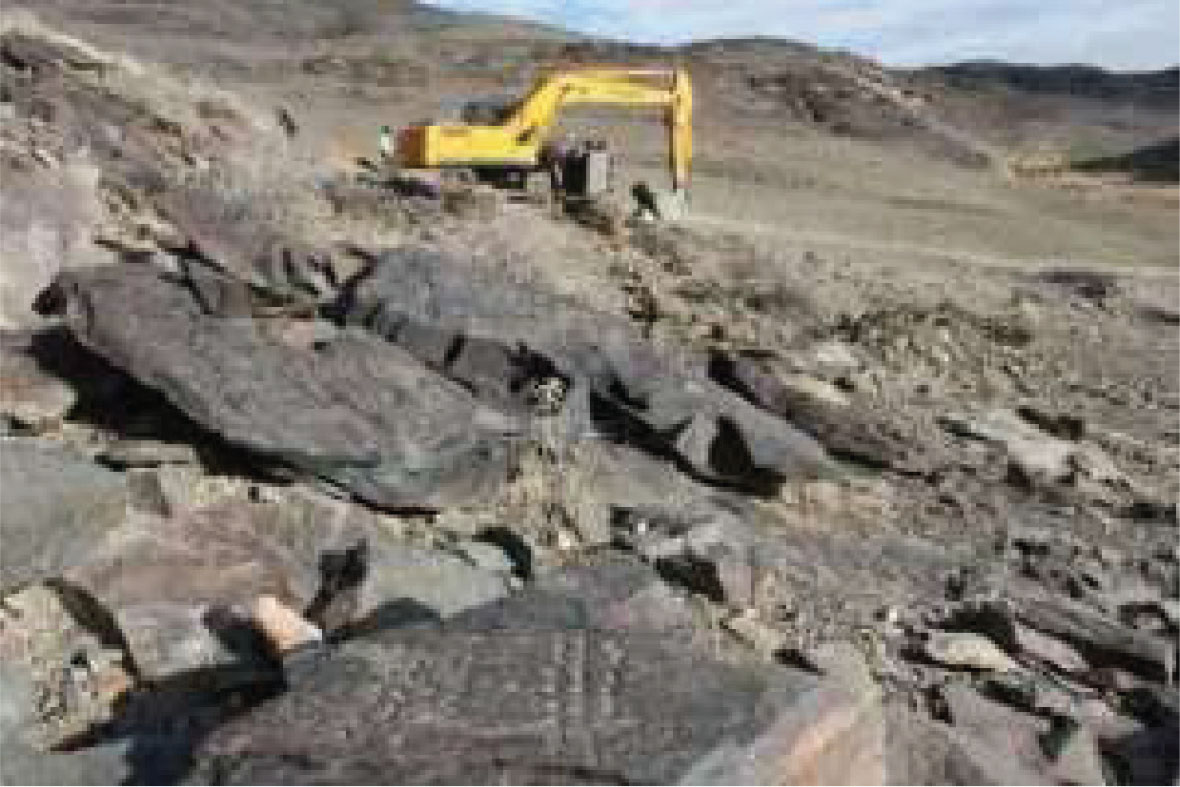
Figure 2:
Retrieved January 27, 2022, from www.yjc.ir.
These examples highlight the persistence of discriminatory attitudes and practices against Turks in Iran, spanning both formal and informal relationships realms. The cases of erasing, renaming, branding, and stigmatizing mentioned above exemplify the four types of forgetting and remembering based on exclusion and inclusion: “repressive erasure,” “formation of a new identity,” and “humiliated silence.”
Attitudes and Implentation Towards Autochthom Turkish Historical Artifacts and Documents in Iran
The destruction of historical monuments, artifacts, and sites associated with Turkish cultural heritage in Iran since 1925 reflects a deliberate effort to suppress ethnonational identities under Persianization policies. The following findings present that statues, inscriptions, tombs, and other cultural symbols, vital as repositories of historical memory and cultural capital, have been systematically targeted through demolition, neglect, and repurposing.
One of the most extensive and mass demolitions was carried out by the authorities in Tabriz in 1981. Ark Castle of Alishah, Tabriz National Library, Tabriz Opera House, Tabriz Khanqah (Hermitage) and ancient shrine of Maqbarat-o-shoara (Mausoleum of Poets) were destroyed by the decisions of Ayatollah Moslem Malakouti 8, right after the regime change in 1979. As an eyewitness, P3 said the following about the process (2017): “Malakouti was saying (also he wrote) that I will build a mosque where Ark Castle of Alishah can be seen inside it like a sparrow. He had ordered the engineers to design an entry gate for the mosque without columns with a width of two hundred and fifty meters.” According to P3, Malakouti as mastermind of the destruction was not alone in this process. Brothers Hassan and Esmail Ghadari, and Hamadanchi, as officials were the engines of this murder.
In 1995, Mohsen Mojtahed Shabestari was appointed by Revolutionary Leader Khamenei to replace Malakouti. Taghizadeh (2021), the former Director General of Cultural Heritage of East Azarbaijan Province, who said:
“Ark’s fate is very sad. Mr. Shabestari, one or two months after being in Tabriz, told me in a meeting, Mr. Taghizadeh, be sure! I don’t want to do what Mr. Malakouti wanted. I said, what to do? He said, I don’t intend to build a mosque next to the Ark. This word came from his blessed mouth. But sometime later, Mr. Ali Abdul Alizadeh 9 called and told me, Mr. Shabestari wants to build a mosque! I said, though, he told me something else. He said, anyway, now their opinion has changed… On one of the Friday, it was reported that the squad of Shabestari brought the bulldozers into the area and they have destroyed the region left and right.”
The Ark Castle built in the era of Ilkhanate between 1318 and 1339 in Tabriz as an enormous historical artifact was targeted to demolish in the Pahlavi era (1925–1979) too. The castle was heavily damaged under the pretext of preserving the original structure in 1931 and creating green space between 1974 to 1979.
The Opera House of Tabriz, Najat (Salvation) School and the Tabriz National Library located near the Ark Castle was deliberately destroyed by official authorities in the early 1980s, to make and broaden the space for Friday Prayer. The Tabriz Opera House with a capacity of 800 people was a magnificent architectural work. Majestic and nostalgic handcrafted 25% crystal chandeliers, ceremonial balconies decorated with muqarnas, plastered congresses, smaller high-quality crystal chandeliers and wall lamps of the same material, shape and cut were destroyed and those with monetary value were plundered by opportunists. Why? Because it was a place of debauchery and dissoluteness according to extreme İslamist officials (P3 2017).
With the demolition of the Tabriz National Library, the books of the library were stuffed into damp basement warehouses of a build behind the Gulistan Baghi park. Therefore, many manuscripts and unique books were abandoned to their fate and suffered irreversible damage. Many of the blessed graves of the great mystics of history and historical stone inscriptions were also destroyed while demolishing the 800 years old Tabriz Khanqah (Hermitage) and ancient shrine of Maqbarat-o-shoara (Mausoleum of Poets) in 1980 (P3 2017).
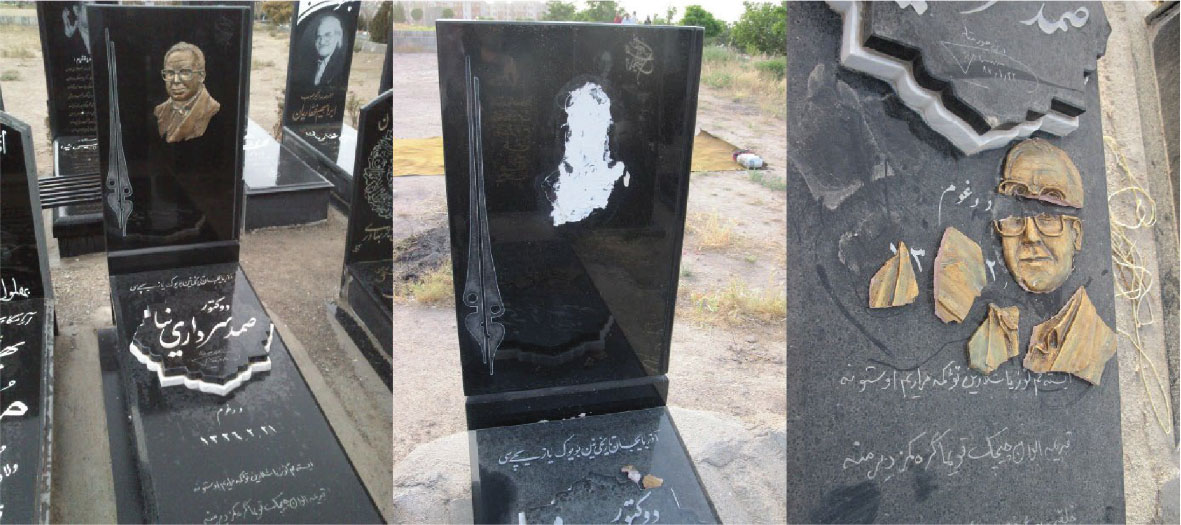
Figure 3:
Retrieved August 9, 2018, from participant number 5.
This deliberate destruction and erasure carried out by official authorities is not limited to Tabriz but is also carried out in other Turkish settlements. For example, architectural works such as Nasser ad-Din Shah’s Bronze Statue, the Imperial Bank of Persia, Qourkhaneh 10, and the Telegraph Office built by the Qajar Turkish Dynasty in Tehran were also destroyed by the Reza Pahlavi administration (Kahraman and Gül 2022, 436–7, 440).
During the Qaraqoyunlu period, the Göy (Blue) Mosque, built in 1466, was renamed the Kabood Mosque in Persian and subsequently neglected for many years. While recent maintenance efforts have been initiated by local authorities, experts often criticize these projects as inadequate, leaving the historical structure still at risk of deterioration.
Beyond neglect, some monuments have been deliberately targeted for destruction by unidentified ultra-nationalist Persian individuals. For instance, the gravestone of Samad Sardarinia in Tabriz has been vandalized twice in recent years (P5).
Additionally, numerous significant monuments tied to Turkish heritage in Iran remain neglected and at risk. These include the tomb of Sattarkhan, a celebrated Turkish national hero, the tomb of Emir Timur’s wife in the village of Has (or As) in Kaleybar, the Rashidiyeh Complex, constructed in the late 13th century during the rule of Ghazan Khan of the Ilkhanate dynasty in Tabriz, and the tomb of Khiyabani, a prominent leader of the early 20th-century Turkish democratic movement.
According to a report in The Guardian, Farhad Hakimzadeh, director of the Iranian Heritage Foundation in London, was found guilty of cutting and stealing pages from historical books held at the British Library and the Bodleian Library at Oxford University. The damaged materials included manuscripts and maps related to Mesopotamia, Iran, and the Mongol Empire, dating from the 16th century onward and authored by European travelers. Kristian Jensen, Head of British Collections at the British Library, described the act as “targeted mutilation, over a number of years, and an attack on the nation’s collective memory of its past” (Laville 2008, 2009; Pallister 2009).
“The Persianist dominant mentality in the Iranian administration ignores us (Turks). It erases us from history. It erases us from geography. It erases us from brands. I will give you a concrete example: the topic on pages 79, 80, and 81 of the Persian textbook for the second grade of primary school is ‘Beautiful Iran’. None of the figures introducing the country under this title represent the Turks or Turkish culture. It is as if tens of millions of Turks don’t live in this country. It is the fact”
(P10 2016).
Following objections, criticisms, and discussions on the subject through new media, a picture of the historical and touristic town of Kendivan, located near Tabriz, has now been included in the relevant lesson.
The exclusionary Persian nationalist mentality, which views the entirety of Iran’s geography as belonging exclusively to itself, extends to the erasure of the word “Turk” even in translations of historical texts into Persian. An example is evident in Hossein Rouhani’s Persian translation of Ibn al-Athir’s The Complete History. In the original Arabic text, Ibn al-Athir states, “... [Arab warriors under the command of] Shimr Bin al-Attaf attacked the Turks in Azerbaijan, killed the fighters, and took the children captive” (Ibn al-Athir 1987, 128). However, Rouhani’s translation modifies the text to read, “... [Arab warriors under the command of] Shimr Bin al-Attaf attacked Azerbaijan, killed, and captured” (Ibn al-Athir 2004, 189), omitting any reference to the Turks.
The phenomenon of “book-burning ceremonies” represents one of many strategies employed to erase targeted textual materials deemed “harmful” by extreme Persianist groups, often supported by official authorities. These actions have been part of broader efforts to promote modernization, unification, and Iranianization—indeed Persianization—by suppressing ethnonational diversity in Iran.
This practice originated during the Pahlavi era with figures like Ahmad Kasravi and his associates initiating such ceremonies. Nowadays, we are witnessing similar practices in the form of restrictions and manipulation of information systems, including official control over books, journals, articles, and other materials before publication, particularly those related to the cultural symbols and heritage of non-Persian peoples, under enforced regulations and prohibitions.
Contemporary Iran can be described as a land of repressed history and memory, where both history as an academic discipline and memory as a tool for societal control have been and continue to be dominated by official Persianist ideology. Iranian historian Faroughi (2005), critiques this phenomenon, stating, Iran’s history is still legendary:
“…The history itself, whose key figures are legendary, is legend. Legendary history is historical legend. …The intention of the legendary history is not enlightening of historical events. It tends more to prove. It approaches to past from the point of present and future. Thus, the legendary history is full of pure pragmatism. Symbiosis of legendary and history is the symbiosis of prejudice and selective observation.”
Shahbazi, another Iranian historian, argues that Iranian historiography in general, and Iranology in particular, cannot be separated from the colonialist dynamics between the West and the East. He contends that historiography and the shaping of collective memory in contemporary Iran have been constructed and perpetuated through an “Arianist” ideological framework, which in the context of Iran manifests as a predominantly “Persianist” approach. This framework, he claims, was influenced by Western Orientalist agents, such as the East India Company, The Theosophical Society, Max Muller, Benjamin Disraeli, James Darmesteter, Henry Steel Olcott, Annie Besant, Ann Lambton, and their domestic collaborators, including organizations like the “Awakening Lodge of Iran” and “Association of Freedom Seekers of Iran,” and individuals such as Ardashir and Shapour Reporter. According to Shahbazi, these actors aimed to facilitate both external and internal colonization of marginalized groups within Iran. To achieve these objectives, the Pahlavi dynasty was installed as the ruling regime in 1925, initiating a comprehensive identity reconstruction project. This process, branded under terms like “modernization,” “Arianism,” and “Iranianization,” sought to Persianize Iran’s diverse ethnonational identities through systematic destruction and reconstruction of collective memory at both local and global levels (Ershad 2000).
Pourpirar, a revisionist researcher, also critiques the “methodological approach” and alleged “manipulations” that are inherent academically in Iranian historiography, particularly with regard to the ancient periods. He challenges the mainstream historical narrative, asserting that many sites and artifacts attributed to Persian heritage are either Greek in origin or modern fabrications. After extensive research, Pourpirar (2006) presents evidence suggesting that certain inscriptions ascribed to the Sassanid era are forgeries. Furthermore, he argues that key historical figures such as Mazdak, Mani, Zoroaster, and Salman the Persian were inventions of modern Jewish historians.
Niar (2019, 272) contends that similar to official historiographical practices, the Pahlavi administration sought to construct the architectural identity of contemporary Iran by selectively and imperiously reviving elements of supposedly Persian identity. In contrast, he highlights the deliberate abandonment and exclusion of a nearly thousand-year-old architectural tradition that began with the Seljuks and continued through the Ilkhanids, Timurids, Safavids, Afshars, and Qajars.
In recent years, several scientific studies, including Archaeological Forgery and Human Sufferings (in the publication phase) by Reza Moradi Ghiasabadi, Iran as Imagined Nation by Mostafa Vaziri (2014), Iran Facing Others: Identity Boundaries in a Historical Perspective by Farzin Vejdani (2012), and Exile and the Nation: The Parsi Community of India and the Making of Modern Iran by Afshin Marashi (2020), have begun critically examining Iranian historiography.
Based on the findings presented above, it can be concluded that cultural and historical elements lacking Persian identity markers are often neglected and left to fade into obscurity, particularly if they cannot be assimilated into a Persianized narrative. In contrast, cultural and historical elements reflecting Persian identity are consistently prioritized and prominently emphasized. These dynamics clearly illustrate the deliberate manipulation of cultural, historical, and collective memories of non-Persian ethno-nations in Iran.
The collective memory management processes shown in the findings presented above such as demolitions, erasure, leaving to fate, burning and nowadays systematic censoring exemplify the four types of forgetting and remembering based on exclusion and inclusion: “repressive erasure,” “formation of new identity,” “planned obsolescence,” and “annulment.”
Attitudes and Implementation Towards Autochthon Turkish Names in Iran
Names and language, as common symbols and codes of meaning, are vital elements for ensuring continuity within any ethnonational identity. As cultural elements, they function as social adhesives, binding groups that share common codes of meaning. Considering the determinative influence of names and language in shaping social interactions, as well as their continuity through the transfer of collective memory between social agents, their crucial importance in memorial activities and related political affairs becomes evident.
The findings presented below illustrate examples of practices implemented in Iran since 1925, which have restricted the use of significant cultural elements of Turks, such as language and names, and mandated the use of Persian and “Iranian” names in their place.
Therefore, according to Akbari 11 (as cited in Jalalpoor 2013, 47) during the process of shaping national identity in Iran, “Persian language became mainstay of national identity and Ferdowsi was placed at the center of attention” due to the imperious intervention of dominant domestic and foreign power centers. The machinery of otherization labeled all of “non-Persian languages” as “non-national languages” without any referendum.
In 1933, an article in the Nameh Baastan 12 newspaper stated (as cited in Jalalpoor 2013, 47–8):
“Talking about the hallowing of Persian and Iranophilia and using non-Persian words and phrases is to beat the air. …We want to design a new Iran similar to ancient Iran under the shadow of Pahlavi Kings. If there is a bridge that can connect the new Iran with ancient Iran, it will be the Persian language and nothing else.”
Foroughi (1950, 264–6), the prime minister of Iran several times during the first Pahlavi period, viewed the autochthonous Turkish people of the country as a threat to Iran. He wrote in 1920 that “Iran’s neighborhood with Turkey, the Caucasus, and Turkistan in the northern and northwestern regions, whose inhabitants are entirely Turks, is dangerous... The best strategy for unifying Iran is to spread Persian education. However, this Persianization must not be obvious to them.”
Mohseni, the cultural affairs chief of Azerbaijan province, in an attempt to sever the roots of the Turkish language in Iran, said in 1946 13: “Whoever speaks Turkish, tie him/her to a stable with a donkey bridle”. After Mohseni, Zoghi was appointed to replace him and imposed a penalty box for speaking Turkish in schools (as cited in CAMI 1983, 272–3).
Rezvan Hakimzadeh, Deputy of Elementary Education at the Ministry of Education in May 2019, referred to the Supreme Leader Ali Khamenei’s statement regarding the importance of learning the Persian language, saying (Esmaili 2019):
“In the workshop group, it was suggested to add ‘[Persian] language proficiency test’ to the assessment set. The leadership’s statements about the importance of learning Persian are important, and our children should be in a situation where they can understand and comprehend things in Persian, and not be part the group that leaves school early. She added: Currently the assessment is optional basis for 5-year-olds and, to a limited extent, for 4-year-olds as well, but if we can bring the assessment forward by two years, better interventions will be possible… We hope to conduct the assessment two years before primary school, rather than when entering primary school… This was a suggestion, and we are going to work on it… to ensure students enter school and communicate in the standard language… So that those who need it receive targeted service.”
This means narrowing the opportunity and restricting the possibilities for millions of children whose mother tongue is not Persian to learn their native language even in the realm of informal relationships in Iran.
The suggestion was criticized and rejected after a lot of objection, criticism and condemnation by some non-Persian MPs, pro-equality political activists, writers, artists, and etc. Tabriz MP and Member of the Cultural Commission of the Islamic Consultative Assembly, Mohammad Esmail Saidi, highlighted parliamentary support for Article 15 of the Constitution and commented on the proposal for a “Persian Proficiency Test” (Asriran 2019):
“It is meaningless to bring up the issue of ‘language proficiency’. Those who bring up this issue are trying to cover up the real problems in the education system. “Language proficiency” has nothing to do with individuals’ abilities. In some cases, even educated people cannot speak the second language they have learned without an accent. Here in Azerbaijan, there are bright and talented individuals of international standing who may not speak Persian fluently. All MPs are unanimous in their opposition to the introduction of the “Persian Proficiency Test” as a measure of new learners’ readiness, and we will definitely oppose it.”
Another example of the Persianist mentality’s exclusionary attitude against Turkish was evident in the backlash to a Turkish-language welcome announcement, alongside Persian and English, on Ata Airlines flight 5606 from Tehran to Tabriz on October 10, 2024. Ultra-nationalist Iranshahri groups criticized the announcement on social media, labeling it as separatist and calling for its immediate cessation and legal action against those responsible. However, Ata Airlines officials clarified that no law prohibits announcements in Turkish, rendering the objections legally unfounded (Entekhab 2024).
According to Jalalpoor (2013, 48–50) within the scope of the memory management, non-Persian names for cities, public places, parks, schools, mosques, streets, squares, workplaces, villages, rivers, mountains, plains, tribes, individuals, months, and years were required to be changed and replaced with Persian-origin names. Below are examples of names that have been changed:
Some city names: Tikantepe to Tikab, Sayin Qala to Shahin Dezh, Aq Qala to Pahlavi Dezh, Melik Kendi to Malekan, Qara Su to Bandareh Shah, Urumiye to Rezaiye, Soyuq Bulaq to Mahabad, and Duvarqan to Azershehr.
Some neighborhood names: Şanb Qazan to Dampezeshki, Deveçi to Shotorban, Daş Körpü to Poleh Sangi, Tepebaşı to Falakeh-e Bahar.
Some mosque names: Göy Meçid Masjed-e Kaboud, Aq Meçid to Masjed-e Sefid, Tanrıxana Meçidi to Masjed-e Tarik Khaneh.
Some street names: Qara Ağaç to Qods, Dovşantepe to Jaleh than to Shohada Square.
Some square names that have been changed: Dik Başı to Meydan-e Namaz, Gölüstü to Emam Hossein, and Mal Meydanı to Sarband.
Some workplace names: Ayaqqabı Dünyası to Donyaye Kefsh, Qaya Kebabçı has been erased from the signboard.
P1 from Tabriz said (2015): “I wanted to put the name of my shoe store in Ayaqqabı Dünyası [Shoes World]. They called me from the intelligence services and said: we come there and pull down the signboard and store on your head. Buck up your ideas!”
P4 from Kaleybar said (2015):
“I had put the name of my kebab restaurant Qaya Kebab [Rock Kebab]. Official inspectors came in my restaurant and told me: you must change the name, because ‘foreign names’ are legally prohibited. I said them: the name is not foreign, it is in Turkish, my mother tongue. They told me: this is legal ruling; you must do it. I did not it. After a few days they came back and erased the name forcibly on the signboard of restaurant.”
Some village names: Deliler to Daliran, Qoç Kendi to Pars Abad, Sarı Qaya to Saroghiyye.
Some river names that have been changed: Qara Su to Siyah Roud, Acı Çay to Talkhe Roud, Yeddi Göz to Haft Roud, Cığatı to Zarrine Roud.
Some mountain names: Yam to Payam, Qoyundağı to Kaboudan, Qaratepe to Siyah Kouh, and Qaraqoldağı to Shir Kouh.
Some plain names: Qaradagh to Arasbaran, Qara Ayn to Siyah Cheshmeh, and Arablar to Poldasht.
In addition, parents face many obstacles when giving Turkish names to their children. P9 said (2015): “Iran’s civil registration office refused to issue an identity card, considering the Turkish name Alp Orhan he chose for his child to be foreign and non-Iranian. After seven months of arguing and resisting, we were finally able to get an ID card for our child.”
P8 also said in this context (2024):
“We were only able to get the name Huntay for our son after six years legal battle. Finally, by a ruling from Branch 11 of the Tabriz General Court of Law, the Jolfa County Civil Registry Office issued Huntay’s birth certificate. Huntay was deprived of many basic services such as treatment, obtaining a passport, etc. during the years without an identity card.”
Parents who wanted to name their children with Turkish names like Ayıl, Anar, Sevgi, Yağmur, Volkan, and Atakan faced similar obstacles.
The exclusionary Persianist mentality is so sensitive about Turkish names that Secretary of Shiraz Clergy Society Mohiuddin Taheri even interprets the fact that Nissan named one of its car models Qashqai as a British conspiracy for separate Qashqai tribes from the İslamic Regime. He stated that the enemies wanted to separate Qashqai tribes from the İslamic Regime through this way (Hawzahnews 2019).
The name “Azerbaijan” also poses a challenge to Persian nationalist narratives. Dividing of Azerbaijan province and giving new names such as Zanjan, Qazvin, Hamadan, Ardabil, Arak, Qum and Alborz on the parts of the lands are remarkable within the unending processes of renaming and erasing since 1937. In addition, the separation of historical Azerbaijani lands such as Astara, Saqqiz, Bijar, Qala, Bashmaq, Quru Chay, Yasu Kend, Qamchkay, and Garus and giving them to the provinces of Gilan and Kurdistan can be considered as initiatives that will lead to possible ethnic conflicts in the future.
Based on the findings presented above, it can be concluded that non-Persian languages and names are often under enforced regulations and prohibitions. In contrast, Persian languages and names are consistently prioritized and prominently emphasized. These dynamics clearly illustrate the deliberate manipulation of collective memories of non-Persian ethno-nations in Iran through language and names.
The collective memory management processes shown in the findings presented above such as restriction, renaming and prohibitions exemplify the four types of forgetting and remembering based on exclusion and inclusion: “repressive erasure,” “prescriptive forgetting,” “formation of new identity,” and “structural amnesia.”
Conclusion
The main question of this study concerns the ideological, discursive, and aesthetic conceptions that have reflexively shaped the process of memory destruction and reconstruction in Iran since 1925, along with its consequences. The findings indicate that collective memory management plays a critical role in the formation of the modern nation-state, particularly in contexts characterized by ethnonational diversity. The destruction and reconstruction of the memory and identity of non-Persian ethno-nations, such as the Turks, reflect a broader strategy of systematic cultural assimilation. By examining the realms of cultural symbols, historical artifacts, names, and language, this study reveals a deliberate attempt to melting diverse identities under a dominant Persianist narrative based on Aryanist ideology.
Drawing upon selective coding and Connerton’s (2008, 60–9) conceptual framework of forgetting, this research demonstrates that processes like repressive erasure, planned obsolescence, and humiliated silence have not only alienated Turks from their histo-cultural heritage and suppress their language but also sought the reconstruction of collective historical memory of them to legitimize and enforce Persianization policies. The parallels between Iran’s national identity construction and assimilationist methods underline the deeply ingrained dynamics of exclusion, denying, melting, and domination.
The Persianization process implemented against the Turks in Iran since 1925 can be operationalized using Connerton’s conceptual frameworks related to forgetting as follows:
– Repressive erasure, where history and memory are forcibly overwritten;
– The formation of a new identity, promoting Persian-centric ideals;
– Planned obsolescence, ensuring that Turkish cultural elements fade into irrelevance;
– Humiliated silence, embarrassing Turks to avoid them from using their own cultural elements, and discouraging resistance through systemic and social pressure;
– Forgetting as annulment, destruction or abandoning to decay of historical artifacts, manuscripts and/or printed books and other cultural elements through bureaucratic processes;
– Structural amnesia, leaving knowledge to be forgotten by no textualization by official authorities; and
– Prescriptive forgetting, destroying the cultural elements of the targeted audience by making them unofficial, illegal, and status-less.
It is evident that, by leveraging the conceptual frameworks mentioned above and implementing assimilationist policies, the Persianist mentality has aestheticized 14 Persian history and cultural elements, portraying them as superior to the history and cultural elements of non-Persian ethno-nations in Iran (Grasskamp 1981, as cited in Connerton 2008, 61).
The findings reveal that collective memory management operates across multiple levels (micro, meso, and macro) affecting individuals, communities, and institutional structures. This process involves historical revisionism, symbolic rebranding, and language suppression, which serve to sever ethno-nations from their identity roots, alienating them from their past while imposing a Persian-centric identity. According to the main themes of the research findings examples include
Cultural Images and Symbols: The symbolic erasure of Turkish identity is starkly evident in the manipulation of cultural representations. The once-positive connotations of “Turk” have been replaced with derogatory labels, and the imposed term “Azeri” has been strategically used to sever the connection between the Turkish population and their historical roots. This symbolic violence extends into literature, cinema, and everyday discourse, perpetuating stereotypes and stigmas that devalue Turkish heritage and reinforce Persian-centric narratives.
Historical Artifacts and Documents: Historical artifacts serve as tangible links to the past, yet many Turkish monuments, inscriptions, and heritage sites have faced deliberate destruction or neglect. The demolition of iconic structures like the Ark Castle, the Tabriz Opera House, Nasser ad-Din Shah’s Bronze Statue, and Qourkhaneh illustrates the targeted erasure of Turkish contributions to Iran’s cultural heritage. Simultaneously, practices like the “book burning ceremonies” and censorship of historical texts further disrupt the transmission of authentic historical knowledge, replacing it with a constructed Persian-centric narrative.
Names and Language: Language and naming conventions, central to identity formation and cultural continuity, have been systematically targeted. Renaming cities, villages, and landmarks with Persian-origin names, alongside the banning of Turkish names for children, exemplifies these efforts. The introduction of policies like the Persian Proficiency Test seeks to marginalize non-Persian languages, restricting their usage even in informal settings. These measures have disrupted the intergenerational transmission of the Turkish language and have imposed significant barriers to maintaining linguistic and cultural identity.
These acts are not isolated incidents but rather part of a broader strategy to silence alternative narratives and reinforce state power, illustrating how the interplay between power, memory, and identity enables control over collective memory as a tool for domination.
Persianist power centers have resorted to mechanisms of memory adjustment and manipulation as instrumental tools in the construction of the nation-state in Iran. Through this process, political authorities have strategically modified collective memory to align cultural values and behavioral norms with the dominant ideological framework. As observed in contemporary Iran, these processes have simultaneously expanded and enriched the sphere of existence for the dominant ethnonational identity while marginalizing and erasing suppressed ethnonational identities. Consequently, resistance efforts by the agents of these marginalized ethno-nations have become an integral aspect of social life. As Foucault said (1978, 95): “Where there is power, there is resistance, and… this resistance is never in a position of exteriority in relation to power.”
Despite state-sponsored oppressive measures, the responses of Turkish activists, ranging from protests to legal challenges, demonstrate a persistent resistance to collective memory management policies. The findings highlight various forms of resistance, including naming children and businesses with Turkish names, inscribing tombstones, wedding announcements, and death notices in Turkish, retaining the original Turkish names of neighborhoods, streets, villages, cities, regions, rivers, and mountains, advocating for the restoration of mother tongue education rights, incorporating Turkish cultural elements into wedding and mourning ceremonies, and commemorating national heroes, writers, poets, and intellectual figures. This resilience functions as a counter-narrative to state-led memory erasure, underscoring the agency of marginalized communities in reclaiming and celebrating their histories. Moreover, the study emphasizes the crucial role of collective memory, language, and naming practices in resisting systematic processes of forgetting and reconfiguration.
For the sake of Persianization politics, the systematic manipulations of collective memory in Iran that are based on essentialist, monist, exclusive, and “superioritist” approaches have started to be questioned by academics over the last decades. Besides, through the political authority’s attitude and approach towards non-Persian ethno-nations, encouraging signs at the direction of some positive softening can be observed in terms of both discursive and actual/operational aspects. However, this tendency is not in any case shifting from “denying” to “recognition,” but in fact it is from “denying” to “vague.”
To address the issues arising from assimilationist practices in Iran, it is essential to first recognize and ensure the representation of ethnic differences while effectively implementing Article 15 of the constitution. Legal regulations can be enacted to facilitate the use of the Turkish language in formal relationship and educational institutions. Non-government organizations and independent researchers can play an active role in documenting cultural heritage that has been subjected to memory destruction and contribute to the preservation and restoration of historical artifacts. Additionally, dialogue programs and reconciliation initiatives among different ethnonational groups can be supported, while media outlets can develop policies aimed at ending discriminatory discourse. Within this framework, scholars can continue to examine relations between collective memory and power relations in a more comprehensive and critical manner.
The implications of this research extend beyond the Iranian context. It offers a lens to understand how nation-states navigate cultural diversity and the tensions between inclusion and exclusion. Furthermore, it contributes to memory studies by exploring how state policies shape, control, and manipulate collective memory in pursuit of ideological goals. In addition, it invites further academic inquiry into the interaction between power, memory, and identity, particularly in contexts where cultural diversity is met with systemic efforts to impose homogeneity.
In conclusion, this study reveals a paradox within Iran’s nation-building project. While striving for unity through assimilation, the systemic suppression of diverse identities fosters alienation and resistance, undermining the very cohesion it seeks to achieve. This research invites further exploration into the long-term consequences of such policies on societal harmony, interethnic relations, and the preservation of cultural heritage in diverse societies.