Have a personal or library account? Click to login
Smart community-driven sustainable urban transition: Knowledge mapping and innovation pathways Cover

Smart community-driven sustainable urban transition: Knowledge mapping and innovation pathways

By: Lang Zhou,  Xinting Li,  Ziyi Ying,  Siwei Zeng and  Jun Xia  
Open Access
|Jul 2025

Figures & Tables

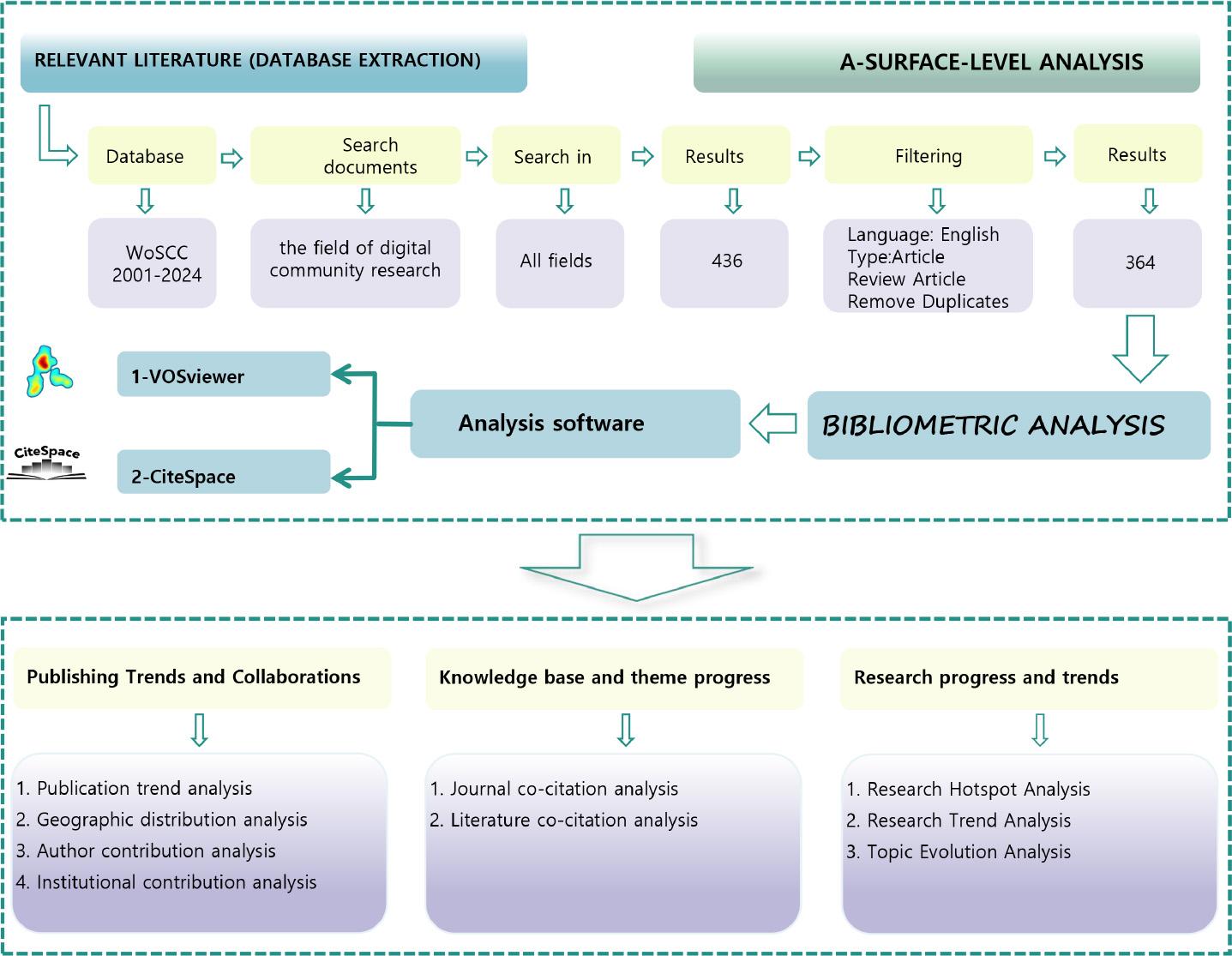
Figure 1.

Flowchart of data retrieval and processing.

Figure 2.

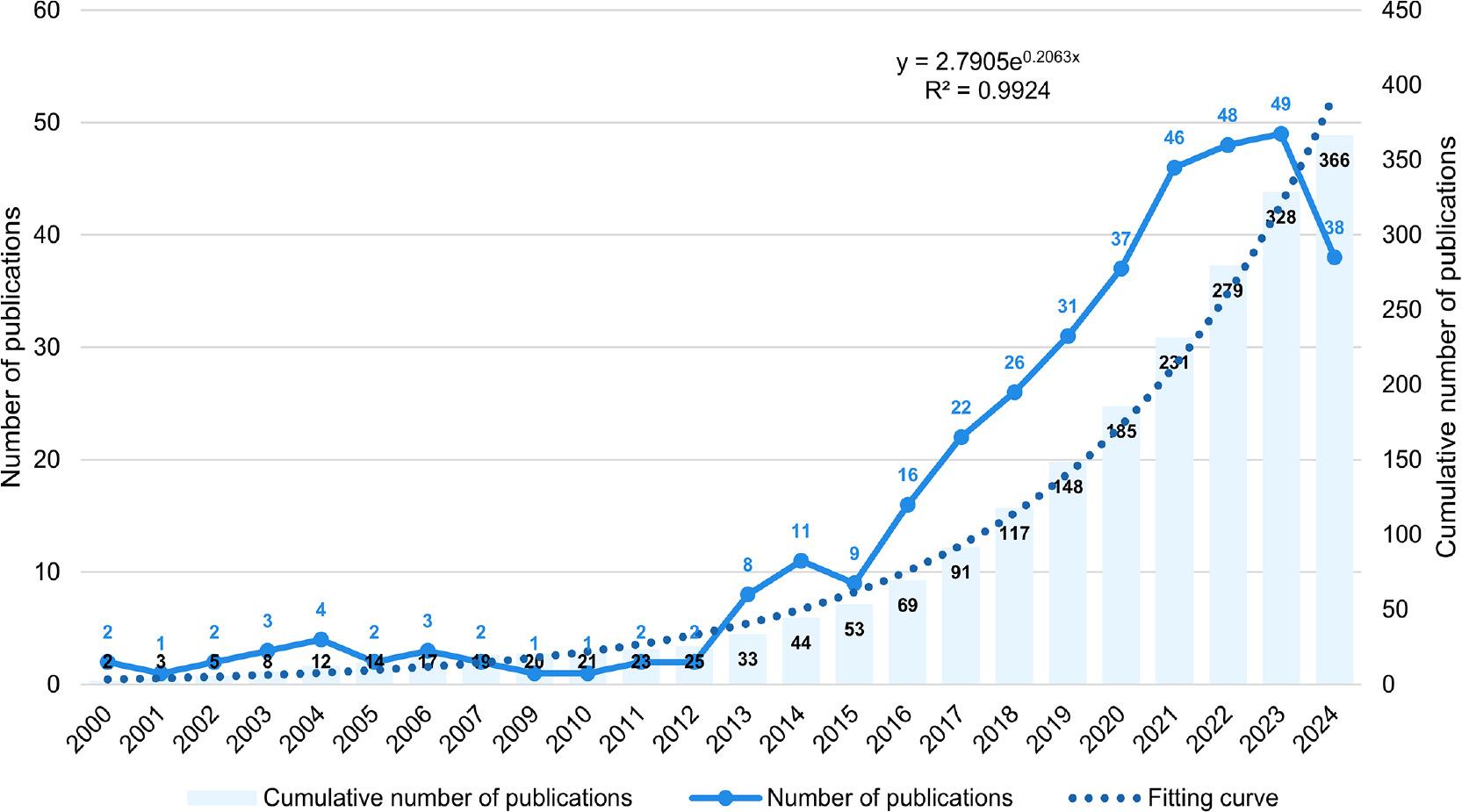
Trend analysis of annual publication volume in smart community research (2000-2024). Notes: The horizontal axis denotes the publication years (2000-2024). The left vertical axis shows the number of publications per year, while the right vertical axis indicates the cumulative total number of publications since 2000. The light blue bars represent the cumulative count of publications for each year, and the solid blue line illustrates the annual publication trend.

Figure 3.

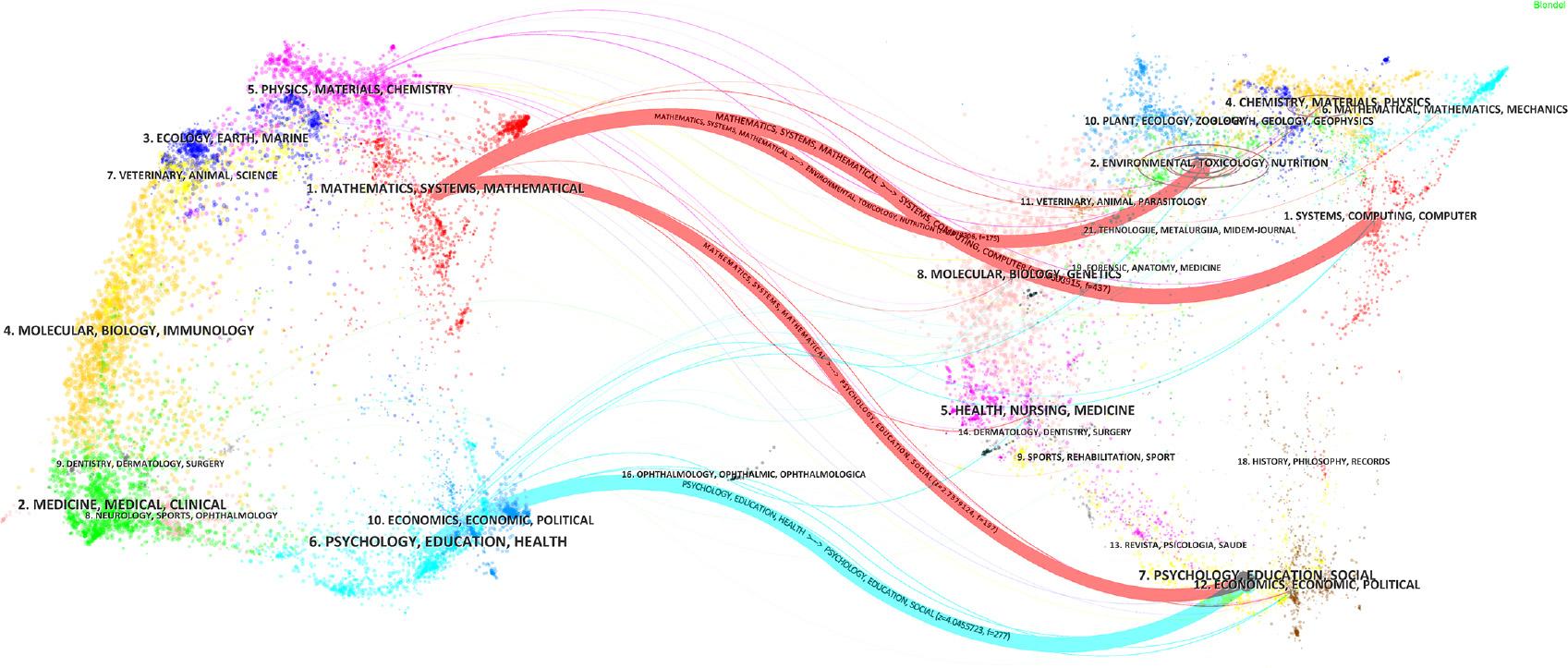
Overlay analysis of two charts for smart community research (2000–2024). Notes: In the overlay map, colors denote the disciplinary categories to which each publication belongs. Lines between nodes indicate citation or referenced‐by relationships. Regions composed of densely connected nodes sharing the same color form clusters, each representing a specific academic research domain.

Figure 4.

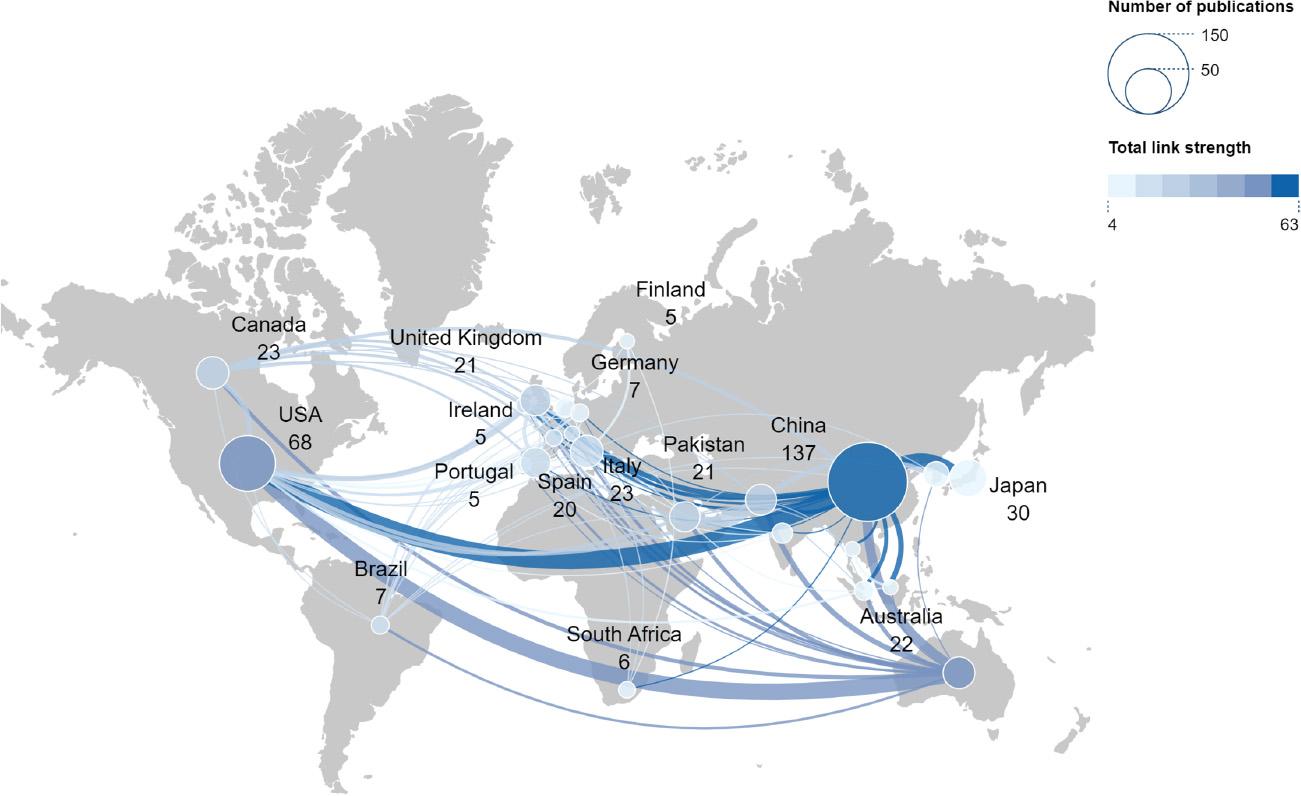
The country collaboration map for smart community research (2000–2024). Notes: The size of the notes indicates the number of publications, while color intensity reflects the strength of collaboration. Edges denote cooperative relationships, with thicker lines signifying closer partnerships.

Figure 5.

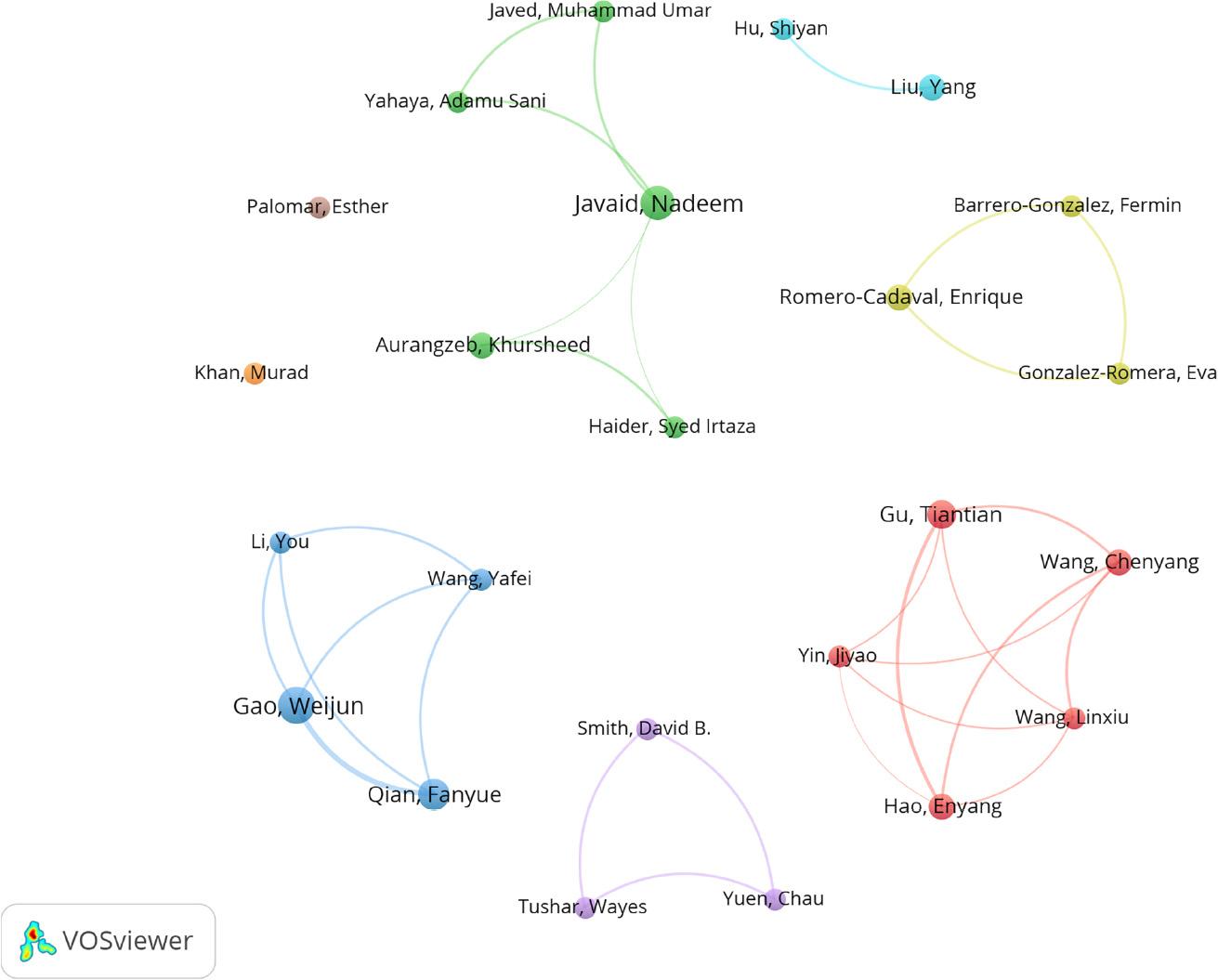
Author collaboration network in smart community research (2000–2024). Notes: Each node represents a single author, with the node size proportional to the author’s publication count. Edges denote co-authorship relationships. Clusters of similarly colored nodes indicate distinct collaboration groups. The spatial proximity of any two nodes reflects the frequency of their collaboration—nodes positioned closer together have collaborated more often.

Figure 6.

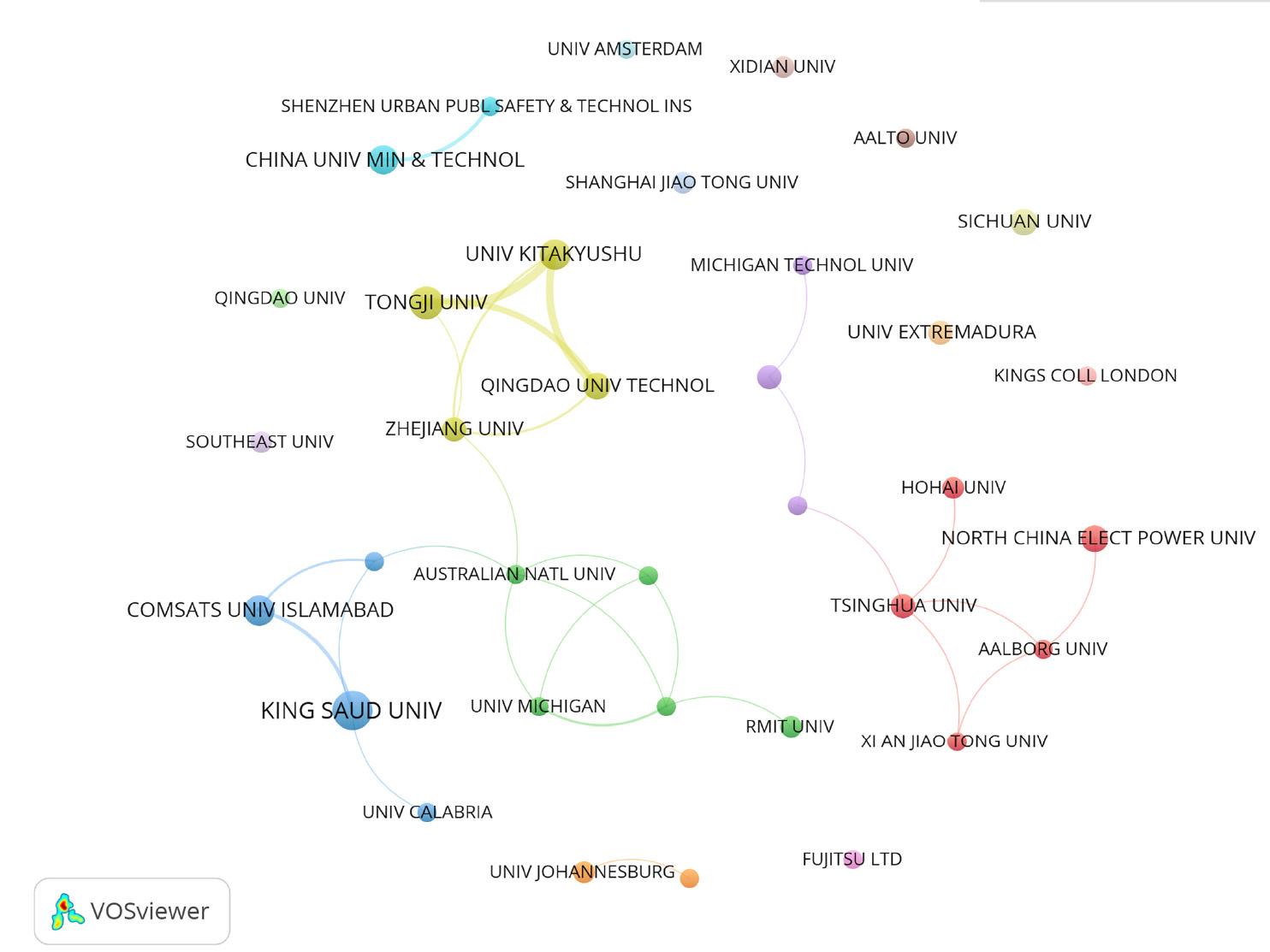
Institutional collaboration network in smart community research (2000–2024). Notes: Each node represents a distinct institution, with node size proportional to its total number of publications. Edges between nodes indicate collaborative relationships, and their thickness corresponds to collaboration strength. Node colors distinguish different collaboration clusters, and the spatial proximity of any two nodes reflects the frequency of their cooperation—nodes positioned closer.

Figure 7.

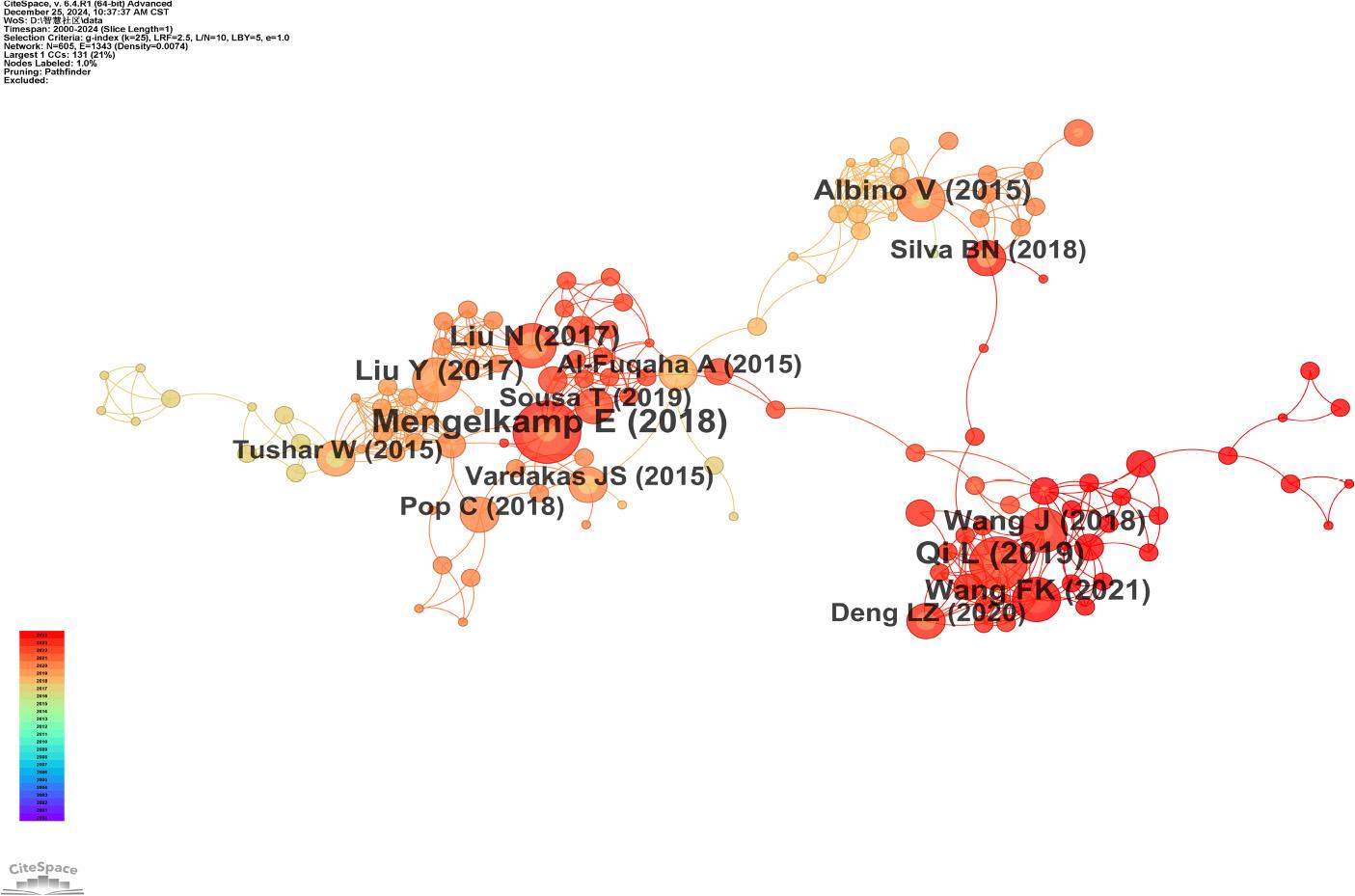
Co-citation network of references in smart community research (2000–2024). Notes: In this visualization, each node corresponds to a single publication, with the node size proportional to its co-citation frequency. The edges between nodes indicate co-citation links. Node colors are assigned by a time-heat algorithm to reflect different temporal co-citation periods: red hues denote recent high-frequency co-citations, while blue-green hues indicate earlier citation hotspots.

Figure 8.

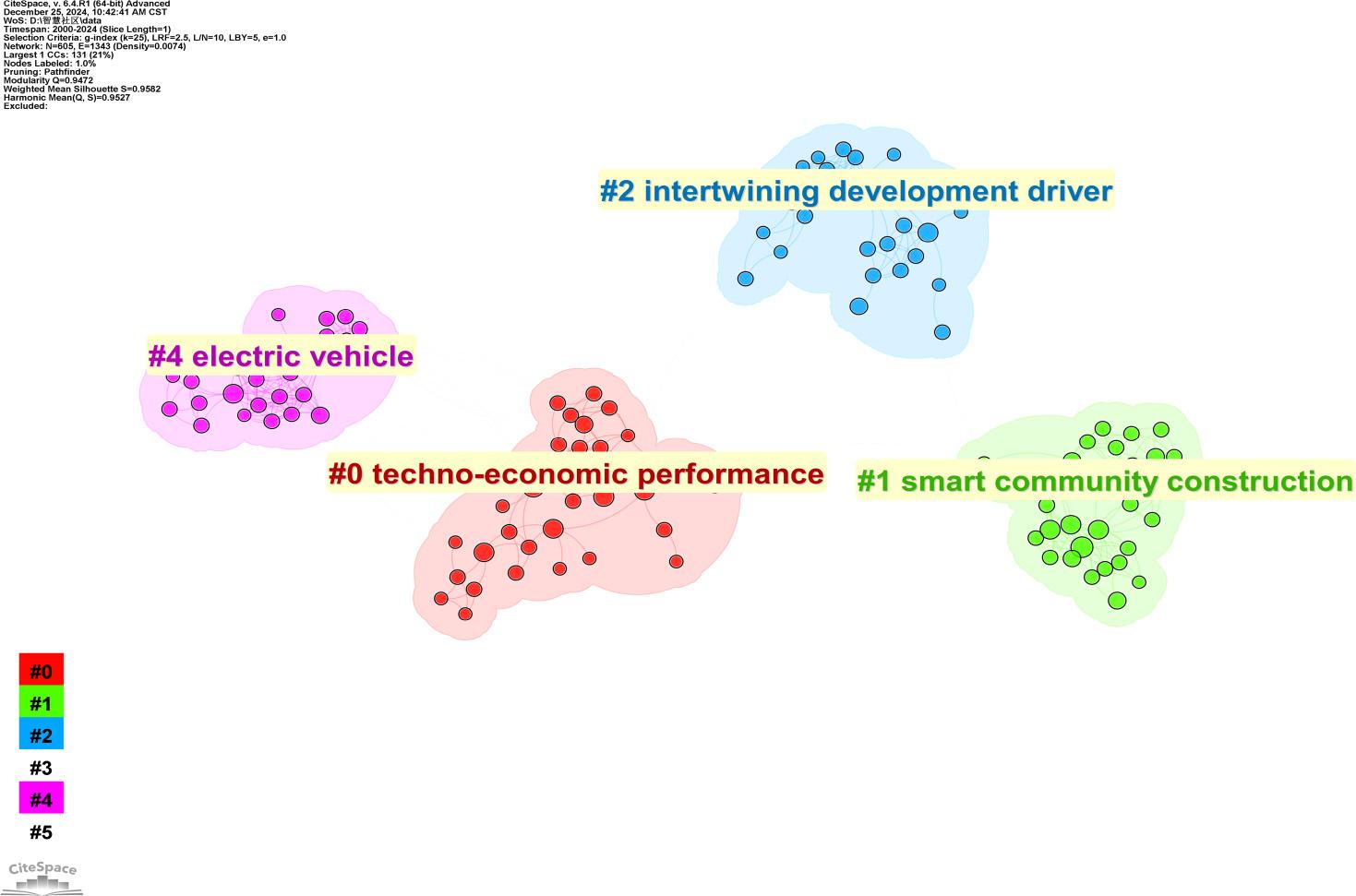
Reference clustering map for smart community research (2000–2024). Notes: In this visualization, each node represents a cited reference, and edges between nodes indicate co-citation relationships. Distinct colors delineate multiple clusters, each corresponding to a specific knowledge subfield. Every cluster is labeled with high-frequency terms automatically extracted by the system, and cluster identifiers begin at #0, with smaller numbers denoting larger cluster size and greater centrality.

Figure 9.

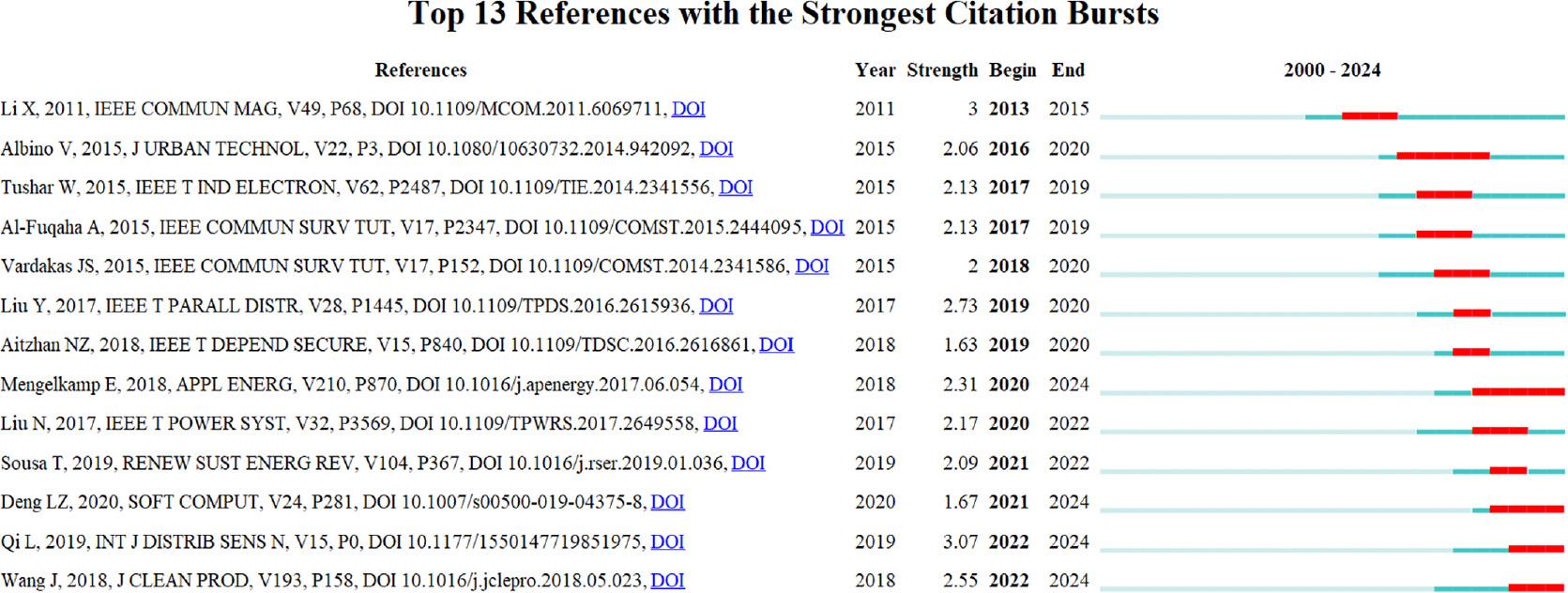
Citation‐burst timeline of references in smart community research (2000–2024). Notes: The horizontal axis denotes years; the red bars indicate the periods during which a reference experienced a citation burst. Each row corresponds to a reference with high burst strength, where “burst strength” quantifies the rapid increase in citation frequency over a short interval. The begin-end years specify the exact period of each citation burst.

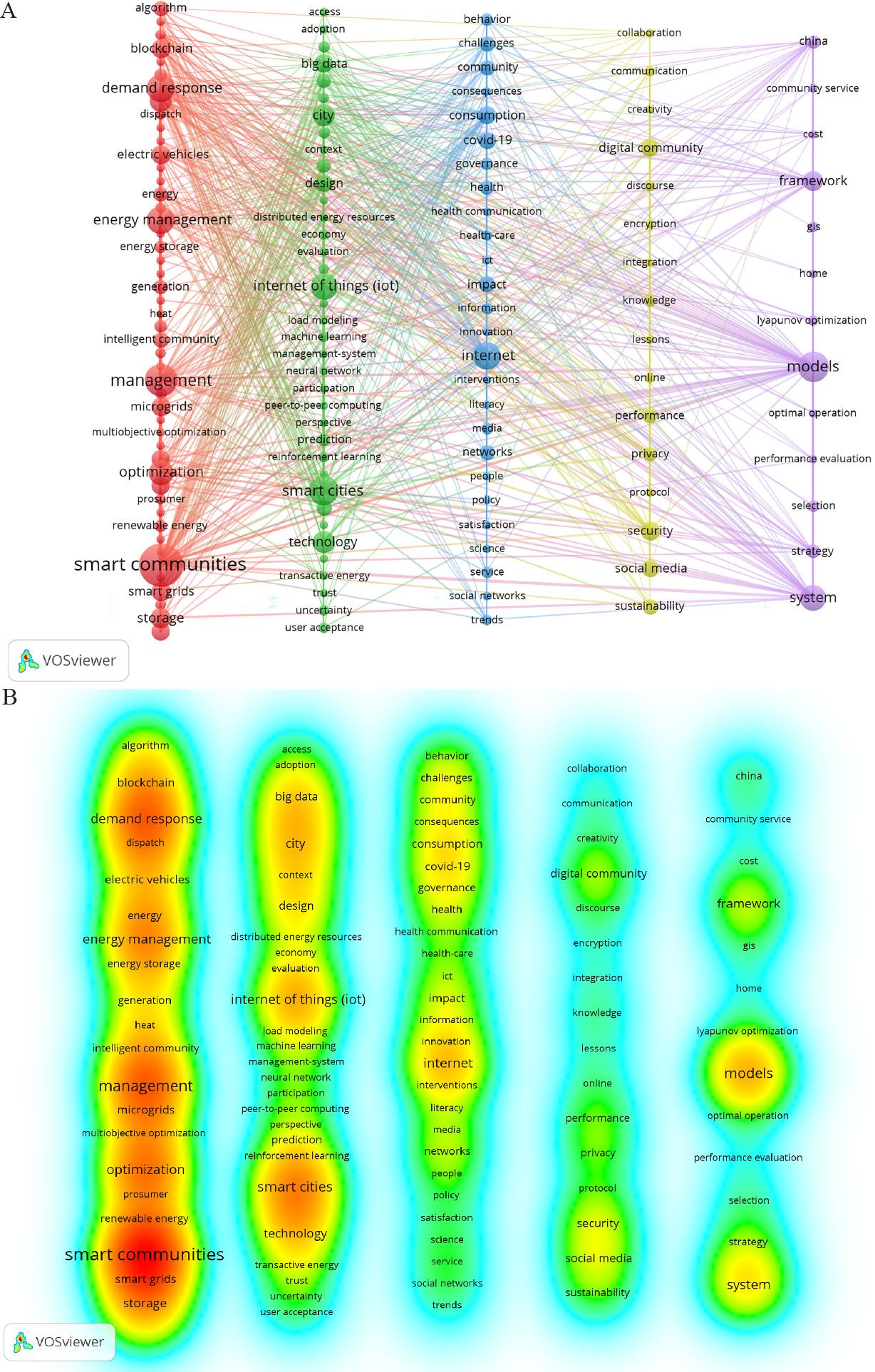
Figure 10.

Keyword clustering diagram: (A) Keyword co-occurrence, (B) Keyword density. Notes: In Figure 10A, each node represents a high-frequency keyword, and edges indicate instances of two keywords co-occurring in the same document. The node colors correspond to clusters automatically detected by VOSviewer, the node size reflects the frequency of each keyword, and the density of connecting lines denotes the strength of co-occurrence with other keywords. In Figure 10B, the color gradient encodes co-occurrence frequency: cooler tones (blue) indicate lower frequencies, while warmer tones (red) signify higher frequencies.

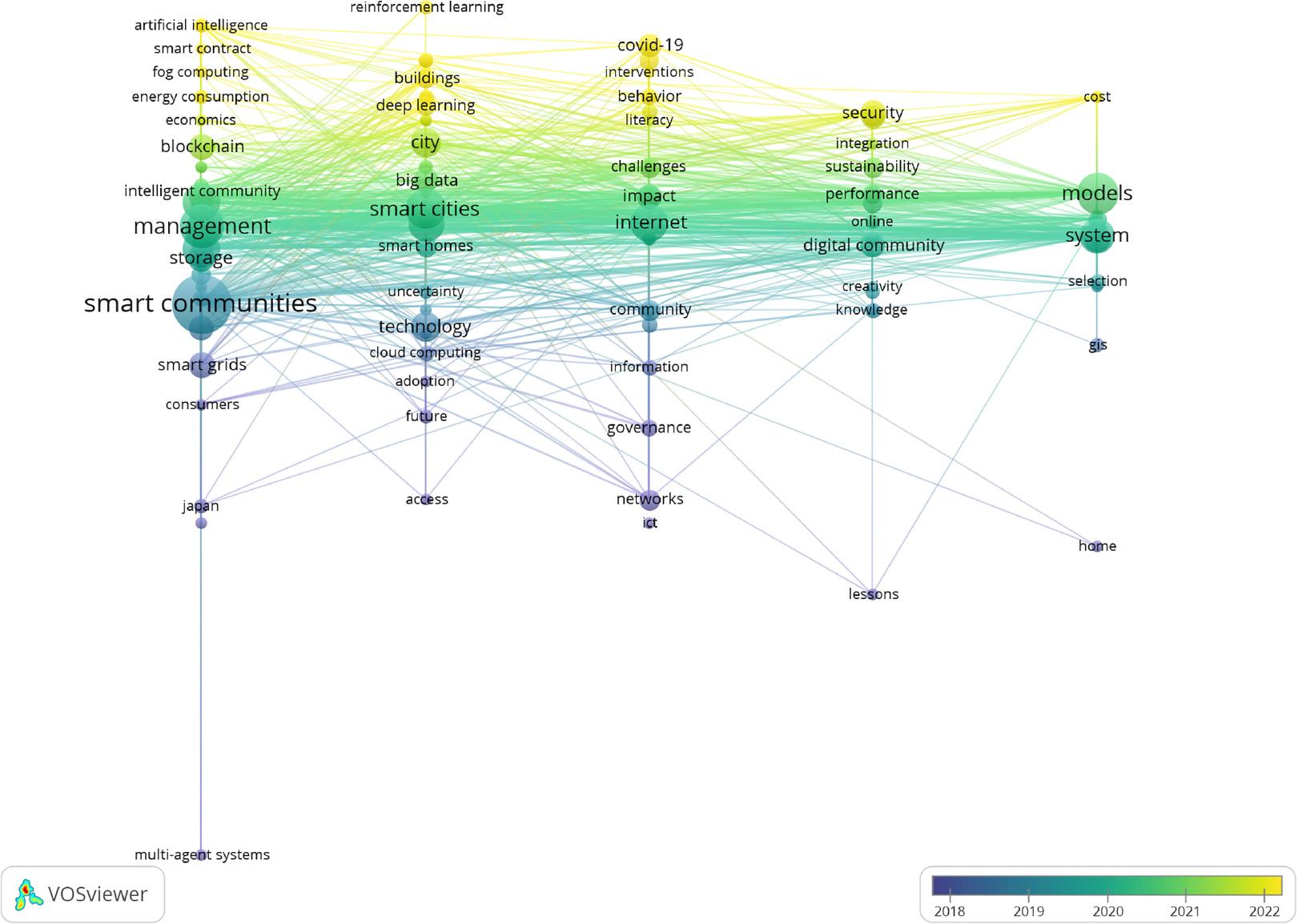
Figure 11.

In the keyword time‐evolution map for smart community research (2000–2024). Notes: Each node represents a distinct keyword, with node size proportional to its frequency of occurrence. Edges between nodes indicate instances of co-occurrence within the same documents. The node color reflects the period during which the keyword was most active: blue for the early stage, green for the middle stage, and yellow for the recent stage.

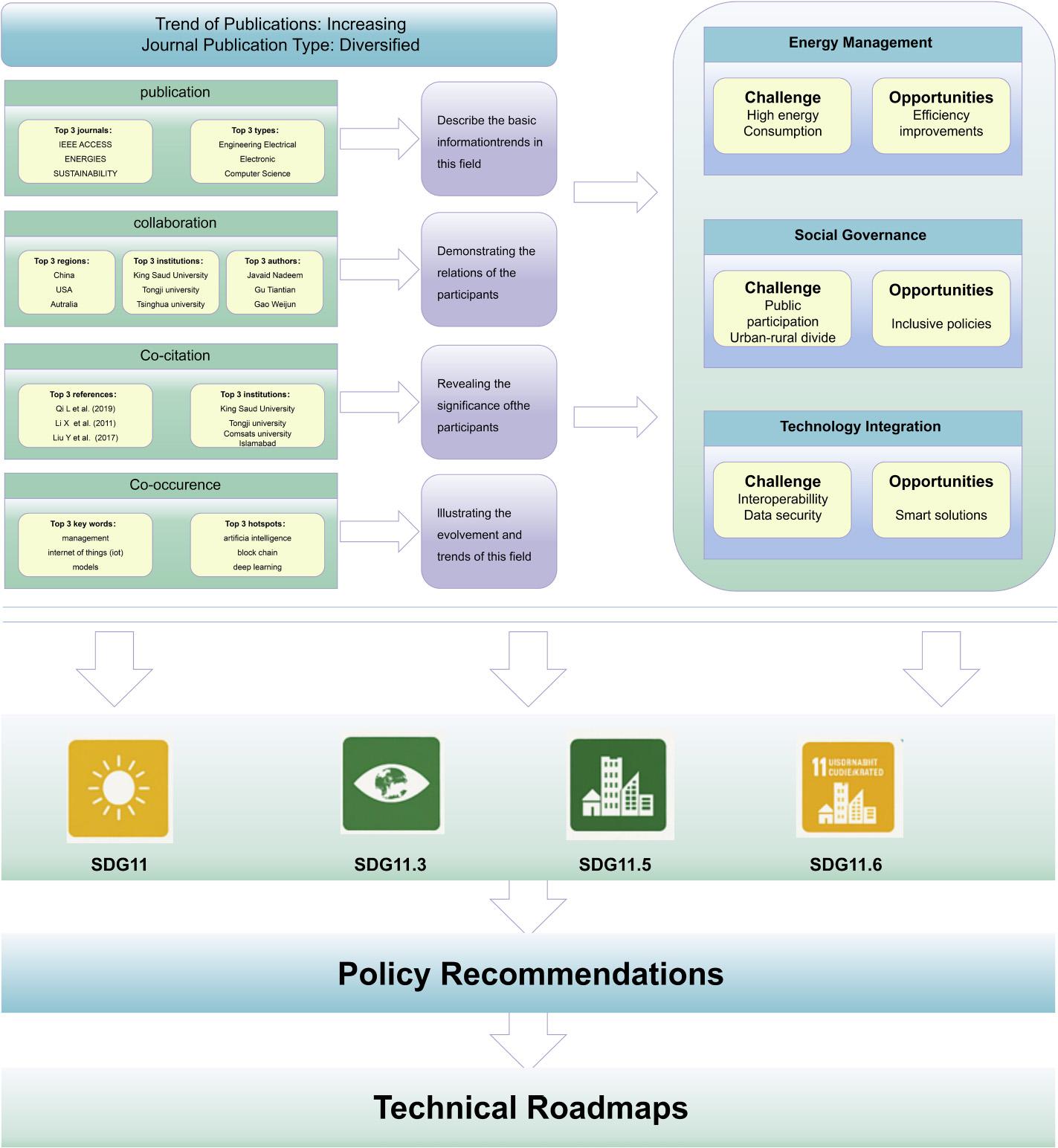
Figure 12.

Knowledge framework.

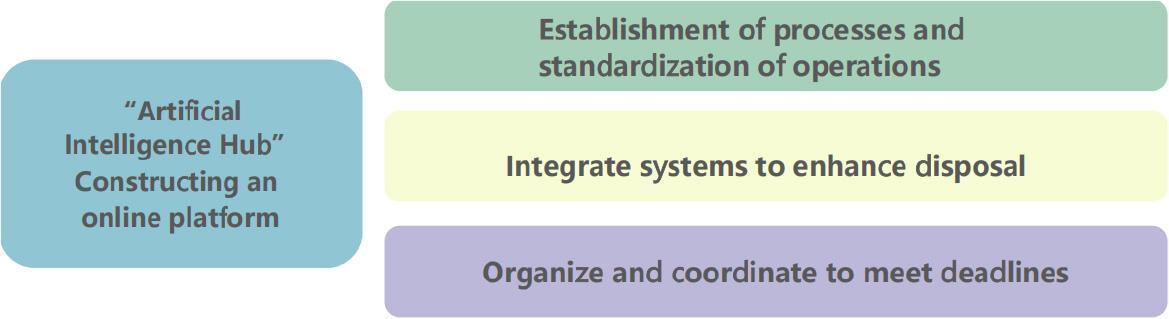
Figure 13.

Intelligent management model.

Top 10 countries by publication volume_

RankCountryNPNCACH-index
1China1372,97921.7426
2USA681,57023.0920
3Japan3033111.039
4Canada2376733.3511
5Italy2362127.0011
6Australia221,16452.9112
7Pakistan2156126.7112
8United Kingdom2131314.9010
9Spain2039619.8010
10Saudi Arabia2037818.9010

Top 10 institutions by publication volume_

RankOrganizationNPNCACH-index
1KING SAUD UNIV1331424.159
2TONGJI UNIV921323.675
3COMSATS UNIV ISLAMABAD823829.757
4UNIV KITAKYUSHU817922.385
5CHINA UNIV MIN & TECHNOL77310.434
6NORTH CHINA ELECT POWER UNIV613222.005
7QINGDAO UNIV TECHNOL611419.003
8SICHUAN UNIV68313.835
9ZHEJIANG UNIV5791158.205
10CHINESE ACAD SCI513326.603

Top 20 disciplines by publication volume_

RankWeb of Science categoriesNP
1Engineering Electrical Electronic88
2Computer Science Information Systems62
3Telecommunications62
4Energy Fuels59
5Green Sustainable Science Technology21
6Environmental Sciences18
7Environmental Studies16
8Computer Science Theory Methods15
9Information Science Library Science15
10Communication13
11Construction Building Technology13
12Computer Science Artificial Intelligence12
13Computer Science Interdisciplinary Applications11
14Computer Science Hardware Architecture10
15Engineering Civil9
16Instruments Instrumentation9
17Multidisciplinary Sciences9
18Public Environmental Occupational Health9
19Engineering Multidisciplinary8
20Social Sciences Interdisciplinary8

Top 10 journals by publication volume and citation frequency_

RankJournalsNPCountryIF (JCR2023)Cited journals or meetingsNCCountryIF (JCR2023)
1IEEE ACCESS17USA3.4IEEE T SMART GRID355USA8.6
2ENERGIES17Switzerland3.0APPL ENERG320United Kingdom10.1
3SUSTAINABILITY10Switzerland3.3IEEE ACCESS195USA3.4
4SENSORS6Switzerland3.4ENERGY184United Kingdom9.0
5IEEE COMMUNICATIONS MAGAZINE5USA8.3RENEW SUST ENERG REV164USA16.3
6APPLIED ENERGY5United Kingdom10.1ENERGIES164Switzerland3.0
7ENERGY5United Kingdom9.0SUSTAIN CITIES SOC120Netherlands10.5
8PLOS ONE5USA2.9IEEE T POWER SYST112USA6.5
9IEEE INTERNET OF THINGS JOURNAL4USA8.2IEEE T IND INFORM110USA11.7
10SUSTAINABLE CITIES AND SOCIETY4Netherlands10.5SUSTAINABILITY-BASEL102Switzerland3.3

Top 10 authors by publication volume_

RankAuthorNPNCACH-index
1Gao, Weijun817922.385
2Javaid, Nadeem713218.867
3Qian, Fanyue613823.003
4Gu, Tiantian5255.002
5Aurangzeb, Khursheed49223.003
6Liu, Yang46115.253
7Romero-Cadaval, Enrique45614.004
8Wang, Chenyang4235.752
9Hao, Enyang4174.252
10Smith, David B.3391130.333
DOI: https://doi.org/10.2478/jdis-2025-0037 | Journal eISSN: 2543-683X | Journal ISSN: 2096-157X
Language: English
Page range: 66 - 103
Submitted on: Feb 23, 2025
Accepted on: Jun 4, 2025
Published on: Jul 1, 2025
Published by: Chinese Academy of Sciences, National Science Library
In partnership with: Paradigm Publishing Services
Publication frequency: 4 issues per year

© 2025 Lang Zhou, Xinting Li, Ziyi Ying, Siwei Zeng, Jun Xia, published by Chinese Academy of Sciences, National Science Library
This work is licensed under the Creative Commons Attribution 4.0 License.