Have a personal or library account? Click to login
Lipoprotein (a) Screening, and What's Next? Cover
Open Access
|Dec 2024

Figures & Tables

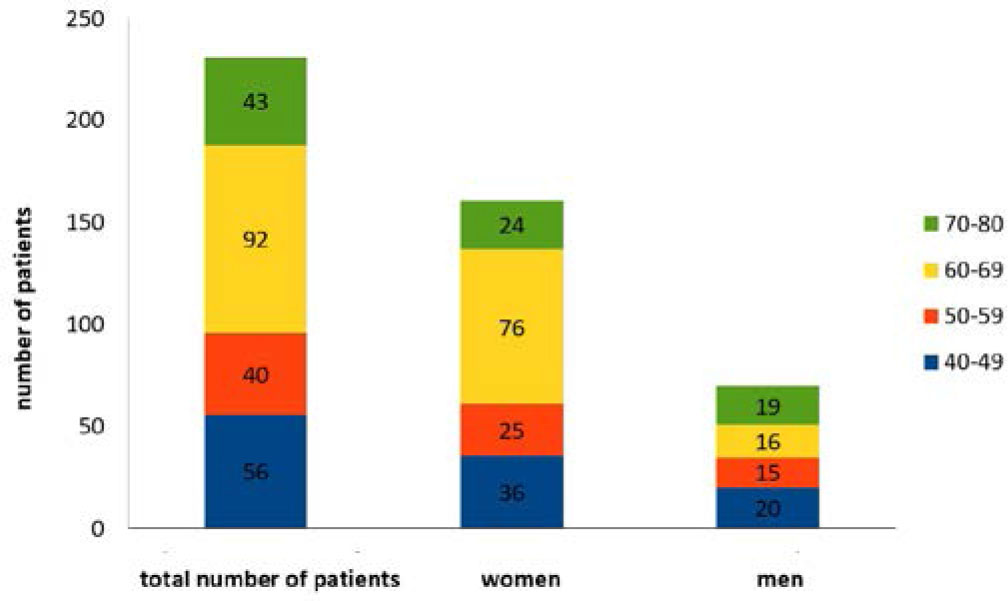
FIGURE 1.

The detailed distribution of patients by age category and sex
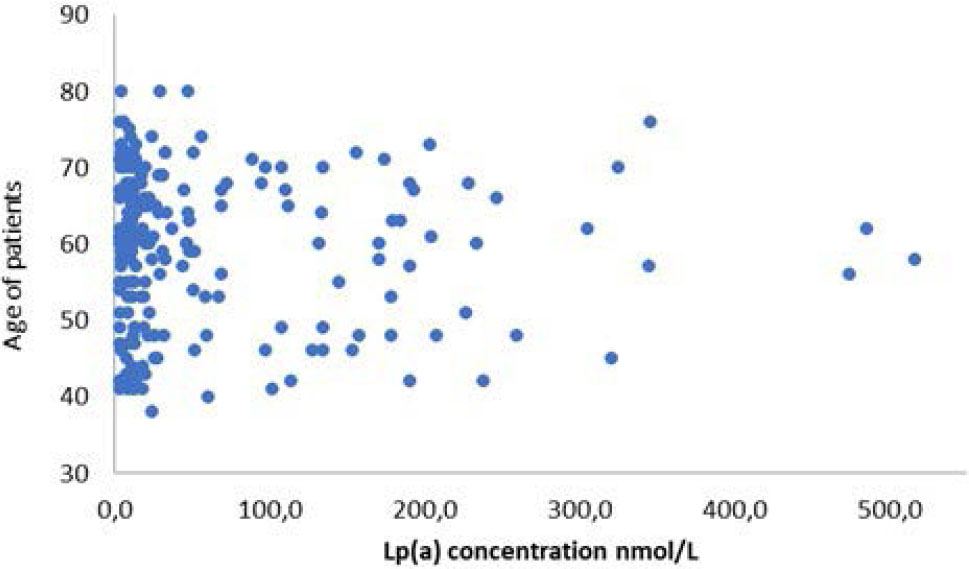

FIGURE 2.

The distribution of Lp(a) concentrations by age
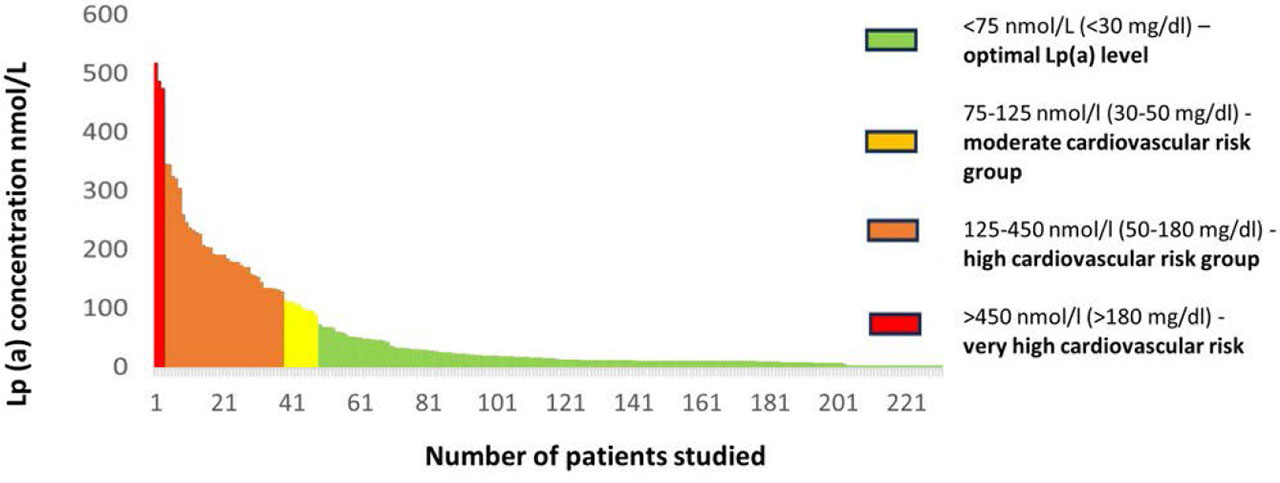

FIGURE 3.

Results of Lp(a) concentration measurements in the studied population (divided into cardiovascular disease risk groups according to the 2021 guidelines of the Polish Lipid Association)
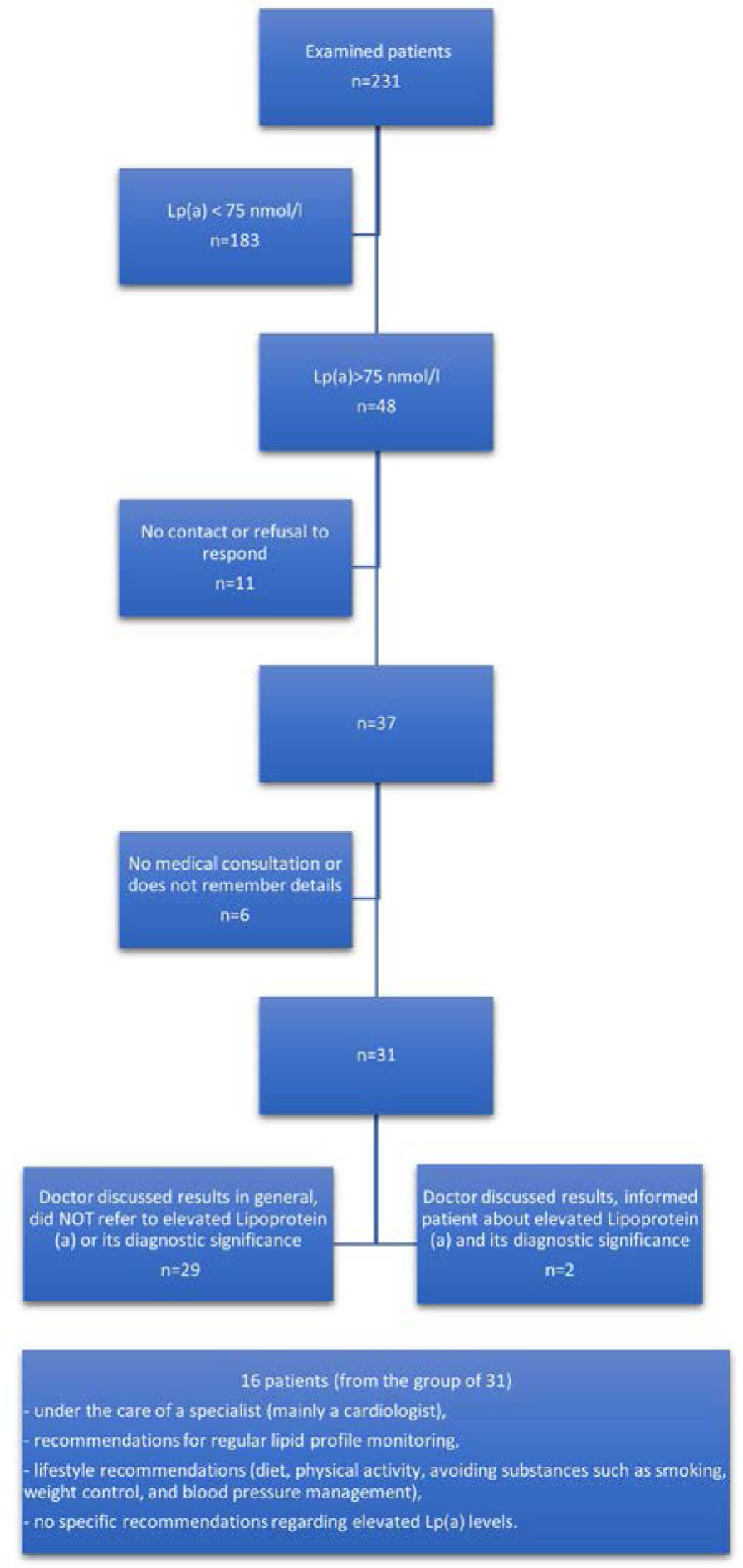

FIGURE 4.

Results of the survey of patients with Lp(a) > 75 nmol/l (>30 mg/dl)

Lp(a) cut-off values according to different guidelines

RecommendationLp(a) cut-off values
Polish Lipid Association 202120
  • <75 nmol/l – optimal Lp(a) level

  • 75–125 nmol/l – moderate cardiovascular risk

  • >125–450 nmol/l – high cardiovascular risk

  • >450 nmol/l – very high cardiovascular risk

HEART UK consensus 20198
  • 32–90 nmol/l – low risk of cardiovascular disease

  • 90–200 nmol/l – modest risk

  • 200–400 nmol/l – high risk

  • >400 nmol/l – very high risk

European Society of Cardiology/European Atherosclerosis Society 20197
  • <75 nmol/l – optimal Lp(a) level

  • >75 nmol/l – progressive risk

  • >125 nmol/l – significantly increased risk

  • > 430 nmol/l – high risk

The factors that influence Lp(a) levels2,3,15,16,17

Factors increasing Lp(a) levelsFactors decreasing Lp(a) levels
  • Ethnic origin (Black African, African American)

  • Pregnancy (Lp(a) level returns to normal values after delivery)

  • Acute inflammatory states (Lp(a) level normalizes with recovery)

  • Kidney function impairment (from the early stages)

  • Antiviral treatment (hepatitis C)

  • Growth hormone replacement therapy

  • Diet based on unsaturated fats or carbohydrates

  • Impaired liver function (hepatocyte damage)

  • Postmenopausal hormone replacement therapy

  • Treatment of overt and subclinical hypothyroidism

  • Diet based on low-carbohydrate and high-saturated fat products

  • Flaxseed and walnuts in the diet

Pro-atherogenic and prothrombotic mechanisms of Lp(a)4

Pro-atherogenic and pro-inflammatory properties of Lp(a)Prothrombotic properties of Lp(a)
↑ oxidized phospholipids↓ plasminogen activation
↑ foam cell formation↓ fibrinolysis
↑ endothelial dysfunction↓ tissue factor pathway inhibitor
↑ smooth muscle cell proliferation↓ clot stability
↑ monocyte chemotaxis↑ platelet response
↑ arterial wall inflammation (IL-8, monocyte chemotactic protein, TNF-α)↑ plasminogen activator inhibitor-1 (PAI-1)
DOI: https://doi.org/10.2478/jce-2024-0022 | Journal eISSN: 2457-5518 | Journal ISSN: 2457-550X
Language: English
Page range: 142 - 150
Submitted on: Sep 16, 2024
Accepted on: Nov 11, 2024
Published on: Dec 26, 2024
Published by: Asociatia Transilvana de Terapie Transvasculara si Transplant KARDIOMED
In partnership with: Paradigm Publishing Services
Publication frequency: 4 issues per year

© 2024 Anna Pasławska, Agnieszka Radom, Przemysław Tomasik, published by Asociatia Transilvana de Terapie Transvasculara si Transplant KARDIOMED
This work is licensed under the Creative Commons Attribution-NonCommercial-NoDerivatives 3.0 License.