
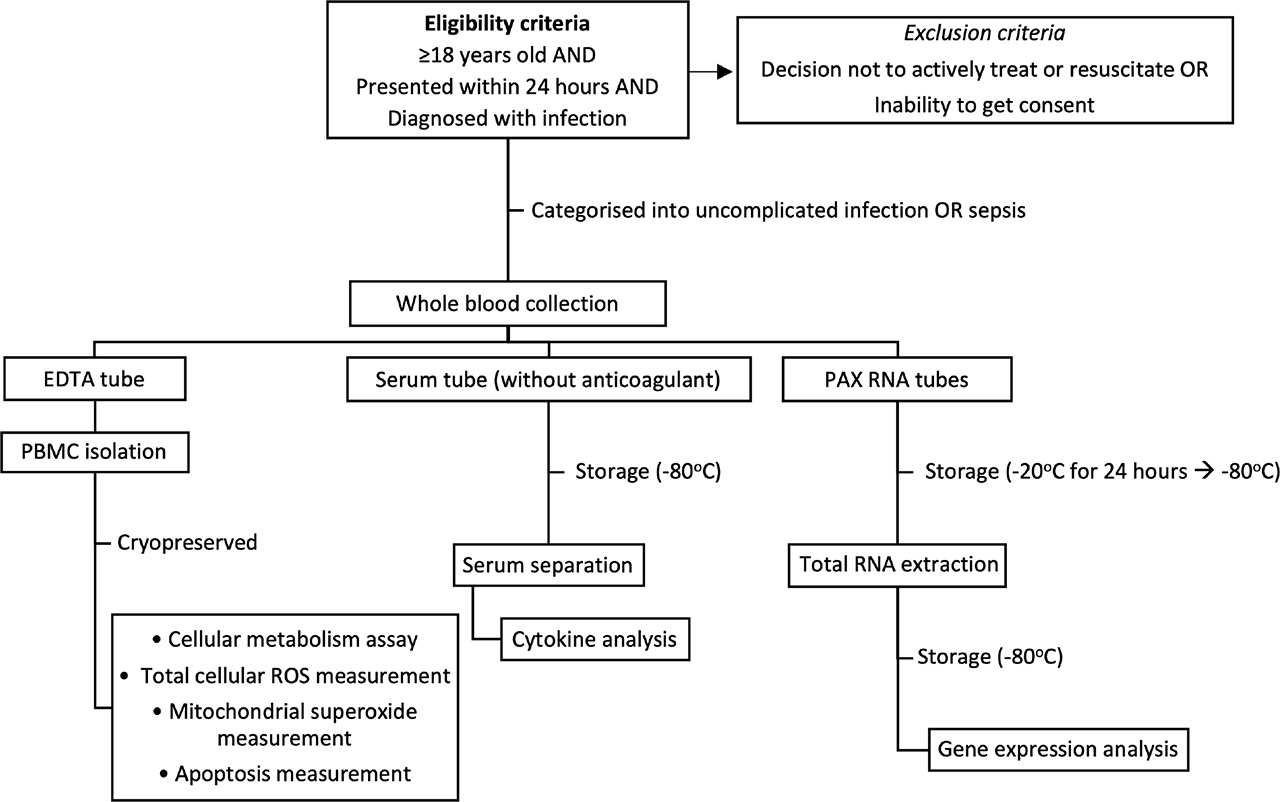
Fig. 1.
illustrates the workflow of experiment.
Table 1.
Patients Demographic and Clinical Characteristics (n = 67)
| Characteristics | Uncomplicated Infection | Sepsis | P value |
|---|---|---|---|
| N (%) | 27 (40.3) | 40 (59.7) | |
| Age – yr | 56.4 ± 18.12 | 69.1 ± 13.83 | 0.002 |
| Male sex – no. (total no., %) | 19 (70.4) | 20 (50) | 0.099 |
| Source of infection | |||
| Respiratory tract (%) | 12 (44.4) | 20 (50) | 0.6551 |
| Urinary tract (%) | 4 (14.8) | 12 (30) | 0.1554 |
| Abdominal, liver and biliary tract (%) | 5 (18.5) | 5 (12.5) | 0.5022 |
| Skin and soft tissue (%) | 4 (14.8) | 5 (12.5) | 0.7881 |
| Cardiovascular (%) | 0 (0) | 1 (2.5) | 0.4113 |
| Bone and joint (%) | 1 (3.7) | 1 (2.5) | 0.7787 |
| Unknown | 2 (7.4) | 1 (2.5) | 0.3450 |
| Comorbidities (%) | 21 (77.8) | 39 (97.5) | 0.0150 |
| Cardiovascular disease (%) | 15 (55.6) | 30 (75) | 0.0997 |
| Respiratory disease (%) | 7 (25.9) | 13 (32.5) | 0.5654 |
| Diabetes mellitus (%) | 6 (22.2) | 15 (37.5) | 0.1887 |
| Malignancy (%) | 4 (14.8) | 13 (32.5) | 0.1050 |
| Chronic kidney disease (%) | 3 (11.1) | 6 (15) | 0.6485 |
| Septic shock (%) | NA | 10 (25.0) | NA |
| ICU admission (%) | 0 (0) | 9 (22.5) | 0.0086 |
| Hospital readmission – 28 day (%) | 2 (7.4) | 3 (7.5) | 0.9879 |
| Length of stay (day) | 5 (1–68) | 8 (1–106) | 0.073 |
| In-hospital mortality (%) | 0 (0) | 3 (7.5) | 0.1484 |
| Improving SOFA score on 3–5 days (%) | 8/9 (88.9) | 15/17 (88.2) | 0.9585 |
| Leukocyte count (×109/L) | 12.5 ± 3.72 | 14.6 ± 8.62 | 0.188 |
| Neutrophil count (×109/L) | 10.0 ± 3.44 | 12.3 ± 8.17 | 0.124 |
| Lymphocyte count (×109/L) | 1.3 (0.5–5.1) | 0.9 (0.2–4.2) | 0.053 |
| Monocyte count (×109/L) | 0.7 (0.2–2.5) | 0.9 (0.0–4.0) | 0.453 |
| Platelet (×109/L) | 222 (136–701) | 187 (43–414) | 0.038 |
| CRP (mg/L) | 43 (3–295) | 118 (3–390) | 0.026 |
| Lactate (mmol/L) | 1.45 (0.8–2.9) | 2 (0.4–6.5) | 0.017 |
| Positive culture | |||
| From source of infection (%) | 11/24 (45.8) | 20/37 (54.1) | 0.5299 |
| From blood (%) | 6/21 (28.6) | 13/32 (40.6) | 0.3775 |
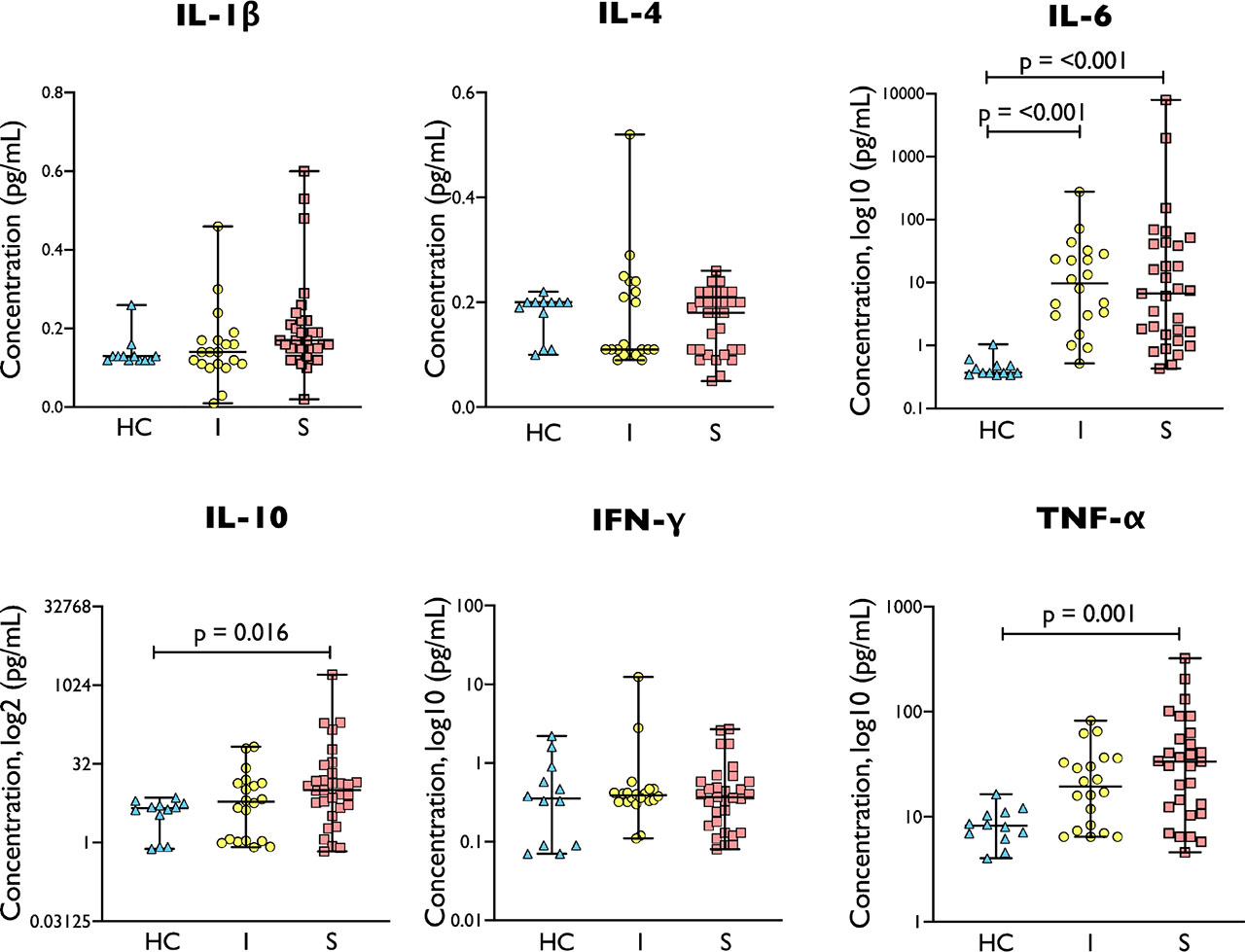
Fig. 2.
Cytokine levels in healthy control/HC (n = 12), uncomplicated infection/I (n = 20) and sepsis/S (n = 31). Sepsis demonstrated the highest cytokine levels in IL-6, IL-10 and TNF-α. Comparison between groups were performed by Kruskal-Wallis test followed by Dunn’s multiple comparison test.
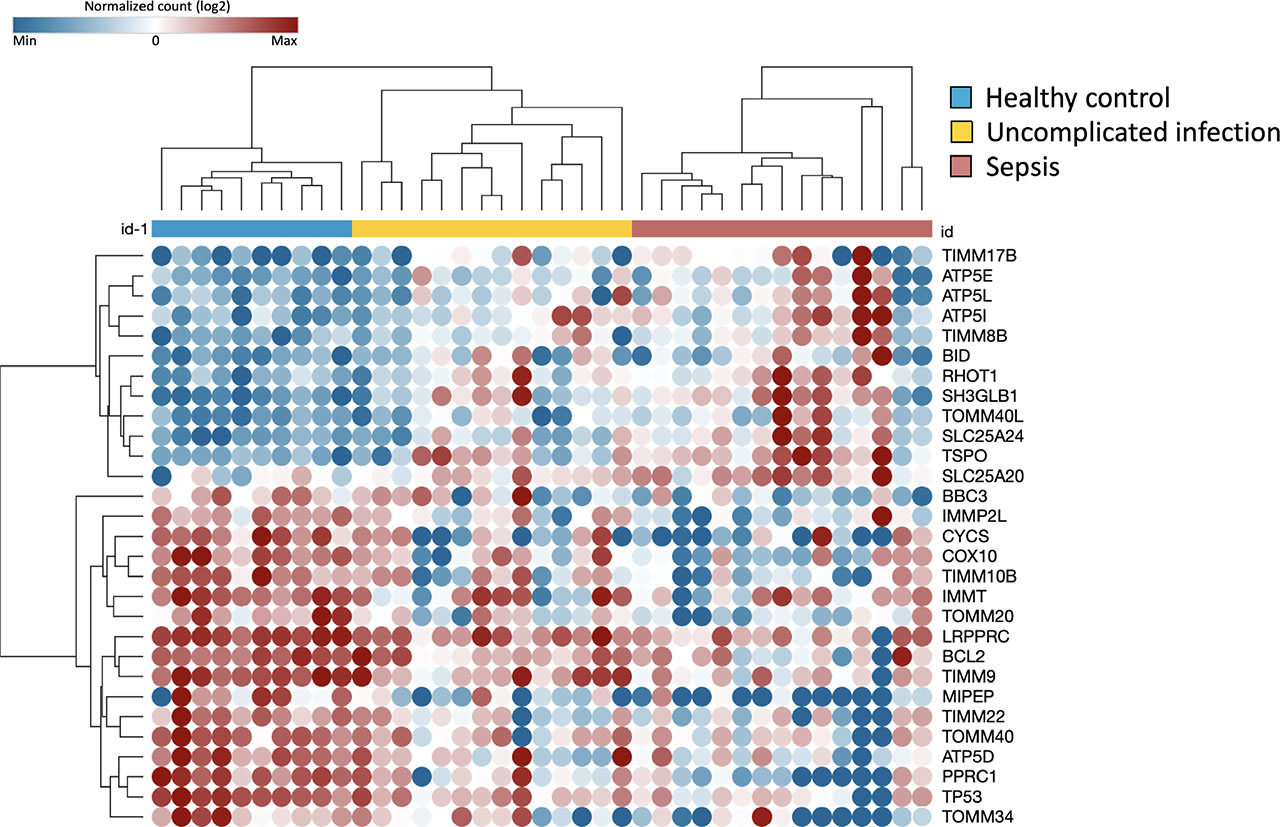
Fig. 3A.
Heat map demonstrated 29 differentially expressed genes in log2-counts. The samples were grouped using semi-supervised clustering. Each sample is labelled by colour according to the clinical condition (performed on a subset of 10 healthy controls, 14 uncomplicated infection and 15 sepsis subjects).
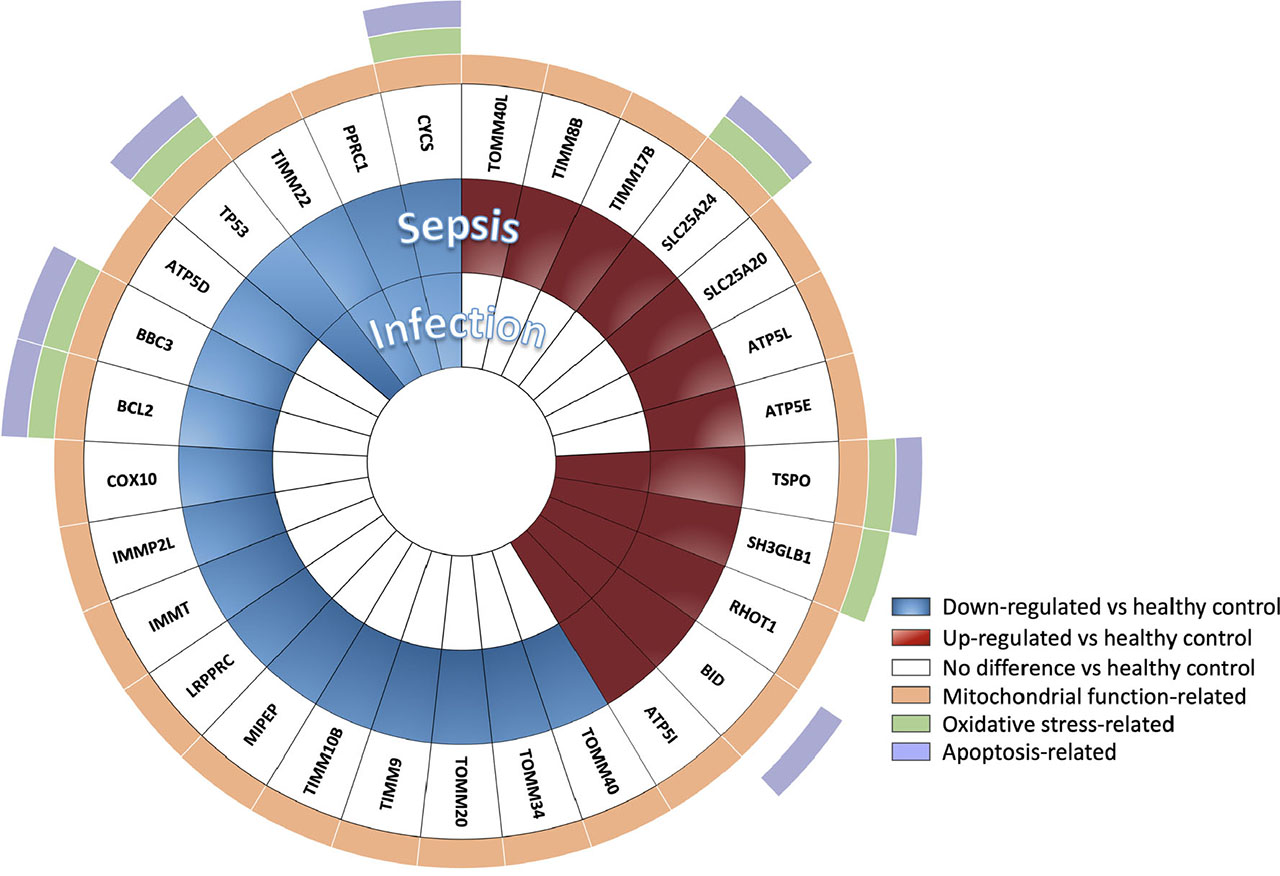
Fig. 3B.
The differentially expressed genes (FDR <0.05) in uncomplicated infection (n = 14) and sepsis patients (n = 15) relative to healthy controls’ (n = 10). Function of each gene is indicated by colour (e.g. regulations on mitochondrial function, ROS production and apoptosis cell death). Twenty genes were expressed differently in sepsis. Comparison between groups were performed by one-way ANOVA followed by Benjamini-Yakutieli False Discovery Rate method.
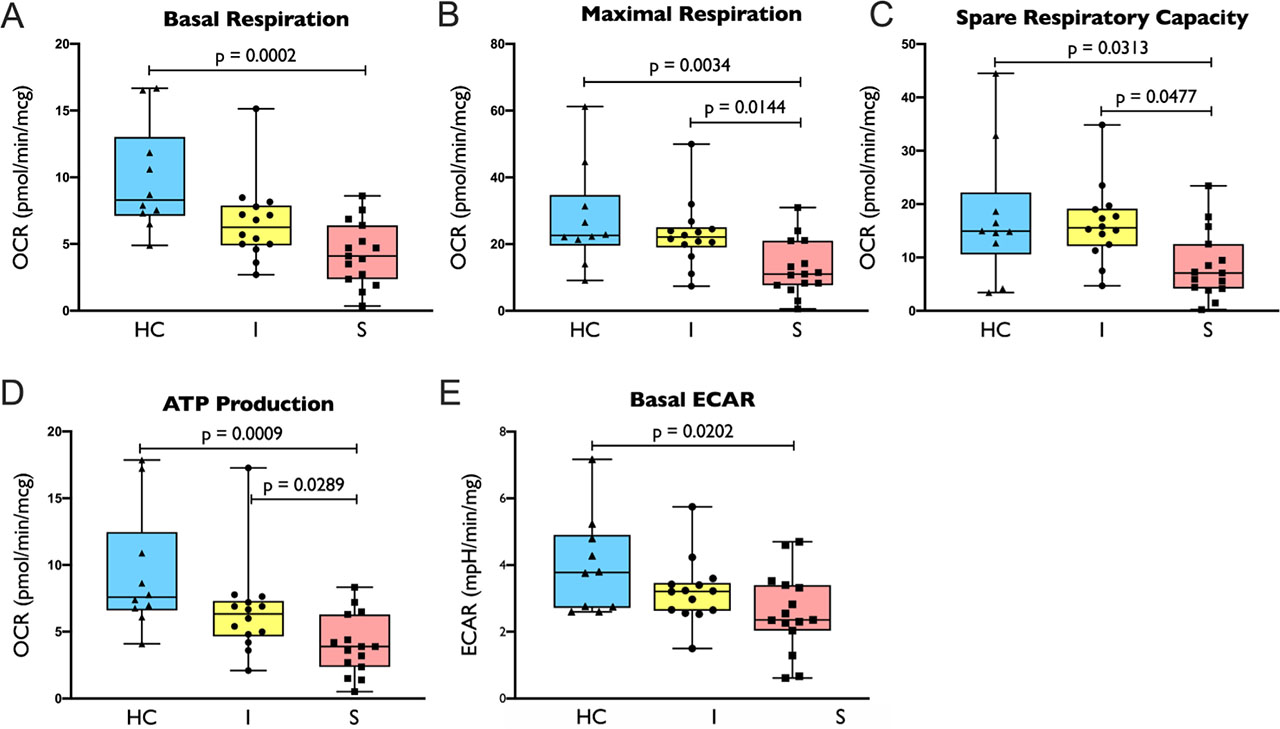
Fig. 4
Oxygen consumption rate (OCR) and extracellular acidification rate (ECAR) on subjects with gene expression data: 4A. basal respiration, 4B. maximal respiration, 4C. spare capacity, 4D. ATP production, 4E. basal ECAR in healthy control/HC (n = 10), uncomplicated infection/I (n = 14) and sepsis/S (n = 15) group. Comparison between groups were performed by one-way ANOVA followed by Tukey’s multiple comparison test.
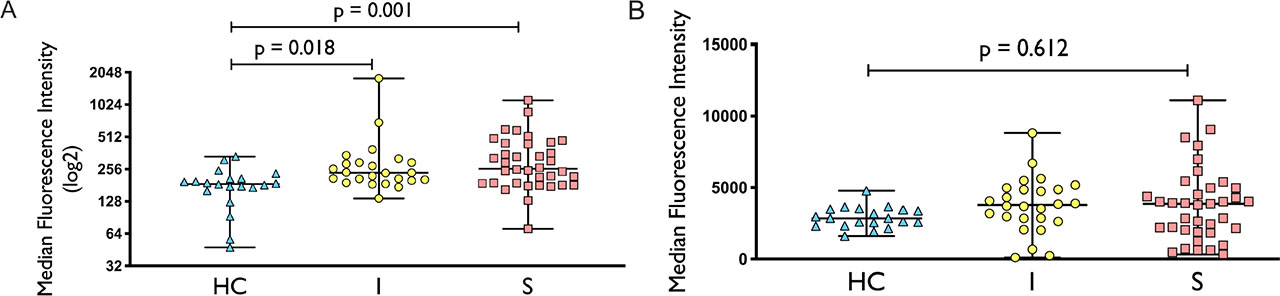
Figure 5
MitoSOX (5A) and DCFDA (5B) staining in healthy control (HC), uncomplicated infection (I) and sepsis (S). N for MitoSOX = HC (20), I (24), S (36), respectively; n for DCFDA = HC (20), I (26), S (37), respectively. For MitoSOX dataset, comparison between groups was performed with Kruskal-Wallis test followed by Dunn’s multiple comparison. For DCFDA dataset, comparison between groups was made using one-way ANOVA followed by Tukey’s multiple comparison.
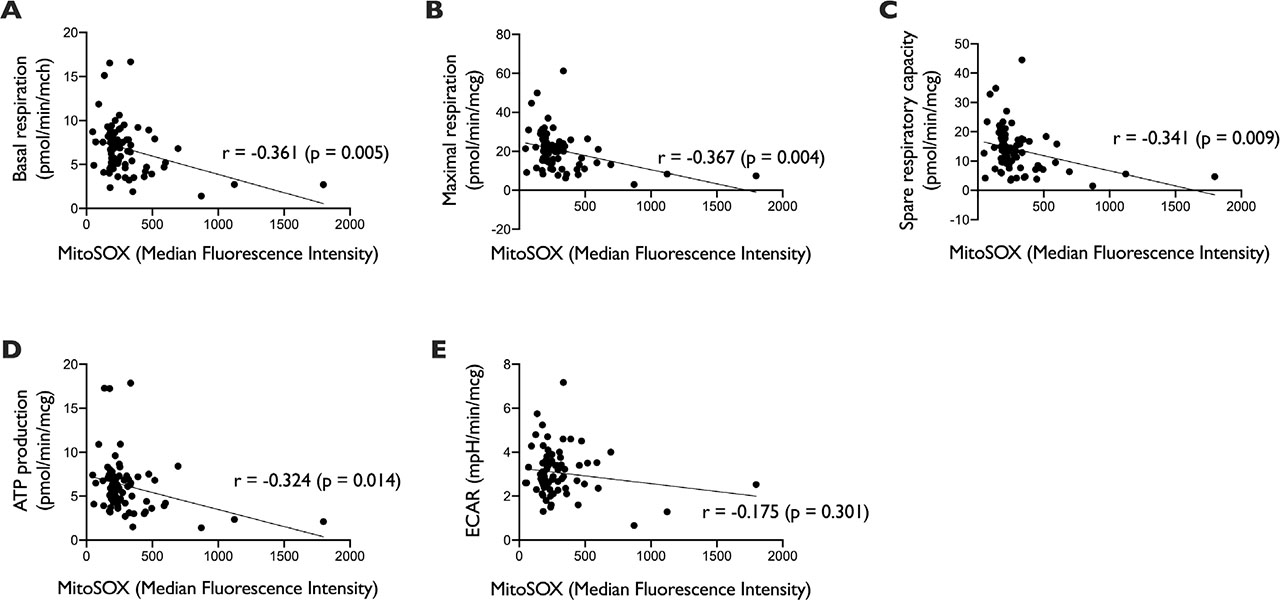
Fig. 6.
Correlation between mitochondrial superoxide level (measured with MitoSOX) with cellular metabolism parameters (n = 80) (A. Basal respiration, B. Maximal respiration, C. Spare respiratory capacity, D. ATP production, E. ECAR). Analysis was performed with Pearson correlation. r = correlation coefficient.