
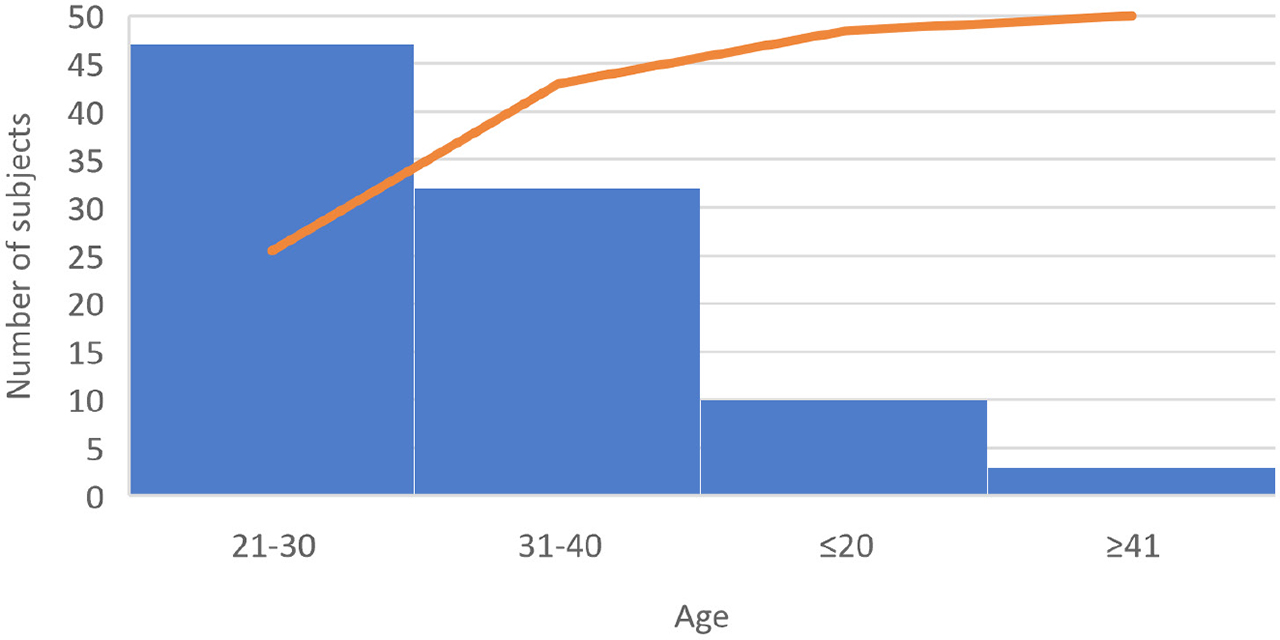
Fig. 1.
Age distribution of the subjects
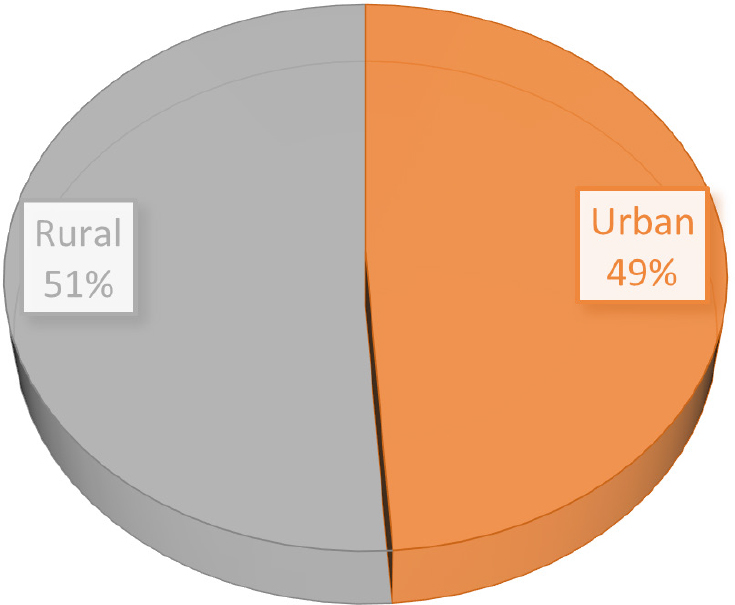
Fig. 2.
Rural/urban area distribution of subjects
Table 1.
Characteristics of subjects according to their discharge note
| Diagnostic | LMWHep treatment | The type of birth | Apgar index | Aborted/dead | ||||
|---|---|---|---|---|---|---|---|---|
| Pregnancy < 36 weeks | Pregnancy > 36 weeks | N | C | 0–7 | 8–10 | |||
| Patients (n) | 15 | 73 | 41 | 32 | 43 | 17 | 65.00 | 8 |
| Patients (% of total) | 16.30 | 79.35 | 44.57 | 34.78 | 46.74 | 18.48 | 70.65 | 16.30 |
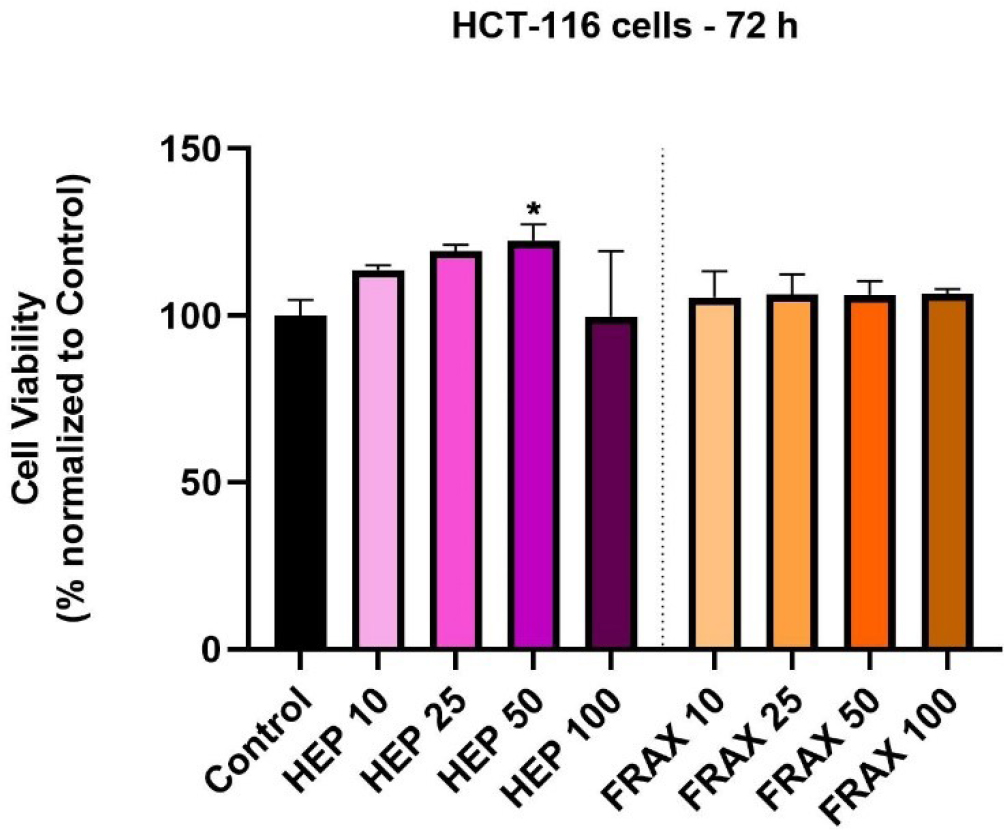
Fig. 3.
In vitro HCT 116 cell evaluation after 72 h of incubation with HEP and FRAX (10, 25, 50, and 100 UI) by performing the MTT assay. The data are presented as viability % normalized to untreated cells (expressed as average values ± SD of three independent experiments). One-way ANOVA analysis and the Dunett’s multiple comparisons post-test were conducted to identify the statistical differences between obtained data (* p < 0.1).
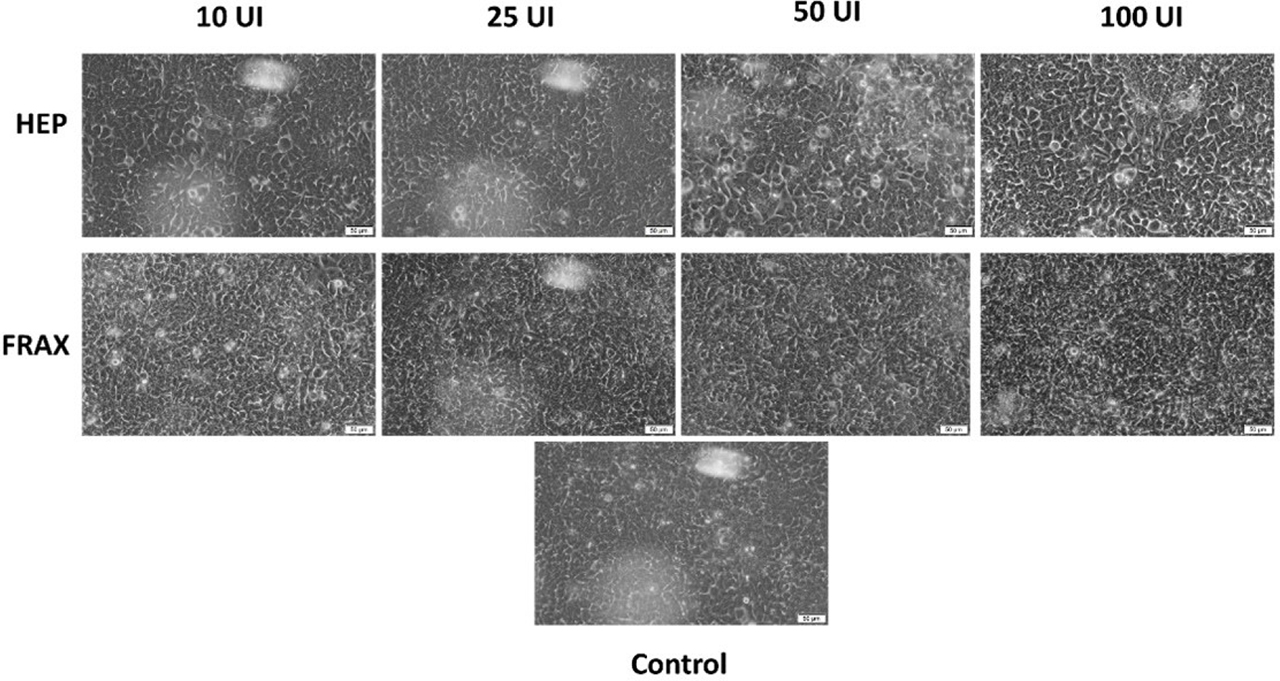
Fig. 4.
Images showing the confluence and morphological aspect of HCT 116 colorectal carcinoma cells after 72 h of treatment with HEP and FRAX at 10, 25, 50 and 100 UI. The scale bars represent 50 µm.
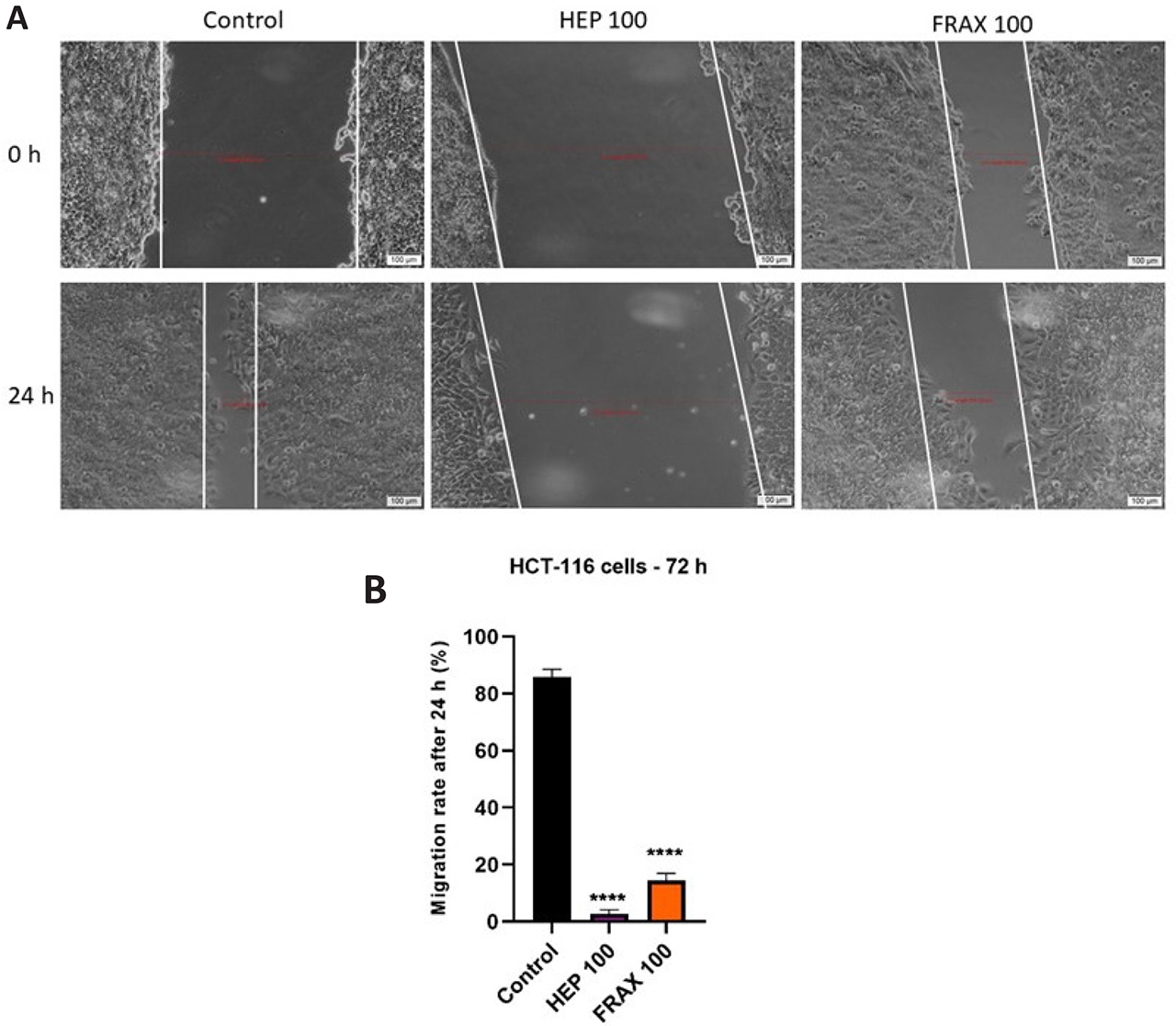
Fig. 5.
A) Pictures illustrating the migratory capacity of HCT 116 cells after treatment with HEP 100UI and FRAX 100UI for 24h. The scale bars represent 50 µm. B) Graphic depiction of the migratory potential of HCT 116 cells after the treatment with HEP 100UI and FRAX 100UI. The bar graphs are exposed as % of wound closure after 24 hours compared to the initial distance at t0. The results are expressed as averages ± SD of 3 independent experiments. One-way ANOVA analysis and the Dunett’s multiple comparisons post-test were applied to follow the statistical differences between obtained results (**** p < 0.0001).
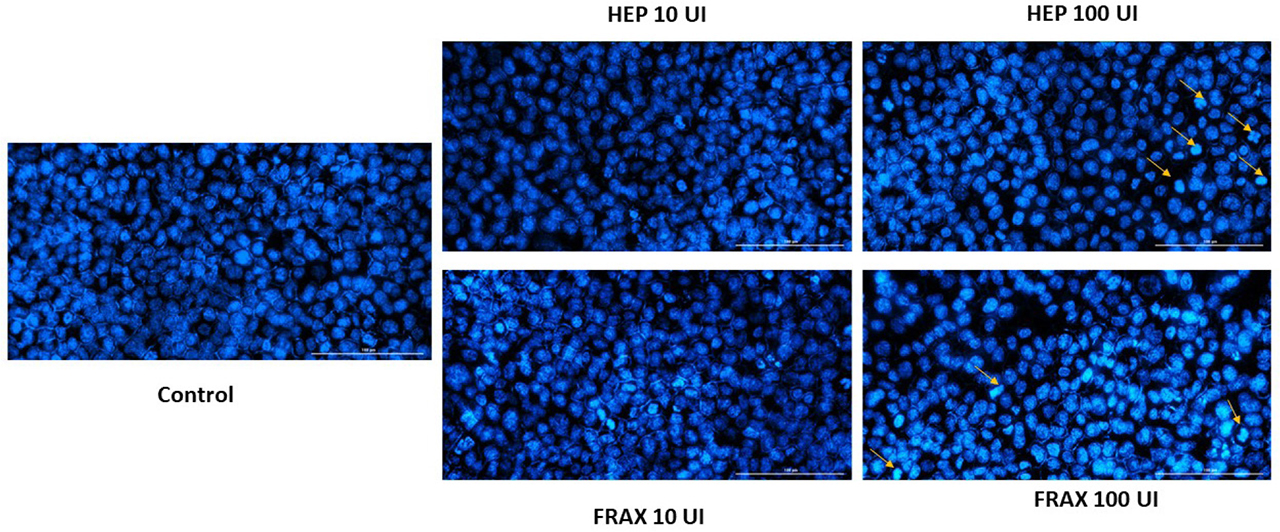
Fig. 6.
Pictures of the HCT 116 cellular nuclei counterstained with Hoechst 33342 reagent after 72 h of treatment with HEP and FRAX 10 and 100UI. The yellow arrows assign nuclei with apoptotic signs. The scale bars represent 100 µm.
Table 2.
Diagnostic and laboratory analyzes according to the discharge ticket
| Patients (n) | Patients (% of total) | ||
|---|---|---|---|
| Discharge diagnosis | Care given to the mother for the uterine scar due to a previous surgery | 17 | 41.46 |
| Medical induction of labor failure | 6 | 14.63 | |
| Birth by caesarean section | 2 | 4.88 | |
| Other diagnosis* | 15 | 36.59 | |
| Hemoglobin value | Under 12 g/dL | 3 | 7.32 |
| Over 16 g/dL | 32 | 78.05 | |
| Hematocrit value | Under 35 % | 13 | 31.71 |
| Over 46% | 0 | 0.00 | |
| Coagulation/fibrinogen value | Under 200 mg/dL | 0 | 0.00 |
| Over 400 mg/dL | 41 | 100.00 |
[i] Other diagnostics* include: tubal pregnancy (n=1), care given to the mother for the insufficient growth of the fetus (n=1), premature detachment of the placenta (n=1), severe or delayed hemorrhage following abortion and ectopic and molar pregnancy (n=1), premature rupture of the membranes, with the onset of labor in 24 h (n=1), care given to the mother for a disproportion due to an abnormally large fetus (n=1), care given to the mother for a pelvic presentation (n=1), maternal care for fetal injuries resulting from a viral disease (n=1), labor and birth complicated by unspecified fetal distress (n=1), care given to the mother for the intrauterine death of the fetus (n=1), gestational hypertension without specific proteinuria (n=1), physiological lause (n=1), hereditary hemorrhagic telangiectasia (n=1), maternal care for signs of fetal hypoxia (n=1), and partial retention of the placenta and membranes, without hemorrhage (n=1.)