
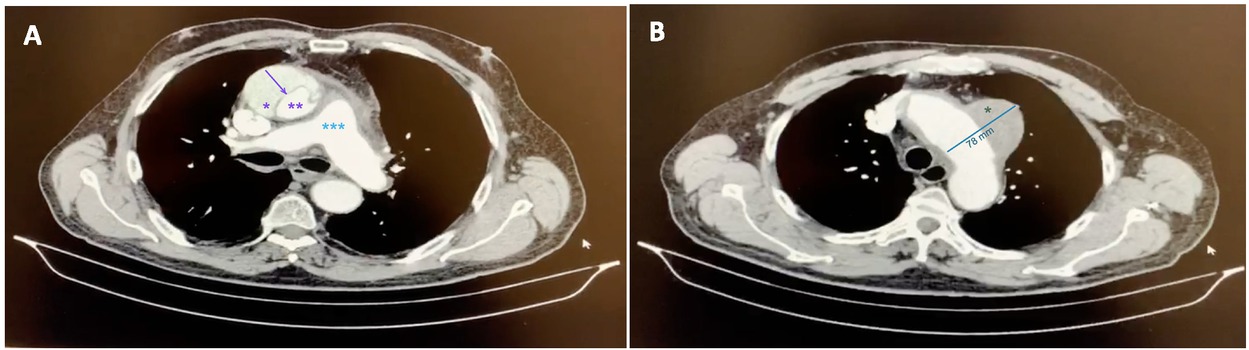
Fig. 1
A. Preoperative thoracic computed tomographic angiography: acute Stanford type A aortic dissection with ascending intimal flap (arrow). The main pulmonary artery(***) and the left and right branches were normally enhanced with contrast medium. (*true lumen aorta; **false lumen). B. Preoperative thoracic computed tomographic angiography: aortic arch saccular aneurysm (*).
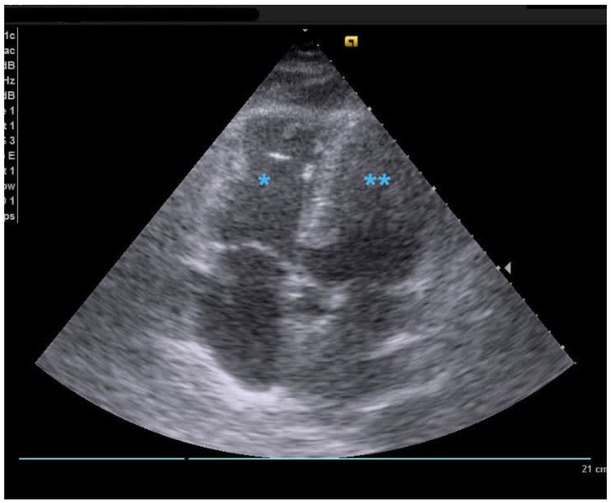
Fig. 2
Transthoracic echocardiography apical five-chamber view: right ventricular enlargement (*) and left ventricle (**).
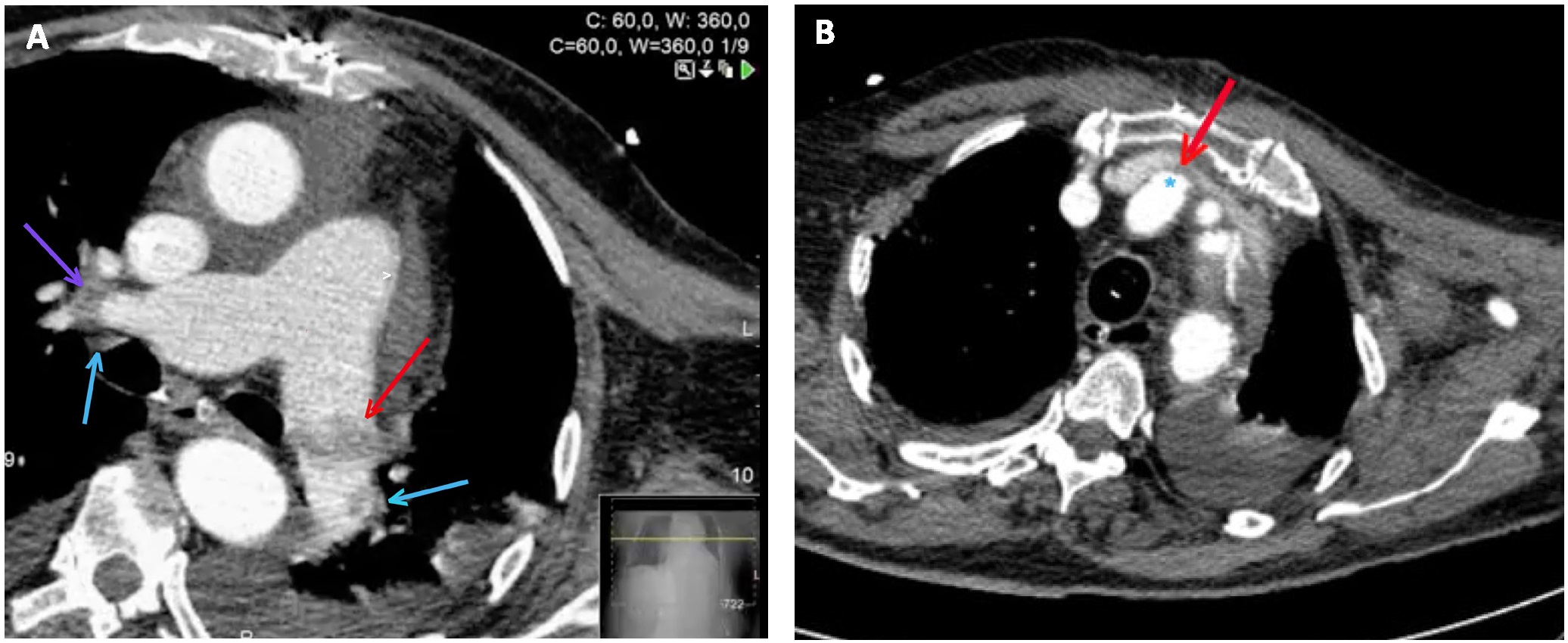
Fig. 3
A. Contrast-enhanced thoracic CT showing extensive, bilateral thromboembolism of the right (purple arrow) and left pulmonary artery (red arrow) branches and its lobar branches (blue arrows). B. Periprosthetic hematoma from the innominate artery with a pseudoaneurysm (*) conditioning a slight impression of the brachiocephalic venous trunk filiform path (red arrow).