
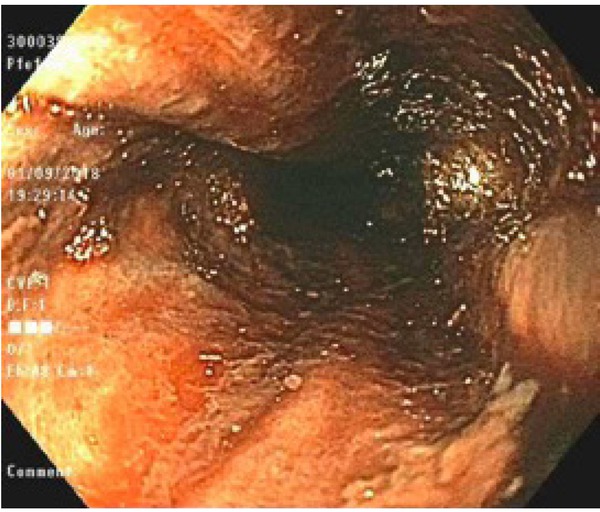
Fig. 1
EGD image of diffusely inflamed oesophageal mucosa
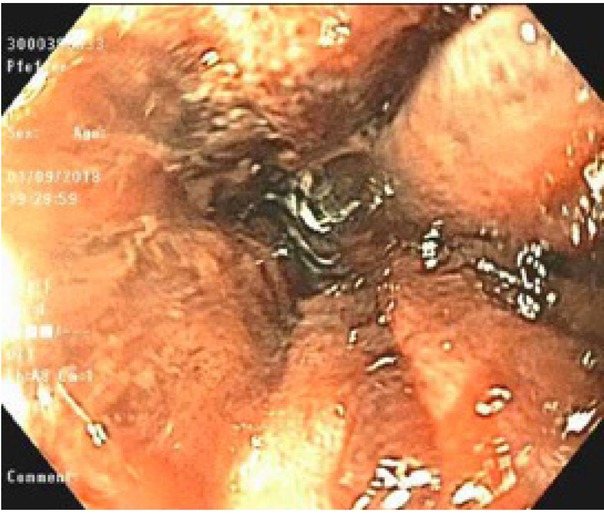
Fig. 2
EGD image of inflamed oesophageal mucosa with diffuse ulceration and sloughing
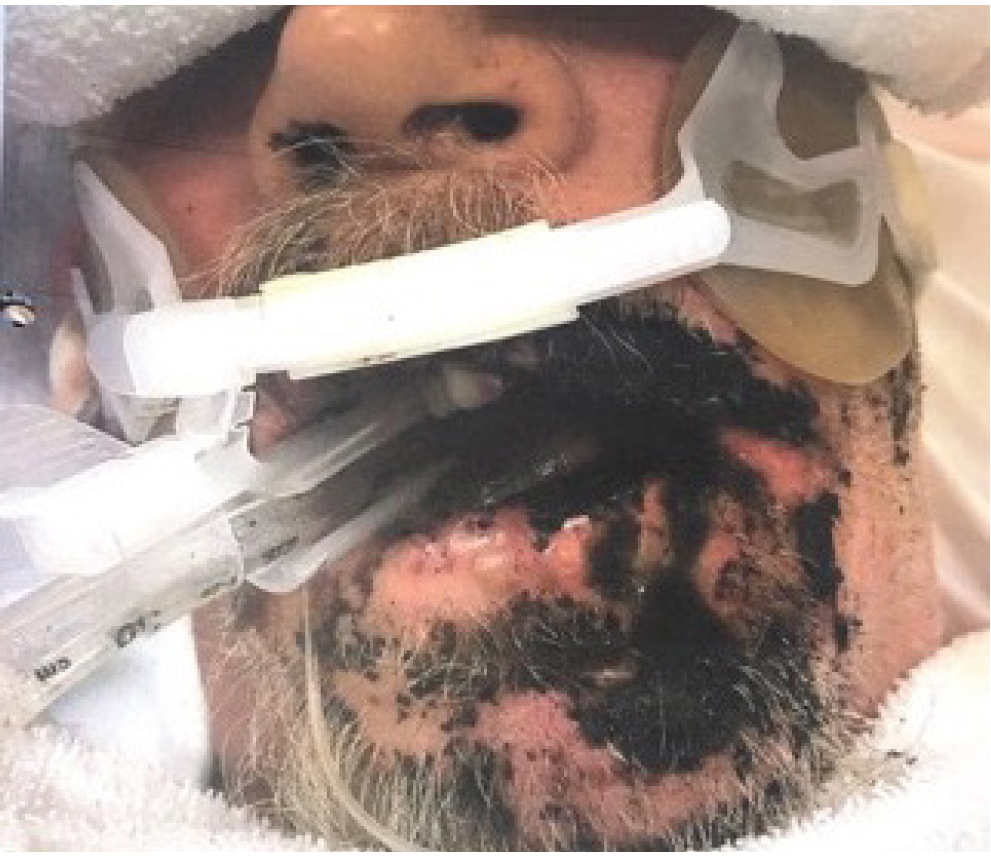
Fig. 3
Extensive burns and eschar to the patient's lower lip, chin, and left cheek
Table 1
Analgesic and sedative agents administered
| Drug | Route | Dose | Frequency | Hospital days | Manufacturer |
|---|---|---|---|---|---|
| Fentanyl citrate | Intravenous infusion | 100-300 milligrams/ hour | Continuous infu- sion | 1-10 | Akorn, Inc., Lake Forest, Illinois, USA |
| propofol | Intravenous infusion | 10 to 60 micrograms/ milligram/minute | Continuous infu- sion | 1-7, 10-15 | Pfizer, New York, New York, USA |
| lorazepam | Intravenous injection | 1-6 milligrams | Every 4 hours as needed | 5-9 | Pfizer, New York, New York, USA |
| hydromorphone | Intravenous infusion | 4-15 milligrams/hour | Continuous sion infu- | 8, 11-19 | Pfizer, New York, USA New York, |
| Hydromorphone | Intravenous injection | 1-5 milligrams | Every 1 hour as needed | 7-19 | Pfizer, New York, New York, USA |
| Haloperidol dec- anoate | Intravenous injection | 10 milligrams | Every 4 hours around the clock and as needed | 10-19 | Fresenius Kabi, Lake Zurich, Illinois, USA |
| Dexmedetomidine hydrochloride | Intravenous infusion | 0.4-1.5 micrograms per kilogram per hour (total 39 mcg) | Continuous infu- sion | 9, 10 | Fresenius Kabi, Lake Zurich, Illinois, USA |
| Ketamine hydro- chloride | Intravenous infusion | 2 milligrams/kilogram/ hour | Continuous infu- sion | 14-19 | Pfizer, New York, New York, USA |
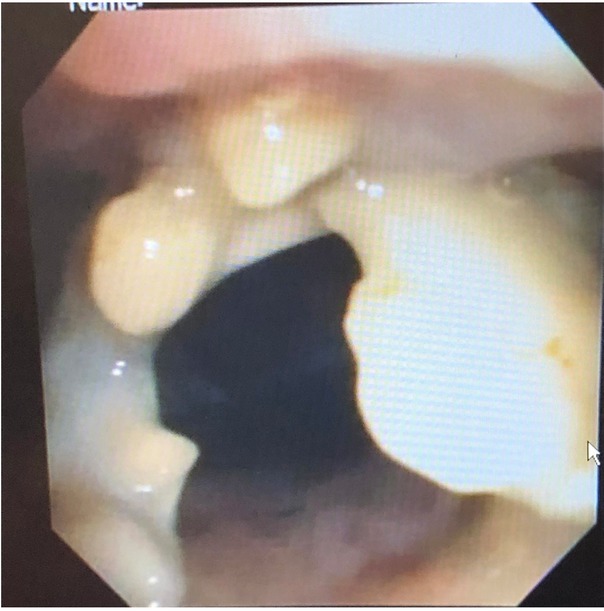
Fig. 4
Bronchoscopy image of oedematous tissue of the epiglottis with diffuse tissue damage
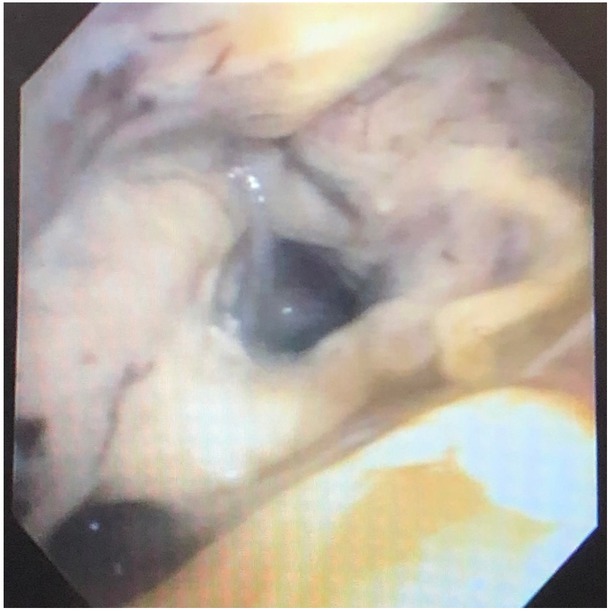
Fig. 5
Bronchoscopy image of oedematous vocal cords with diffuse tissue damage