
Table 1
Number of flowers per plant, during experimental period from October to February
| Oct | Nov | Dec | Jan | Feb | |
|---|---|---|---|---|---|
| Osmia bicornis | 10.5±2.62 | 10.5±3.37 | 9.6±3.01 | 10.4±3.18 | 10.8±3.19 |
| hand pollination | 10.9±3.37 | 11.0±3.26 | 9.4±3.39 | 9.9±3.32 | 10.4±3.44 |
[i] Mean values were based on measurement from 25 plants in each pollination method each month (untransformed data).
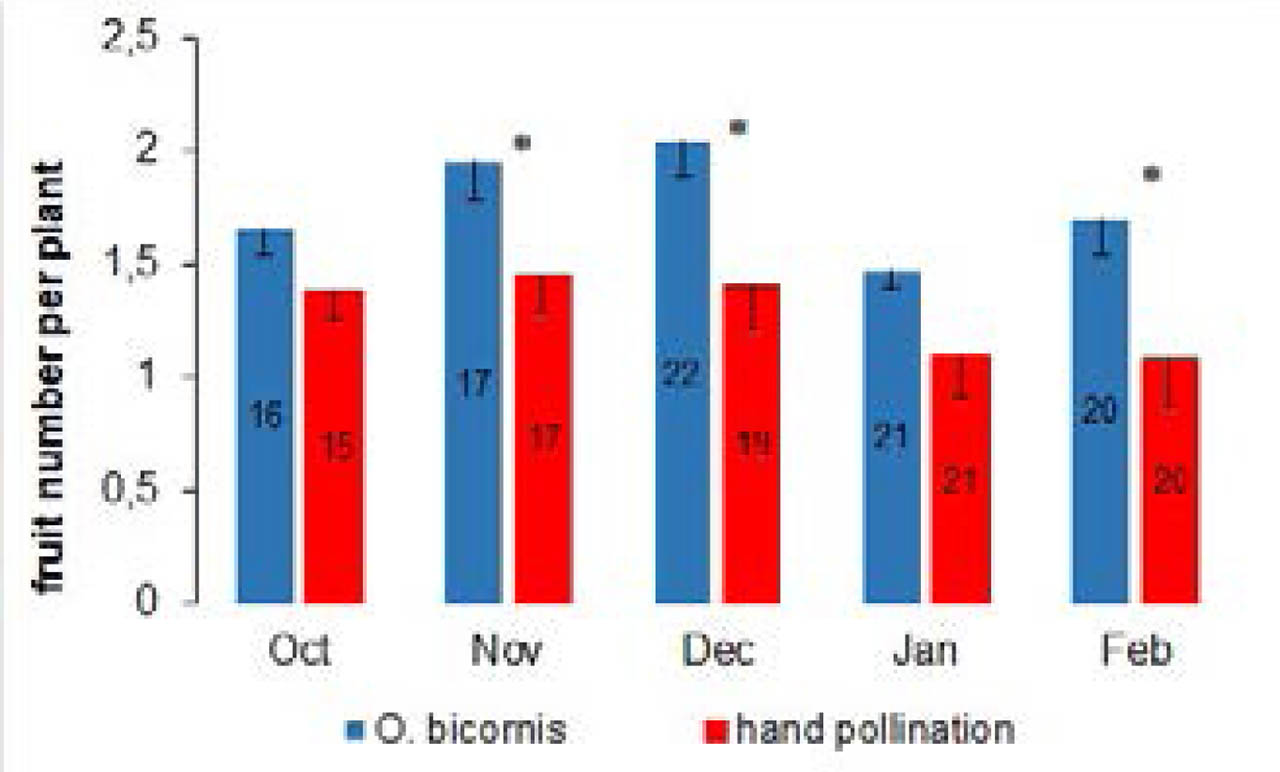
Fig. 1
Number of fruits (capsules) produced by plant each experimental month (Oct - Feb)
The means ± standard error (transformed data) and number of plants in each group are presented.
* indicates significant differences between bee pollination and hand pollination (Student’s t-test, P≤0.05)
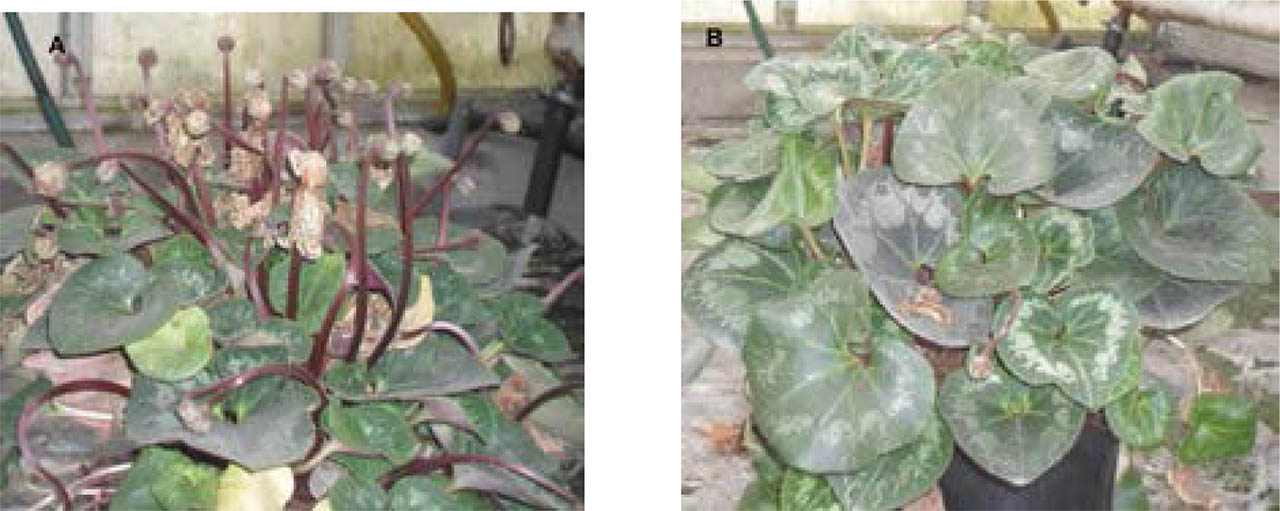
Fig. 2
Cyclamen persicum plants after flowering and fruits formed as a result of O. bicornis pollination (A) and pollination without bees (B).
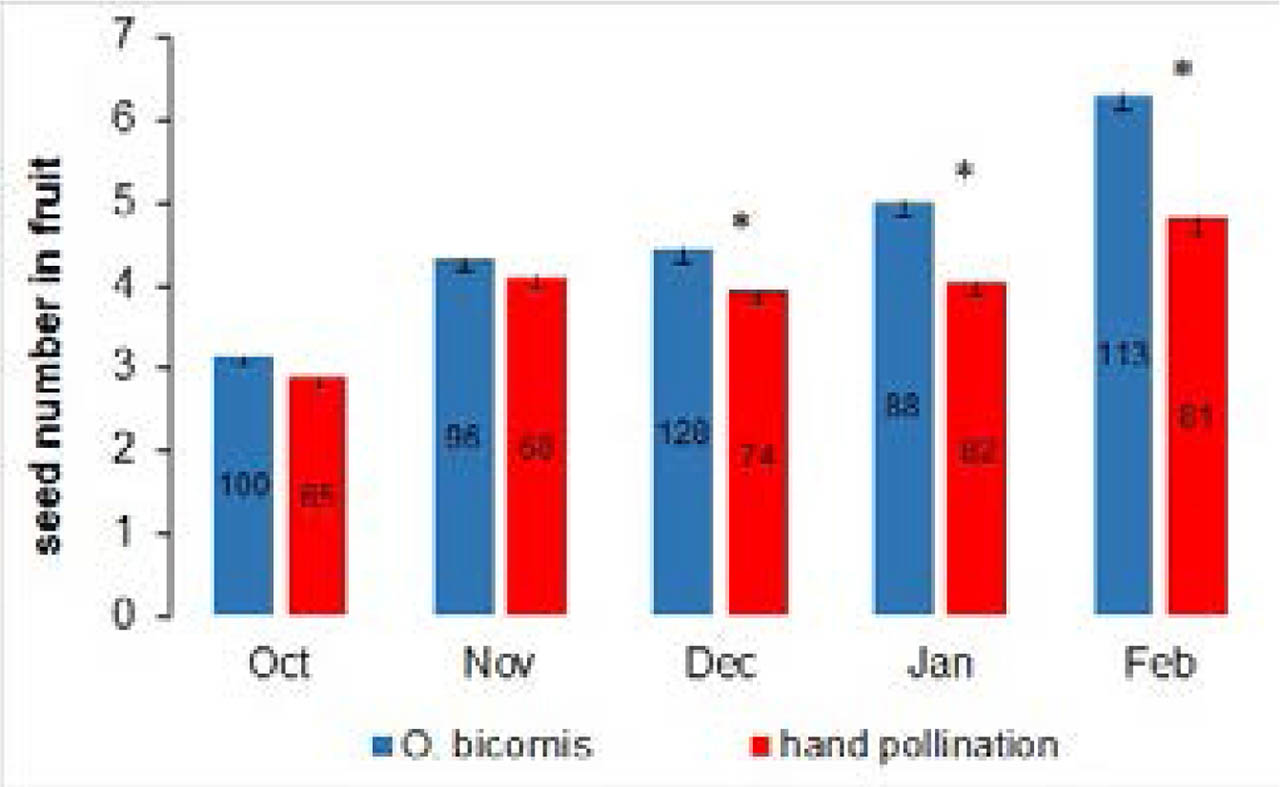
Fig. 3
Number of seeds in capsule produced by plant in particular months (Oct - Feb).
Means ± standard error (transformed data) and number of sampled fruits in each group are presented.
* indicates significant differences between bee pollination and hand pollination (Student’s t-test, P≤0.05).
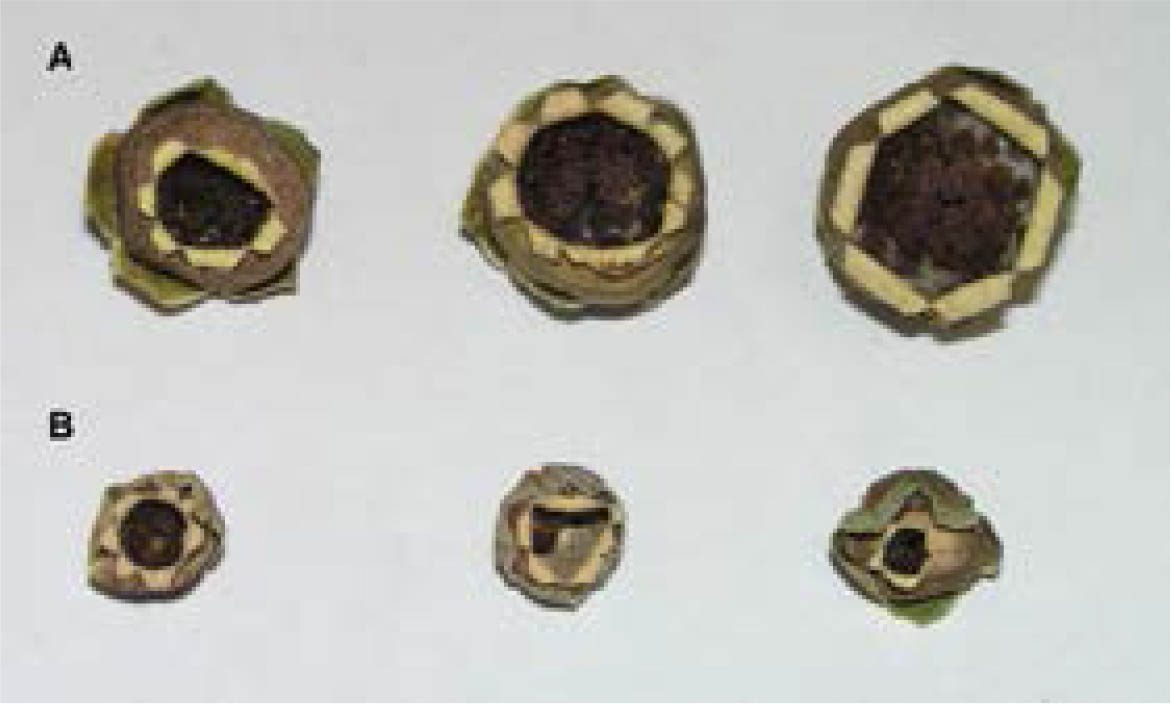
Fig. 4
Fruits of Persian cyclamen formed after O. bicornis pollination (A) and pollination without bees (B).
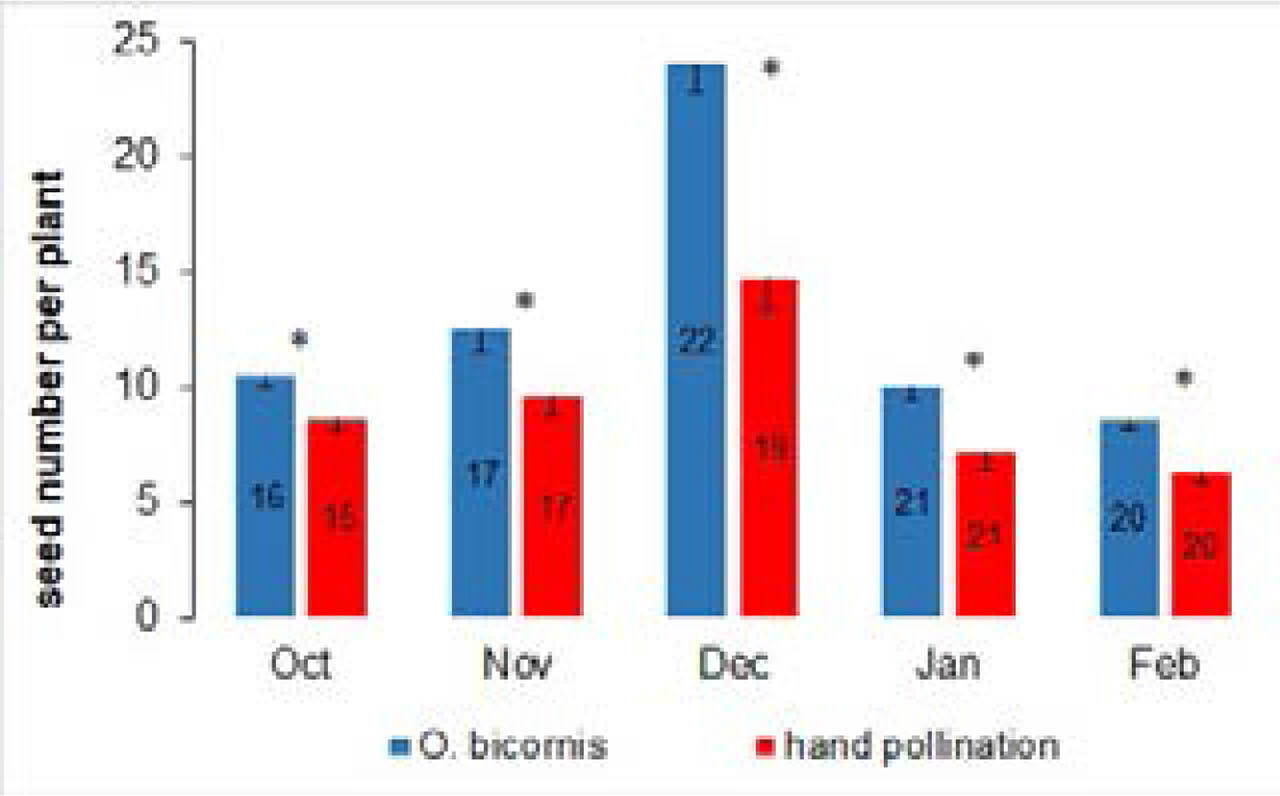
Fig. 5
Total number of seeds produced by a single plant each experimental months (Oct - Feb).
The means ± standard error (transformed data) and number of plants in each group are presented.
*indicates significant differences between bee pollination and hand pollination (Student’s t-test, P≤0.05).
Table 2
Mass of thousand seeds (g) during experimental period from October to February
| Oct | Nov | Dec | Jan | Feb | |
|---|---|---|---|---|---|
| Osmia bicornis | 7.1±0.15 | 6.5±0.17 | 6.6±0.09 | 7.7±0.27 | 7.8±0.42 |
| hand pollination | 7.1±0.13 | 6.4±0.14 | 6.4±0.03 | 6.1±0.30 | 7.7±0.22 |
[i] Mean value were based on four samples of 100 seeds (multiplied by 10) in each pollination method each month (untransformed data).