
Table 1
Plant properties and bioactivities considered in preparing HEOEM
| Species | Major components | Bioactivities | References |
|---|---|---|---|
| Rumex acetosella | Oxalate (binoxalate) of potassium, tannic acid, and nitrogenous matter | Refrigerant, asidic and diuretic | https://www.henriettes-herb.com/eclectic/kings/rumex-acet.html |
| Achillea millefolium | Artemisia ketone, camphor, linalyl acetate and 1,8-cineole | Anti-inflammatory and disinfectant | Ghanbari et al., 2017 |
| Plantago lanceolata | Flavonoids, alkaloids, terpenoids, phenolic compounds (caffeic acid derivatives), iridoid glycosides, fatty acids, polysaccharides and vitamins | Anti-inflammatory antimicrobial activity, antioxidant and cytotoxic activity, anti-tumoural activity and antispasmodic | Bajer et al., 2016 |
| Salvia officinalis | Cis-thujone, camphor, cineole, humulene, trans-thujone, camphene, pinene, limonene, bornyl acetate and linalool | Antibacterial, antioxidant, antimicrobial, insecticidal and allelopathic activities antitumoral antidiabetic and antioxidant | Khedher et al., 2017 |
| Thymus vulgaris | Geraniol, linalool, gamma-terpineol, carvacrol, thymol and trans-thujan-4-ol/terpinen-4-ol, p-cymene, γ-terpinene and thymol | Antimicrobial, antitussive, antibroncholitic, antispasmodic, anthelmintic, carminative, antiseptic, antioxidant, diuretic | Borugă et al., 2014 |
| Rosmarinus officinalis | Rosmarinic acid, caffeic acid, ursolic acid, betulinic acid, carnosic acid and carnosol, camphor, 1,8-cineole, α-pinene, borneol, camphene, β-pinene and limonene | Antibacterial, antiviral, antioxidant and anti-inflammator, antidiabetic anti-inflammatory, antitumor and antioxidant | Andrade et al., 2018 |
| Laurus nobilis | 1,8-cineole, sabinene, and linalool | Antibacterial, antioxidant, antifungal, cytotoxic | Caputo et al., 2017 |
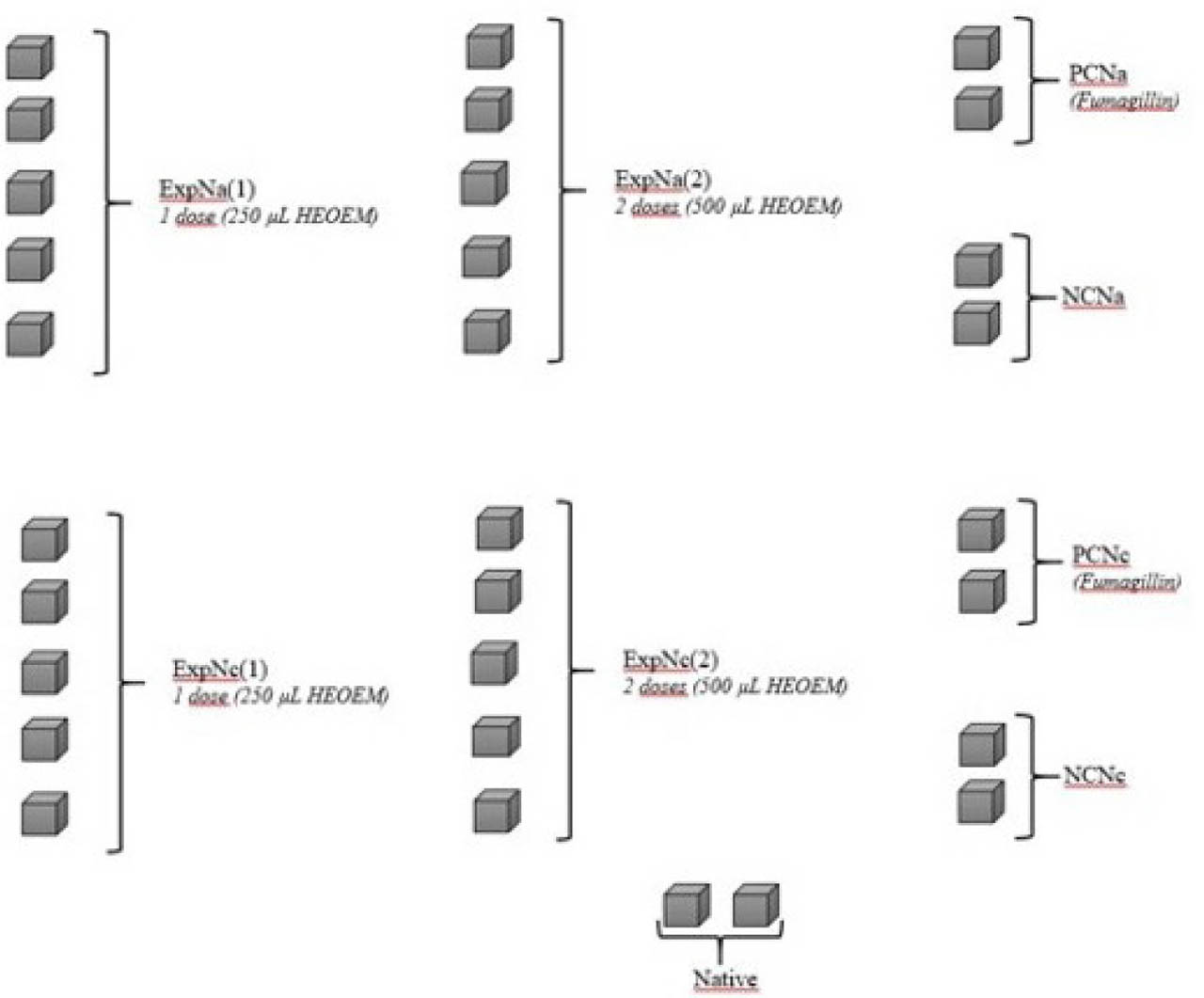
Fig. 1
Experimental design of the cage experiment.
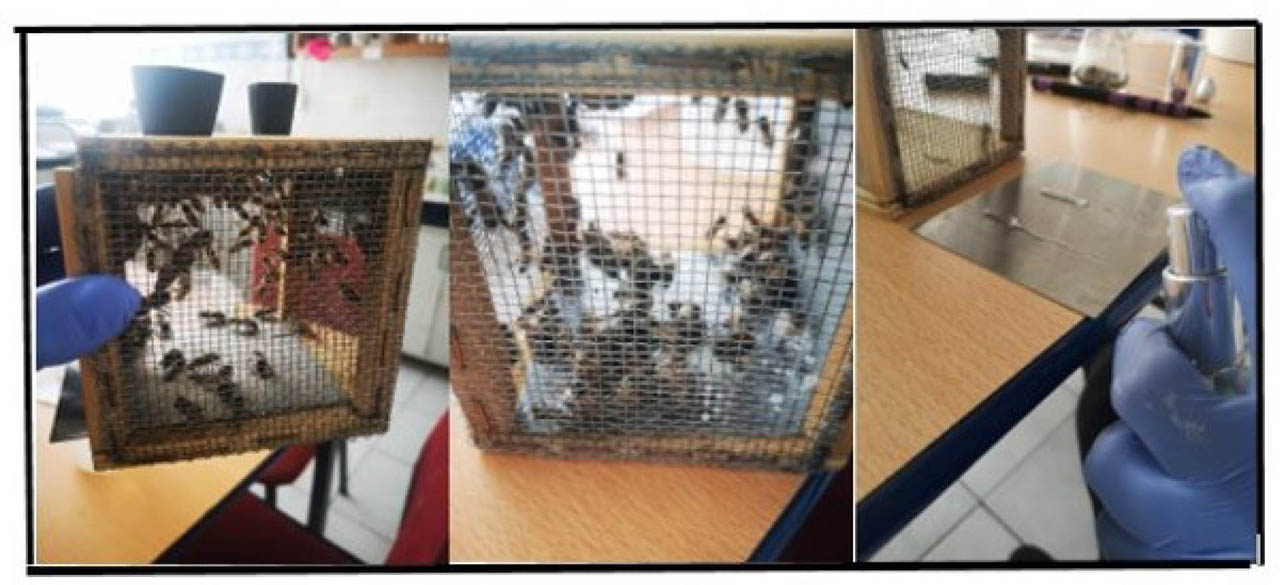
Fig. 2
HEOEM application method in the cage experiment by spraying the syrup on 190 adult bees in the 225 cm2 surface area of the experimental cages using a 30-ml glass spray bottle.
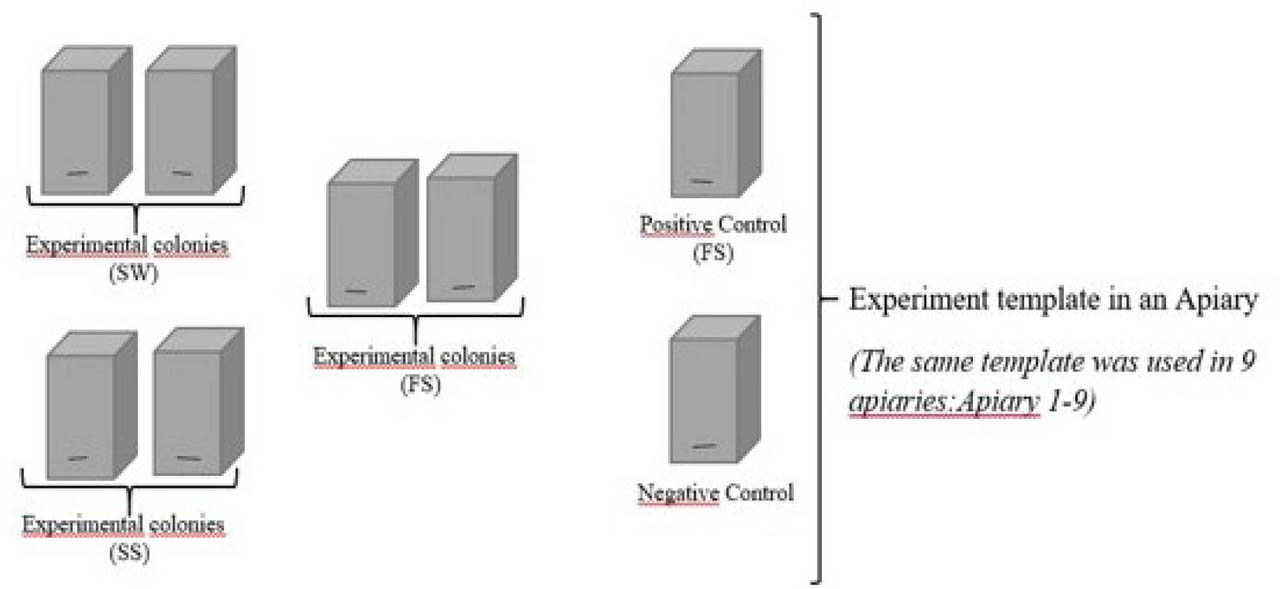
Fig. 3
Experimental design of the field study.
Table 2
Number of dead bees and final mortality rates (%) during the cage experiments
| Sampling Days | Total number of dead bees | Final mortality rates(%) | ||||||||
|---|---|---|---|---|---|---|---|---|---|---|
| Cages | Cage number | 3 | 6 | 9 | 12 | 15 | 18 | 21 | (190 newly emerged bees at the beginning point x10 cages) | |
| ExpNa(1) | 1–10 | 5 | 15 | 33 | 48 | 63 | 85 | 93 | 342 | 18.0 |
| ExpNa(2) | 1–10 | 5 | 15 | 17 | 29 | 34 | 51 | 64 | 215 | 11.3 |
| PCNa | 1–2 | 0 | 6 | 15 | 11 | 20 | 27 | 53 | 132 | 34.7 |
| NCNa | 1–2 | 1 | 11 | 20 | 31 | 59 | 95 | 117 | 334 | 87.8 |
| ExpNc(1) | 1–10 | 8 | 14 | 32 | 39 | 85 | 108 | 165 | 451 | 23.7 |
| ExpNc(2) | 1–10 | 8 | 11 | 29 | 33 | 51 | 81 | 102 | 315 | 16.5 |
| PCNc | 1–2 | 0 | 13 | 15 | 22 | 30 | 48 | 70 | 198 | 52.1 |
| NCNc | 1–2 | 15 | 25 | 46 | 59 | 70 | 105 | 59 | 380 | 100 |
| Native | 1–2 | 1 | 5 | 8 | 10 | 12 | 10 | 15 | 61 | 16.0 |
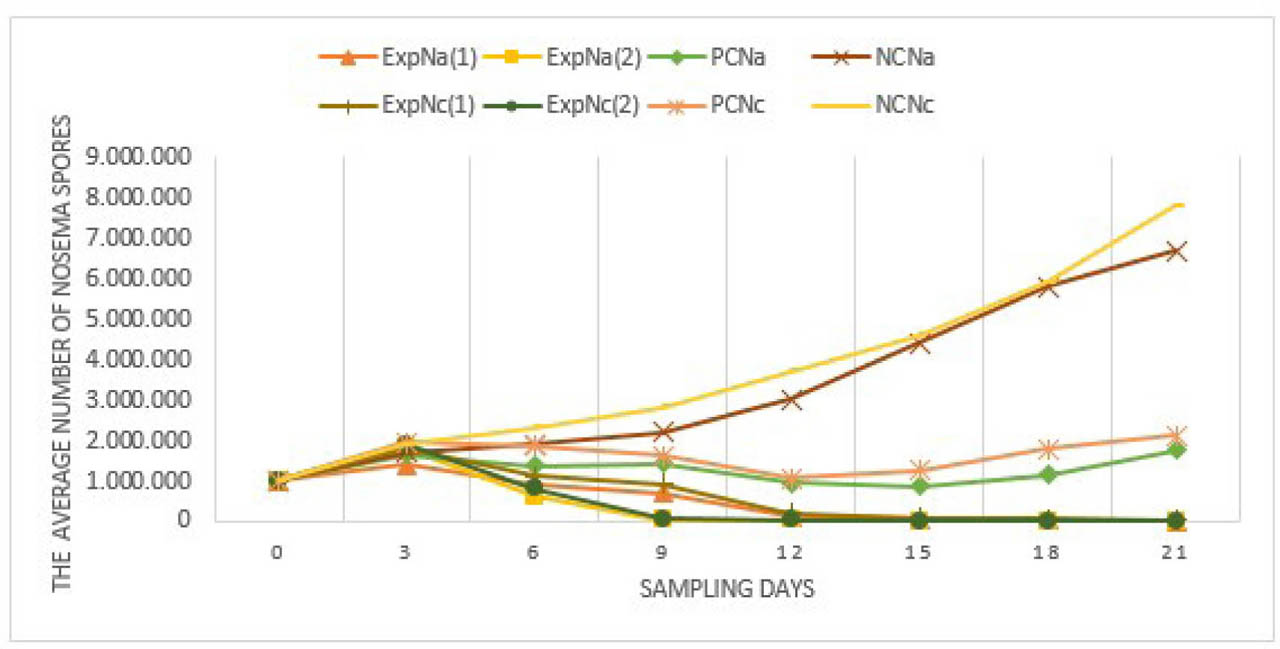
Fig. 4
The average numbers of Nosema spp. spores/bee during cage experiment in all groups.
Table 3
Differences between groups regarding application doses classified by Duncan test
Table 4
Comparison of numbers of Nosema spp. spores following varying HEOEM application methods analysed by Duncan test
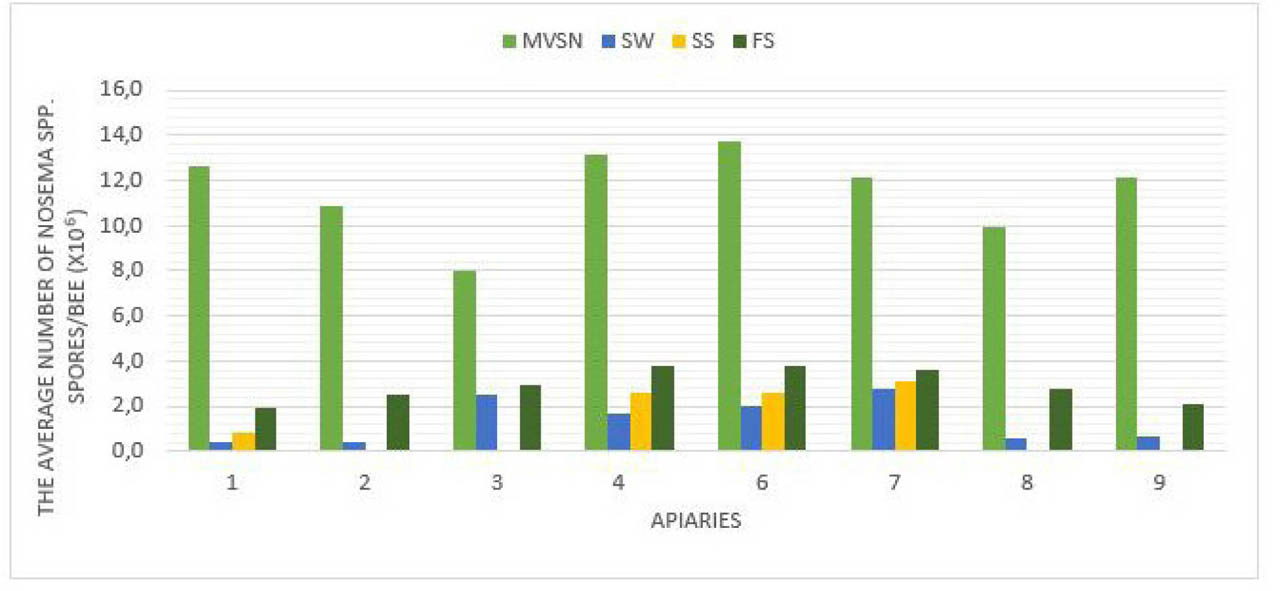
Fig. 5
Comparative results of the average number of Nosema spp. spores in the apiaries differentiated by application method. *MVSN: Mean values of spore numbers at the beginning of the field study. SW:Mean values of the final spore numbers after the application of spraying with water at the end of the field study SS:Mean values of the final spore numbers after the application of spraying with syrup at the end of the field study FS:Mean values of the final spore numbers after the application of feeding with syrup at the end of the field study **Missing data belong to SS in 2,3,8,9th apiaries could not be shown because of robbing behaviour. All of the experiments’ data on individual basis are presented in supplementary table online.