
Table 1:
Research gap validation
| Author(s) | Techniques involved | Advantages | Disadvantages |
|---|---|---|---|
| Ahmed et al. (2025) | Smart contracts in blockchain-enabled IoT health monitoring | Tamper-proof data, real-time access, strong privacy | High latency, computational load on IoT devices |
| Mazhar et al. (2025) | Blockchain + AI + IoT hybrid architecture | Data ownership, interoperability, tamper resistance | Integration complexity, energy use, regulatory issues |
| Meisami et al. (2023) | Lightweight blockchain with privacy-preserving access control | Transparency, low cost, patient-centric access | Scalability, performance in large systems |
| Cheikhrouhou et al. (2023) | Fog-computing with blockchain for remote monitoring | Faster response, better security and real-time processing | Reliance on fog nodes, consistency challenges |
| Rizzardi et al. (2024) | Hyperledger fabric for supply chain and medical record security | Supply chain transparency, data integrity, secure sharing | High setup cost, complex deployment |
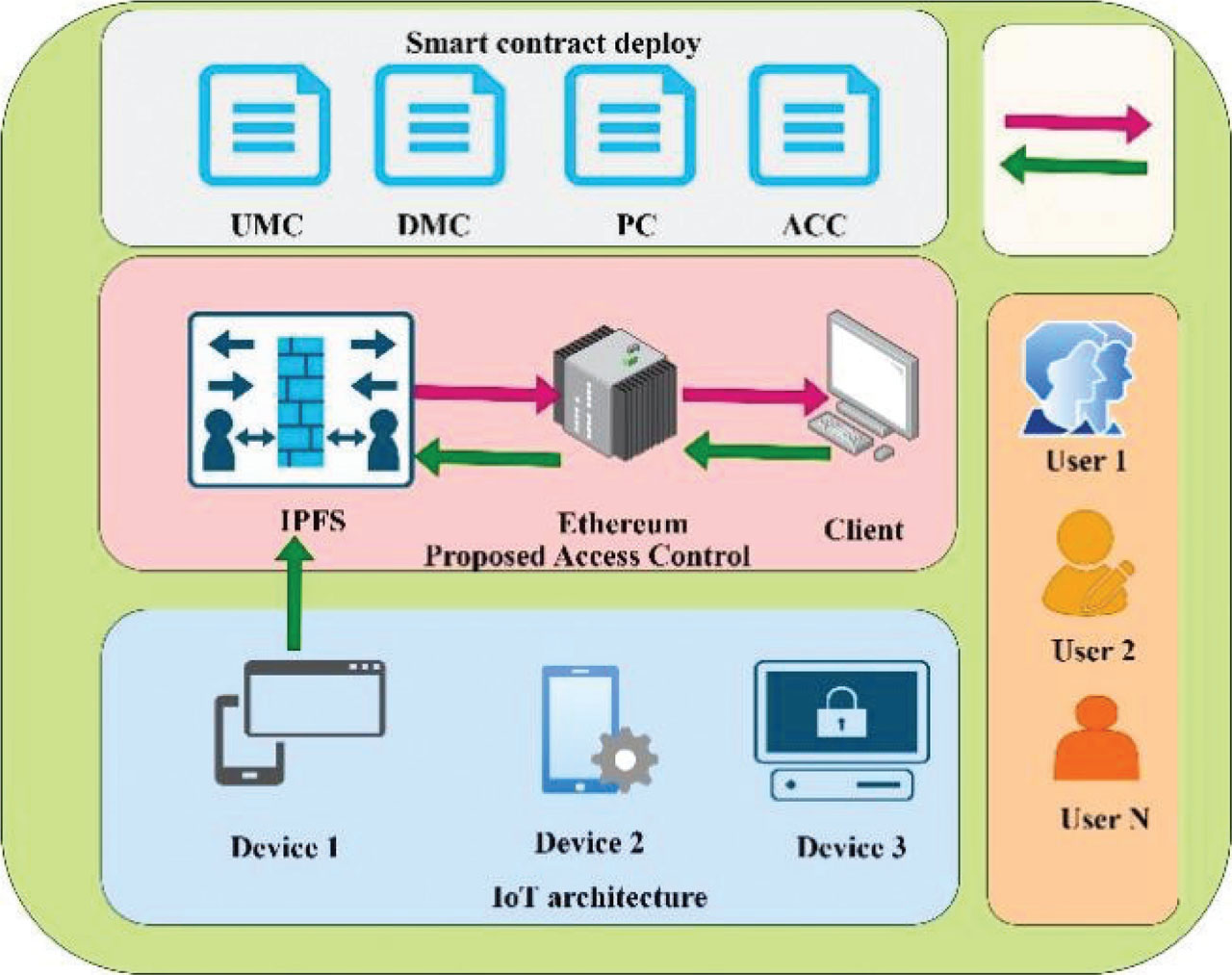
Figure 1:
Proposed architecture with data access control. IPFS, interplanetary file system; UMC, user management contract.
Table 2:
Comparison of proposed model with existing access control methods
| Model | Accuracy (%) | Response Time (ms) | Throughput (TPS) |
|---|---|---|---|
| RBAC | 85.7 | 210 | 47 |
| ABAC | 89.2 | 185 | 52 |
| MAC | 82.4 | 170 | 50 |
| Proposed Model | 96.5 | 120 | 74 |
Table 3:
Comparison with existing studies
| Study | Technique | Accuracy (%) | Response Time (ms) | Throughput (TPS) |
|---|---|---|---|---|
| Ahmed et al. (2025) | Blockchain + IoT | 91.3 | 150 | 60 |
| Mazhar et al. (2025) | AI + Blockchain | 92.4 | 155 | 65 |
| Meisami et al. (2023) | Lightweight Blockchain | 88.7 | 165 | 55 |
| Proposed Model | Hybrid RBAC-ABAC + Blockchain | 96.5 | 120 | 74 |
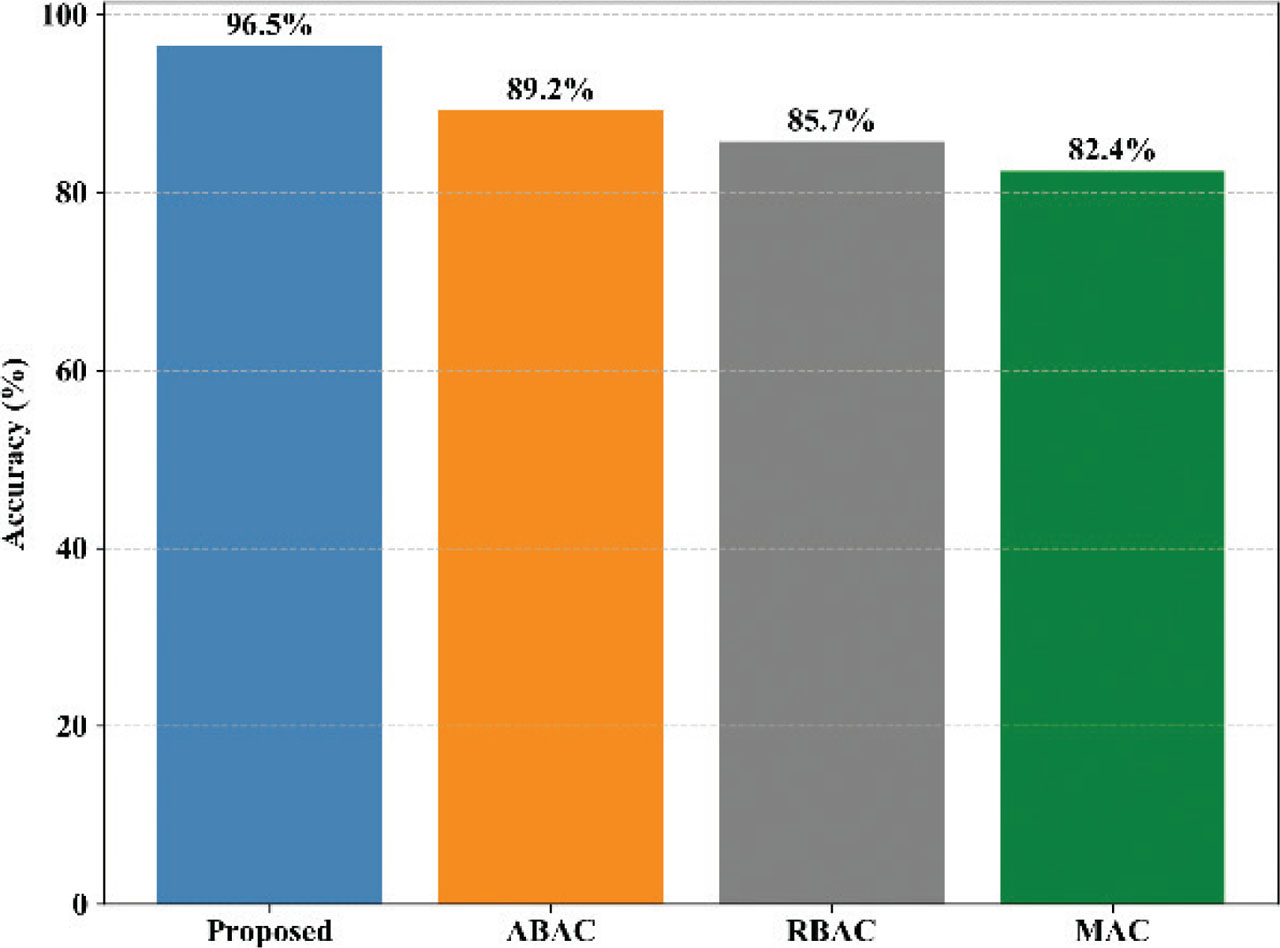
Figure 2:
Accuracy. ABAC, attribute-based access control; MAC, mandatory access control; RBAC, role-based access control.
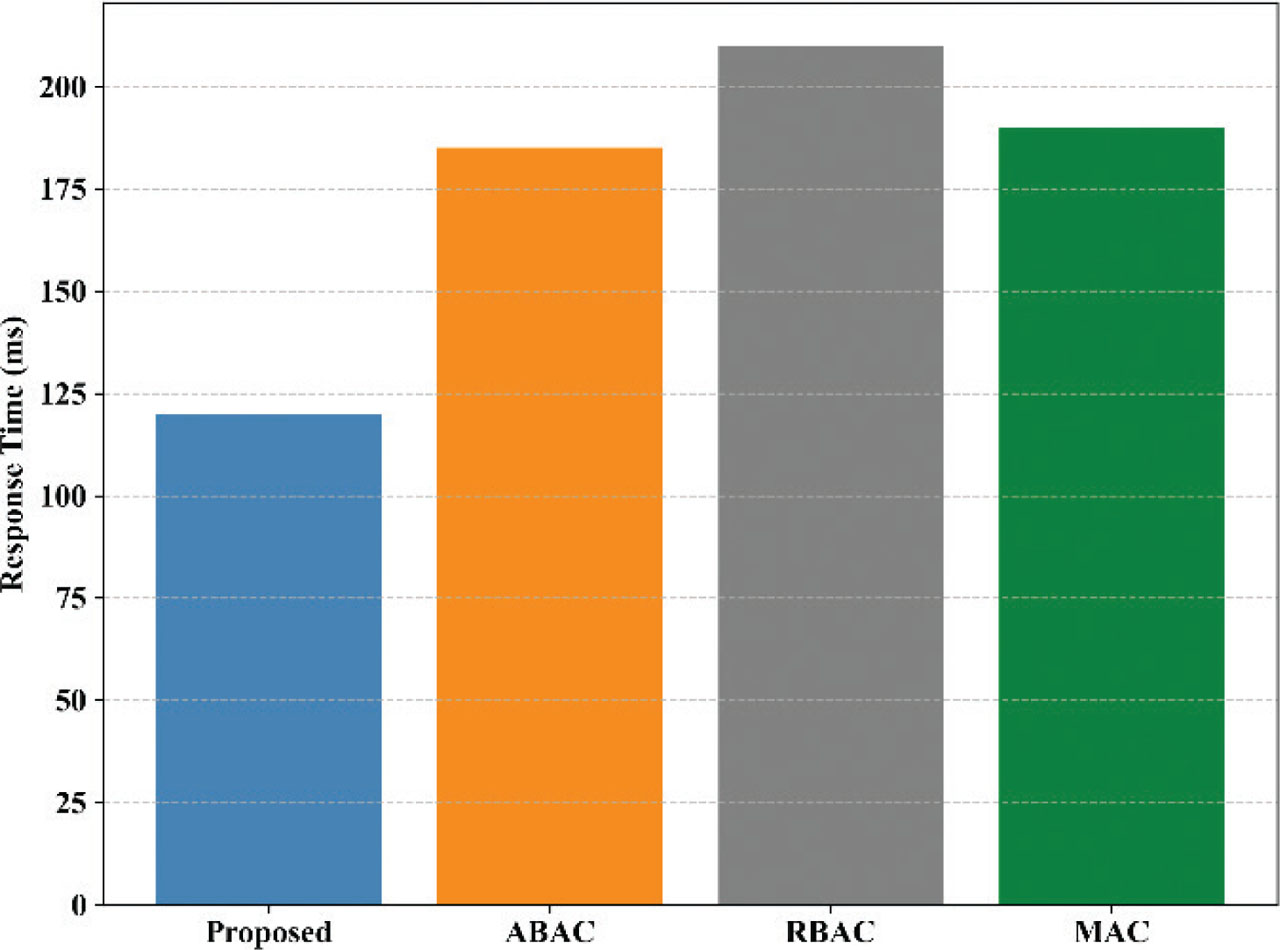
Figure 3:
Response time. ABAC, attribute-based access control; MAC, mandatory access control; RBAC, role-based access control.
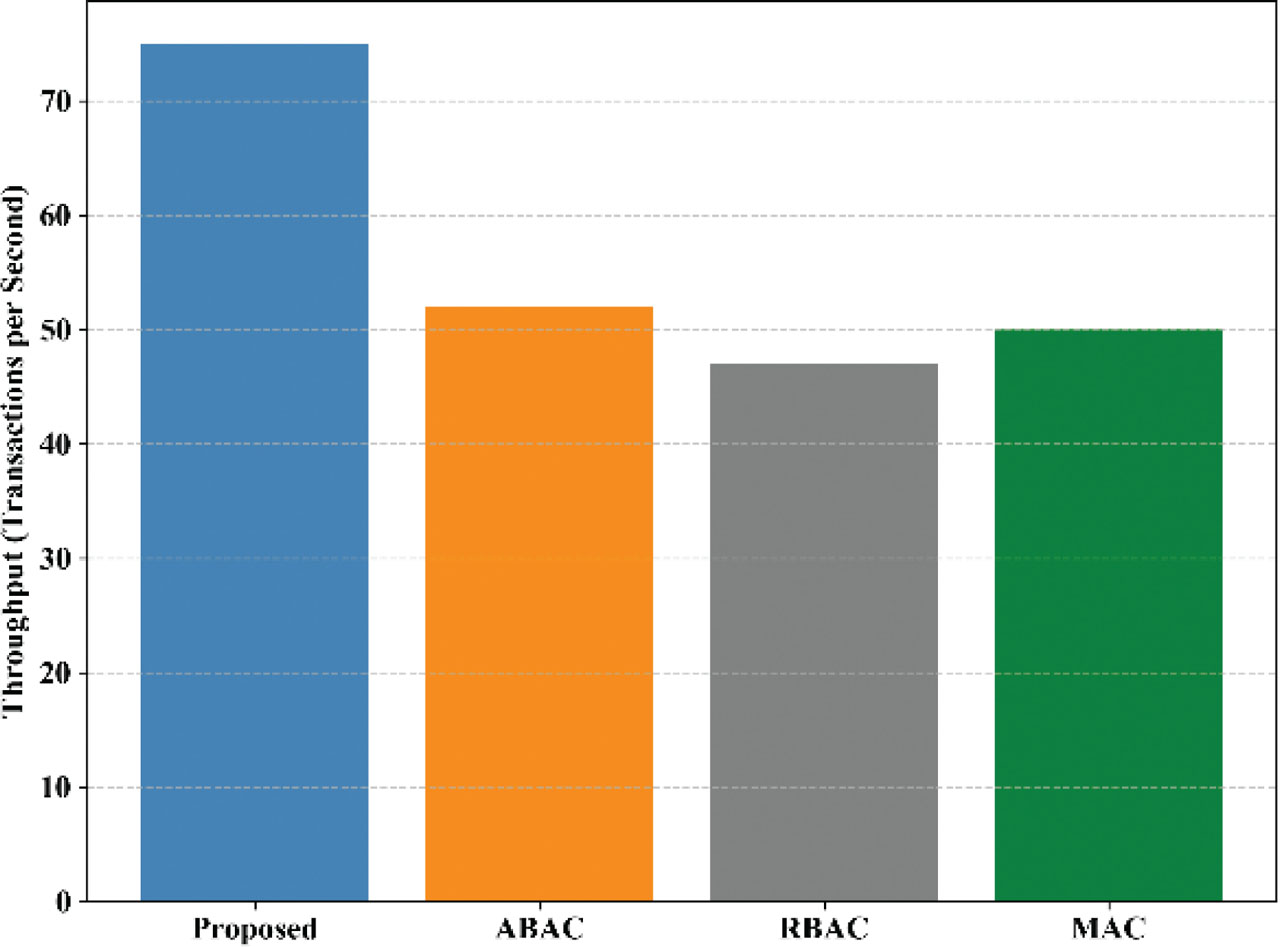
Figure 4:
Throughput. ABAC, attribute-based access control; MAC, mandatory access control; RBAC, role-based access control.
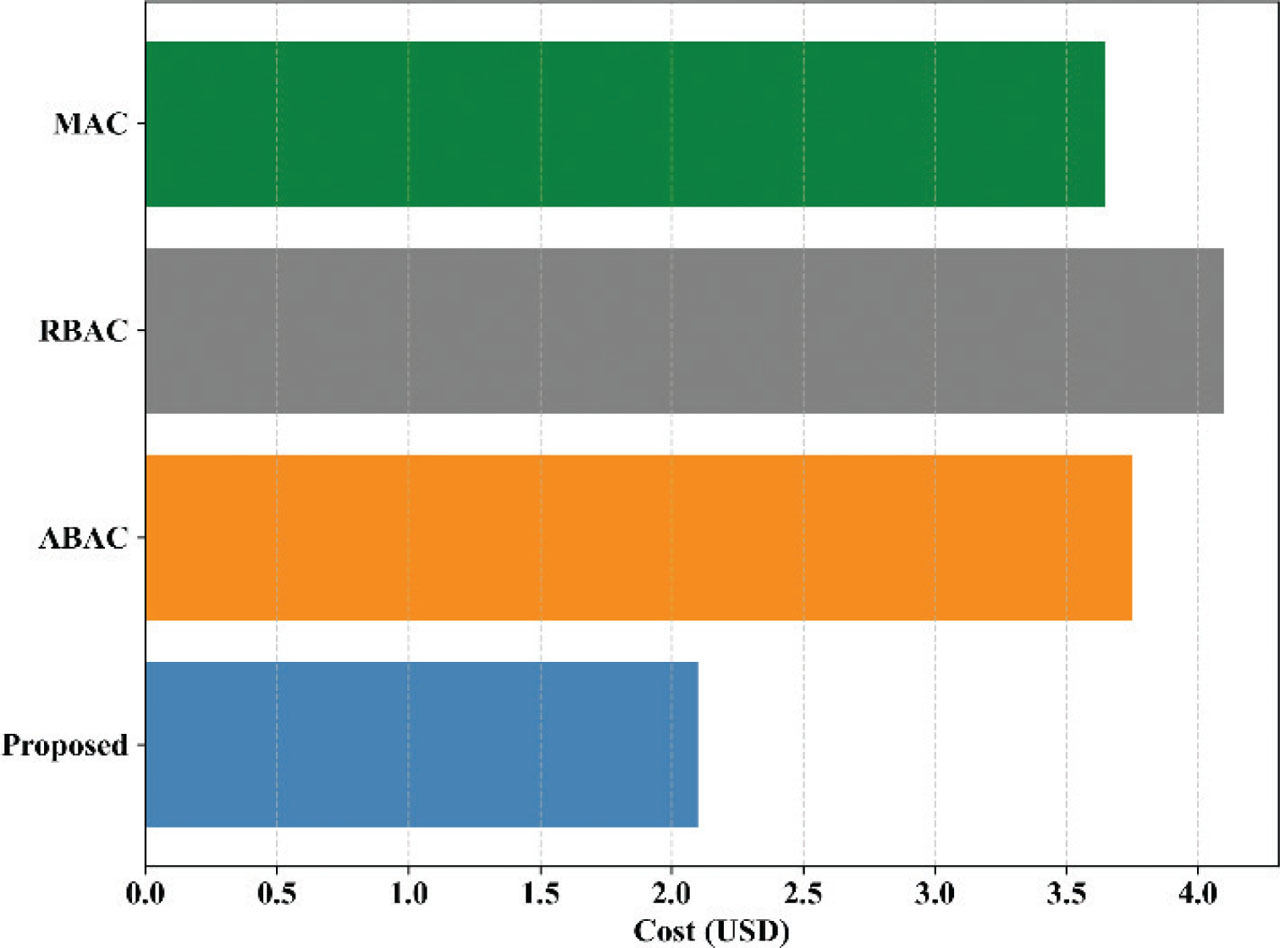
Figure 5:
Cost utilization. ABAC, attribute-based access control; MAC, mandatory access control; RBAC, role-based access control.
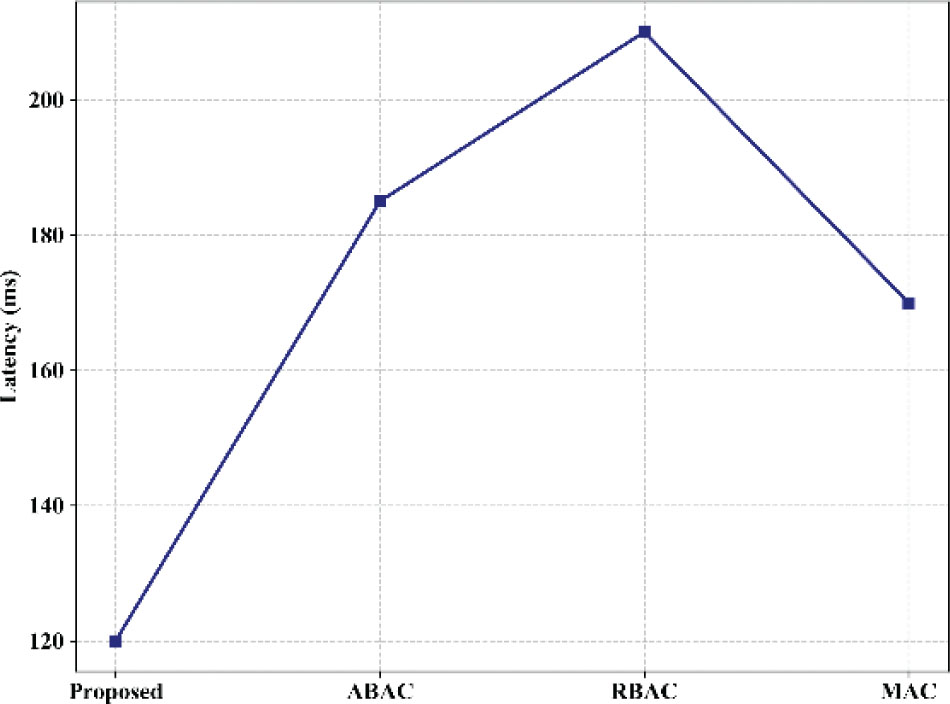
Figure 6:
Latency validation. ABAC, attribute-based access control; MAC, mandatory access control; RBAC, role-based access control.
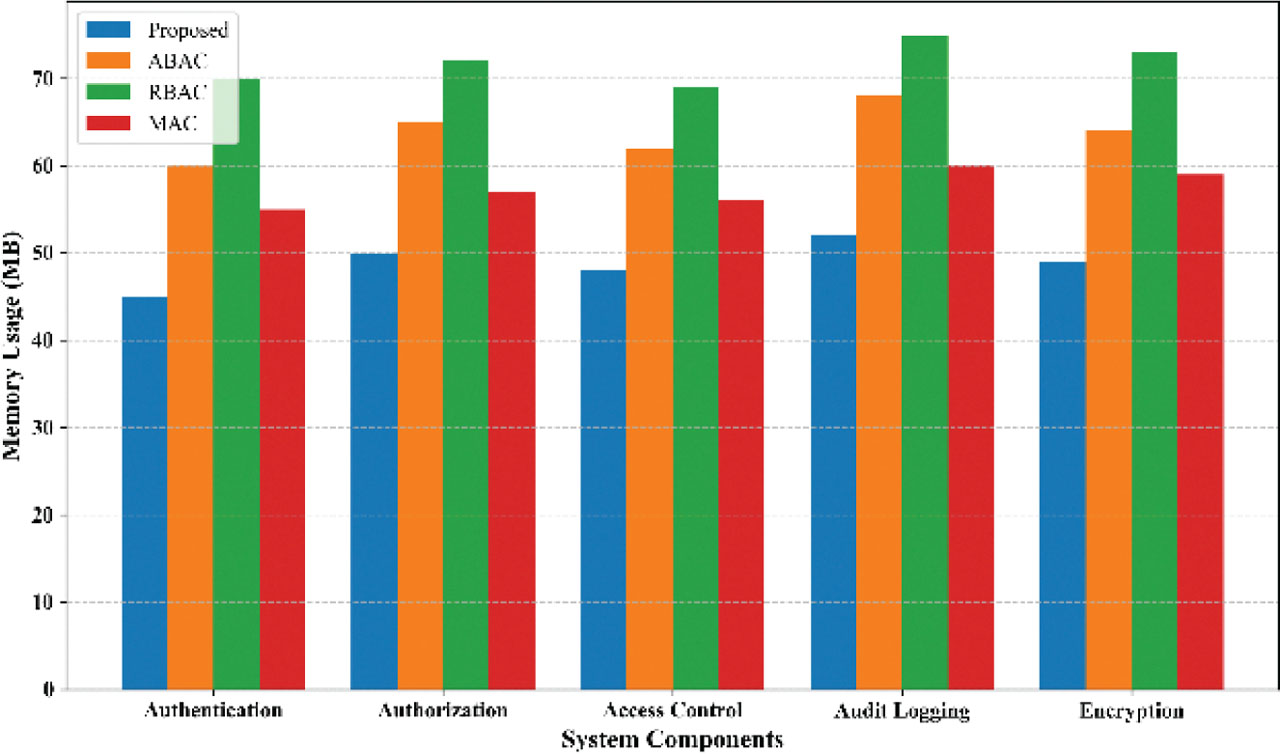
Figure 7:
Memory utilization. ABAC, attribute-based access control; MAC, mandatory access control; RBAC, role-based access control.
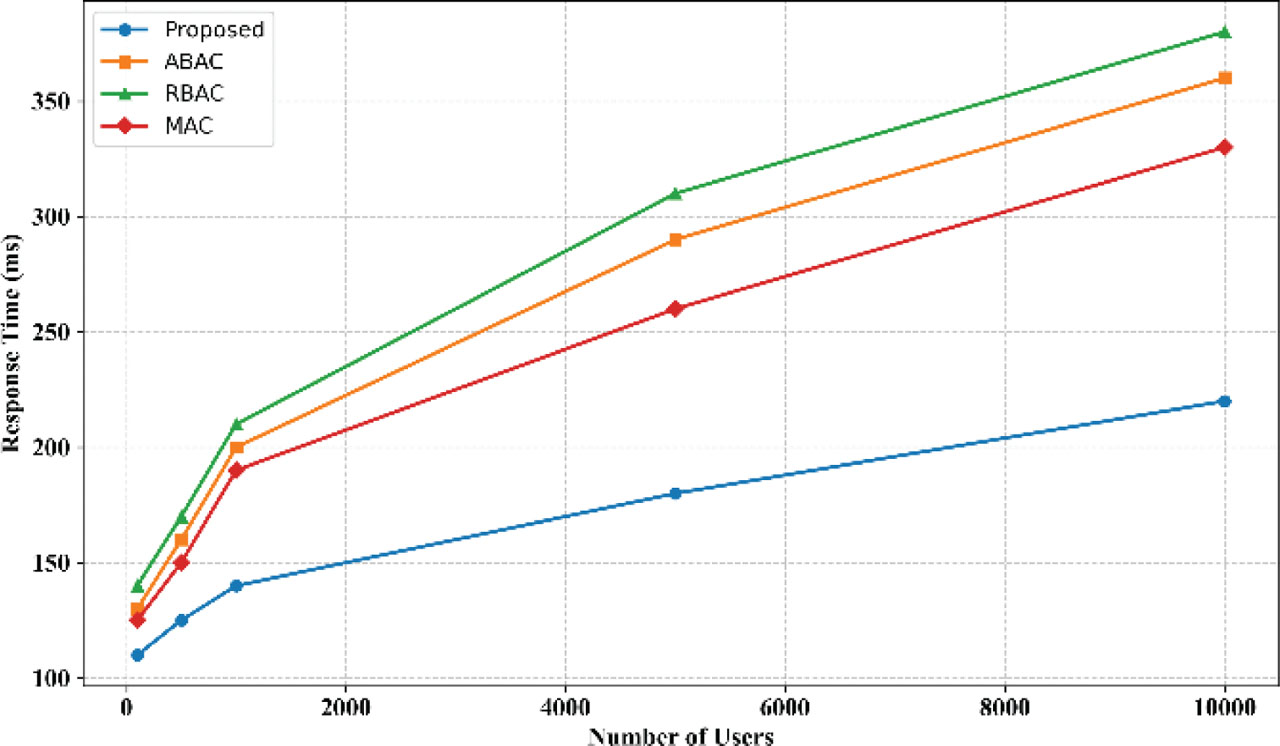
Figure 8:
Response time versus number of users illustrating sensitivity of the system to varying workload. ABAC, attribute-based access control; MAC, mandatory access control; RBAC, role-based access control.
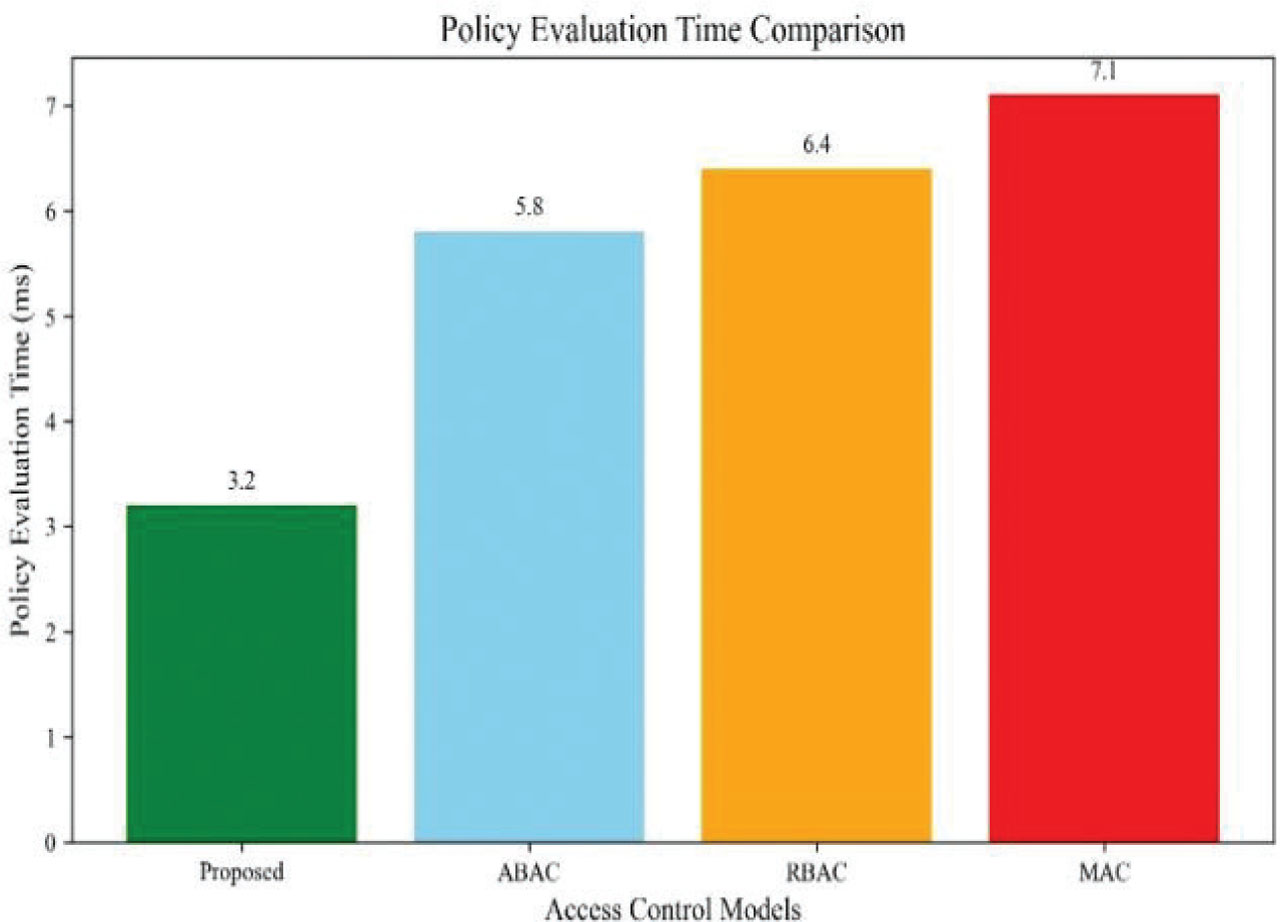
Figure 9:
Policy evaluation time. ABAC, attribute-based access control; MAC, mandatory access control; RBAC, role-based access control.