
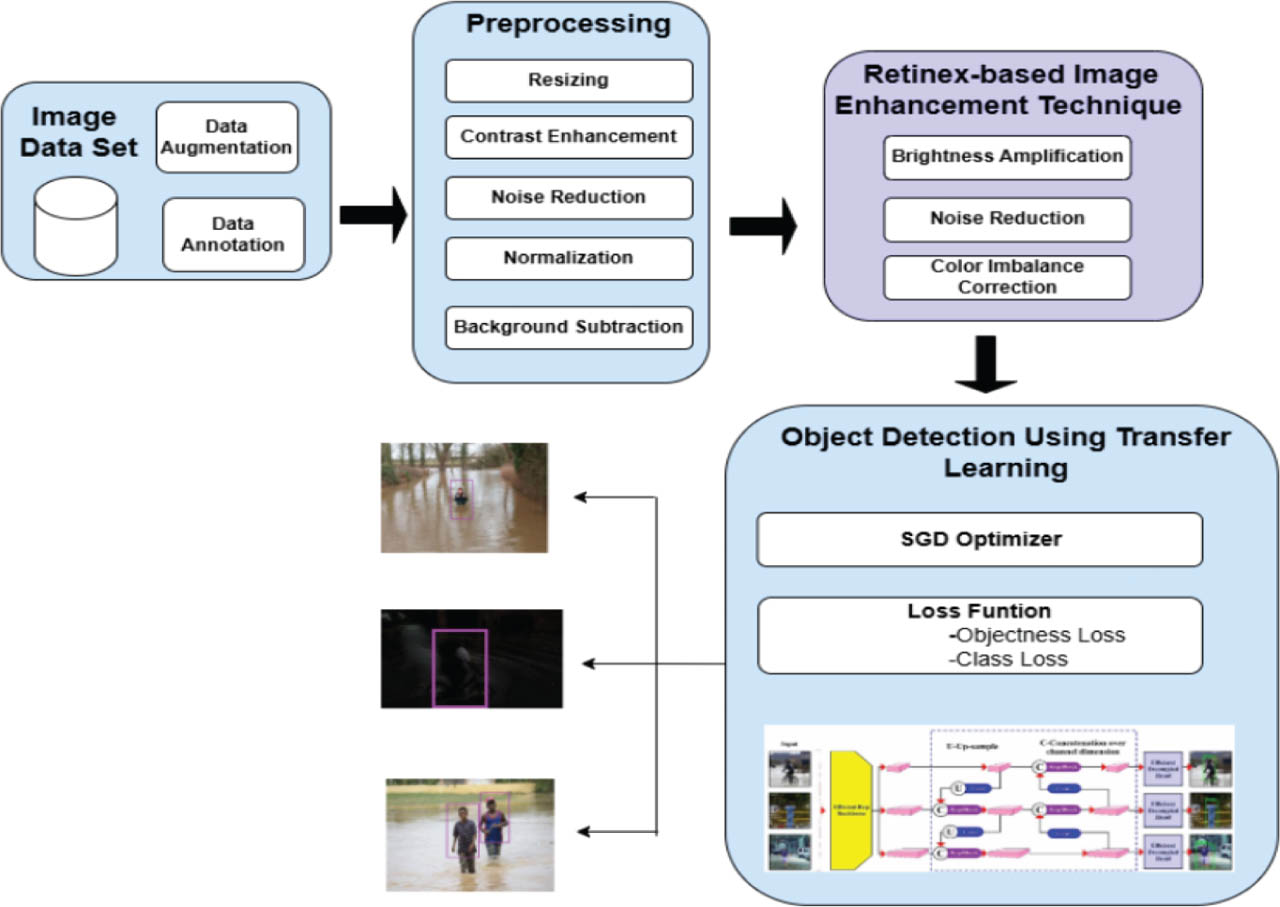
Figure 1:
Proposed system architecture of enhanced object detection with Retinex and YOLOv11. SGD, stochastic gradient descent.
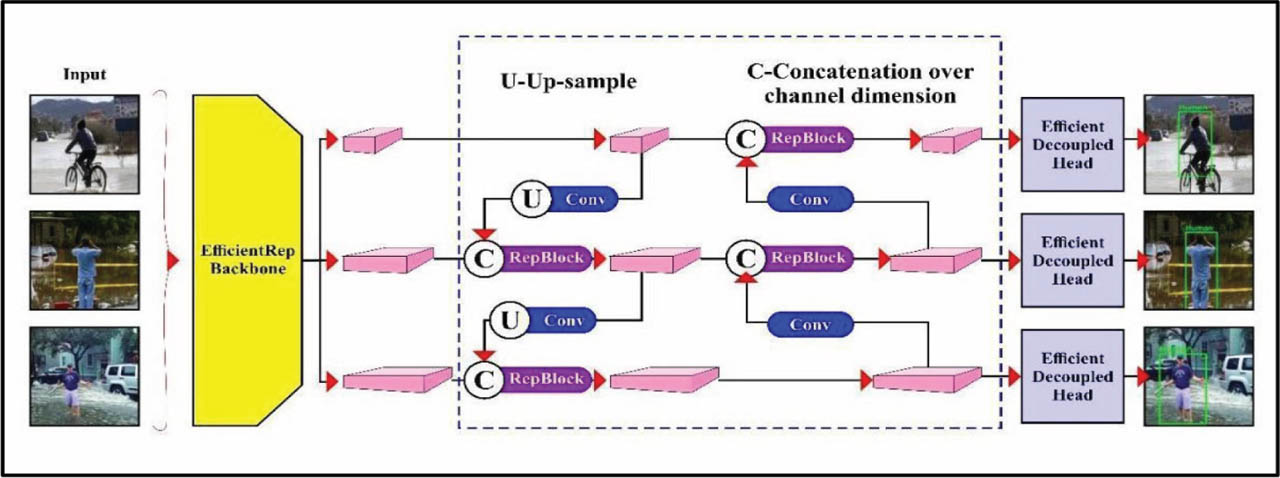
Figure 2:
Schematic structure of YOLO model used in the study.
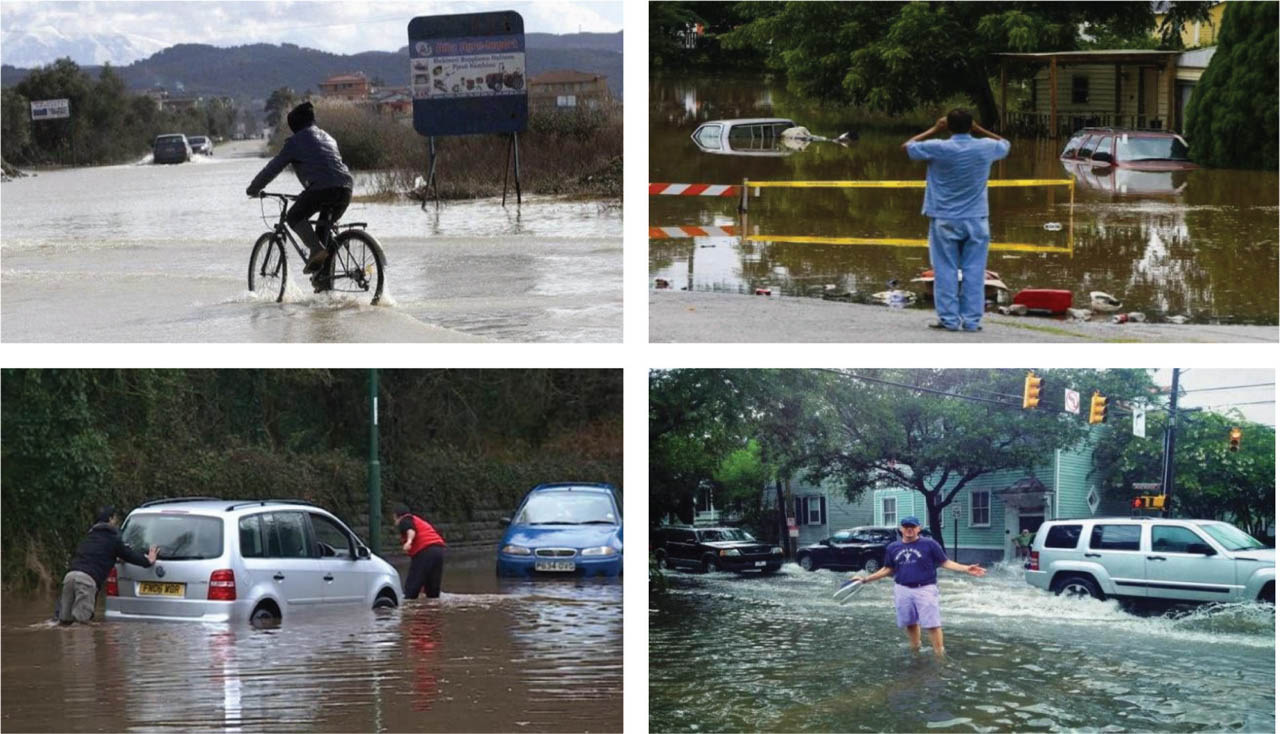
Figure 3:
Sample images from roadway-flooding-image-dataset (Kaggel) [34] showing diverse scenarios, including varying water levels, different angles of view, and different weather conditions.
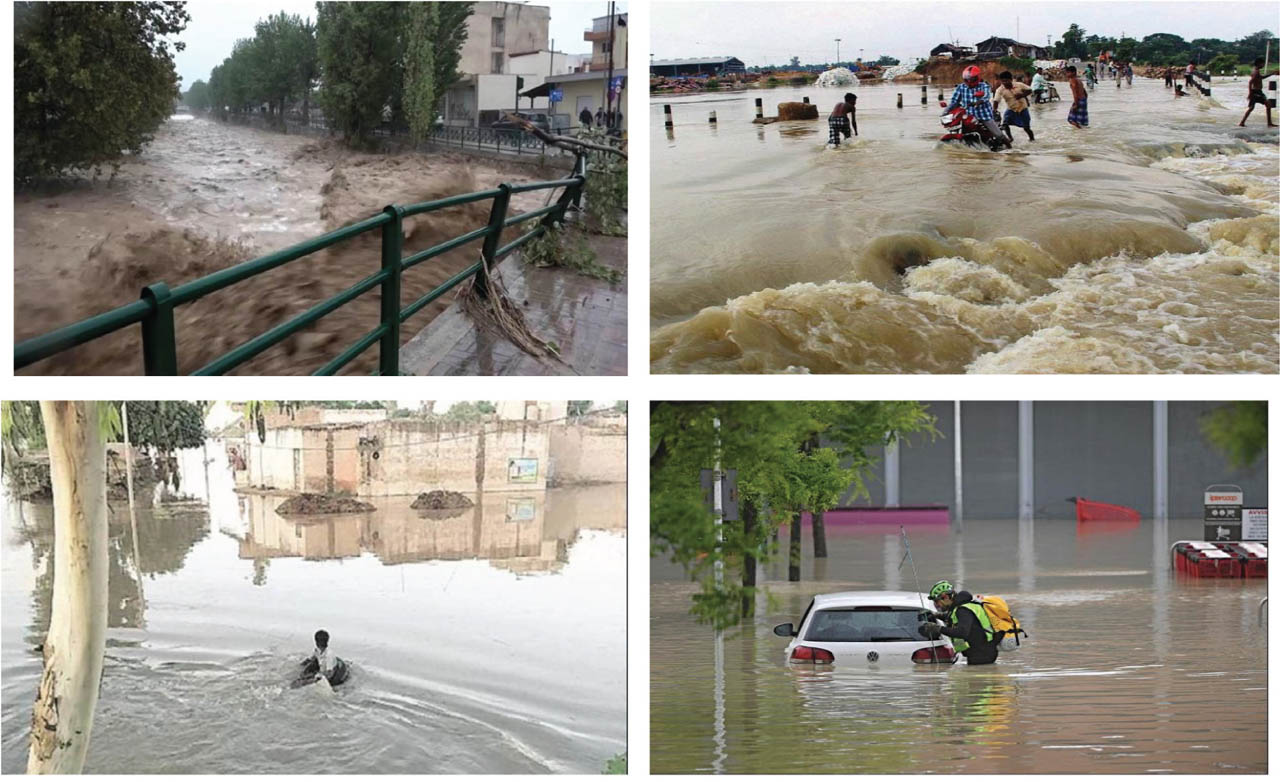
Figure 4:
Sample images from human detection in flood dataset (Roboflow) [35].
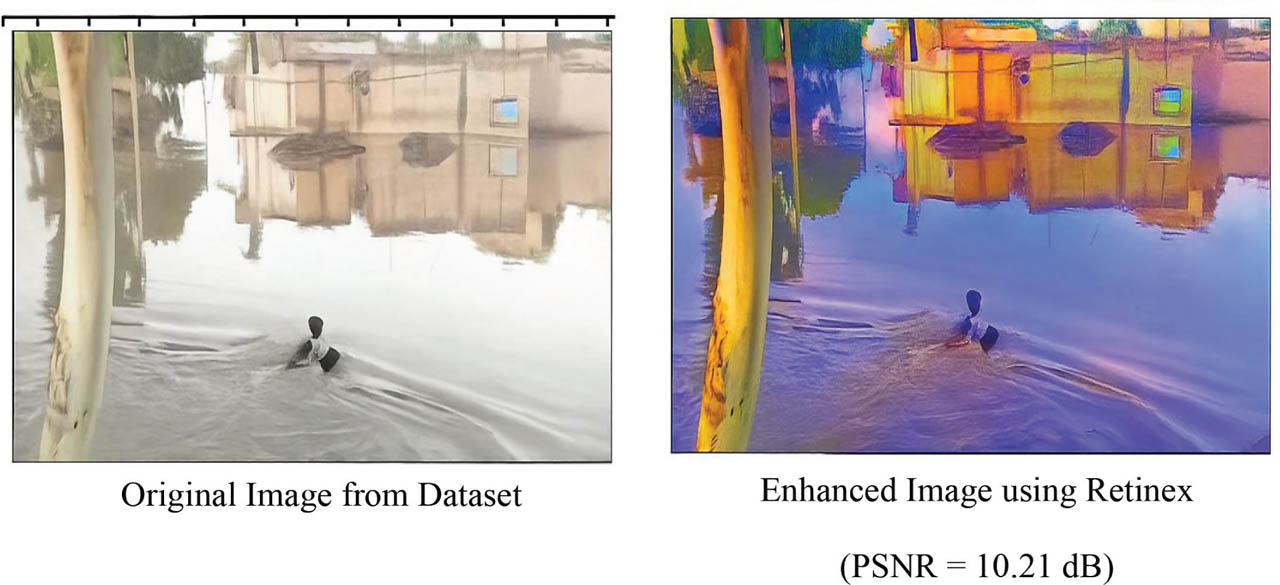
Figure 5:
Original and enhanced flood image using Retinex adaptive filtering.
Table 1:
Model parameter settings and training configuration
| Parameter | Value | Description |
|---|---|---|
| Input image size | 640 × 640 | Standardized input resolution ensuring efficient processing and retention of visual detail. |
| Batch size | 16 | Optimized for GPU memory utilization and stable gradient updates during training. |
| Learning rate | 0.01 (with cosine annealing) | Enables smooth convergence with adaptive reduction across epochs. |
| Optimizer | SGD with momentum = 0.937 | Ensures stable learning and faster convergence by maintaining directional consistency. |
| Anchor boxes | Custom anchors for human detection | Tailored anchor dimensions optimized for human object scales in flood environments. |
| Epochs | 50 | Sufficient training iterations to achieve robust convergence and model generalization. |
| IoU threshold | 0.5 | Intersection-over-Union threshold for accurate bounding box matching and evaluation. |
| Loss function | Combined CIoU loss, objectness loss, and class loss | Balances spatial accuracy, confidence prediction, and class differentiation. |
| Data augmentation | Random flipping, rotation, scaling, brightness, and contrast variations | Increases robustness by simulating diverse lighting and environmental conditions typical of flood scenes. |
| Preprocessing enhancement | Retinex-based DLAIE | Improves image illumination and visibility for enhanced human detection performance. |
| Model variant used | YOLOv11 | Advanced real-time architectures fine-tuned for detecting humans under variable lighting and occlusion conditions. |
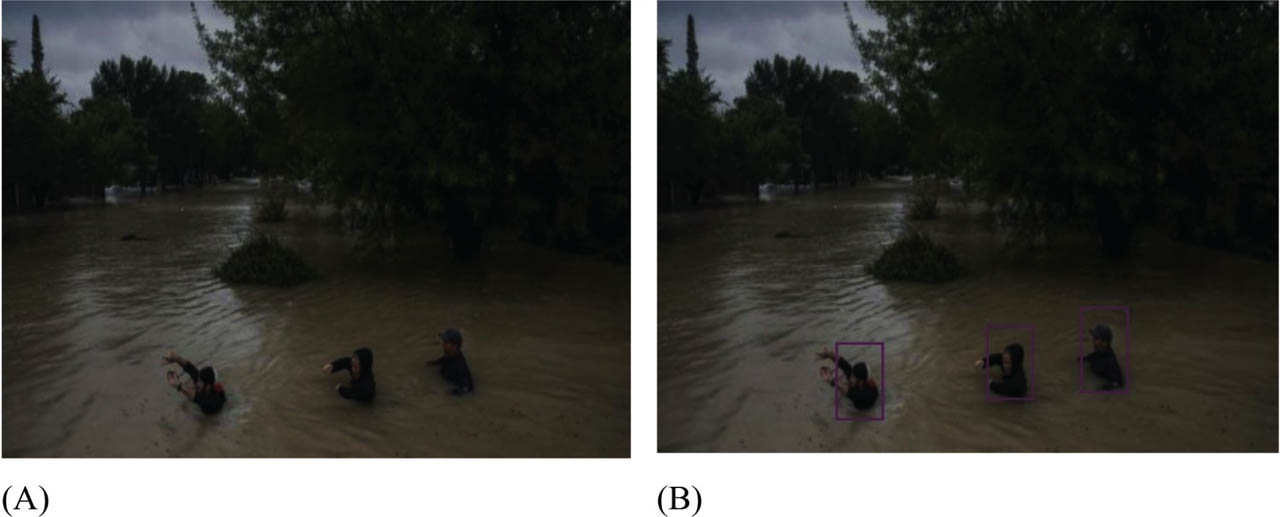
Figure 6:
Human detection after low light image enhancement. (A) Original image. (B) Detected output.
Table 2:
Comparative analysis of proposed object detection model in varying lighting conditions
| Approach | Lighting condition | Precision | Recall | F1 score | Accuracy |
|---|---|---|---|---|---|
| Proposed methodology (YOLOv11 with Retinex enhancement) | Normal light | 95.68 | 97.15 | 96.39 | 95.72 |
| Varying/low-light | 92.83 | 95.56 | 92.28 | 94.83 |
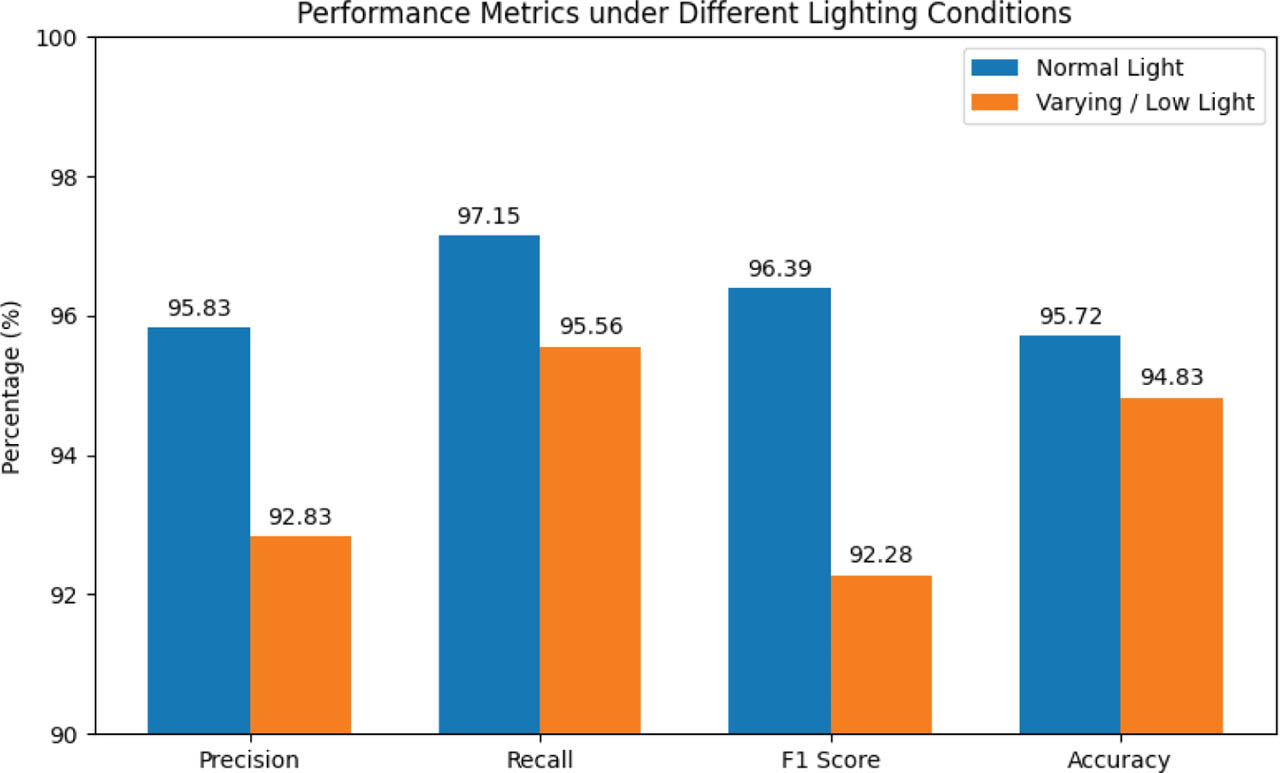
Figure 7:
Performance analysis of proposed Retinex + YOLOv11 under normal light and varying light conditions.
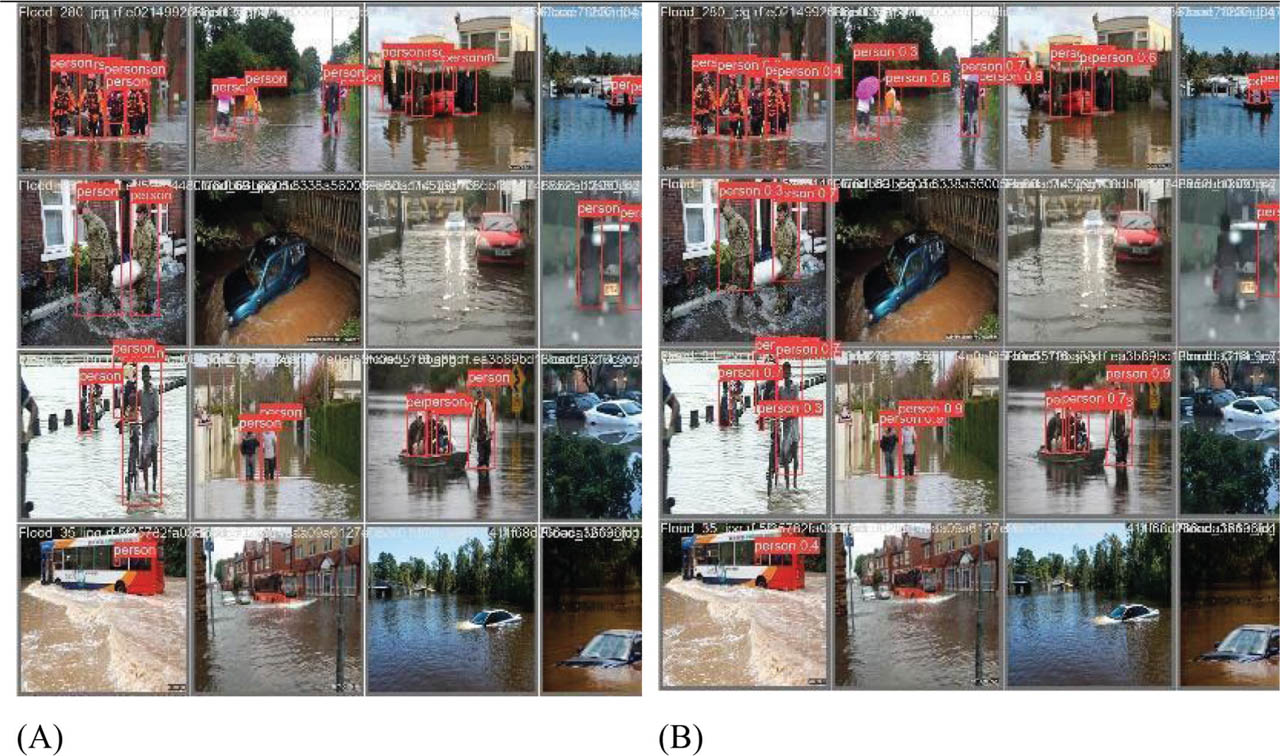
Figure 8:
True labeling and predicted output with proposed system. (A) True labels. (B) Predicted output.
Table 3:
Object detection performance improvement analysis with before and after low light image enhancement
| Model | Metrics | Before image enhancement (%) | After enhancement (Retinex-based) | Improvement (%) |
|---|---|---|---|---|
| YOLOv9 | Precision | 89.50 | 93.87 | +4.37 |
| Recall | 86.30 | 96.23 | +9.93 | |
| F1 Score | 87.60 | 94.41 | +6.81 | |
| Accuracy | 88.90 | 94.83 | +5.93 | |
| YOLOv11 | Precision | 90.87 | 95.68 | +4.81 |
| Recall | 87.26 | 97.15 | +9.89 | |
| F1 Score | 88.90 | 96.39 | +7.49 | |
| Accuracy | 89.85 | 95.72 | +5.87 |
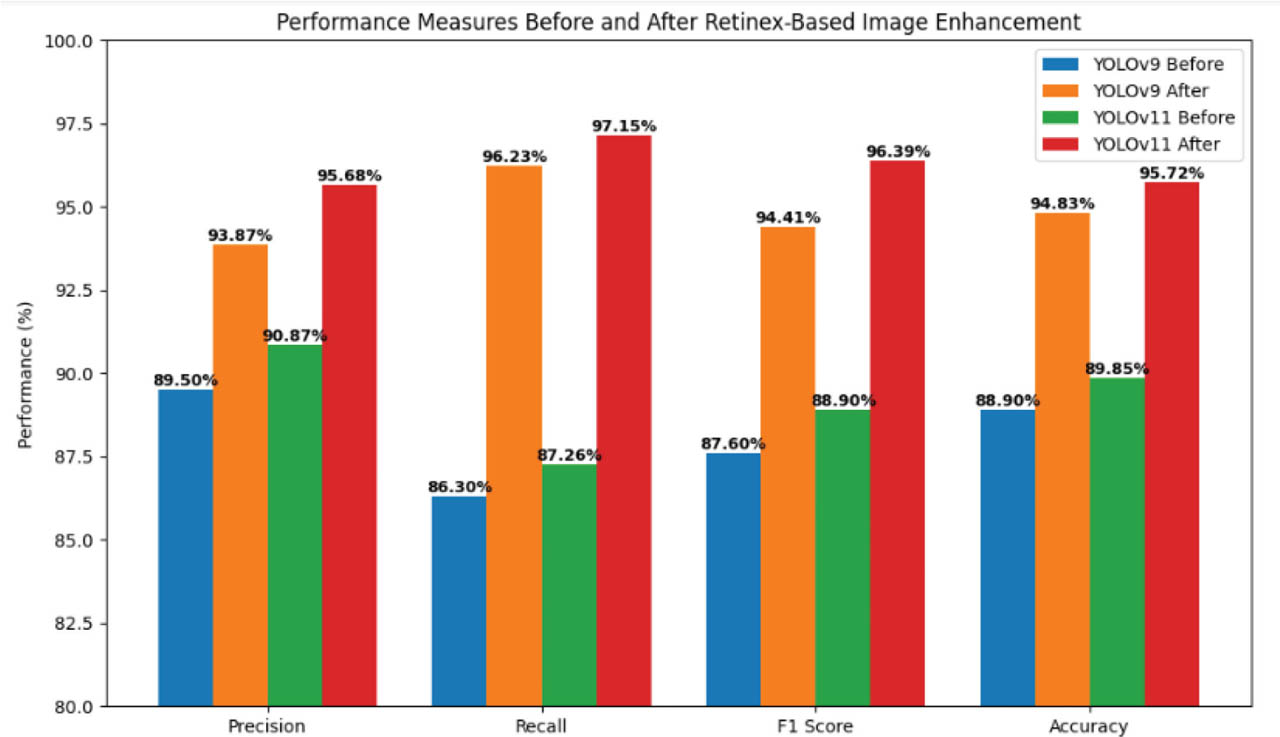
Figure 9:
Performance measures before and after low light image enhancement techniques.