
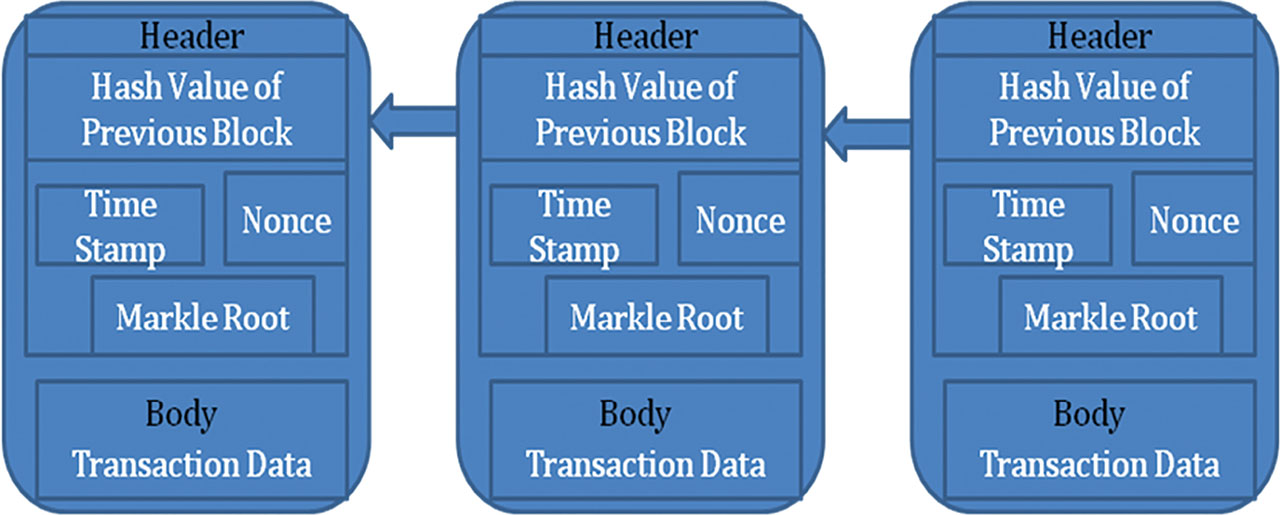
Figure 1:
Structure of blocks in blockchain.
Table 1:
Comparison of different blockchain platforms
| Parameters | Public blockchain | Private blockchain | Consortium blockchain |
|---|---|---|---|
| Network type | Public decentralized | Partially decentralized | Partially decentralized |
| Access | Anyone | Single organization | Multiple selected organizations |
| Efficiency | Low | High | High |
| Centralized | No | Yes | Partial |
| No. of users | More | Less | Less |
| Speed | Slow | Fast | Fast |
| Scalability | Harder to scale | Easier to scale | Easier to scale |
| Example | Bitcoin, Ethereum, Litecoin | Ripple, Hyperledger | Quorum, Corda |
[i] Each type of blockchain has strengths and weaknesses, making them suitable for different uses. Public blockchains excel in decentralized applications and open ecosystems, while private blockchains offer more control and privacy for enterprise or sensitive data applications. Consortium blockchains bridge the gap between these two models, offering a balance of transparency and confidentiality for collaborative projects involving multiple parties.
Table 2:
Different universities using blockchain [19]
| S. No. | University and country | Findings |
|---|---|---|
| 1 | ASU, USA |
|
| 2 | UNIC, Cyprus |
|
| 3 | University of Malta, Malta |
|
| 4 | Imperial College London, UK |
|
| 5 | ETH Zurich, Switzerland |
|
Table 3:
Comparison between traditional record-keeping systems and blockchain technology
| S. No. | Parameters | Traditional record-keeping | Blockchain technology |
|---|---|---|---|
| 1. | Type of system | Centralized | Decentralized |
| 2. | Transparency | Low | High |
| 3. | Security | Less secure | Highly secure |
| 4 | Auditing | Difficult | Easy |
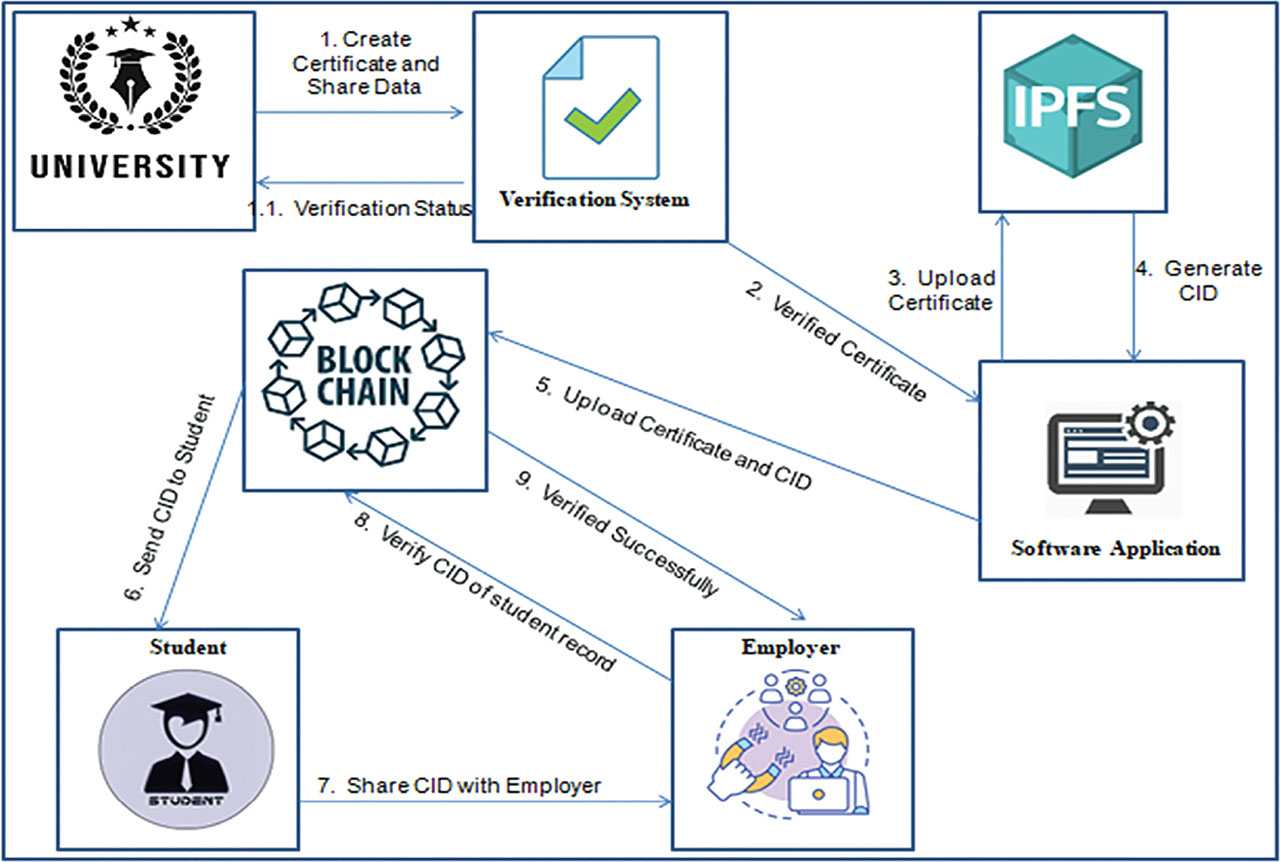
Figure 2:
Proposed model.
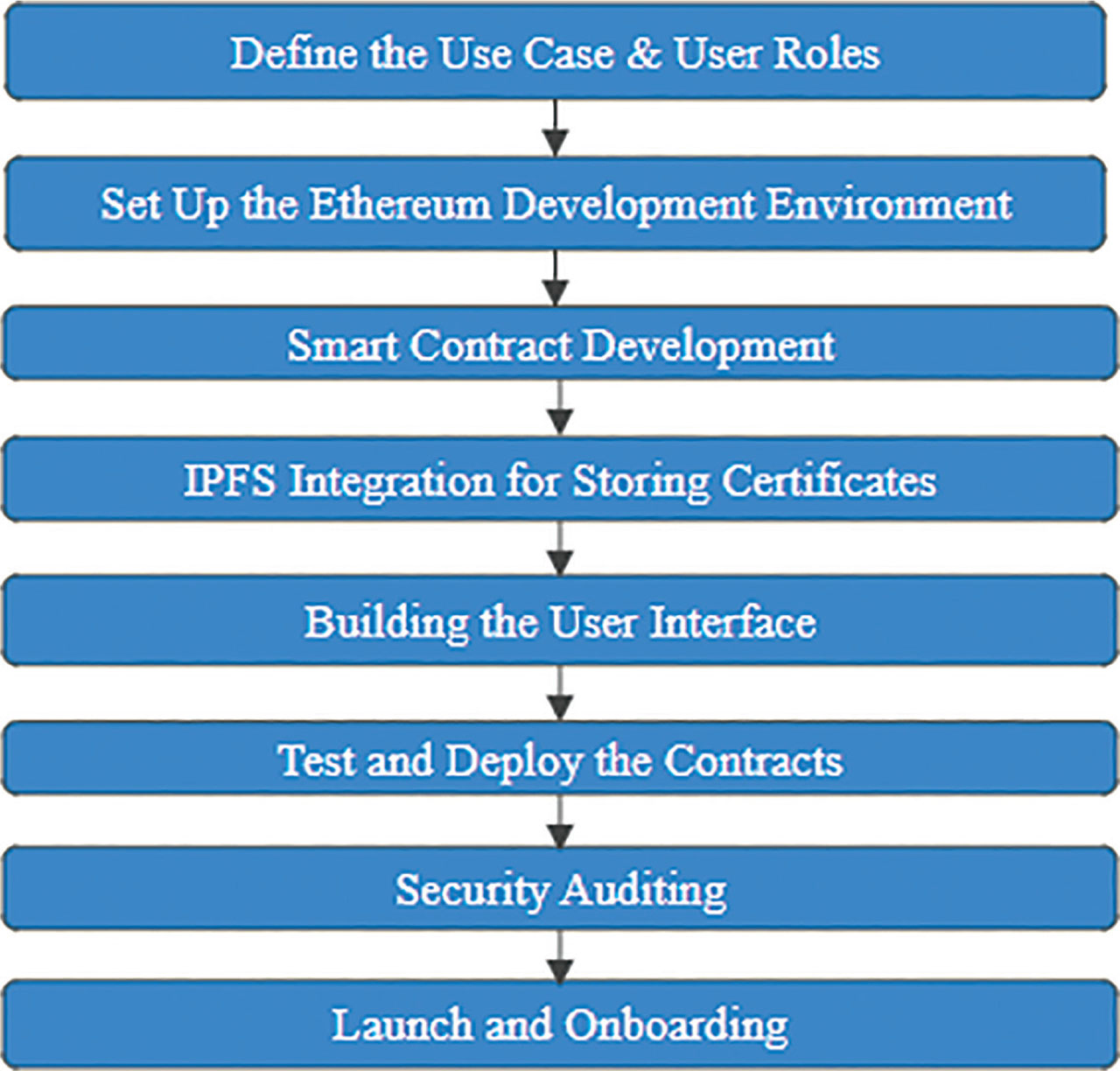
Figure 3:
Steps for implementing digital certificates on Ethereum.