
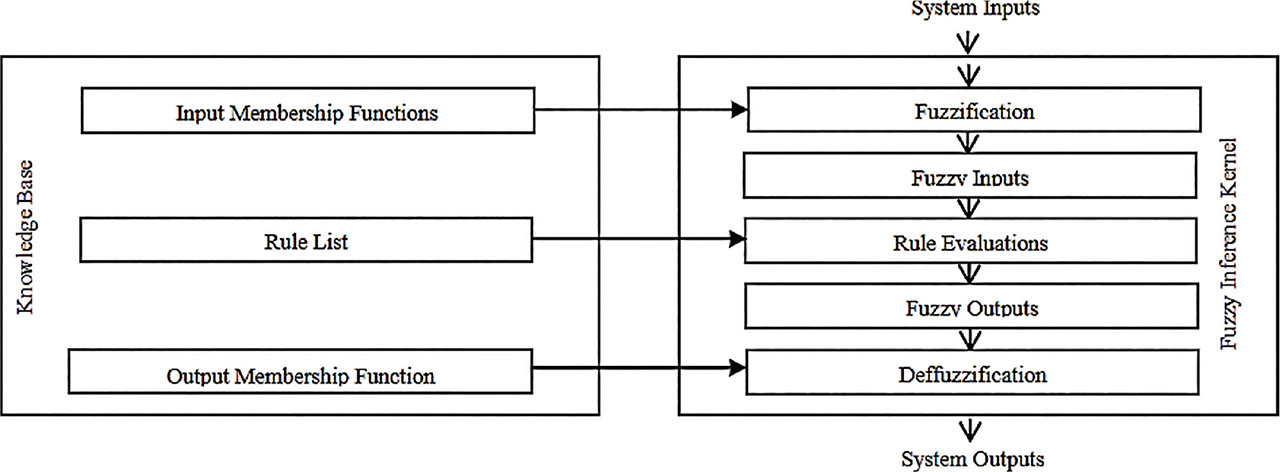
Figure 1:
Block representation of a knowledge-base and inference engine.
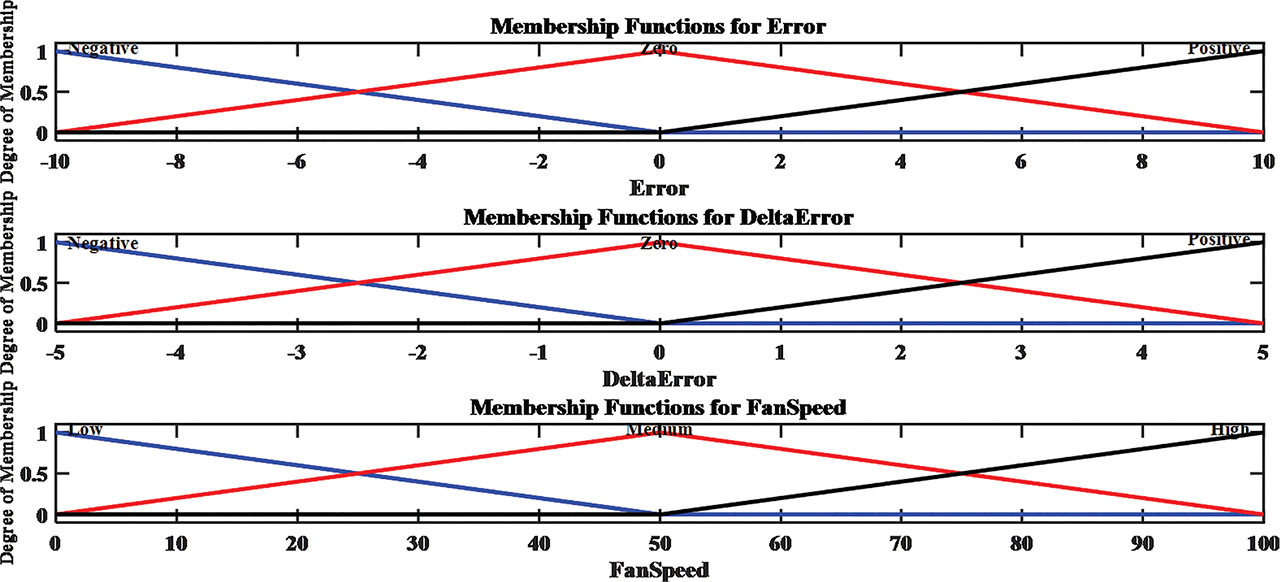
Figure 2:
FLC for a temperature-controlled fan system: input and output membership functions. FL, fuzzy logic; FLC, fuzzy logic controller.
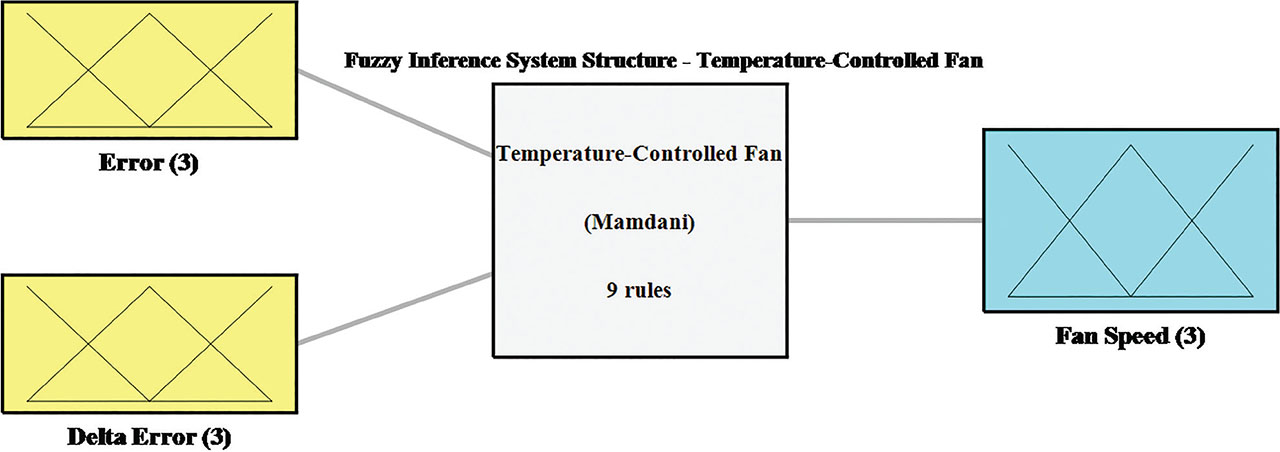
Figure 3:
FLC-based temperature control for a fan system structure: inputs and output regulation. FL, fuzzy logic.
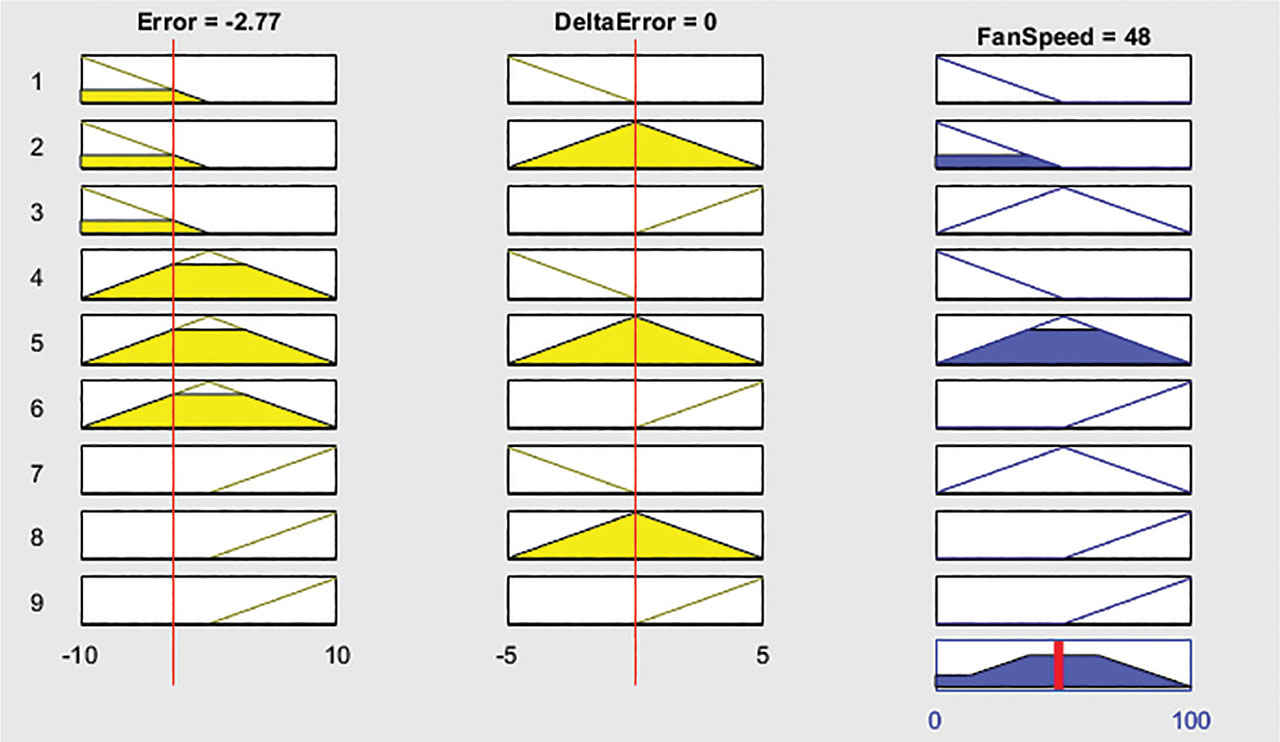
Figure 4:
FIS for temperature-controlled fan: membership functions and rule base.
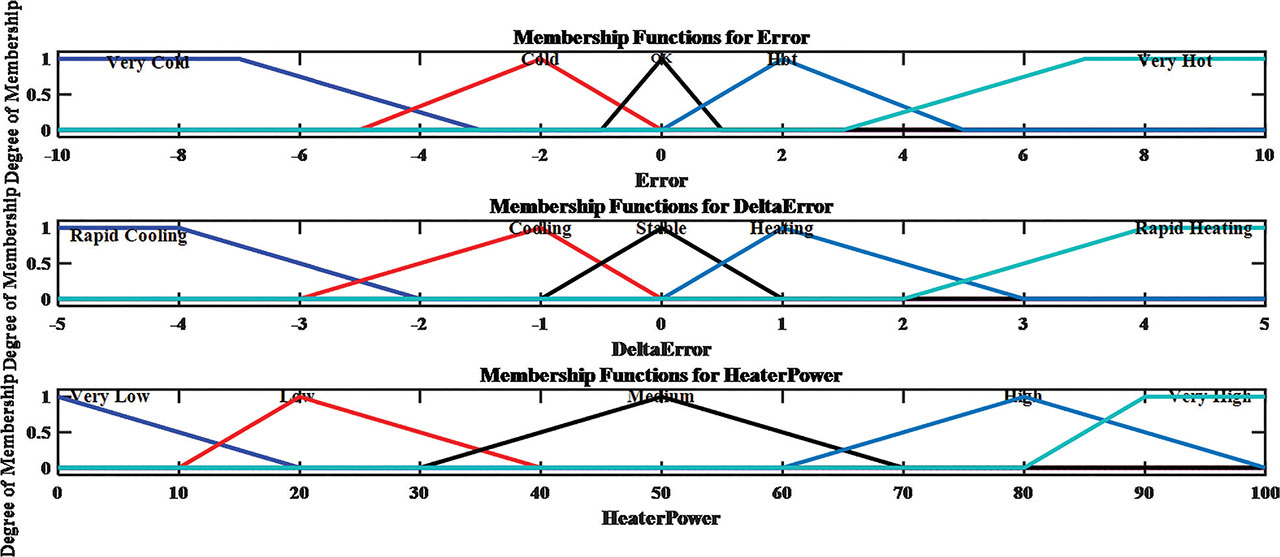
Figure 5:
FLC for a temperature-controlled heater system: input and output membership functions. FL, fuzzy logic; FLC, fuzzy logic controller.
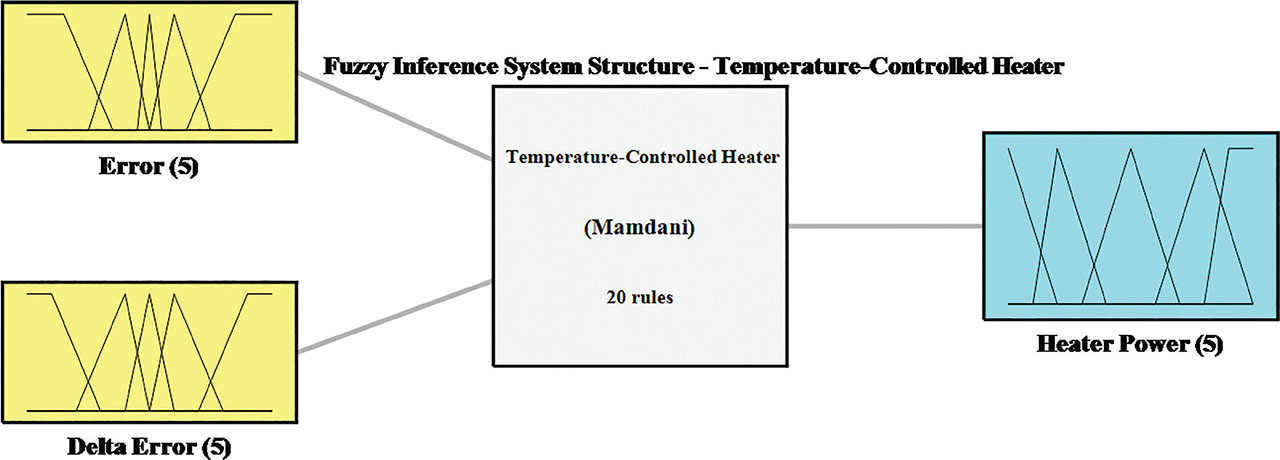
Figure 6:
FLC-based temperature control for a heater system structure: inputs and output regulation. FL, fuzzy logic.
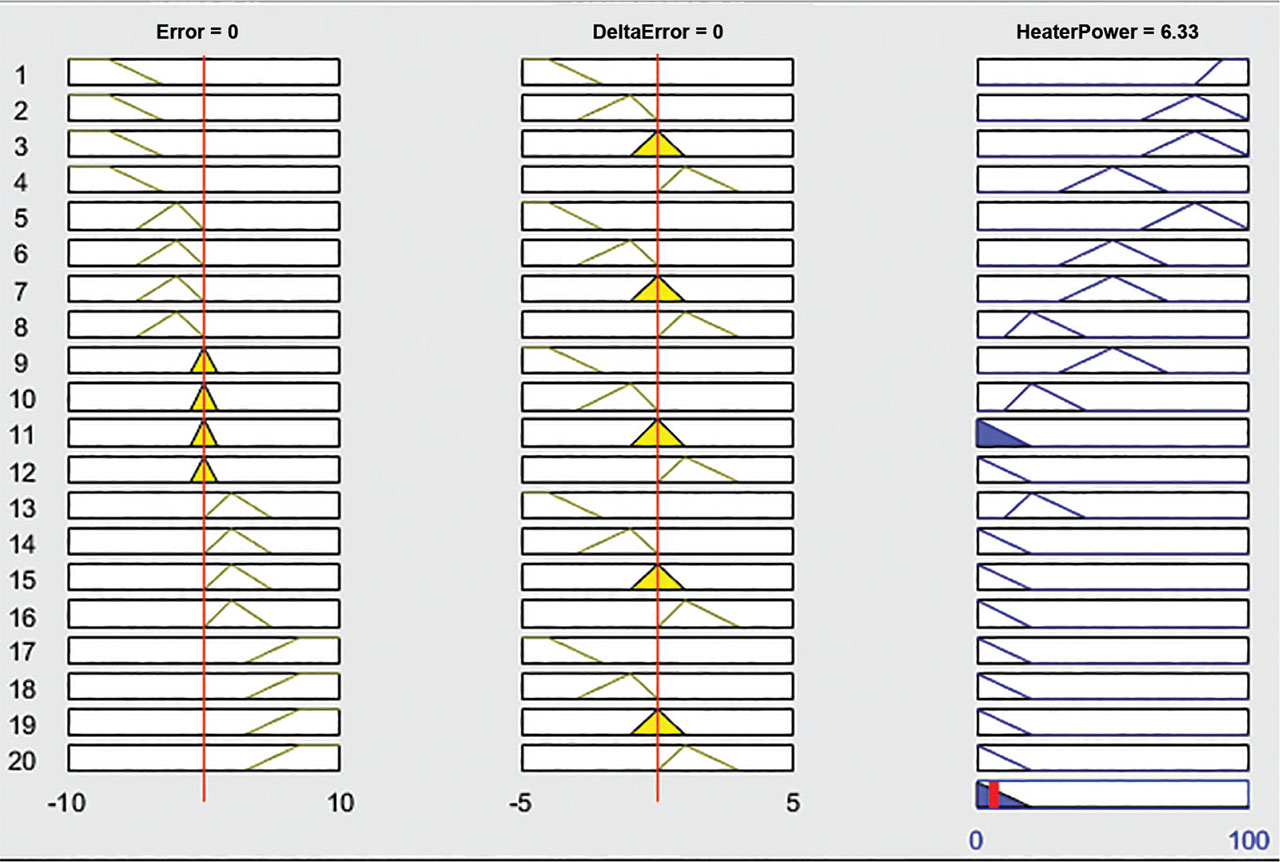
Figure 7:
FIS for temperature-controlled heater: membership functions and rule base.
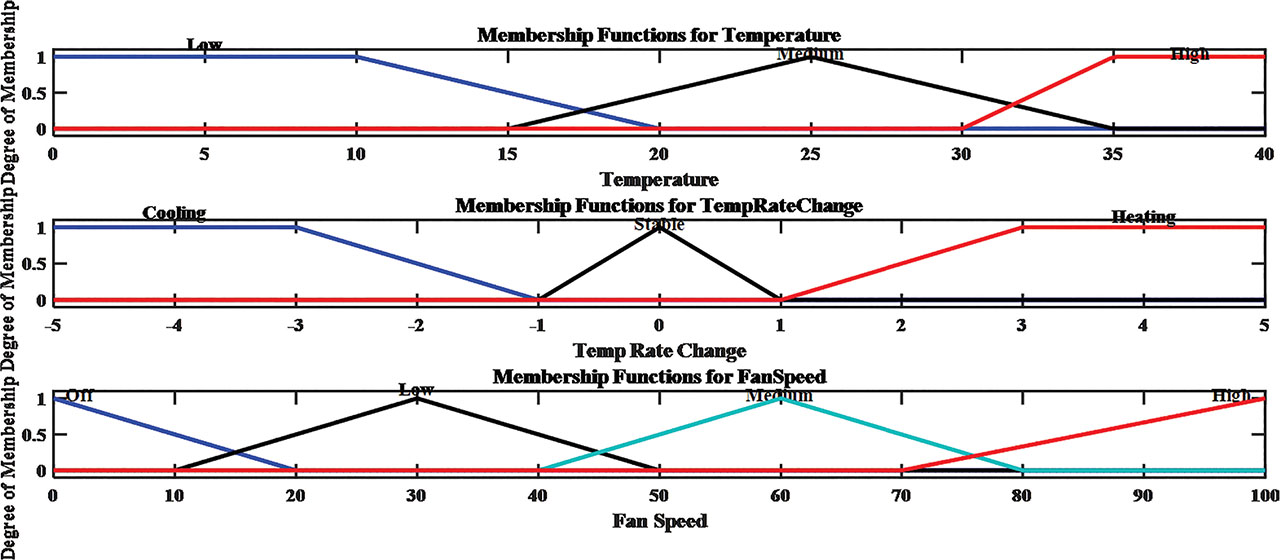
Figure 8:
FLC for a cool-controlled fan system: input and output membership functions. FL, fuzzy logic; FLC, fuzzy logic controller.
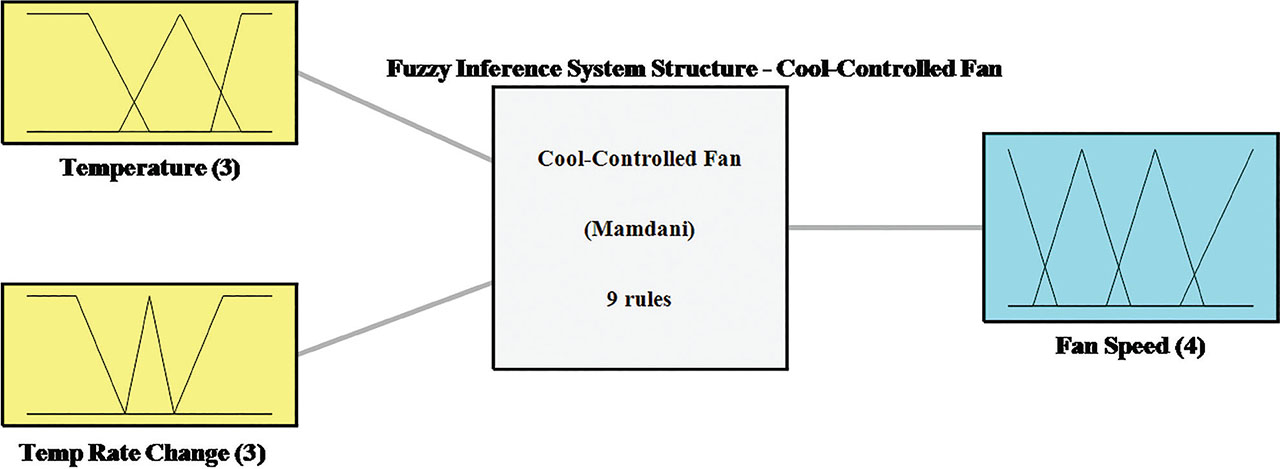
Figure 9:
FLC-based cool control for a fan system structure: inputs and output regulation. FL, fuzzy logic; FLC, fuzzy logic controller.
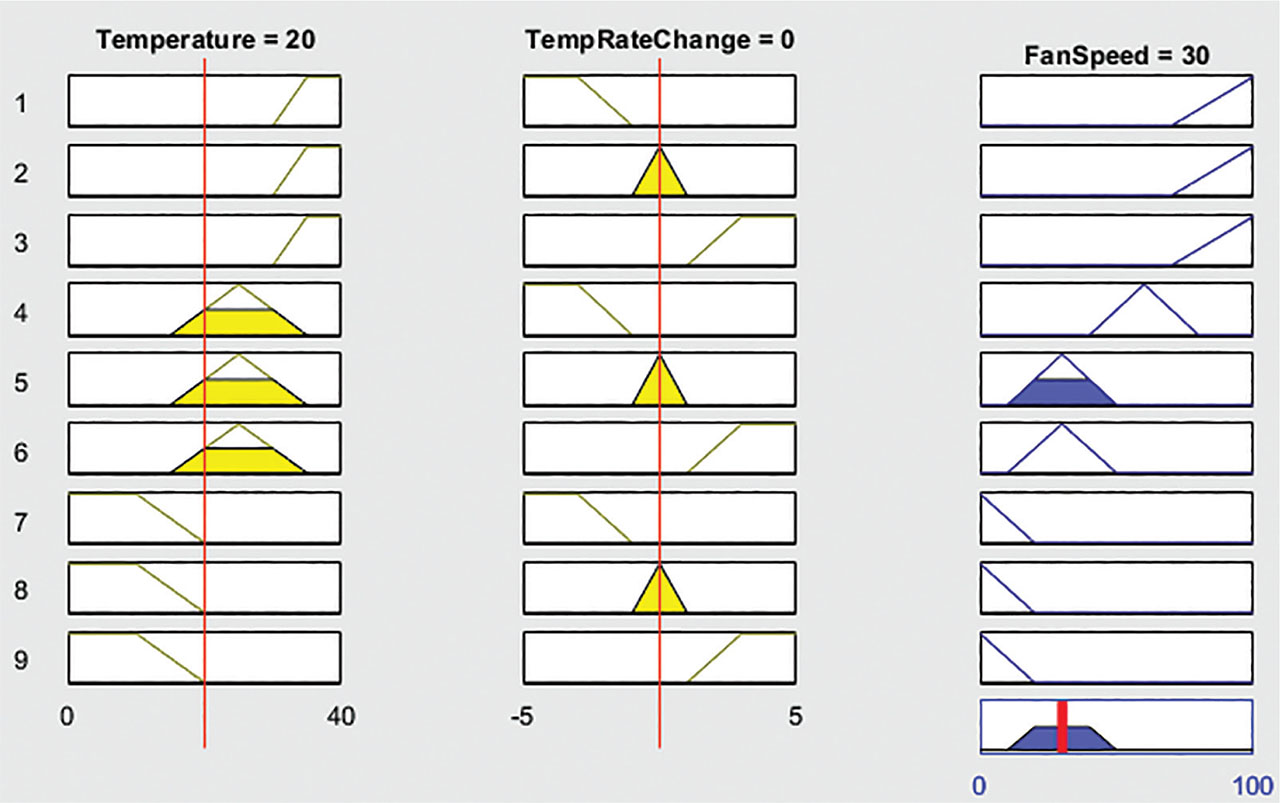
Figure 10:
FIS for cool-controlled fan: membership functions and rule base.
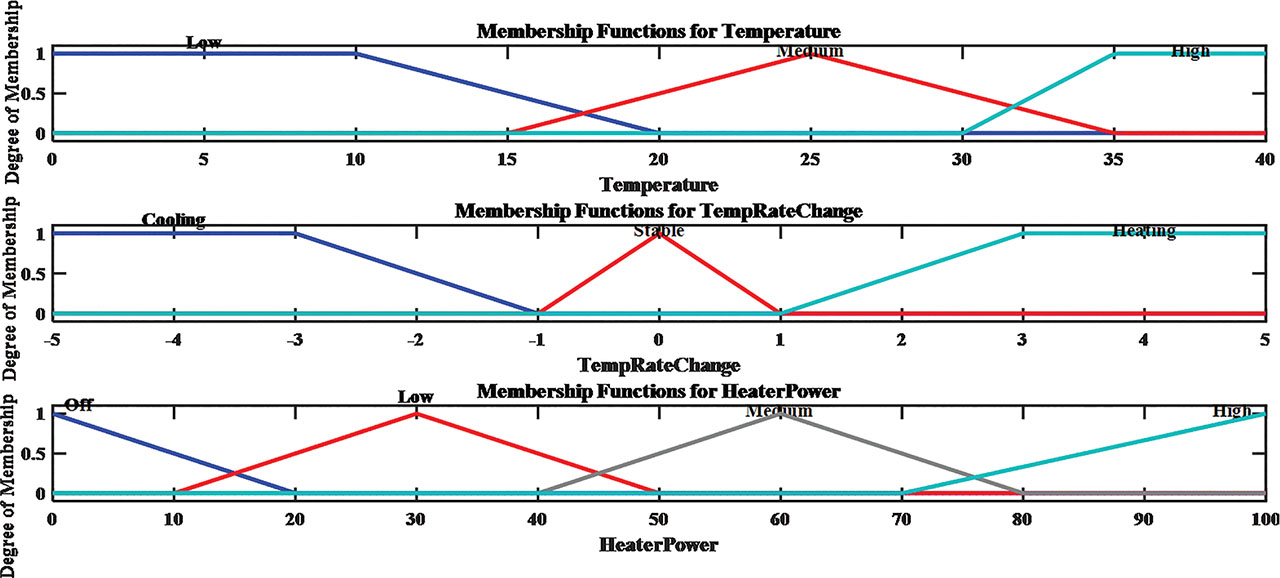
Figure 11:
FLC for a cool-controlled heater system: input and output membership functions. FL, fuzzy logic; FLC, fuzzy logic controller.
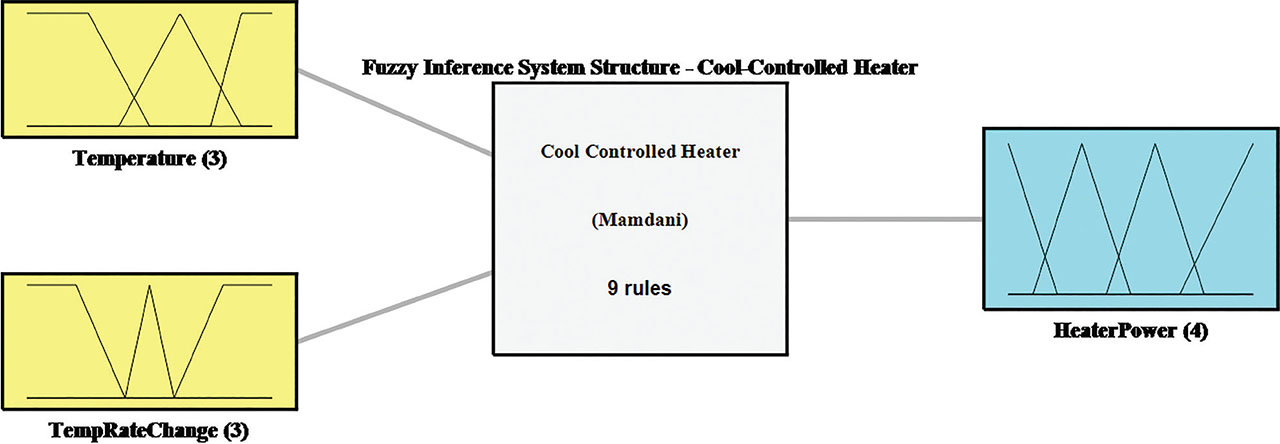
Figure 12:
FLC-based cool control for a heater system structure: inputs and output regulation. FL, fuzzy logic; FLC, fuzzy logic controller.
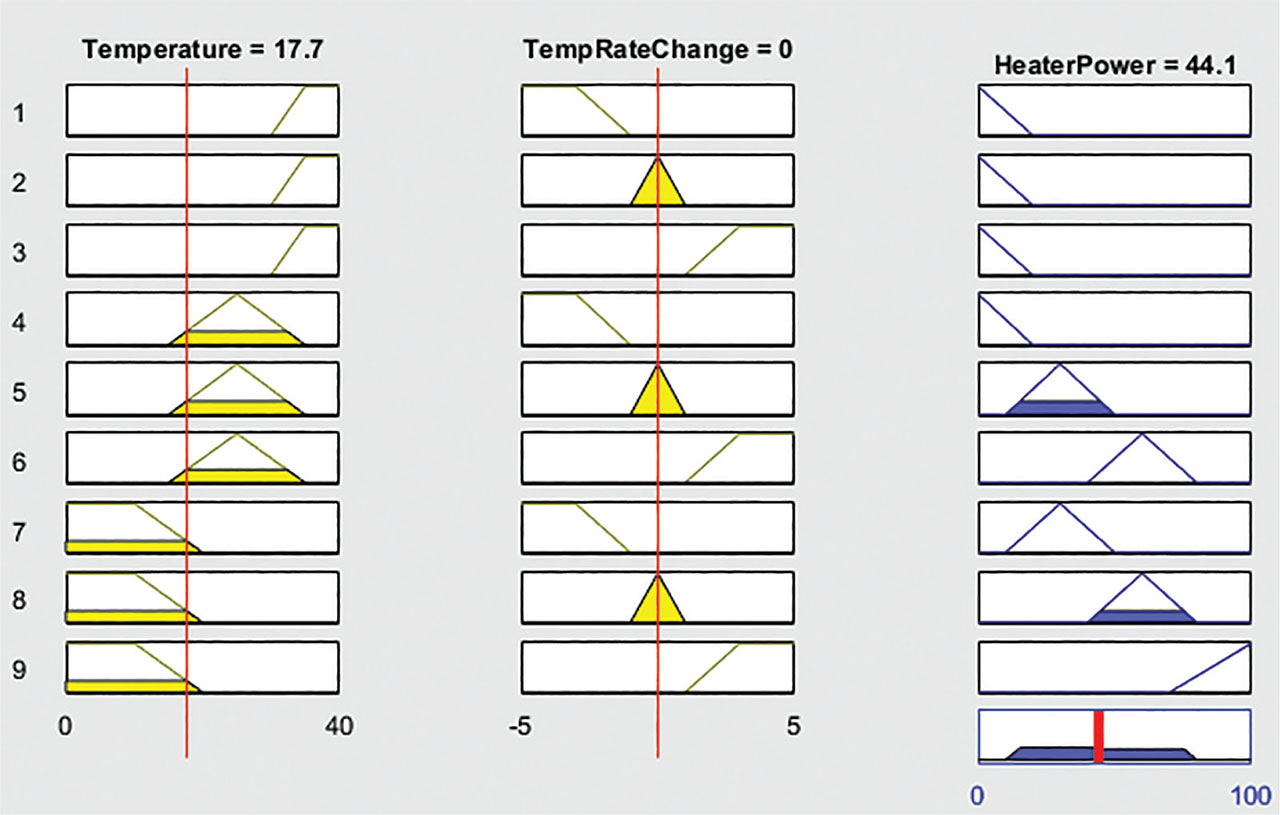
Figure 13:
FIS for cool-controlled heater: membership functions and rule base.
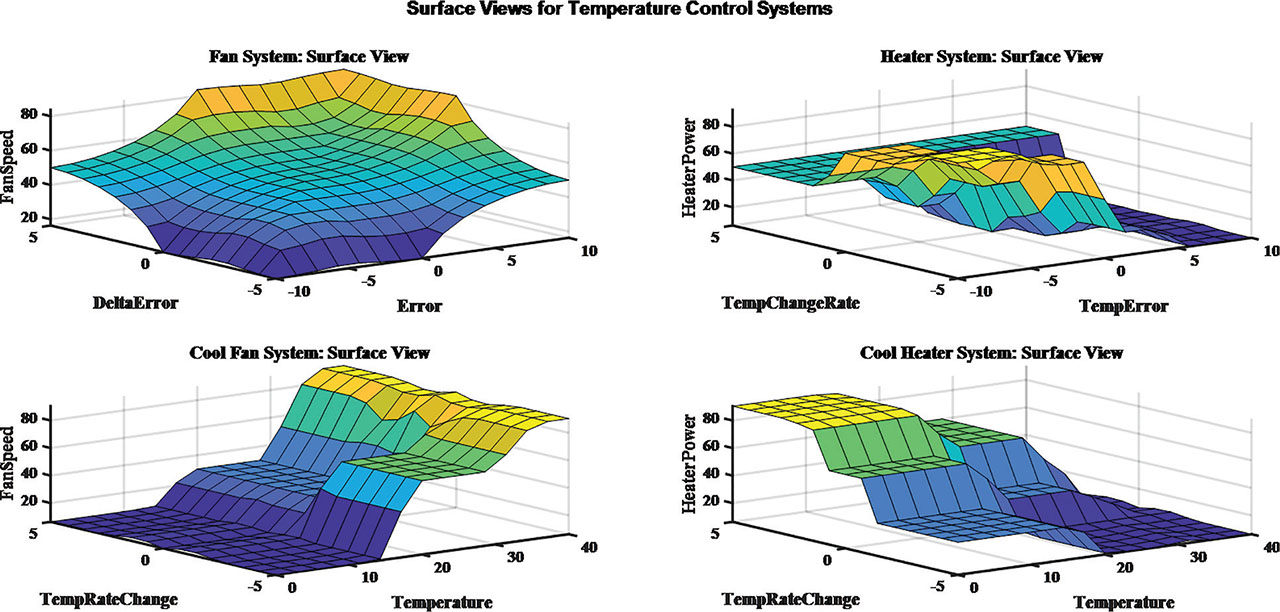
Figure 14:
3D FLC control surface plots for fan speed and heater power adjustments. FL, fuzzy logic; FLC, fuzzy logic controller.
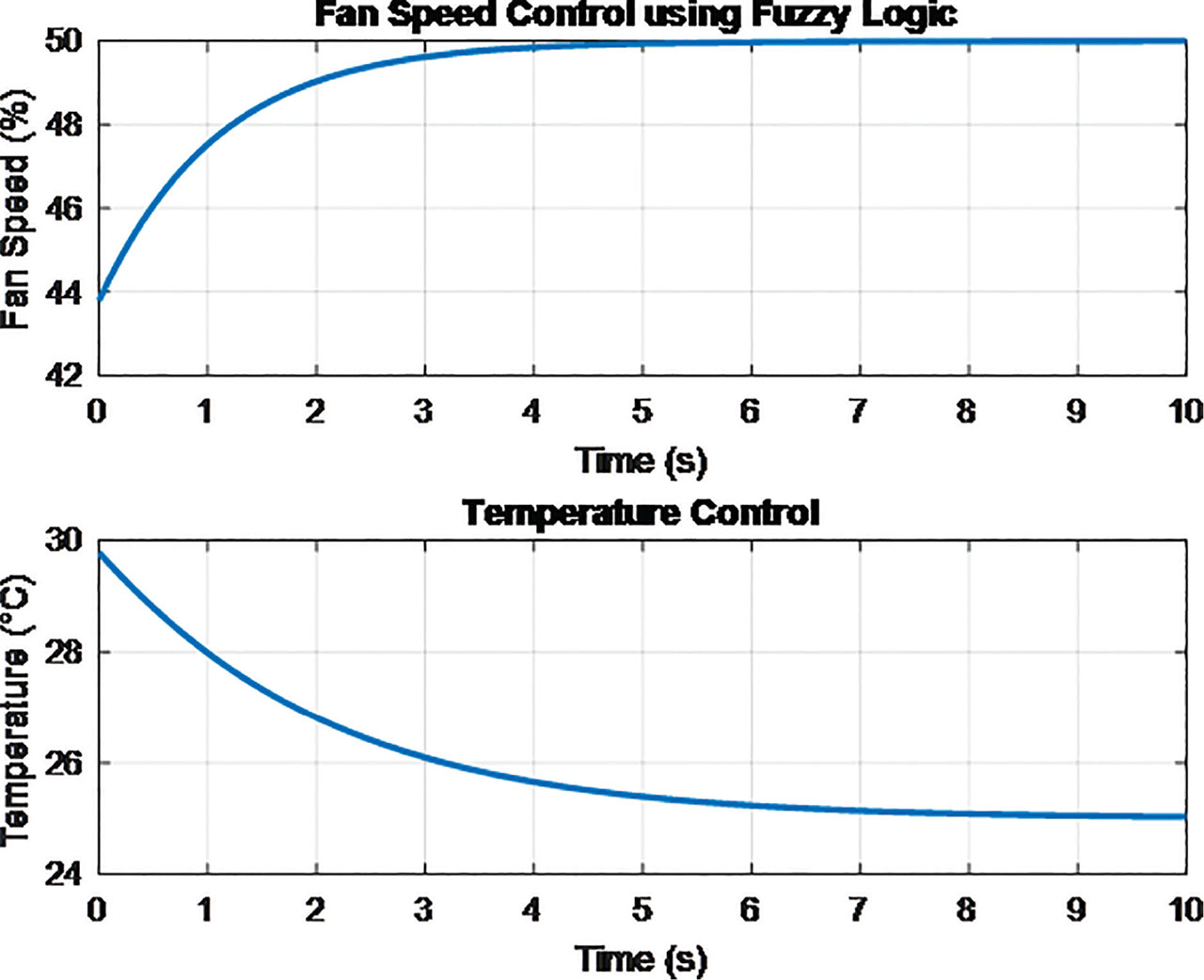
Figure 15:
Temperature-controlled fan system using FLC. FL, fuzzy logic; FLC, fuzzy logic controller.
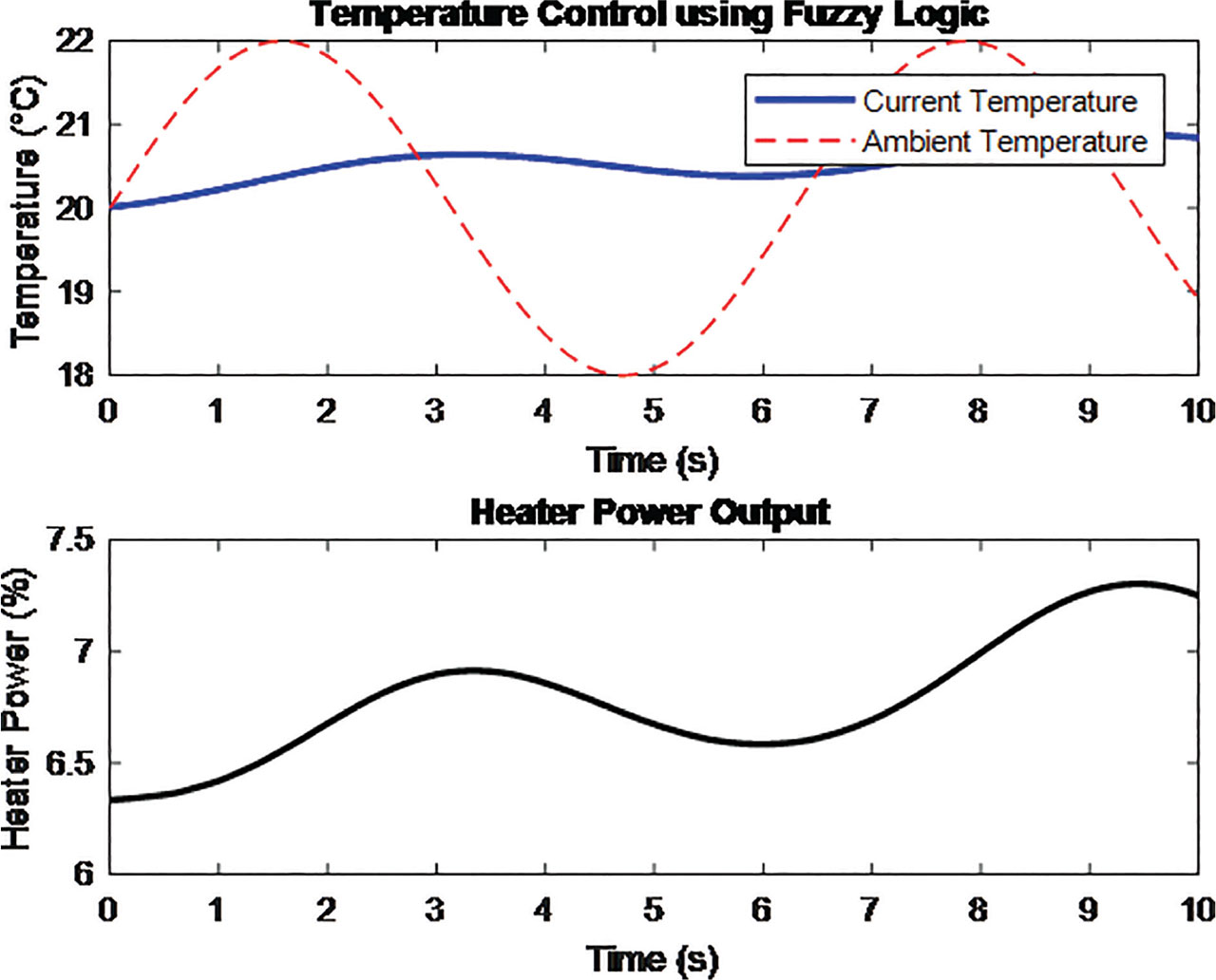
Figure 16:
Temperature control performance and heater power output over time.
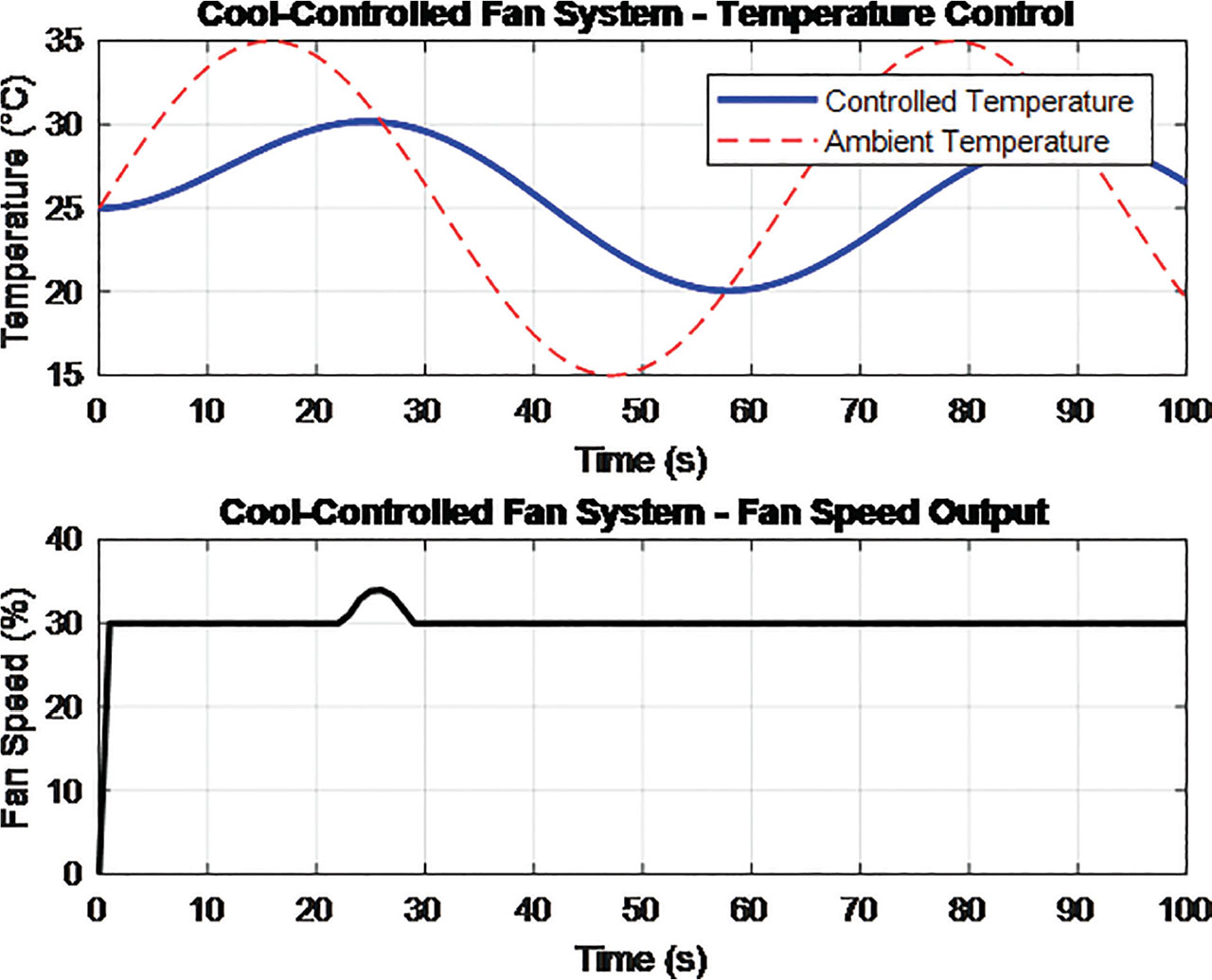
Figure 17:
Cooling system performance: controlled temperature and fan speed over time.
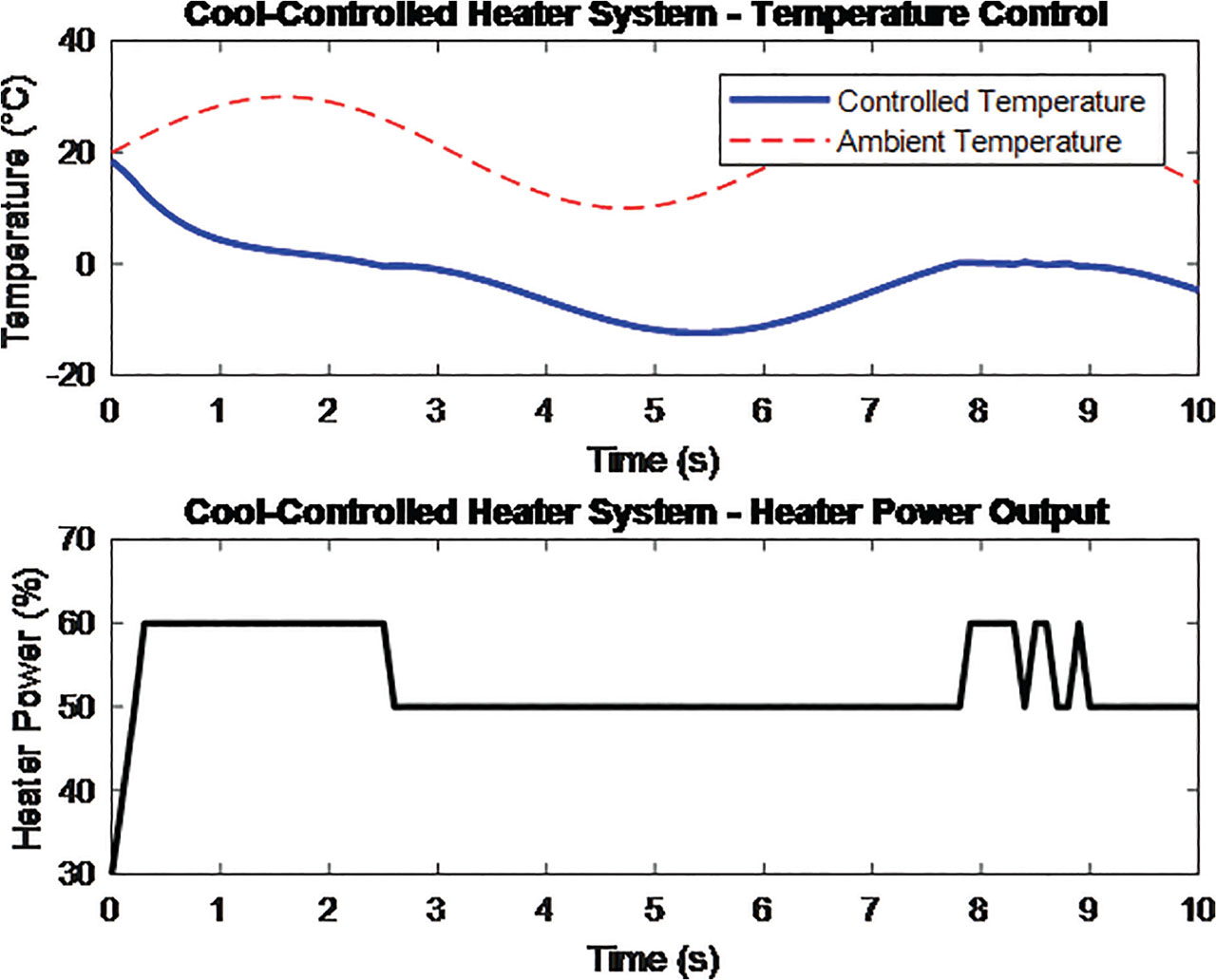
Figure 18:
Heating system performance: controlled temperature and heater power over time.
Table 1:
Comprehensive comparison of temperature-controlled and cool-controlled systems using FLC
| Aspect | Temperature-controlled fan system | Temperature-controlled heater system | Cool-controlled fan system | Cool-controlled heater system |
|---|---|---|---|---|
| Performance | Maintains target temperature with minimal overshoot | Maintains temperature close to desired with minor deviations | Efficiently maintains a cooler environment than ambient | Prevents overheating effectively by adjusting heater power |
| Effectiveness | Effective for precise cooling | Suitable for stable heating in varied conditions | Ideal for cooling applications with consistent airflow | Useful for environments requiring strict temperature control |
| Improvement needed | Slight need for error correction | Lower mean error and minor temperature fine-tuning needed | Fan speed optimization may improve energy efficiency | Better heater power management for energy efficiency |
| Initial temperature (°C) | 30 | Varies around 20 | Varies around 25 | Not specified (example uses 20) |
| Desired temperature (°C) | 25 | 22 | Cooler than ambient (e.g., maintaining 25) | Prevent temperature from exceeding a threshold |
| Final temperature (°C) | Slightly above 25 | 20.842 | Not specified; focused on maintaining a cooler environment | Managed to stay around set temperature with control actions |
| Final fan speed/heater power (%) | Fan speed dynamically adjusted | 7.2501 | Fan speed: 30 | Heater power: 60 |
| Mean temperature error (°C) | −0.0319 | 1.4696 | - | - |
| Max temperature error (°C) | - | 1.9873 | - | - |
| Comments on results | Maintains target temperature with minimal overshoot. Effective for precise cooling and slightly needed for error correction | Maintains temperature close to desired with minor deviations. Suitable for stable heating and requires minor fine-tuning | Efficiently maintains a cooler environment than ambient. Ideal for cooling applications with consistent control | Effectively prevents overheating by adjusting heater power. Suitable for strict temperature control and could improve energy efficiency |
| Control objective | Reduce and maintain temperature at a lower set point | Increase and maintain temperature at a higher set point | Reduce temperature below ambient, maintaining cooler conditions | Prevent temperature from rising above a certain point |
| Control strategy | Adjust fan speed based on the error and the rate of change | Adjust heater power based on the error and the rate of change | Adjust fan speed dynamically to reduce temperature fluctuations | Adjust heater power dynamically to prevent the temperature increase |
| Ambient temperature | Not directly controlled | Simulated fluctuation: 20 + 2 × sin (time) | Simulated fluctuation: 25 + 10 × sin (time/10) | Simulated varying conditions: e.g., 20 + 10 × sin (time) |
| System complexity | Moderate, requiring dynamic fan speed adjustment | Moderate, requiring dynamic heater power adjustment | Moderate, adjusting fan speed to manage temperature variations | Moderate, adjusting heater power to manage temperature increases |
| Energy efficiency | Moderate efficiency, depends on fan speed adjustments | Moderate efficiency, adjusting heater power to manage temperature | Moderate efficiency, dynamic fan speed adjustment to manage cooling | Moderate efficiency, managing heater power to prevent overheating |
| Key output variables | Fan speed | Heater power | Fan speed | Heater power |
| Response characteristics | Increases airflow to cool environment | Increases heat to warm environment | Increases airflow to reduce temperature effectively | Modulates heating to prevent excessive temperature |
| Typical applications | HVAC systems, data centers | Residential heating, industrial processes | Cooling systems for electronics, data centers | Heating systems in environments, requiring strict temperature control |
| System focus | Cooling by regulating fan speed | Heating by modulating heater power | Cooling by increasing fan speed to manage temperature fluctuations | Cooling by preventing overheating through heater power modulation |
| Primary function | Cools the environment by regulating airflow | Heats the environment by adjusting heat output | Prevents overheating by regulating heat output | Cools the environment by increasing airflow |
| Key input variables | Temperature, fan speed, and sometimes humidity | Temperature and rate of temperature change | Temperature and rate of temperature increase | Temperature, fan speed, and sometimes humidity |
| Output variables | Fan speed adjustments | Heater power adjustments | Heater power adjustments | Fan speed adjustments |
| Environmental suitability | Best for warm climates, needing cooling | Best for cold climates, needing heating | Suitable for hot environments, needing to avoid overheating | Suitable for environments, needing consistent cooling |
| Control complexity | Requires managing airflow and sometimes humidity | Focused on direct heat output control | Balances heating and cooling mechanisms to prevent overheating | Focuses on managing airflow and sometimes additional cooling |
| Temperature regulation | Maintains or reduces temperature effectively | Increases and maintains temperature | Maintains a maximum temperature to prevent overheating | Reduces temperature by maximizing airflow |
Table 2:
Performance analysis of temperature and cool-controlled systems
| System type | Initial temperature (°C) | Desired temperature (°C) | Final temperature (°C) | Final fan speed/heater power (%) | Mean temperature error (°C) | Max temperature error (°C) | Comments |
|---|---|---|---|---|---|---|---|
| Temperature-controlled fan system | 30 | 25 | Slightly above 25 | Dynamically adjusted | −0.0319 | - | Maintains target temperature with minimal overshoot. Effective for precise cooling, slightly need for error correction |
| Temperature-controlled heater system | Varies around 20 | 22 | 20.842 | 7.2501 | 1.4696 | 1.9873 | Maintains temperature close to desired with minor deviations. Suitable for stable heating and requires minor fine-tuning |
| Cool-controlled fan system | Varies around 25 | Cooler than ambient | Maintains cooler env. | 30 | - | - | Efficiently maintains cooler environment than ambient. Ideal for cooling applications with consistent control |
| Cool-controlled heater system | Not specified | Prevents exceeding threshold | Maintains set temp. | 60 | - | - | Effectively prevents overheating by adjusting heater power. Suitable for strict temperature control and could improve energy efficiency |
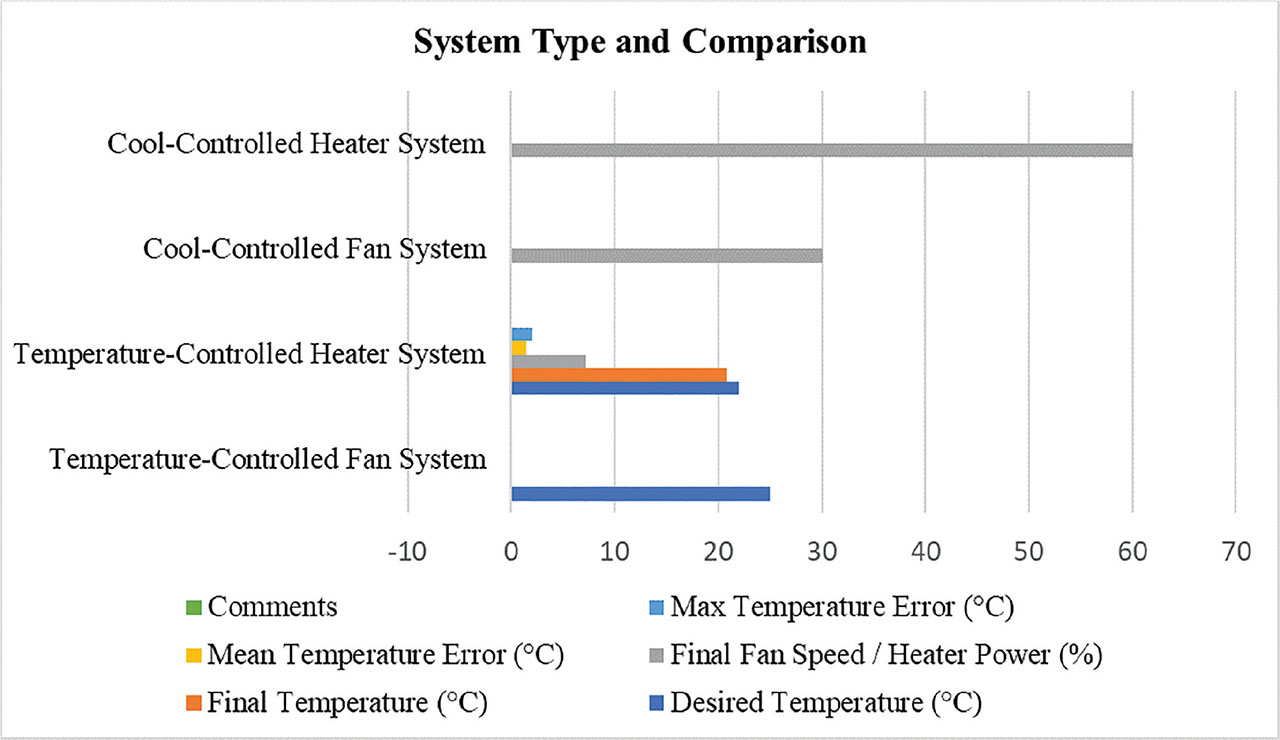
Figure 19:
Comparison of temperature-controlled and cool-controlled systems using FLCs. FLCs, fuzzy logic controllers.
Table 3:
| Aspect | Our study | Ahmad et al. [22] | Nyiekaa et al. [21] | Schuster et al. [28] |
|---|---|---|---|---|
| Objective | Evaluate FLC-based temperature and cooling systems for stable conditions and energy efficiency | Address thermal comfort, heat wave resilience, and indoor air quality in warm climates | Design and construct a temperature control system to maintain a desired temperature in enclosed area | Explore cool-controlled heating systems for improved thermal comfort and energy efficiency in building automation |
| Methodology | Utilize FIS to dynamically adjust fan speed and heater power based on input variables, such as temperature error and rate of temperature change | Investigate the integration of advanced control algorithms and natural ventilation strategies | Use a temperature controller system designed to maintain a desired temperature automatically | Integrate cool-controlled heating systems with building automation to optimize energy use |
| Control objective | Maintain stable conditions in residential, industrial, and electronic cooling applications | Enhance thermal comfort and indoor air quality in warm climates | Maintain a specific temperature within an enclosed area | Maintain thermal comfort and enhance energy efficiency in heating systems |
| Results | Achieved a mean temperature error of −0.0319°C for fan system and 1.4696°C for heater system; effective temperature control and energy efficiency | Potential of advanced fan systems to improve thermal comfort and indoor air quality | Successfully maintained a specified temperature within enclosed area | Potential for improved energy efficiency and user satisfaction through building automation |
| System applications | Residential, industrial, and electronic cooling | Warm climates and natural ventilation systems | Enclosed areas requiring stable temperature control | Building automation and heating systems |
| System focus | Both heating and cooling applications, preventing overheating and maintaining desired conditions | Primarily cooling applications to enhance thermal comfort and air quality | Heating applications to maintain stable temperature | Heating applications for thermal comfort and energy efficiency |
| Energy efficiency | Substantial energy savings compared to traditional methods | Enhanced through advanced ventilation strategies | Energy-efficient temperature maintenance | Improved through integration with building automation |