
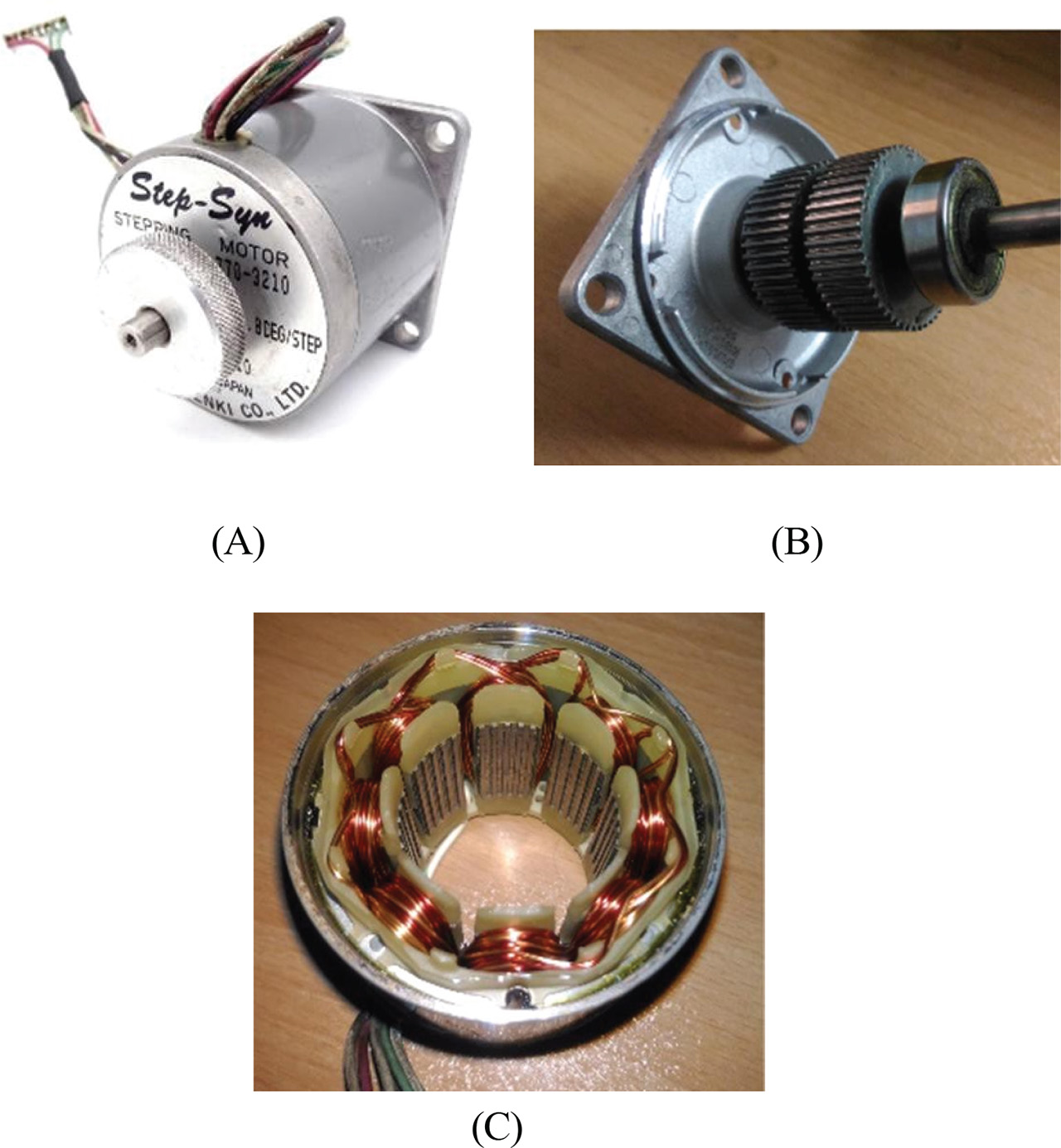
Figure 1:
A two-phase HSM, (A) Whole motor, (B) Rotor, and (C) Stator [28]. HSM, hybrid stepper motor.
Table 1:
Motor specifications [28]
| Motor outer diameter | 56.5 mm |
| Motor body height | 52 mm |
| Stator outer diameter | 54.1 mm |
| Stator inner diameter | 30 mm |
| Number of teeth in each stator pole | 5 |
| Stator teeth depth | 1.25 mm |
| Stator height | 23 mm |
| Air gap | 0.1 mm |
| Rotor outer diameter | 29.8 mm |
| Each half-rotor height | 10 mm |
| Distance between two half-rotors | 3 mm |
| Number of teeth in each half-rotor | 50 |
| Rotor teeth depth | 1.5 mm |
| Magnet diameter | 20.8 mm |
| Magnet height | 13 mm |
| Number of wire-turns per coil | 32 |
| Wire diameter | 0.6 mm |
| Stator and rotor material | Steel 1,008 |
| Magnet material | NdFe35 (1.3 T) |
| Stator and rotors teeth fillet radius | 0.125 mm |
| Maximum nominal current | 3A |
| Angle per step | 1.8° |
| Rotor and stator teeth angle (pitch) | 7.2° |
| Rotor and stator teeth width | 3.6°(0.94 mm) |
| Stator pole thickness | 2 mm |
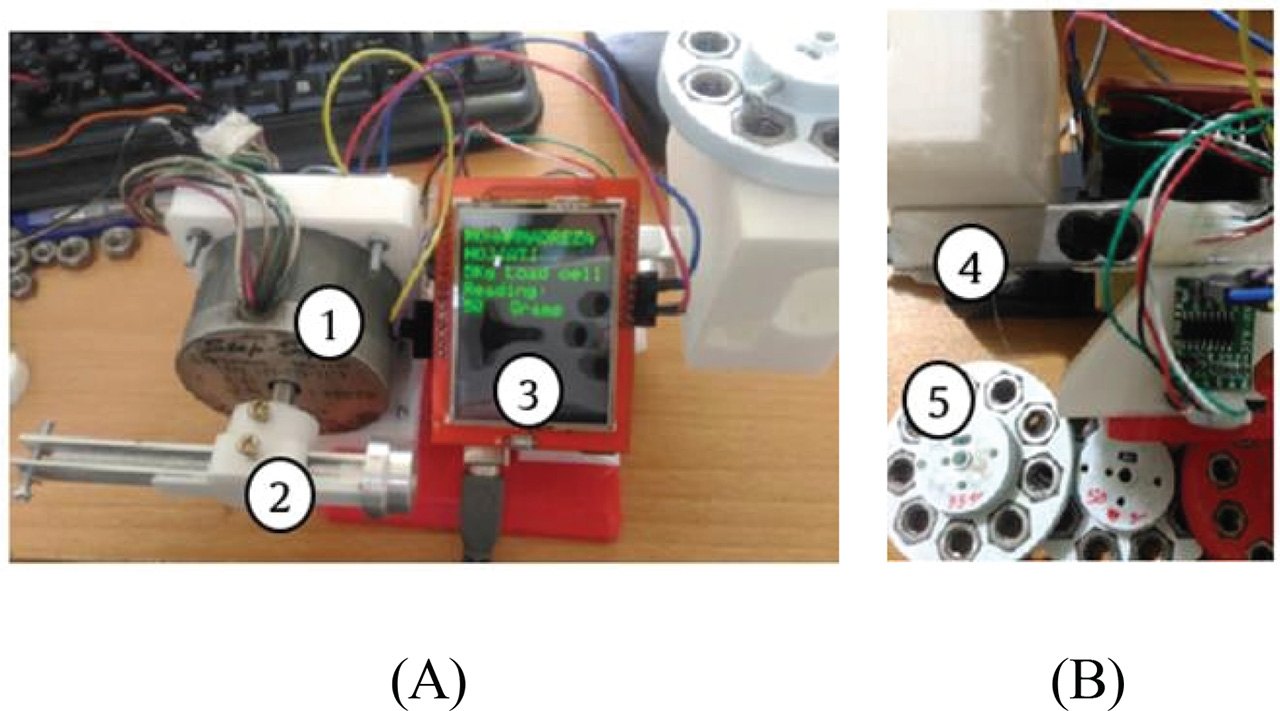
Figure 2:
Stepper motor testbed, (A) Front view, (B) Back view, 1: Stepper motor, 2: Weights carrier arm, 3: Arduino and LCD shield, 4: Load cell, 5: Weights [28].
Table 2:
Stepper motor experiment results [28]
| Current [A] | Weights mass [g] | Torque [mN/m] |
|---|---|---|
| 1.05 | 218 | 130.8 |
| 1.53 | 297 | 178.2 |
| 1.96 | 373 | 223.8 |
| 2.35 | 433 | 259.8 |
| 2.73 | 477 | 286.2 |
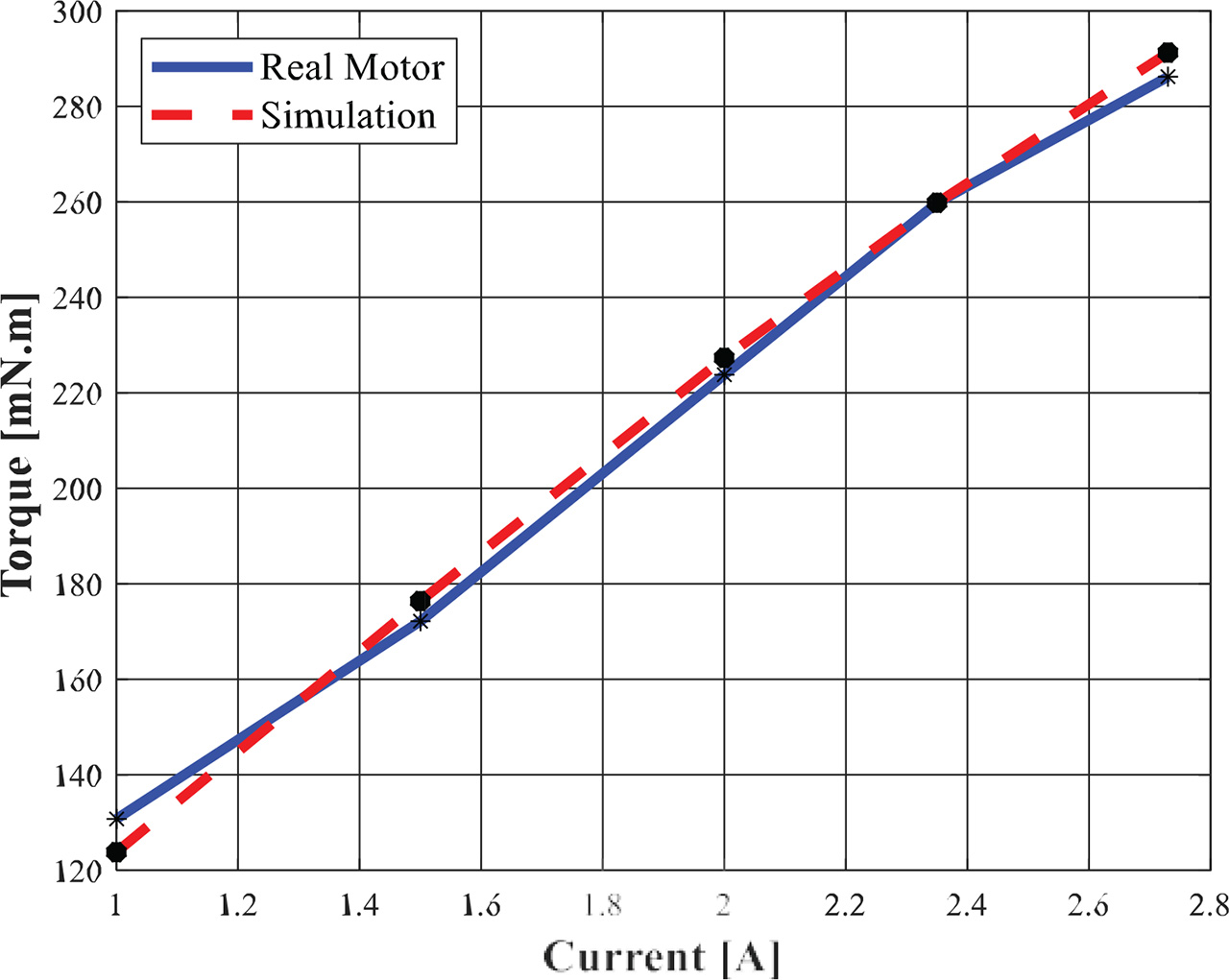
Figure 3:
Real motor and simulated model output torque [28].
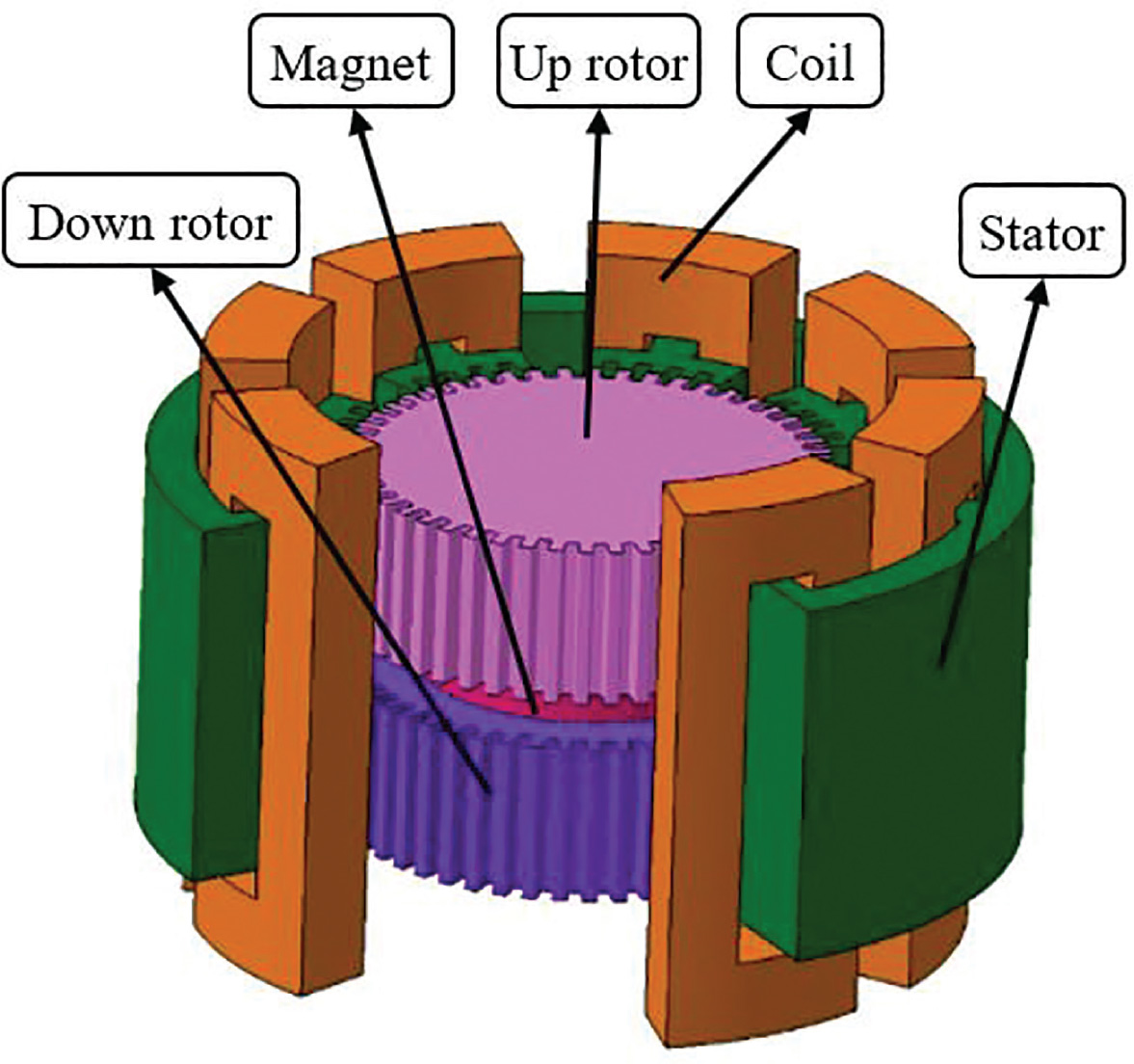
Figure 4:
HSM computer model. HSM, hybrid stepper motor.
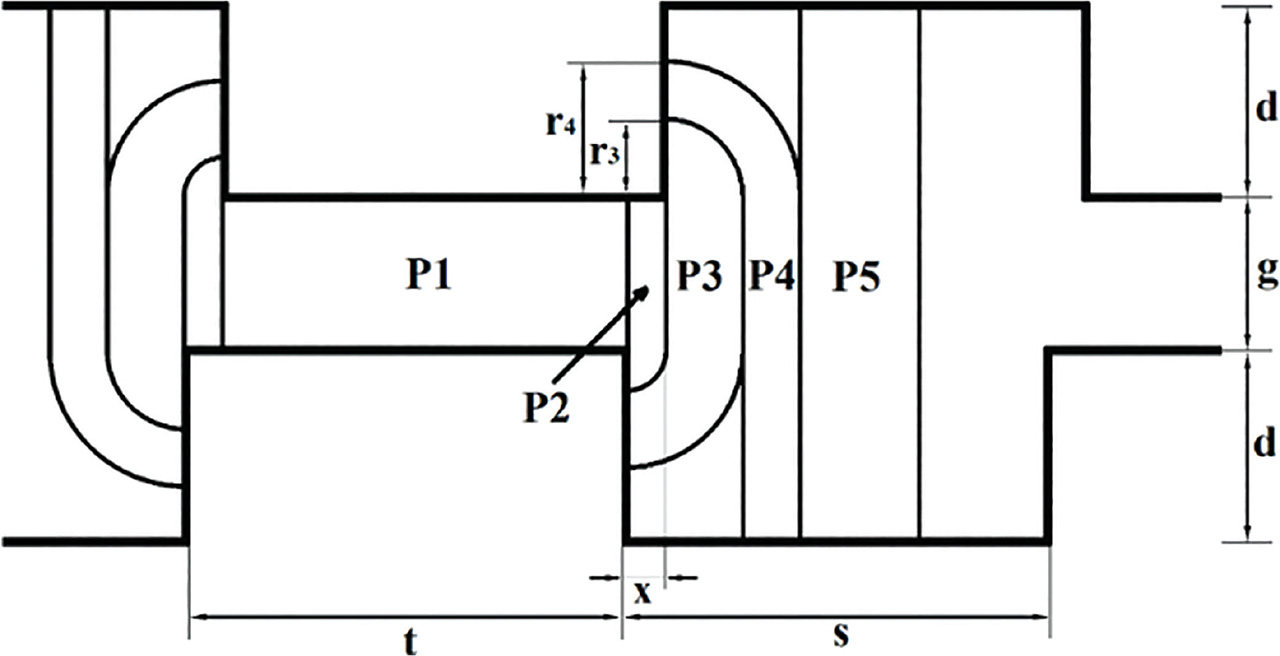
Figure 5:
Linearized tooth to tooth arrangement and flux tubes [14, 15].
Table 3:
The motor parameters
| Absolute permeability | μ0 | 4π × 10−7 H/m |
| Slot thickness | t | 0.939 mm |
| Air gap length | g | 0.1 mm |
| Rotor and stator teeth depth | d | 1.375 mm |
| Tooth thickness | s | 0.939 mm |
| Number of teeth per stator pole | Zs | 5 |
| Number of rotor teeth | Zr | 50 |
| Number of wire-turns per stator winding | Ns | 32 |
| Excitation current | i | 1.5 A |
| Rotor height | h | 20 mm |
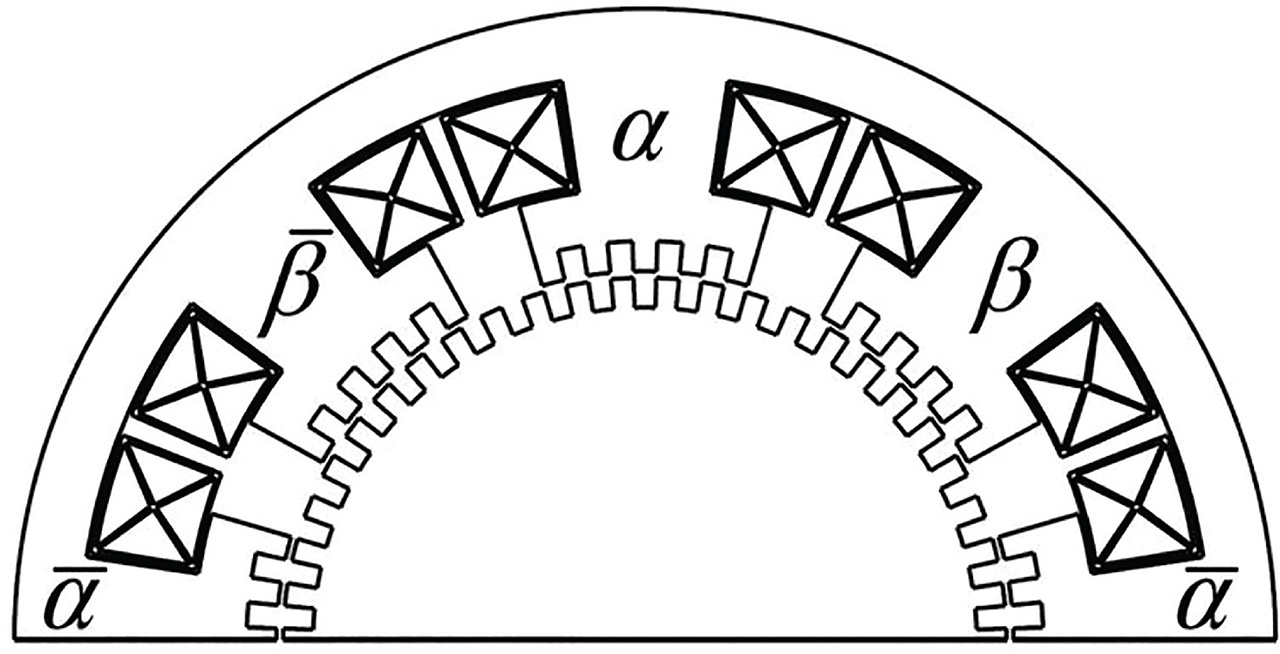
Figure 6:
Construction of a two-phase hybrid stepping motor [14].
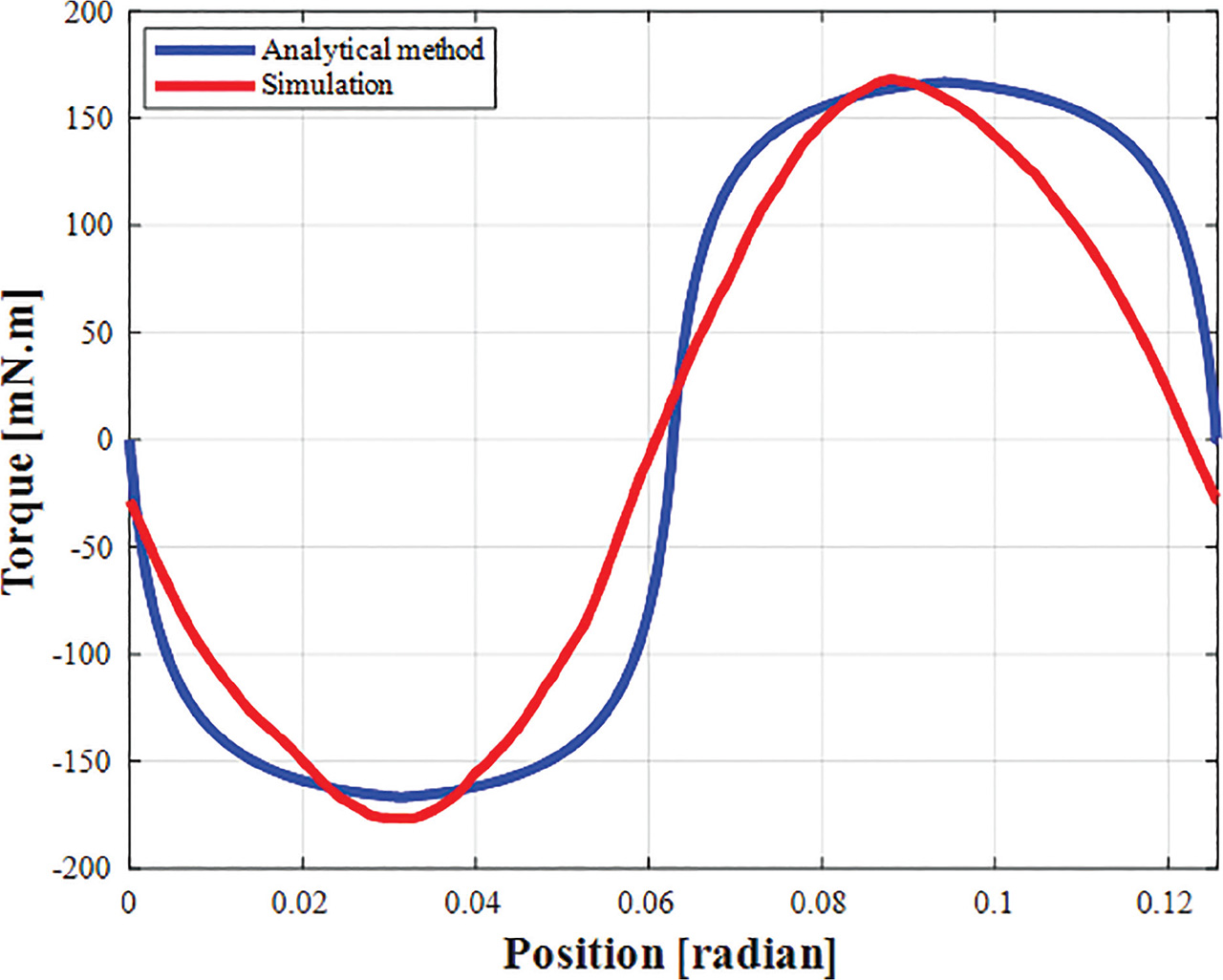
Figure 7:
Comparison between torque curves in analytical and numerical simulation models.
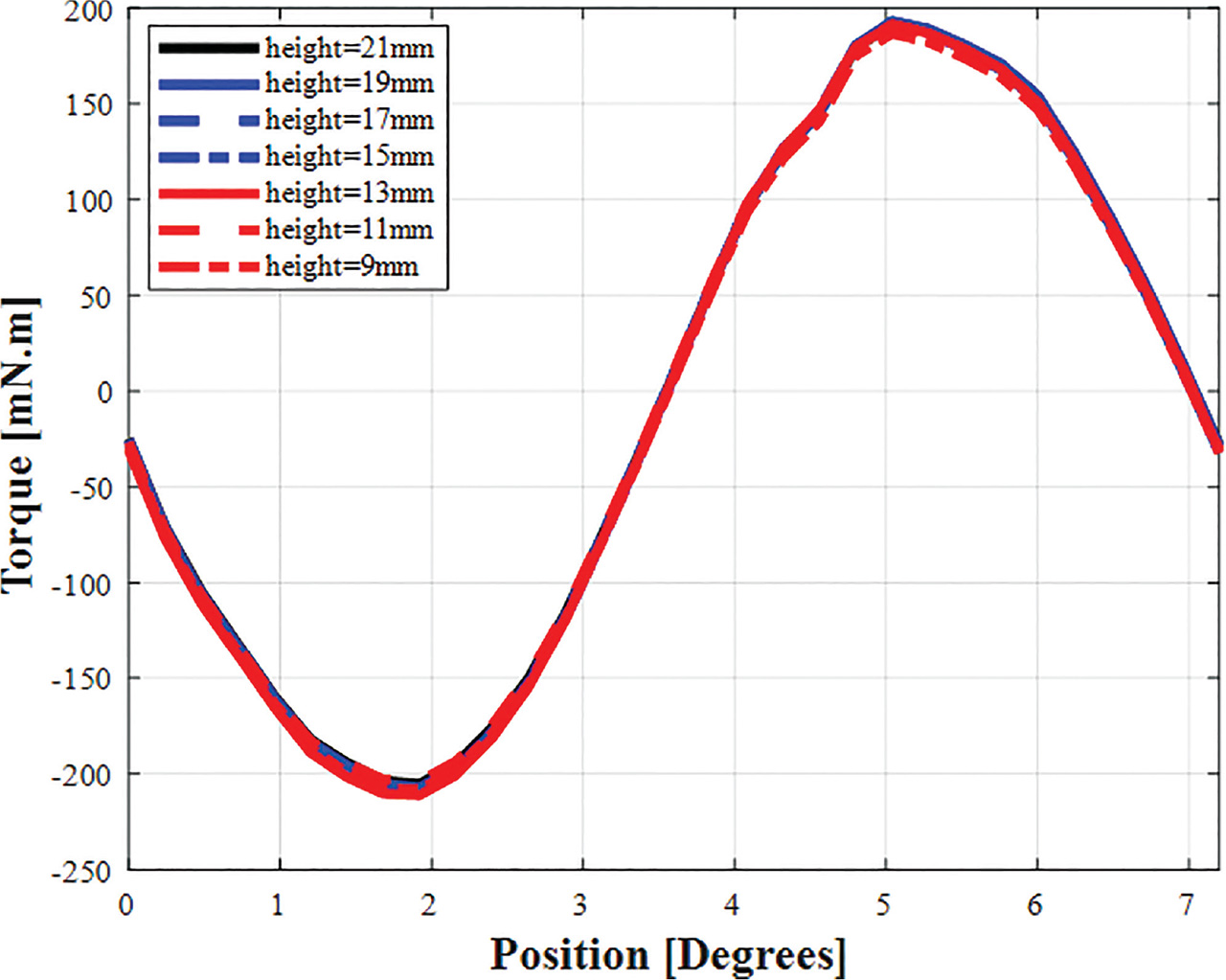
Figure 8:
A sample meshing used for 3D FEM analysis. FEM, finite element method.
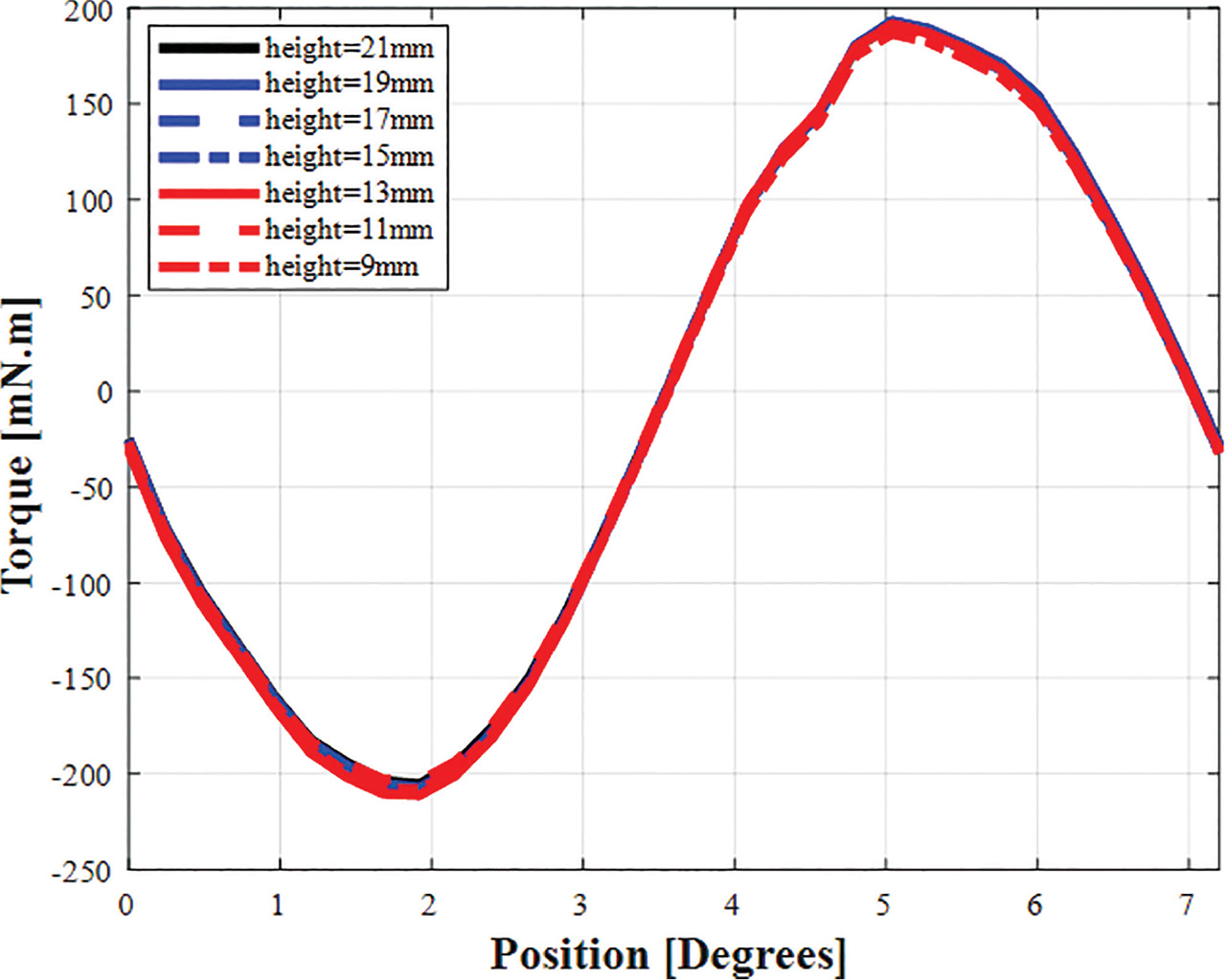
Figure 9:
Motor torque for different magnet heights.
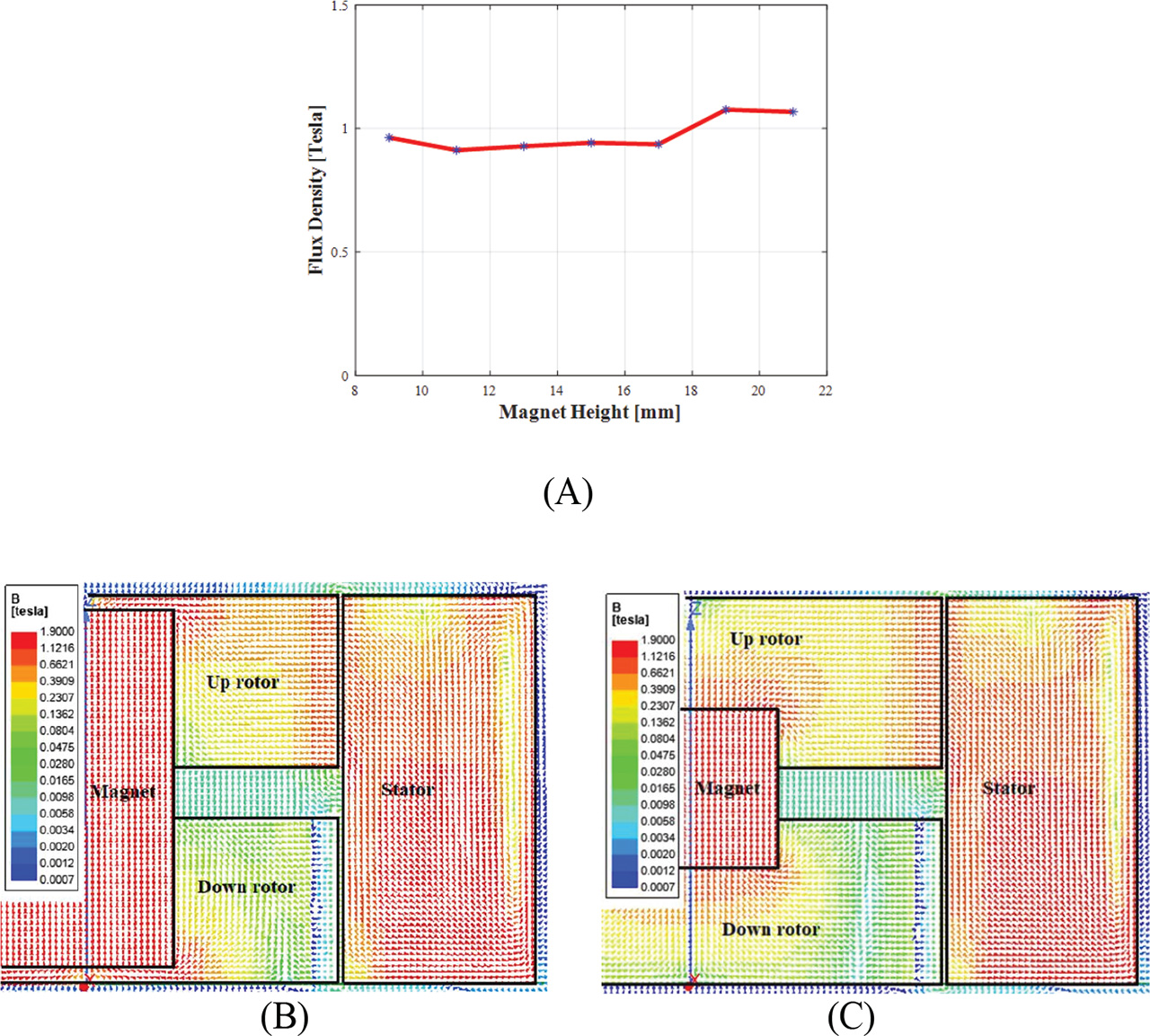
Figure 10:
Flux density, (A) magnet heights 9–21 mm, (B) magnet height is 21 mm, (C) magnet height is 9 mm.
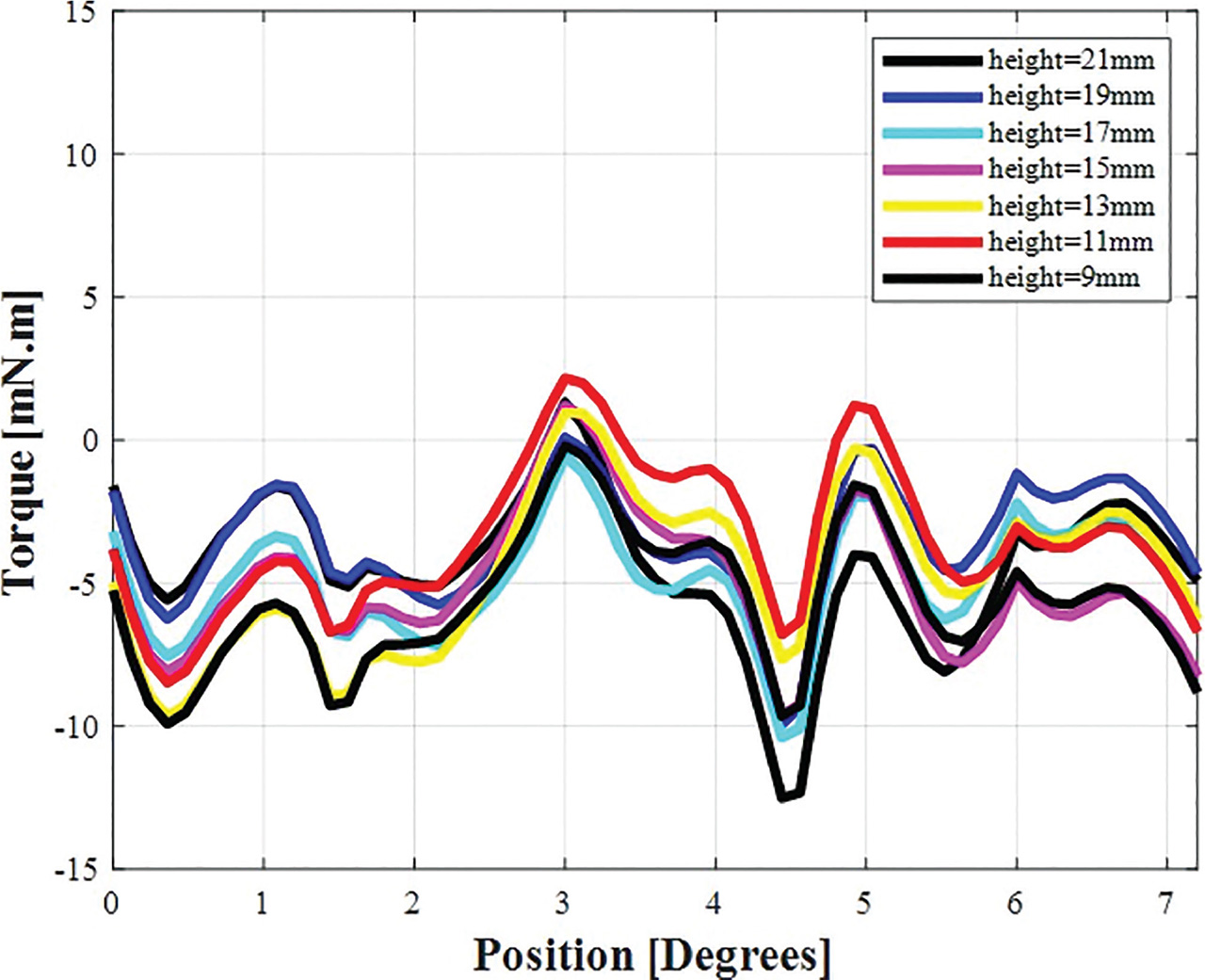
Figure 11:
Motor torque for magnet heights from 21 mm to 9 mm when the stator coils are not excited.
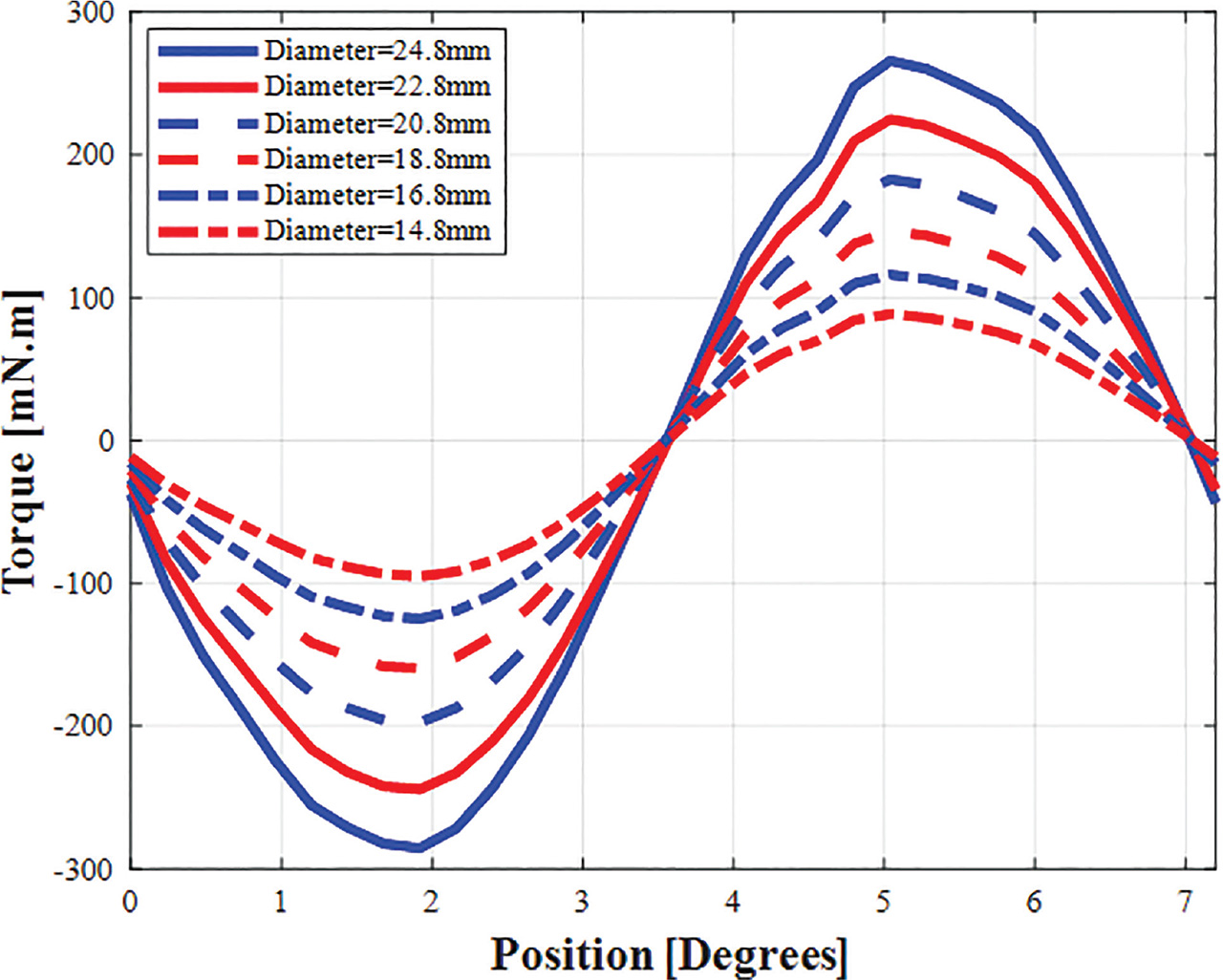
Figure 12:
Motor torque for different magnet diameters.
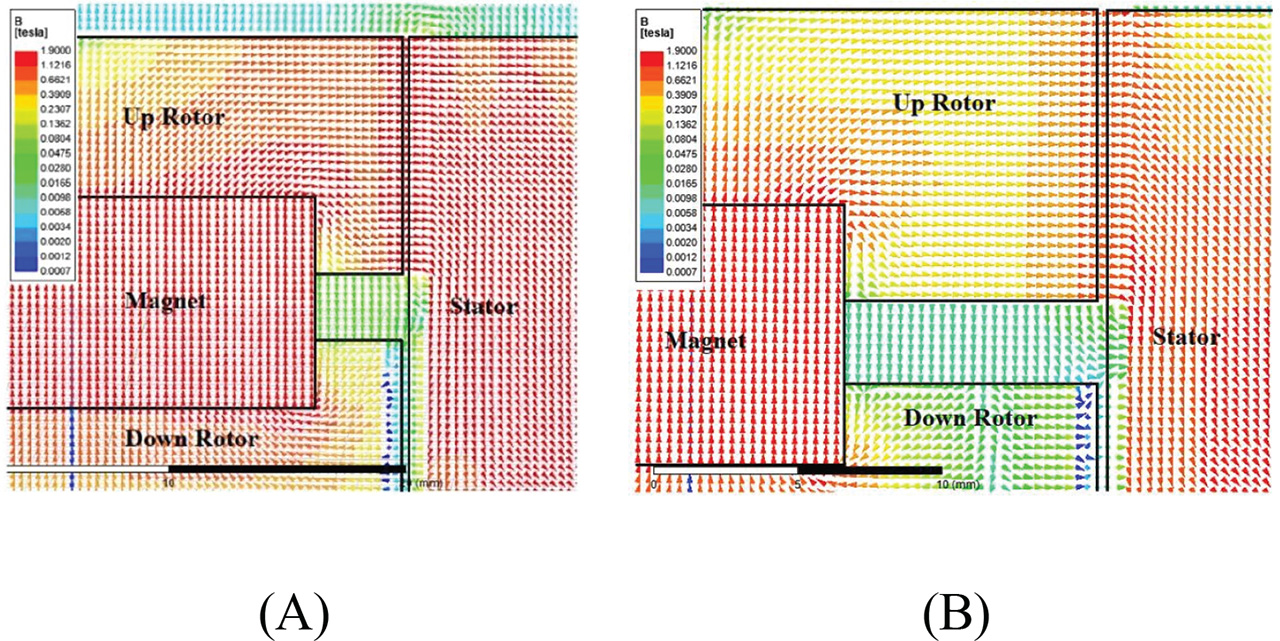
Figure 13:
Flux density, (A) magnet diameter is 20.8 mm and (B) magnet diameter is 10.8 mm.
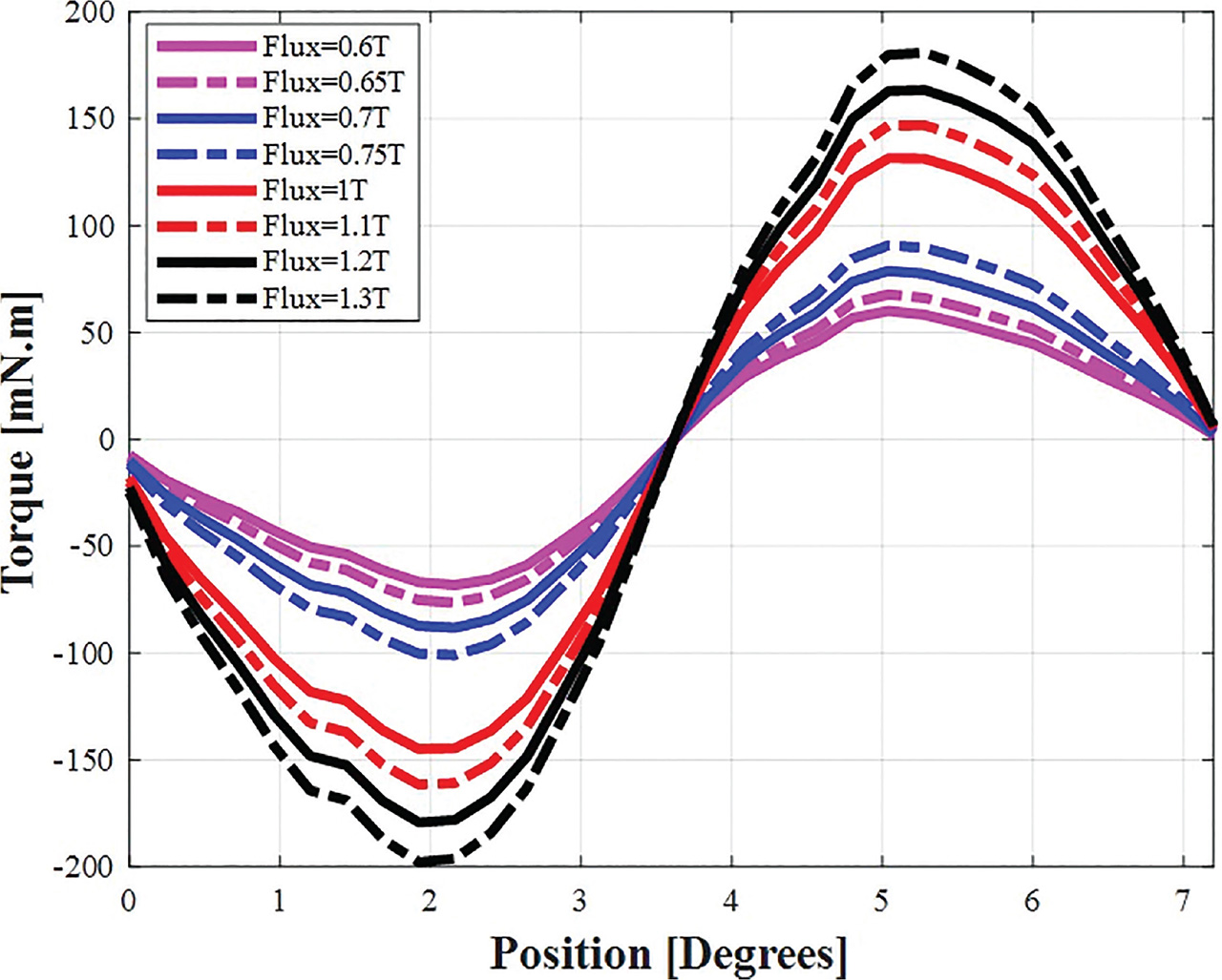
Figure 14:
Motor torque for magnet diameters from 29.8 mm to 24.8 mm when the stator coils are not excited.
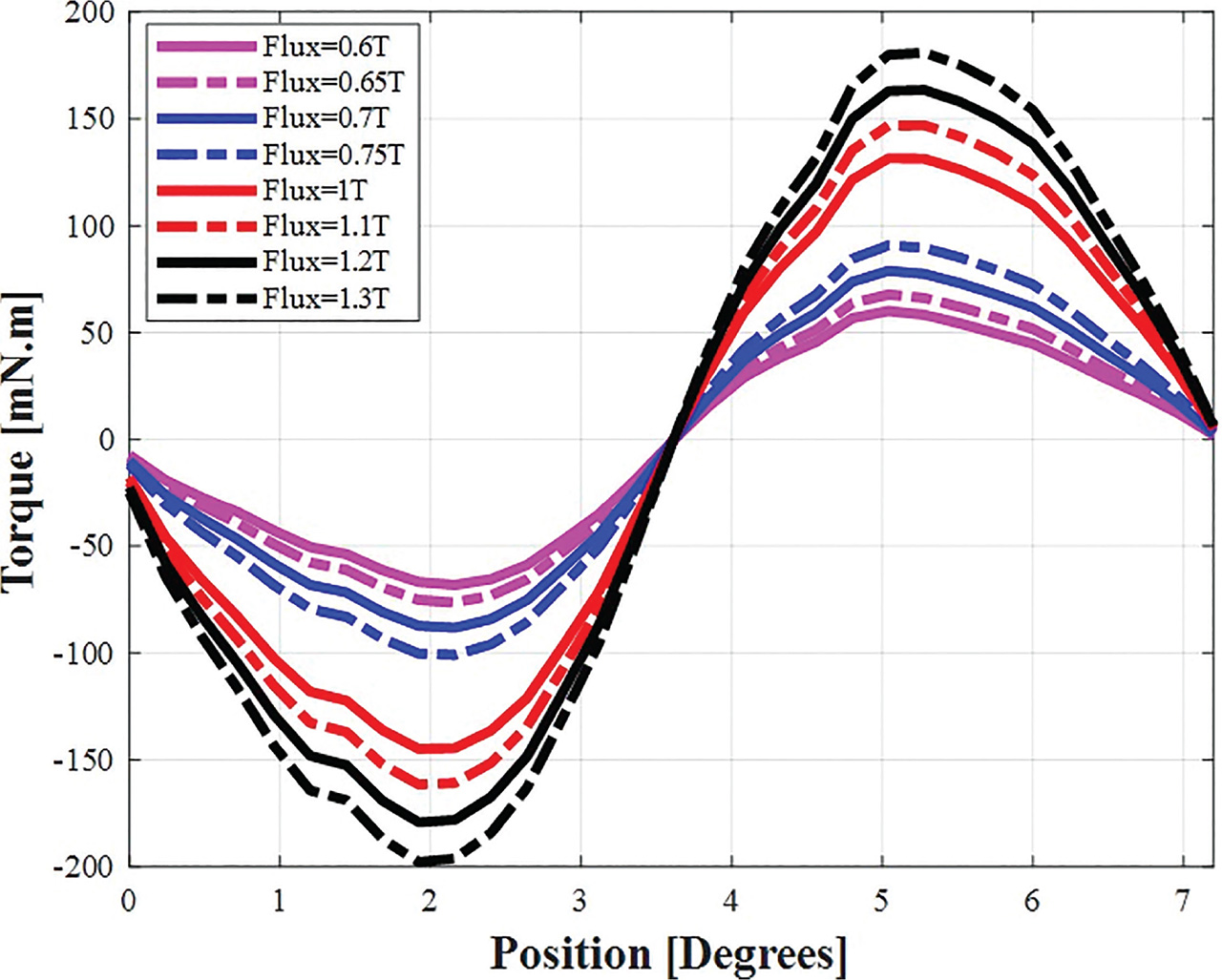
Figure 15:
Motor torque for different magnetic flux densities.
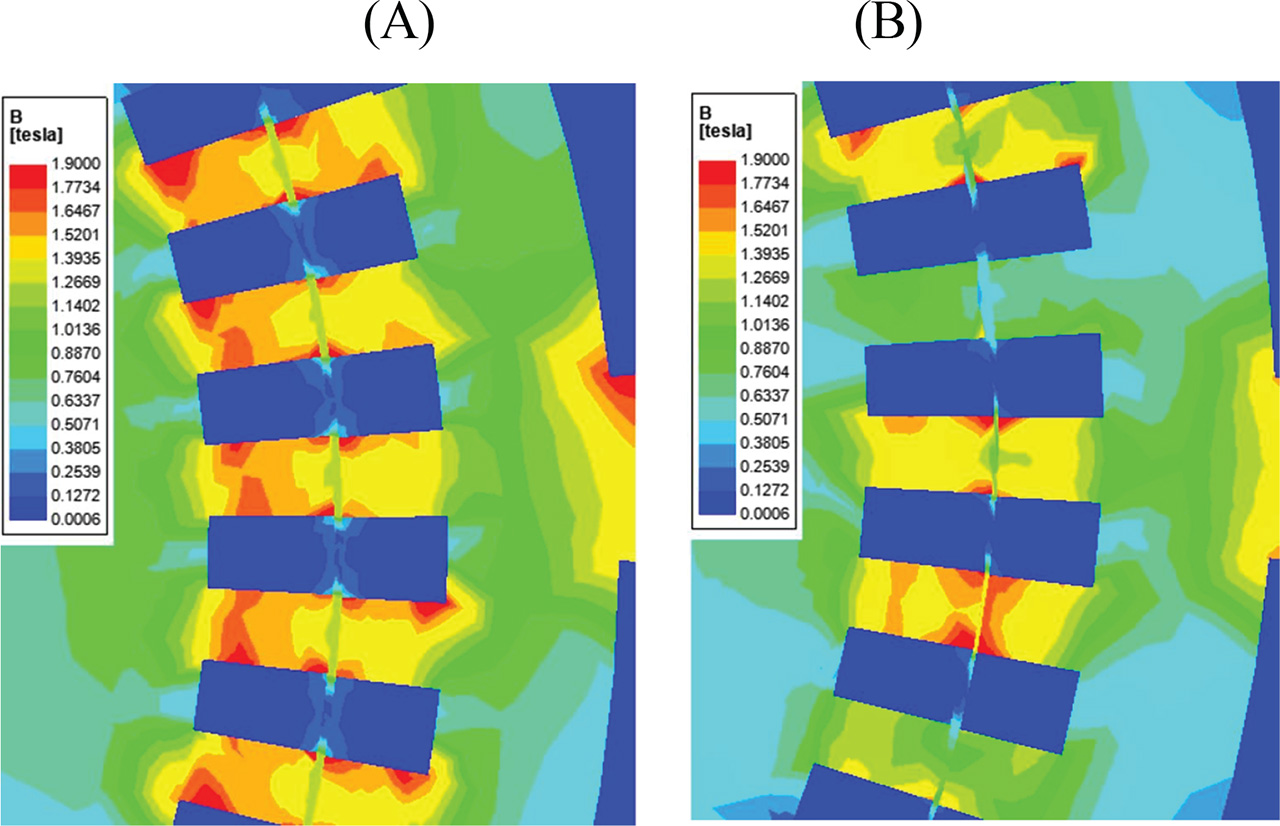
Figure 16:
Flux density distribution for two different air gaps- (A) 0.1 mm and (B) 0.05 mm.
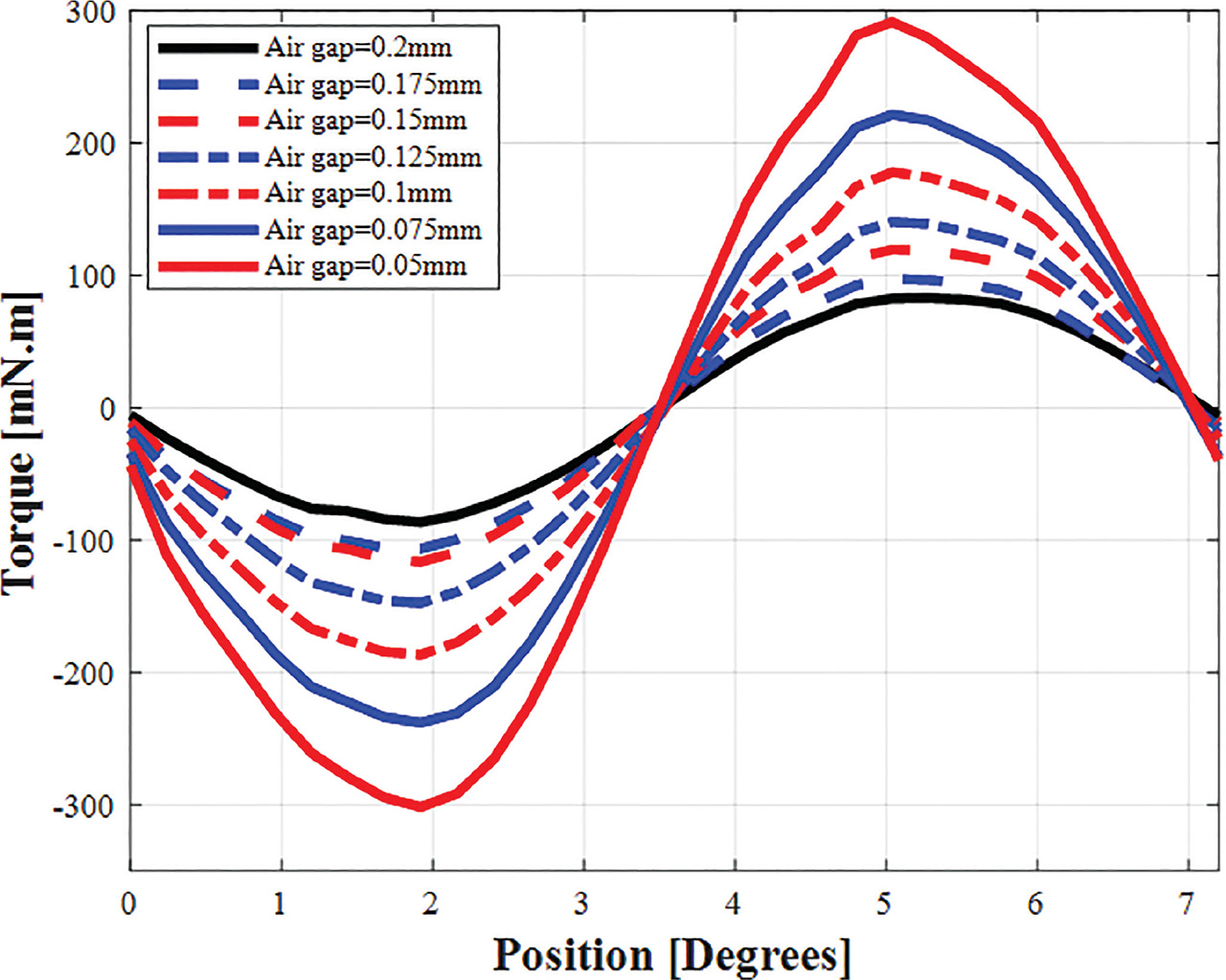
Figure 17:
Motor torque for different air gaps.
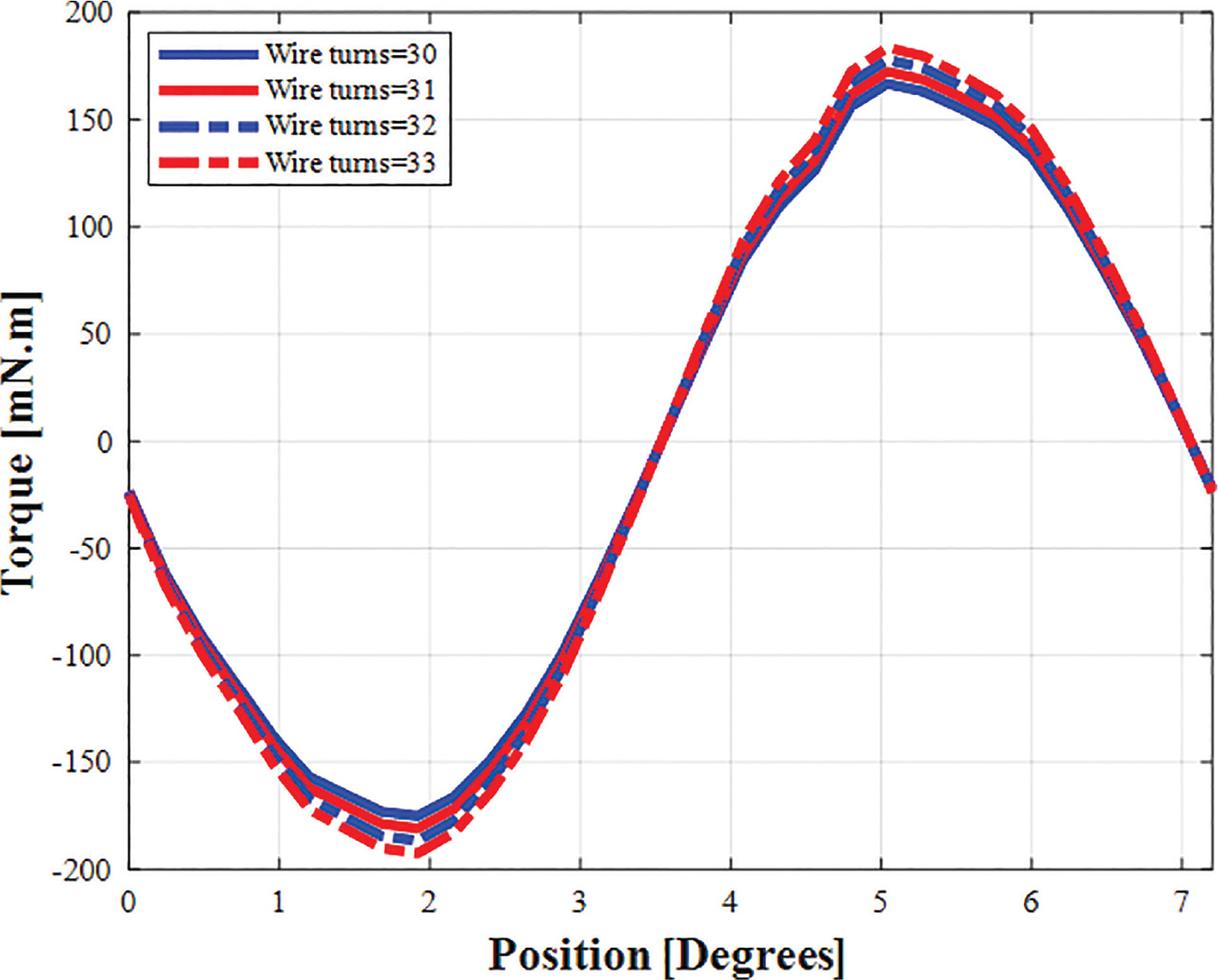
Figure 18:
Motor torque for different wire-turns in stator coils.
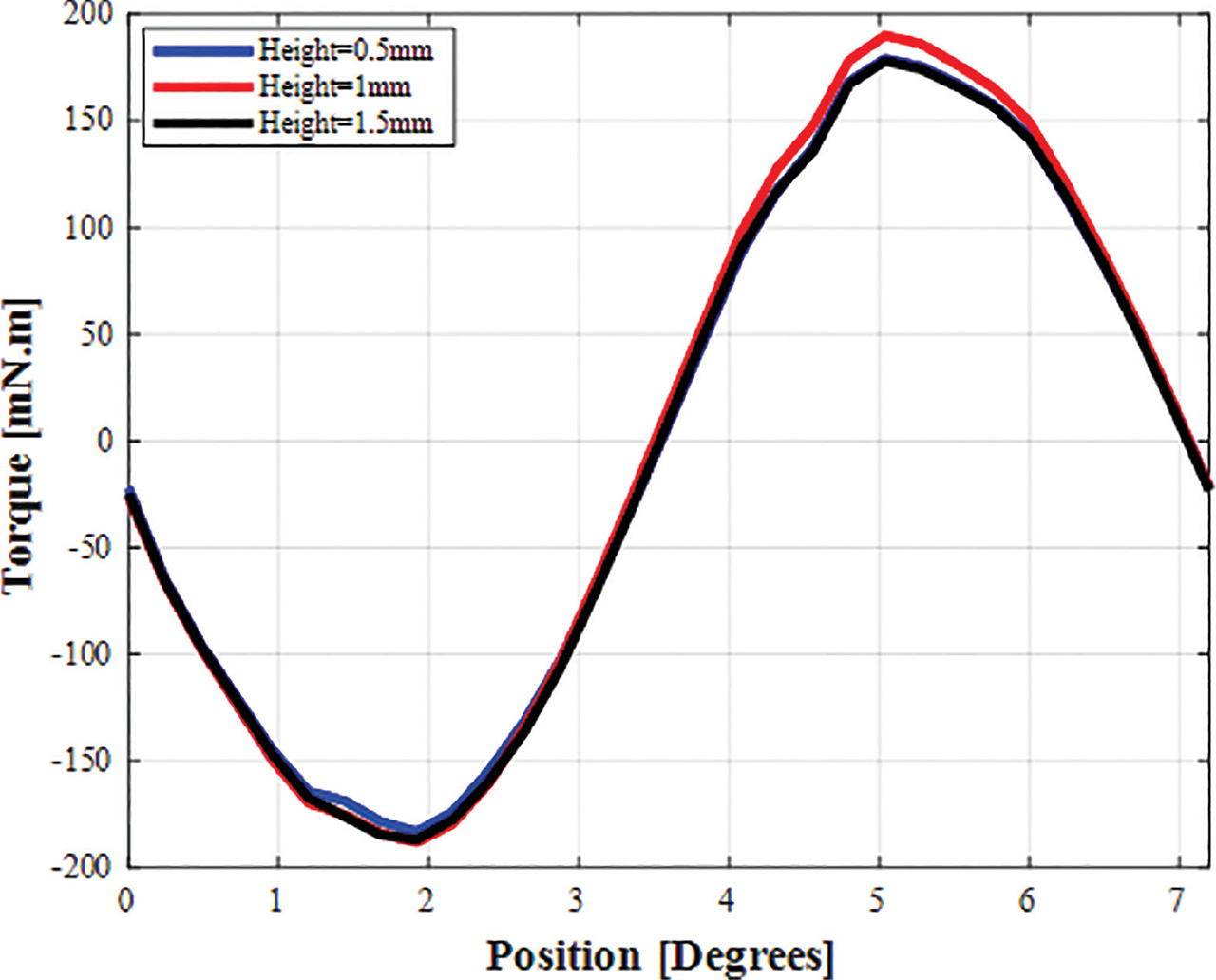
Figure 19:
Rotor teeth depth influence on motor torque.
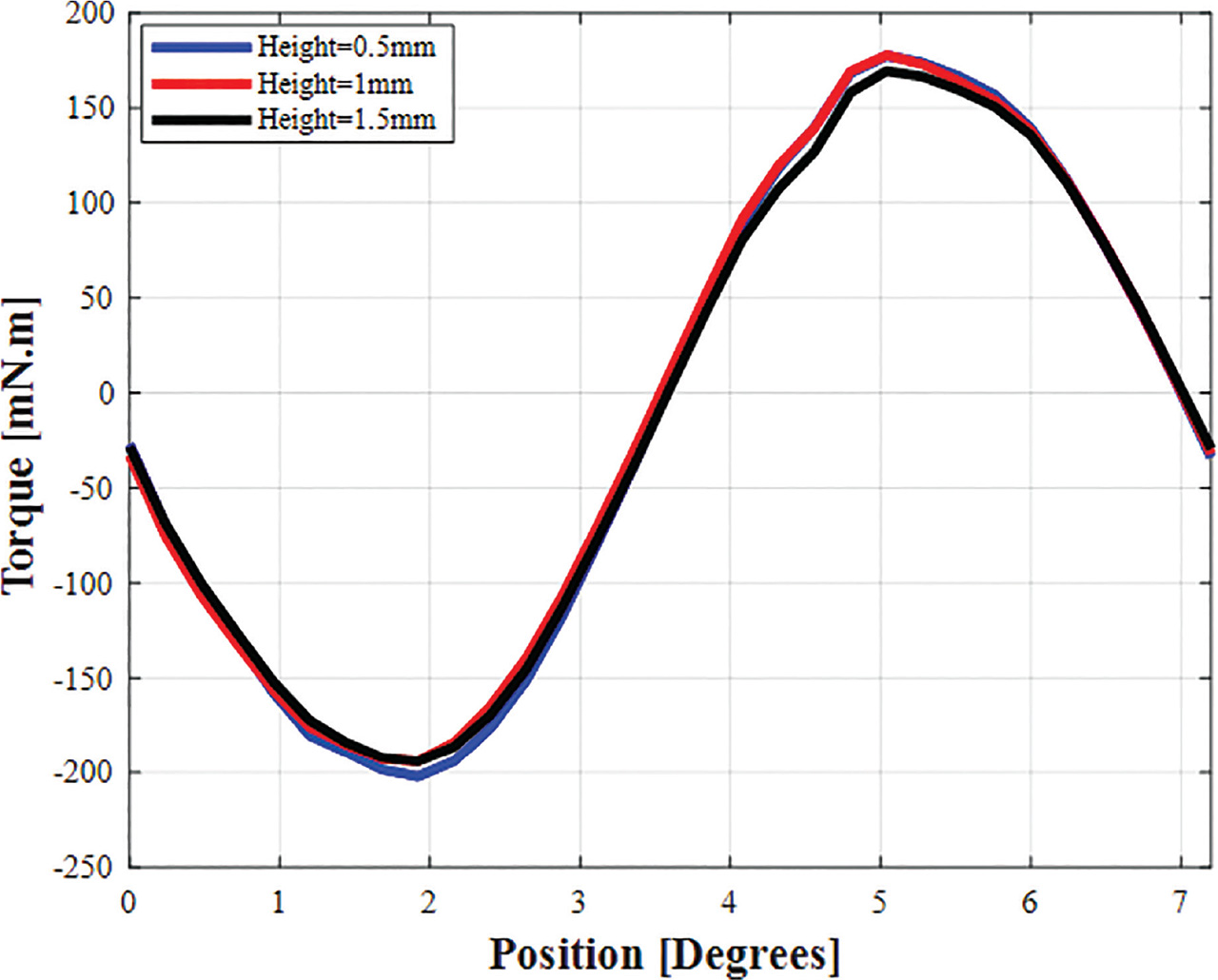
Figure 20:
Stator teeth depth influence on motor torque.
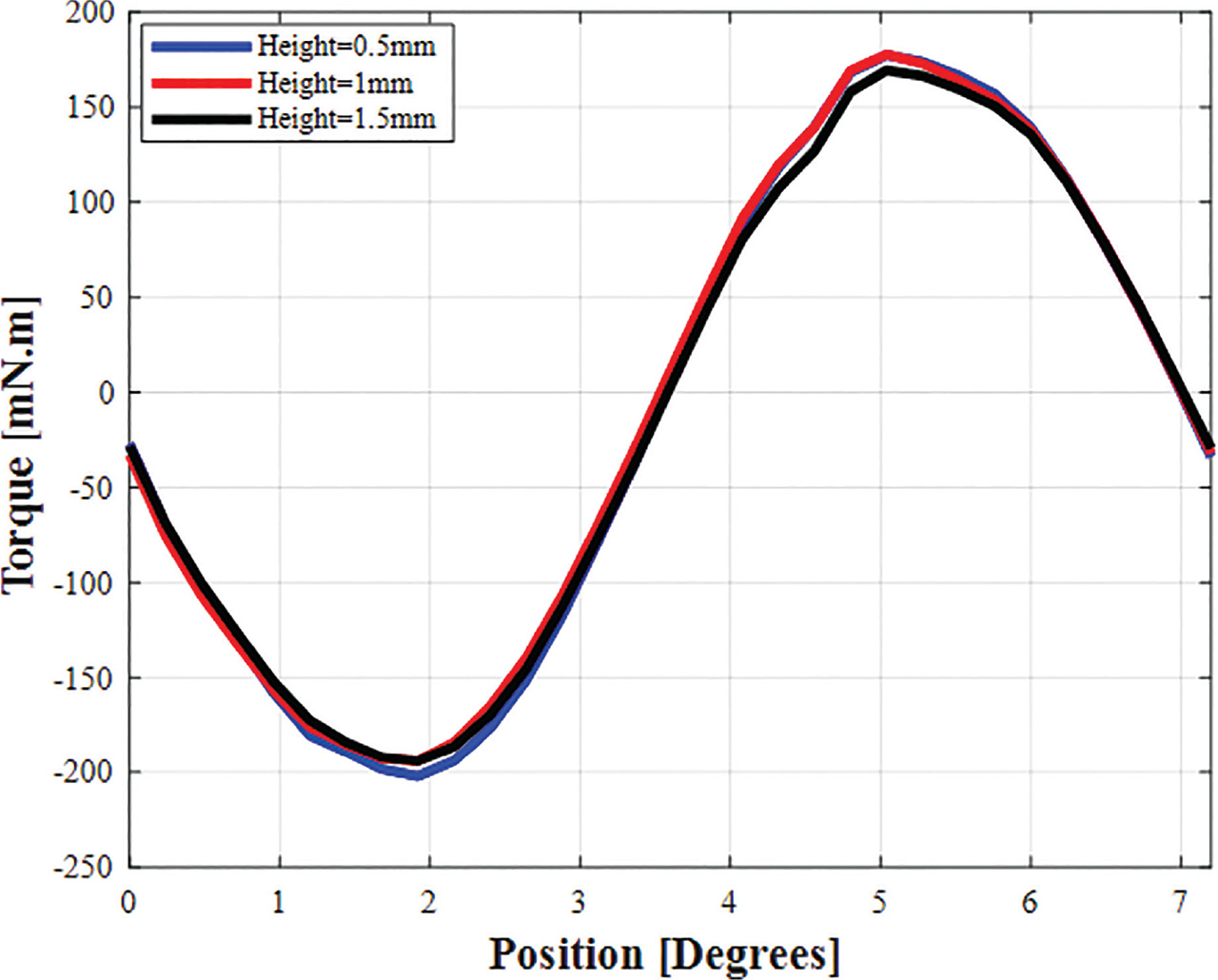
Figure 21:
Both rotor and stator teeth depth influence on motor torque.
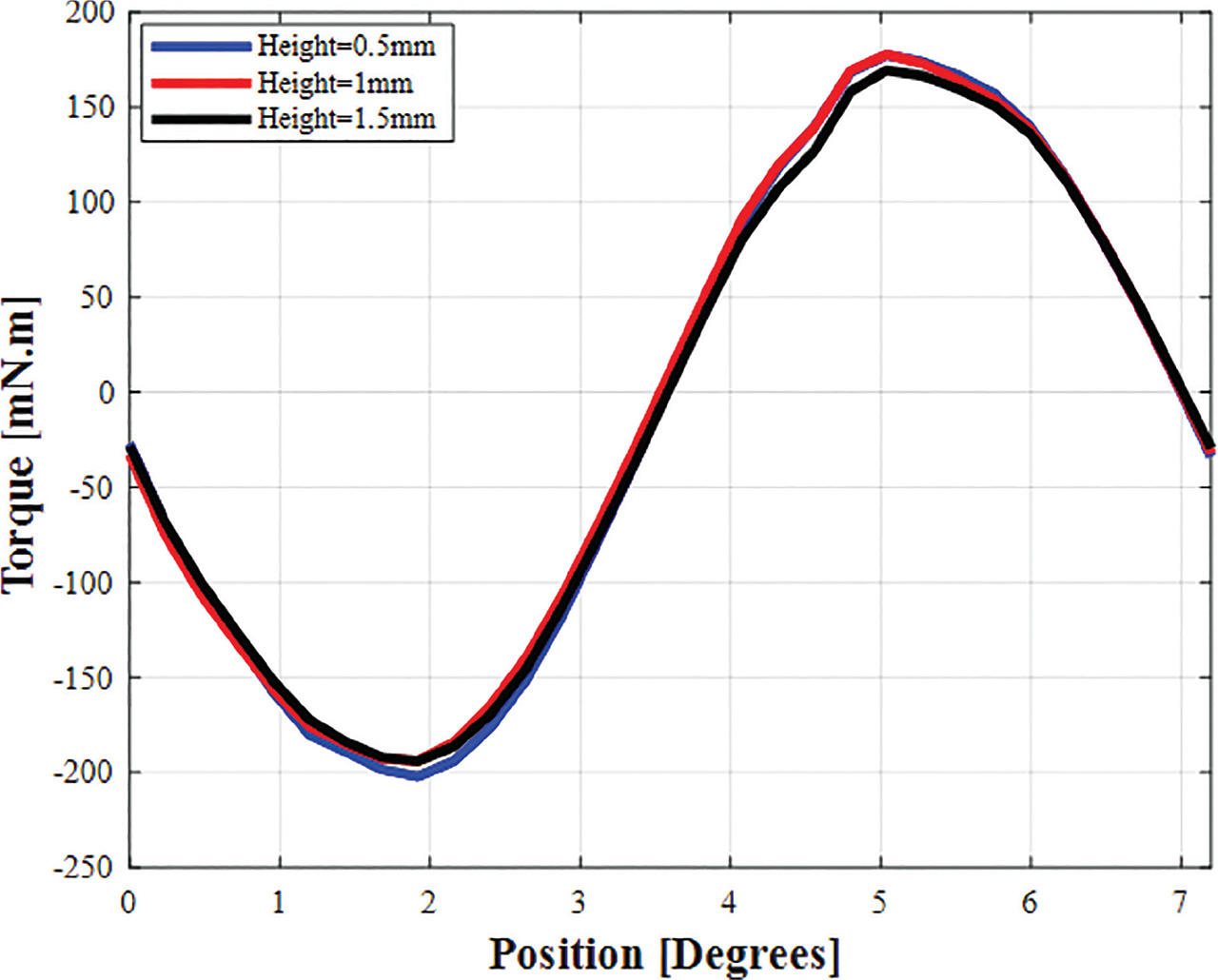
Figure 22:
Motor torque for different teeth width.
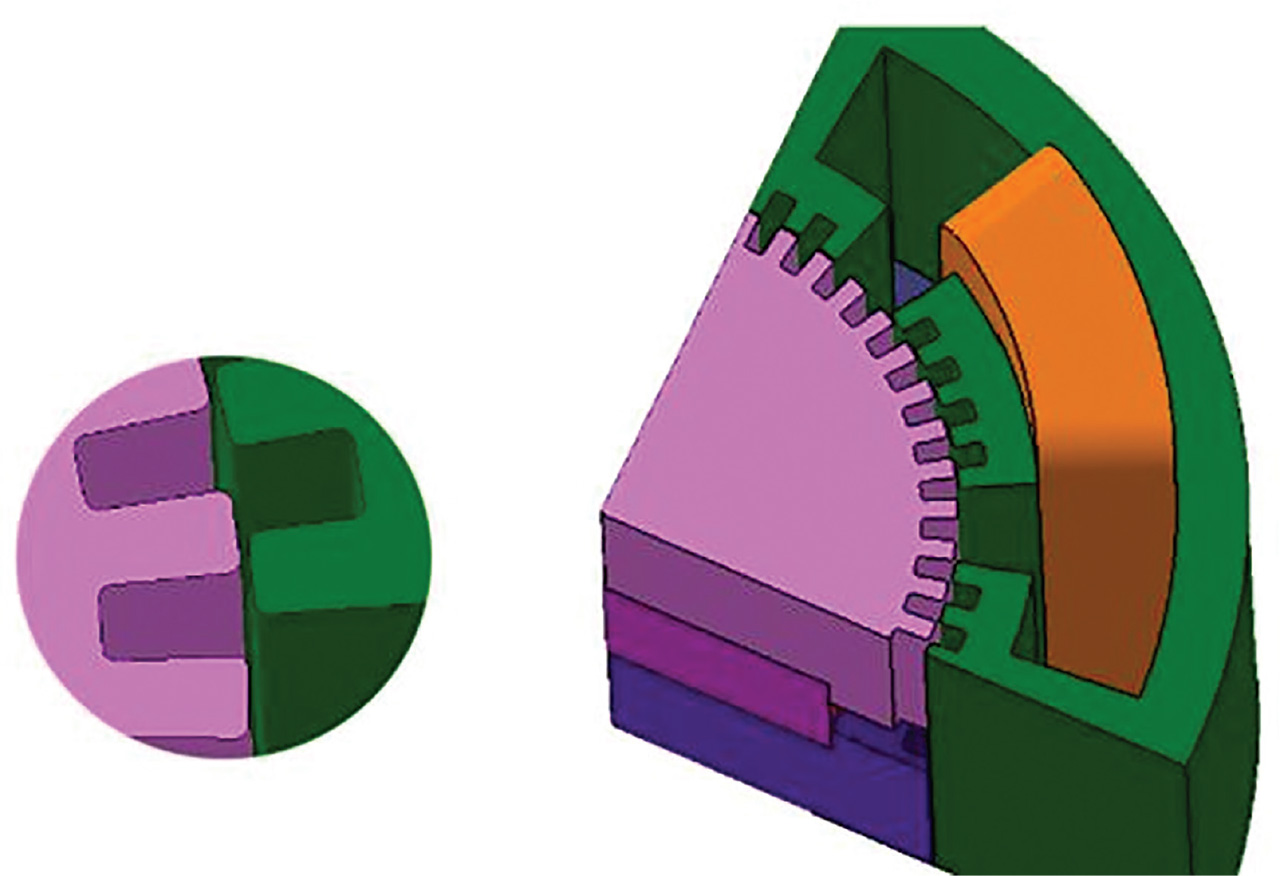
Figure 23:
Fillet on the teeth edges.
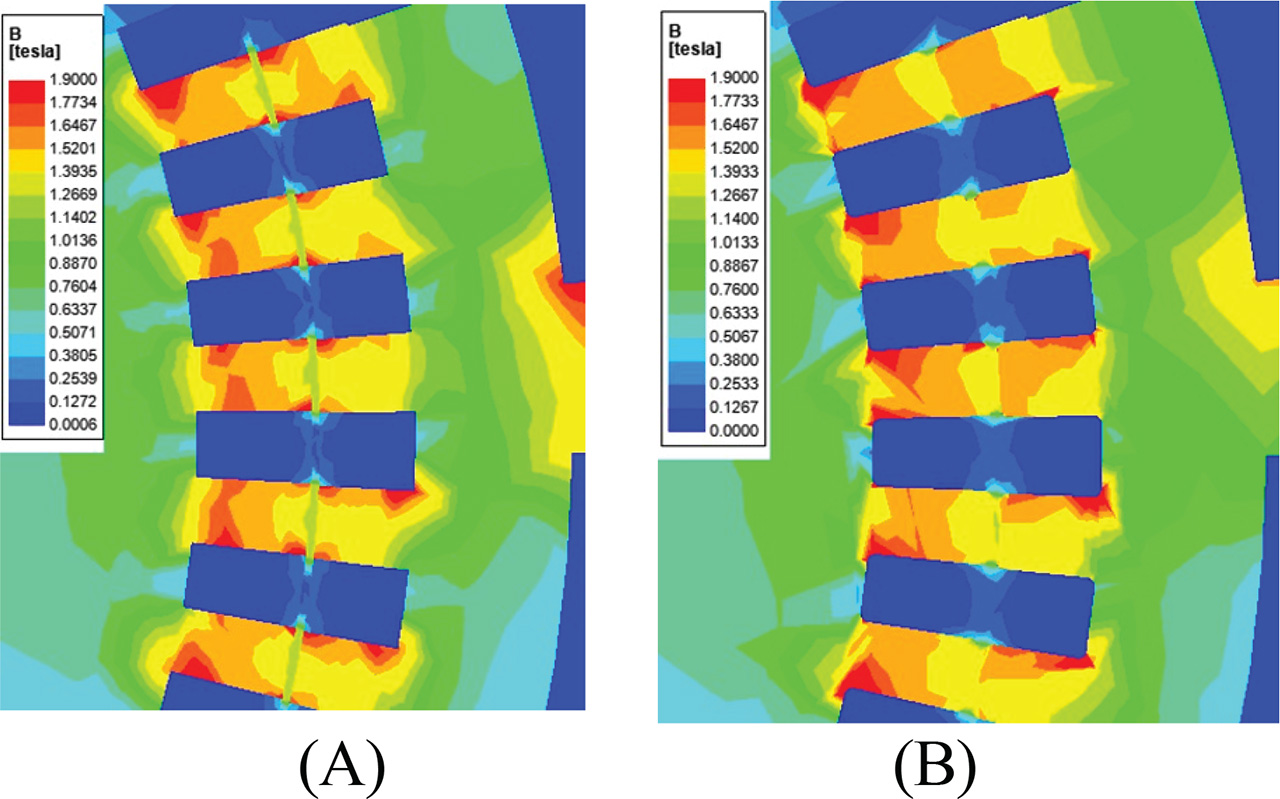
Figure 24:
The effect of teeth fillet on flux distribution, (A) Fillet radius = 0 mm and (B) Fillet radius = 0.125 mm.
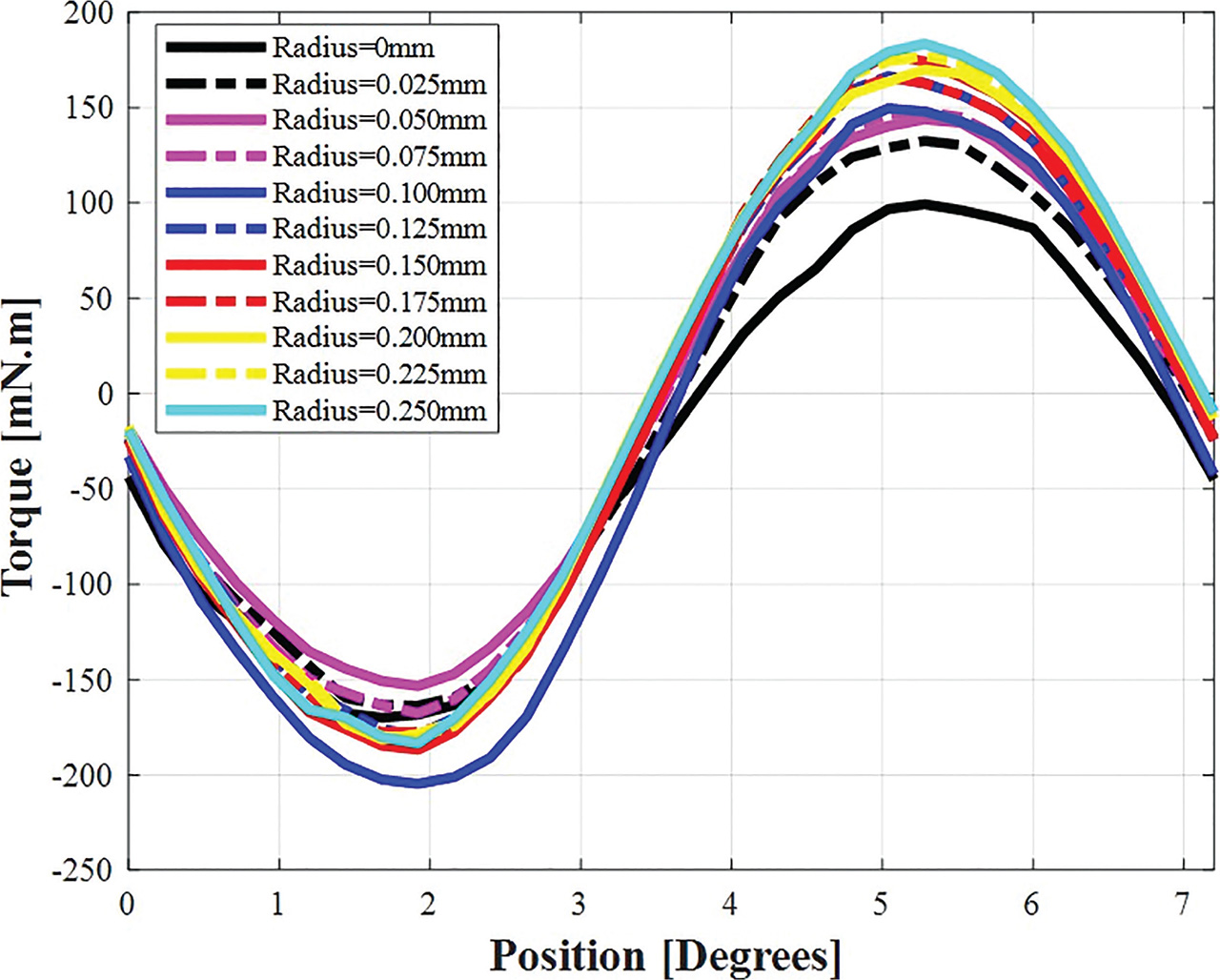
Figure 25:
Motor torque with different fillet radiuses.
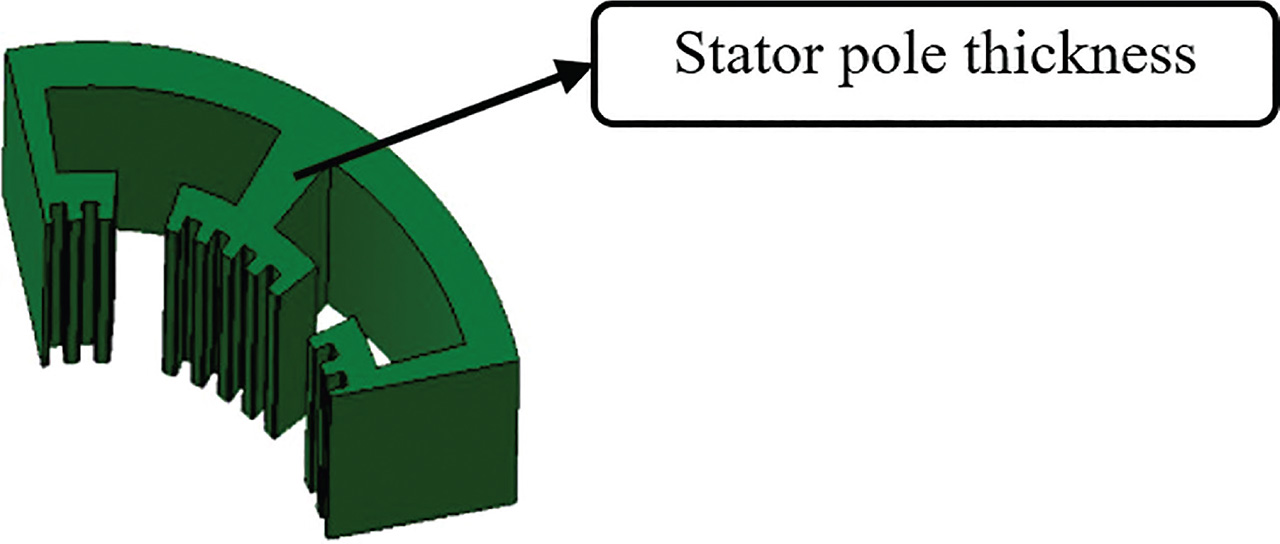
Figure 26:
Stator pole thickness.
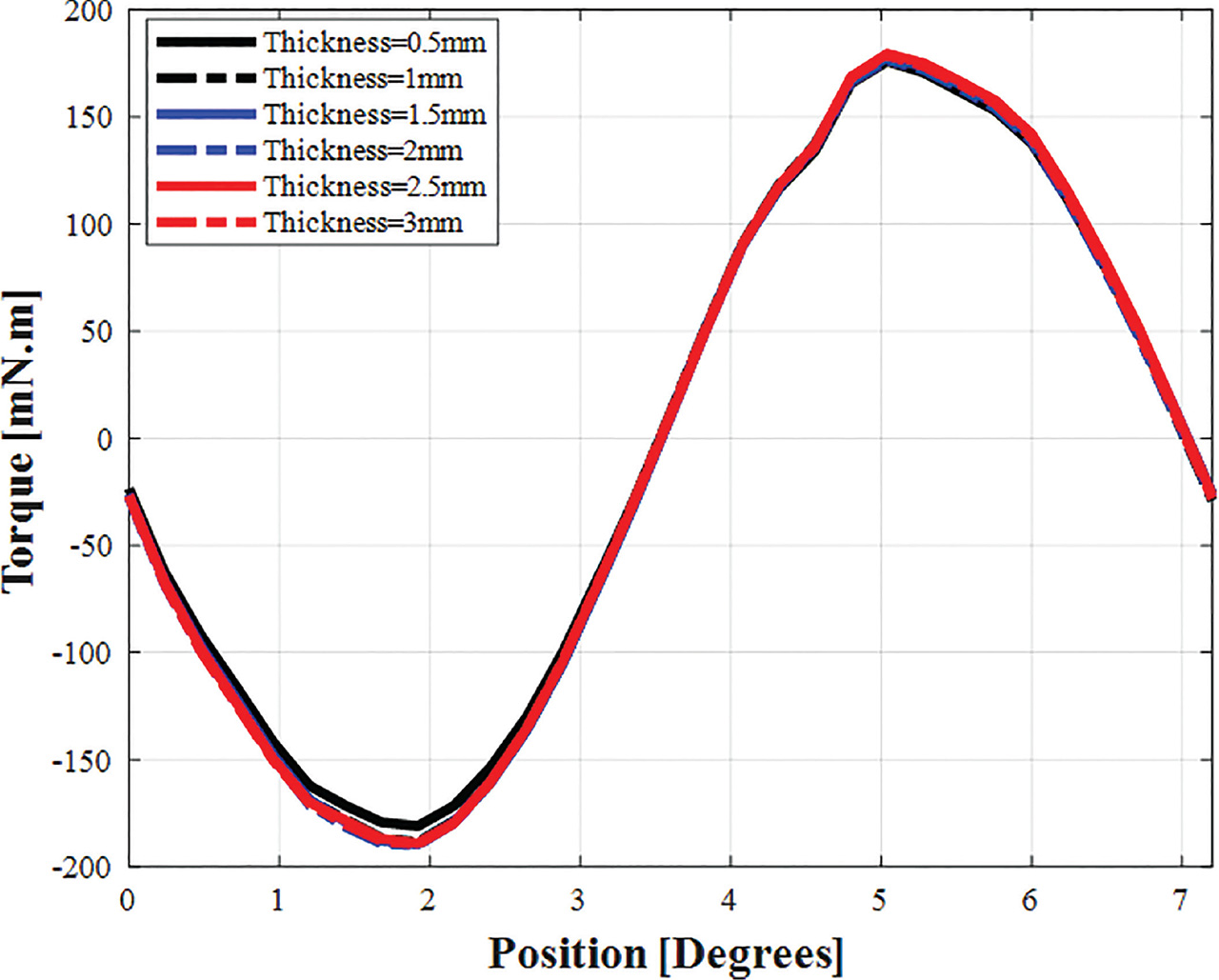
Figure 27:
Stator pole thickness influence.