
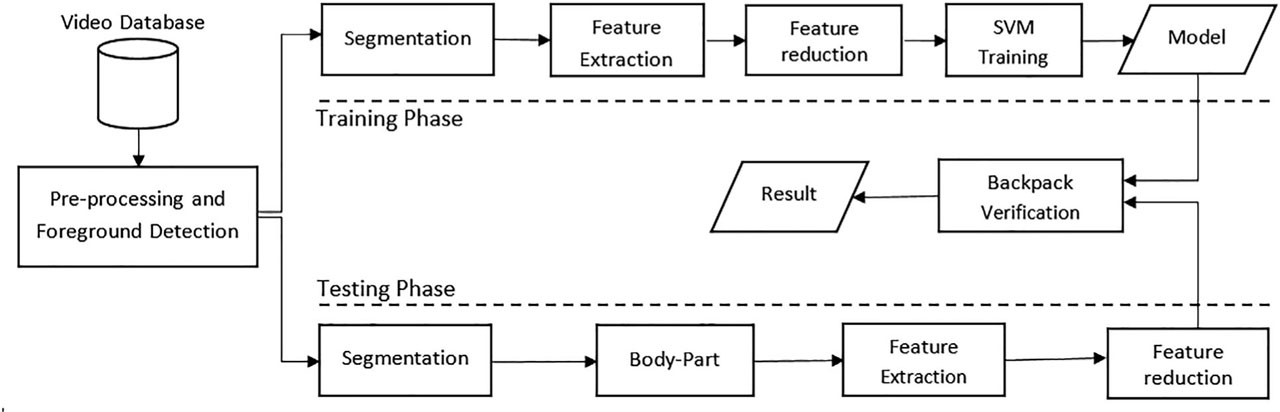
Figure 1:
Backpack detection using multi-scale superpixel segmentation and body-part method.
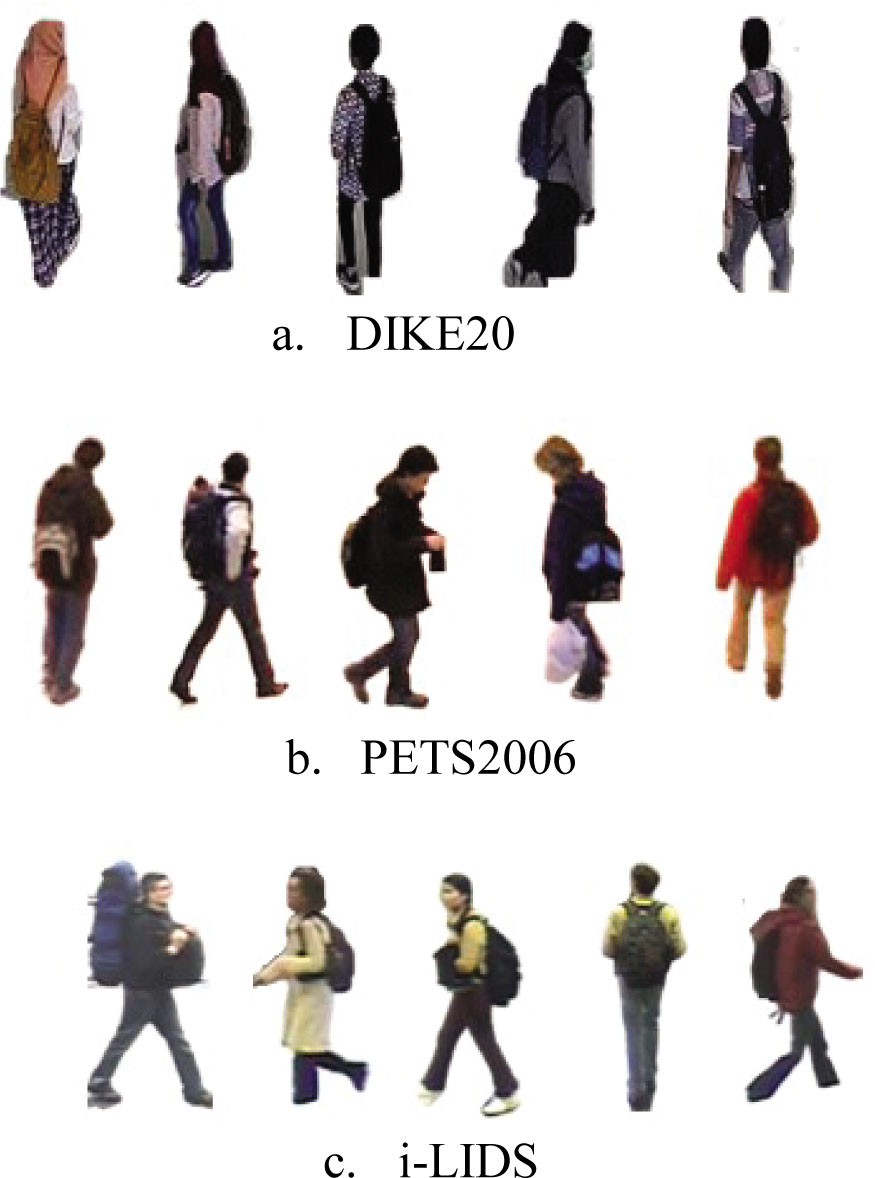
Figure 2:
The resulting image of the foreground detection process on each dataset.
Algorithm :
SLIC segmentation
| 1: | Centroid Initialization Ck=[lk,ak,bk,xk,yk]T |
| 2: | Put centroid in n × n window |
| 3: | repeat |
| 4: | for each cluster Ck do |
| 5: | Group each pixel in the nearest centroid (based on measurement of pixel distance to centroid) |
| end for | |
| 6: | Update centroid |
| 7: | until centroid unchanged |
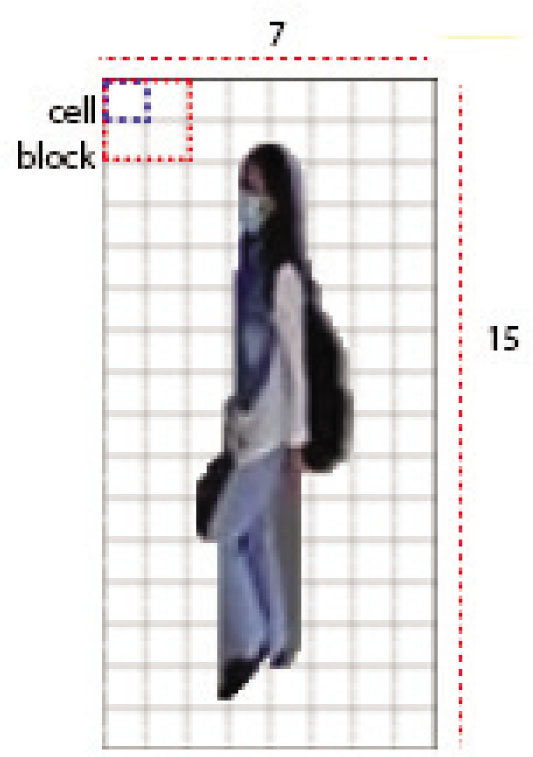
Figure 3:
Cell and block in 64 × 128 image.
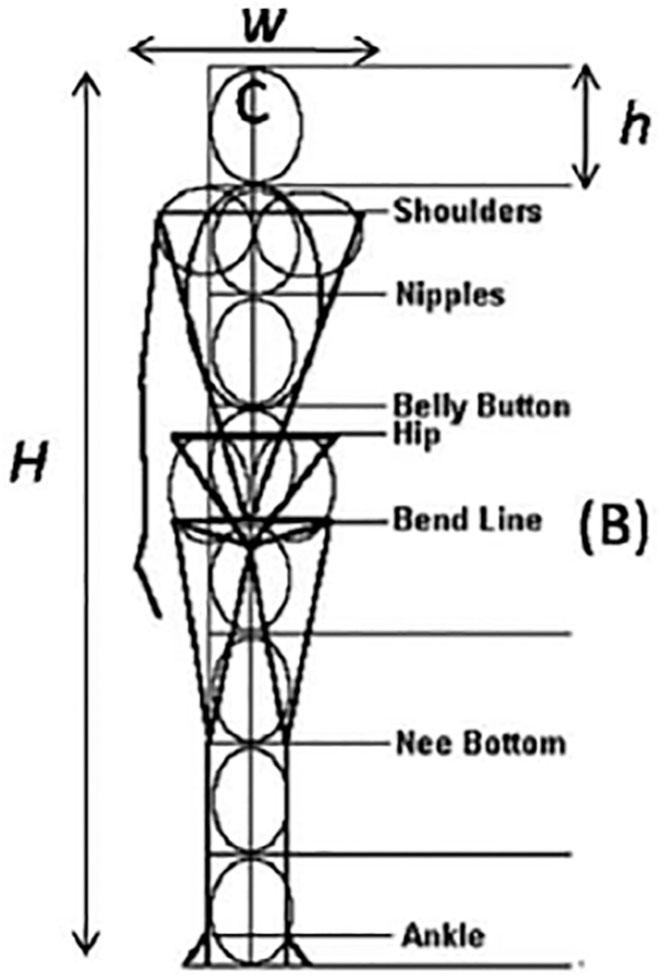
Figure 4:
Human Body Proportion Model [29].
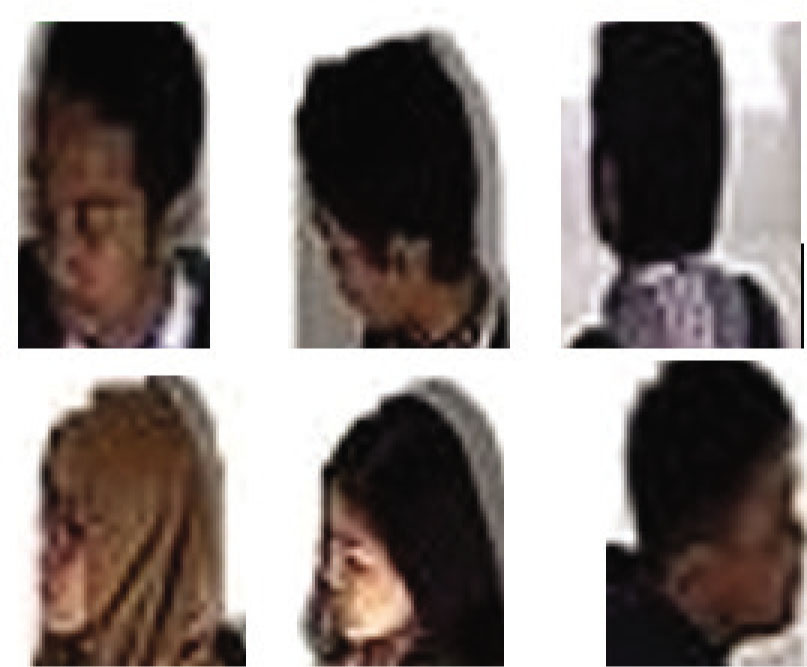
Figure 5:
Heads segment sample.
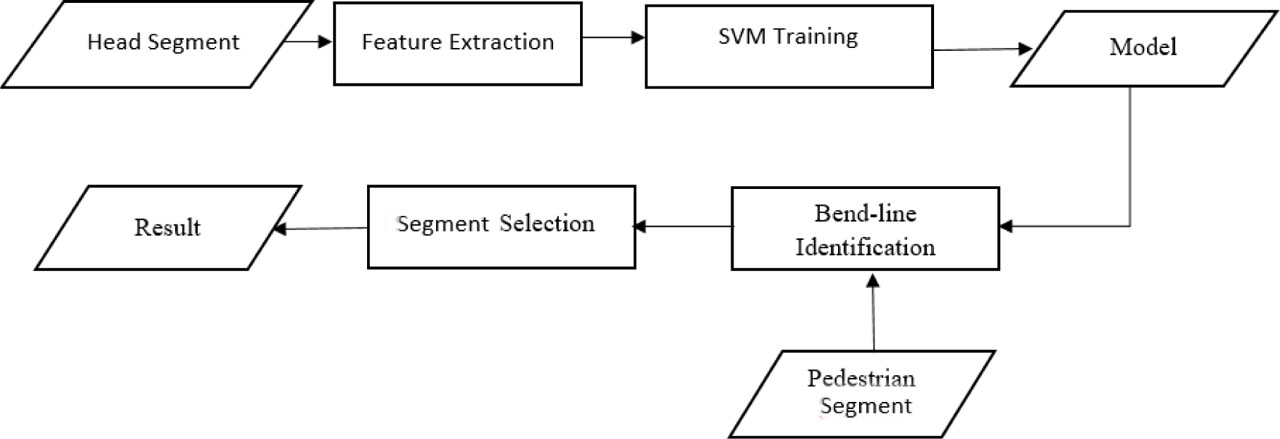
Figure 6:
Bend-line identification and superpixel selection process.
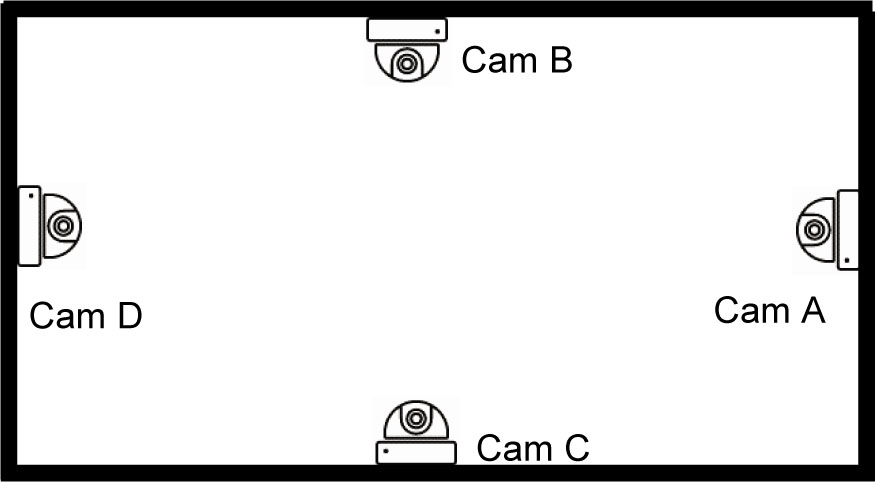
Figure 7:
Camera configuration in the acquisition room.
Table 1:
Number of test images in each dataset
| Dataset | Test Images |
|---|---|
| DIKE20 | 271 |
| PETS2006 | 323 |
| i-LIDS | 185 |
| Total | 779 |
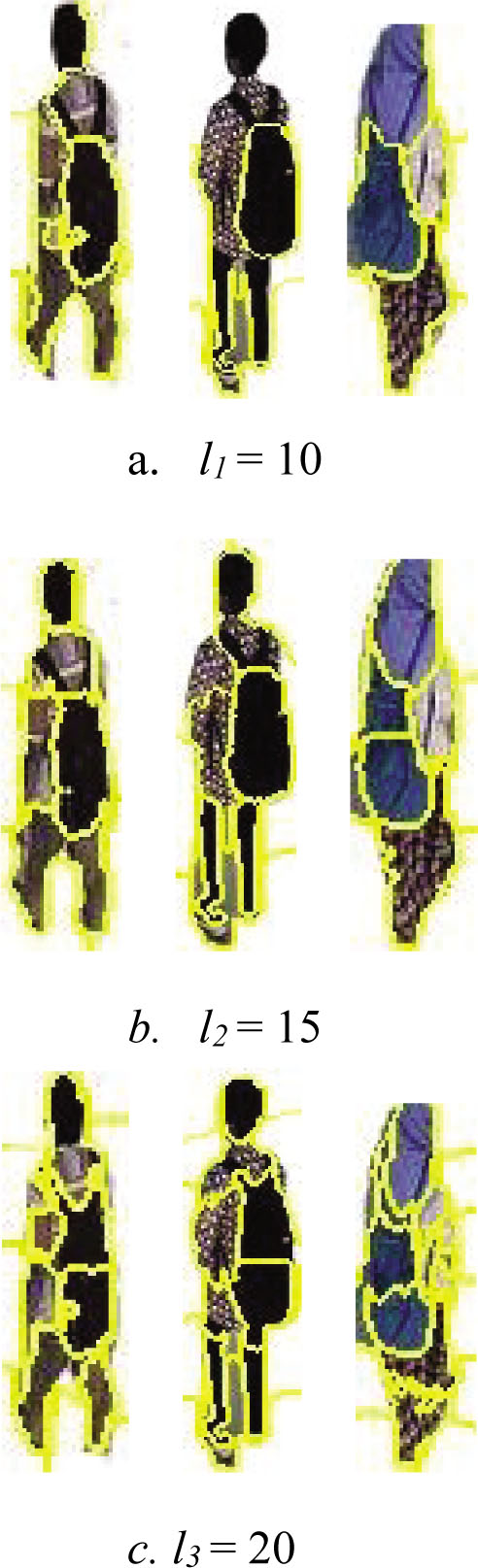
Figure 8:
The segmentation results on the l1, l2, and l3 scales.
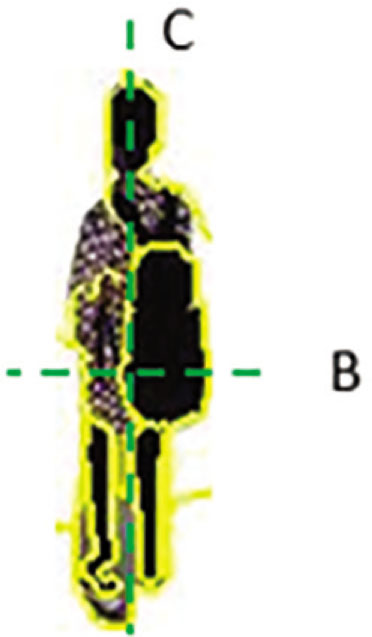
Figure 9:
The result of bend-line determining process on image with scale l2.
Table 2:
The selected superpixels and their location based on bend line
| Superpixels | Location |
|---|---|
 | B + 3h |
 | B + 2h |
 | B + 2h |
 | B + h |
 | B + h |
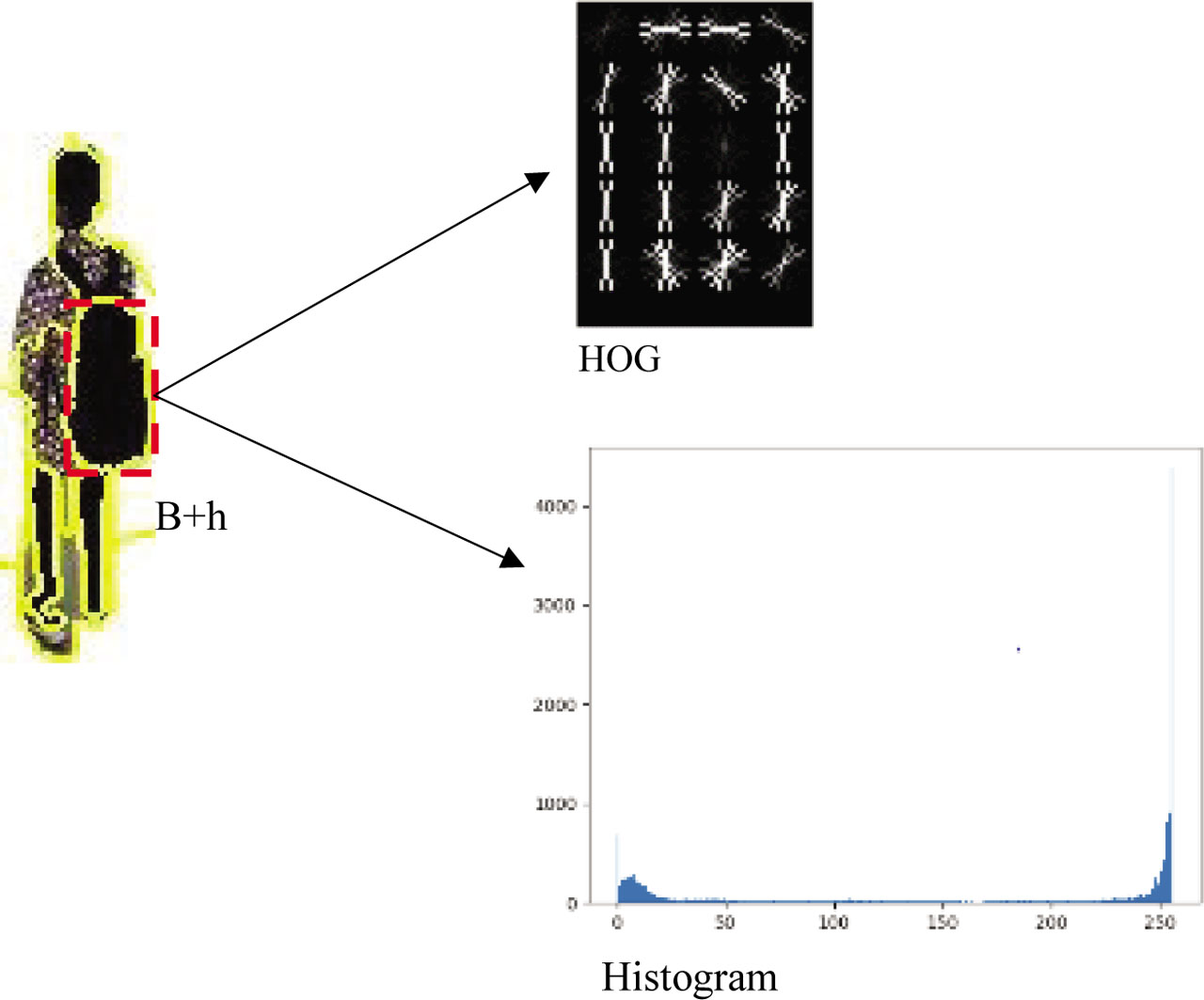
Figure 10:
Example of Features Extraction on Selected Superpixels (B+h).
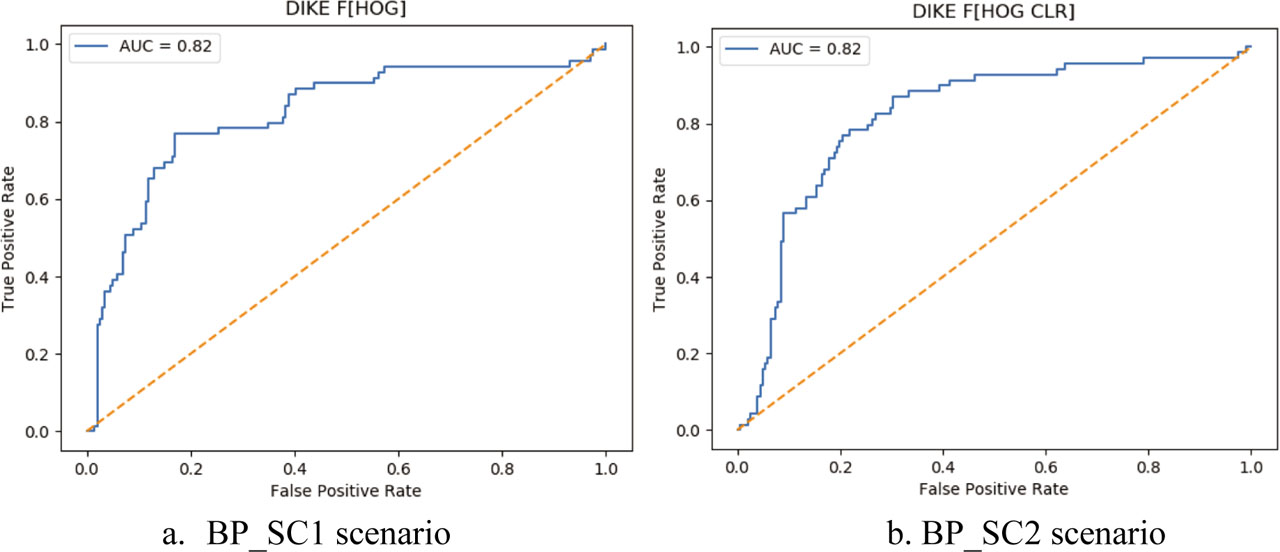
Figure 11:
The ROC curve for each scenario on the DIKE20 dataset.
Table 3:
The precision, recall, and F1 scores on DIKE20 dataset
| Methods | Precision | Recall | F1 score |
|---|---|---|---|
| BP_SC1 | 46% | 79% | 60% |
| BP_SC2 | 52% | 80% | 63% |
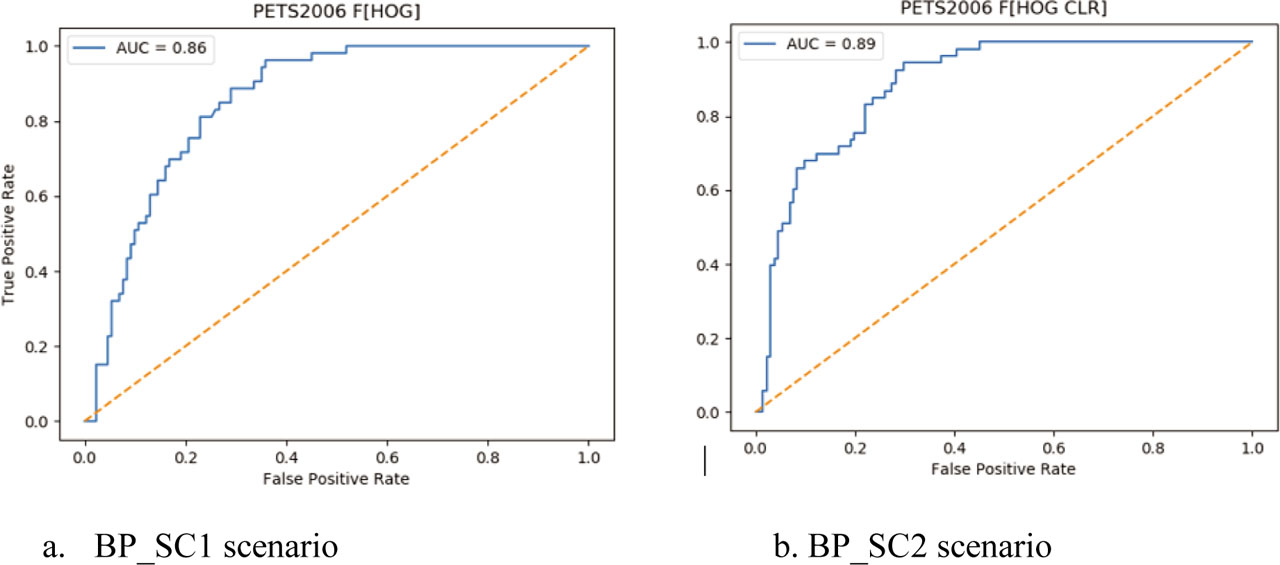
Figure 12:
The ROC curve for each scenario on the PETS2006 dataset.
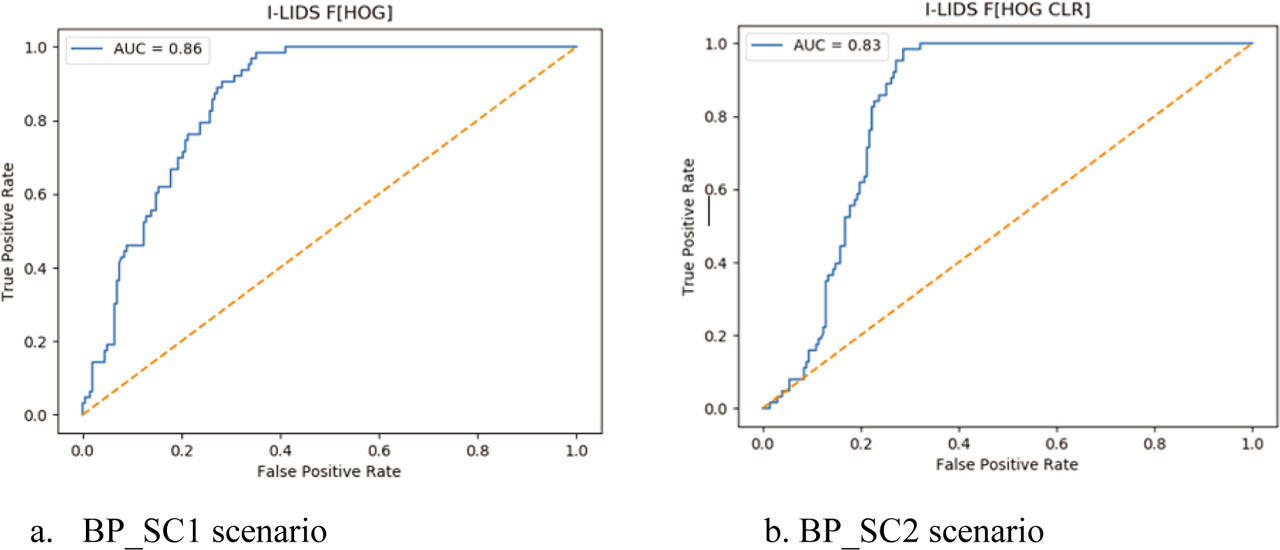
Figure 13:
The ROC curve for each scenario on the i-LIDS dataset.