
1. Introduction
Central banks in developed countries increasingly turn to big data to predict economic indicators. The Federal Reserve Board (FRB) uses textual data to forecast financial market trends [Boukus and Rosenberg, 2006; Heston and Sinha, 2017]. The Bank of England uses internet search data such as the house price index and unemployment rates to predict economic conditions [McLaren and Shanbhogue, 2011]. The European Central Bank (ECB) also leverages Internet search data for economic forecasting. The Bank of Japan also explores using innumerable highly volatile economic indicators for monthly GDP forecasting [Okazaki and Atsuga, 2015]. The shift toward big data is driven by its unique characteristics, such as scale, variety of sources, volume, diversity, and real-time nature, which set it apart from traditional data.
Big data is distinguished from traditional data by its unique characteristics, including its scale, variety of sources, volume, diversity, and most importantly, its real-time nature. For instance, point of sales (POS) data, used across various businesses, including distribution, home appliances, and food, provide real-time information on product distribution routes, inventory, and retail sales. This urgency and relevance have led to efforts to interpret economic trends from consuming actual conditions and trends based on POS data [Suimon, 2021].
Numerous efforts have been made to conduct economic analysis using a wide range of transportation data [Japan Cabinet Office, 2016]. Previous studies have focused on analyzing logistics and economic indicators and have argued that there is a positive correlation between maritime container volume and GDP [Elem and Ejem, 2020]. This correlation is attributed to increase in transportation demand due to increased production, capital investment, and inventory buildup due to economic growth. By contrast, transportation demand decreases during periods of economic stagnation.
The potential of logistics data, a subset of big data, to transform economic forecasting is promising and intriguing. Its real-time accessibility enables earlier and more frequent acquisitions than traditional economic indicators such as GDP. Additionally, logistics data encompass a broad spectrum of local and global economic activities, offering comprehensive insights into transportation routes and item volumes across diverse regions and industries. This presents an exciting and extensive prospect for economic forecasting.
This research examines the viability of utilizing logistics data to predict economic indicators by establishing a causal relationship between transportation data and GDP. The primary objective of this research is to generate interest in the potential of logistics data for economic forecasting.
2. Literature review
Michail [2020] researched the connection between the quantity of goods transported through maritime routes and the world’s GDP. Using a vector error correction model (VECM), the study found that the world’s GDP influences the volume of goods transported through maritime routes. Valentine et al. [2013] highlighted developing countries’ increasing role in driving maritime (seaborne) trade growth. Munim and Schramm [2018] conducted a study on the seaports and trade connections of 91 nations, concluding that can increase maritime trade and economic growth. However, as developing countries become more prosperous, the relationships tend to weaken as developing countries become more prosperous.
Wang et al. [2021] conducted a study using the data from 30 provinces in China spanning from 1997 to 2017. The study found a connection between freight demand and regional economic development. Similarly, Yang [2021] showed that the freight volume growth contributed to China's economic expansion based on a data from 1989 to 2018.
In another study, Kawasaki et al. [2021] examined the correlation between economic indicators in the USA and the volume of maritime containers from East Asia. Their research revealed that the volume of containers loaded in China could be forecasted by the number of construction permissions in the USA as these containers mainly transport housing-related products. Additionally, the USA industrial production index helped to predict the volume loaded in Korea and Japan as these containers primarily carry industrial products.
The studies prove a solid and intricate connection between global economic growth and maritime volume. These findings are significant as they enhance our understanding of economic growth factors and the potential use of logistics data in economic forecasting. Various countries have extensively studied the relationship between air transportation and economic growth. Multiple studies have shown a positive correlation between the expansion of air transport and economic development. For example, Islamoglu [2021] confirmed this relationship in Turkey, Brida et al. [2016a,b] in Mexico, and Yao and Yang [2012] in China.
Zhang and Graham [2020] reported that the relationship between air transport and economic growth is often bidirectional, with air transport contributing to economic growth and vice versa. However, they stated that the direction of causality may vary depending on the country’s development level, with less developed economies more likely to exhibit bidirectional causality.
Kiracı and Bakır [2019] examined the causal link between air transport and economic growth, focusing on income levels in 70 countries from 1990 to 2016. Their findings indicated that GDP has a notable influence on air transport, and they observed that the direction of causal relationships between GDP and air transport, as well as air transport and GDP, varied based on the countries’ income levels.
Numerous academic studies have investigated the causal relationship between air transport and economic growth using Granger causality tests and impulse response analysis (IRA). The results have shown variations across regions and countries. For example, Brida et al. [2018] observed a one-way causality between GDP and air transport in Argentina and Uruguay. Mukkala and Tervo [2013] reported consistent causality from growth to air traffic, with peripheral regions showing causality from growth in European regions. Nguyen [2023] argued that most Asian regions exhibited two-way causality. Brida et al. [2016a,b] found a one-way causality between air transport and GDP in Italy. Aprigliano Fernandes et al. [2021] also confirmed two-way causality in Mexico and remote towns in Brazil’s Amazon region, with GDP having a more substantial impact. Additionally, Button and Yuan (2013) reported that airfreight transport positively drove for local economic development in the USA. The studies emphasize the complex and the context-specific connection between air transportation and economic growth.
Kiracı and Bakır [2019] classified 70 countries according to their income levels from 1990 to 2016 and conducted an empirical analysis. Their findings indicated that GDP has a significant impact on air transport. The study revealed that the causal relationships between GDP and air transport, whether unidirectional or bidirectional, vary based on the countries’ income levels. Similarly, Nisansala and Mudunkotuwa [2015] presented a bidirectional (GDP to air –transportation and air transportation to GDP) long-run causal relationship between GDP and air transportation. On the contrary, Hakim and Merkert [2016] found a one-way causal relationship between GDP and air transport, emphasizing a long-term connection with air freight volumes.
Reviewing the impact mechanism and causal relationships between air transport and economic growth reveals a reciprocal relationship, particularly in less developed economies. This relationship is influenced by market access, with air transport shaping economic geography and productivity [Deng, 2013; Lenaerts et al., 2021]. Higgoda and Madurapperuma [2019] reported that the relationship between air transport and economic growth is reciprocal, particularly in less developed economies. However, Forsyth [2020] stated that measuring air transport’s broader economic benefits remains challenging due to difficulties.
Extensive research has investigated the relationship between transportation volume and GDP. However, most of these studies have been constrained in their geographic scope, often centering on individual nations or regions, and have not sufficiently accounted for discrepancies in transportation modalities.
3. Aims and hypothesis developments
This research’s primary objective was to comprehensively examine the relationship between transportation volume and GDP. The analysis will encompass maritime and air cargo transportation volume, GDP data for the global aggregate, the top three GDP countries: the USA, China, and Japan. By scrutinizing these countries within the context of their GDP, the goal is to elucidate any disparities between transportation volume and GDP at both the global- and country-specific levels. Moreover, this research seeks to explore the disparities in causality across different countries and transportation modes. It is postulated that this inquiry will certainly yield valuable insights into the effective use of logistics data for forecasting economic indicators. The investigation will assess the correlation between transport volume and GDP for the global and four specific country contexts. This analysis will encompass correlation, unit root tests, correlation coefficient calculations, Granger causality tests, and impulse response function (IRF) analysis.
4. Methods
4.1. Data
This research examines specific variables listed in Table 1 and their measurement and data sources. Economic growth is measured in terms of GDP in constant US dollars, while air transport is assessed by air freight volume in million ton-kilometers. On the contrary, maritime (seaborne) transport is evaluated based on container port traffic in twenty-foot equivalent units (TEUs). All data were sourced from the World Bank Group. The annual maritime transport volume is available from 2000 to 2021, and the annual air transport volume is accessible from the 1970s to 2021. To align data length, we used the data from 1974 to 2021. Since transport volume data are available annually, GDP data are also available annually.
Table 1.
Details about variables, measurements, and source of data
| Variables | Measurements | Source = World Bank Group URL |
|---|---|---|
| GDP | In constant US dollars (US$) | https://data.worldbank.org/indicator/NY.GDP.MKTP.KD |
| AIR | In a million-ton-kilometers | https://data.worldbank.org/indicator/IS.AIR.GOOD.MT.K1 |
| Maritime (SEA) | In TEU | https://data.worldbank.org/indicator/IS.SHP.GOOD.TU |
Figure 1 shows the growth rate of each dataset, with 2000 as the base year. There is a noticeable correlation between air and maritime transport volumes and GDP as the growth rates of air transport volume and GDP have been synchronized since 2000. There can be a spurious correlation between the data. This correlation may occur when comparing data that has an unsteady upward trend, where each series increases over time but is unrelated.
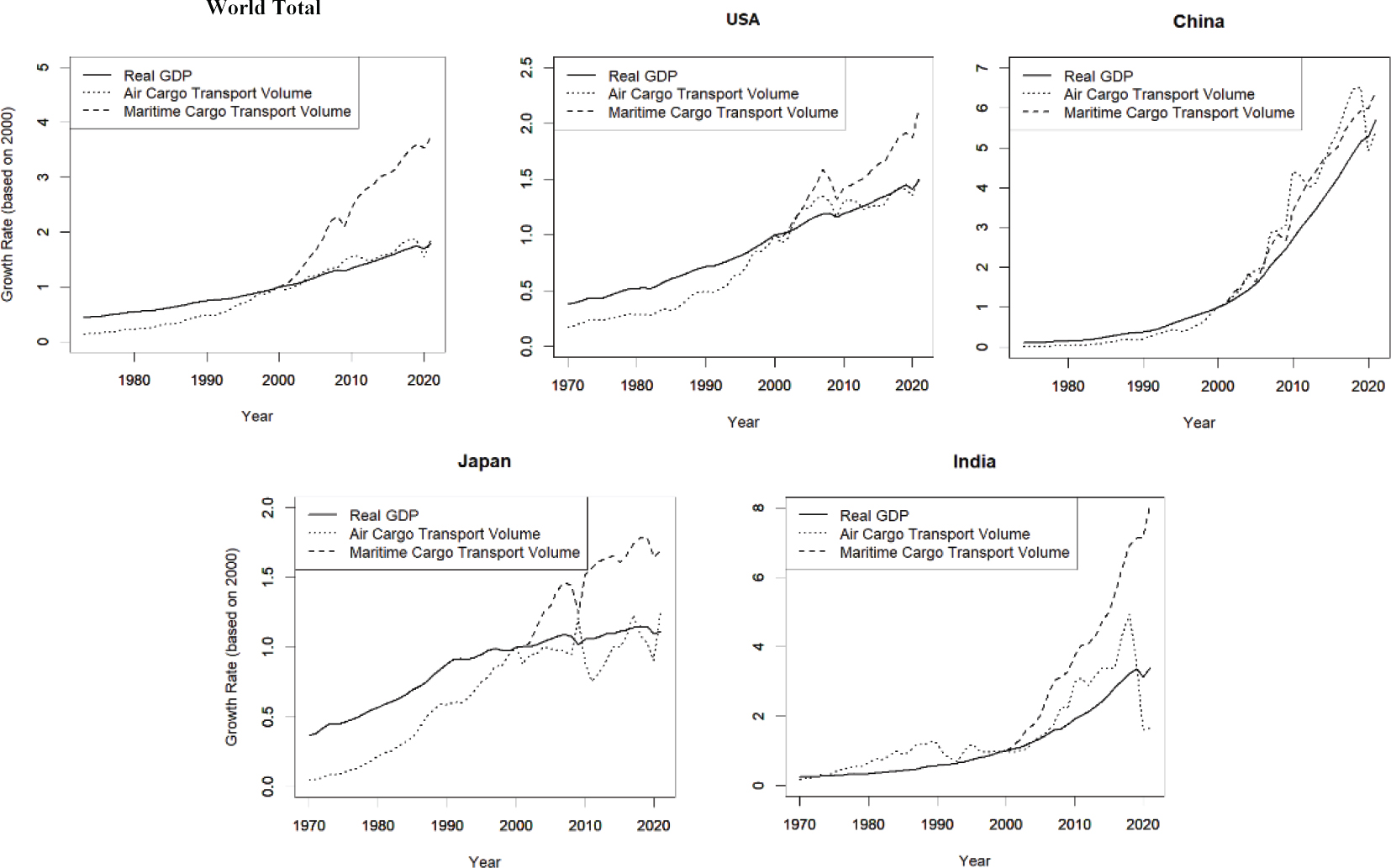
Figure 1.
The growth rate of air and maritime cargo volume and GDP (Original Data Series).
4.2. Unit root test
Unit root tests are commonly used to evaluate a variable’s stationarity and avoid spurious regressions. To ensure the robustness of the results, two different methods, the augmented Dickey–Fuller (ADF) test [Dickey and Fuller, 1979, 1981] and the Phillips–Perron (PP) test [Phillips and Perron, 1988], are applied to all variables. These tests assume that the unit root processes are individual across cross sections. ADF and PP tests have the null hypothesis of a unit root, whereas the alternative hypothesis is that some cross sections do not have a unit root. When the results of ADF and PP tests are inconsistent, the PP test results are given priority due to the known lower power of ADF tests.
4.3. Correlation coefficient calculation
The correlation coefficients are calculated to examine the correlation between air and maritime transport and GDP. The correlation coefficient requires a regression, requiring the time series variables to be stationary to avoid a spurious correlation.
The following equation is used to calculate correlation coefficients:
4.4. Granger causality tests
The Granger causality test, developed by Granger [1969], is statistical method that used to investigate causal relationships between variables and determine how changes in one variable may affect another. It is practical for examining the causal link between air and maritime transport and GDP, helping to identify the direction of causality and any bidirectional relationship between them. Before conducting the test, it is essential to ensure that the variables are stationary to avoid spurious regressions.
The following vector auto autoregression (VAR) model is used to evaluate the Granger causality:
The null hypothesis that X does not Granger cause Y is presented as follows:
The null hypothesis is evaluated against:
Similarly, the null hypothesis that Y does not Granger cause X is presented as follows:
The null hypothesis is evaluated against:
In each, the Granger causality relationship between the variables exists if the null hypothesis is rejected.
4.5. IRF
The IRF is an essential vector autoregression (VAR) model tool. It measures the reaction of one variable to a shock in another variable over time. This involves introducing a one-time shock to a variable and observing how this shock affects the other variables in the system over time. The IRF is often represented graphically to show the time path of each variable’s response to the shock.
The IRF and Granger causality are related and crucial tools in time series analysis. Granger causality focuses on one variable's past value can help another. In comparison, the IRF shows the dynamic effect of a shock to one variable on the entire system over time. Both tools are indispensable for understanding the intricate relationships and dynamics between variables, providing a deeper understanding of the economic system.
The IRF is not just a theoretical concept; it is a practical tool that helps us to understand how quickly and to what extent the system adjusts to shocks. Economists and policymakers often use IRFs to predict the effects of policy changes or external shocks on economic indicators such as GDP, empowering them to make informed decisions and plans.
There are two types of IRF. The “Orthogonalized IRF” considers the correlation between two variables: traffic weight/volume and GDP. The “Generalized IRF” provides a more flexible approach to analyzing shocks. Given the aim and purpose of this research, we adopted the “Orthogonalized IRF” because it can consider the correlation between the variables of interest.
The formula for orthogonalized IRF is shown as follows.
5. Empirical results
5.1. Unit root tests
The results of the ADF and PP tests indicate that the data series for air and maritime transport and the corresponding GDP values are nonstationary in level. Nevertheless, they become stationary when the series first differences are taken, primarily through the PP test. Consequently, the first differences of the variables are used in further analysis as they show stationarity.
Additionally, the ADF and PP tests show that the GDP-related data for maritime transport are nonstationary in their original form. However, except for India, the data become stationary when the first differences are taken (refer to Tables 3 and 4). Due to their stationary nature, the first differences in the variables will be used for further analyses. It is essential to mention that the empirical analysis for maritime transport in India is not included.
Table 3.
The results of ADF tests and PP tests for air transport and GDP
| ADF test | World | USA | China | Japan | India | |||||
|---|---|---|---|---|---|---|---|---|---|---|
| p-value | Lag | p-value | Lag | p-value | Lag | p-value | Lag | p-value | Lag | |
| GDP | 0.943 | 3 | 0.356 | 3 | 0.981 | 3 | 0.946 | 3 | 0.99 | 3 |
| GDP Diff1* | 0.015 | 3 | 0.055 | 3 | 0.631 | 3 | 0.045 | 3 | 0.052 | 3 |
| AIR | 0.353 | 3 | 0.637 | 3 | 0.725 | 3 | 0.769 | 3 | 0.717 | 3 |
| AIR Diff1 | 0.021 | 3 | 0.354 | 3 | 0.058 | 3 | 0.01 | 3 | 0.364 | 3 |
| PP test | World | USA | China | Japan | India | |||||
| GDP | 0.976 | 3 | 0.485 | 3 | 0.99 | 3 | 0.987 | 3 | 0.99 | 3 |
| GDP Diff1 | 0.01 | 3 | 0.01 | 3 | 0.01 | 3 | 0.01 | 3 | 0.01 | 3 |
| AIR | 0.250 | 3 | 0.633 | 3 | 0.849 | 3 | 0.340 | 3 | 0.492 | 3 |
| AIR Diff1 | 0.01 | 3 | 0.01 | 3 | 0.01 | 3 | 0.01 | 3 | 0.01 | 3 |
Table 4.
The results of ADF tests and PP tests for maritime transport and GDP
| ADF test | World | USA | China | Japan | India | |||||
|---|---|---|---|---|---|---|---|---|---|---|
| p-value | Lag | p-value | Lag | p-value | Lag | p-value | Lag | p-value | Lag | |
| GDP | 0.362 | 2 | 0.494 | 2 | 0.022 | 2 | 0.323 | 2 | 0.620 | 2 |
| GDP Diff1 | 0.146 | 2 | 0.426 | 2 | 0.720 | 2 | 0.426 | 2 | 0.734 | 2 |
| Maritime | 0.850 | 2 | 0.735 | 2 | 0.444 | 2 | 0.541 | 2 | 0.99 | 2 |
| Ma. Diff1 | 0.020 | 2 | 0.574 | 2 | 0.077 | 2 | 0.032 | 2 | 0.429 | 2 |
| PP test | World | USA | China | Japan | India | |||||
| GDP | 0.075 | 2 | 0.388 | 2 | 0.924 | 2 | 0.41 | 2 | 0.655 | 2 |
| GDP Diff1 | 0.01 | 2 | 0.01 | 2 | 0.01 | 2 | 0.013 | 2 | 0.014 | 2 |
| Maritime | 0.466 | 2 | 0.592 | 2 | 0.332 | 2 | 0.553 | 2 | 0.897 | 2 |
| Ma. Diff1* | 0.033 | 2 | 0.027 | 2 | 0.01 | 2 | 0.014 | 2 | 0.082 | 2 |
5.2. Correlation coefficient calculation
As per the data in Table 5, a moderate positive correlation exists between the first differences in air transport and the corresponding GDP, except for Japan, where a weak negative correlation is observed. A scatterplot graph was plotted and presented in Figure 2 to investigate this further. The graph shows that the weak negative correlation in Japan is influenced by outliers during the Lehman shock in 2009 and the COVID-19 pandemic from 2019 to 2020. Table 6 excludes these outliers to address this issue and shows that the data series indicates a weak positive correlation. However, the p-value is not <0.05.
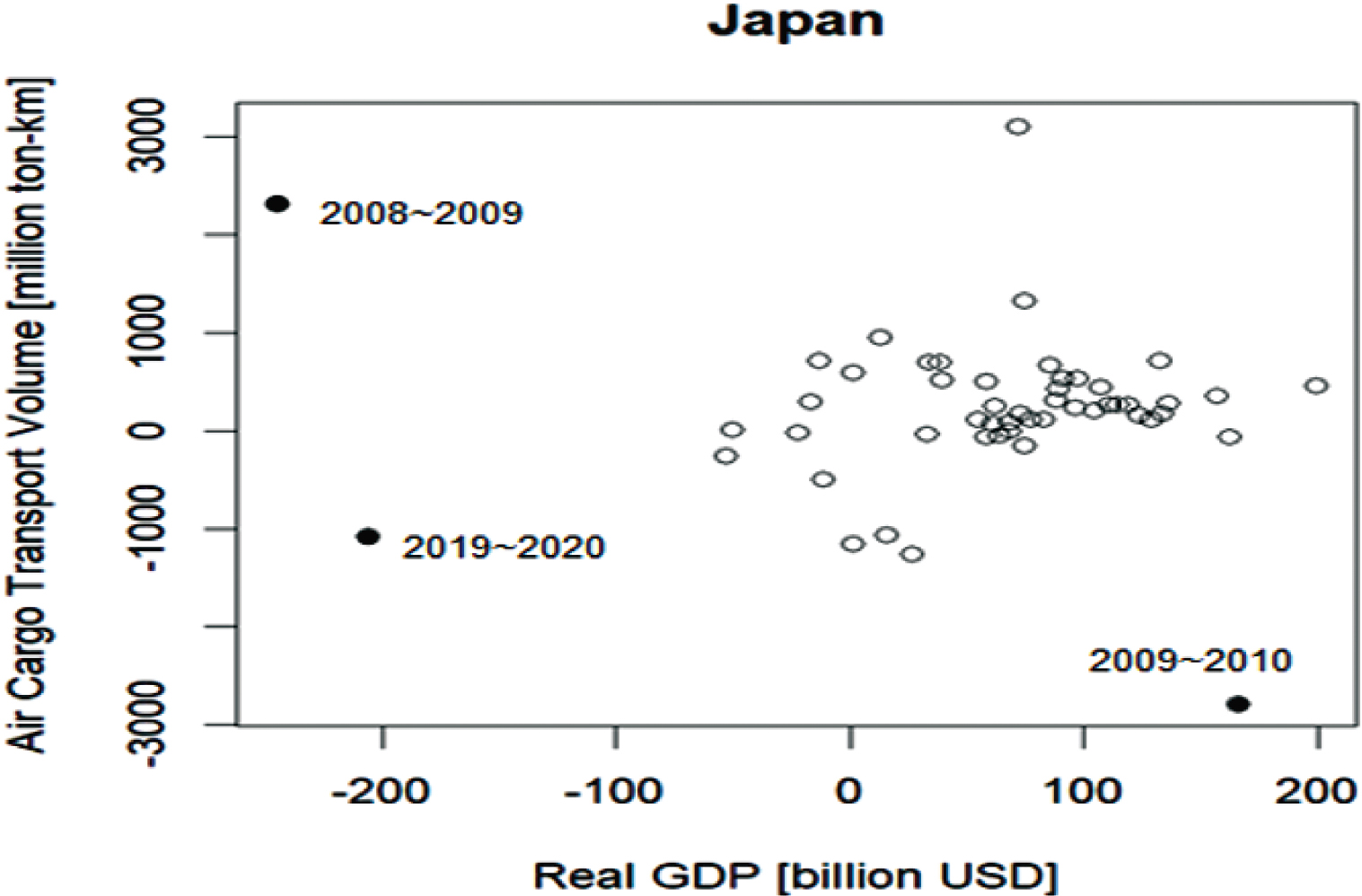
Figure 2.
The scatter plot of air transport and GDP for Japan.
Note: The black dot shows outliers.
Table 5.
The correlation coefficients for the first differences between air transport and GDP
| R | p-value | N | |
|---|---|---|---|
| World total | 0.679 | <0.001 | 45 |
| USA | 0.693 | <0.001 | 45 |
| China | 0.405 | <0.001 | 45 |
| Japan | –0.081 | <0.001 | 45 |
| India | 0.500 | <0.001 | 45 |
Table 6.
The correlation coefficient for the first difference between air transport and GDP.
| Country | R | p-value | N |
|---|---|---|---|
| Japan | 0.2142 | 0.1627 | 43 |
Table 7 presents the correlation coefficient for the first differences between maritime transport and the respective GDP. Strong or moderate positive correlations are observed in all data series except for China, where the p-value >0.05
5.3. Granger causality tests
Table 8 presents the results of Granger causality tests conducted to examine the causal relationship between air transport and the GDP of the listed countries. Table 8 indicates that all data series, except for China, exhibit at least one-way causality between air transport and GDP. In other words, these countries’ air transport volume and GDP have a causal relationship, whereby changes in one variable affect the other in the short run. Notably, India displays bidirectional causality, indicating that changes in air transport volume and GDP can cause changes in each other.
Table 8.
The results of Granger causality tests for the first differences between air transport and GDP
| Area/country | AIR to GDP | GDP to AIR | ||
|---|---|---|---|---|
| F-value | p-value | F-value | p-value | |
| World total | 0.08 | 0.778 | 4.841 | 0.030 |
| USA | 3.776 | 0.055 | 5.112 | 0.026 |
| China | 0.733 | 0.572 | 1.661 | 0.169 |
| Japan | 8.693 | 0.004 | 0.566 | 0.454 |
| India | 9.396 | 4.17E–06 | 3.634 | 0.009 |
Conversely, Table 9 displays the results of Granger causality tests conducted to examine the causal relationship between maritime transport and the corresponding GDP of various countries. Table 9 indicates that only the world shows one-way causality between maritime transport and corresponding GDP. This result implies that changes in the maritime transport industry can cause changes in the GDP of various countries but not vice versa.
5.4. IRF analysis results
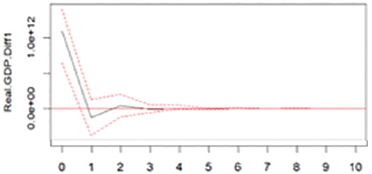
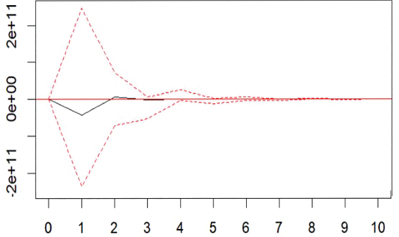
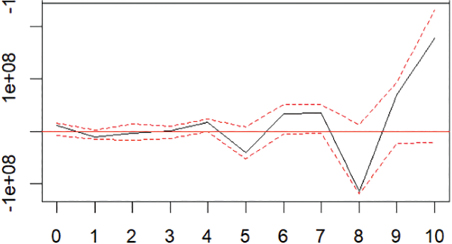
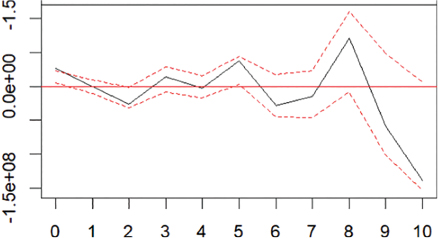
On analyzing the IRF, we found no discernible impact on the global GDP and the GDP of the USA, China, and India from changes in air or maritime traffic volume, or vice versa. Table 10 displays the IRF analysis results for the global GDP due to space constraints.
6. Discussion
The analysis of the relationship between GDP and maritime traffic volume revealed no significant correlations, whether from GDP to maritime transport volume or vice versa. The findings, outlined in Tables 8 and 9, are consistent with the outcomes of the Granger causality test conducted on GDP and maritime transport volume.
This research has contributed to comprehending the correlation between transportation and economic expansion. Through an in-depth examination of the mass and volume of air and maritime transportation, we have unearthed substantial findings that elucidate the impact of these modes of transportation on GDP and establish a causal relationship between them. Our extensive economic and transportation data analysis unveils the intricate interplay between these pivotal elements and their implications for national and global economies. These insights, invaluable for formulating of policies, possess the potential to facilitate sustainable economic growth. Derived from a singular data source encompassing global information, including data on the top three GDP countries and India, our analysis adds a noteworthy perspective to the existing corpus of knowledge.
This research investigates the correlation between air and maritime transportation volume and GDP for various countries, with a particular emphasis on Japan and China. The results reveal a moderate positive correlation between air transport and GDP for all three countries except Japan, which displayed a weak negative correlation. However, further investigation revealed that the outlier data caused Japan to show these results due to the economic shocks of the Lehman shock and the COVID-19 pandemic. After removing the outlier data, Japan also exhibited a positive correlation between air transport and GDP. Similarly, this research found a strong or moderate positive correlation between maritime transport and GDP for all countries except China, where the p-value >0.05.
Historically, marine transportation has been the preferred mode of mass transportation. However, recent studies indicate that air transportation volume, characterized by its real-time nature and high liquidity among logistics data, exhibits a positive correlation with the GDP of the entire world. This finding is significant as it verifies the correlation between logistics and economic indicators.
Specifically, in Japan, maritime transport represents 99% of international transport in terms of volume. However, in terms of value, the ratio is substantially lower, at 40%. Similarly, in the USA, it accounts for 30% of international transport [Ministry of Economy, Industry, and Trade, Japan, 2020].
The vital role of air transport in the macroeconomic performance of Asian countries has also been highlighted in several studies. A positive correlation between air transport and economic growth is reported by Mehmood et al. [2015], indicating that air transport contributes to the economic development of Asian nations, with a mutually influencing relationship observed. Kiboi et al. [2017] indicated that the demand for air cargo is impacted by macroeconomic factors such as GDP growth. Moreover, Tang and Abosedra [2019] analyzed the data from 23 Asian countries between 2010 and 2016 and found that the export-led growth hypothesis, which posits that a country’s economic growth is driven by its exports, holds in all the countries researched.
Ishutkina and Hansman (2008) further explored the relationship, between airtransport and economic development highlighting economic and commodity flows. Baltaci et al. [2015] confirmed the positive effects of active airports on regional economic examine specifically examining the case of Turkey. Taken together, these studies highlight the crucial role of air transport in driving economic growth and development in Asian countries. Various factors, including geopolitical positioning, economic development, and trade dependence, influence the impact of air and maritime transportation on a country’s GDP. These factors determine how much transportation volume can affect a country’s economic growth.
Moreover, the correlation between transportation volume and GDP can change as a country’s primary commodities shift. Our comprehensive research suggests that air transport is more sensitive to and influential regarding economic fluctuations; whereas, maritime transport is more dependable and less susceptible to economic circumstances. Thus, as seen in these studies in Japan and the USA, it is essential to examine the potential of logistics data as a forward-looking economic indicator, considering the means of transportation in terms of trade value.
Our comprehensive research underscores the potential of logistics data as a forward-looking economic indicator. These data, which includes information about the movement of goods and services, can provide early insights into economic trends and help policymakers make informed decisions. Our study suggests that air transport is more sensitive to and influential regarding economic fluctuations; whereas, maritime transport is more dependable and less susceptible to economic circumstances. This research concludes that it is crucial to examine the potential of logistics data, considering the means of transportation in terms of trade value, as a tool for understanding and predicting economic trends.
This research provides valuable insights into the relationship between logistics data and economic growth. However, it also identifies several areas that require further investigation. For instance, this research did not assess the influence of other transportation modes, such as road and rail, on a country’s GDP. Additionally, it did not explore the impact of transportation on specific industries such as manufacturing and tourism. Furthermore, further research is necessary to understand the discrepancy between the IRA result, the Granger causality analysis result, and the previous studies.
Despite these limitations, this research offers information that may assist policymakers and stakeholders in making informed decisions regarding investment plans by outlining trends in economic growth. Understanding the economic impact of transportation is crucial for utilizing logistics data to create a robust and sustainable economic framework. We respect the boundaries of this research and acknowledge that further investigation is needed to understand the full impact of transportation on economic growth.
Conclusion
This research uses the panel data to examine the macro-level dynamics of the global economy, focusing on finding a relationship between air and maritime transport and economic growth. This research, covering five decades, from the 1970s to 2021 for the air transport data and from 2000 to 2021 for the maritime transport data, is part of the larger academic discourse on the subject. Real GDP figures for the same period are sourced from a single data repository, ensuring the consistency and reliability of the data.
This research has yielded extensive insights into the correlation between air and maritime transport volumes and economic growth, as measured by real GDP. These findings are of utmost importance and can extensively influence policy formulation and economic strategies.
Key Findings
Positive Global Correlation: This research revealed a positive correlation between air and maritime transportation volumes and real GDP on a global scale.
Direct Impact of Air Transportation: The volume of air transport significantly impacts economic growth in countries such as the USA, Japan, and India, demonstrating a one-way causality between air transport volume and GDP.
Unique Pattern of China: While there is a strong or moderate positive correlation between maritime transport and GDP worldwide (including in the USA and Japan), China exhibits a different pattern.
Unique Pattern of India: In India, there is bidirectional causality between air transport and GDP, which differs from the pattern observed in other countries.
This research underscores the critical role that air and maritime transport volumes play in driving global economic growth. Policymakers and stakeholders seeking to promote economic development and enhance transport infrastructure in various countries can leverage this valuable information to make informed decisions.
Importance of Logistics Data
This research also highlights the importance of logistics data, particularly air and maritime freight volumes, in developing a more comprehensive understanding of the market. Logistics data are essential as they become available prior to GDP statistics, providing a more precise depiction of the global economy and signaling its potential upturn or downturn.
Furthermore, this research indicates that air transport data can be a leading indicator for investment decisions. Since air transport is primarily utilized for time-sensitive goods, timely data on air transport volumes can forecast GDP growth.
Limitations
This research is subject to certain limitations that necessitate acknowledgment. It is imperative to note that the data exclusively pertain to maritime and air freight volumes, which may exhibit significant variability over prolonged periods. Furthermore, the data are confined to annual frequency, potentially restricting the generalizability of the findings. Additionally, disparities in the data comparisons between air transport volume and maritime transport volume arose due to changes in the methodology for quantifying maritime transport volume statistics. Notably, the available data extend only up to 2021, a year extensively affected by the COVID-19 pandemic and subsequent government-imposed lockdown policies, which had discernible impacts on international traffic and GDP.
Notes
[10] Conflicts of interest Declaration of Interests
It is also pertinent to declare that we do not harbor competing financial, professional, or personal interests from other parties.