Have a personal or library account? Click to login
Behavioral additionality: the role of cooperation with research institutions in fostering technological maturity of enterprises Cover

Behavioral additionality: the role of cooperation with research institutions in fostering technological maturity of enterprises

Open Access
|Jun 2022

Figures & Tables

Figure 1

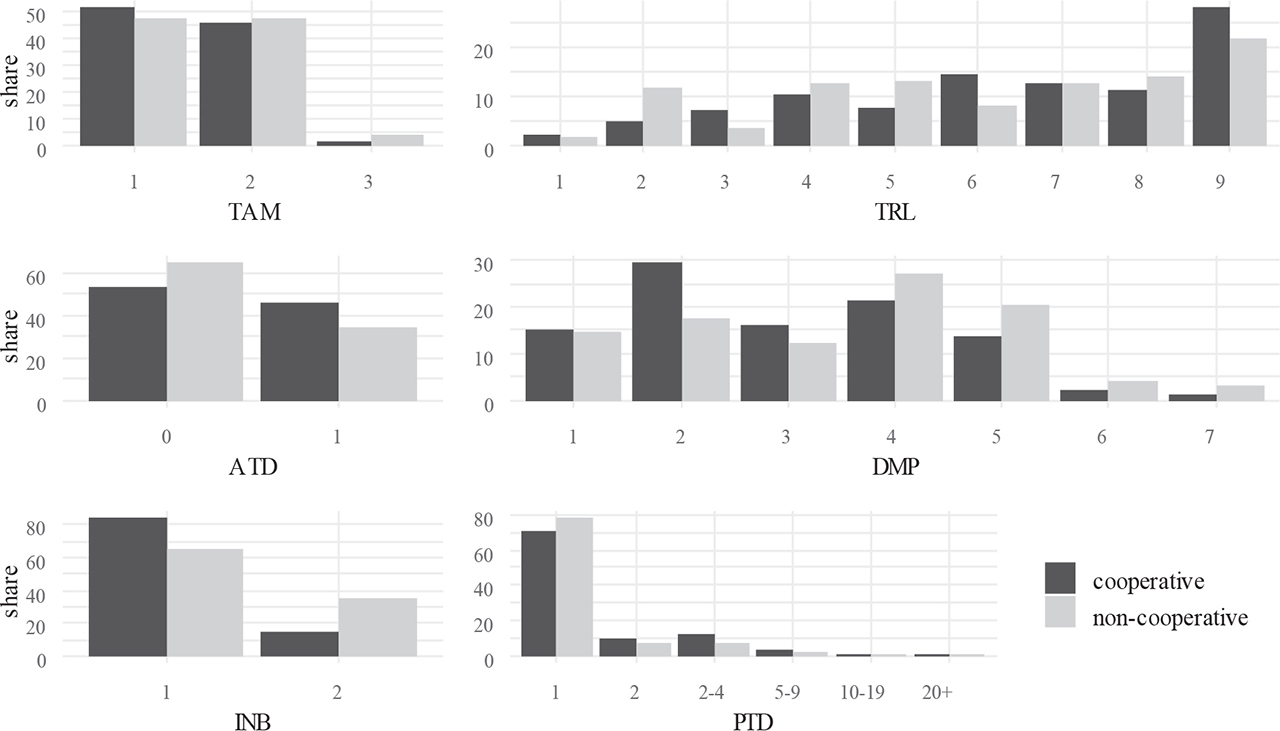
Survey results—comparison of firms cooperating and not cooperating with research institutes. TAM—technical advancement versus other companies operating in the market (answers: 1—Highly advanced, 2—Moderately advanced, 3—Not advanced); TRL—technology readiness level (TRL 1—Basic principles observed, TRL 2—Technology concept formulated, TRL 3—Experimental proof of concept, TRL 4—Technology validated in lab, TRL 5—Technology validated in relevant environment (industrially relevant environment in the case of key enabling technologies), TRL 6—Technology demonstrated in relevant environment (industrially relevant environment in the case of key enabling technologies), TRL 7—System prototype demonstration in operational environment, TRL 8—System complete and qualified, TRL 9—Actual system proven in operational environment (competitive manufacturing in the case of key enabling technologies; or in space)); ATD (answers: 1—received awards, 0—no awards); DMP—domestic market position (answers from 1—a national leader to 5—very weak market position; 6—don’t know; 7—answer refused); INB—innovations (1—innovations implemented, 2—no innovations); PTD—number of patents, trademarks.Source: own research.

Figure 2

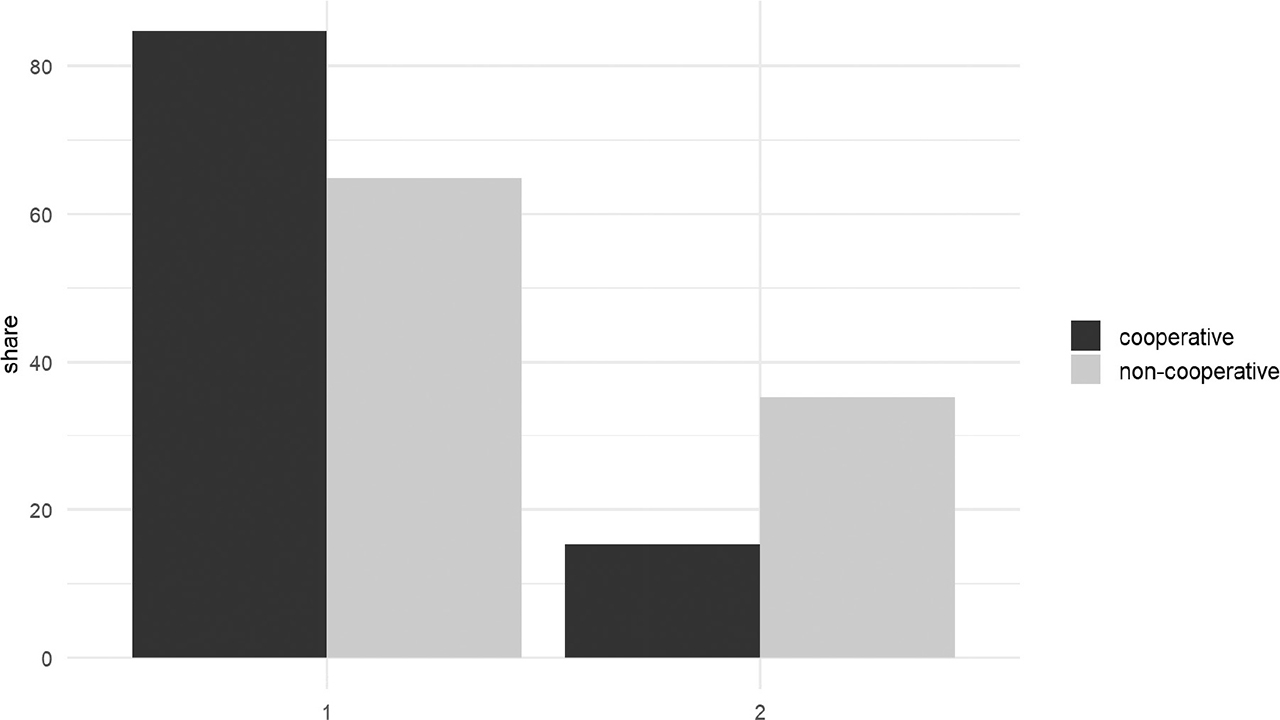
Innovations—comparison of firms cooperating and not cooperating with research institutions. 1—innovations implemented; 2—no innovation implemented.Source: Own research.

Figure 3

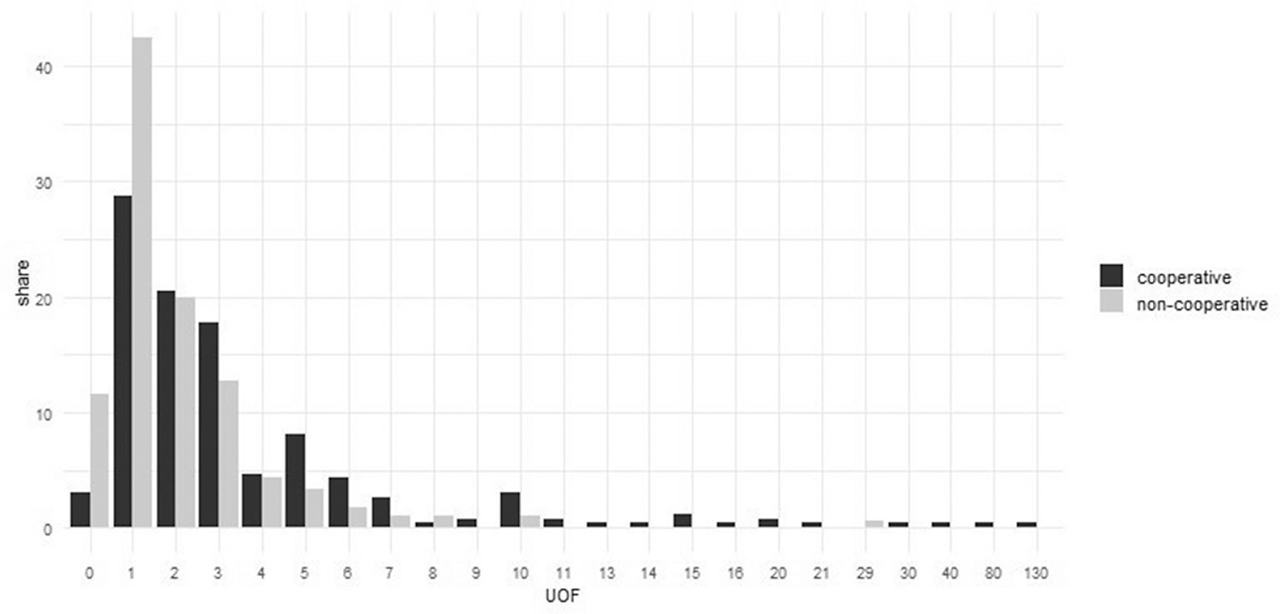
Usage of public support and cooperation with research institutes on R&D projects.Source: Own research.

The results of Mann–Whitney and t-test

DescriptionTestStatisticp-value
Technical advancement versus other companies operating in the marketMann–Whitney133090.38357
TRLMann–Whitney13469.50.17806
Achievements in technology developmentMann–Whitney26290.50.01411
Domestic market positionMann–Whitney196050.00235
Implementation of innovationsMann–Whitney177390.000002
Patents, trademarks, designst-test0.8960.37074
DOI: https://doi.org/10.2478/ijme-2022-0009 | Journal eISSN: 2543-5361 | Journal ISSN: 2299-9701
Language: English
Page range: 179 - 191
Submitted on: Dec 22, 2021
Accepted on: Apr 21, 2022
Published on: Jun 30, 2022
Published by: Warsaw School of Economics
In partnership with: Paradigm Publishing Services
Publication frequency: 4 issues per year

© 2022 Arkadiusz Michał Kowalski, Marta Mackiewicz, published by Warsaw School of Economics
This work is licensed under the Creative Commons Attribution-NonCommercial-NoDerivatives 4.0 License.