
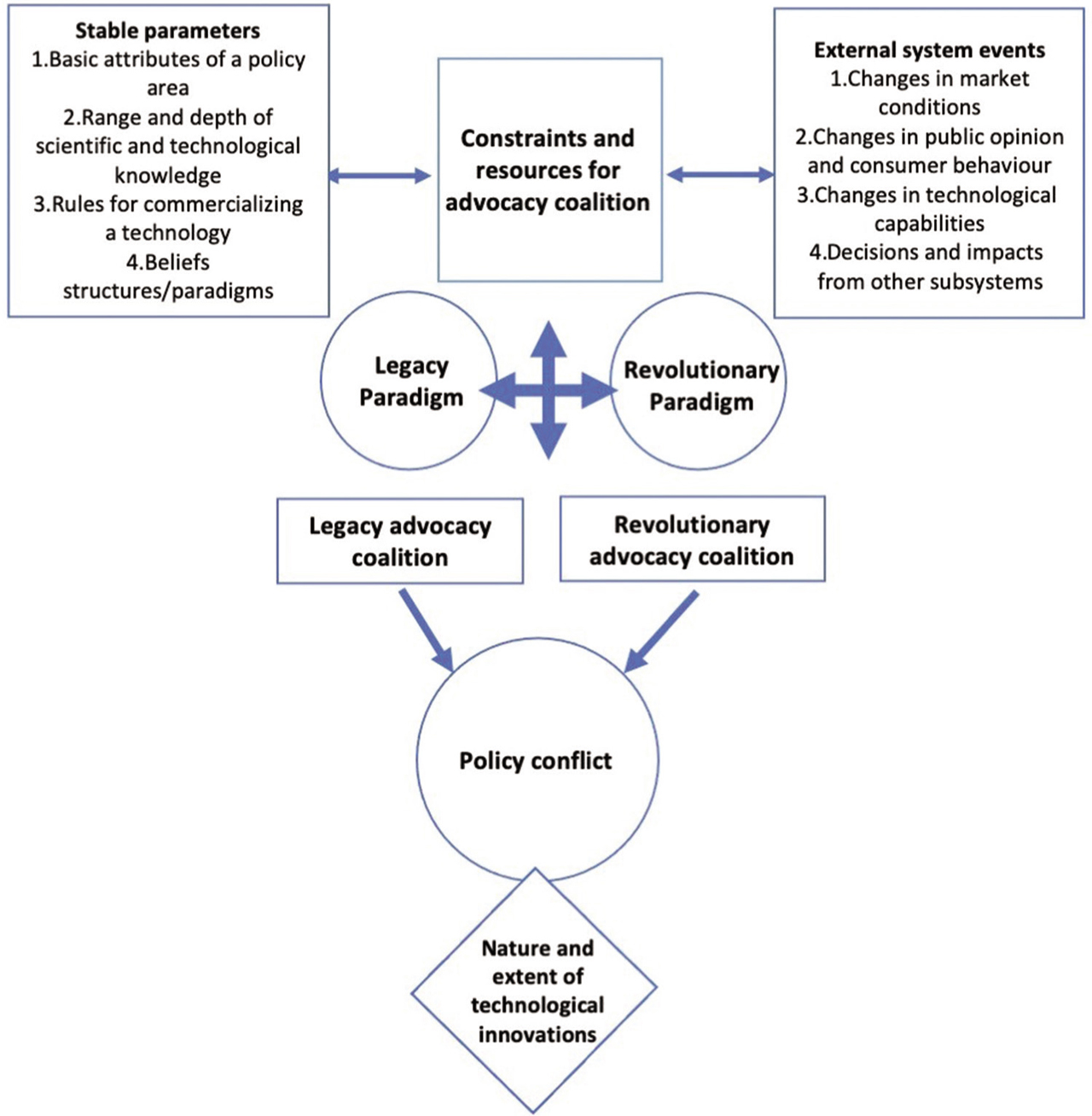
Figure 1
The paradigmatic model of revolutionary change by Giannopoulos and Munro (2019).
Table 1
Coalitions in the Danish article 17 subsystem.
| Copyright coalition | IT coalition |
|---|---|
| Music rightsholders: Record labels, music publishers, songwriters and performers that identify with the Europe for Creators political campaign (EuropeForCreators, n.d.) | IT Companies, mainly Google and Facebook, and Civil Rights Organisations, such as IT-Political Coalition, that identify with the Save Your Internet political campaign (SaveYourInternet, n.d.) |
Table 2
Table of the advocacy coalitions contrasting beliefs.
| Policy core belief | Copyright coalition | IT coalition |
|---|---|---|
| Definition of the problem | There exists a value gap that has to be balanced. | Regulating the Internet is complex and should be kept at a minimum. |
| The preferred choice of policy instruments | Regulation | Incentives |
| Basic perspective on the Policy conflict | Copyright protection | Technological development |
| Priority of which social group's interest | Rightsholders, general public | Innovators, general public |
| Can regulatory instruments solve problems in the policy area | Yes | No |
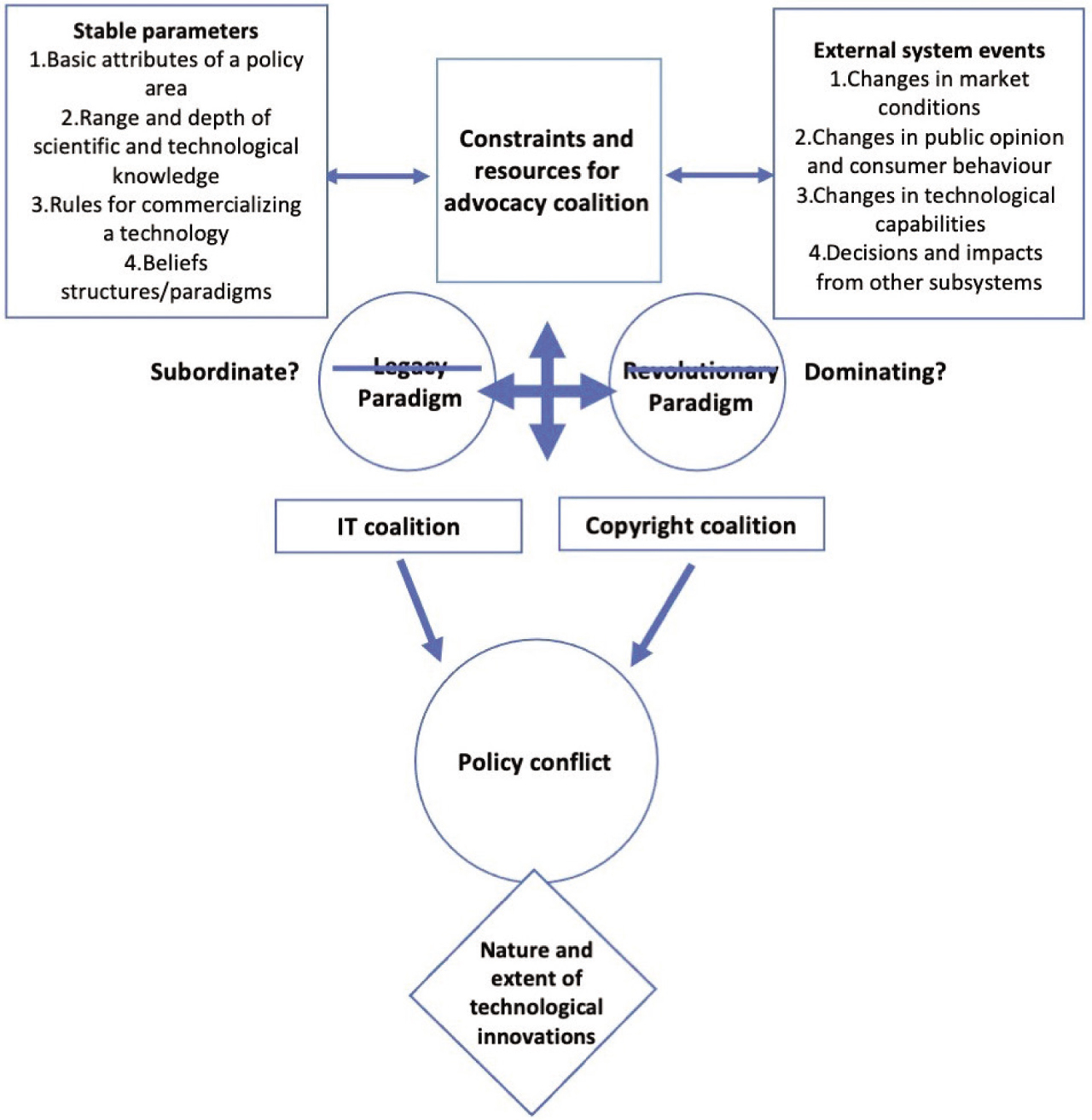
Figure 2
The Danish article 17 policy subsystem in The Paradigmatic Model of Revolutionary Change, inspired by Giannopoulos and Munro (2019).